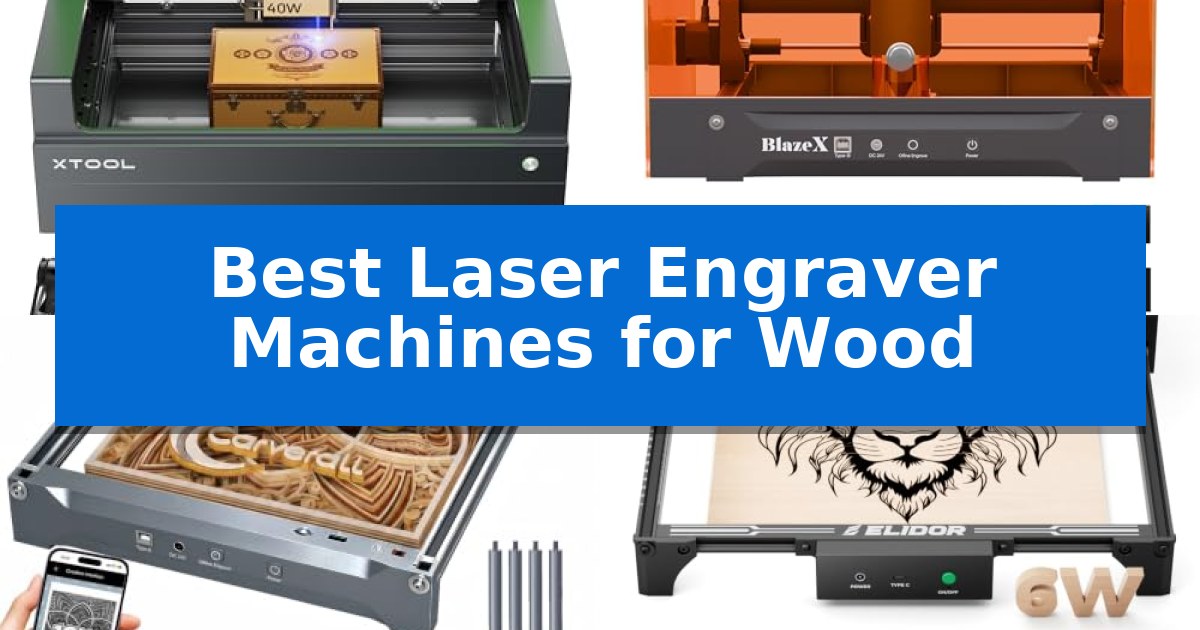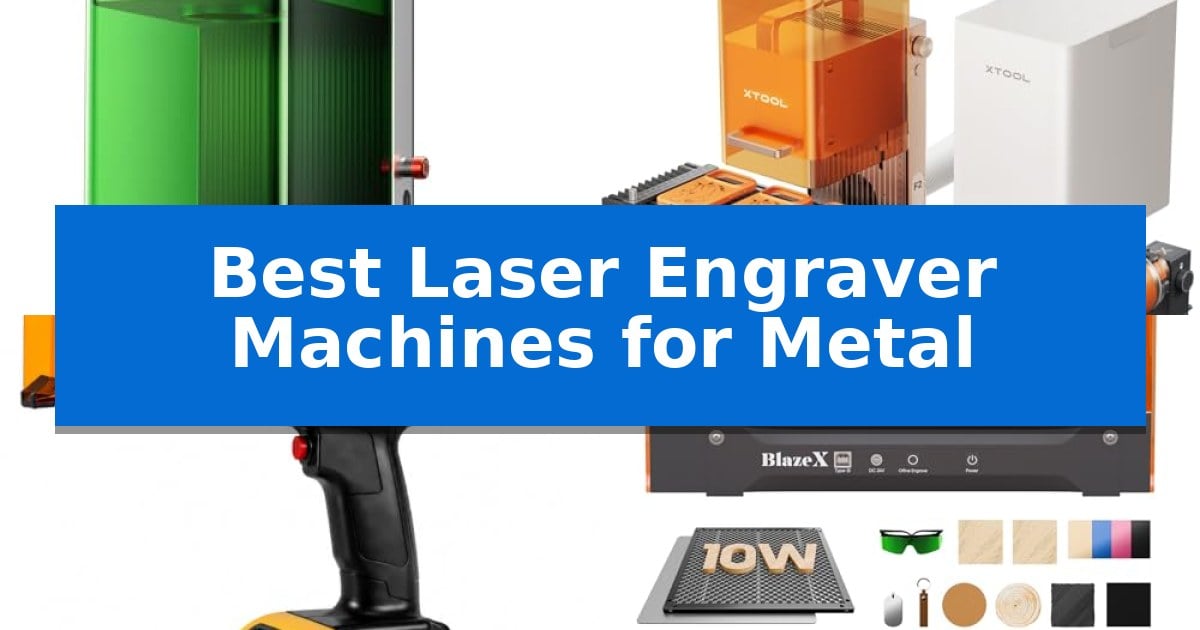
Best Laser Engravers for Aluminum in 2026

Best Laser Engravers for Aluminum

Finding the right equipment for metal projects can be challenging, as not all systems are built to handle the unique thermal properties of aluminum. Whether you are a hobbyist looking to personalize gifts or a small business owner scaling production, selecting the Best Laser Engravers for Aluminum requires balancing laser power, wavelength, and material compatibility.

Our guide focuses on machines that offer the precision and versatility needed for consistent results on various metal surfaces. We have analyzed current market options to help you identify which features—such as dual-laser systems or modular upgrades—best align with your specific creative requirements and workspace constraints.
Best Laser Engravers for Aluminum in 2026

Our Top Picks
  1. Upgradeable for Bare Metal Carverall K15 Pro Laser Engraver
  2. Fast Modular Laser Swapping Creality Falcon A1C Laser Engraver
  3. Pre-Assembled for Quick Setup Ortur H10 Laser Engraver
  4. Dual-Motor Precision Stability Twotrees TTS-10 Pro Laser Engraver

Quick Comparison

Product Best For Key Strength Score
xTool F2 Dual Laser Engraver Best Overall Dual-laser system combining 15W diode and 5W IR for versatility across 300+ materials. 4.9
Carverall K15 Pro Laser Engraver Upgradeable for Bare Metal Modular design allows for future upgrades to bare metal engraving. 4.5
Creality Falcon A1C Laser Engraver Fast Modular Laser Swapping 15-second quick-swap modular design for rapid laser head changes. 4.5
Ortur H10 Laser Engraver Pre-Assembled for Quick Setup Pre-assembled design allows for immediate setup and use. 4.5
Twotrees TTS-10 Pro Laser Engraver Dual-Motor Precision Stability High-precision 0.069mm laser spot for detailed work. 4.3

How We Chose

  • Laser Wavelength Compatibility: Assessing whether the machine uses infrared (IR) or diode lasers to achieve marking on coated or bare aluminum.
  • Operational Precision: Evaluating motion accuracy and camera-assisted positioning for high-resolution, detailed engraving.
  • Material Versatility: Determining the range of additional materials the system can process beyond aluminum.
  • Workflow Efficiency: Analyzing setup time, software compatibility, and batch processing capabilities.
  • Safety and Design: Reviewing enclosure features and fume management for indoor or on-site use.

1 xTool F2 Dual Laser Engraver — Best for Color Marking Metal

Achieving precise, high-contrast results on metal surfaces requires specialized hardware capable of handling both organic and inorganic materials. The xTool F2 5W IR & 15W Diode Dual Laser Engraver distinguishes itself by integrating two distinct laser sources into a single desktop unit, allowing users to switch between deep, vivid color marking on metal and intricate 3D embossing on a wide variety of substrates.

Efficiency is central to the design of this xTool F2 Dual Laser Engraver, which reaches industry-leading speeds of up to 6000mm/s. This performance capability enables rapid batch processing, making it suitable for small-scale commercial production of items like coasters or phone cases. The inclusion of a 50MP camera provides a real-time visualization of the workspace, ensuring an alignment accuracy of up to 0.1 mm to minimize material waste during complex projects.

Portability and ease of use are prioritized through its fully enclosed, leak-proof chassis. Weighing 4.6 kg, the device is built for deployment in diverse environments, from workshops to on-site pop-up markets. The system arrives fully assembled and utilizes built-in material presets, which streamlines the setup process for users who need to transition quickly between different engraving tasks.

While the device offers significant versatility, it is a Class 4 laser system that relies on its enclosed design for safety. Users looking to expand their workflow can integrate optional accessories like the RA3 rotary tool or a Slide Extension, which further enhances the machine's capacity for handling larger or cylindrical objects in a professional setting.

Best for: Small-batch creators and professionals needing high-speed, precise color marking on metal and versatile material engraving.

Skip if: Users requiring large-format engraving areas or those who do not need the specific dual-laser functionality for metal color marking.

PROS

  • Dual-laser system combining 15W diode and 5W IR for versatility across 300+ materials.
  • High-speed performance reaching 6000mm/s for efficient batch processing.
  • 50MP built-in camera for precise workspace visualization and 0.1 mm alignment accuracy.
  • Portable, fully enclosed design suitable for on-site customization and workshop safety.

CONS

  • Class 4 laser classification requires strict adherence to safety protocols.
  • Compact footprint may limit the size of individual items compared to open-frame laser systems.

2 Carverall K15 Pro Laser Engraver — Upgradeable for Bare Metal

Achieving precise marks on metal surfaces requires a machine that balances power with material-specific capabilities. The Carverall K15 Pro Laser Engraver distinguishes itself by offering a modular design that allows users to transition from standard diode-based engraving on wood and acrylic to bare metal marking by adding an optional 1W IR laser head.

This 2-in-1 laser engraver and cutter features a compact 11.8×7.9-inch A4 workbed, designed to fit into home studios while handling common projects like custom coasters, leather goods, and branded merchandise. It utilizes a dual-fan diode module to manage heat during extended batch jobs, which is essential for maintaining consistent results when working on multiple items.

Usability is a core focus, evidenced by the one-touch smart focus system that removes manual measurement guesswork. The machine supports offline engraving via a TF card, allowing users to run repeated jobs without a constant PC connection. For those who prefer digital control, the CutLabX software is compatible with mobile devices and tablets, while the hardware remains compatible with industry-standard tools like LightBurn and LaserGRBL.

The system is built for longevity, with a module life rated at 15,000 hours supported by a high-speed cooling fan. By including four heightening columns, the unit accommodates taller objects such as gift boxes or skateboards, providing versatility beyond flat surfaces. This combination of 4K precision and upgradeability makes it a practical choice for those starting with basic materials who intend to expand into metal engraving later.

Best for: Small business owners and hobbyists who need a compact, upgradeable machine for diverse materials including wood, acrylic, and eventually bare metal.

Skip if: Users requiring immediate, out-of-the-box capability to engrave bare metal without purchasing an additional IR laser module.

PROS

  • Modular design allows for future upgrades to bare metal engraving.
  • Compact A4 footprint fits easily on standard desks.
  • One-touch smart focus simplifies the setup process.
  • Offline batch processing via TF card reduces reliance on a PC.

CONS

  • Bare metal engraving requires an additional IR laser head purchase.
  • Limited work area may not accommodate oversized signage.

3 Creality Falcon A1C Laser Engraver — Fast Modular Laser Swapping

Precision and versatility define the Creality Falcon A1C 10W Mini Laser Engraver, a desktop machine that streamlines the transition from digital design to physical output. Its standout 15-second quick-swap modular design allows users to switch between 5W, 10W, and 1.2W infrared laser modules without complex installation, providing the flexibility required to handle a wide range of materials efficiently.

Equipped with a built-in HD smart camera, the unit enables precise visual positioning and real-time previews, significantly reducing material waste by ensuring designs are perfectly aligned before engraving begins. The auto-focus system further simplifies operation by automatically adjusting laser height for different substrates, removing the need for manual calibration.

Performance is driven by a rigid frame capable of reaching engraving speeds of up to 15,000 mm/min. This high-motion accuracy, combined with a fine laser spot, delivers crisp lines and stable results across wood, leather, and acrylic. For those working with specific metals or plastics, the separately available 1.2W infrared module expands the machine's utility beyond standard organic materials.

Safety and ease of use are central to its design, featuring a fully enclosed Class 1 eye-safe housing that eliminates the need for protective goggles during operation. The machine includes intelligent flame detection, tilt protection, and a USB safety lock, while the Falcon Design Space software provides AI-powered tools like image extraction and material recognition to support both beginners and experienced creators.

The Creality Falcon A1C Laser Engraver offers a compact, portable footprint suitable for workshops, classrooms, or retail counters. While the 10W diode module is highly capable for common materials, users focusing primarily on bare metal engraving should note that the infrared module is an additional purchase required to unlock those specific capabilities.

Best for: Makers and small business owners who need a compact, modular laser engraver that can handle diverse materials with high precision and integrated safety features.

Skip if: Users who require high-power industrial cutting capabilities for thick metals or large-scale production runs will find the 10W desktop form factor and diode-based technology limiting.

PROS

  • 15-second quick-swap modular design for rapid laser head changes.
  • Class 1 enclosed safety design removes the need for external protective goggles.
  • Integrated HD smart camera for real-time preview and visual positioning.
  • AI-powered software simplifies design, material recognition, and auto-focusing.

CONS

  • Infrared laser module for metal and plastic compatibility must be purchased separately.
  • 10W diode power is optimized for engraving and light cutting rather than heavy-duty industrial metal fabrication.

4 Ortur H10 Laser Engraver — Pre-Assembled for Quick Setup

Achieving precise, clean results on metal surfaces requires a machine that balances structural stability with high-speed movement. The Ortur H10 Laser Engraver addresses this through a full-aluminum frame designed with a low center of gravity, effectively minimizing wobble during high-speed operations of up to 20000mm/min. This construction ensures that the precision of the Nema17 stepper motor is maintained, even when working on intricate designs.

For those looking to expand their creative capabilities, the Ortur H10 Laser Engraver features a 300×300mm workspace that supports modular upgrades, allowing users to swap between 5.5W, 10W, and 20W laser modules. The included 10W module is engineered for longevity, boasting an over 10000-hour service life, and provides the power necessary to cut 8mm pine wood in a single pass. A reserved air-assist port is integrated to further refine cutting quality.

Usability is a core focus, as the unit arrives pre-assembled, allowing users to begin projects immediately without complex setup. The machine offers versatile connectivity options, including WiFi APP, USB, and TF-card offline engraving, which provides flexibility for different workshop environments. Safety is managed through five built-in detections that monitor exposure, tilt, voltage, and current to support reliable operation.

This device is capable of engraving on over 340 types of colored metal, making it a versatile tool for small businesses and hobbyists producing custom signage or personalized merchandise. By combining a compact desktop footprint with professional-grade features, it serves as a practical solution for those transitioning from basic DIY projects to more demanding craft orders.

Best for: Beginners and small business owners who require a pre-assembled, compact laser engraver capable of working on various metals and wood.

Skip if: Users who require a larger workspace than 300x300mm or those who need integrated laser modules higher than 10W out of the box.

PROS

  • Pre-assembled design allows for immediate setup and use.
  • Full-aluminum frame provides stability and reduces vibration.
  • Modular laser support enables future power upgrades.
  • Five built-in safety detections enhance operational security.

CONS

  • Fixed workspace size of 300x300mm may limit large-scale projects.
  • Requires separate module purchase for power upgrades beyond the included 10W laser.

5 Twotrees TTS-10 Pro Laser Engraver — Dual-Motor Precision Stability

Precision is paramount when working with metal, and the Twotrees TTS-10 Pro Laser Engraver distinguishes itself with a 0.069mm laser spot that enables high-detail work on anodized and coated surfaces. This machine is designed for those who require a reliable motion system, utilizing dual Y-axis motors and GT2-6mm synchronous belts to maintain accuracy across its 300x300mm engraving area.

The core of this engraver is a 10000mW optical power blue light diode laser, which provides the energy necessary for deep marking on materials like bamboo, acrylic, and leather. While it is highly capable, users should note that it is not intended for bare stainless steel or uncoated metal unless a marking spray is applied to the surface first.

Usability is enhanced by a 32-bit dual-core MCU mainboard, which supports both online operation and TF card offline engraving. This flexibility allows for project management via mobile app or computer, and the system is compatible with industry-standard software like LightBurn and LaserGRBL, simplifying the transition from design to execution.

Built with a full metal frame and injection-molded components, the unit is engineered for stability. Every machine undergoes testing before shipping to ensure it meets quality standards. For those who prioritize a structured workflow, the included 4GB TF card and comprehensive assembly tools allow for a straightforward setup process, supported by an online wiki for guidance.

Best for: Hobbyists and small business owners needing a stable, high-precision laser for engraving coated metals, wood, and acrylic within a 12-inch workspace.

Skip if: Users specifically requiring a laser for cutting or marking bare, uncoated stainless steel or raw metal surfaces without the use of additional marking sprays.

PROS

  • High-precision 0.069mm laser spot for detailed work.
  • Dual Y-axis motors provide enhanced motion stability.
  • Offline engraving capability via TF card for standalone operation.
  • Broad software compatibility with LightBurn and LaserGRBL.

CONS

  • Not suitable for bare metal without surface preparation.
  • 300x300mm workspace may limit projects larger than 12 inches.

Best Laser Engravers for Aluminum Buying Guide

Understanding Laser Types for Metal

The Best Laser Engravers for Aluminum often utilize specific laser technologies to achieve results. Diode lasers are excellent for cutting and engraving organic materials and coated metals, but they often struggle with bare aluminum. For bare metal, an infrared (IR) laser is typically required because its wavelength is better absorbed by metallic surfaces.

Many modern systems now offer dual-laser versatility, combining both diode and IR modules. This hybrid approach allows users to switch between high-power cutting and fine-detail metal marking without needing to purchase two separate machines, making it a highly efficient choice for diverse creative projects.

Precision and Positioning

Accuracy is paramount when working on small metal items like jewelry or custom tags. Look for machines equipped with high-resolution cameras that provide real-time workspace visualization. This feature allows for precise alignment, significantly reducing material waste by ensuring your design is perfectly centered before the laser fires.

Motion accuracy is another critical factor. Systems with 0.00199-inch motion precision or similar specifications enable the capture of intricate details. When combined with auto-focus capabilities, these machines eliminate the guesswork of manual calibration, allowing for a faster and more reliable workflow.

Workspace and Portability

The physical footprint of your laser engraver should match your available space. Desktop laser engravers are ideal for home studios, while portable units weighing under 5 kg are better suited for those who need to transport their equipment to markets or pop-up events.

Consider the enclosure design as well. A fully enclosed machine not only provides essential eye protection but often includes built-in fans or ports for air purifiers. This is vital for maintaining a clean, fume-free environment, especially if you are operating your machine in a shared living or office space.

Software and Connectivity

The ease of use often comes down to the software ecosystem. Many top-tier engravers support industry-standard software like LightBurn and LaserGRBL, providing a familiar interface for experienced users. Beginners should look for machines that offer AI-powered design tools or proprietary apps that simplify the process from image generation to final engraving.

Connectivity options such as Wi-Fi, USB, and TF card support allow for flexible working modes. Offline engraving is particularly useful for batch processing, as it enables you to run repetitive jobs directly from the machine's internal memory without needing a constant connection to a computer.

Scalability and Upgrades

Your needs may evolve, so choosing a machine that supports modular upgrades can be a smart long-term investment. Some systems allow you to swap laser modules in seconds, enabling you to upgrade from a basic diode setup to a more powerful or specialized laser head as your business grows.

Accessories like rotary rollers for tumblers or slide extensions for batch engraving can significantly expand your capabilities. Before purchasing, check if the machine's ecosystem supports these add-ons, as they can transform a simple desktop engraver into a professional-grade production tool.

Frequently Asked Questions

Can all laser engravers mark bare aluminum?

No. Most standard diode lasers cannot mark bare aluminum effectively. You typically need an infrared (IR) laser or a specifically coated aluminum surface to achieve a visible mark.

What is the benefit of a dual-laser system?

A dual-laser system combines the cutting power of a diode laser with the metal-marking capability of an IR laser, providing a single, versatile machine that can handle a much wider range of materials.

Do I need special software for these engravers?

Most of these machines are compatible with common software like LightBurn and LaserGRBL. Some brands also provide their own user-friendly apps with AI features to help beginners get started.

How do I ensure safety while using a laser engraver?

Always prioritize machines with Class 1 enclosed designs to block laser exposure. Additionally, ensure your workspace has proper ventilation or use an air purifier to manage fumes.

Can I engrave cylindrical objects like tumblers?

Yes, many of these engravers support optional rotary roller accessories that allow you to engrave on curved or cylindrical surfaces.

Conclusion: Our Top Pick

Selecting the right tool for your metal projects depends on your specific material needs and production volume. For those requiring a balance of high-speed performance and the ability to mark both coated and bare metals, the xTool F2 Dual Laser Engraver stands out as a versatile choice.

The xTool F2 Dual Laser Engraver offers a unique combination of a 15W diode and 5W IR laser, making it highly capable for diverse applications. Its built-in 50MP camera and portable design provide the precision and flexibility needed for both personal projects and small-batch commercial work.
Best Laser Engravers and Cutters in 2026

Best Laser Engravers and Cutters

Finding the right equipment for your workshop can be a daunting task, especially with the wide range of capabilities available in modern desktop manufacturing. Whether you are looking to personalize small gifts or handle large-scale batch production, selecting the Best Laser Engravers and Cutters requires balancing laser power, workspace dimensions, and software integration.

Our guide focuses on machines that offer reliable performance for hobbyists and small business owners alike. By examining key specifications like output power, safety certifications, and material compatibility, we help you navigate the technical landscape to find a tool that fits your specific creative workflow and space constraints.

Best Laser Engravers and Cutters in 2026

Our Top Picks
  1. Easiest for Home DIY xTool M2 Laser Engraver
  2. High-Speed Batch Production LASER TREE 20W Laser Engraver
  3. Precision with Smart Guidance BlazeX M3 Laser Engraver
  4. Compact Portable Choice ELIDOR Laser Engraver

Quick Comparison

Product Best For Key Strength Score
xTool S1 Laser Cutter Best Overall 40W high-power laser for efficient single-pass cutting of thick materials. 4.9
xTool M2 Laser Engraver Easiest for Home DIY Dual-camera system for accurate, real-time workspace preview and alignment. 4.9
LASER TREE 20W Laser Engraver High-Speed Batch Production Large 400x800mm working area for batch production. 4.7
BlazeX M3 Laser Engraver Precision with Smart Guidance Smart camera guidance for real-time design preview and placement. 4.3
ELIDOR Laser Engraver Compact Portable Choice High-precision 0.01 mm accuracy for detailed graphics and text. 4.6

How We Chose

  • Laser Power and Cutting Depth: Assessing the optical output to determine which materials, such as wood or acrylic, can be processed in a single pass.
  • Working Area Dimensions: Measuring the physical bed size to ensure it accommodates the scale of your intended projects.
  • Safety and Enclosure: Verifying the presence of protective shielding, flame sensors, and ventilation systems for a secure environment.
  • Software and Ease of Use: Evaluating the compatibility with design tools and the availability of pre-set material parameters for streamlined operation.
  • Precision and Positioning: Checking for integrated cameras or alignment technologies that reduce material waste and improve accuracy.

1 xTool S1 Laser Cutter — Best for Large-Scale Projects

Achieving professional-grade precision in custom fabrication requires a machine that balances raw power with intuitive control. The xTool S1 40W Laser Cutter addresses this by integrating a high-output 40W laser module capable of slicing through 18mm cherry wood in a single pass, making it a robust solution for those tackling demanding, large-scale projects.

Beyond its cutting capacity, the machine streamlines the creative process through Auto-focus and the xTool Creative Space (XCS) software. This ecosystem includes pre-tested parameters for over 400 materials and AI-powered design tools, which assist users in generating unique patterns without requiring advanced CAD skills. The inclusion of AutoPassthrough Technology further extends its utility, allowing for the processing of materials up to 118 inches in length.

Safety and structural integrity are central to its design, featuring a 3mm aerospace-grade aluminum frame that ensures stability during high-speed operations of up to 600mm/s. The unit operates as a Class 1 safety-certified device, utilizing an enclosed design with a light-filtering cover that eliminates the need for external goggles. Integrated flame sensors and an emergency stop button provide essential safeguards during unattended or complex engraving tasks.

The xTool S1 40W Laser Cutter is built for durability, having undergone over 71,830 hours of rigorous testing to ensure consistent performance. By combining Pin-point Positioning for 3D curved surface engraving with a spacious 23.93" x 15.16" bed, it offers a comprehensive toolset for creators who need to scale their production while maintaining high standards of accuracy.

Best for: Creators and small business owners who require a high-power, enclosed laser system for large-format wood and metal projects.

Skip if: Users who need a portable or ultra-compact laser engraver for small, occasional hobbyist tasks may find the footprint and weight of this unit excessive.

PROS

  • 40W high-power laser for efficient single-pass cutting of thick materials.
  • Class 1 safety enclosure with integrated flame sensors and light-filtering lid.
  • AutoPassthrough Technology allows for handling exceptionally long materials.
  • Aerospace-grade aluminum frame provides high structural stability.

CONS

  • Large physical footprint requires significant dedicated workspace.
  • Higher complexity may be more than what is needed for simple, entry-level engraving.

2 xTool M2 Laser Engraver — Easiest for Home DIY

Precision crafting at home requires tools that minimize setup time and maximize creative output. The xTool M2 10W Laser Engraver distinguishes itself with an integrated dual-camera system that provides a real-time workspace preview, allowing users to align designs directly on materials before engraving begins. This "Place & Go" functionality removes the guesswork typically associated with manual positioning, ensuring that complex patterns are placed exactly where intended.

Designed for versatility, the machine features a 10W diode laser capable of handling a wide range of materials including wood, leather, felt, and cardstock. The fully enclosed design meets Class 1 safety standards, making it a practical choice for home environments where safety and air quality are primary concerns. Its modular architecture also supports future expansion, such as the addition of a CMYK Inkjet module for full-color printing or a 3W IR laser for specialized metal and plastic work.

Software integration is handled via xTool Studio, which includes an AI image generator and a library of ready-to-use templates. This ecosystem is built to lower the barrier to entry for beginners, allowing users to transition from initial design to a finished product in minutes. By streamlining the workflow, the system enables creators to focus on project execution rather than technical configuration.

While the base unit provides a robust foundation for most DIY projects, it is important to note that specialized components like the rotary attachment or inkjet module are sold separately. This modular approach allows users to start with the core engraving capabilities and scale their setup only as their specific creative needs evolve.

Best for: Home crafters and DIY makers who prioritize ease of use, safety, and precise material alignment for personalized projects.

Skip if: Users requiring high-volume industrial production or those who need integrated rotary and full-color printing capabilities without purchasing additional modules.

PROS

  • Dual-camera system for accurate, real-time workspace preview and alignment.
  • Class 1 enclosed design provides enhanced safety for home use.
  • Beginner-friendly software with integrated AI image generation and templates.
  • Modular architecture allows for future upgrades like IR lasers or inkjet modules.

CONS

  • Additional modules such as the CMYK Inkjet and RA3 Lite Rotary are sold separately.
  • 10W diode laser may be limited for heavy-duty industrial cutting compared to higher-wattage options.

3 LASER TREE 20W Laser Engraver — High-Speed Batch Production

The LASER TREE 20W Laser Engraver & Cutter utilizes advanced 3-beam combined compression technology to deliver a stable 20W of optical power, enabling precise, one-pass cutting on materials like 10mm plywood and 8mm acrylic. This machine is built for those who require both high-precision detail and the ability to process thicker materials without the need for repeated passes.

Designed for versatility and scale, the unit features an expansive 400x800mm working area. This large format is particularly beneficial for users transitioning from small-scale DIY projects to batch production or oversized creations, such as custom murals and large wooden signage.

Efficiency is a core focus, with the device achieving engraving speeds of up to 10000mm/min. Despite this high speed, the system maintains clear detail, making it suitable for both rapid prototyping and commercial small-batch workflows. The inclusion of a fixed focal length design simplifies the setup process, allowing users to begin work quickly without complex calibration.

Compatibility is ensured through support for mainstream software like LightBurn and LaserGRBL, running on both Windows and Mac systems. The machine handles a wide range of file formats, including SVG, DXF, and various image files, while its multi-material capability—spanning wood, leather, fabric, and coated metals—provides a comprehensive solution for diverse creative and commercial applications.

Best for: Users needing a large-format laser cutter for batch production and thick material processing.

Skip if: Users with limited workspace who do not require the 400x800mm footprint or the 20W power output for thick material cutting.

PROS

  • Large 400x800mm working area for batch production.
  • 20W optical power for efficient, one-pass cutting.
  • High-speed engraving up to 10000mm/min.
  • Fixed focal length for simplified setup.

CONS

  • Large footprint requires significant dedicated table space.

4 BlazeX M3 Laser Engraver — Precision with Smart Guidance

Achieving precise, clean cuts on materials like wood, acrylic, and metal requires a system that balances power with visual guidance. The BlazeX M3 Laser Engraver distinguishes itself by integrating a high-definition smart camera directly into its workflow, allowing users to preview designs on their material via PC before the laser ever fires. This feature is designed to eliminate material waste by ensuring perfect placement for every project.

This 2-in-1 laser cutter and engraver utilizes a high-density beam to achieve an ultra-fine precision of 0.01mm. The system is built for versatility, handling intricate patterns on glass and leather as effectively as it cuts through wood. To support a clean and safe environment, the machine includes a protective enclosure with an integrated fan that exhausts smoke and odors while operating at reduced noise levels.

Safety and compatibility are core to the machine's design, featuring a Class 1 Safety rating that filters harmful radiation. It is fully compatible with industry-standard software including LightBurn, LaserGRBL, and CutLabX, and supports operation across Windows, macOS, iOS, and Android. The unit also includes smart sensors that provide an automatic stop if the lid is opened or the machine is tilted during operation.

The BlazeX M3 Laser Engraver is part of an expandable ecosystem. Users can enhance the machine's capabilities with optional accessories like a Rotary Roller and Risers for cylindrical engraving, or an Air Assist and Purifier to improve edge clarity and detail. This modular approach allows hobbyists to scale their setup as their project complexity increases.

Best for: Beginners and hobbyists who prioritize precise design placement via smart camera guidance and require a safe, enclosed workspace.

Skip if: Users who need a high-power industrial laser for thick material cutting beyond the capabilities of a 10W diode system.

PROS

  • Smart camera guidance for real-time design preview and placement.
  • Class 1 Safety rating with automatic shut-off sensors.
  • Wide software compatibility including LightBurn and LaserGRBL.
  • Enclosed design with integrated smoke and odor exhaust.

CONS

  • 10W laser power may limit the thickness of materials that can be cut in a single pass.
  • Requires separate accessory purchases for advanced features like rotary engraving.

5 ELIDOR Laser Engraver — Compact Portable Choice

The ELIDOR Laser Engraver distinguishes itself with a highly focused 0.04 × 0.14 mm laser spot, enabling intricate detail work with an engraving accuracy of up to 0.01 mm. This level of precision allows creators to produce crisp text and complex graphics on a variety of materials, including wood, leather, acrylic, and metal.

Designed for versatility and mobility, the unit features a 300 × 300 mm working area while maintaining a lightweight profile of only 2.13 kg. This compact footprint makes it a practical choice for home workshops or mobile craft projects where space is at a premium. Users can achieve engraving speeds up to 10,000 mm/min, balancing efficiency with detailed output.

Software flexibility is a core component of this system, as it provides seamless compatibility with industry-standard tools like LaserGRBL and LightBurn. It supports a wide range of common file formats, including NC, DXF, BMP, JPG, and PNG, across Windows, macOS, and Linux platforms. This broad support ensures that users can easily import and execute their custom designs.

For those prioritizing safety in their workspace, the machine is designed to be paired with a protective enclosure to establish a Class 1 laser system. This configuration is particularly beneficial for classroom or shared environments where safety standards are a primary concern. The ELIDOR Laser Engraver offers a balance of professional-grade control and beginner-friendly operation for DIY enthusiasts and small business creators alike.

Best for: DIY makers and small business creators who require a portable, high-precision tool for custom engraving projects on various materials.

Skip if: Users who require a high-power industrial laser for deep cutting of thick materials or those who do not have the space to add a separate enclosure for Class 1 safety compliance.

PROS

  • High-precision 0.01 mm accuracy for detailed graphics and text.
  • Lightweight and portable design weighing only 2.13 kg.
  • Wide software compatibility including support for LightBurn and LaserGRBL.
  • Versatile material support covering wood, leather, acrylic, metal, and more.

CONS

  • Requires a separate enclosure to achieve a Class 1 laser safety rating.
  • Compact 300 × 300 mm workspace may limit the size of larger projects.

Best Laser Engravers and Cutters Buying Guide

Understanding Laser Power

The optical power of a laser, typically measured in watts, is the primary factor determining what a machine can cut. A 10W laser is often sufficient for detailed engraving and light cutting, while 20W or 40W lasers provide the penetration needed for thicker materials like 10mm plywood or acrylic.

Consider your primary material needs before purchasing. If you intend to cut thick hardwoods or perform high-speed batch production, prioritizing a higher wattage will save significant time and prevent the need for multiple passes, which can often lead to charred edges.

Workspace and Bed Size

Your available workshop space and the size of your projects dictate the necessary working area. Compact machines are excellent for desktop use and small crafts, while expanded beds are essential for larger signs or mass-producing multiple items simultaneously.

Always check if the machine supports passthrough technology, which allows you to feed longer materials through the unit. This feature effectively expands your workspace beyond the physical dimensions of the machine bed, offering greater flexibility for large-format projects.

Safety Standards

Laser safety is non-negotiable, especially in home or classroom environments. Look for Class 1 safety ratings, which indicate that the laser is fully enclosed, preventing harmful light exposure and reducing the need for protective goggles.

Additional features like flame sensors and automatic shut-off triggers provide essential peace of mind. These sensors monitor for combustion during the cutting process and can halt operation instantly if a fire is detected, protecting both your machine and your workspace.

Software Compatibility

The software interface is your primary point of interaction with the machine. Look for systems that are compatible with industry-standard software like LightBurn or LaserGRBL, as these provide robust control over cutting paths and power settings.

Many modern machines also include proprietary software with AI-powered design tools and pre-tested material libraries. These features can significantly reduce the learning curve for beginners by automatically suggesting optimal settings for hundreds of common materials.

Precision and Alignment

Achieving consistent results requires accurate material placement. Machines equipped with built-in cameras allow for a real-time preview of the workspace, enabling you to align your design precisely on the material before the laser fires.

This visual feedback loop eliminates guesswork and minimizes wasted material. For those working with irregular or curved surfaces, look for machines that offer advanced positioning technologies to ensure your engraving remains sharp and centered.

Frequently Asked Questions

What is the difference between an engraver and a cutter?

An engraver primarily marks the surface of a material, while a cutter has sufficient power to penetrate through the material entirely. Many modern machines are hybrid units capable of both functions depending on the power settings used.

Do I need a separate ventilation system?

While many enclosed machines have built-in fans to exhaust smoke, it is always recommended to operate your laser in a well-ventilated area or use an external air purifier to ensure air quality remains safe.

Can these lasers cut metal?

Most diode lasers can mark or engrave coated metals, such as anodized aluminum. However, cutting through thick, solid metal typically requires a different class of laser, such as a fiber laser, which is not standard in these desktop models.

Is it difficult to set up a laser machine?

Many current models are designed for quick assembly and feature auto-focusing capabilities. Beginners should look for machines that emphasize a 'ready to use' setup and provide extensive tutorial libraries.

What is a rotary attachment used for?

A rotary attachment allows the laser to engrave on cylindrical objects like tumblers, mugs, or spoons by rotating the item while the laser head moves, ensuring the design wraps correctly around the surface.

Conclusion: Our Top Pick

For those seeking the most versatile and powerful performance, the xTool S1 Laser Cutter stands out as the premier choice. Its 40W laser provides the necessary power to cut through thick materials efficiently, while the patented positioning technology ensures that even complex projects are completed with high accuracy.

This machine is particularly well-suited for users who need a reliable, safe, and productive tool for large-scale projects. By combining robust hardware with intuitive software, it offers a balanced experience that caters to both the precision requirements of professional work and the ease of use desired by serious hobbyists.

Best Laser Engravers in 2026: Scale Your Creative Projects

Best Laser Engravers

Finding the right equipment for custom fabrication can be a challenge, especially when balancing power, precision, and workspace safety. Whether you are looking to personalize small batches of items or tackle large-scale wood projects, selecting from the Best Laser Engravers requires a clear understanding of your specific production needs.

This guide examines five distinct models to help you identify which machine aligns with your workflow. We focus on essential factors like laser power, workspace dimensions, and safety features to ensure you can make an informed decision for your home or studio.

Best Laser Engravers in 2026: Scale Your Creative Projects

Our Top Picks
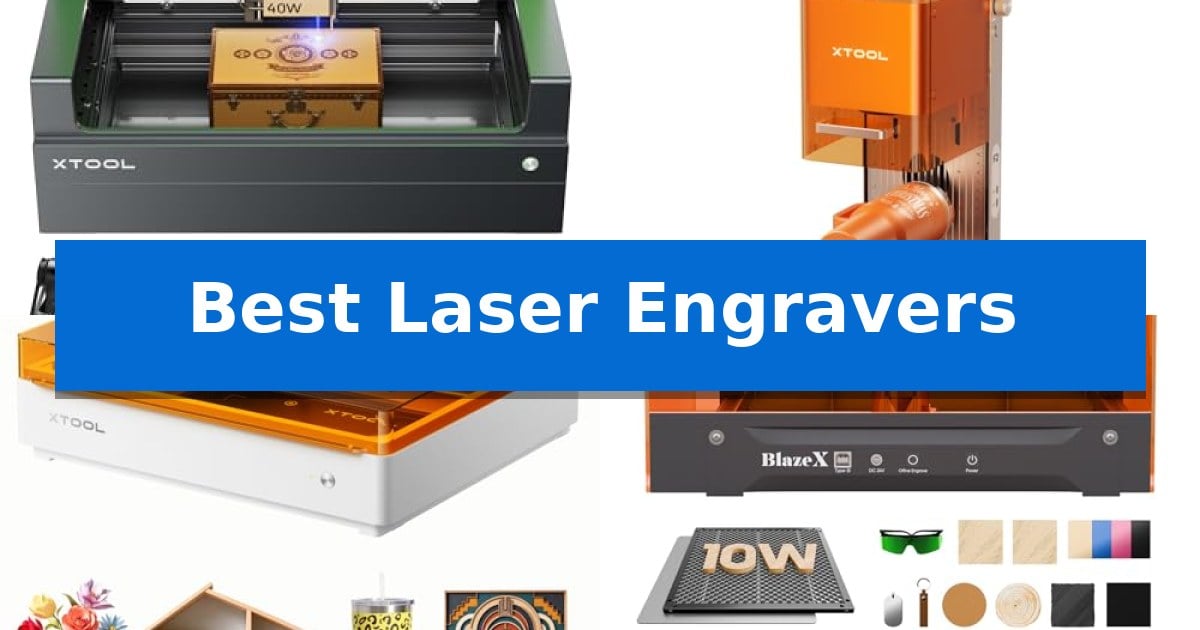
  1. Fastest for Batch Customization xTool F2 Dual Laser Engraver
  2. Versatile Enclosed Desktop Design xTool M2 Laser Engraver
  3. Smart Camera for Precise Placement BlazeX M3 Laser Engraver
  4. Portable Choice for Beginners ELIDOR Laser Engraver

Quick Comparison

Product Best For Key Strength Score
xTool S1 Laser Engraver Best Overall 40W high-power laser for efficient cutting of thick materials. 4.9
xTool F2 Dual Laser Engraver Fastest for Batch Customization Dual-laser versatility handles over 300 materials including metal and thick stock. 4.9
xTool M2 Laser Engraver Versatile Enclosed Desktop Design Class 1 safety enclosure ensures a secure environment for home use. 4.5
BlazeX M3 Laser Engraver Smart Camera for Precise Placement Smart camera guidance for accurate, real-time design placement. 4.8
ELIDOR Laser Engraver Portable Choice for Beginners High-precision engraving with 0.01 mm accuracy and a fine 0.04 x 0.14 mm laser spot. 4.7

How We Chose

  • Laser power output and material compatibility
  • Workspace size and material throughput capabilities
  • Safety certifications and enclosure design
  • Software ease-of-use and AI-assisted design features
  • Precision and motion accuracy for detailed engraving

1 xTool S1 Laser Engraver — High-Power for Large Projects

The xTool S1 Laser Engraver distinguishes itself with a robust 40W laser capable of cutting through 18mm cherry wood in a single pass, providing a high-capacity solution for those needing to scale their creative output. Designed for both precision and volume, it features a spacious 23.93" x 15.16" bed that accommodates large-scale projects or batch production of smaller items.

Engineered for versatility, the machine incorporates AutoPassthrough Technology to handle materials up to 118 inches in length, while Pin-point Positioning enables detailed 3D engraving on curved surfaces like plates and spoons. Users can manage these operations through the xTool Creative Space (XCS) software, which includes AI-powered design tools and access to over 1,000 project tutorials.

Safety is integrated into the hardware via an enclosed design that filters 99% of laser light, eliminating the need for external goggles. The unit also includes 5 flame sensors for automated operation halts, an emergency stop button, and a lid-open detection feature to ensure a secure environment during use.

Built for durability, the xTool S1 Laser Engraver utilizes a 3mm aerospace-grade aluminum frame. Each unit undergoes rigorous testing, including over 71,830 hours of component aging and multiple pre-shipment inspections, to ensure consistent performance across various material types.

Best for: Creators and small businesses requiring high-power cutting and engraving capabilities for large-format or batch-production projects.

Skip if: Users seeking a highly portable or ultra-compact laser engraver, as the robust aluminum frame and large bed size require a dedicated, permanent workspace.

PROS

  • 40W high-power laser for efficient cutting of thick materials.
  • AutoPassthrough Technology allows for extended project lengths up to 118 inches.
  • Class 1 safety enclosure with built-in flame sensors and light filtering.
  • Pin-point Positioning for accurate 3D engraving on non-flat surfaces.

CONS

  • Large physical footprint may limit placement options in smaller workshops.

2 xTool F2 Dual Laser Engraver — Fastest for Batch Customization

Achieving precise customization on a wide range of materials is simplified by the xTool F2 Dual Laser Engraver, which integrates a 15W Diode laser and a 5W IR laser into a single, compact unit. This dual-laser configuration allows for both deep, vivid color marking on metal and intricate 3D embossing on various substrates, making it a versatile tool for diverse creative projects.

Efficiency is central to the design, with the machine capable of reaching speeds up to 6000mm/s. The inclusion of a built-in 50MP camera provides real-time visualization of the workspace, enabling 0.1 mm alignment accuracy to minimize material waste. These features, combined with a 0.00199" motion accuracy, ensure that high-resolution details are captured consistently across small-batch production runs.

The xTool F2 is built for practical, on-site use, featuring a fully enclosed, leak-proof design that prioritizes safety in workshops or retail environments. Weighing only 4.6 kg, it is highly portable for pop-up events or markets. The device arrives fully assembled, allowing users to begin projects immediately using built-in material presets that streamline the setup process.

For those looking to scale their output, the system supports expansion through accessories like the RA3 rotary attachment and a Slide Extension. These additions facilitate batch processing for items such as phone cases and coasters, providing a seamless transition from personal crafting to commercial customization services.

Best for: Small-batch commercial customization and on-site personalization services requiring high speed and precision.

Skip if: Users who need to engrave or cut extremely large-format materials that exceed the desktop-sized workspace.

PROS

  • Dual-laser versatility handles over 300 materials including metal and thick stock.
  • 50MP camera enables precise, waste-free alignment.
  • Ultra-fast 6000mm/s speed optimized for batch processing.
  • Portable, fully enclosed design suitable for retail and workshop environments.

CONS

  • Desktop form factor limits the maximum size of materials compared to larger gantry-style engravers.

3 xTool M2 Laser Engraver — Versatile Enclosed Desktop Design

The xTool M2 Laser Engraver distinguishes itself through a fully enclosed Class 1 safety design that prioritizes user protection while maintaining a high-performance 10000mW laser output. This desktop unit is built for creators who require a secure environment for home-based projects, ranging from intricate wood engravings to precise fabric cutting.

Equipped with built-in dual cameras, the machine provides a real-time workspace preview that enables a "Place & Go" workflow. This system integrates with motion control to minimize material waste and eliminate the guesswork often associated with manual alignment. The xTool Studio software further simplifies the process by offering an extensive library of templates and an integrated AI image generator, allowing users to transition from concept to finished product with minimal technical friction.

Versatility is a core component of its architecture, supporting a wide range of materials including leather, felt, and cardstock. While it comes standard with a 10W diode laser, the system is designed to be modular. Users can expand its capabilities by adding a CMYK Inkjet module for full-color printing or a 3W IR laser for specialized work on metal and plastic surfaces, though these components are sold separately.

This device offers a balance of safety and creative freedom, making it a practical choice for those looking to produce personalized gifts or professional-grade home decor. By combining high-accuracy vision systems with a robust, enclosed chassis, it provides a stable platform for both hobbyists and those starting a small-scale creative business.

Best for: Home crafters and DIY makers who need a safe, enclosed, and versatile laser system for engraving and cutting a wide variety of materials.

Skip if: Users who require an open-frame laser engraver for oversized projects that exceed the dimensions of the enclosed workspace.

PROS

  • Class 1 safety enclosure ensures a secure environment for home use.
  • Dual-camera system enables precise workspace alignment and real-time previews.
  • Modular design supports optional upgrades like CMYK printing and IR lasers.
  • Beginner-friendly software includes AI image generation and ready-to-use templates.

CONS

  • Additional modules for full-color printing and IR engraving are sold separately.
  • Rotary and inkjet accessories are not included in the base standalone package.

4 BlazeX M3 Laser Engraver — Smart Camera for Precise Placement

The BlazeX M3 Laser Engraver distinguishes itself with an integrated high-definition smart camera that syncs with software to provide a real-time preview of designs directly on the material. This feature allows for precise placement before the laser initiates, helping to minimize material waste during complex projects.

Engineered as a 2-in-1 laser cutter and engraver, this machine utilizes an ultra-fine 0.01mm precision laser beam capable of handling materials ranging from wood and acrylic to metal and leather. The system is built with a Class 1 Safety rating, incorporating an enclosure that filters harmful radiation and an integrated fan system designed to exhaust smoke and odors while maintaining a quieter workspace.

For users looking to expand their capabilities, the device supports a professional accessory ecosystem, including a Rotary Roller for cylindrical items and an Air Assist module to improve cutting edge clarity. The machine offers broad software compatibility, working seamlessly with LightBurn, LaserGRBL, and CutLabX across Windows, macOS, iOS, and Android platforms.

The included all-in-one vision kit provides a straightforward setup process, bundling the engraver with a honeycomb laser bed, protective enclosure, and a variety of sample materials. This configuration is intended to support both beginners and hobbyists in achieving professional-grade results with minimal assembly time.

Best for: Beginners and hobbyists who require high-precision alignment and a safe, enclosed environment for diverse DIY engraving and cutting projects.

Skip if: Users who require a high-wattage industrial laser for heavy-duty, high-speed production cutting will find the 10W output of this model limiting.

PROS

  • Smart camera guidance for accurate, real-time design placement.
  • Class 1 safety enclosure with integrated smoke and odor exhaust.
  • Wide software compatibility including LightBurn and CutLabX.
  • Comprehensive bundle including a honeycomb bed and starter materials.

CONS

  • 10W laser power may be insufficient for thick material cutting compared to higher-wattage industrial alternatives.

5 ELIDOR Laser Engraver — Portable Choice for Beginners

Precision and portability define the ELIDOR Laser Engraver, a compact machine designed to bring detailed customization to home workshops and mobile projects. With a working area of 300 x 300 mm and a lightweight build of just 2.13 kg, it offers a practical footprint for creators who need to move between workspaces or craft fairs without sacrificing capability.

Engineered for accuracy, this device features a fine 0.04 x 0.14 mm laser spot that achieves engraving precision up to 0.01 mm. It supports speeds reaching 10,000 mm/min, ensuring that text, portraits, and complex graphics are rendered with consistent clarity. The system is versatile enough to handle a wide range of materials, including wood, leather, acrylic, metal, and glass.

Software integration is straightforward, as the machine works seamlessly with industry-standard platforms like LaserGRBL and LightBurn across Windows, macOS, and Linux. It supports common file formats such as NC, DXF, BMP, JPG, and PNG, allowing users to import designs with minimal friction. For those requiring a higher safety standard, the unit can be paired with an optional protective enclosure to establish a Class 1 laser system.

Whether producing personalized tumblers, custom keychains, or detailed home décor, this engraver provides the flexibility needed for both hobbyist projects and small business applications. Its combination of professional-grade precision and a beginner-friendly interface makes it a reliable choice for those looking to expand their creative toolkit.

Best for: DIY makers and small business creators who require a portable, high-precision laser engraver for diverse materials like wood, metal, and acrylic.

Skip if: Users who require a large-format industrial engraver or those who do not have the space to manage a 300 x 300 mm working area.

PROS

  • High-precision engraving with 0.01 mm accuracy and a fine 0.04 x 0.14 mm laser spot.
  • Wide software compatibility including support for LightBurn and LaserGRBL.
  • Compact and portable design weighing only 2.13 kg for easy transport.
  • Versatile material support covering wood, leather, acrylic, metal, and ceramic.

CONS

  • Requires a separate enclosure to achieve a Class 1 laser safety rating.

Best Laser Engravers Buying Guide

Understanding Laser Power and Material Compatibility

The laser power (measured in watts) is the primary determinant of what a machine can cut versus what it can only mark. Higher wattage machines, such as those with 40W lasers, are capable of slicing through thicker materials like 18mm cherry wood in a single pass, whereas lower-power units are better suited for surface etching on metal or delicate acrylic.

When choosing, consider the density of the materials you plan to use most frequently. If your goal is batch customization of metal items, an infrared (IR) laser component is often necessary for high-contrast marking, while a diode laser is more effective for deep engraving and cutting tasks.

Workspace Dimensions and Throughput

The bed size dictates the maximum dimensions of your projects. For large-scale items like door signs, a spacious bed is essential. Some advanced machines feature AutoPassthrough Technology, which allows you to work on materials significantly longer than the machine itself by feeding them through the unit.

For those focusing on small-batch production, look for features like slide extensions or rotary attachments. These accessories enable you to engrave cylindrical objects like tumblers or coasters, effectively expanding the utility of your workspace without requiring a larger footprint.

Safety Standards and Enclosure Design

Because laser engraving involves high-intensity light and potential fumes, Class 1 safety ratings are highly recommended for home and classroom environments. An enclosed design acts as a physical barrier, filtering out harmful laser radiation and containing smoke, which is vital if you do not have a dedicated industrial ventilation system.

Look for machines that include flame sensors and lid-open stop features. These automated safety measures provide peace of mind by halting operation immediately if an anomaly is detected, protecting both the user and the equipment from fire hazards.

Software Integration and Ease of Use

Modern laser engravers rely heavily on software to bridge the gap between a design idea and the physical product. Look for platforms that offer AI-powered design tools or extensive material parameter presets, which eliminate the guesswork of finding the right speed and power settings for different substrates.

Camera-assisted positioning is another critical feature for beginners and professionals alike. A high-resolution camera allows you to preview your design directly on the material, ensuring perfect alignment and reducing the risk of wasted material due to placement errors.

Precision and Motion Accuracy

The level of detail an engraver can produce is determined by its motion accuracy and laser spot size. Machines with ultra-fine precision, often measured in fractions of a millimeter, are capable of rendering complex portraits and intricate graphics with high clarity.

High-speed engraving is beneficial for productivity, but it must be balanced with stability. A rigid frame, such as one constructed from aerospace-grade aluminum, helps maintain accuracy during high-speed operations by minimizing vibrations that could otherwise blur the final result.

Frequently Asked Questions

What is the difference between a diode laser and an infrared laser?

A diode laser is typically used for cutting and engraving organic materials like wood, leather, and acrylic. An infrared (IR) laser is specialized for marking metals and certain plastics with high contrast.

Do I need a separate ventilation system for these engravers?

While many enclosed machines feature built-in fans to manage smoke, an optional air purifier or external exhaust setup is recommended for indoor use to ensure a clean and odor-free workspace.

Can I use these machines if I have no design experience?

Yes, many modern engravers come with intuitive software that includes pre-tested material settings, AI design generators, and hundreds of ready-to-use templates to help beginners start creating immediately.

What does a Class 1 safety rating mean?

A Class 1 rating indicates that the laser system is fully enclosed and safe for operation under normal conditions, as it prevents the user from being exposed to harmful laser radiation without the need for additional protective goggles.

Are these machines compatible with macOS and Windows?

Most professional-grade and hobbyist laser engravers are compatible with major operating systems like Windows and macOS, often supporting industry-standard software like LightBurn or proprietary manufacturer software.

Conclusion: Our Top Pick

After reviewing the current options, the xTool S1 Laser Engraver stands out as the most capable choice for those needing a balance of high power and large-project versatility. Its 40W laser provides the necessary strength for deep cutting, while the enclosed design ensures a safe environment for home or studio use.

With its patented pin-point positioning and support for large materials via passthrough technology, the xTool S1 Laser Engraver offers the most robust feature set for users who want to scale their production from simple crafts to complex, professional-grade projects.

Best Laser Engraver to Start a Small Business in 2026

Best Laser Engraver to Start a Small Business

Launching a creative venture requires tools that balance reliability with professional-grade output. Finding the Best Laser Engraver to Start a Small Business means prioritizing machines that can handle consistent workloads while maintaining the fine detail necessary for high-quality custom merchandise.

Whether you are focusing on personalized wood crafts, metal marking, or intricate acrylic designs, the right equipment acts as the backbone of your production line. This guide examines five capable laser systems designed to help you transition from prototype to batch production with efficiency and precision.

Best Laser Engraver to Start a Small Business in 2026

Our Top Picks
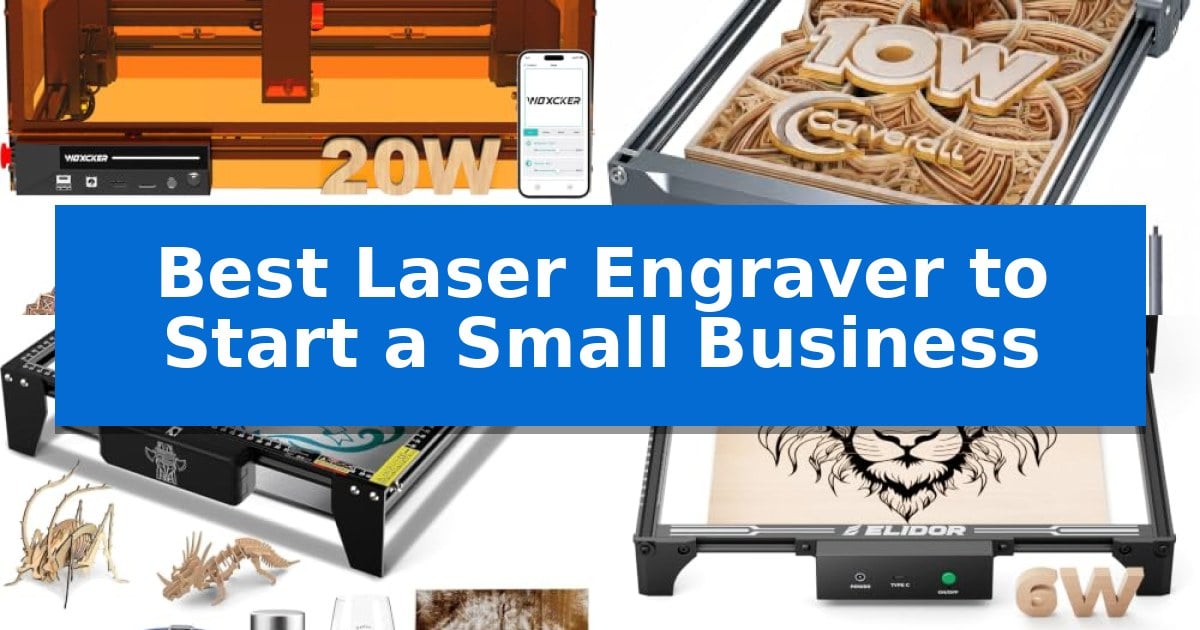
  1. Reliable for Daily Projects Carverall K15 Pro Laser Engraver
  2. High-Speed Professional Performance Twotrees TTS-10 Pro Laser Engraver
  3. Precision for Custom Crafts ELIDOR Laser Engraver
  4. Easiest for Small-Batch Makers Carverall A1 Pro Laser Engraver

Quick Comparison

Product Best For Key Strength Score
Woxcker L2 MAX Laser Engraver Best Overall High-speed 20W laser for efficient cutting and engraving. 4.9
Carverall K15 Pro Laser Engraver Reliable for Daily Projects Dual-fan heat control for consistent performance during long batch jobs. 4.5
Twotrees TTS-10 Pro Laser Engraver High-Speed Professional Performance 10000mW optical power for deep and efficient material processing. 4.9
ELIDOR Laser Engraver Precision for Custom Crafts High-precision engraving with 0.01 mm accuracy for detailed graphics. 4.9
Carverall A1 Pro Laser Engraver Easiest for Small-Batch Makers Integrated HD camera for precise, visual design alignment. 4.5

How We Chose

  • Work Area Capacity: We assessed the physical dimensions of the engraving bed to ensure it accommodates common small business items like signs, tumblers, and multiple small-batch pieces.
  • Material Versatility: We reviewed the laser's capability to process a wide range of substrates, including wood, acrylic, leather, and coated metals, which is essential for diverse product lines.
  • Production Speed and Efficiency: We analyzed the engraving and cutting speeds to determine how effectively each machine can reduce turnaround times for custom orders.
  • Safety and Enclosure Standards: We prioritized systems with enclosed designs and integrated safety features that protect the operator and contain fumes in a home or workshop environment.
  • Software and Control Flexibility: We examined the compatibility with industry-standard software like LightBurn and the availability of offline control options for streamlined, PC-free operation.

1 Woxcker L2 MAX Laser Engraver — Best for Batch Production

Scaling a creative venture requires equipment that balances precision with production capacity. The Woxcker L2 MAX Laser Engraver addresses this by integrating a powerful 20W laser module capable of reaching speeds up to 20,000mm/min, designed to streamline batch production for small business owners.

This machine features a 300x300mm work area, providing sufficient space for ornaments, signs, and personalized gifts. Its advanced point-compression technology produces a fine 0.01mm square focus, ensuring that intricate logos and fine text remain sharp across materials like wood, leather, acrylic, and coated metal.

Safety and workflow management are central to its design. The 360° fully enclosed structure shields users from direct laser exposure while containing fumes and operational noise. Integrated safety features include flame detection, 15° tilt protection, and an automatic shutdown mechanism, providing a controlled environment for home-based workshops.

For flexible operation, the unit supports connectivity via Wi-Fi, USB, APP, and TF card, and is compatible with software like LightBurn and LaserGRBL. This versatility allows creators to manage complex designs and project queues with greater efficiency, making it a functional choice for those transitioning from hobbyist projects to small-scale commercial output.

Best for: Small business owners and creators who need a reliable, enclosed machine for batch production of personalized wood, leather, and metal goods.

Skip if: Users requiring a larger work surface than 300x300mm or those who prefer an open-frame design for handling oversized materials that exceed the machine's footprint.

PROS

  • High-speed 20W laser for efficient cutting and engraving.
  • 360° fully enclosed design for enhanced safety and fume containment.
  • Advanced 0.01mm square focus for high-precision detail work.
  • Comprehensive safety suite including flame detection and tilt protection.

CONS

  • Fixed 300x300mm work area may limit the size of larger custom projects.

2 Carverall K15 Pro Laser Engraver — Reliable for Daily Projects

Starting a small business requires equipment that balances precision with reliability, and the Carverall K15 Pro Laser Engraver is designed to handle that transition from hobbyist to entrepreneur. This 2-in-1 diode laser system features a dual-fan diode module specifically engineered to manage heat during long, continuous batch jobs, making it a practical choice for producing consistent inventory like custom coasters, leather keychains, or branded merchandise.

The machine offers a compact A4 workspace measuring 11.8 by 7.9 inches, which is sized to accommodate the majority of daily small-scale projects while remaining small enough to fit on a standard desk. For added versatility, the unit includes four heightening columns, allowing users to engrave taller items such as gift boxes or skateboards without needing additional specialized accessories.

Usability is a core focus, supported by the CutLabX software which works across computers, tablets, and phones. The system includes one-touch smart focus to eliminate manual calibration errors and supports offline engraving via a TF card, allowing for batch production without a constant connection to a PC. With a rated speed of 15,000mm/min and 4K precision, it is built to maintain fine detail across a wide range of over 300 materials.

As a long-term investment, the Carverall K15 Pro Laser Engraver is designed to be upgradeable. Users can start with the standard diode for wood and acrylic and later add an optional 1W IR laser head to expand capabilities to bare metals like stainless steel and aluminum. The module is rated for a 15,000-hour lifespan, providing a durable foundation for a growing home-based business.

Best for: Small business owners and crafters who need a compact, upgradeable, and reliable machine for batch-producing custom items on wood, acrylic, and leather.

Skip if: Users who require a large-format workspace for oversized signs or those who need to engrave bare metal immediately without purchasing an additional IR laser head.

PROS

  • Dual-fan heat control for consistent performance during long batch jobs.
  • Upgradeable design allows for future expansion into metal engraving.
  • Versatile software compatibility including mobile app support and offline mode.
  • Compact A4 footprint with heightening columns for taller objects.

CONS

  • Requires optional IR laser head for bare metal engraving.
  • Limited to A4 workspace size for larger projects.

3 Twotrees TTS-10 Pro Laser Engraver — High-Speed Professional Performance

The Twotrees TTS-10 Pro Laser Engraver centers its utility on a 10000mW optical power blue light diode laser, providing the necessary intensity for deep engraving across materials like wood, bamboo, acrylic, leather, and anodized metal. Designed for versatility, this machine enables small business owners to produce custom coasters, jewelry, and signage within a 300x300mm workspace.

Performance is managed by a 32-bit dual-core MCU, which facilitates faster processing and supports both online and offline operation via a TF card. This flexibility allows users to manage workflows through a mobile app, computer web interface, or directly from the control board, accommodating various production environments.

Construction focuses on stability through a full metal frame composed of aluminum alloy and injection-molded parts. The motion system utilizes dual Y-axis motors and GT2-6mm synchronous belts to maintain alignment during operation. Every unit undergoes testing before shipping to ensure consistent build quality.

Compatibility with industry-standard software like LightBurn and LaserGRBL simplifies the design-to-production pipeline, accepting .lbrn and .nc file formats. The package includes all necessary assembly tools and a 4GB TF card, with additional support provided through an online wiki containing tutorials and FAQs.

Best for: Small business owners and hobbyists requiring a reliable, software-compatible laser engraver for custom signage and personalized goods.

Skip if: Users who need to engrave bare stainless steel or uncoated metal, as this machine is not designed for those specific materials without additional surface preparation.

PROS

  • 10000mW optical power for deep and efficient material processing.
  • 32-bit dual-core MCU enables fast processing and offline engraving via TF card.
  • Full metal frame with dual Y-axis motors ensures a stable and reliable motion system.
  • Broad software compatibility with LightBurn and LaserGRBL for streamlined workflows.

CONS

  • Not suitable for bare stainless steel or uncoated metal without specialized marking sprays.
  • 300x300mm work area may limit the size of larger signage or projects.

4 ELIDOR Laser Engraver — Precision for Custom Crafts

Turning creative concepts into a professional venture requires reliable hardware capable of handling diverse materials. The ELIDOR Laser Engraver provides a versatile foundation for small business owners by combining a fine 0.04 × 0.14 mm laser spot with high-precision engraving accuracy of up to 0.01 mm. This level of detail allows for the production of crisp text and intricate graphics on substrates ranging from wood and leather to acrylic and metal.

Designed with a 300 × 300 mm working area, this machine balances workspace capacity with a compact, portable footprint weighing only 2.13 kg. This makes it an adaptable tool for creators who need to transition between home workshops, craft fairs, or mobile project setups. The unit supports speeds up to 10,000 mm/min, helping to maintain consistent output during batch production of personalized items like keychains or tumblers.

Software integration is a core component of its usability, as the device works seamlessly with industry-standard platforms like LightBurn and LaserGRBL. It supports a wide array of file formats including NC, DXF, and common image files, ensuring that importing designs from various creative suites is straightforward. For those requiring a safer operating environment, the system can be paired with a compatible protective enclosure to meet Class 1 laser standards.

While the machine offers significant flexibility for DIY makers and small business creators, it is important to consider the specific material requirements for your product line. The ELIDOR Laser Engraver is engineered to be beginner-friendly while providing the professional-grade precision necessary for custom keepsakes and home décor projects.

Best for: Small business owners and hobbyists who need a portable, high-precision laser engraver for custom wood, leather, and acrylic projects.

Skip if: Users who require industrial-grade power for deep cutting of thick materials or those who prefer a pre-assembled, fully enclosed system without needing to source additional protective housing.

PROS

  • High-precision engraving with 0.01 mm accuracy for detailed graphics.
  • Wide software compatibility including support for LightBurn and LaserGRBL.
  • Compact and lightweight design for easy portability and workspace flexibility.
  • Versatile material support for wood, metal, leather, and acrylic.

CONS

  • Requires a separate enclosure to achieve Class 1 laser system certification.

5 Carverall A1 Pro Laser Engraver — Easiest for Small-Batch Makers

The Carverall A1 Pro 5W Desktop Laser Engraver simplifies small-batch production by integrating an HD camera that allows users to snap a photo of their material and drag designs directly onto the workspace for precise alignment. This feature eliminates the guesswork often associated with manual positioning, ensuring 0.01mm precision for detailed projects like custom pet tags, jewelry, and bookmarks.

Designed for efficiency, this machine features a 3.94×3.94-inch work area and is capable of running at speeds up to 12,000mm/min. It includes pre-installed TF card storage for offline batch jobs, allowing creators to repeat designs with one button without needing a constant connection to a computer or phone. The unit is fully enclosed with a Class 1 safety rating, incorporating automatic shut-offs if the lid is opened or if the machine is tilted over 15 degrees.

The Carverall A1 Pro offers versatility across 150+ materials, including wood, leather, acrylic, and coated metals, with a verified 5.12–5.35W power output. For those looking to expand their offerings, the base is removable to allow for engraving on larger items, and optional attachments support cylindrical objects like tumblers. The included CutLabX software provides an accessible entry point for beginners, while the system remains compatible with advanced tools like LightBurn.

Setup is streamlined through a no-assembly design that allows users to begin creating within minutes. The machine is supported by a 1-year warranty and a dedicated user community, providing resources for those new to laser engraving. Whether used for home-based crafts or small-scale business inventory, this engraver balances a compact footprint with the necessary tools for professional-grade results.

Best for: Small-batch makers and home-based crafters who need a compact, easy-to-use machine for precise, repeatable engraving on items like pet tags and jewelry.

Skip if: Users who require a large-format work area for engraving items significantly larger than 4 inches will find the compact workspace limiting.

PROS

  • Integrated HD camera for precise, visual design alignment.
  • Class 1 enclosed design with automatic safety shut-offs for secure operation.
  • Offline batch processing via pre-installed TF card.
  • Versatile material compatibility including wood, leather, and coated metals.

CONS

  • Limited 3.94×3.94-inch work area restricts the size of individual projects.
  • 5W power output is optimized for small crafts rather than heavy-duty industrial cutting.

Best Laser Engraver to Start a Small Business Buying Guide

Understanding Laser Power and Material Compatibility

The laser power rating, typically measured in watts, is the primary indicator of what a machine can cut versus what it can only mark. A 20W laser provides significant power for cutting through thicker materials like plywood or oak in fewer passes, which is crucial for maintaining a fast production cycle.

Conversely, lower-wattage lasers are often sufficient for surface engraving on materials like leather or coated metals. Always verify that the machine's power output aligns with the specific materials you intend to sell, as attempting to cut dense materials with an underpowered laser can lead to poor edge quality and increased production time.

The Importance of Work Area and Batch Processing

For a small business, the work area dictates the maximum size of the products you can offer. A 300x300mm bed is a standard, versatile size that fits most custom coasters, keychains, and small signs without requiring a massive footprint in your workspace.

If you plan to produce items in bulk, look for machines that support batch processing through features like offline file storage on TF cards. This allows you to set up a job once and repeat it multiple times without needing a computer connected to the machine, significantly simplifying your workflow.

Software Integration and Ease of Use

Your choice of software is just as important as the hardware itself. Most professional laser engravers support LightBurn or LaserGRBL, which are industry-standard tools that offer advanced control over cutting paths, power settings, and engraving speeds.

Beginner-friendly machines often include proprietary software or mobile apps that simplify the design process. Ensure the machine you choose is compatible with the software you are comfortable using, as this will directly impact your ability to iterate on new product designs quickly.

Safety Features for Commercial Workshops

Operating a laser in a small business setting requires robust safety features to protect yourself and your environment. Look for fully enclosed designs that shield the operator from direct laser exposure and help contain smoke and dust.

Additional safety mechanisms such as flame detection, tilt protection, and emergency stop buttons are essential for unattended or long-duration jobs. These features not only provide peace of mind but also help prevent accidental damage to your equipment during intensive production runs.

Scalability and Future-Proofing

As your business grows, your needs may evolve. Some laser engravers are designed with upgradeability in mind, allowing you to add accessories like rotary rollers for tumblers, air purifiers for better ventilation, or even different laser modules for specialized materials.

Investing in a machine that supports these modular upgrades can save you from needing to purchase an entirely new system as you expand your product catalog. Check for compatibility with common accessories before committing to a specific model.

Frequently Asked Questions

Can these laser engravers cut through metal?

Most diode laser engravers are designed to mark or engrave coated or anodized metals. They generally cannot cut through bare stainless steel or thick metal sheets without specialized equipment or industrial-grade fiber lasers.

Do I need a separate air purifier?

While many machines include exhaust fans, an external air purifier or a dedicated ventilation system is highly recommended to manage smoke and odors, especially if you are working in a residential or small office space.

Is assembly difficult for these machines?

Many modern desktop laser engravers are designed for quick assembly, often requiring only a few screws or simple frame alignment. Most manufacturers provide step-by-step video tutorials to assist with the process.

What is the difference between an open-frame and an enclosed laser?

An open-frame laser offers more flexibility for large or irregularly shaped items but requires strict adherence to safety protocols. An enclosed laser provides a controlled environment that shields the operator from laser light and helps contain fumes.

Can I use these machines for tumblers?

Yes, many of these engravers support rotary attachments that allow you to engrave cylindrical objects like tumblers and bottles. Always check if the specific model you choose is compatible with a rotary roller accessory.

Conclusion: Our Top Pick

For entrepreneurs looking to balance power, precision, and production efficiency, the Woxcker L2 MAX Laser Engraver stands out as the most capable choice. Its 20W power output and 300x300mm work area provide the necessary performance to handle both intricate detailing and consistent batch production for a variety of materials.

By integrating advanced safety features and broad software compatibility, this machine offers a reliable foundation for scaling your custom goods business. It is an ideal investment for those who need a machine that can grow alongside their creative output without sacrificing quality or speed.

Best Laser Engraver to Start a Business in 2026

Best Laser Engraver to Start a Business

Launching a creative venture requires tools that balance professional precision with reliable throughput. Finding the Best Laser Engraver to Start a Business means identifying a machine capable of handling consistent, repeatable tasks while maintaining the high-quality finish your customers expect.

Whether you are personalizing wood products, engraving metal tumblers, or cutting intricate acrylic designs, the right equipment serves as the foundation of your workflow. We have analyzed current market options to help you select a laser engraver that aligns with your production volume, material requirements, and available workspace.

Best Laser Engraver to Start a Business in 2026

Our Top Picks
  1. Versatile A4 Workspace Carverall K15 Pro Laser Engraver
  2. Powerful Dual-Core Processing Twotrees TTS-10 Pro Laser Engraver
  3. Precision Camera Alignment Carverall A1 Pro Laser Engraver
  4. Portable Professional Flexibility ELIDOR Laser Engraver

Quick Comparison

Product Best For Key Strength Score
Woxcker L2 MAX Laser Engraver Best Overall 360° fully enclosed design for improved safety and fume containment. 4.9
Carverall K15 Pro Laser Engraver Versatile A4 Workspace Beginner-friendly software with AI design capabilities and mobile app control. 4.6
Twotrees TTS-10 Pro Laser Engraver Powerful Dual-Core Processing 32-bit dual-core MCU for faster processing and reliable offline operation. 4.5
Carverall A1 Pro Laser Engraver Precision Camera Alignment Integrated HD camera for precise, real-time design alignment. 4.9
ELIDOR Laser Engraver Portable Professional Flexibility High-precision engraving with 0.01 mm accuracy for detailed designs. 4.9

How We Chose

  • Production Throughput: Assessing speed and batch-processing capabilities to ensure the machine can keep up with customer orders.
  • Material Versatility: Evaluating the laser's ability to cut and engrave a wide range of substrates, including wood, acrylic, and coated metals.
  • Software and Control: Prioritizing compatibility with industry-standard software like LightBurn and LaserGRBL for seamless design integration.
  • Operational Safety: Checking for enclosed designs, emergency stops, and tilt-protection features essential for home or studio environments.
  • Precision and Accuracy: Verifying the focus technology and resolution capabilities to ensure crisp, professional-grade results.

1 Woxcker L2 MAX Laser Engraver — High-Speed Batch Production

For entrepreneurs looking to scale their creative output, the Woxcker L2 MAX Laser Engraver offers a 360° fully enclosed design that prioritizes safety and workspace cleanliness. By containing fumes, dust, and operating noise, this unit is built for home-based workshops where maintaining a professional environment is essential for small business operations.

This machine utilizes a 20W laser capable of high-speed performance, reaching up to 20,000mm/min. This speed is engineered to improve workflow efficiency for batch production, allowing users to handle custom orders and personalized goods with faster turnaround times. The 300×300mm work area provides sufficient space for ornaments, signs, and various wood products.

Precision is managed through advanced point-compression technology, which achieves a fine 0.01mm square focus. This capability ensures that logos, fine patterns, and intricate text remain sharp across materials like wood, coated metal, leather, acrylic, glass, and stone. The system supports flexible control via Wi-Fi, USB, APP, and TF card, with compatibility for software such as LightBurn and LaserGRBL.

Operational safety is integrated through several automated features, including flame detection, 15° tilt protection, an automatic shutdown mechanism, and an emergency stop. These tools provide a layer of protection during extended engraving or cutting tasks, making the Woxcker L2 MAX Laser Engraver a practical choice for those starting a business in custom fabrication.

Best for: Small business owners and hobbyists requiring a safe, enclosed laser system for batch production and detailed engraving on various materials.

Skip if: Users who require a larger work area than 300×300mm or those who do not need the safety benefits of a fully enclosed chassis.

PROS

  • 360° fully enclosed design for improved safety and fume containment.
  • 20,000mm/min high-speed engraving for efficient batch production.
  • 0.01mm precision focus for detailed, intricate designs.
  • Comprehensive safety suite including flame detection and tilt protection.

CONS

  • 300×300mm work area may limit the size of larger custom projects.

2 Carverall K15 Pro Laser Engraver — Versatile A4 Workspace

The Carverall K15 Pro Laser Engraver streamlines the transition from hobbyist to entrepreneur by offering a 3-minute assembly process and a beginner-friendly ecosystem that eliminates the need for complex wiring or steep learning curves. Designed for those who want to start a business without technical friction, this machine features CutLabX software that allows users to generate designs via AI or mobile app control, making it accessible even for those without prior CNC experience.

Performance is anchored by a 10W diode laser capable of handling over 300 materials, including wood, acrylic, leather, and coated metal. The 11.8×7.9-inch A4 workspace is optimized for common small-business items like custom coasters, pet tags, and branded merchandise. To maintain consistency during batch production, the unit incorporates a dual-fan diode module specifically engineered for heat control, ensuring the machine remains reliable during extended operation.

Precision and efficiency are central to the Carverall K15 Pro Laser Engraver design, which achieves 4K clarity at 0.01mm precision and speeds up to 15,000mm/min. The one-touch smart focus system removes the guesswork from material setup, while a built-in smart memory function allows for one-tap repeat jobs, significantly reducing downtime between identical orders.

This system is built to scale alongside a growing business. The modular design supports future upgrades, such as an optional 1W IR laser head for engraving stainless steel and aluminum. With four heightening columns included for larger items and a robust ecosystem of compatible accessories like rotary rollers and air purifiers, the machine provides a long-term foundation for a home-based studio.

Best for: Small business owners and home-based crafters who need a compact, user-friendly, and upgradeable laser engraver for batch production of custom goods.

Skip if: Users who require a large-format workspace for oversized signage or those who need to engrave bare stainless steel immediately without purchasing an additional IR laser module.

PROS

  • Beginner-friendly software with AI design capabilities and mobile app control.
  • Dual-fan heat management system for reliable batch processing.
  • Upgradeable design allows for future expansion to bare metal engraving.
  • One-touch smart focus and memory for efficient, repeatable workflows.

CONS

  • Requires separate IR laser module for engraving stainless steel and aluminum.
  • A4 workspace size may limit the dimensions of larger custom projects.

3 Twotrees TTS-10 Pro Laser Engraver — Powerful Dual-Core Processing

The Twotrees TTS-10 Pro Laser Engraver centers its performance around a 10000mW optical power blue light diode laser, providing the necessary intensity to engrave materials such as wood, bamboo, acrylic, leather, and anodized metal. Designed for those entering the customization market, this machine features a 300x300mm work area that accommodates common small-business items like custom coasters, jewelry, and signage.

Efficiency in workflow is supported by a 32-bit dual-core MCU mainboard, which enables faster processing speeds compared to standard controllers. The system offers versatile connectivity, allowing users to operate the machine online, via a mobile app, or through a computer web interface. For those who prefer a dedicated setup, the included 4GB TF card allows for offline engraving, removing the need for a constant computer connection during production runs.

Built for durability, the unit utilizes a full metal frame constructed from aluminum alloy and injection-molded parts. The motion system relies on dual Y-axis motors and GT2-6mm synchronous belts to maintain precision. Compatibility is a key focus, as the hardware is designed to work with industry-standard software like LightBurn and LaserGRBL, supporting standard .lbrn and .nc file formats.

Safety and reliability are addressed through CE, FCC, ROHS, FDA, and UL62368 certifications. The package includes all necessary assembly tools and a detailed manual to assist with initial setup. While the machine is capable of handling a variety of surfaces, users should note that bare stainless steel or uncoated metals require specific marking sprays or surface preparation to achieve results.

Best for: Small business owners and hobbyists seeking a reliable, offline-capable laser engraver for custom wood, acrylic, and leather projects.

Skip if: Users requiring the ability to engrave bare, untreated stainless steel or uncoated metal without the use of additional marking sprays.

PROS

  • 32-bit dual-core MCU for faster processing and reliable offline operation.
  • 10000mW optical power laser diode suitable for a wide range of materials.
  • Full metal frame construction with dual Y-axis motors for structural stability.
  • Broad software compatibility with LightBurn and LaserGRBL.

CONS

  • Not suitable for bare steel or uncoated metal without surface preparation.
  • 300x300mm work area may limit the size of larger signage or projects.

4 Carverall A1 Pro Laser Engraver — Precision Camera Alignment

Starting a small-batch customization business requires precision and efficiency, and the Carverall A1 Pro Laser Engraver simplifies the workflow with its integrated HD camera. By allowing users to snap a photo of their material and drag designs directly onto the workspace, this machine eliminates the guesswork typically associated with manual alignment, ensuring 0.01mm precision for high-detail projects like pet tags, jewelry, and bookmarks.

Beyond its visual alignment capabilities, the Carverall A1 Pro Laser Engraver is engineered for versatility and ease of use. It features a fully enclosed Class 1 design with automatic safety shut-offs if the lid is opened or the unit is tilted, making it a secure choice for home studios. The machine is compatible with CutLabX software, which provides AI-driven design prompts for those without formal graphic design skills, while also supporting advanced workflows through LightBurn and LaserGRBL.

Performance is driven by a verified 5.12–5.35W laser output, capable of cutting through 4mm plywood and 3mm acrylic in a single pass. For makers looking to diversify their offerings, the system supports over 150 materials and can be expanded with an optional roller attachment for cylindrical items like tumblers or bottles. The pre-installed TF card enables offline batch processing, allowing creators to repeat jobs with a single button press without needing a constant connection to a computer or phone.

The Carverall A1 Pro Laser Engraver is designed to grow with a business, offering a removable dual-use base that allows for engraving on larger items or surfaces outside the standard 3.94×3.94-inch work area. With built-in air assist for cleaner cuts and an exhaust fan for fume management, the unit maintains a clean workspace. Supported by a 1-year warranty and lifetime technical assistance, it provides a reliable foundation for small-batch makers.

Best for: Small-batch makers and crafters focusing on custom pet tags, jewelry, and personalized gifts who need precise, camera-assisted alignment.

Skip if: Users requiring a large-format engraving area beyond 3.94×3.94 inches or those needing to cut materials thicker than 4mm plywood.

PROS

  • Integrated HD camera for precise, real-time design alignment.
  • Class 1 safety enclosure with automatic tilt and open-lid shut-off sensors.
  • Versatile material compatibility including wood, leather, acrylic, and coated metals.
  • Offline batch processing via pre-installed TF card for streamlined production.

CONS

  • Limited 3.94×3.94-inch work area restricts the size of individual projects.
  • 5W power output is optimized for small crafts rather than heavy-duty industrial cutting.

5 ELIDOR Laser Engraver — Portable Professional Flexibility

Establishing a professional workshop requires equipment that balances precision with a manageable footprint, and the ELIDOR Laser Engraver is designed to meet these exact needs. With a compact 300 × 300 mm working area and a lightweight 2.13 kg frame, it offers the portability necessary for mobile engraving projects or small-scale craft production without sacrificing workspace efficiency.

The machine utilizes a fine 0.04 × 0.14 mm laser spot, achieving an engraving accuracy of 0.01 mm. This level of detail, combined with speeds reaching 10,000 mm/min, allows for the creation of crisp text, intricate graphics, and detailed portraits on materials ranging from wood and leather to metal and acrylic. For those prioritizing safety in a professional setting, the unit can be paired with a protective enclosure to establish a Class 1 laser system.

Software flexibility is a core component of this system, as it works seamlessly with industry-standard tools like LaserGRBL and LightBurn. It supports common file formats such as NC, DXF, and PNG across Windows, macOS, and Linux platforms, ensuring a streamlined workflow from design to final product. This compatibility makes it a practical choice for creators looking to scale their production of custom keychains, tumblers, and personalized keepsakes.

Whether you are setting up a home studio or preparing for craft fairs, the ELIDOR Laser Engraver provides a reliable foundation for your business. Its combination of high-precision output and broad software support simplifies the transition from hobbyist projects to professional-grade custom manufacturing.

Best for: Small business owners and DIY makers who need a portable, high-precision laser engraver for custom projects on a variety of materials.

Skip if: Users requiring a larger working area than 300 × 300 mm or those who do not have the space to add a separate protective enclosure for Class 1 safety compliance.

PROS

  • High-precision engraving with 0.01 mm accuracy for detailed designs.
  • Broad software compatibility including support for LightBurn and LaserGRBL.
  • Compact and lightweight design for easy portability and workspace efficiency.
  • Versatile material support including wood, metal, leather, and acrylic.

CONS

  • Class 1 safety compliance requires the purchase of an additional protective enclosure.
  • Limited working area of 300 × 300 mm may restrict larger project sizes.

Best Laser Engraver to Start a Business Buying Guide

Understanding Laser Power and Material Compatibility

The laser power rating is the most critical factor for a business, as it dictates what materials you can cut and how fast you can work. A 20W laser provides the depth and speed needed for thicker wood and faster production, while lower-wattage diode lasers are often sufficient for surface engraving and lighter cutting tasks.

Always verify if your target materials require specific surface preparation. While many diode lasers handle wood and acrylic effortlessly, bare metal often requires specialized marking sprays or an IR laser module to achieve a permanent, high-contrast result.

Work Area and Machine Footprint

Your workspace constraints will influence the work area you can realistically utilize. A 300x300mm bed is a common standard that balances a large enough canvas for signs and ornaments with a footprint that fits comfortably on a standard workbench.

Consider the physical dimensions of the machine and whether it offers heightening options. If you plan to engrave bulky items like skateboards, gift boxes, or tall tumblers, look for a design that supports height adjustments or includes a rotary attachment.

Software Workflow and Connectivity

A business-ready engraver must integrate smoothly into your digital workflow. Look for machines that support LightBurn or LaserGRBL, as these tools allow for complex design manipulation and precise control over laser parameters.

Connectivity options like Wi-Fi, USB, and TF card support are essential for efficiency. The ability to load files onto a TF card for offline engraving is a significant advantage, as it frees up your computer for other business tasks while the laser runs a batch job.

Safety and Environmental Controls

Operating a laser in a business or home environment requires robust safety features. An enclosed design is highly recommended, as it shields users from direct laser exposure and helps contain smoke and fumes generated during the cutting process.

Look for integrated safety mechanisms such as flame detection, automatic shutdown if the machine tilts, and emergency stop buttons. These features not only protect the operator but also safeguard your workspace and materials from accidental damage.

Scalability and Long-Term Support

As your business grows, your equipment needs may evolve. Choosing a machine with an upgradeable ecosystem—such as support for air purifiers, honeycomb plates, or rotary rollers—allows you to expand your product line without needing to invest in an entirely new system.

Reliable technical support and a community of users are invaluable for a new business owner. Prioritize brands that offer clear documentation, video tutorials, and active user groups to help you troubleshoot issues quickly and maintain consistent production.

Frequently Asked Questions

Can I engrave bare stainless steel with these lasers?

Most standard diode laser engravers require a marking spray to create a visible, permanent bond on bare stainless steel. For direct engraving without sprays, an infrared (IR) laser module is typically required.

Is an air assist necessary for my business?

Yes, an air assist is highly recommended for cutting tasks. It blows away smoke and debris from the laser path, resulting in cleaner edges and preventing charring on the surface of your materials.

Do I need a powerful computer to run these machines?

Most laser engraving software is relatively lightweight. However, if you are working with complex vector files or high-resolution images, a computer with a decent processor and sufficient RAM will ensure a smoother design process.

What is the difference between cutting and engraving?

Engraving involves removing a small amount of material from the surface to create a design, while cutting involves passing the laser through the entire thickness of the material to separate it.

How do I ensure my laser is focused correctly?

Many modern machines feature one-touch smart focus or fixed-focus modules that simplify the setup process. Always follow the manufacturer's guidelines for your specific material thickness to ensure the laser spot is at the optimal distance.

Conclusion: Our Top Pick

Selecting the right equipment is a pivotal step in building a successful custom-crafting brand. The Woxcker L2 MAX Laser Engraver stands out as the top choice for small businesses due to its combination of high 20W power, a generous 300x300mm work area, and impressive 20,000mm/min speed. Its enclosed design and comprehensive safety features provide the reliability needed for consistent batch production.

While other models offer unique benefits like camera alignment or extreme portability, the Woxcker L2 MAX provides the best balance of performance and capacity for those ready to scale their operations. By investing in a machine that supports professional-grade output, you position your business to handle diverse customer requests with efficiency and precision.

Best Laser Engraver Software for Mac in 2026: Unlock Creative Precision

Best Laser Engraver Software for Mac

Finding the right software to bridge the gap between your creative vision and your hardware is essential for any laser engraving project. When working within the macOS ecosystem, you need a tool that offers seamless integration, stable performance, and a robust feature set to handle complex designs without constant crashes or compatibility hurdles.

Our guide explores the Best Laser Engraver Software for Mac and the hardware that pairs perfectly with it. Whether you are a hobbyist looking for intuitive controls or a small business owner requiring batch production capabilities, selecting the right software is the first step toward achieving clean, professional results on wood, metal, and acrylic.

Best Laser Engraver Software for Mac in 2026: Unlock Creative Precision

Our Top Picks
  1. High-Speed Mac Compatible Engraving Twotrees TTS-10 Pro Laser Engraver
  2. Pre-Assembled Mac-Friendly Desktop Pick ATOMSTACK Swift Mini Laser Engraver
  3. Powerful Large-Area Mac Production Woxcker L2 MAX Laser Engraver
  4. Precision Air-Assist for Mac Users LASER TREE LT-K1 Mini Laser Engraver

Quick Comparison

Product Best For Key Strength Score
Twotrees LightBurn Software Best Overall Native Mac OS support ensures stable performance and integration. 4.9
Twotrees TTS-10 Pro Laser Engraver High-Speed Mac Compatible Engraving Broad software compatibility with LightBurn and LaserGRBL. 4.5
ATOMSTACK Swift Mini Laser Engraver Pre-Assembled Mac-Friendly Desktop Pick 100% pre-assembled design eliminates the need for complex tool-based setup. 4.8
Woxcker L2 MAX Laser Engraver Powerful Large-Area Mac Production 20W powerful laser for cutting thick materials like oak and plywood. 4.9
LASER TREE LT-K1 Mini Laser Engraver Precision Air-Assist for Mac Users 10W high-performance laser output for faster engraving speeds. 4.8

How We Chose

  • MacOS Compatibility: Ensuring the software runs natively without requiring complex workarounds or unstable emulators.
  • Controller Support: Verifying the software can communicate effectively with common G-Code based hardware.
  • Workflow Efficiency: Assessing how well the interface handles design-to-engraving transitions.
  • Material Versatility: Checking the software's ability to adjust power and speed settings for diverse substrates.
  • Reliability: Evaluating the stability of the connection between the Mac and the laser module.

1 Twotrees LightBurn Software — Industry Standard for Mac Control

Precision laser control on macOS requires software that bridges the gap between design intent and machine execution. The Twotrees LightBurn Software serves as a native application for Mac OS, providing a direct interface for G-Code based laser cutters and engravers. By sending commands directly to your hardware, it bypasses the limitations of generic print drivers, allowing for granular control over power and movement.

This software is engineered for compatibility with a wide range of open-source hardware, including GRBL, Smoothieware, and Marlin controllers. It is specifically optimized for users operating DIY or kit-based diode lasers, such as the XTool D1, NEJE Master, and TwoTrees models. The application translates complex design files into the text-based G-Code format that these machines require to function.

For those utilizing older hardware like the K40 laser, it is important to note that the software does not support the stock M2 Nano board, as that specific controller lacks the necessary software power control. To leverage the full capabilities of this software, an upgrade to a compatible controller board is recommended. The software is delivered via a digital key sent through email, ensuring a streamlined setup process for your workstation.

By choosing this native solution, Mac users gain a stable environment for managing their laser projects without the need for complex emulation layers. It effectively acts as the central command for your engraving setup, provided your controller hardware is compatible with the G-Code standard.

Best for: Users of G-Code based laser cutters and engravers looking for a native, high-performance control application on macOS.

Skip if: Users operating laser cutters with proprietary or non-G-Code compatible controllers, such as the stock M2 Nano board in K40 lasers.

PROS

  • Native Mac OS support ensures stable performance and integration.
  • Broad compatibility with GRBL, Marlin, and Smoothieware controllers.
  • Direct G-Code command transmission for precise machine control.
  • Supports a wide range of popular DIY and open-frame diode lasers.

CONS

  • Incompatible with stock M2 Nano boards found in some K40 lasers.
  • Requires controller hardware upgrades to enable full software power control on certain legacy machines.

2 Twotrees TTS-10 Pro Laser Engraver — High-Speed Mac Compatible Engraving

Precision laser work requires a reliable interface, and the Twotrees TTS-10 Pro Laser Engraver provides a robust hardware foundation for Mac-based workflows. Featuring a 10000mW optical power blue light diode laser, this machine is engineered for high-detail tasks on materials like wood, bamboo, acrylic, and anodized metal.

The Twotrees TTS-10 Pro Laser Engraver integrates seamlessly with industry-standard software such as LightBurn and LaserGRBL. Users can export designs as .lbrn or .nc files directly from their Mac, ensuring a straightforward path from digital creation to physical output. For those who prefer a tether-free experience, the included 4GB TF card allows for offline operation, bypassing the need for a constant computer connection.

Built with a full metal frame and dual Y-axis motors, the unit emphasizes structural stability and motion accuracy. The 300x300mm engraving area offers sufficient space for common projects like custom signage, jewelry, and phone cases. The system is powered by a 32-bit dual-core MCU, which facilitates faster processing speeds compared to older controller architectures.

Compatibility is a primary focus, with the device supporting both mobile app and web-based control interfaces. While the machine is highly capable, it is important to note that it is not suitable for bare stainless steel or uncoated metals without the use of specialized marking sprays. The package includes all necessary assembly tools and is backed by a 12-month warranty.

Best for: Hobbyists and small business owners seeking a reliable, Mac-compatible laser engraver for wood, acrylic, and coated metal projects.

Skip if: Users requiring the ability to engrave bare, uncoated stainless steel or those needing a work area larger than 12×12 inches.

PROS

  • Broad software compatibility with LightBurn and LaserGRBL.
  • Offline engraving capability via the included 4GB TF card.
  • High-precision 0.069mm laser spot for detailed work.
  • Sturdy full metal frame with dual Y-axis motors.

CONS

  • Not compatible with bare stainless steel or uncoated metal surfaces.
  • 12-inch workspace limit may restrict larger project dimensions.

3 ATOMSTACK Swift Mini Laser Engraver — Pre-Assembled Mac-Friendly Desktop Pick

The ATOMSTACK Swift Mini Laser Engraver streamlines the creative process by arriving 100% pre-assembled, allowing users to move directly from unboxing to engraving in minutes. Its reinforced aluminum frame is engineered to minimize vibration, ensuring that intricate designs on materials like wood, leather, and dark acrylic are rendered with high precision.

Central to its functionality is the inclusion of AtomStack Studio, an AI-powered software suite compatible with macOS. This platform provides access to over 1,000 templates and smart presets that automatically calibrate speed and power settings, removing the guesswork often associated with material preparation. The software's integration ensures that Mac users have a dedicated interface for managing their projects without needing third-party workarounds.

Connectivity is a major strength of this device, offering three distinct modes to suit various environments. Users can leverage 2.4GHz WiFi for home studios, a Direct Hotspot mode for mobile operation at markets, or a standard USB connection for consistent offline reliability. This flexibility makes it a practical choice for creators who require a portable yet stable engraving solution.

Safety and durability are integrated into the design, featuring a built-in tip-over sensor that halts the laser immediately if the unit is disturbed. The 135x145mm workspace provides ample room for small-scale projects, such as custom jewelry tags or decorative signs, while the included safety goggles ensure protection during operation. With a 12-month warranty and lifetime technical support, the system is built for long-term reliability.

Best for: Beginners and hobbyists who need a compact, pre-assembled laser engraver that integrates seamlessly with Mac software for small-scale DIY projects.

Skip if: Users requiring a large-format engraving area or high-power industrial cutting capabilities will find the 135x145mm workspace and 3W output insufficient for their needs.

PROS

  • 100% pre-assembled design eliminates the need for complex tool-based setup.
  • AI-powered software with smart presets simplifies material configuration.
  • Versatile connectivity options including WiFi, hotspot, and USB.
  • Integrated safety features like a tip-over sensor and included protective goggles.

CONS

  • Limited workspace of 135x145mm restricts the size of projects.
  • 3W laser output is optimized for engraving rather than heavy-duty cutting.

4 Woxcker L2 MAX Laser Engraver — Powerful Large-Area Mac Production

Achieving precise results when working with laser-cut materials requires a reliable hardware foundation that integrates seamlessly with your design workflow. The Woxcker L2 MAX Laser Engraver provides a robust 20W output capable of handling denser materials like oak and plywood while maintaining a fine 0.01mm square focus for intricate detail work.

This machine is built for both individual projects and batch production, offering a generous 300x300mm work area. It supports high-speed operations reaching up to 20,000mm/min, which helps reduce total project time. For those managing custom orders, the ability to process multiple pieces efficiently is a significant operational advantage.

Safety and control are central to its design, featuring a 360° fully enclosed structure that contains fumes and dust while shielding the user from direct laser exposure. Integrated safety mechanisms include flame detection, 15° tilt protection, and an automatic shutdown feature. The device offers flexible connectivity options, including Wi-Fi, USB, and TF card support, ensuring compatibility with standard design software like LightBurn and LaserGRBL.

While the enclosure provides essential protection, users should note that the unit weighs 16 pounds and occupies a 21.5-inch footprint, requiring a dedicated space in the workshop. The combination of high-speed performance and precise point-compression technology makes this a capable tool for creators looking to move beyond basic engraving into more complex cutting tasks.

Best for: Small business owners and hobbyists who need a high-speed, enclosed laser cutter for batch production and detailed wood or metal engraving.

Skip if: Users with limited workshop space or those requiring a portable, open-frame laser engraver for oversized materials beyond the 300x300mm limit.

PROS

  • 20W powerful laser for cutting thick materials like oak and plywood.
  • 360° fully enclosed design for enhanced safety and fume containment.
  • High-speed performance up to 20,000mm/min for faster project turnaround.
  • Advanced point-compression technology achieving a 0.01mm precision focus.

CONS

  • Fixed 300x300mm work area limits the size of individual pieces.
  • 16-pound weight and enclosed housing require a permanent, dedicated workspace.

5 LASER TREE LT-K1 Mini Laser Engraver — Precision Air-Assist for Mac Users

Achieving precise cuts and intricate engravings on a Mac requires hardware that integrates seamlessly with your design workflow. The LASER TREE LT-K1 Mini Laser Engraver offers a dedicated solution for creators, featuring a high-performance 10W laser output that supports engraving speeds up to 25,000mm/m. This unit is specifically engineered to handle diverse materials, from wood and leather to coated glass and stainless steel, making it a versatile tool for small business projects or custom DIY home decor.

The core of this system is the Dual-Beam Precision Laser module, which utilizes advanced LD+FAC+C-Lens compression spot technology. With a fixed focal length of 45mm, it achieves high-speed engraving on 304 stainless steel and can cut through 8mm plywood in a single pass. The inclusion of an all-in-one air-assist system is a significant functional advantage, as it actively cools the material surface and clears smoke, ensuring cleaner lines and preventing discoloration during extended operation.

Designed with user accessibility in mind, the LASER TREE LT-K1 Mini Laser Engraver simplifies the setup process for beginners. The kit includes a Desktop Protection Magnetic Plate and pre-packed components, allowing for a straightforward assembly. Its compact 300x300mm working area provides enough space for most standard projects while maintaining a manageable footprint on your workspace. This machine is classified as a Class 4 laser device, emphasizing the importance of the included eye protection during operation.

While the system is highly capable for a variety of organic and metallic materials, it does have specific limitations regarding material compatibility. It is unable to engrave blue, purple, white, or transparent materials, nor can it process aluminum that lacks an oxide layer. Users should verify their material types before starting, as these constraints are inherent to the laser's wavelength and power profile.

Best for: Small business owners and hobbyists looking for a reliable, air-assisted laser engraver for wood, leather, and metal projects.

Skip if: Users who need to engrave transparent, white, or blue materials, or those requiring a larger work area than 300x300mm.

PROS

  • 10W high-performance laser output for faster engraving speeds.
  • Integrated air-assist system for cleaner cuts and smoke removal.
  • Dual-beam compression spot technology for high precision.
  • Easy installation kit with pre-packed components and magnetic pad.

CONS

  • Limited material compatibility (cannot engrave transparent, white, or blue surfaces).
  • Class 4 laser safety requirements necessitate careful handling and eye protection.

Best Laser Engraver Software for Mac Buying Guide

Understanding Software and Hardware Integration

The most important factor when choosing software is its native compatibility with your specific laser controller. Most diode lasers use G-Code firmware, which requires software that can translate your vector designs into precise machine instructions. Using software that is specifically optimized for Mac ensures that your system resources are managed correctly, preventing lag during complex engraving tasks.

Always verify if your chosen software supports your machine's firmware version. While many programs are universal, some require specific drivers or board configurations to enable advanced features like software power control, which is vital for achieving consistent depth and detail across different materials.

The Importance of Material Settings

Different materials, such as anodized aluminum, dark acrylic, or plywood, require vastly different laser power and speed settings. High-quality software allows you to create and save material presets, which saves significant time when switching between projects.

Look for software that offers granular control over laser spot size and focus. Precision is often determined by the software's ability to manage the laser's intensity at high speeds, preventing the edges of your design from burning or discoloring due to excessive heat buildup.

Connectivity and Workflow

For Mac users, the method of connection—whether via USB, Wi-Fi, or offline TF card—is a critical workflow consideration. Software that supports direct USB tethering often provides the most stable experience for long, intricate engravings, while Wi-Fi or app-based control offers more flexibility for quick, simple tasks.

If you are running a small business, prioritize software that supports batch production and smart templates. These features allow you to queue multiple designs or repeat the same engraving across several items with minimal manual input, drastically improving your throughput.

Safety and Environmental Controls

Engraving generates smoke, dust, and fumes, making safety features a non-negotiable aspect of your setup. Modern laser engravers often include flame detection, tilt protection, and automatic shutdown sensors that communicate directly with your control software.

Ensure your software can monitor these sensors in real-time. This integration provides an essential layer of security, especially in home workshops or classrooms, by instantly pausing the laser if the machine is moved or if an unsafe operating condition is detected.

Scaling Your Production

As your skills grow, you may want to expand your capabilities with accessories like rotary rollers for cylindrical objects or air-assist pumps for cleaner cuts. Your software must be capable of configuring these add-ons without requiring a complete system overhaul.

Choosing a platform with an active community and regular updates ensures that you can continue to integrate new hardware as your workshop evolves. Compatibility with industry-standard file formats like SVG, DXF, and AI is also essential for maintaining a professional design workflow.

Frequently Asked Questions

Is there a difference between G-Code and proprietary software?

Yes. G-Code software is generally more flexible and compatible with a wide range of open-source hardware, whereas proprietary software is often locked to a specific brand's ecosystem.

Can I use my Mac to control a laser engraver via Wi-Fi?

Many modern engravers support Wi-Fi connectivity, allowing you to send files from your Mac to the machine. However, USB connections are typically recommended for long or highly detailed jobs to ensure maximum stability.

Does my Mac need high-end specs to run engraving software?

Most laser engraving software is relatively lightweight. As long as your Mac can run the operating system smoothly and handle vector design files, you should have sufficient performance for standard engraving tasks.

What is the benefit of an air-assist system?

An air-assist pump blows away smoke and debris from the laser path. This prevents material discoloration, improves cutting depth, and keeps your lens cleaner for longer.

Can I engrave on bare metal?

Most diode lasers are not designed for bare, reflective metal. You will typically need to use a marking spray or surface preparation to create a dark layer that the laser can bond to or etch.

Conclusion: Our Top Pick

For Mac users seeking the most reliable and feature-rich experience, Twotrees LightBurn Software stands out as the industry standard. Its native support for macOS and wide compatibility with various G-Code controllers make it the most versatile choice for both beginners and experienced makers.

While other options offer specialized features for specific hardware, this software provides the most consistent performance and the deepest level of control over your laser's power and speed. It is an essential investment for anyone looking to maximize the potential of their laser engraver on a Mac platform.

Best Laser Engraver Software in 2026: Simplify Your Creative Workflow

Best Laser Engraver Software

Finding the right interface to control your hardware is essential for turning raw ideas into finished products. Whether you are a hobbyist working on small crafts or a creator scaling up production, the Best Laser Engraver Software acts as the bridge between your digital designs and physical materials.

Selecting the right program involves balancing ease of use with advanced control features. We have analyzed current market offerings to help you identify which platform provides the necessary tools for your specific engraving goals, ensuring your setup remains efficient and reliable.

Best Laser Engraver Software in 2026: Simplify Your Creative Workflow

Our Top Picks
  1. Streamlined Design-to-Create Workflow xTool M2 Laser Engraver
  2. High-Speed Precision Performance Artilume T1 Laser Engraver

Quick Comparison

Product Best For Key Strength Score
ATOMSTACK Swift Mini Laser Engraver Best Overall 100% pre-assembled design allows for immediate use out of the box. 4.9
xTool M2 Laser Engraver Streamlined Design-to-Create Workflow Hybrid functionality combining CMYK inkjet printing and laser engraving in one device. 4.6
Artilume T1 Laser Engraver High-Speed Precision Performance 0.01mm high-precision engraving for detailed artwork. 4.5

How We Chose

  • Compatibility with operating systems and hardware interfaces.
  • Availability of built-in design templates and AI-assisted tools.
  • Ease of file import and support for common vector formats.
  • Real-time preview capabilities and workspace management.
  • Accessibility of advanced power and speed settings for material optimization.

1 ATOMSTACK Swift Mini Laser Engraver — AI-Powered Software Included

The ATOMSTACK Swift Mini Laser Engraver arrives as a fully pre-assembled unit, eliminating the need for complex calibration or tool-heavy setups. Built with a reinforced 20x20mm aluminum frame, this machine is engineered to minimize vibration during operation, ensuring that your engravings maintain fine detail and clean lines across its 135x145mm workspace.

Designed for versatility, the device offers three distinct connectivity modes: 2.4GHz WiFi for home networks, a Direct Hotspot mode for mobile use in environments without internet, and a reliable USB connection. This flexibility allows you to transition from a home studio to an outdoor market or classroom without losing functionality.

The included AtomStack Studio software provides a comprehensive suite of tools, featuring AI-powered text-to-image generation and over 1,000 built-in templates. Smart presets within the software automatically adjust speed and power settings, simplifying the process for beginners working with materials like wood, leather, coated metal, or dark acrylic.

Safety is integrated through a built-in tip-over sensor that immediately shuts off the laser if the unit is moved or tilted during a project. Every kit includes professional-grade safety goggles, and the manufacturer provides a 12-month warranty along with lifetime technical assistance to support users through their creative process.

Best for: Beginners and DIY enthusiasts who require a portable, pre-assembled laser engraver with integrated AI software for multi-material projects.

Skip if: Users who require a larger engraving area or high-power industrial cutting capabilities will find the 135x145mm workspace and 3W output insufficient for their needs.

PROS

  • 100% pre-assembled design allows for immediate use out of the box.
  • AI-powered software includes smart presets for various materials.
  • Triple-mode connectivity supports WiFi, Hotspot, and USB.
  • Built-in tip-over sensor enhances operational safety.

CONS

  • Limited workspace of 135x145mm may restrict larger projects.
  • 3W laser output is optimized for engraving rather than heavy-duty cutting.

2 xTool M2 Laser Engraver — Streamlined Design-to-Create Workflow

The xTool M2 Laser Engraver distinguishes itself by integrating a full-color CMYK inkjet printer alongside a 10W diode laser in a single, enclosed unit. This hybrid capability allows users to transition seamlessly from high-resolution color printing to precision cutting and engraving on over 300 materials, including wood, leather, and fabric.

Equipped with built-in dual cameras, the device provides a real-time workspace preview that powers a "Place & Go" workflow. This system, supported by xTool Studio software, minimizes material waste by allowing users to align designs visually before execution. The software includes an integrated AI image generator and a library of ready-to-use templates, which streamlines the design process for beginners.

Safety is a primary design focus, as the xTool M2 Laser Engraver is classified as a Class 1 laser product. The fully enclosed chassis includes real-time monitoring, ensuring it is suitable for home environments. Users can further customize their setup by swapping the standard 10W laser module for an optional 3W IR module, depending on the specific material or project requirements.

This machine is built for versatility, handling everything from delicate personalized gifts to batch production. By combining printing and laser processing, it eliminates the need for multiple machines, making it a practical choice for those looking to start a side hustle or expand their DIY capabilities.

Best for: Home crafters and DIY makers who need a versatile, all-in-one machine for both full-color printing and laser engraving.

Skip if: Users who require industrial-grade power for high-volume, thick-material cutting will find the 10W diode laser insufficient compared to dedicated heavy-duty CO2 systems.

PROS

  • Hybrid functionality combining CMYK inkjet printing and laser engraving in one device.
  • Dual-camera system for real-time workspace preview and accurate design placement.
  • Class 1 safety enclosure suitable for home use.
  • Beginner-friendly software with AI-assisted design tools and templates.

CONS

  • Modular limitations require additional purchases for specialized tasks like IR laser engraving.
  • 10W laser power is optimized for craft and hobbyist materials rather than heavy-duty industrial cutting.

3 Artilume T1 Laser Engraver — High-Speed Precision Performance

Achieving precise detail on small-scale projects requires a reliable tool capable of both speed and accuracy. The Artilume T1 Laser Engraver distinguishes itself with a 7W diode laser that provides enough power for engraving and light cutting, such as slicing through 4mm basswood in multiple passes. Its rigid aluminum frame and advanced stepper motor system ensure 0.01mm engraving accuracy, making it a suitable choice for intricate patterns, fine text, and detailed photo work on surfaces like wood, leather, and dark acrylic.

Designed for desktop convenience, the machine features a 200x150mm working area that accommodates common DIY items like coasters, ornaments, and gift tags. Its foldable design is particularly useful for users with limited workspace, allowing for easy storage when the engraver is not in use. The system supports a maximum speed of 10,000 mm/min, which helps reduce total project time compared to slower alternatives, provided the speed is adjusted to match the specific material and desired detail level.

Versatility is a core component of the Artilume T1 Laser Engraver, as it handles a wide variety of materials including bamboo, kraft paper, and coated metal. For those working with bare metal, the unit requires pre-treatment with marking spray to achieve optimal results. As with any laser system, testing settings on scrap material is recommended to calibrate the output for the best finish before starting a final project.

Best for: This engraver is best for hobbyists and DIY enthusiasts who need a compact, high-precision machine for small-scale engraving and light cutting projects.

Skip if: Skip this model if you require a larger working area for big signs or furniture, or if you primarily work with thick materials that exceed its 4mm cutting capacity.

PROS

  • 0.01mm high-precision engraving for detailed artwork.
  • Foldable, compact design saves valuable desktop space.
  • 7W diode laser supports both engraving and light cutting.
  • 10,000 mm/min maximum speed reduces project turnaround time.

CONS

  • Limited 200x150mm working area restricts the size of projects.
  • Requires pre-treatment spray for effective results on bare metal.

Best Laser Engraver Software Buying Guide

Understanding Software Compatibility

The most critical factor when choosing engraving software is ensuring it communicates effectively with your specific machine. Many manufacturers provide proprietary suites that offer seamless integration and automatic firmware updates, which can significantly reduce setup time for beginners.

If you prefer a more flexible workflow, look for software that supports universal file formats like SVG, DXF, and PNG. Cross-platform compatibility—such as support for Windows, macOS, and mobile devices—is also vital if you plan to move your projects between a desktop studio and a portable workspace.

The Role of AI and Automation

Modern engraving software often includes AI-powered features that can automatically generate designs from text or simplify complex image tracing. These tools are particularly useful for users who want to create custom jewelry tags, wooden signs, or personalized gifts without needing advanced graphic design skills.

Smart presets are another major benefit of integrated software. By selecting your material type, the software can suggest optimal power and speed settings, which helps prevent material waste and ensures consistent results across different batches of projects.

Work Area Management and Previewing

Effective software should provide a clear, real-time preview of your workspace. Features like dual-camera integration allow you to see exactly where your design will be placed on the material, eliminating the guesswork that often leads to misaligned engravings.

A robust workspace management system also helps with batch production. Look for software that allows you to arrange multiple items on the bed simultaneously, maximizing your material usage and reducing the time spent manually aligning each piece.

Connectivity and Workflow Flexibility

Your software should support the connectivity options that fit your environment. While a USB connection is often the most reliable for offline tasks, WiFi and Direct Hotspot modes provide the freedom to manage your machine from a smartphone or tablet at craft fairs or in shared workspaces.

Consider whether the software allows for remote monitoring. Being able to check the status of a job or receive alerts if a machine is moved or tilted adds a layer of safety and convenience, especially when working on longer, more complex projects.

Safety and Technical Support

Software is not just about design; it is also a safety tool. Reliable programs include built-in safety monitoring that can trigger an emergency shutdown if the machine is bumped or if the laser encounters an error during operation.

Finally, prioritize software backed by active developer support. Access to a community of makers, regular software updates, and lifetime technical assistance ensures that you can troubleshoot issues quickly and continue your creative work without long interruptions.

Frequently Asked Questions

Do I need to be a graphic designer to use laser engraver software?

Not necessarily. Many modern software suites include built-in templates and AI-assisted design tools that allow beginners to create professional-looking projects without prior design experience.

Can I use the same software for different laser engravers?

Often, software is proprietary to the manufacturer. While some third-party software exists, using the software provided by your machine's manufacturer usually ensures the best compatibility and access to all hardware features.

What file formats should my software support?

For the best flexibility, look for software that supports standard vector formats like SVG and DXF, as well as common image formats like PNG and JPG.

How does software help with material settings?

Many programs include a material library with smart presets. You simply select the material you are using, and the software automatically adjusts the laser power and speed to provide the best engraving results.

Is wireless connectivity necessary for engraving software?

It is not strictly necessary, but it is highly convenient. Wireless connectivity allows you to send designs to your machine from a phone or laptop without needing a physical cable, which is helpful for portable setups.

Conclusion: Our Top Pick

Choosing the right software is a foundational step in your creative journey. The ATOMSTACK Swift Mini Laser Engraver stands out because it includes the AtomStack Studio software at no additional charge, offering a comprehensive suite of AI-powered tools and templates that simplify the entire design-to-engraving process.

This software integration makes the ATOMSTACK Swift Mini Laser Engraver an excellent choice for beginners who want to start creating immediately. While it is highly capable for a wide range of materials, ensure your specific project needs align with its 135x145mm workspace and 3W laser output to get the most out of your purchase.

Best Laser Engraver on a Budget in 2026

Best Laser Engraver on a Budget

Finding the right tool for your creative projects doesn't have to break the bank. Whether you are looking to personalize gifts, start a small side business, or simply explore the world of DIY crafting, choosing the Best Laser Engraver on a Budget requires balancing power, ease of use, and workspace constraints.

We have analyzed five distinct laser engraving machines to help you identify which model fits your specific needs, from compact desktop units to high-speed cutters. This guide cuts through the technical jargon to focus on the features that actually impact your workflow, ensuring you make an informed decision for your next project.

Best Laser Engraver on a Budget in 2026

Our Top Picks
  1. Compact Desktop Solution Laservii L1 Mini Laser Engraver
  2. Fast Setup for Small Projects Longer Ray5 MiniS Laser Engraver
  3. Enclosed Design for Home Workshops Woxcker L2 Max Laser Engraver
  4. High-Speed Performance for DIY Longer Laser B1 Engraver

Quick Comparison

Product Best For Key Strength Score
LASER TREE LT-K1 Mini Laser Engraver Best Overall Integrated air-assist system for cleaner cuts and reduced material discoloration. 4.9
Laservii L1 Mini Laser Engraver Compact Desktop Solution High-speed engraving up to 12,000 mm/min for efficient batch projects. 4.3
Longer Ray5 MiniS Laser Engraver Fast Setup for Small Projects Pre-assembled design for quick, plug-and-play setup. 4.7
Woxcker L2 Max Laser Engraver Enclosed Design for Home Workshops 360° fully enclosed design for enhanced safety and fume containment. 4.3
Longer Laser B1 Engraver High-Speed Performance for DIY High-power 36000mW output for deep cutting and versatile material compatibility. 4.3

How We Chose

  • Laser output power and cutting efficiency on common materials like wood and acrylic.
  • Engraving precision and speed, focusing on the ability to handle fine details.
  • Workspace footprint and portability for home workshop integration.
  • Software compatibility and ease of connectivity for a seamless creative workflow.
  • Safety features, including protective covers and emergency stop mechanisms.

1 LASER TREE LT-K1 Mini Laser Engraver — Beginner-Friendly Entry Point

Precision and versatility define the LASER TREE LT-K1 Mini Laser Engraver, a tool engineered to bring professional-grade customization to a home workshop. By utilizing advanced LD+FAC+C-Lens compression spot technology, this device achieves a fine focal length of 45mm, enabling users to engrave intricate designs on materials ranging from wood and leather to mirror stainless steel without the need for pre-treatment.

Performance is bolstered by an all-in-one air-assist system that actively manages surface temperature. This feature is critical for maintaining clean lines and preventing discoloration, as the pump effectively clears smoke and debris during operation. With a 10W laser output, the unit supports engraving speeds up to 25,000mm/m, providing a balance of speed and stability for small-scale production or hobbyist projects.

Designed with the user in mind, the LASER TREE LT-K1 Mini Laser Engraver simplifies the setup process through a well-documented manual and pre-packed components. The inclusion of a Desktop Protection Magnetic Plate adds a layer of safety and convenience, ensuring the workspace remains organized while protecting surfaces from accidental damage during the cutting or engraving process.

This system offers a robust 300x300mm working area, making it suitable for a variety of DIY applications, including custom desk organizers, business cards, and home decor. While it handles a wide array of materials, users should note that it is not compatible with blue, purple, white, or transparent materials, nor aluminum that lacks an oxide layer.

Best for: Small business owners and hobbyists seeking a reliable, air-assisted laser engraver for detailed wood, leather, and metal projects.

Skip if: Users who need to engrave transparent, white, or blue materials, as these are incompatible with this laser technology.

PROS

  • Integrated air-assist system for cleaner cuts and reduced material discoloration.
  • High-performance 10W laser output capable of engraving mirror stainless steel directly.
  • Fast engraving speeds up to 25,000mm/m for increased productivity.
  • User-friendly installation with clearly labeled parts and detailed documentation.

CONS

  • Material limitations prevent engraving of transparent, white, blue, or purple surfaces.
  • Requires specific surface types like oxidized aluminum for successful marking.

2 Laservii L1 Mini Laser Engraver — Compact Desktop Solution

Achieving precise, detailed designs on a variety of materials does not require a massive industrial setup. The Laservii L1 Mini Laser Engraver offers a compact, portable solution for hobbyists and small business owners, weighing only 3.3 lbs and measuring 296x298x175mm to fit easily into any workspace.

This device is engineered for efficiency, featuring blistering engraving speeds up to 12,000 mm/min. It utilizes an advanced 0.04mm ultra-small compressed laser spot, which enables professional-grade engraving precision of ±0.15mm. Whether you are working with wood, acrylic, leather, coated metal, or kraft paper, the machine is designed to deliver smooth lines and high-detail results.

Usability is a core focus of the Laservii L1 Mini Laser Engraver, as it provides broad compatibility with industry-standard software like LightBurn and LaserGRBL on both Windows and macOS. The unit supports multiple connectivity options, including Bluetooth, Type-C, and TF card offline engraving, ensuring a seamless workflow for diverse crafting projects.

For those looking to personalize items for holidays or batch projects, this engraver provides the necessary tools to bring creative ideas to life quickly. Its combination of a small footprint and high-speed performance makes it a practical choice for those who need a reliable, space-saving tool for DIY crafting.

Best for: DIY hobbyists and small business owners who need a portable, high-speed laser engraver for detailed work on wood, acrylic, and leather.

Skip if: Users requiring a larger working area than 150 x 150mm or those who need to engrave on materials thicker than what a compact desktop unit can accommodate.

PROS

  • High-speed engraving up to 12,000 mm/min for efficient batch projects.
  • Ultra-small 0.04mm laser spot for high-precision detail.
  • Versatile connectivity including Bluetooth, Type-C, and offline TF card support.
  • Portable, compact design weighing only 3.3 lbs.

CONS

  • Limited 150 x 150mm working area may restrict large-scale projects.

3 Longer Ray5 MiniS Laser Engraver — Fast Setup for Small Projects

Achieving precise detail in custom projects often requires equipment that balances speed with a manageable footprint. The Longer Ray5 MiniS Laser Engraver addresses this by offering an ultra-fast engraving speed of up to 12,000mm/min, allowing for efficient production of detailed graphics and text on materials like wood, acrylic, and leather.

Designed for immediate use, the pre-assembled nature of this machine eliminates complex installation, making it accessible for those new to laser engraving. It features a Class 1 laser safety system that includes a high-transparency protective cover and a smart door detection system that automatically pauses operation if the cover is opened, ensuring a controlled environment during use.

The unit is built on a stable aluminum alloy frame to maintain consistent precision, with a dovetail-style laser head that allows for quick height adjustments. It supports a wide range of software, including LightBurn and LaserGRBL, and offers flexible connectivity through both WiFi and USB, providing compatibility across Windows, macOS, Android, and iOS systems.

For users looking to expand their capabilities, the device is compatible with an ecosystem of accessories, such as rotary rollers for cylindrical objects and Air Assist modules to improve cutting quality and reduce burn marks. With 24/7 lifetime technical support included, this engraver provides a structured path for beginners and small business owners to scale their creative output.

Best for: Beginners and small business owners seeking a pre-assembled, high-speed laser engraver for small-scale personalized projects.

Skip if: Users requiring a large-format engraving area beyond the 130x140mm capacity or those who do not intend to use compatible software for their workflow.

PROS

  • Pre-assembled design for quick, plug-and-play setup.
  • High-speed engraving up to 12,000mm/min for efficient production.
  • Class 1 laser safety features including automatic door detection.
  • Wide software compatibility with LightBurn, LaserBurn, and LaserGRBL.

CONS

  • Limited engraving area of 130x140mm may restrict larger projects.
  • Optional accessories like Air Assist are required for advanced cutting results.

4 Woxcker L2 Max Laser Engraver — Enclosed Design for Home Workshops

Achieving professional-grade results in a home workshop requires a balance of power and precision. The Woxcker L2 Max Laser Engraver centers its design around a 20W laser module capable of cutting through denser materials like oak and plywood while maintaining a fine 0.01mm square focus for intricate detailing on leather, acrylic, and coated metal.

Efficiency is a core component of this system, which supports high-speed operation up to 20,000mm/min. This capability is intended for users managing small-batch production or custom orders who need to reduce turnaround times without sacrificing the clarity of logos, text, or fine patterns.

Safety and workspace management are addressed through a 360° fully enclosed design. This enclosure serves to contain fumes and dust while shielding the operator from direct laser exposure. Integrated safety features include flame detection, 15° tilt protection, and an automatic shutdown mechanism to provide a controlled environment for creative projects.

The device offers versatile connectivity, supporting Wi-Fi, USB, APP, and TF card inputs. It is compatible with industry-standard software including LightBurn, LaserGRBL, and CutLabX, allowing for flexible control over the 300×300mm work area.

Best for: Small business owners and hobbyists requiring a safe, enclosed workspace for batch production and detailed wood cutting.

Skip if: Users who require a larger than 300x300mm work area or those who prefer an open-frame design for handling oversized materials.

PROS

  • 360° fully enclosed design for enhanced safety and fume containment.
  • 20W laser power enables efficient cutting of thick wood and metal engraving.
  • 0.01mm precision ensures high-quality detail for complex artwork.
  • High-speed performance up to 20,000mm/min for faster project completion.

CONS

  • Fixed 300×300mm work area limits the size of individual projects.
  • Enclosed footprint requires more dedicated desk space than open-frame models.

5 Longer Laser B1 Engraver — High-Speed Performance for DIY

Precision and versatility define the Longer Laser B1 Engraver, a machine built to handle demanding projects with a powerful 36000mW diode laser. This unit is engineered for creators who need to move beyond simple surface marking, as it is capable of cutting through 20 mm thick wood panels, 15 mm black acrylic, and 0.1 mm stainless steel.

Efficiency is central to its design, featuring a 32-bit high-speed motherboard that enables engraving speeds up to 30,000mm/min. To ensure clean results, the intelligent air assist system—controllable via LightBurn software—actively manages airflow to minimize burn marks and smoke, resulting in clearer, more delicate edges on complex designs.

The machine offers a substantial 450x440mm engraving area, providing enough room for large-scale projects while maintaining a minimum engraving precision of 0.08×0.1mm. Connectivity is flexible, supporting USB, TF card, WiFi, and APP operations, and it remains compatible with LaserGRBL and LightBurn across Windows, Mac OS, and Linux environments.

Safety and longevity are integrated through a suite of hardware protections, including an emergency stop switch, safety lock, limit switch, and motion sensor. A dedicated heat dissipation system and dust prevention measures are included to support stable, long-term operation for intensive DIY or small-scale production tasks.

Best for: Makers and small-scale creators who require high-speed cutting and engraving capabilities across a wide variety of materials on a budget.

Skip if: Users who require a compact, portable desktop unit for light hobbyist tasks may find the footprint of this machine too large for their workspace.

PROS

  • High-power 36000mW output for deep cutting and versatile material compatibility.
  • Integrated intelligent air assist for cleaner, more professional cutting edges.
  • Fast 30,000mm/min operation to reduce production time.
  • Comprehensive safety features including emergency stop and motion sensors.

CONS

  • Large physical footprint requires significant dedicated workspace.

Best Laser Engraver on a Budget Buying Guide

Understanding Laser Power and Material Compatibility

The laser output power is the most critical specification when selecting an engraver. Lower-wattage lasers are excellent for surface-level engraving on soft materials like leather or thin wood, while higher-wattage units provide the necessary energy to cut through thicker plywood or acrylic in fewer passes.

Always verify the material compatibility of the machine. Most diode lasers are effective on organic materials but struggle with transparent or blue-colored plastics. Ensure your chosen model supports the specific surfaces you intend to customize, such as coated metals or bamboo.

Workspace and Design Considerations

Consider the working area dimensions carefully. A larger workspace allows for bigger projects but requires a dedicated, permanent spot in your home. If you have limited space, a compact desktop model is often more practical, though it may limit the size of the items you can engrave.

Look for enclosed designs if you prioritize safety and fume management. These units often include protective covers that shield your eyes from direct laser exposure and help contain the smoke and debris generated during the engraving process.

Software and Connectivity

Modern laser engravers should offer flexible software support. Compatibility with industry-standard programs like LightBurn or LaserGRBL is essential for importing designs and controlling the laser path with precision. These programs are widely used and offer extensive tutorials for beginners.

Check the connectivity options available. While USB is the standard for stable communication, many machines now offer Wi-Fi, Bluetooth, or TF card support. These features allow you to send files wirelessly or engrave offline, which can significantly improve your workflow efficiency.

Safety Features for Home Use

Safety should never be compromised, even on a budget. Look for machines that include Class 1 laser safety systems, which often feature protective shields and automatic shut-off sensors. These features pause the operation if the cover is opened or if the machine detects a tilt.

Additional safety components like emergency stop switches and flame detection are valuable additions for home workshops. These features provide peace of mind by preventing accidents and protecting both the machine and your workspace during longer engraving sessions.

Maintenance and Air Assist

An air assist system is a game-changer for clean results. By blowing a constant stream of air at the point of contact, it prevents material discoloration, reduces burn marks, and clears away smoke. This results in much sharper lines and cleaner cuts.

Regular maintenance, such as keeping the lens clean and checking the belt tension, ensures the longevity of your engraver. Choose a model with accessible parts and clear documentation to make these routine tasks easier to manage over time.

Frequently Asked Questions

Can these budget laser engravers cut metal?

Most diode laser engravers in this price range can engrave on coated or anodized metals but cannot cut through solid metal sheets. Always check the manufacturer's specifications for the specific metal types supported.

Is it difficult to learn how to use a laser engraver?

Many modern machines are designed for beginners with plug-and-play setups. Using software like LightBurn may have a slight learning curve, but there are numerous online resources to help you get started.

Do I need an air assist pump?

While not strictly required for simple engravings, an air assist pump is highly recommended if you plan on cutting materials, as it significantly improves edge quality and reduces charring.

Are these machines safe for indoor use?

Yes, provided you use them in a well-ventilated area and follow the manufacturer's safety guidelines. Using an enclosure or a dedicated exhaust system is recommended to manage smoke and fumes.

What is the difference between engraving and cutting?

Engraving involves marking the surface of a material to create a design, while cutting involves passing the laser through the entire thickness of the material to separate pieces.

Conclusion: Our Top Pick

For those seeking the best balance of performance and accessibility, the LASER TREE LT-K1 Mini Laser Engraver stands out as our top recommendation. Its 10W laser output provides a significant boost in speed and cutting capability compared to entry-level alternatives, making it an excellent choice for those looking to scale up their DIY projects or start a small side hustle.

While other models offer specific benefits like extreme portability or fully enclosed designs, the versatility of this unit, combined with its included air assist and magnetic pad kit, provides the most comprehensive value for a wide range of materials. It is a reliable, high-performance tool that simplifies the learning process for beginners while offering enough power for more demanding creative tasks.

Best Laser Engraver Machines for Wood in 2026

Best Laser Engraver Machines for Wood

Finding the right equipment for woodworking projects can be daunting, especially when you need consistent results on various wood types. Whether you are a hobbyist creating personalized gifts or a small business owner scaling production, selecting the right tool is essential for achieving clean, professional-grade results.

Our guide highlights the Best Laser Engraver Machines for Wood currently available, focusing on machines that balance cutting power, engraving precision, and software accessibility. We have evaluated these tools to help you identify which model best suits your specific creative requirements and workspace constraints.

Best Laser Engraver Machines for Wood in 2026

Our Top Picks
  1. Easiest for Precise Positioning BlazeX M3 Laser Engraver
  2. Best for Batch Crafting Carverall K15 Pro Laser Engraver
  3. Compact Pick for Small Spaces ELIDOR Laser Engraver
  4. Best Value for Beginners Twotrees TTS-55 Pro Laser Engraver

Quick Comparison

Product Best For Key Strength Score
xTool S1 Laser Engraver Best Overall 40W laser power enables efficient cutting of thick wood materials. 4.9
BlazeX M3 Laser Engraver Easiest for Precise Positioning Smart camera guidance for real-time design preview and placement. 4.8
Carverall K15 Pro Laser Engraver Best for Batch Crafting Compact A4 workspace fits easily on standard desks while handling most common project sizes. 4.5
ELIDOR Laser Engraver Compact Pick for Small Spaces High-precision 0.01 mm accuracy for detailed designs. 4.4
Twotrees TTS-55 Pro Laser Engraver Best Value for Beginners Integrated air assist support for cleaner and deeper cutting results. 4.3

How We Chose

  • Laser power and cutting depth capabilities for various wood densities.
  • Engraving precision and spot size for intricate design detailing.
  • Software compatibility and ease of file integration for seamless design-to-production.
  • Safety features and enclosure design for a secure home or studio environment.
  • Work area dimensions to ensure the machine fits your specific project needs.

1 xTool S1 Laser Engraver — Best for Large Professional Projects

Achieving precise, high-volume production on wood requires a machine that balances raw power with intuitive control. The xTool S1 40W Laser Cutter and Laser Engraver distinguishes itself through its robust 40W laser module, capable of slicing through 18mm cherry wood in a single pass, making it a capable choice for those managing large-scale projects.

Beyond its cutting capacity, the machine integrates xTool’s patented Pin-point Positioning technology, which ensures high accuracy during engraving tasks. For complex geometries, the device supports 3D engraving on curved surfaces like spoons and plates, while the AutoPassthrough Technology allows users to handle materials up to 118 inches in length, significantly expanding the scope of potential projects.

Usability is centered around the xTool Creative Space (XCS) software, which simplifies the workflow with pre-tested parameter settings for over 400 materials. The system includes AI-powered design tools for those without formal design experience and provides access to a library of over 1,000 tutorials to assist with project execution.

Safety and durability are prioritized through an enclosed, Class 1 safety-rated design that filters 99% of laser light, eliminating the need for protective goggles. The unit is constructed with a 3mm aerospace-grade aluminum frame and features integrated flame sensors, an emergency stop button, and a lid-open sensor to maintain a secure workspace.

Best for: Professional creators and hobbyists requiring high-power cutting and engraving for large-scale wood projects.

Skip if: Users seeking a highly portable or entry-level budget device may find the robust, enclosed design of this unit excessive for their needs.

PROS

  • 40W laser power enables efficient cutting of thick wood materials.
  • AutoPassthrough Technology accommodates extra-long materials.
  • Enclosed safety design provides Class 1 protection without external goggles.
  • Integrated AI software simplifies design and parameter setup.

CONS

  • Large physical footprint requires significant dedicated workspace.

2 BlazeX M3 Laser Engraver — Easiest for Precise Positioning

Achieving precise, clean results on wood, metal, or glass requires more than just raw power; it demands the ability to visualize and verify your work before the laser engages. The BlazeX M3 Laser Engraver integrates a high-definition smart camera that syncs with your PC, allowing you to preview designs directly on your material to ensure perfect alignment and eliminate wasted stock.

This 2-in-1 laser cutter and engraver is built for versatility, utilizing an ultra-fine 0.01mm precision beam to handle both intricate engraving patterns and clean cuts on wood or acrylic. The system arrives as a comprehensive bundle, including a protective enclosure, a honeycomb laser bed, and a tool kit, enabling hobbyists to begin projects immediately upon setup.

Safety and environmental control are central to the design, as the machine carries a Class 1 Safety rating to filter harmful radiation. An integrated fan system manages smoke and odors while maintaining a low-noise environment, making it suitable for home studios or educational settings. Smart sensors provide an added layer of protection by automatically halting operation if the lid is opened or the unit is tilted.

For those looking to expand their capabilities, the machine supports an ecosystem of professional upgrades, including a rotary roller for cylindrical items, air assist, and a dedicated purifier. With broad software compatibility across LightBurn, LaserGRBL, and CutLabX, the system accommodates users on Windows, macOS, iOS, and Android platforms.

Best for: Beginners and hobbyists who prioritize precise material alignment and integrated safety features for home-based wood engraving projects.

Skip if: Users requiring high-volume industrial production speeds or those who prefer an open-frame design without the constraints of a protective enclosure.

PROS

  • Smart camera guidance for real-time design preview and placement.
  • Class 1 Safety rating with automatic shut-off sensors for home use.
  • Ultra-fine 0.01mm precision suitable for detailed engraving and cutting.
  • Broad software compatibility including LightBurn and LaserGRBL.

CONS

  • Enclosed design may limit the maximum size of materials that can be fed through the machine compared to open-frame models.

3 Carverall K15 Pro Laser Engraver — Best for Batch Crafting

Achieving precise detail on wood projects often requires a balance of speed and control, which is where the Carverall K15 Pro Laser Engraver distinguishes itself. This 10W diode laser system is built for creators who need a reliable, compact machine that handles everything from intricate jewelry to batch-produced coasters without occupying excessive desk space.

The machine features an 11.8×7.9-inch A4 workbed, designed to accommodate the vast majority of common DIY projects. Its one-touch smart focus system removes the guesswork from setup, while the dual-fan diode module is specifically engineered to manage heat during long, continuous engraving sessions. With a maximum speed of 15,000mm/min and 0.01mm precision, it delivers high-clarity results on over 300 materials, including wood, acrylic, and leather.

Usability is a core focus of the Carverall K15 Pro Laser Engraver, which supports wireless control via the CutLabX app and is compatible with industry-standard software like LightBurn and LaserGRBL. For those who prefer a streamlined workflow, the device supports offline batch processing via a TF card. The unit is also designed for longevity and growth, offering an upgrade path to an optional 1W IR laser head for marking bare metals like stainless steel.

Assembly is straightforward, requiring only six screws to set up, and the inclusion of four heightening columns allows for the customization of larger items like skateboards or gift boxes. With a rated module life of 15,000 hours and a 1-year manufacturer warranty, this machine serves as a durable, adaptable workhorse for home studios and small-scale crafting businesses.

Best for: Small business owners and hobbyists who need a compact, upgradeable laser engraver for batch-producing wood and acrylic crafts.

Skip if: Users who require a large-format workspace or the ability to cut through thick materials beyond 12mm plywood will find the A4 footprint and diode power insufficient.

PROS

  • Compact A4 workspace fits easily on standard desks while handling most common project sizes.
  • One-touch smart focus and AI-driven software simplify the design-to-engraving process.
  • Upgradeable design allows for the addition of an IR laser head for bare metal engraving later.
  • Dual-fan cooling system ensures consistent performance during long batch jobs.

CONS

  • Limited work area may constrain users looking to engrave large-format signs or furniture.
  • Diode laser limitations require an optional IR head upgrade for effective work on bare stainless steel.

4 ELIDOR Laser Engraver — Compact Pick for Small Spaces

Achieving precise, consistent results on wood surfaces requires a tool capable of fine-tuned control. The ELIDOR Laser Engraver distinguishes itself with a 0.04 × 0.14 mm laser spot that enables an engraving accuracy of up to 0.01 mm, providing the detail necessary for intricate graphics and crisp text.

Designed for versatility, this machine is equipped to handle a wide range of materials including wood, leather, acrylic, and metal. It supports high-speed operation up to 10,000 mm/min, which helps maintain productivity for small business creators or hobbyists working on personalized gifts and custom crafts.

The ELIDOR Laser Engraver prioritizes a portable workflow with a 300 × 300 mm working area while maintaining a lightweight profile of just 2.13 kg. This compact design makes it suitable for home workshops or mobile projects where space is at a premium, without sacrificing the ability to import common file formats like DXF, BMP, and JPG.

Compatibility is a core strength, as the unit works seamlessly with LaserGRBL and LightBurn software across Windows, macOS, and Linux platforms. For users requiring a controlled environment, the system can be paired with an optional protective enclosure to meet Class 1 laser safety standards.

Best for: DIY makers and small business creators who need a compact, portable, and software-compatible laser engraver for detailed wood and craft projects.

Skip if: Users who require a large-format engraving area beyond 300 × 300 mm or those who do not wish to source a separate enclosure for Class 1 safety compliance.

PROS

  • High-precision 0.01 mm accuracy for detailed designs.
  • Wide software compatibility including LightBurn and LaserGRBL.
  • Compact and lightweight design for easy portability.
  • Versatile material support beyond wood, including metal and acrylic.

CONS

  • Enclosure required separately to achieve Class 1 safety classification.
  • 300 × 300 mm limit may restrict larger scale projects.

5 Twotrees TTS-55 Pro Laser Engraver — Best Value for Beginners

The Twotrees TTS-55 Pro Laser Engraver distinguishes itself through its 5500mW (5.5W) laser module paired with a specialized metal air-assisted nozzle, which facilitates deeper, cleaner cuts on materials like wood, acrylic, and leather. Designed for makers and small business projects, this machine offers a 300 x 300 mm work area and utilizes LD+FAC+C-Lens compression technology to achieve a fine 0.08 x 0.46mm spot focus for high-precision detailing.

Performance is driven by a dual-core 32-bit MCU, allowing for engraving speeds reaching 30,000mm/min. The unit supports flexible operation modes, including online, TF card offline, and built-in Wi-Fi for remote control via mobile app or web interface. This connectivity ensures that users can manage projects without a constant tether to a primary computer.

Compatibility is a core strength, as the machine works seamlessly with LaserGRBL and LightBurn software across Windows, macOS, and Linux environments. The inclusion of a red laser shield enhances safety during operation, while the modular design is intended for straightforward assembly using the provided tools and guides.

While the Twotrees TTS-55 Pro Laser Engraver provides significant utility for hobbyists, it is important to note that its 5.5W power output is optimized for specific material thicknesses, such as 5mm plywood or 3mm acrylic. Users requiring high-volume industrial production or the ability to cut significantly thicker materials may need to consider higher-wattage alternatives.

Best for: Hobbyists and small business creators seeking an affordable, Wi-Fi-enabled laser engraver for wood, leather, and acrylic projects.

Skip if: Users who require industrial-grade production speeds or the capability to cut materials thicker than 5mm plywood.

PROS

  • Integrated air assist support for cleaner and deeper cutting results.
  • High-speed 32-bit control board with wireless Wi-Fi connectivity.
  • Broad software compatibility including LightBurn and LaserGRBL.
  • Fine 0.08mm spot focus for high-detail engraving accuracy.

CONS

  • 5.5W laser power limits cutting depth to 5mm plywood and 3mm acrylic.
  • Manual assembly required for initial setup.

Best Laser Engraver Machines for Wood Buying Guide

Understanding Laser Power

The laser power of an engraver, typically measured in watts, is the primary factor in determining what materials you can cut and how quickly you can engrave. Higher wattage allows for deeper cuts in a single pass, which is essential for thicker wood projects.

For simple surface engraving, lower-wattage diode lasers are often sufficient. However, if your projects involve cutting through plywood or thicker stock, look for machines with higher power ratings to ensure clean edges and improved productivity.

Work Area and Machine Footprint

The work area defines the maximum size of the material you can place inside the machine. Before purchasing, consider the scale of your typical projects; a larger bed provides more flexibility but requires a significantly larger footprint in your workshop.

Some models offer passthrough technology, which allows you to feed longer materials through the machine, effectively removing the constraints of the physical bed size for larger signs or long boards.

Precision and Spot Size

Laser spot size is critical for detail work. A smaller, more focused spot allows for finer lines and higher resolution in your engravings, which is vital for portraits or complex graphic designs.

Look for machines that utilize compression technology or advanced optics to maintain a tight focus across the entire work area, ensuring that your details remain sharp from the center to the edges of your material.

Software and Connectivity

The software ecosystem is the bridge between your digital design and the physical product. Ensure the machine is compatible with industry-standard software like LightBurn or LaserGRBL, which offer robust control over power, speed, and layering.

Modern machines often include wireless connectivity or offline engraving capabilities, allowing you to manage jobs via mobile apps or TF cards, which can streamline your workflow and reduce the need for a dedicated computer connection.

Safety and Enclosure

Working with lasers requires strict adherence to safety standards. An enclosed design is highly recommended as it filters harmful laser light and contains smoke and debris, creating a safer environment for home use.

Features like flame sensors and automatic shut-off mechanisms provide an extra layer of protection, halting the machine immediately if an issue is detected, which is particularly important for long-duration jobs.

Frequently Asked Questions

Can these laser engravers cut through all types of wood?

While most diode laser engravers are excellent for engraving and cutting softwoods like cherry or plywood, they may struggle with very dense hardwoods or thick materials. Always check the manufacturer's recommended material thickness and power settings.

Do I need special software to run these machines?

Most of these machines are compatible with popular software like LightBurn and LaserGRBL. Some brands also provide their own intuitive software, such as xTool Creative Space, which is designed to simplify the setup process for beginners.

Is an enclosure necessary for laser engraving?

An enclosure is highly recommended for safety and air quality. It protects your eyes from harmful laser radiation and helps contain smoke, dust, and noise, making it essential for indoor or residential workshops.

What is the difference between engraving and cutting?

Engraving involves etching the surface of the material to create a design, while cutting involves the laser passing all the way through the material to create shapes or parts. Higher power settings are generally required for cutting.

How do I ensure precise placement of my design?

Many modern laser engravers feature smart cameras or pin-point positioning technology. These tools allow you to preview your design on the material via your software, ensuring perfect alignment before you start the job.

Conclusion: Our Top Pick

Selecting the right tool for your woodworking projects depends on your specific needs for power, precision, and workspace size. After reviewing the available options, the xTool S1 Laser Engraver stands out as a versatile and powerful choice for those looking to handle both large-scale projects and intricate detailing.

With its robust 40W laser, advanced safety features, and user-friendly software, the xTool S1 Laser Engraver offers a reliable foundation for both hobbyists and professionals. Its ability to handle diverse materials and its focus on safety make it a standout investment for any serious maker.

Best Laser Engraver Machines for Metal in 2026

Best Laser Engraver Machines for Metal

Finding the right equipment for permanent metal identification requires balancing laser power, material compatibility, and operational workflow. Whether you are customizing jewelry, marking industrial components, or batch-processing promotional items, selecting the correct hardware is essential for achieving high-contrast, durable results.

Our guide evaluates the Best Laser Engraver Machines for Metal based on their specific laser technology, material handling capabilities, and integration features. We focus on machines that provide the precision and reliability necessary for both hobbyist projects and professional-grade production environments.

Best Laser Engraver Machines for Metal in 2026

Our Top Picks
  1. Vivid Color Marking on Metal xTool F2 Dual Laser Engraver
  2. Best for Industrial On-Site Marking Therble Portable Laser Marker
  3. Smart Camera for Precise Metalwork BlazeX M3 Laser Engraver
  4. Upgradeable for Bare Metal Projects Carverall K15 Pro Laser Engraver

Quick Comparison

Product Best For Key Strength Score
xTool F1 Ultra Dual Laser Engraver Best Overall 20W fiber and diode dual lasers for versatile material compatibility. 4.9
xTool F2 Dual Laser Engraver Vivid Color Marking on Metal Dual-laser versatility combining 5W IR and 15W diode for marking and cutting. 4.5
Therble Portable Laser Marker Best for Industrial On-Site Marking True cordless portability with dual 9900mAh batteries. 4.6
BlazeX M3 Laser Engraver Smart Camera for Precise Metalwork Smart camera guidance for real-time design preview and material alignment. 4.3
Carverall K15 Pro Laser Engraver Upgradeable for Bare Metal Projects Upgradeable design allows for future expansion to bare metal engraving. 4.6

How We Chose

  • Laser Source Type: Assessing the effectiveness of fiber versus diode lasers for specific metal types.
  • Operational Speed and Batch Capability: Evaluating throughput for high-volume or commercial projects.
  • Precision and Alignment: Analyzing camera systems and focus mechanisms for accurate, waste-free marking.
  • Portability and Setup: Determining the ease of use for both stationary workshops and mobile on-site applications.
  • Material Compatibility: Reviewing the range of metals and secondary materials each machine can process.

1 xTool F1 Ultra Dual Laser Engraver — Fastest Dual-Laser Metal Marking

Achieving precise, high-speed metal marking requires hardware capable of handling both deep engraving and intricate detail. The xTool F1 Ultra 20W Fiber & Diode Dual Laser Engraver addresses this by integrating a 20W fiber laser specifically engineered for metals like gold, silver, copper, and stainless steel, alongside a 20W diode laser for non-metal materials.

This machine reaches speeds up to 10,000mm/s, allowing for rapid batch processing. Its 16MP SMART CAMERA system and Auto Streamline Production capabilities enable the device to recognize shapes and automatically fill patterns, which is particularly useful for high-volume customization tasks. The unit features a 220mm x 220mm working area, providing significant space for varied project sizes without requiring lens swaps.

For those focused on high-value output, the system supports 3D embossing and deep engraving on metal, wood, and rock. The design is fully enclosed to filter strong light and includes efficient smoke extraction, making it suitable for in-store environments where safety and cleanliness are priorities. It also utilizes Artimind AI to assist in generating designs and embossing patterns.

While the machine is highly capable, users should note that the Auto Conveyor required for expanded batch production is sold separately. The system is built for professional-grade productivity, offering a robust solution for businesses needing to transition quickly from design to finished product.

Best for: Professional creators and business owners requiring high-speed, batch-processing capabilities for metal engraving and diverse material cutting.

Skip if: Users who do not require high-speed batch production or the dual-laser versatility may find a dedicated, single-purpose laser engraver more cost-effective.

PROS

  • 20W fiber and diode dual lasers for versatile material compatibility.
  • 10,000mm/s ultra-fast engraving speed for high productivity.
  • 16MP smart camera for automated shape recognition and batch processing.
  • Large 220mm x 220mm working area for expansive projects.

CONS

  • Auto Conveyor for expanded production is sold separately.
  • Class 4 laser requires strict adherence to safety protocols.

2 xTool F2 Dual Laser Engraver — Vivid Color Marking on Metal

Achieving precise, vivid color marking on metal requires a specialized approach that goes beyond standard diode capabilities. The xTool F2 Dual Laser Engraver addresses this by integrating a 5W infrared laser alongside a 15W diode laser, allowing for both deep, dark metal marking and intricate 3D embossing on a wide variety of materials.

Efficiency is central to the design of this system, which boasts industry-leading speeds up to 6000mm/s. This performance allows for rapid batch processing, particularly when utilizing the optional slide extension for items like coasters or phone cases. The inclusion of a 50MP camera provides a clear visualization of the workspace, ensuring 0.1 mm alignment accuracy to minimize material waste during complex projects.

Designed for versatility and portability, the unit weighs only 4.6 kg, making it a practical choice for on-site customization at markets or pop-up events. The fully enclosed, leak-proof housing includes a built-in fan and supports an optional air purifier to maintain a clean environment, allowing for safe operation in workshops or retail spaces.

Setup is streamlined for immediate use, as the machine arrives fully assembled. Users can rely on built-in material presets to reduce manual configuration, while the system remains expandable through accessories like the RA3 rotary tool. This combination of high-speed performance and user-friendly features makes it a robust tool for scaling from personal hobbyist projects to professional commercial services.

Best for: Small business owners and hobbyists requiring high-speed, precise metal marking and versatile material engraving in a portable, enclosed form factor.

Skip if: Users who primarily need to cut through very thick industrial-grade metals or require a larger workspace than the compact, portable design provides.

PROS

  • Dual-laser versatility combining 5W IR and 15W diode for marking and cutting.
  • High-speed operation reaching up to 6000mm/s for efficient batch processing.
  • Integrated 50MP camera for precise workspace visualization and alignment.
  • Portable, enclosed design suitable for safe indoor use and on-site services.

CONS

  • Compact form factor may limit the size of projects compared to large-format open-frame engravers.

3 Therble Portable Laser Marker — Best for Industrial On-Site Marking

The Therble Portable Laser Marker distinguishes itself through a truly mobile design, powered by dual 9900mAh batteries that eliminate the need for a workbench or constant power tethering. This industrial-grade tool is engineered for on-site marking, allowing users to bring the engraving process directly to large, fixed, or heavy workpieces in warehouses and construction environments.

Operation is streamlined through an integrated 5-inch HD touchscreen and a Linux-based system, removing the requirement for an external computer or complex software setup. Users can import files via USB, preview marking positions, and initiate engraving immediately. The device supports a variety of file formats, including JPG, PNG, and BMP, facilitating the quick application of logos, QR codes, and serial numbers.

Designed for professional manufacturing, the 10W laser system provides high-contrast, permanent identification on materials ranging from stainless steel and coated metals to plastics, wood, and leather. The unit includes an integrated cooling fan and a safety protection switch to support continuous commercial use, ensuring reliability during batch marking tasks.

This system excels in environments where product traceability and asset management are critical. By automating variable data generation, such as date codes and batch numbers, it helps improve inventory control and manufacturing efficiency without the logistical constraints of stationary desktop laser engravers.

Best for: Industrial professionals and mobile teams requiring on-site, cordless permanent marking on metal and other materials.

Skip if: Users who require a high-powered desktop laser for deep engraving or large-format production runs will find the handheld form factor and 10W power limit restrictive.

PROS

  • True cordless portability with dual 9900mAh batteries.
  • Standalone operation via an integrated 5-inch HD touchscreen.
  • Versatile material compatibility including stainless steel, plastics, and wood.
  • Efficient batch marking with automated serial number and QR code generation.

CONS

  • Limited to 10W power, which may not suit deep engraving tasks.
  • Handheld design is less stable for high-precision, repetitive stationary tasks compared to fixed-gantry systems.

4 BlazeX M3 Laser Engraver — Smart Camera for Precise Metalwork

Achieving precise, repeatable results on metallic surfaces requires a system that bridges the gap between digital design and physical execution. The BlazeX M3 Laser Engraver addresses this by integrating a high-definition smart camera that allows users to preview designs directly on the material via PC software. This visual alignment capability eliminates guesswork, ensuring that complex patterns are positioned exactly where intended before the laser engages.

Engineered for versatility, this machine features a high-density laser beam capable of 0.01mm ultra-precision engraving. While it excels at marking metal and glass, the system also functions as a cutter for wood and acrylic. The unit arrives as an all-in-one vision kit, bundling a protective enclosure, a honeycomb laser bed, and a tool kit, which simplifies the initial setup process for those new to laser fabrication.

Safety and environmental control are central to its design, as evidenced by its Class 1 Safety rating. The integrated enclosure filters harmful radiation, while an onboard fan system actively exhausts smoke and odors to maintain a cleaner workspace. For users looking to expand their capabilities, the machine supports an accessory ecosystem that includes a rotary roller for cylindrical items and air assist modules to improve edge clarity and detail definition.

The BlazeX M3 Laser Engraver maintains broad software compatibility, working with LightBurn, LaserGRBL, and CutLabX across Windows, macOS, iOS, and Android platforms. This flexibility ensures that the hardware integrates into existing digital workflows without requiring proprietary software lock-in, making it a functional choice for home studios and educational environments.

Best for: Hobbyists and creators who require precise visual alignment and safety-enclosed operation for engraving metal and wood projects.

Skip if: Users who require high-power industrial cutting capabilities for thick metal sheets, as this 10W system is optimized for engraving and light cutting.

PROS

  • Smart camera guidance for real-time design preview and material alignment.
  • Class 1 Safety enclosure with integrated smoke and odor exhaust.
  • 0.01mm ultra-precision laser beam for detailed metal and glass work.
  • Wide software compatibility including LightBurn and LaserGRBL.

CONS

  • 10W power output limits the thickness of material that can be cut in a single pass.
  • Requires additional accessory purchases like the rotary roller to unlock full cylindrical engraving potential.

5 Carverall K15 Pro Laser Engraver — Upgradeable for Bare Metal Projects

Achieving precise detail on metal surfaces requires a machine that balances power with fine-tuned control, and the Carverall K15 Pro Laser Engraver addresses this by offering a 10W diode module designed for consistent performance. This unit is specifically engineered to handle coated metals, wood, and acrylic, providing a versatile solution for home studios and small businesses that need to move beyond basic hobbyist tools.

The machine features an 11.8×7.9-inch A4 work area, which is sized to accommodate the majority of daily projects like custom coasters, pet tags, and leather goods without occupying excessive desk space. For users concerned with long-term utility, the system is designed to be upgradeable; while the base diode handles coated metals, it can be expanded with an optional 1W IR laser head to support bare metal engraving on stainless steel and aluminum.

Usability is a core focus, evidenced by the inclusion of the free CutLabX software, which supports cross-platform operation across computers, tablets, and phones. The Carverall K15 Pro Laser Engraver also simplifies the workflow with one-touch smart focus and offline engraving capabilities, allowing users to load files onto a TF card to run batch jobs without a constant PC connection.

To ensure reliability during extended use, the module incorporates a dual-fan heat control system that extends the diode life to 15,000 hours. The package includes four heightening columns, enabling the engraving of taller items such as gift boxes or skateboards, making it a practical choice for those who need a compact yet adaptable tool for diverse crafting requirements.

Best for: Small business owners and home crafters who need a compact, upgradeable machine for engraving coated metals and various organic materials.

Skip if: Users who require high-power industrial-grade fiber lasers for deep engraving on bare metal or those needing a workspace larger than an A4 sheet.

PROS

  • Upgradeable design allows for future expansion to bare metal engraving.
  • Compact A4 footprint fits easily on standard desks while handling most common project sizes.
  • Offline engraving via TF card enables batch processing without a dedicated computer.
  • One-touch smart focus eliminates manual calibration guesswork.

CONS

  • Requires an optional IR laser head to engrave bare metal surfaces.
  • Limited to A4 workspace, which may restrict larger-format projects.

Best Laser Engraver Machines for Metal Buying Guide

Understanding Laser Sources for Metal

The effectiveness of a laser engraver on metal depends heavily on the laser source. Fiber lasers are generally the gold standard for bare metal, as they provide the high peak power and short pulse duration required to etch or anneal surfaces like stainless steel, brass, and titanium without damaging the underlying structure.

Conversely, diode lasers are often used for coated metals. While they may not mark bare metal as effectively as fiber, they offer excellent versatility for engraving wood, leather, and acrylic. Many modern systems now utilize dual-laser technology, combining both sources to provide a single machine capable of handling a vast array of materials.

Evaluating Precision and Alignment

For intricate designs or small components, alignment accuracy is critical. Machines equipped with high-resolution smart cameras allow users to visualize the workspace directly through software, ensuring the design is perfectly positioned before the laser fires. This feature significantly reduces material waste, especially when working with expensive blanks.

Look for systems that offer auto-focus capabilities or one-touch focus mechanisms. These features eliminate the guesswork associated with manual height adjustments, ensuring that the laser beam remains at the optimal focal point for consistent, high-resolution results across the entire engraving area.

Workflow and Batch Processing

If your goal is to scale production, consider machines that support automated workflows. Features like auto-conveyors and software that can intelligently recognize and fill patterns on multiple pieces allow for continuous, non-stop operation. This is a vital consideration for businesses moving from single-item customization to batch production.

Software compatibility also plays a major role in efficiency. Ensure the machine supports industry-standard software like LightBurn or dedicated manufacturer suites that offer material presets. These tools simplify the process of setting power, speed, and frequency, allowing you to achieve professional results with minimal trial and error.

Safety and Environmental Considerations

Laser engraving generates smoke, fumes, and intense light, making safety a top priority. Fully enclosed designs are highly recommended, as they filter out harmful radiation and prevent accidental exposure. These enclosures also help contain smoke, which can be extracted through built-in fans or external air purifiers.

For professional or in-store environments, look for machines that include fire safety alarms and emergency stop buttons. These features provide essential protection, ensuring that the machine can be operated safely in front of customers or in shared workspaces without compromising the integrity of the environment.

Portability vs. Stationary Power

The choice between a portable marker and a stationary desktop unit depends on your specific use case. Handheld laser markers are ideal for on-site marking of large, fixed workpieces or components that cannot be moved to a workbench. These units are often battery-powered, offering the freedom to work in warehouses or construction sites.

Desktop units, while less mobile, typically offer more robust features like larger working areas, integrated camera systems, and higher power outputs. If your work is primarily studio-based or involves high-volume batch processing, a stationary machine will generally provide a more stable and efficient platform for your projects.

Frequently Asked Questions

Can these machines engrave all types of metal?

Most fiber-based lasers can mark a wide range of metals, including gold, silver, copper, stainless steel, and titanium. Diode lasers are typically limited to coated or anodized metals.

Do I need a computer to operate these engravers?

Many modern laser engravers offer offline operation via touchscreens or mobile apps, though using a computer with software like LightBurn provides the most control for complex designs.

What is the difference between engraving and marking?

Engraving physically removes material to create depth, while marking usually refers to changing the surface color or texture through heat without significant material removal.

Are these machines safe for home use?

Yes, provided they feature a fully enclosed design with proper light filtering and smoke extraction. Always follow the manufacturer's safety guidelines and wear appropriate laser safety glasses.

Can I upgrade my machine later?

Some models are designed to be modular, allowing you to add accessories like rotary rollers, air purifiers, or even different laser heads as your business or project needs grow.

Conclusion: Our Top Pick

Selecting the right equipment is a significant step toward professionalizing your metal marking projects. After reviewing the available options, the xTool F1 Ultra Dual Laser Engraver stands out as the most versatile choice due to its dual-laser system, which combines the power of a 20W fiber laser for bare metal with a 20W diode laser for other materials.

Its ability to handle 3D embossing, combined with the 16MP smart camera and potential for automated batch production, makes it a robust solution for both hobbyists and small business owners. While it represents a significant investment, the efficiency and precision it offers provide a clear path for scaling your creative output.