

Adding a dedicated subwoofer to your audio system is the most effective way to transform a thin, flat soundstage into a cinematic experience. Whether you are watching high-action films or listening to bass-heavy music, the Best Mid-Range Home Subwoofers provide the necessary low-frequency extension that standard bookshelf or floor-standing speakers simply cannot reach.
Selecting the right unit requires balancing your room size with the physical footprint of the subwoofer. From compact desktop solutions to powerful 12-inch theater drivers, we have analyzed the latest options to help you identify which model fits your specific acoustic environment and connectivity needs.
You may also want to compare Best Mid-Range Home Speakers, Best Mid-Range Home Printer, and Best Mid-Range Home Computers.
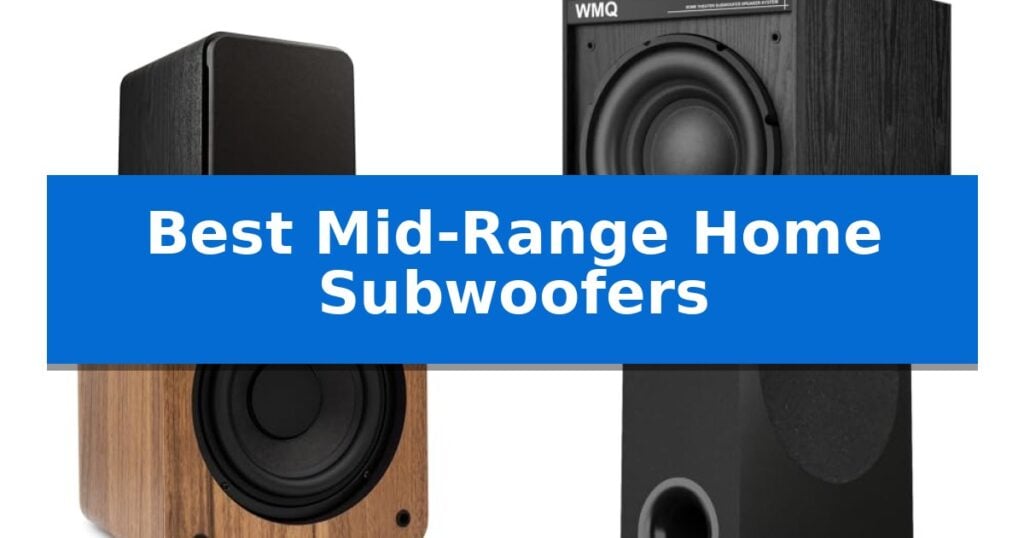
Best Mid-Range Home Subwoofers
Quick Comparison
| Product | Best For | Key Strength | Score |
|---|---|---|---|
| Polk Audio Signature Elite ES10 Subwoofer | Best Overall | 200W Class D amplifier for robust power delivery. | 4.9 |
| WMQ 12-Inch Active Home Theater Subwoofer | Powerful Output for Immersive Audio | 400W RMS Class A/B amplifier for clean and powerful output. | 4.5 |
| Audioengine S6 Mini Powered Subwoofer | Compact Pick for Desktop Setups | Compact 6-inch form factor fits easily on or under desks. | 4.6 |
| BESTISAN Basscore 80 Powered Subwoofer | Slim Profile for Tight Spaces | Slim 6.2-inch width fits easily into tight media consoles or under desks. | 4.3 |
| BESTISAN SW65D Powered Subwoofer | Budget Friendly Home Theater Upgrade | Compact footprint ideal for space-constrained rooms. | 4.3 |
How We Chose
- Driver size and enclosure design relative to room-filling capability.
- Amplifier power and efficiency for consistent low-frequency reproduction.
- Connectivity options including LFE, RCA, and high-level speaker inputs.
- Frequency response range and the availability of adjustable crossover controls.
- Physical dimensions and footprint for placement flexibility in shared living spaces.
1 Polk Audio Signature Elite ES10 Subwoofer — Deep Bass for Mid-Sized Rooms
The Polk Audio Signature Elite ES10 Powered Subwoofer is engineered to bring depth to medium-to-large home theater setups through a dedicated 200W Class D amplifier. This unit prioritizes acoustic precision by utilizing a 10-inch long-throw woofer paired with a mineral-filled polymer cone, designed to produce clean output across demanding audio tracks.
To manage low-frequency performance, the subwoofer incorporates Dual Power Ports that work to minimize turbulence, allowing for deep musical lows reaching down to 22 Hz without the distortion often associated with air noise. The cabinet itself is FEA-optimized with internal bracing, which serves to reduce unwanted resonances and coloration during playback.
Integration with existing audio systems is handled via Time-Smart Phase Control, offering 360-degree phase adjustment for seamless blending with main speakers. Additionally, an advanced 4th-order lowpass filter provides the necessary frequency control to ensure the subwoofer remains balanced within a larger multi-speaker configuration.
The design features a classic aesthetic with durable black vinyl and curved edges, intended to complement the broader Signature Elite series. Users can choose to use the unit with or without the included removable grilles, providing flexibility in both sound profile and visual presentation.
Best for: Home theater enthusiasts looking to add deep, clear bass to medium-to-large listening spaces.
Skip if: Users with very limited floor space or those requiring a wireless-only subwoofer connection.
PROS
- 200W Class D amplifier for robust power delivery.
- Dual Power Ports to minimize air noise and distortion.
- Time-Smart Phase Control for precise speaker integration.
- FEA-optimized internal bracing to reduce cabinet resonance.
CONS
- Large footprint may be challenging for compact living areas.
2 WMQ 12-Inch Active Home Theater Subwoofer — Powerful Output for Immersive Audio
Achieving deep, resonant low-frequency output in a home audio setup requires a dedicated driver capable of handling significant power. The WMQ 12-Inch Active Home Theater Subwoofer addresses this by pairing a 12-inch woofer with a high-rigidity paper composite diaphragm, engineered to produce tight and impactful bass response for movies, music, and gaming.
At the heart of this unit is a Class A/B amplifier providing 400W RMS power. This design choice focuses on delivering clean, powerful audio while minimizing distortion. The inclusion of a sturdy voice coil and flexible surround allows the driver to maintain control during high-excursion movements, ensuring layered bass details are preserved even at higher volumes.
Practicality in system integration is a primary design focus. The subwoofer includes a built-in output interface that enables wired dual-subwoofer pairing. By connecting the output port to a second active subwoofer, users can achieve a more even distribution of low frequencies across larger rooms, such as living areas or dedicated home theaters.
The enclosure is constructed from medium-density fiberboard (MDF), a material selected for its ability to minimize unwanted resonance that can color the sound. This sturdy build quality not only supports the internal components but also ensures the unit remains stable during intense playback, contributing to a reliable and immersive listening experience.
Best for: Users looking to enhance their home theater or music system with deep, powerful bass and the potential for dual-subwoofer expansion.
Skip if: Users with extremely limited floor space who require a compact or low-profile subwoofer that can fit into tight furniture gaps.
PROS
- 400W RMS Class A/B amplifier for clean and powerful output.
- Dual-subwoofer pairing capability via built-in output interface.
- High-rigidity 12-inch paper composite diaphragm for tight bass reproduction.
- Sturdy MDF enclosure designed to minimize resonance.
CONS
- Large physical footprint may be challenging for smaller rooms.
3 Audioengine S6 Mini Powered Subwoofer — Compact Pick for Desktop Setups
The Audioengine S6 Mini Powered Subwoofer is engineered for those who need deep, impactful low-end frequencies without sacrificing desk real estate. Measuring roughly 9 inches in every dimension, this compact 6-inch subwoofer utilizes a front-firing design to deliver 210 Watts of power, making it a capable addition to desktop, dorm, or apartment audio systems.
This unit functions as an active subwoofer, meaning it integrates seamlessly with existing home stereo speakers to provide a more complete frequency range. Its small footprint is specifically intended to fit into modern living areas or crowded home office setups where traditional, bulky subwoofers would be impractical.
For users who prefer a cleaner aesthetic or have limited cable management options, the system is compatible with the Audioengine W3 wireless adapter, allowing for flexible placement away from the primary audio source. The unit is finished in a walnut veneer, balancing its technical utility with a design that fits into various home decor styles.
While the Audioengine S6 Mini Powered Subwoofer provides significant bass enhancement for its size, it is important to consider the physical limitations of a 6-inch driver. It is designed primarily for near-field or small-room environments rather than large-scale home theater installations, ensuring that users can achieve balanced sound in smaller spaces.
Best for: Desktop users and apartment dwellers who need to add low-frequency depth to a compact audio setup without taking up significant floor space.
Skip if: Users looking to fill a large living room or home theater space, as the 6-inch driver is optimized for smaller, near-field environments.
PROS
- Compact 6-inch form factor fits easily on or under desks.
- 210 Watts of power provides substantial bass for its size.
- Wireless compatibility with the Audioengine W3 adapter for flexible placement.
- Front-firing design allows for versatile positioning in tight spaces.
CONS
- Limited driver size may not provide the deep room-filling resonance required for large home theaters.
4 BESTISAN Basscore 80 Powered Subwoofer — Slim Profile for Tight Spaces
Integrating a dedicated low-frequency driver into a compact media setup often requires balancing floor space with acoustic output. The BESTISAN Basscore 80 Powered Subwoofer addresses this constraint through an innovatively slimmer design, measuring just 6.2 inches in width, allowing it to fit into tight spaces like media consoles or under desks where traditional, boxier subwoofers would not.
At the heart of the system is an 8-inch side-firing woofer paired with a high-efficiency Class-D amplifier. This configuration provides 100W RMS (150W peak) of power, capable of reaching a 35Hz bass extension. The inclusion of an adjustable low-pass filter allows for precise integration with existing bookshelf speakers or soundbars, ensuring the subwoofer only handles the deep frequencies required for a balanced soundstage.
Connectivity is designed for versatility, featuring RCA, LFE, and high-level speaker inputs. This allows the BESTISAN Basscore 80 Powered Subwoofer to interface with a wide variety of receivers and audio sources. Additionally, the unit includes an automatic standby function that powers down the device after 15 minutes of inactivity, reducing energy consumption during periods of non-use.
The package includes a 1.5m stereo RCA cable and a right-angle DC power adapter, which simplifies installation against walls by eliminating bulky cable bends. This combination of a low-profile form factor and flexible input options makes it a practical choice for users looking to enhance their home theater or desktop audio without sacrificing significant room real estate.
Best for: Users with limited floor space who need a slim, versatile subwoofer to integrate with bookshelf speakers or a home theater receiver.
Skip if: Users requiring extreme low-frequency output for large, dedicated cinema rooms or those who prefer a traditional, larger-cabinet subwoofer design.
PROS
- Slim 6.2-inch width fits easily into tight media consoles or under desks.
- Versatile connectivity options including LFE, RCA, and high-level inputs.
- Energy-efficient Class-D amplification with automatic standby mode.
- Adjustable crossover allows for seamless integration with main speakers.
CONS
- Compact 8-inch driver may not provide the deep-room-filling impact of larger 10-inch or 12-inch models.
5 BESTISAN SW65D Powered Subwoofer — Budget Friendly Home Theater Upgrade
Achieving deep, immersive audio in a confined living space often requires a balance between physical footprint and low-frequency output. The BESTISAN SW65D Powered Subwoofer addresses this by utilizing a 6.5-inch side-firing woofer housed in a compact, bass-reflex cabinet, providing a frequency response of 35 Hz to 200 Hz without demanding significant floor space.
Engineered for precision, the unit features internal bracing designed to reduce cabinet resonance, ensuring the output remains tight rather than muddy. The sleek black oak finish allows the subwoofer to integrate into various home decor styles while serving as a dedicated low-end companion for music streaming, gaming, or cinematic audio enhancement.
Versatility is a core component of its design, offering universal connectivity through RCA, 3.5mm AUX, LFE, and high-level speaker inputs and outputs. This allows the subwoofer to pair effectively with a wide range of existing hardware, including AV receivers, soundbars, and bookshelf speakers, making it a flexible addition to diverse audio system configurations.
To maintain optimal performance, the manufacturer recommends pairing the device with equipment outputting a signal level of 850mV or less. While it functions as a standalone upgrade, the system is specifically optimized for seamless synergy when matched with other BESTISAN audio products, ensuring a balanced and high-fidelity soundstage.
Best for: Users seeking a compact, versatile subwoofer to add low-frequency depth to bookshelf speakers or soundbars in smaller home theater setups.
Skip if: Users requiring extreme, room-shaking bass output for very large home cinema environments may find the 6.5-inch driver size insufficient compared to larger, dedicated subwoofers.
PROS
- Compact footprint ideal for space-constrained rooms.
- Versatile connectivity including RCA, LFE, and high-level inputs.
- Internal bracing to minimize unwanted cabinet resonance.
- Bass-reflex design for enhanced low-frequency punch.
CONS
- Limited driver size compared to larger cinema-grade subwoofers.
- Signal sensitivity requires matching with devices outputting 850mV or less for best results.
Best Mid-Range Home Subwoofers Buying Guide
Understanding Subwoofer Driver Size
The size of the woofer cone is a primary indicator of how much air a subwoofer can move. A 6-inch or 8-inch driver is often sufficient for desktop setups or smaller bedrooms, providing tight, punchy bass without overwhelming the room. These smaller units are easier to tuck into corners or under desks.
For larger living rooms or dedicated home theater spaces, a 10-inch or 12-inch driver is typically required to reach the lowest frequencies effectively. Larger drivers can produce more substantial sound pressure levels, which is essential for creating the physical impact felt during movie explosions or deep musical passages.
Connectivity and System Integration
Before purchasing, verify how the subwoofer will interface with your existing equipment. Most modern receivers feature a dedicated LFE (Low-Frequency Effects) output, which simplifies setup significantly. This connection allows the receiver to manage the crossover, directing only the lowest frequencies to the subwoofer.
If you are using a stereo amplifier or a soundbar without a dedicated sub-out, look for models that offer high-level speaker inputs. These allow you to connect the subwoofer directly to your speaker terminals, ensuring the bass perfectly matches the timing and volume of your main speakers.
The Importance of Crossover Controls
An adjustable low-pass filter is a critical feature for achieving a seamless transition between your main speakers and the subwoofer. This control allows you to set the frequency at which the subwoofer begins to take over, preventing a 'gap' in the sound or an unnatural overlap that can make bass sound muddy.
Properly tuning the crossover ensures that your main speakers handle the mid-to-high frequencies while the subwoofer focuses exclusively on the deep lows. This division of labor reduces distortion and improves the overall clarity of your entire audio system.
Enclosure Design and Resonance
The cabinet construction plays a vital role in sound quality. A rigid, braced MDF enclosure is preferred because it minimizes cabinet vibration, which can introduce unwanted coloration or 'boxy' sounds into your audio. High-quality subwoofers are built to remain inert even when playing at high volumes.
Ported designs, which use an opening to vent air, generally provide more output at the lowest frequencies compared to sealed cabinets of the same size. However, they require careful placement to ensure that the airflow is not obstructed and that turbulence noise is kept to a minimum.
Placement for Optimal Performance
Where you place your subwoofer significantly impacts how it sounds in your room. Placing a subwoofer in a corner can reinforce bass output due to boundary loading, but it can also lead to boomy or uneven frequency response. Experimenting with different locations is often necessary to find the 'sweet spot'.
If you have limited space, look for slim or side-firing designs that offer more flexibility. These models are engineered to provide powerful output while maintaining a lower profile, allowing them to fit into media consoles or tight gaps between furniture without sacrificing performance.
Frequently Asked Questions
Do I need a 12-inch subwoofer for a small room?
Not necessarily. While a 12-inch driver moves more air, it may be overkill for a small bedroom or office. An 8-inch or 6-inch model often provides better-controlled, tighter bass in smaller acoustic environments.
What is the difference between LFE and RCA inputs?
LFE (Low-Frequency Effects) is a dedicated channel for subwoofers on AV receivers. RCA inputs are standard line-level connections that can be used with various audio sources, though they may require manual crossover adjustment.
Can I use a subwoofer with my existing soundbar?
Yes, provided your soundbar has a 'sub-out' or a dedicated port for an external subwoofer. Always check your soundbar's specifications to ensure compatibility with active subwoofers.
Why does my subwoofer have an auto-on/off feature?
This feature is designed for energy efficiency. It detects when an audio signal is present and wakes the subwoofer from standby mode, then powers it down after a period of inactivity to save electricity.
How do I prevent my subwoofer from vibrating the floor?
Using isolation pads or a dedicated subwoofer mat can help decouple the unit from the floor, reducing structural vibrations and preventing unwanted rattles in your room.
Conclusion: Our Top Pick
Choosing the right bass solution depends on your room's dimensions and your specific audio goals. For those seeking a balanced, powerful, and reliable addition to a mid-sized home theater, the Polk Audio Signature Elite ES10 Subwoofer stands out as the most versatile option. Its 200W Class D amplifier and dual-port design provide a clean, deep output that integrates well with various speaker systems.
While larger 12-inch models offer more raw power for massive spaces, the Polk unit excels in providing rich dynamics without the distortion often found in budget alternatives. Its robust cabinet construction and precise phase control make it a dependable choice for listeners who prioritize sound clarity and long-term performance in their home entertainment setup.