
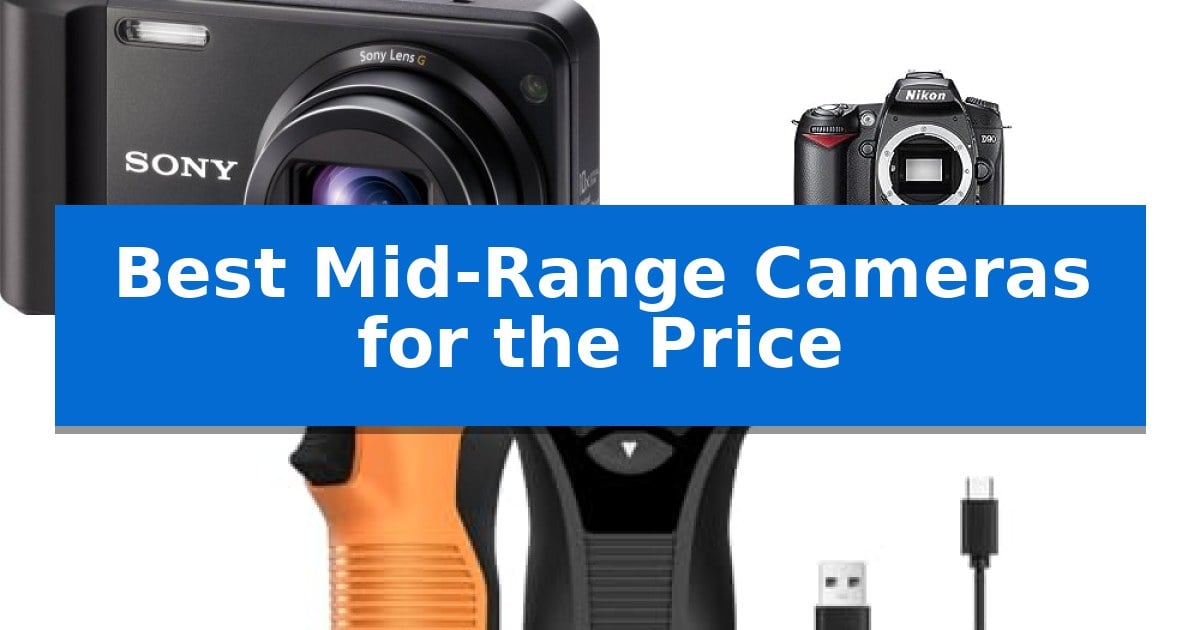
Finding the right imaging device requires balancing technical capability with your specific creative or professional goals. Whether you are capturing daily life, learning manual photography, or performing technical inspections, selecting the right equipment is essential for achieving consistent results.
Our guide explores the Best Mid-Range Cameras for the Price, focusing on distinct categories to help you identify which features—such as optical zoom, sensor type, or thermal sensitivity—align with your intended use case.
You may also want to compare Best Mid-Range Cameras for Photography, Best Mid-Range Cameras, and Best Mid-Range Camera Tripod.
Best Mid-Range Cameras for the Price
Quick Comparison
| Product | Best For | Key Strength | Score |
|---|---|---|---|
| Sony Cyber-Shot DSC-H70 Digital Camera | Best Overall | 10x optical zoom in a highly portable, compact body. | 4.9 |
| Nikon D90 DSLR Camera | Classic DSLR for Enthusiast Photographers | D-Movie Mode for cinematic 24fps HD video recording. | 4.4 |
| AccuMEMS GT14S Thermal Imaging Camera | Specialized Inspection for Pro Needs | 14-hour battery life for full-day inspection coverage. | 4.7 |
How We Chose
- Sensor and Lens Capability: Assessing the imaging hardware and optical zoom range for clarity and versatility.
- Operational Design: Evaluating the physical form factor, weight, and button layout for ease of use in the field.
- Specialized Functionality: Analyzing unique modes such as thermal imaging, HD movie recording, or manual control settings.
- Power and Reliability: Considering battery runtime and durability for long-duration tasks or daily shooting.
- Application Suitability: Matching the device's feature set to common scenarios like home inspection, enthusiast photography, or casual travel.
1 Sony Cyber-Shot DSC-H70 Digital Camera — Versatile Zoom for Everyday Shooting
The Sony Cyber-Shot DSC-H70 Digital Camera provides a versatile 10x optical zoom range within a compact frame, making it a practical choice for those who need reach without the bulk of a traditional DSLR. Its 25mm wide-angle lens allows for expansive landscape shots, while the integrated Optical SteadyShot image stabilization works to minimize blur caused by hand movement.
Designed for everyday convenience, this model includes a dedicated HD Movie mode capable of 720p recording. To ensure steady video capture, the device features Active Mode stabilization, which is engineered to compensate for handheld camera shake during filming. Users can also utilize the Sweep Panorama Mode to capture wide-field images by simply moving the camera in a sweeping motion.
The camera is built around a 16.1-megapixel sensor and features a 3.0-inch LCD screen for framing and reviewing shots. With physical dimensions of approximately 4.02 x 2.28 x 1.14 inches and a weight of 0.43 pounds, it is sized for portability, fitting easily into small bags or pockets for travel or casual outings.
While this camera offers a significant zoom range for its size, it is a point-and-shoot device intended for general photography. It lacks the manual control depth and interchangeable lens systems found in more advanced mirrorless or DSLR cameras, making it best suited for users who prioritize ease of use and portability over complex manual settings.
Best for: Travelers and casual photographers who need a compact camera with a versatile zoom range for everyday shooting.
Skip if: Users who require manual exposure controls, interchangeable lenses, or professional-grade sensor performance for specialized photography.
PROS
- 10x optical zoom in a highly portable, compact body.
- Optical SteadyShot image stabilization for clearer handheld photos.
- Active Mode stabilization specifically for smoother HD video recording.
- Sweep Panorama Mode for easy wide-angle image capture.
CONS
- Fixed lens design limits versatility compared to interchangeable lens systems.
- Compact sensor size may not match the low-light performance of larger, professional-grade cameras.
2 Nikon D90 DSLR Camera — Classic DSLR for Enthusiast Photographers
The Nikon D90 DX-Format CMOS DSLR Camera offers a dedicated D-Movie Mode, allowing for cinematic 24fps HD video capture with sound, bridging the gap between still photography and high-definition video in a single body. This feature set makes it a versatile tool for those who want to explore creative videography alongside traditional photography without needing separate equipment.
Built around a 12.3-megapixel DX-format CMOS imaging sensor, this camera is designed to deliver detailed imagery for enthusiast-level projects. The rear of the unit features a 3-inch super-density 920,000-dot color LCD monitor, which provides a clear interface for reviewing shots and navigating the camera's settings in various lighting conditions.
As a body-only model, the Nikon D90 provides the flexibility to pair the camera with specific lenses that match your preferred focal lengths and aperture requirements. It utilizes SD/SDHC memory cards for storage, ensuring compatibility with widely available media formats for managing high-resolution files.
This full-size DSLR is engineered for photographers who prioritize manual control and a robust form factor. Its design balances physical handling with the technical demands of modern digital imaging, making it a reliable choice for those building a photography kit from the ground up.
Best for: Enthusiast photographers seeking a versatile, full-size DSLR that combines high-resolution still photography with cinematic HD video capabilities.
Skip if: Users who require an all-in-one kit with included lenses or those looking for a lightweight, compact mirrorless system for travel.
PROS
- D-Movie Mode for cinematic 24fps HD video recording.
- High-resolution 3-inch 920,000-dot LCD monitor for precise image review.
- 12.3-megapixel DX-format CMOS sensor for detailed image capture.
- Compatible with standard SD/SDHC memory cards.
CONS
- Body only configuration requires separate lens investment.
- Full-size DSLR form factor is heavier than modern compact alternatives.
3 AccuMEMS GT14S Thermal Imaging Camera — Specialized Inspection for Pro Needs
Precision thermal monitoring requires equipment that balances sensitivity with portability, and the AccuMEMS GT14S Thermal Imaging Camera addresses this by integrating a high-sensitivity sensor capable of detecting temperature differences as small as 0.05°C. Designed for professionals who need to move between job sites, this device weighs only 240g and features a balanced, non-slip grip for extended use.
The AccuMEMS GT14S Thermal Imaging Camera provides a versatile -4°F to 1202°F measurement range, making it suitable for a variety of HVAC and home inspection tasks. Its dual-mode inspection capability allows users to switch between full-screen thermal imaging for dynamic monitoring and a dedicated thermometer mode for precise point-and-shoot digital temperature readings.
Efficiency in the field is supported by a 50° wide field of view, which enables rapid scanning of large surfaces. Users can customize their workflow using adjustable emissivity and distance settings, while the inclusion of custom high/low temperature alarms ensures immediate notification when thermal anomalies are detected during an inspection.
Reliability during long shifts is managed by a 2500mAh rechargeable battery that delivers up to 14 hours of continuous operation. The interface is designed for intuitive navigation, featuring seven selectable color palettes and level and span adjustment functions to help isolate localized thermal issues quickly.
Best for: HVAC technicians and home inspectors who require a lightweight, long-battery-life thermal imager for dynamic, multi-scenario temperature monitoring.
Skip if: Users who require specialized high-resolution thermal analysis beyond the capabilities of a standard professional inspection imager may need a more advanced, higher-tier diagnostic system.
PROS
- 14-hour battery life for full-day inspection coverage.
- High-sensitivity sensor with NETD < 50mK for detecting subtle temperature variations.
- Compact 240g design with a non-slip, balanced grip for mobile use.
- Dual-mode functionality combining thermal imaging and point-and-shoot thermometer modes.
CONS
- Fixed 50° field of view may limit detail on extremely distant or small-scale targets.
- Manual emissivity adjustments require user knowledge to ensure accurate readings across different materials.
Best Mid-Range Cameras for the Price Buying Guide
Understanding Sensor Types
The sensor is the heart of any camera, determining how light is captured and converted into an image. Mid-range cameras often feature either compact sensors for portability or larger DX-format sensors that offer greater depth of field control and better low-light performance.
Choosing between these depends on your priority: a compact sensor often allows for a more versatile, integrated zoom lens, while a larger sensor typically requires interchangeable lenses to achieve the same flexibility.
The Importance of Optical Zoom
Optical zoom is a critical feature for photographers who cannot physically move closer to their subject. Unlike digital zoom, which crops the image and reduces quality, optical zoom uses the lens elements to magnify the scene without losing detail.
For everyday shooting and travel, a camera with a wide-angle lens and a significant optical zoom range provides the most flexibility, allowing you to capture both expansive landscapes and distant details.
Video Capabilities and Stabilization
Modern cameras are rarely used for still images alone. Features like HD movie mode and active stabilization are vital for handheld recording, ensuring that your footage remains smooth even when you are on the move.
Look for cameras that offer dedicated video modes and stabilization technology, as these features significantly reduce the need for external equipment like tripods or gimbals.
Thermal Imaging for Technical Tasks
Thermal imaging cameras serve a different purpose than traditional photography, focusing on detecting temperature variations rather than visible light. These devices are essential for HVAC and home inspections, where identifying heat loss or electrical anomalies is the primary goal.
Key specifications to watch for include the temperature measurement range, sensor sensitivity (NETD), and the availability of different color palettes to help visualize subtle thermal differences.
Ergonomics and Build Quality
The physical design of a camera impacts how long you can use it comfortably. A balanced, handheld design with a non-slip grip is particularly important for specialized cameras used in long-duration inspections.
Consider the weight and button placement of the device. A well-designed interface allows for quick adjustments to settings like exposure or color palettes without needing to navigate complex menus during critical tasks.
Frequently Asked Questions
What is the main difference between a DSLR and a compact camera?
A DSLR typically features a larger sensor and interchangeable lenses, offering more control over manual settings and image quality. A compact camera is designed for portability and often includes a fixed, versatile zoom lens.
Can a thermal camera be used for standard photography?
No, thermal cameras are specialized tools designed to detect infrared radiation and display temperature data. They are intended for inspections and technical analysis rather than artistic or portrait photography.
Why is optical zoom better than digital zoom?
Optical zoom uses physical lens movement to magnify the image, maintaining full resolution and clarity. Digital zoom simply crops and enlarges the existing image, which results in a loss of detail and increased pixelation.
What does NETD mean in thermal imaging?
NETD stands for Noise Equivalent Temperature Difference. It measures the sensitivity of a thermal sensor; a lower value means the camera can detect smaller, more subtle temperature differences.
Do I need a separate lens for a DSLR body?
Yes, if you purchase a DSLR 'body only,' it does not include a lens. You will need to purchase a compatible lens separately to capture images.
Conclusion: Our Top Pick
When selecting from the Best Mid-Range Cameras for the Price, the Sony Cyber-Shot DSC-H70 Digital Camera stands out as a highly versatile choice for everyday photography. Its combination of a 10x optical zoom, wide-angle lens, and built-in image stabilization makes it an excellent all-in-one solution for users who want to capture high-quality images and HD video without the complexity of changing lenses.
While the Nikon D90 offers a more traditional enthusiast experience and the AccuMEMS GT14S provides essential thermal inspection capabilities, the Sony model remains the most accessible and flexible option for general daily use. Its compact body and reliable feature set ensure that you are ready for a variety of shooting scenarios without the need for extra gear.