
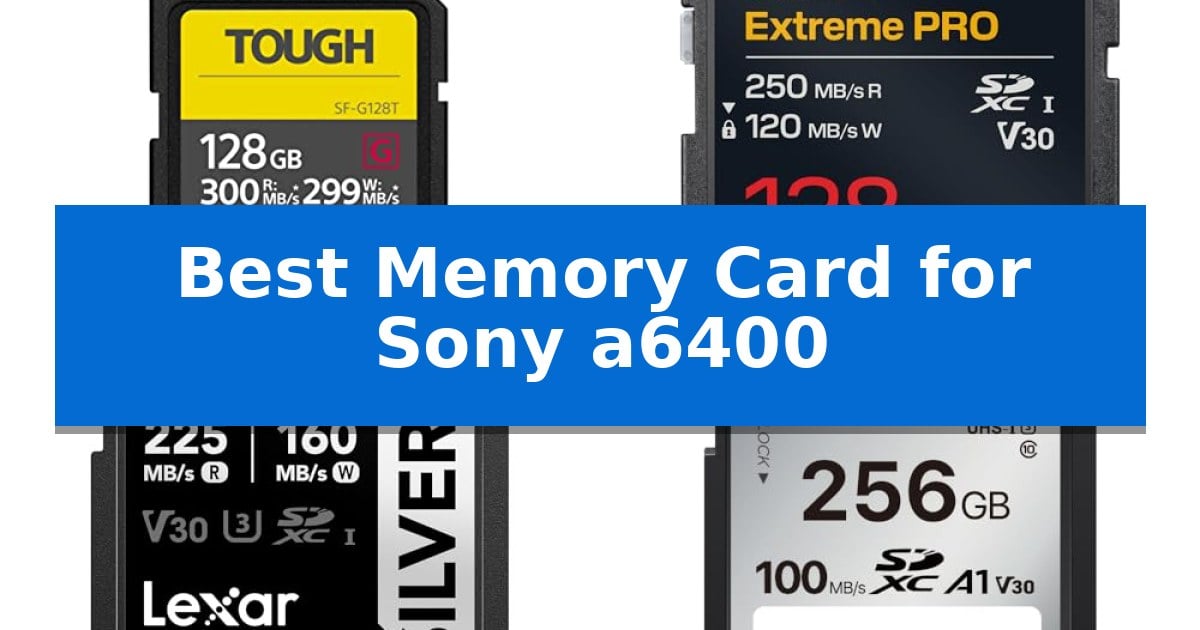
Choosing the right storage media is essential for maintaining the performance of your mirrorless camera. When you are capturing high-bitrate 4K video or utilizing continuous burst modes, your camera requires a card that can keep up with its internal buffer and write speeds. Finding the Best Memory Card for Sony a6400 involves balancing your specific shooting requirements with the camera's interface capabilities to avoid dropped frames or unexpected write errors.
Whether you are a professional videographer needing maximum reliability or a hobbyist looking for a cost-effective way to expand your storage, the following options provide distinct advantages. We have evaluated these cards based on their speed ratings, durability, and compatibility with the Sony a6400 to help you make an informed decision for your next project.
You may also want to compare Best Memory Card for Sony a6300, Best Memory Card for Sony a5000, and Best Memory Card for Sony a350.
Best Memory Card for Sony a6400
Quick Comparison
| Product | Best For | Key Strength | Score |
|---|---|---|---|
| Sony TOUGH-G Series SDXC Card | Best Overall | One-piece molded construction provides exceptional bend strength. | 4.9 |
| SanDisk Extreme PRO SD Card | Reliable Choice for 4K Video | U3 and V30 speed class ratings for 4K UHD video recording. | 4.3 |
| Lexar Silver SD Memory Card | Fast Transfers for Professional Workflows | V30 rating supports stable 4K 60FPS video recording. | 4.5 |
| Gigastone 4K Camera Pro SD Card | High Capacity for Extended Recording | Generous 256GB capacity for long-form recording. | 4.4 |
| SanDisk Ultra SDXC Memory Card | Budget Pick for Casual Photography | 128GB high-capacity storage for extensive media files. | 4.5 |
How We Chose
- Write Speed Consistency: Ensuring the card maintains the sustained speeds required for 4K video recording without buffer bottlenecks.
- Interface Compatibility: Verifying support for UHS-I and UHS-II standards to ensure the card functions correctly within the camera's slot.
- Physical Durability: Assessing build quality, including resistance to water, dust, and temperature extremes for reliable outdoor performance.
- Capacity and Value: Balancing total storage space against the cost per gigabyte for different user needs.
- Data Reliability: Considering manufacturer warranties and features like included recovery software for long-term peace of mind.
1 Sony TOUGH-G Series SDXC Card — Maximum Durability for Burst Shooting
Reliability during high-speed photography often hinges on the physical integrity of your storage media, and the Sony TOUGH-G Series SDXC Card addresses this with a unique one-piece molded construction. By utilizing high-hardness materials, this design achieves a bend strength 18 times greater than the standard SD specification, providing a robust solution for photographers who frequently swap cards in demanding field conditions.
Beyond its physical resilience, this card is engineered for high-performance workflows. It supports UHS-II, Class 10, and U3 compliance, enabling transfer speeds up to 300 MB/s and write speeds up to 299 MB/s. These specifications make it a capable choice for 4K video recording and continuous burst mode shooting, ensuring that your camera's buffer clears efficiently during intense action sequences.
The Sony TOUGH-G Series SDXC Card also features a ribless, no-write-protection-switch design. By removing these traditionally fragile components, the card minimizes potential failure points. Furthermore, it is rated IPX8 waterproof and IP6X dustproof, allowing it to operate reliably in temperatures ranging from -13°F to +185°F.
While the card is optimized for UHS-II compatible equipment, it remains backward compatible with UHS-I devices. When used in older hardware, users can expect reliable, albeit slower, performance, making it a versatile storage option that can transition with you as you upgrade your camera gear over time.
Best for: Photographers and videographers who require extreme physical durability and high-speed write performance for 4K recording and burst shooting.
Skip if: Casual users who do not require high-speed UHS-II performance or extreme environmental protection may find more cost-effective standard SD cards sufficient for their needs.
PROS
- One-piece molded construction provides exceptional bend strength.
- High-speed performance with up to 299 MB/s write speeds for 4K video.
- IPX8 and IP6X ratings ensure high-level water and dust resistance.
- Ribless design removes fragile parts for increased longevity.
CONS
- Premium pricing compared to standard UHS-I memory cards.
- No physical write-protection switch may be a drawback for users accustomed to that feature.
2 SanDisk Extreme PRO SD Card — Reliable Choice for 4K Video
Capturing high-resolution stills and 4K UHD video on a Sony a6400 requires a storage medium that balances speed with reliability. The SanDisk 128GB Extreme PRO SD UHS-I Card is engineered to handle these demanding tasks, offering video speed class ratings of U3 and V30 to ensure consistent performance during high-bitrate recording.
This card is built for efficiency, featuring read speeds up to 250MB/s and write speeds up to 170MB/s (for capacities 256GB and above). These specifications help minimize downtime when transferring large files from the card to a desktop or laptop, especially when utilizing the SanDisk Memory Zone desktop app for organized content management.
Durability is a core design focus, as the card is built to defy the elements and perform under extreme conditions. Whether you are shooting in challenging environments or handling the card frequently, its resilient construction is designed to protect your data during constant use.
With a capacity of 128GB, this card provides ample space for extended shooting sessions. It is capable of storing up to 2,808 minutes of 4K UHD video at 30 fps, making it a practical choice for creators who need to minimize card swaps while in the field.
Best for: Photographers and videographers using the Sony a6400 who require reliable, high-speed storage for 4K video and high-resolution burst photography.
Skip if: Users who require UHS-II speeds for specialized high-speed continuous shooting or those who need a different form factor than standard SD.
PROS
- U3 and V30 speed class ratings for 4K UHD video recording.
- High-speed data transfer with read speeds up to 250MB/s.
- Resilient design engineered for extreme conditions.
- Lifetime Limited warranty for long-term peace of mind.
CONS
- UHS-I interface may not match the maximum potential of UHS-II compatible devices.
3 Lexar Silver SD Memory Card — Fast Transfers for Professional Workflows
Capturing high-resolution footage and rapid-fire bursts with the Sony a6400 requires a storage medium that keeps pace with the camera's internal processing. The Lexar 256GB Silver SD Memory Card is engineered to support demanding workflows, offering a 225MB/s max read speed that significantly reduces the time spent transferring large files to your workstation.
Reliability during field use is a core design focus for this card. It is built to withstand harsh environments, featuring wearproof, drop-proof, temperature-proof, x-ray-proof, shockproof, magnetic-proof, and vibration-resistant construction. This durability ensures that your captured media remains protected across a wide range of shooting conditions.
For videographers, the card is rated V30, which guarantees the sustained performance necessary for recording 4K 60FPS video. This rating ensures smooth, high-quality capture without the dropped frames that can occur with slower media, making it a dependable choice for both professional and enthusiast video projects.
With a 160MB/s max write speed, the card provides the necessary overhead to clear the camera's buffer quickly during continuous shooting. This performance profile helps maintain the responsiveness of the Sony a6400, ensuring you are ready to capture the next shot without unnecessary delays.
Best for: Photographers and videographers who require reliable, high-speed storage for 4K video recording and rapid continuous shooting.
Skip if: Users who do not require high-capacity storage or 4K video capabilities may find a lower-capacity or lower-speed card sufficient for their needs.
PROS
- V30 rating supports stable 4K 60FPS video recording.
- 225MB/s read speed accelerates file transfer times.
- Comprehensive durability features protect against environmental hazards.
- 160MB/s write speed ensures readiness for high-speed burst photography.
CONS
- High-capacity 256GB storage may exceed the requirements of casual photographers.
4 Gigastone 4K Camera Pro SD Card — High Capacity for Extended Recording
Capturing high-resolution footage requires reliable storage that keeps pace with your camera's demands. The Gigastone 4K Camera Pro SD Card provides a 256GB capacity, making it a practical choice for photographers and videographers who need extended recording time without frequent card swaps. This high-capacity storage ensures you have enough room for long-form 4K video sessions or extensive high-resolution image bursts, allowing you to focus on your composition rather than managing remaining space.
Engineered for versatility, this card supports 4K Ultra HD video recording, ensuring compatibility with modern digital cameras, HD camcorders, and DSLRs. With data transfer speeds reaching up to 170 MB/s, it facilitates efficient file management when moving large video files or high-resolution image bursts to a PC. This speed is particularly beneficial for professionals who need to offload large volumes of data quickly to maintain a productive workflow.
Durability is a core design focus for this storage medium. The card is built to be waterproof, temperature-proof, x-ray-proof, shock-proof, and magnetic-proof, providing peace of mind when shooting in varied environmental conditions. Whether you are working in extreme temperatures or traveling through security checkpoints, these protective features help safeguard your data. It also includes a mini case for secure transport, ensuring the card remains protected when not in use.
To support long-term usage, the product includes a 5-year limited warranty and access to free data recovery services. This combination of robust physical protection and manufacturer support makes it a dependable component for your photography workflow. While it is a UHS-I interface card, it offers a balance of capacity and reliability for users whose primary focus is high-resolution video and photography in diverse environments.
Best for: Photographers and videographers who require high-capacity storage for extended 4K video recording sessions.
Skip if: Users who require specialized high-speed cards for professional-grade cinema cameras with extreme bitrate requirements may find this UHS-I card insufficient.
PROS
- Generous 256GB capacity for long-form recording.
- Comprehensive environmental protection including shock and water resistance.
- Includes a 5-year limited warranty for added peace of mind.
- Fast 170 MB/s transfer speeds for efficient data offloading.
CONS
- Limited to UHS-I interface speeds which may not match the performance of UHS-II cards in high-end burst photography.
5 SanDisk Ultra SDXC Memory Card — Budget Pick for Casual Photography
Capturing high-resolution stills and Full HD video on a Sony a6400 requires reliable storage that balances capacity with consistent write performance. The SanDisk 128GB Ultra SDXC UHS-I Memory Card is engineered to support these demands, offering a substantial 128GB of space to store extensive photo libraries without frequent card swaps.
This card features UHS Speed Class 1 (U1) and Class 10 ratings, which are specifically designed to handle the data throughput necessary for stable Full HD (1080p) video recording. By meeting these standards, the card ensures that your camera can maintain the necessary write speeds for real-time video capture, preventing dropped frames during recording sessions.
For photographers who frequently move files between devices, the card utilizes proprietary technology to achieve read speeds up to 140MB/s. This performance level exceeds standard UHS-I 104MB/s limits, provided the host device and interface are compatible, significantly reducing the time spent transferring large batches of images to a computer or external storage.
Built for versatility, the SanDisk 128GB Ultra SDXC UHS-I Memory Card serves as a dependable companion for compact to mid-range point-and-shoot cameras. It includes a 10-year limited manufacturer warranty, providing long-term assurance for your digital assets. For optimal management, the card is fully compatible with SanDisk SD UHS-I card readers.
Best for: Casual photographers and videographers who need reliable, high-capacity storage for Full HD video and everyday still photography.
Skip if: Professional users requiring 4K video recording at high bitrates or burst-shooting speeds that exceed UHS-I interface limitations.
PROS
- 128GB high-capacity storage for extensive media files.
- UHS Speed Class 1 (U1) and Class 10 rating for stable Full HD video.
- Up to 140MB/s read speeds for efficient file transfers.
- 10-year limited manufacturer warranty for long-term peace of mind.
CONS
- UHS-I interface may limit performance in high-end 4K recording scenarios.
Best Memory Card for Sony a6400 Buying Guide
Understanding Speed Classes
Memory cards are categorized by speed classes, such as V30 or U3, which indicate their minimum sustained write performance. For the Sony a6400, a V30 rated card is generally the baseline requirement for recording high-quality 4K video. Cards that meet these standards ensure that the camera does not stop recording prematurely due to a slow write speed.
While higher speed classes like V90 offer faster transfer rates, they are primarily beneficial for offloading large files to your computer quickly. Always check the Video Speed Class rating on the card label to ensure it meets the specific bitrate requirements of your camera's video settings.
UHS-I vs. UHS-II Interfaces
The Sony a6400 utilizes a UHS-I interface for its SD card slot. This means that while you can use a faster UHS-II card, the camera will operate it at UHS-I speeds. Investing in a UHS-II card can still be a smart choice if you frequently transfer massive amounts of data to a computer using a compatible high-speed card reader.
If your primary goal is camera performance, a high-quality UHS-I card will often provide the same in-camera experience as a more expensive UHS-II option. Focus on the card's write speed rating rather than the interface generation if you do not have a high-speed workflow for file transfers.
Durability and Environmental Protection
Photography often takes you into unpredictable environments, from humid forests to dusty deserts. Look for cards that feature waterproof, dustproof, and temperature-proof designs. These features protect your data from physical damage caused by moisture, static, or extreme heat.
Some premium cards feature one-piece molded construction, which significantly increases bend strength compared to standard SD cards. This is particularly useful if you frequently swap cards in the field, as it reduces the risk of the casing cracking or the write-protection switch breaking off.
Capacity Requirements
Your storage needs depend heavily on whether you shoot primarily stills or video. High-resolution RAW files take up significant space, but 4K video is the true consumer of storage. A 128GB or 256GB card is usually the sweet spot for most users, offering enough room for a full day of shooting without the need to constantly swap media.
Remember that actual usable storage is slightly less than the advertised capacity due to file system overhead. If you are planning an extended trip or a long-form video project, carrying multiple smaller cards can be a safer strategy than relying on a single high-capacity card, as it mitigates the risk of losing all your data if a card fails.
Data Recovery and Warranty
Even the most reliable cards can occasionally face data corruption. Many manufacturers include free data recovery software or offer extended warranties that provide peace of mind. Checking the warranty period—often ranging from five years to a lifetime—can be a strong indicator of the manufacturer's confidence in the product's longevity.
Always register your product if the manufacturer provides that option. Having a reliable backup plan, including regular file transfers to a secure hard drive, is the best way to ensure your images and videos remain safe, regardless of the memory card you choose.
Frequently Asked Questions
Can I use a UHS-II card in my Sony a6400?
Yes, the Sony a6400 is backward compatible with UHS-II cards. However, the camera will operate the card at UHS-I speeds, so you will not see the maximum potential speed of the card while it is inside the camera.
What is the minimum speed class for 4K video on the a6400?
You should use at least a V30 or U3 rated card. These ratings ensure the card can sustain the write speeds necessary to record 4K video without dropping frames.
Is a 256GB card too large for the Sony a6400?
No, the Sony a6400 supports high-capacity SDXC cards. A 256GB card is excellent for long recording sessions, though many photographers prefer using two 128GB cards to spread out the risk of data loss.
Why did my camera stop recording video suddenly?
This is often caused by a memory card that cannot keep up with the camera's write speed requirements. Ensure your card is rated at least V30 and is not nearing its full capacity, as performance can sometimes degrade when a card is nearly full.
Do I need a special card reader for faster transfers?
If you purchase a UHS-II card, you will need a UHS-II compatible card reader to take advantage of the faster read speeds when transferring files to your computer.
Conclusion: Our Top Pick
For those seeking the most robust and reliable option, the Sony TOUGH-G Series SDXC Card stands out due to its unique one-piece molded construction and high bend strength. It is designed to withstand the rigors of professional field use while providing the fast write speeds necessary for demanding burst shooting and 4K video recording.
While it represents a higher investment, the durability and performance it offers make it a dependable choice for your Sony a6400. If your workflow involves frequent file transfers, the high read speeds of this card will also save you significant time during post-production.