
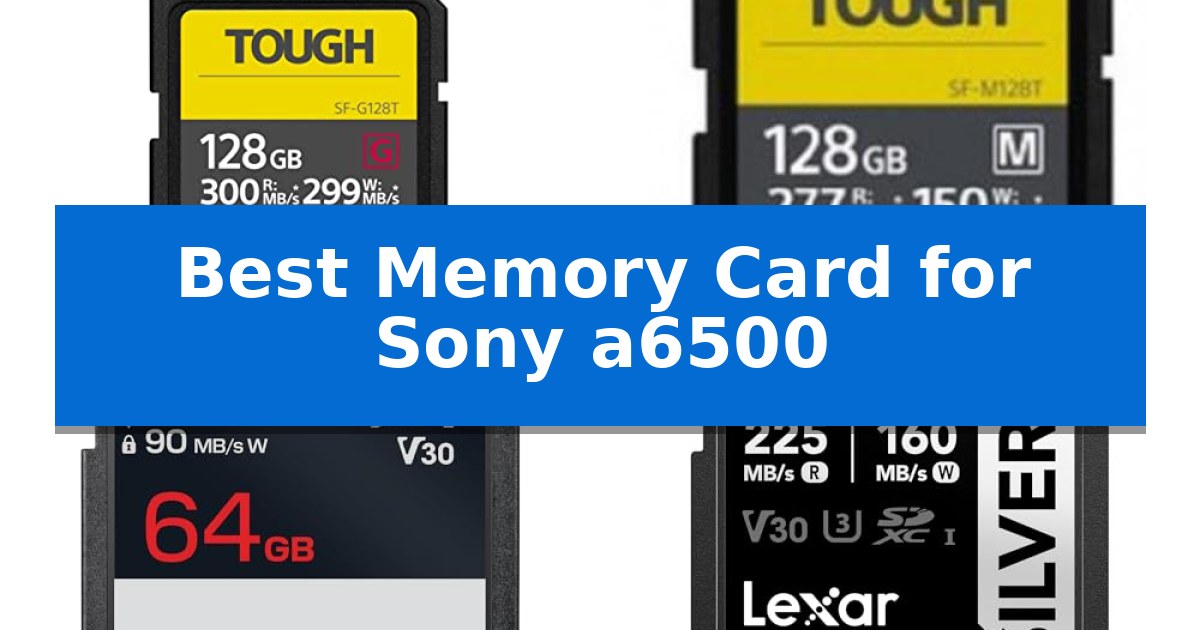
Capturing high-resolution stills and smooth 4K video with your camera requires a storage medium that can keep up with the data throughput demands of your sensor. Finding the Best Memory Card for Sony a6500 means balancing write speeds, capacity, and physical resilience to ensure your footage is saved securely without dropped frames or corruption.
Whether you are shooting fast-paced action or detailed landscapes, the right card acts as the bridge between your lens and your post-production workflow. We have evaluated several leading SDXC options to help you determine which card provides the necessary performance for your specific shooting style and environment.
You may also want to compare Best Memory Card for Sony a6400, Best Memory Card for Sony a6300, and Best Memory Card for Sony a5000.
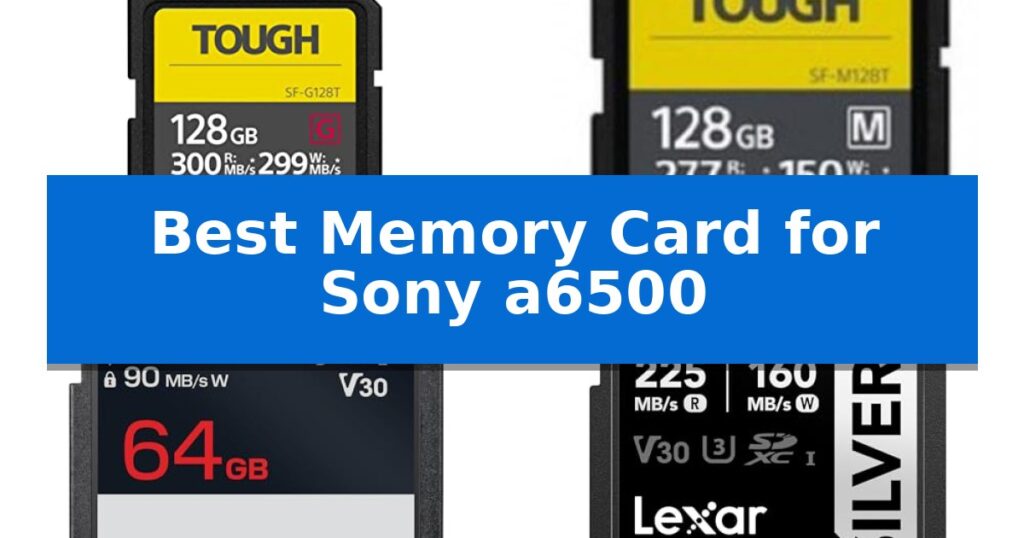
Best Memory Card for Sony a6500
Quick Comparison
| Product | Best For | Key Strength | Score |
|---|---|---|---|
| Sony TOUGH-G SDXC UHS-II Card | Best Overall | One-piece molded construction provides superior bend strength. | 4.9 |
| Sony TOUGH-M SDXC UHS-II Card | Reliable High-Speed Burst Shooting | 18x stronger than standard cards for enhanced physical durability | 4.4 |
| SanDisk Extreme PRO SD Card | Fast Transfers for 4K Workflow | V30 and U3 speed class ratings for stable 4K UHD video recording. | 4.6 |
| Lexar Silver SD Memory Card | High-Performance 4K Video Capture | V30 speed class ensures stable 4K 60FPS video recording. | 4.8 |
| Gigastone SDXC Memory Card | Budget-Friendly 4K Video Support | 4K UHD video compatibility ensures reliable recording for high-resolution projects. | 4.5 |
How We Chose
- Bus Interface and Speed Class: We prioritized cards with UHS-II or UHS-I ratings that meet the U3 and V30/V90 requirements for consistent 4K video recording.
- Write Speed Consistency: We examined the manufacturer-rated write speeds to ensure the card can handle the camera's continuous burst mode without buffer bottlenecks.
- Physical Durability: We assessed build materials and environmental protections, such as water and dust resistance, which are critical for field photography.
- Compatibility: We verified that each card supports the SDXC standard to ensure seamless integration with the camera's card slot.
- Capacity and Workflow: We considered storage sizes that provide enough overhead for high-bitrate video files and long-duration shooting sessions.
1 Sony TOUGH-G SDXC UHS-II Card — Maximum Durability for Pro Shooters
Reliability in the field often hinges on the physical integrity of your storage media, and the Sony TOUGH-G series SDXC UHS-II Card 128GB is engineered to address common failure points. Featuring the world's first one-piece molded construction, this card achieves a bend strength 18 times greater than the standard SD specification, providing a robust foundation for high-stakes photography.
Beyond physical durability, the card is designed for demanding workflows. It features a ribless, no-write-protection-switch design that removes fragile components prone to breaking. This structural choice ensures the card remains intact even when frequently inserted and removed from your camera.
Performance is driven by UHS-II, Class 10, and U3 compliance, supporting fast file transfers with up to 300 MB/s read and 299 MB/s write speeds. These specifications make it an effective choice for 4K video recording and continuous burst mode shooting, where consistent data throughput is essential for capturing action without interruption.
Environmental resilience is another core component, with an IPX8 waterproof and IP6x dustproof rating. The monolithic structure is sealed to withstand harsh conditions, operating reliably in temperatures ranging from -13℉ to +185℉. While optimized for UHS-II cameras, it remains backward compatible with UHS-I equipment, ensuring versatility across your existing gear.
Best for: Professional photographers and videographers requiring extreme physical durability and high-speed write performance for 4K recording and burst shooting.
Skip if: Users who do not require high-speed UHS-II performance or extreme environmental protection may find more cost-effective options for standard photography needs.
PROS
- One-piece molded construction provides superior bend strength.
- Ribless design eliminates fragile, easy-to-break parts.
- High-speed performance supports 4K recording and continuous burst mode.
- IPX8 and IP6x ratings ensure protection against water and dust.
CONS
- Lack of a physical write-protection switch may be a disadvantage for users who prefer manual control over data security.
- Premium pricing reflects the specialized construction and high-speed capabilities.
2 Sony TOUGH-M SDXC UHS-II Card — Reliable High-Speed Burst Shooting
Reliable high-speed performance is essential when capturing action or high-resolution imagery with your camera. The Sony TOUGH-M series SDXC UHS-II Card 128GB is engineered to withstand demanding environments while maintaining the data throughput necessary for 4K video recording and rapid burst photography.
Built with a specialized toughness design, this card is rated to be 18x stronger than standard UHS-II cards, providing peace of mind for photographers working in unpredictable outdoor conditions. Its physical resilience is complemented by an IPX8 waterproof and IP66 dustproof rating, ensuring your captured media remains protected against the elements.
In terms of technical capability, the card supports read speeds of up to 277MB/s and write speeds of up to 150MB/s. These specifications allow for efficient file transfers to your computer and ensure the card can keep pace with the data-intensive requirements of modern high-definition video formats.
The Sony TOUGH-M series SDXC UHS-II Card 128GB is backed by a five-year limited warranty, reflecting the manufacturer's confidence in its durability. With a generous 128GB capacity, it offers ample space for extensive shooting sessions without the frequent need to swap media, making it a practical choice for consistent field use.
Best for: Photographers and videographers who require high-speed data transfer and physical durability for outdoor or rugged shooting environments.
Skip if: Users who do not require high-speed UHS-II performance or the extreme physical durability of the Tough series may find more cost-effective options with standard SD cards.
PROS
- 18x stronger than standard cards for enhanced physical durability
- IPX8 waterproof and IP66 dustproof ratings
- Supports 4K video recording with high-speed throughput
- Five-year limited warranty for long-term support
CONS
- Higher price point compared to standard UHS-II or UHS-I memory cards
3 SanDisk Extreme PRO SD Card — Fast Transfers for 4K Workflow
Capturing high-resolution stills and 4K UHD video on your Sony a6500 requires a storage medium that keeps pace with the camera's internal processing. The SanDisk 64GB Extreme PRO SD Memory Card is engineered to handle these demanding tasks, utilizing UHS-I, U3, and V30 video speed class ratings to ensure consistent performance during high-bitrate recording.
Beyond its video capabilities, this card offers read speeds up to 200MB/s, which significantly reduces the time required to transfer large files to your computer. The integration with the SanDisk Memory Zone desktop app provides a streamlined way to organize and back up your content, whether you are utilizing an integrated SD card slot or an external card reader.
Durability is a core component of the design, as the card is built to remain resilient in extreme conditions. This focus on reliability ensures that your data remains protected even when shooting in challenging environments or under the stress of frequent, heavy use.
With a 64GB capacity, this card provides sufficient space for extended shooting sessions without the constant need to swap media. It represents a balanced solution for photographers and videographers who prioritize both speed and data integrity for their professional or hobbyist workflows.
Best for: Photographers and videographers using the Sony a6500 who require reliable V30-rated storage for 4K UHD video and high-resolution stills.
Skip if: Users who require higher-capacity storage for multi-day shoots or those whose specific workflow demands UHS-II or UHS-III interface speeds.
PROS
- V30 and U3 speed class ratings for stable 4K UHD video recording.
- Resilient design engineered to perform in extreme conditions.
- Fast 200MB/s read speeds for efficient file transfers.
- Lifetime Limited warranty for long-term peace of mind.
CONS
- 64GB capacity may be limiting for long-duration 4K video projects.
- UHS-I interface does not support the maximum theoretical speeds of newer UHS-II compatible hardware.
4 Lexar Silver SD Memory Card — High-Performance 4K Video Capture
Capturing high-resolution footage with the Sony a6500 requires a storage medium capable of handling sustained data throughput without interruption. The Lexar 256GB Silver SD Memory Card provides a reliable solution for this camera, featuring a V30 speed class rating that supports consistent 4K 60FPS video recording. This ensures that videographers can record high-quality footage without dropped frames or unexpected write errors during critical shoots.
Beyond its video capabilities, this card is engineered for efficient workflow management. With a max read speed of 225MB/s, it significantly reduces the time required to transfer large files to a computer, while the 160MB/s max write speed ensures the camera remains responsive during burst shooting sequences. These speeds allow professionals to offload data quickly, minimizing downtime between sessions.
Designed for photographers and videographers who work in diverse environments, the card is built for high durability. It is wearproof, drop-proof, temperature-proof, x-ray-proof, shockproof, magnetic-proof, and vibration-resistant, providing a layer of physical protection for stored media against common field hazards. This robust construction makes it a dependable choice for outdoor or travel-based photography.
This UHS-I card offers broad compatibility across various camera systems, making it a versatile choice for those managing multiple devices. It is backed by a Lifetime Limited Warranty, reflecting its intended use as a long-term storage component for professional and enthusiast setups. By choosing this card, users gain a balance of high-capacity storage and reliable performance suitable for the demands of the Sony a6500.
Best for: Photographers and videographers using the Sony a6500 who require reliable 4K video recording and fast file transfer speeds.
Skip if: Users who require the extreme write speeds of UHS-II or CFexpress cards for high-speed continuous RAW shooting or higher bitrate video formats.
PROS
- V30 speed class ensures stable 4K 60FPS video recording.
- 225MB/s read speed expedites data offloading to workstations.
- Comprehensive durability features protect data from drops, shocks, and temperature extremes.
- Lifetime Limited Warranty provides long-term support.
CONS
- UHS-I interface may limit performance in cameras requiring UHS-II or faster protocols.
5 Gigastone SDXC Memory Card — Budget-Friendly 4K Video Support
The Gigastone SDXC Memory Card provides a reliable storage solution for the Sony a6500, specifically catering to users who require 4K Ultra HD video recording capabilities. This full-sized SD card, measuring 32mm by 24mm, is engineered to handle high-resolution data demands while offering broad environmental protection.
Designed with UHS-I, U3, and V30 speed classes, this card is built to maintain the consistent write speeds necessary for capturing high-bitrate video. It features up to 100 MB/s data transfer speeds, facilitating efficient file offloading to your computer or editing workstation after a shoot.
Durability is a core aspect of its design, as the card is waterproof, temperature-proof, x-ray-proof, shock-proof, and magnetic-proof. These protective features help safeguard your footage against common environmental hazards encountered during field work. Each unit also includes a mini case for secure storage when the card is not in the camera.
To provide long-term peace of mind, the product includes a 5-year limited warranty. This support coverage ensures that the storage medium remains a viable part of your camera kit for an extended period, backed by the manufacturer's commitment to quality.
Best for: Photographers and videographers using the Sony a6500 who need a durable, budget-friendly storage option for 4K video recording.
Skip if: Professional users requiring ultra-high-speed burst photography or cinema-grade raw video formats that exceed the performance limits of UHS-I interface cards.
PROS
- 4K UHD video compatibility ensures reliable recording for high-resolution projects.
- Comprehensive environmental protection including shock, water, and temperature resistance.
- Includes a 5-year limited warranty for long-term support.
- Comes with a mini storage case for added convenience.
CONS
- UHS-I interface may be slower than UHS-II alternatives for massive file transfers.
- 100 MB/s transfer speed is sufficient for standard use but not the fastest available for professional workflows.
Best Memory Card for Sony a6500 Buying Guide
Understanding Speed Classes
The speed class of a memory card, such as V30 or V90, indicates the minimum sustained write speed. For 4K video, a V30 rating is generally the minimum requirement to prevent recording interruptions. If you frequently shoot high-bitrate video, moving to a V90 card provides a larger safety margin.
It is important to note that while a camera may be backward compatible with slower cards, using a card that falls below the required speed class can lead to recording errors. Always match your card's rating to the maximum bitrate settings available in your camera's menu.
The Importance of Durability
Memory cards are often exposed to harsh conditions, from extreme temperatures to moisture. Cards featuring one-piece molded construction or IPX8 waterproof ratings offer significantly better protection against accidental drops, bending, and environmental ingress.
Choosing a card with a robust design reduces the risk of data loss caused by physical damage. For photographers who work outdoors, investing in a card built with high-hardness materials is a practical insurance policy for your captured media.
Bus Interface Explained
The UHS-II interface utilizes an extra row of pins to achieve significantly faster transfer speeds compared to the older UHS-I standard. While your camera may not always utilize the full potential of a UHS-II card, these cards often provide faster offloading times when used with a compatible card reader.
If you prioritize quick file transfers to your computer, a UHS-II card is a worthwhile upgrade. However, for standard photography, a high-quality UHS-I card remains a cost-effective and reliable choice.
Capacity Considerations
Selecting the right capacity depends on your file format and shooting frequency. 128GB or 256GB cards are generally recommended for 4K video, as these files consume space rapidly. Larger cards allow you to shoot longer without the need to swap media, reducing the risk of losing a card during a shoot.
Always consider the trade-off between having one large card versus multiple smaller ones. While a single large card is convenient, having two smaller cards provides redundancy in case of a hardware failure.
Data Recovery and Warranty
Many manufacturers include limited warranties or data recovery software with their premium cards. These features can be invaluable if you encounter a file system error or accidental deletion, providing a layer of support that generic cards often lack.
Always register your product if the manufacturer provides a warranty program. Keeping your firmware updated and formatting your card in-camera before each shoot are also best practices to maintain long-term reliability.
Frequently Asked Questions
Can I use a UHS-II card in my camera if it only supports UHS-I?
Yes, UHS-II cards are backward compatible with UHS-I devices. The card will function at the slower UHS-I speed limits, but you will still benefit from the card's physical durability and faster transfer speeds when using a UHS-II reader on your computer.
What is the difference between V30 and V90 speed classes?
The V30 class guarantees a minimum sustained write speed of 30MB/s, which is sufficient for most 4K video. The V90 class guarantees 90MB/s, providing much higher headroom for high-bitrate recording and faster clearing of the camera's buffer during continuous shooting.
How often should I format my memory card?
It is recommended to format your memory card in-camera before every major shoot. This clears the file structure and helps prevent file system errors that can occur when deleting files individually on a computer.
Are all SDXC cards waterproof?
No, only cards specifically marketed with an IPX8 or similar waterproof rating are designed to withstand immersion. Always check the product specifications to confirm the level of environmental protection provided.
Why does my camera show a 'Write Error' with a new card?
A write error can occur if the card is not formatted correctly for the camera or if the card's speed class is too slow for the selected video settings. Ensure the card is formatted in-camera and that your video bitrate settings do not exceed the card's capabilities.
Conclusion: Our Top Pick
For photographers and videographers seeking the most reliable performance, the Sony TOUGH-G SDXC UHS-II Card stands out as the top choice. Its one-piece molded construction and high-speed V90 rating provide the durability and throughput necessary for demanding 4K workflows and high-speed burst shooting.
While it represents a higher initial investment, the added protection against physical damage and the efficiency gained during file transfers make it an excellent long-term solution. For those who prioritize data security and consistent performance in the field, this card remains the most robust option available.