
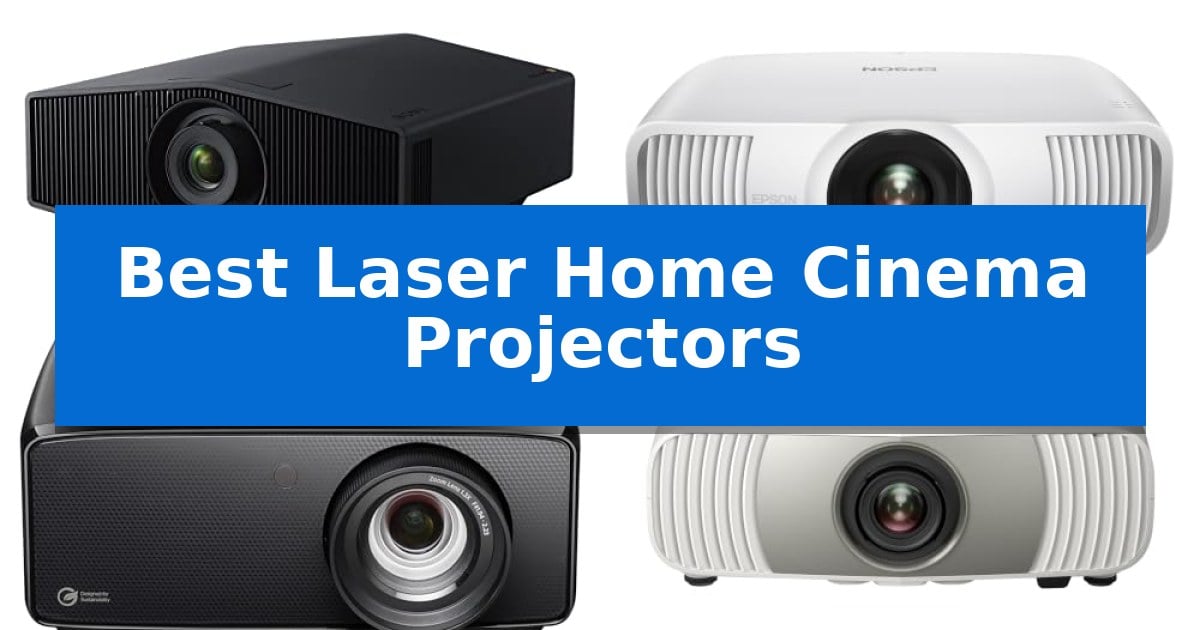
Transforming a living room into a dedicated theater requires a display that balances brightness, color depth, and installation flexibility. The Best Laser Home Cinema Projectors utilize advanced light sources to deliver consistent, long-lasting performance that traditional lamp-based models often struggle to maintain over time.
Whether you are prioritizing cinematic color accuracy for film nights or low-latency performance for competitive gaming, selecting the right unit depends on your specific room environment and content preferences. We have analyzed the latest laser-powered options to help you identify which technology best aligns with your home entertainment goals.
Best Laser Home Cinema Projectors in 2026
Quick Comparison
| Product | Best For | Key Strength | Score |
|---|---|---|---|
| Sony VPL-XW5000ES 4K Laser Projector | Best Overall | Native 4K SXRD panel for high-resolution imagery. | 4.9 |
| Epson Home Cinema LS11000 4K Laser Projector | Precision Motorized Lens | 3-Chip 3LCD laser engine provides consistent 2,500 lumens of color and white brightness. | 4.9 |
| Optoma UHZ36 4K Laser Projector | Director-Approved Color Accuracy | FILMMAKER MODE for accurate cinematic color reproduction | 4.7 |
| Epson Home Cinema LS6000 4K Laser Projector | High-Contrast Gaming Performance | 3,400 Lumens of color and white brightness for clear images. | 4.7 |
| ViewSonic LX700-4K Laser Projector | Ultra-Low Latency Gaming | 4.2ms ultra-low input lag for competitive gaming. | 4.6 |
How We Chose
- Native resolution and image processing capabilities for 4K content.
- Brightness output and color gamut coverage for HDR performance.
- Input lag and refresh rate specifications for gaming responsiveness.
- Lens shift and zoom flexibility for room-specific installation.
- Laser light source longevity and maintenance requirements.
1 Sony VPL-XW5000ES 4K Laser Projector — Native 4K Clarity
Achieving a cinematic experience at home requires precision optics and reliable light sources, and the Sony VPL-XW5000ES 4K HDR Laser Home Theater Projector is engineered specifically for this purpose. Utilizing a long-lasting laser light source, this projector delivers up to 2,000 lumens of brightness, ensuring vibrant images even on large screens while maintaining clarity for up to 20,000 uninterrupted hours.
At the heart of the Sony VPL-XW5000ES 4K Laser Projector is a native 4K SXRD panel, which provides a true 3,840 x 2,160 resolution. This is paired with the flagship-level X1 Ultimate processor, which optimizes image processing to enhance contrast and color accuracy. The integration of TRILUMINOS PRO technology allows the device to detect color saturation, hue, and brightness, enabling the reproduction of over a billion natural shades.
The projector features new Wide Dynamic Range Optics that achieve a 95% DCI-P3 wide color gamut, contributing to a more compact design that is approximately 20% smaller and 30% lighter than previous models. This physical refinement allows for easier integration into various room layouts without sacrificing light control or color volume.
For those who utilize their home cinema for gaming, the Sony VPL-XW5000ES offers specialized input support. It handles 4K 60 Hz signals with an input lag under 21 ms, and 2K 120 Hz inputs with an input lag under 13 ms. Additionally, Motionflow technology is included to ensure smooth motion during fast-paced 4K content playback.
Best for: Dedicated home theater enthusiasts who prioritize native 4K resolution and long-term laser reliability in a compact form factor.
Skip if: Users requiring extreme portability or those with very small rooms where the throw distance of a standard-throw projector is not feasible.
PROS
- Native 4K SXRD panel for high-resolution imagery.
- Long-lasting laser light source rated for 20,000 hours.
- Low input lag for 4K 60 Hz and 2K 120 Hz gaming.
- Compact and lightweight design compared to previous generations.
CONS
- Standard-throw optics may limit placement options in smaller rooms.
2 Epson Home Cinema LS11000 4K Laser Projector — Precision Motorized Lens
Achieving a cinematic experience at home often hinges on the quality of the projection engine, and the Epson Home Cinema LS11000 4K Laser Projector utilizes a 3-Chip 3LCD system to deliver 2,500 lumens of both color and white brightness. This laser-powered light source is designed to maintain high picture clarity while providing the necessary output for vibrant, large-scale displays.
The unit is built around the Epson RX Picture Processor, a 32-bit technology that manages real-time color, contrast, and frame interpolation. It supports HDR10+ and 10-bit color processing, allowing for granular adjustments via 16-step real-time HDR settings. The 1,200,000:1 dynamic contrast ratio works to enhance shadow detail and distinguish between light and dark areas of the frame.
Installation flexibility is a primary focus, featuring a 15-Element Aspheric Glass Structure (AGS) Precision Lens that supports screen sizes up to 300 inches. The motorized lens shift (±47% horizontal, ±96% vertical) combined with powered zoom and focus allows for precise alignment, while ten preset memory settings enable users to save configurations for different aspect ratios, including 21:9.
For those integrating the projector into a gaming setup, the 120Hz refresh rate and input lag measured below 20ms provide responsive performance. Connectivity is handled through dual HDMI ports, with one supporting eARC for high-quality audio passthrough, ensuring the device fits into modern home theater environments.
Best for: Home cinema enthusiasts and gamers requiring high-brightness, color-accurate 4K projection with flexible motorized installation options.
Skip if: Users with extremely limited space who cannot accommodate a unit measuring 20.5 inches in width and 28 pounds in weight.
PROS
- 3-Chip 3LCD laser engine provides consistent 2,500 lumens of color and white brightness.
- Motorized lens shift, zoom, and focus with ten memory presets for versatile installation.
- 120Hz refresh rate and low input lag support responsive gaming.
- Advanced HDR10+ and 10-bit color processing for detailed image reproduction.
CONS
- Substantial physical footprint may require dedicated mounting or shelf space.
- Single-model configuration lacks varying brightness or size tiers within this specific series.
3 Optoma UHZ36 4K Laser Projector — Director-Approved Color Accuracy
Achieving a theater-like experience in a living room requires precise color reproduction and high-resolution clarity. The Optoma UHZ36 4K UHD Laser HDR Home Theater Projector addresses this by integrating FILMMAKER MODE, which is specifically engineered to preserve the director's original vision, ensuring that the content displayed remains faithful to the creator's intent. This feature is particularly beneficial for enthusiasts who want to avoid over-processed image settings and see films exactly as they were mastered.
This projector utilizes a 4K UHD resolution to deliver sharp, detailed images, supported by HDR compatibility to enhance contrast and color depth. With a brightness rating of 3500 Lumens, it is capable of maintaining image visibility in various lighting conditions, making it a versatile choice for dedicated home cinema setups where ambient light might be a factor. The high lumen output ensures that HDR content remains punchy and vibrant rather than washed out.
Designed with a compact footprint, the unit measures approximately 10.8 inches in width and 4.5 inches in height, weighing 10.4 pounds. This physical profile allows for easier integration into existing media cabinets or shelf-mounted configurations without overwhelming the room's aesthetic. Its size makes it a practical choice for those who want a high-performance visual experience without the bulk of larger, traditional theater hardware.
Maintenance and longevity are addressed through the inclusion of a 20,000-hour light source warranty, which provides significant operational peace of mind. This long-term reliability is a key advantage of laser technology, reducing the need for frequent bulb replacements common in older projector designs. The device is backed by a 1-year limited parts and labor warranty, covering the core components of the system.
Best for: Home theater enthusiasts who prioritize color accuracy and long-term light source reliability in a 4K display.
Skip if: Users requiring a portable, battery-powered projector or those with extremely limited space who need ultra-short-throw capabilities.
PROS
- FILMMAKER MODE for accurate cinematic color reproduction
- High 3500 Lumens brightness for versatile room lighting
- 20,000-hour light source warranty for long-term reliability
- Crisp 4K UHD resolution with HDR support
CONS
- Fixed throw distance requires careful room planning
- Standard form factor lacks ultra-short-throw convenience
4 Epson Home Cinema LS6000 4K Laser Projector — High-Contrast Gaming Performance
Achieving a cinematic experience at home requires precision optics and high-speed processing to handle modern media. The Epson Home Cinema LS6000 4K Laser Projector utilizes a unique 3-chip 3LCD projection engine paired with a laser array light source to deliver 3,400 Lumens of both color and white brightness, ensuring vivid imagery even in rooms with ambient light.
Designed for versatility, this projector features a multi-element precision lens that supports screen aspect ratios from 16:9 up to a massive 300-inch display. The 800,000:1 dynamic contrast ratio works to enhance shadow detail and depth, while full 10-bit color processing supports HDR, HDR10, and HLG content for accurate color reproduction.
For those integrating the device into a gaming setup, the Epson Home Cinema LS6000 4K Laser Projector offers a 120Hz refresh rate and Auto Low Latency Mode (ALLM), keeping input lag below 20ms. Dual HDMI ports, including one with eARC for high-quality audio passthrough, provide modern connectivity for consoles and PCs.
Installation is simplified through a whisper-quiet front-exiting airflow design and flexible manual lens shift of ±21% horizontal and ±59% vertical. The unit also includes integrated Bluetooth 6.0 for wireless audio streaming, providing a clean, cable-free option for personal headphone use during late-night viewing sessions.
Best for: Home theater enthusiasts and gamers seeking a high-brightness, low-latency 4K display with flexible installation options.
Skip if: Users requiring a portable or ultra-short-throw projector, as this model is designed for fixed, traditional long-throw placement.
PROS
- 3,400 Lumens of color and white brightness for clear images.
- 120Hz refresh rate and ALLM support for responsive gaming.
- Flexible manual lens shift for easier room integration.
- Bluetooth 6.0 connectivity for wireless audio streaming.
CONS
- Fixed long-throw design may limit placement in smaller or unconventional room layouts.
5 ViewSonic LX700-4K Laser Projector — Ultra-Low Latency Gaming
Transforming a media room into a high-performance gaming hub or a cinematic retreat requires equipment that balances visual fidelity with rapid response times. The ViewSonic LX700-4K Laser Projector addresses this by combining 4K UHD (3840x2160p) resolution with a 4,000 ANSI lumens light source, ensuring that images remain clear and vibrant even in rooms with ambient lighting.
For those prioritizing gaming performance, this projector offers a 240Hz refresh rate and a 4.2ms ultra-low input lag when configured for 1440p at 120Hz. These specifications provide a responsive experience for fast-paced action, while the inclusion of HDR/HLG compatibility and SuperColor technology ensures that movies and simulation environments maintain deep contrast and a wide color gamut.
Installation flexibility is a core component of the design. The unit features 1.3x optical zoom, horizontal and vertical keystone correction, and four-corner adjustment to simplify image alignment. It is capable of projecting screen sizes from 80 to 150 inches, achieving a 100-inch display from a distance of 7.7 feet, making it suitable for various room layouts.
Beyond standard entertainment, the ViewSonic LX700-4K Laser Projector includes a specialized Golf Simulation Mode that optimizes greens and blues for compatibility with major golf simulators. With ceiling mount support and a durable laser light source, it serves as a versatile tool for both dedicated home theaters and multi-purpose media spaces.
Best for: This projector is ideal for gamers and home theater enthusiasts who require ultra-low latency, high-resolution visuals, and flexible installation options for medium-sized rooms.
Skip if: Skip this model if you require built-in smart streaming apps or integrated speakers, as this unit focuses on external source connectivity and dedicated projection performance.
PROS
- 4.2ms ultra-low input lag for competitive gaming.
- 4,000 ANSI lumens brightness for well-lit environments.
- Dedicated Golf Simulation Mode for specialized training setups.
- Flexible image adjustment including 1.3x optical zoom and four-corner keystone.
CONS
- Requires external audio and streaming devices due to a focus on core projection hardware.
- Fixed throw ratio may require precise placement to achieve specific screen sizes.
Best Laser Home Cinema Projectors Buying Guide
Understanding Laser Light Sources
Unlike traditional mercury lamps, laser light sources offer a significantly longer lifespan, often rated for up to 20,000 hours of use. This technology provides more stable brightness over time and allows for near-instant on/off functionality, which is a major convenience for daily use.
Because laser engines run cooler and more efficiently, they enable more compact chassis designs. This makes it easier to integrate high-performance projectors into standard living spaces without requiring the massive ventilation systems often associated with older, high-output lamp projectors.
Brightness and Ambient Light
Lumens are the primary metric for how well a projector handles ambient light. If your home theater is a dedicated, light-controlled room, a lower-lumen output is sufficient for a high-contrast image. However, for multi-purpose living rooms with some natural light, higher-lumen models are essential.
It is important to balance brightness with contrast ratios. While high brightness helps fight glare, a high native or dynamic contrast ratio is what truly defines the depth of blacks and the vibrancy of shadows in dark scenes.
Gaming Performance and Latency
For gamers, input lag is the most critical specification. A projector with an input lag under 20ms ensures that your controller inputs are reflected on the screen almost instantly, which is vital for fast-paced action or competitive titles.
Look for models that support 120Hz or 240Hz refresh rates and features like Auto Low Latency Mode (ALLM). These technologies ensure that high-frame-rate console and PC gaming remains smooth, preventing motion blur and tearing during intense gameplay.
Installation and Lens Flexibility
Motorized lens shift and zoom are invaluable tools for achieving a perfectly rectangular image without using digital keystone correction, which can degrade image quality. Horizontal and vertical shift ranges determine how much physical flexibility you have when mounting the projector off-center.
Before purchasing, verify the throw ratio of the projector. This determines the distance required between the lens and the screen to achieve your desired image size. A projector with a flexible zoom range provides more options for placement in rooms with fixed mounting constraints.
HDR and Color Accuracy
HDR (High Dynamic Range) support, including formats like HDR10 and HLG, allows the projector to display a wider range of colors and brightness levels. This is essential for modern 4K content, which is mastered to take advantage of expanded color gamuts.
Look for models that mention DCI-P3 color gamut coverage. This standard represents the color range used in digital cinema, and projectors that can reproduce a high percentage of this gamut will offer more natural, true-to-life shades in your favorite films.
Frequently Asked Questions
Do laser projectors require bulb replacements?
No, laser projectors use a solid-state light source that is designed to last for the life of the projector, typically rated for 20,000 hours or more, eliminating the need for periodic lamp changes.
Can I use these projectors for gaming?
Yes, many modern laser projectors are specifically designed for gaming, featuring low input lag and high refresh rates that are compatible with the latest gaming consoles and PCs.
What is the benefit of native 4K over pixel-shifting?
Native 4K projectors use panels with a physical 3,840 x 2,160 resolution, providing a sharper, more detailed image compared to pixel-shifting technologies that simulate 4K resolution.
How much brightness do I need for a living room?
For rooms with some ambient light, aim for at least 2,500 to 3,500 lumens. In a fully light-controlled dedicated theater, 2,000 lumens is often sufficient to maintain excellent contrast.
Is lens shift necessary?
Lens shift is highly recommended if you cannot mount the projector perfectly centered with your screen. It allows you to move the image vertically or horizontally without distorting the geometry.
Conclusion: Our Top Pick
When selecting the right model, consider how your room environment influences your needs. For those seeking the highest level of detail and processing, the Sony VPL-XW5000ES 4K Laser Projector stands out as a top choice due to its native 4K SXRD panel and advanced image processing capabilities, which deliver exceptional clarity and color reproduction.
While other models offer specific advantages for gaming or high-brightness environments, the Sony provides a balanced, high-fidelity experience that excels in dedicated home theater setups. Ensure your mounting location and screen size are compatible with its specifications to maximize the visual impact of your home cinema.