
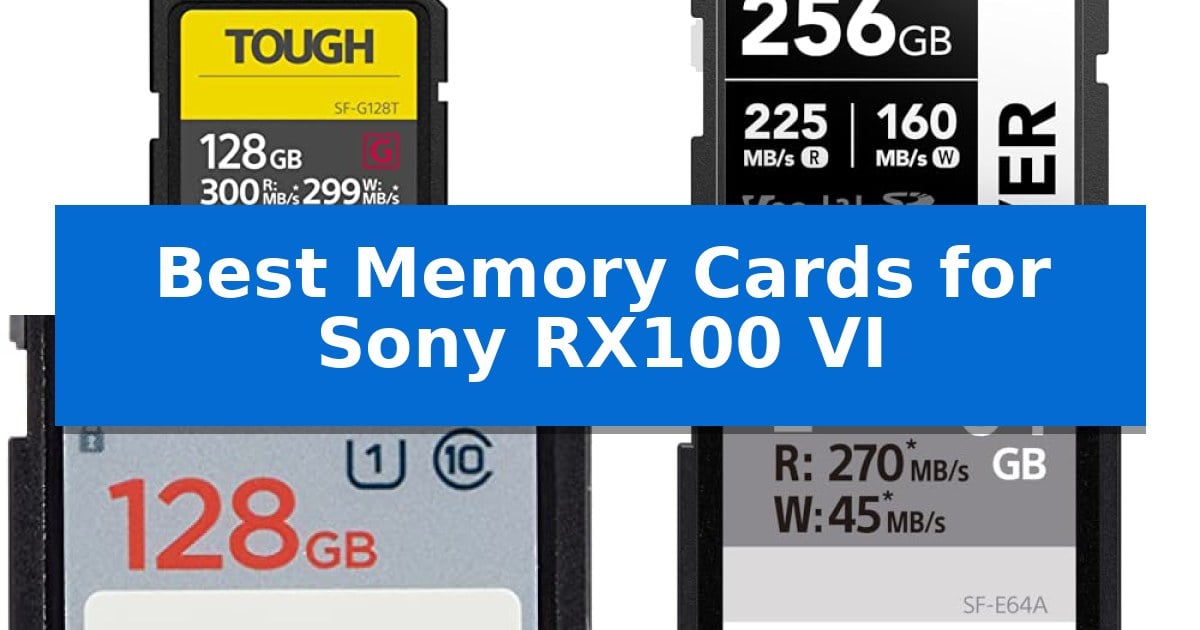
Choosing the right storage for your camera is essential to ensure you never miss a moment, whether you are capturing high-resolution stills or recording 4K video. The Best Memory Cards for Sony RX100 VI must balance write speeds with the specific interface requirements of your device to prevent buffer delays during continuous shooting.
We have evaluated several options to help you find a reliable card that fits your workflow. From rugged, weather-resistant designs to budget-friendly storage for everyday photography, this guide highlights the key specifications you need to consider before making your purchase.
You may also want to compare Best Memory Cards for Sony RX100 IV, Best Memory Cards for Sony RX10 IV, and Best Memory Cards for Sony PXW-X70.
Best Memory Cards for Sony RX100 VI
Quick Comparison
| Product | Best For | Key Strength | Score |
|---|---|---|---|
| Sony TOUGH-G Series SD Card | Best Overall | One-piece molded construction provides 18x greater bend strength than standard SD cards. | 4.9 |
| Lexar Silver SD Memory Card | Reliable Speed for 4K Video | V30 speed class ensures smooth 4K 60FPS video recording. | 4.7 |
| SanDisk Ultra SDXC Memory Card | Ideal for Everyday Photography | High-capacity 128GB storage for extensive photo and video sessions. | 4.6 |
| Sony E Series SDXC Memory Card | Balanced Performance for Enthusiasts | UHS-II interface enables efficient file transfers up to 270 MB/s. | 4.8 |
| BigBuild Technology SDHC Memory Card | Budget Friendly Storage Solution | UHS-I Class 10 speed rating for smooth Full HD video. | 4.3 |
How We Chose
- Compatibility with UHS-I and UHS-II standards to ensure full functionality.
- Rated write speeds required for smooth 4K video recording and burst mode.
- Physical durability features such as water, dust, and shock resistance.
- Storage capacity options to match different shooting volumes and file sizes.
- Manufacturer warranty and build quality for long-term data reliability.
1 Sony TOUGH-G Series SD Card — Maximum Durability for Action
The Sony TOUGH-G Series SD Card is engineered with a unique one-piece molded construction that provides the world's highest level of bend strength, rated 18 times greater than the standard SD specification. This design choice removes common failure points, such as the fragile ribs and the write-protection switch, creating a monolithic structure that is both waterproof to IPX8 and dustproof to IP6X standards.
Designed for demanding workflows, this card supports UHS-II, Class 10, and U3 compliance, enabling high-speed performance for 4K video recording and continuous burst mode photography. It delivers transfer speeds up to 300 MB/s and write speeds up to 299 MB/s, ensuring rapid file offloading. The card remains operational in extreme conditions, with a temperature range spanning from -13°F to +185°F.
While the card is optimized for UHS-II compatible hardware, it maintains backward compatibility with UHS-I equipment. When used in older devices, it functions at UHS-I speeds, providing a versatile storage solution that fits into various camera setups. Its robust physical build is specifically intended to withstand the rigors of field use where environmental exposure is a concern.
Choosing this card involves weighing its specialized durability against its specific form factor. By eliminating the write-protection switch, the design prioritizes structural integrity over traditional manual safety toggles. This makes it a focused tool for users who prioritize physical reliability and high-speed data throughput in challenging shooting environments.
Best for: Photographers and videographers requiring extreme physical durability and high-speed write performance for 4K recording in harsh environments.
Skip if: Users who rely on a physical write-protection switch or those using equipment that does not benefit from the high-speed UHS-II interface.
PROS
- One-piece molded construction provides 18x greater bend strength than standard SD cards.
- IPX8 waterproof and IP6X dustproof rating ensures operation in extreme environments.
- High-speed performance with up to 300 MB/s transfer and 299 MB/s write speeds for 4K video.
- Ribless, switchless design eliminates common mechanical failure points.
CONS
- No physical write-protection switch may be a disadvantage for users accustomed to manual lock toggles.
2 Lexar Silver SD Memory Card — Reliable Speed for 4K Video
Capturing high-resolution video and continuous bursts on the Sony RX100 VI requires a memory card capable of handling consistent data throughput. The Lexar 128GB Silver SD Memory Card provides a reliable foundation for this compact camera, offering a V30 speed class rating that supports stable 4K 60FPS video recording without dropping frames.
Beyond its video capabilities, this card features a 160MB/s max write speed, which is essential for clearing the camera's buffer quickly during high-speed continuous shooting. This ensures that the device remains responsive when you are ready to capture the next sequence, minimizing downtime between shots.
Efficiency in post-production is supported by a 225MB/s max read speed, allowing for rapid file transfers from the card to your computer. This speed helps reduce wait times when offloading large batches of high-resolution images or lengthy video files, streamlining the transition from the field to your editing suite.
Designed for versatility and resilience, the card is built to withstand challenging environments. It is wearproof, drop-proof, temperature-proof, x-ray-proof, shockproof, magnetic-proof, and vibration-resistant, providing peace of mind when shooting in various locations. With a Lifetime Limited Warranty, it serves as a dependable storage solution for photographers and videographers who prioritize durability alongside performance.
Best for: Photographers and videographers who need reliable 4K video recording and fast write speeds for continuous shooting on their Sony RX100 VI.
Skip if: Users who require extreme UHS-II speeds for professional cinema-grade RAW video or ultra-high-bitrate workflows that exceed the V30 standard.
PROS
- V30 speed class ensures smooth 4K 60FPS video recording.
- 160MB/s write speed helps maintain camera responsiveness during burst shooting.
- Comprehensive durability features protect data against shock, temperature, and X-rays.
- 225MB/s read speed significantly reduces file transfer times.
CONS
- UHS-I interface may limit performance in devices specifically optimized for UHS-II or faster standards.
3 SanDisk Ultra SDXC Memory Card — Ideal for Everyday Photography
The SanDisk 128GB Ultra SDXC UHS-I Memory Card is engineered to support the demands of compact point-and-shoot cameras, making it a practical choice for the Sony RX100 VI. With its Class 10 and UHS Speed Class 1 (U1) rating, this card is specifically designed to handle the data requirements of Full HD (1080p) video recording, ensuring consistent performance during capture.
Beyond its video capabilities, this card offers quick transfer speeds up to 100MB/s, which helps reduce the time spent moving high-resolution photos and video files to your computer. The 128GB capacity provides ample space for extensive shooting sessions, allowing you to store a large volume of images without needing to swap cards frequently.
Designed for reliability in everyday photography, the card includes a 10-year limited manufacturer warranty. Its physical dimensions are standard for the SDXC format, ensuring it fits securely into the memory card slot of your camera. This balance of storage capacity and transfer efficiency makes it a reliable companion for travel or daily use.
While this card is optimized for Full HD workflows, users should note that performance may vary depending on specific host device settings and file attributes. It is a straightforward, high-capacity storage solution that prioritizes compatibility and ease of use for photographers who need a dependable card for their daily shooting needs.
Best for: Photographers and videographers using compact cameras who require reliable, high-capacity storage for Full HD video and high-resolution still images.
Skip if: Professional creators who require high-speed UHS-II or V60/V90 cards for 4K video recording or rapid-fire burst shooting, as this card is limited to U1/Class 10 performance.
PROS
- High-capacity 128GB storage for extensive photo and video sessions.
- UHS Speed Class 1 (U1) and Class 10 ratings for stable Full HD video recording.
- Quick transfer speeds up to 100MB/s to expedite file offloading.
- 10-year limited manufacturer warranty for long-term peace of mind.
CONS
- UHS-I interface may be a bottleneck for high-bitrate 4K video or extremely fast burst modes.
- Performance may vary based on the host device and specific usage conditions.
4 Sony E Series SDXC Memory Card — Balanced Performance for Enthusiasts
The Sony 64GB E Series UHS-II SDXC Memory Card provides a specialized storage foundation for the Sony RX100 VI, balancing the throughput requirements of high-bitrate 4K video with the practical needs of enthusiast photographers. By utilizing the UHS-II interface, this card facilitates rapid data offloading with maximum read speeds of 270 MB/s, which significantly shortens the time required to transfer high-resolution files to a computer after a long day of shooting.
Engineered for reliability in challenging conditions, the card features a rugged construction that is waterproof, dustproof, and UV-resistant. It is also rated to withstand extreme temperatures and X-ray exposure, making it a dependable choice for creators who frequently work in unpredictable outdoor environments. The inclusion of a built-in write-protect switch offers a physical safeguard against accidental data loss or overwriting during transit.
With a V30 speed class rating, the card guarantees a minimum write speed of 30 MB/s, ensuring consistent performance for 4K and Full HD video recording without dropped frames. While the maximum write speed is 45 MB/s, this capacity is optimized for the internal recording modes of the RX100 VI. This creates a cost-effective storage solution for enthusiasts who prioritize stability and durability over the higher write speeds required for professional-grade, high-frame-rate burst photography.
Best for: Enthusiasts seeking a durable, weather-resistant storage solution for 4K video and high-resolution photography on the Sony RX100 VI.
Skip if: Professional videographers needing sustained write speeds higher than 45 MB/s for specialized, ultra-high-bitrate recording formats.
PROS
- UHS-II interface enables efficient file transfers up to 270 MB/s.
- Rugged design protects against water, dust, UV, and extreme temperatures.
- V30 speed class ensures stable 4K and Full HD video recording.
- Built-in write-protect switch prevents accidental data deletion.
CONS
- 45 MB/s maximum write speed may limit performance for high-speed burst photography.
5 BigBuild Technology SDHC Memory Card — Budget Friendly Storage Solution
The BigBuild Technology 32GB Ultra Fast SDHC Memory Card is engineered to support the storage demands of the Sony Cyber-shot RX100 VI, providing a reliable medium for capturing high-resolution imagery and Full HD video. This card utilizes a high-end controller to maintain sustained speeds and ensure compatibility with the camera's continuous shooting modes.
Designed for versatility, this SDHC card is rated for UHS-I Class 10 performance. When paired with a USB 3.0 interface, it achieves read speeds of up to 90MB/s and write speeds of up to 18MB/s, facilitating efficient data transfer from the camera to a computer. It is built to operate in environments ranging from 0°C to 70°C, with storage tolerances between -25°C and 85°C.
The card is specifically validated for the Sony RX100 series, including the VI model, ensuring that the hardware interface meets the camera's requirements for smooth operation. With a 5-year limited warranty against manufacturer defects, it offers a standardized storage solution for photographers who require consistent performance without the complexity of higher-tier professional formats.
Choosing the right memory card involves balancing capacity with the camera's data throughput needs. While 32GB provides ample space for high-resolution stills, users capturing extensive 4K video or high-bitrate footage may find the 18MB/s write speed a limiting factor compared to faster UHS-II or V-rated cards. This card is best suited for general photography and standard video recording tasks.
Best for: Photographers seeking a reliable, budget-friendly 32GB storage solution for everyday shooting and Full HD video on the Sony RX100 VI.
Skip if: Users who primarily record high-bitrate 4K video or require rapid buffer clearing for extended high-speed burst photography should opt for a card with higher write speeds.
PROS
- UHS-I Class 10 speed rating for smooth Full HD video.
- High-end controller ensures sustained compatibility.
- 5-year limited warranty provides long-term support.
- Wide operating temperature range for diverse environments.
CONS
- 18MB/s write speed may be insufficient for intensive 4K video workflows.
- Performance is limited to 18MB/s when used with older USB 2.0 ports.
Best Memory Cards for Sony RX100 VI Buying Guide
Understanding Speed Classes
Memory cards are categorized by speed classes, such as UHS Speed Class (U3) or Video Speed Class (V30/V90). These ratings indicate the minimum sustained write speed of the card, which is critical for recording high-bitrate video without dropped frames.
For the Sony RX100 VI, a card rated at least U3 or V30 is recommended to handle 4K video recording effectively. Using a card that does not meet these minimum requirements can lead to recording errors or the camera stopping mid-shot.
UHS-I vs. UHS-II Interfaces
The UHS-II interface offers significantly faster transfer speeds compared to the older UHS-I standard. While the Sony RX100 VI is compatible with UHS-I, using a UHS-II card can still be beneficial for faster offloading of files to your computer using a compatible card reader.
It is important to note that you will not see the maximum performance of a UHS-II card while it is inside the camera itself, as the camera's internal bus is limited to UHS-I speeds. However, the added durability and transfer speed benefits often make them a worthwhile investment.
Durability and Environmental Protection
If you frequently shoot outdoors, look for cards with IPX8 waterproof or IP6X dustproof ratings. These features protect your data from accidental spills, rain, or harsh environments where dust might otherwise compromise the card's contacts.
Some premium cards also feature one-piece molded construction, which increases bend strength and reduces the risk of the card snapping inside the camera slot. This is particularly useful for photographers who travel often.
Capacity Considerations
The amount of storage you need depends on your file format and shooting frequency. 128GB cards are generally the sweet spot for most users, providing enough space for thousands of high-resolution JPEGs or several hours of 4K video.
If you primarily shoot in RAW format, your files will be significantly larger. In such cases, having multiple smaller cards or a single high-capacity card is a strategic choice to avoid running out of space during a shoot.
Reliability and Warranty
Always prioritize cards from reputable manufacturers that offer a limited lifetime or multi-year warranty. A card failure can result in the total loss of your photos and videos, making the quality of the internal controller and flash memory paramount.
Check for features like built-in write-protect switches, which prevent accidental deletion of your data. While some modern designs are removing these switches for durability, they remain a useful feature for many photographers.
Frequently Asked Questions
Can I use a UHS-II card in my Sony RX100 VI?
Yes, UHS-II cards are backward compatible with the Sony RX100 VI. While you will not achieve the maximum UHS-II speed while the card is in the camera, the card will function normally at UHS-I speeds.
What is the minimum speed class needed for 4K video?
For 4K video recording, you should use a card with at least a U3 or V30 speed rating to ensure the card can keep up with the data write requirements.
Does the Sony RX100 VI support SDHC or SDXC cards?
The camera supports both SDHC and SDXC formats. SDXC cards are typically used for capacities above 32GB, while SDHC cards are used for 32GB and below.
Why is my camera giving me a write error?
A write error often occurs if the card's write speed is too slow for the selected video bitrate or if the card is corrupted. Ensure you are using a high-quality, reputable brand and that the card meets the U3/V30 standard.
How often should I format my memory card?
It is best practice to format your memory card in the camera after you have successfully transferred and backed up your files to a computer. This helps maintain the file system and reduces the risk of errors.
Conclusion: Our Top Pick
Selecting the right memory card is a simple but vital step in protecting your creative work. For those who prioritize maximum reliability and physical protection, the Sony TOUGH-G Series SD Card stands out as the most robust option due to its unique one-piece molded construction and high-speed transfer capabilities.
While other options like the Lexar Silver or SanDisk Ultra offer excellent value for everyday use, the Sony TOUGH-G series provides peace of mind for demanding shooting conditions. Ensure you choose a capacity that aligns with your typical shooting volume to keep your workflow efficient and your data secure.