
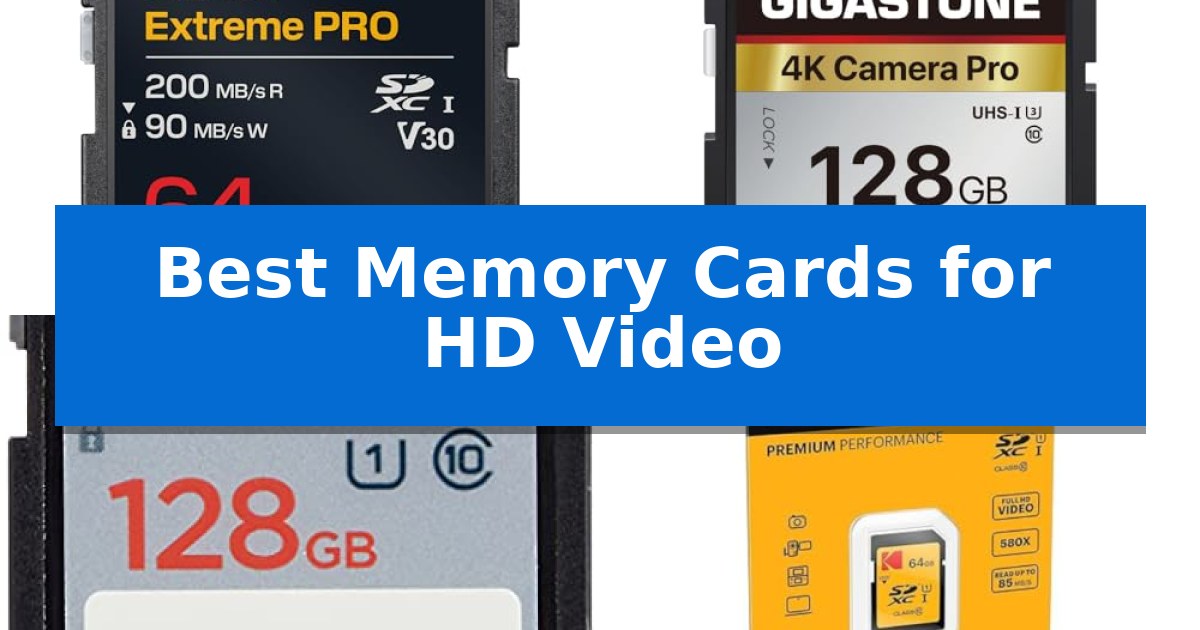
Finding the right storage for your camera setup is essential to ensure your footage is captured without interruption. Whether you are filming high-definition projects or daily vlogs, selecting the Best Memory Cards for HD Video requires balancing write speeds, storage capacity, and environmental resilience to match your specific recording device.
Our guide evaluates current memory card options to help you identify which card fits your workflow. We focus on technical standards like UHS-I, V30, and U3 ratings to ensure your equipment maintains steady performance during critical recording sessions, preventing dropped frames and data loss.
You may also want to compare Best Memory Cards for GoPro Session, Best Memory Cards for GoPro Max, and Best Memory Cards for GoPro Hero 13.
Best Memory Cards for HD Video
Quick Comparison
| Product | Best For | Key Strength | Score |
|---|---|---|---|
| SanDisk Extreme PRO SD Memory Card | Best Overall | V30 and U3 speed class ratings ensure stable 4K UHD video capture. | 4.9 |
| Gigastone 4K Camera Pro SD Card | Reliable choice for ultra-high definition | Durable construction that is waterproof, shock-proof, and temperature-proof. | 4.9 |
| SanDisk Ultra SDXC Memory Card | Standard pick for everyday recording | Class 10 and UHS Speed Class 1 (U1) ratings ensure stable Full HD video recording. | 4.7 |
| Kodak Premium SDXC Memory Card | Optimized for high-resolution capture | 64 GB capacity allows for significant storage of full HD video and high-resolution images. | 4.5 |
| SanDisk High Endurance Video Card | Built for continuous recording sessions | 10,000 hours of high-endurance recording capability. | 4.6 |
How We Chose
- Video Speed Class ratings (V30, U3) to ensure consistent write performance for HD and 4K recording.
- Read and write speed benchmarks to evaluate efficiency during file transfers and post-production workflows.
- Storage capacity options to determine suitability for short clips versus long-form continuous recording.
- Environmental durability features, including water, shock, and temperature resistance for field reliability.
- Compatibility with standard SDXC and microSD host devices to ensure broad hardware support.
1 SanDisk Extreme PRO SD Memory Card — Blazing speeds for 4K workflows
Reliable data management is essential when recording high-resolution footage, and the SanDisk Extreme PRO SD Memory Card is engineered to support demanding 4K UHD workflows. With its UHS-I, U3, and V30 speed class ratings, this card ensures the consistent write performance required to capture pristine video without dropping frames.
The card offers significant storage capacity, reaching up to 2TB, which provides the space needed for long-form recording sessions. For those who frequently transfer large files, the card features read speeds up to 200MB/s, helping to streamline the post-production process by reducing wait times during data offloading.
Designed for durability, the SanDisk Extreme PRO SD Memory Card is built to withstand challenging environments, making it a dependable choice for field use. The inclusion of the SanDisk Memory Zone desktop app further simplifies content organization, allowing users to back up and manage their media efficiently across different devices.
While this card is optimized for high-speed 4K recording, users should ensure their specific camera hardware supports the UHS-I interface to fully utilize these performance capabilities. It remains a robust, versatile option for creators who require a balance of high-capacity storage and reliable, high-speed data transfer.
Best for: Videographers and photographers who require reliable, high-capacity storage for 4K UHD recording and efficient file transfers.
Skip if: Users requiring UHS-II or faster interface speeds for professional cinema-grade RAW video workflows may find this UHS-I card limiting.
PROS
- V30 and U3 speed class ratings ensure stable 4K UHD video capture.
- High-speed read performance up to 200MB/s accelerates file transfers.
- Resilient design engineered to perform in extreme conditions.
- Massive storage options up to 2TB for extended recording sessions.
CONS
- UHS-I interface may be a bottleneck for cameras requiring faster UHS-II standards.
2 Gigastone 4K Camera Pro SD Card — Reliable choice for ultra-high definition
Capturing high-definition footage requires a reliable storage medium that can keep pace with the high data rates of modern cameras. The Gigastone 4K Camera Pro SD Card is engineered specifically for this purpose, offering 4K Ultra HD video compatibility to ensure your recordings remain smooth and detailed.
This full-sized SD card (32mm x 24mm) is built to handle the rigors of field work. It features a robust design that is waterproof, temperature-proof, x-ray-proof, shock-proof, and magnetic-proof, providing peace of mind when shooting in unpredictable environments. Each card also includes a mini case for secure storage when not in use.
Performance-wise, the card is rated as UHS-I A1 V30 U3 Class 10, meeting the necessary standards for high-bitrate video capture. It supports data transfer speeds of up to 100 MB/s, which facilitates efficient file offloading to your computer after a long day of shooting. The inclusion of a 5-year limited warranty further underscores the manufacturer's commitment to long-term reliability.
Whether you are a hobbyist or a professional, this memory card balances essential durability with the technical specifications required for consistent 4K performance. It is a straightforward, dependable solution for photographers and videographers who need to ensure their media remains protected and accessible.
Best for: Videographers and photographers who need a durable, reliable storage solution for 4K UHD recording in varied environments.
Skip if: Users who require extreme high-speed performance for burst photography or 8K video, as this card is optimized for standard 4K workflows.
PROS
- Durable construction that is waterproof, shock-proof, and temperature-proof.
- V30 and U3 speed class ratings ensure stable 4K video recording.
- Includes a 5-year limited warranty for added peace of mind.
- Comes with a protective mini case for safe transport.
CONS
- 100 MB/s transfer speed may be slower than premium professional-grade cards for massive file offloads.
3 SanDisk Ultra SDXC Memory Card — Standard pick for everyday recording
Reliable storage is essential for capturing high-definition footage without interruption, and the SanDisk 128GB Ultra SDXC UHS-I Memory Card is engineered to support this specific demand. With its UHS Speed Class 1 (U1) and Class 10 rating, this card provides the necessary performance to handle Full HD (1920×1080) video recording, making it a dependable choice for those using compact or mid-range point-and-shoot cameras.
Beyond its video capabilities, the card facilitates efficient file management with quick transfer speeds up to 100MB/s. This allows for faster offloading of large video files and photo collections to a computer, minimizing downtime between shoots. The 128GB capacity provides ample space to store significant amounts of media, ensuring you have enough room for extended recording sessions without needing to swap cards frequently.
Designed for versatility, the card is compatible with a wide range of devices that support the SDXC standard. It includes a 10-year limited manufacturer warranty, offering long-term peace of mind regarding the hardware's durability. While performance can vary based on the specific host device and file attributes, the card remains a straightforward, high-capacity solution for everyday digital recording needs.
When selecting a memory card for HD video, prioritize the Speed Class rating to ensure your camera can write data fast enough to prevent dropped frames. The SanDisk Ultra SDXC Memory Card balances storage density with the required write speeds for 1080p content, serving as a practical foundation for standard video workflows.
Best for: This memory card is best for users of compact or mid-range point-and-shoot cameras who need reliable storage for Full HD video recording.
Skip if: Skip this card if you are shooting 4K or higher-resolution video, as this card is specifically rated for Full HD (1080p) performance.
PROS
- Class 10 and UHS Speed Class 1 (U1) ratings ensure stable Full HD video recording.
- 100MB/s read speeds enable quick file transfers to your computer.
- 128GB capacity provides substantial storage for large volumes of photos and video.
- 10-year limited manufacturer warranty provides long-term support.
CONS
- Write speeds are lower than read speeds and may vary depending on the host device.
- Performance is optimized for Full HD and may not meet the requirements of higher-bitrate 4K recording.
4 Kodak Premium SDXC Memory Card — Optimized for high-resolution capture
Capturing high-definition video requires reliable storage that keeps pace with your camera's output. The Kodak Premium SDXC Memory Card offers a 64 GB storage capacity, providing ample space for extended recording sessions and high-resolution photography without the constant need to offload files.
Designed for efficiency, this card features a read speed of up to 85MB/s, which facilitates quick transfers of your footage to a computer or other compatible devices. It utilizes Class 10 speed ratings and supports a write speed of up to 25MB/s, ensuring the necessary throughput for consistent full HD video recording.
Compatibility is a primary consideration for this storage medium, as it is designed specifically for devices supporting the SDXC standard. For users of specific models like the Kodak FZ45 or FZ55, the manufacturer notes that firmware updates (V1.0.7 or V1.0.6 respectively) are required to ensure proper functionality with the card.
With a 2-year limited warranty, this card provides a straightforward solution for those who need a dedicated, high-capacity storage option for their HD-capable cameras. It balances storage volume with the necessary speed requirements for standard video workflows.
Best for: Photographers and videographers using SDXC-compatible cameras who need a reliable, mid-capacity storage solution for full HD video recording.
Skip if: Users requiring high-speed burst shooting or 4K video recording, as the U1/V10 speed class may not meet the higher bitrate demands of those formats.
PROS
- 64 GB capacity allows for significant storage of full HD video and high-resolution images.
- 85MB/s read speed enables efficient file transfers to computers.
- Class 10 speed rating ensures stable performance for full HD video capture.
CONS
- SDXC compatibility only limits use to devices that specifically support this standard.
- 25MB/s write speed may be insufficient for high-bitrate 4K video or rapid-fire continuous shooting.
5 SanDisk High Endurance Video Card — Built for continuous recording sessions
Reliability in continuous recording environments requires hardware built specifically for the demands of constant data writing. The SanDisk 128GB High Endurance Video microSDXC Card is engineered to handle up to 10,000 hours of video recording, providing a specialized solution for devices that never truly power down, such as dash cams and home security systems.
This card is built to withstand harsh environmental factors, featuring a temperature proof, water proof, shock proof, humidity proof, and magnet proof design. These physical protections ensure that data remains secure even when the hardware is subjected to the extreme conditions often found in external vehicle setups or exposed home monitoring locations.
The card supports 4K UHD and Full HD recording, providing the necessary throughput for high-resolution surveillance footage. With capacities reaching 128GB, it offers substantial space for long-term storage, though users should note that actual recording duration varies based on the specific resolution and host device settings, with 4K footage consuming space more rapidly than standard Full HD.
Compatibility extends beyond dedicated security cameras, as the included adapter allows for use in various devices, including the Nintendo Switch. This versatility ensures that the high-endurance architecture benefits users who need consistent, reliable performance across different hardware platforms, provided the host device supports the card's specifications.
Best for: Users requiring reliable, continuous video recording for dash cams and home security monitoring systems.
Skip if: Users who prioritize maximum transfer speeds for professional photography or high-speed burst shooting rather than long-term endurance.
PROS
- 10,000 hours of high-endurance recording capability.
- Rugged design resistant to temperature, water, shock, and magnets.
- Versatile compatibility with dash cams, home monitors, and gaming consoles.
- Includes SD adapter for broader device integration.
CONS
- Endurance limits vary significantly between 4K and Full HD recording modes.
Best Memory Cards for HD Video Buying Guide
Understanding Speed Class Ratings
The Speed Class is the most critical factor for video recording. Ratings like V30 and U3 indicate the card's ability to maintain a minimum sustained write speed, which is necessary to prevent the camera from stopping during a recording. For high-definition and 4K video, these ratings ensure the card can keep up with the data stream generated by your sensor.
Always check your camera's manual for the minimum required speed class. Using a card that falls below these requirements can lead to corrupted files or sudden recording termination, regardless of the card's maximum burst speed.
Capacity and Recording Time
Your choice of storage capacity should reflect the length of your typical recording sessions. A 64GB card may be sufficient for short, edited clips, while 128GB or 256GB options are better suited for long-form content or continuous shooting where swapping cards is inconvenient.
Remember that higher resolution and higher frame rates consume storage space significantly faster. If you frequently record in 4K, prioritize cards with larger capacities to avoid running out of space mid-shoot.
Durability and Environmental Protection
If you film outdoors, look for cards labeled as waterproof, shock-proof, and temperature-proof. These features protect your data from common hazards like accidental drops, moisture, or extreme heat, which are common in field environments.
While these protections are robust, they are not a substitute for regular data backups. Always transfer your footage to a secondary drive or cloud storage as soon as possible after your session.
Read Speeds and Workflow Efficiency
While write speed is vital for recording, read speed determines how quickly you can offload your footage to a computer for editing. Cards with higher read speeds, such as those reaching 200MB/s or 250MB/s, significantly reduce wait times during the post-production phase.
Investing in a high-speed card reader that matches your card's interface is just as important as the card itself. A fast card used with an outdated reader will be bottlenecked by the hardware interface.
Compatibility and Form Factors
Ensure the card's form factor—SDXC or microSD—is compatible with your device. Many microSD cards come with an SD adapter, which adds versatility, but ensure the adapter is high-quality to maintain a stable connection.
Check that your device supports the SDXC standard if you are purchasing cards larger than 32GB. Older devices may have limitations on the maximum capacity they can recognize or format.
Frequently Asked Questions
What does the V30 rating mean?
The V30 rating signifies a minimum sustained write speed of 30MB/s, which is sufficient for recording Full HD and 4K video streams without interruption.
Can I use a microSD card in my full-sized SD camera?
Yes, provided you use a reliable SD adapter. The adapter allows the smaller card to fit the physical dimensions of the SD slot while maintaining electrical compatibility.
Why did my camera stop recording suddenly?
This is often caused by a memory card that cannot maintain the required write speed for the selected video resolution. Ensure your card meets the speed class requirements specified by your camera manufacturer.
How often should I format my memory card?
It is best practice to format your card in the camera you are using before each major shoot. This ensures the file system is optimized for that specific device and helps prevent potential errors.
Does a higher capacity card affect recording speed?
Generally, no. Speed and capacity are independent specifications. However, always verify the specific speed class (UHS-I, V30, etc.) for the exact capacity you are purchasing, as performance can sometimes vary within a product line.
Conclusion: Our Top Pick
For those seeking the most reliable performance for high-resolution workflows, the SanDisk Extreme PRO SD Memory Card stands out due to its consistent V30 and U3 speed class ratings. It provides the necessary write speeds to handle 4K UHD recording while offering the durability required for demanding field conditions.
While other options may serve specific needs like continuous monitoring or budget-conscious everyday recording, this card offers the best balance of speed, capacity, and resilience for serious video production. Ensure your camera's firmware is up to date to take full advantage of its capabilities.