
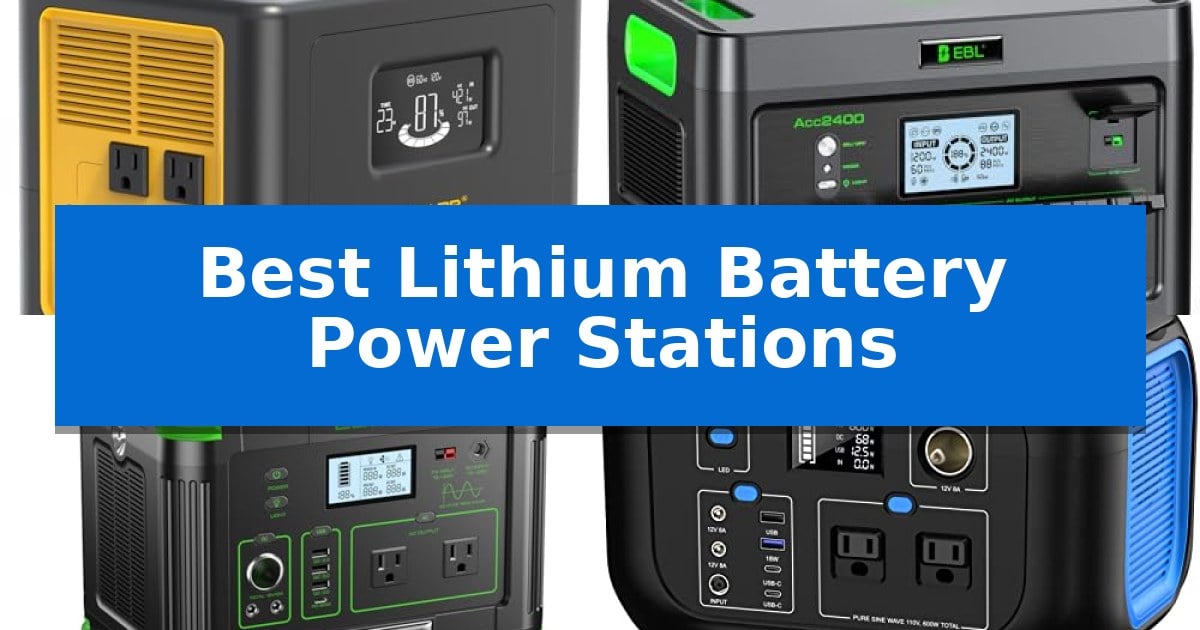
Finding the right power solution for off-grid adventures or emergency home backup can be challenging with so many options available. Whether you need to keep essential appliances running during a blackout or want to charge your devices while camping, selecting the right equipment is vital for peace of mind.
Our guide explores the Best Lithium Battery Power Stations currently available, focusing on capacity, port variety, and charging speed. By examining these key specifications, you can choose a unit that reliably meets your energy demands without unnecessary complexity.
You may also want to compare Best Lithium Battery Jump Starter with Air Compressor, Best Lithium Battery for Solar Inverters, and Best Lithium Battery for Off-Grid Solar.
Best Lithium Battery Power Stations
Quick Comparison
| Product | Best For | Key Strength | Score |
|---|---|---|---|
| Baldr Infinity Plus 1200 Power Station | Best Overall | 5000+ charge cycle lifespan using LFP battery technology. | 4.9 |
| EBL Acc2400 Portable Power Station | Reliable Home Backup Solution | High 2400W output capable of powering demanding appliances. | 4.3 |
| GRECELL EB500 Portable Power Station | Versatile Mid-Range Choice | Pure sine wave inverter ensures safe power for sensitive electronics. | 4.4 |
| ENOFLO G600 Portable Power Station | Fast Charging for Travel | Pure sine wave AC output for safe operation of sensitive electronics. | 4.5 |
| EnginStar R300 Portable Power Station | Compact Pick for Portability | Compact and lightweight design for easy transport. | 4.7 |
How We Chose
- Battery capacity and total energy storage measured in watt-hours.
- Inverter output capabilities to determine which appliances can be supported.
- Port selection and versatility for simultaneous device charging.
- Recharge speed and multiple input options including solar and AC.
- Portability factors such as weight, dimensions, and handle design.
1 Baldr Infinity Plus 1200 Power Station — Best for High-Capacity Needs
Equipped with a high-capacity 1042Wh lithium iron phosphate battery, the Baldr Infinity Plus 1200 Power Station provides a robust energy reserve for demanding off-grid scenarios. This unit is engineered to support a wide range of appliances, offering 1200W of rated power with a 2400W surge capacity, which allows it to operate common household items like blenders and projectors during power outages or camping trips.
The device features an extensive array of 16 output ports, including 6 AC outlets, 4 USB-A ports, 4 USB-C ports, and 2 DC ports. This versatility ensures that multiple devices—from mobile phones and laptops to specialized camping gear like car fridges—can be powered simultaneously. For monitoring energy consumption, the integrated LCD panel provides real-time data on power usage.
Designed for longevity, the unit utilizes LFP battery chemistry, which is rated for 5000+ charge cycles, supporting over a decade of regular use. When it comes to replenishment, the station supports 1000W AC fast charging, capable of reaching an 80% charge in approximately 55 minutes, while also offering 96W car charging for mobile refueling.
Despite its substantial power output, the station maintains a compact footprint of 271 x 190 x 232mm, making it manageable for transport. It also incorporates practical utility features such as a built-in SOS flashlight with three distinct modes, providing essential illumination during emergency situations.
Best for: Users requiring a high-capacity, long-cycle-life power source for home backup or extended off-grid camping trips.
Skip if: Users who need a lightweight, ultra-portable power bank for simple smartphone charging, as the 20.9-pound weight may be excessive for casual use.
PROS
- 5000+ charge cycle lifespan using LFP battery technology.
- 1000W AC fast charging reaches 80% capacity in 55 minutes.
- 16 versatile output ports allow for simultaneous multi-device powering.
- 1200W rated power with 2400W surge capacity for high-draw appliances.
CONS
- 20.9-pound weight is relatively heavy for frequent transport.
- Large physical footprint may require significant storage space compared to smaller power banks.
2 EBL Acc2400 Portable Power Station — Reliable Home Backup Solution
Maintaining power during unexpected blackouts or off-grid excursions requires a reliable energy source capable of handling high-wattage appliances. The EBL Acc2400 Portable Power Station is engineered for these scenarios, featuring a substantial 1843.2Wh capacity and a 2400W output that supports everything from sensitive electronics like laptops to high-draw equipment such as electric kettles and power tools.
Versatility is a core component of this unit, which provides 12 output ports to accommodate simultaneous charging for multiple devices. Users can utilize 4 AC ports, two fast-charging 100W USB-C PD ports, and various DC and wireless charging options. An intelligent emergency power mode is integrated to switch to battery backup in just 0.1 seconds during a power failure, helping to prevent data loss for connected computers.
Built for longevity, the station utilizes lithium iron phosphate (LiFePO4) batteries designed to endure over 3500 charge-discharge cycles. This chemistry contributes to a service life estimated at over 10 years. Safety is managed through a built-in protection system that guards against overcharging, short circuits, and extreme temperature fluctuations, ensuring consistent operation in diverse environments.
Despite its robust power capabilities, the device remains designed for transport with dual-side handles. Measuring 16.9" x 11.8" x 11" and weighing 55 pounds, it is intended for those who need a balance between heavy-duty output and portability for jobsites or camping trips. The integrated 4-mode LED light and clear status display further assist with usability during emergency or outdoor use.
Best for: Homeowners and outdoor enthusiasts requiring a high-capacity, durable backup power solution for both sensitive electronics and high-wattage appliances.
Skip if: Users seeking an ultra-lightweight or pocket-sized power bank for minimal charging needs will find this 55-pound unit too heavy and bulky for their requirements.
PROS
- High 2400W output capable of powering demanding appliances.
- Long-lasting LiFePO4 battery rated for over 3500 cycles.
- Fast 0.1-second switchover time for emergency backup scenarios.
- 12 versatile ports including 100W USB-C PD for diverse device compatibility.
CONS
- Heavy 55-pound weight limits portability for frequent travel.
- Large physical footprint requires significant storage space.
3 GRECELL EB500 Portable Power Station — Versatile Mid-Range Choice
Reliable power during outages or outdoor excursions requires a dependable energy source, and the GRECELL EB500 Portable Power Station offers a versatile solution with its 519Wh capacity. This unit provides a pure sine wave AC output capable of supporting devices up to 500W, making it suitable for essential electronics like laptops, CPAP machines, and small appliances without the noise or fumes of traditional fuel-based generators.
Designed for multi-device utility, the station features 10 output ports, including USB-C PD 60W for rapid charging of modern mobile devices and laptops. The inclusion of three USB-A QC3.0 ports and a wireless charging pad adds convenience for users managing multiple gadgets simultaneously. Safety is managed through an integrated Battery Management System (BMS), which provides critical protections against temperature fluctuations, overvoltage, and short circuits.
Recharging the unit is flexible, supporting inputs from wall outlets, car chargers, or compatible 100W/200W solar panels. While the 500W limit is sufficient for many small electronics, users must ensure their equipment does not exceed this rated power to prevent damage. With a 24-month warranty and a compact, portable design, it serves as a practical backup for home emergencies or camping trips.
Best for: Users needing a portable, multi-port power source for small appliances and mobile devices during camping or home power outages.
Skip if: Users who need to power heavy-duty appliances exceeding 500W or those requiring sustained high-wattage output for extended periods.
PROS
- Pure sine wave inverter ensures safe power for sensitive electronics.
- Versatile charging options including solar, car, and wall outlet compatibility.
- Comprehensive output selection featuring PD 60W USB-C and wireless charging.
- Integrated Battery Management System for enhanced safety and longevity.
CONS
- 500W power limit restricts use with high-draw appliances.
- Maintenance requirement to recharge at least every three months.
4 ENOFLO G600 Portable Power Station — Fast Charging for Travel
When you need reliable power away from a wall outlet, the ENOFLO G600 Portable Power Station offers a versatile 296Wh lithium-ion battery capacity designed to keep essential electronics running. Whether you are managing a temporary power outage at home or powering devices during outdoor activities, this unit provides a stable energy source for gear requiring up to 600W of rated power.
The device features a pure sine wave AC inverter, which ensures that sensitive electronics receive cleaner, more stable power compared to modified sine wave alternatives. Users can monitor input and output power, battery status, and system alerts via the integrated digital LCD display. For added utility, the unit includes a large LED flashlight panel with multiple brightness modes and an SOS function, making it a practical tool for emergency night lighting.
Connectivity options are extensive, featuring two AC outlets, two USB-C ports, two USB-A ports, two DC outputs, and a cigarette lighter port. The ENOFLO G600 Portable Power Station supports pass-through charging, allowing you to power devices while the station itself is being recharged. Recharging is efficient, taking approximately 3 hours via an AC wall charger, with additional support for car charging or solar panel input.
Safety is managed by an internal battery management system (BMS) that provides protections against over-voltage, over-current, over-temperature, and short circuits. To maintain optimal operating temperatures, the unit is equipped with cooling vents and self-cooling fans on both sides. The exterior is constructed from high-grade PC shell material, chosen for its durability and resistance to scratches.
Best for: Users needing a portable, multi-port power solution for camping, travel, or emergency home backup for devices under 600W.
Skip if: You require power for heavy-duty appliances exceeding 600W or need a significantly larger battery capacity for extended off-grid living.
PROS
- Pure sine wave AC output for safe operation of sensitive electronics.
- Fast 3-hour recharge time when using the included AC wall charger.
- Comprehensive port selection including USB-C, USB-A, DC, and AC outlets.
- Integrated LED flashlight with SOS mode for emergency situations.
CONS
- 600W power limit restricts use with high-wattage appliances.
- Solar panels not included in the package, requiring a separate purchase for solar charging.
5 EnginStar R300 Portable Power Station — Compact Pick for Portability
Reliable power in remote locations requires a balance of capacity and portability, which is exactly what the EnginStar R300 Portable Power Station provides. Measuring just 9 x 5.5 x 7.5 inches and weighing 6.5 pounds, this unit is built for those who need a compact energy source for camping, road trips, or emergency backup during power outages.
The device features a 296Wh lithium battery with an 80,000mAh capacity, capable of supporting devices up to 300W. It delivers clean, stable energy through two 110V pure sine wave AC outlets, ensuring sensitive electronics are protected. With a total of eight output ports—including USB-C, USB-A, and multiple DC barrel ports—it allows for simultaneous charging of several devices.
Versatility is a core design choice, offering three distinct ways to recharge: via an AC wall adapter, a car charger, or a compatible 12-25V solar panel. The integrated smart battery management system oversees safety, providing protection against overloading, over-discharging, and overheating. It is also UL-certified, ensuring it meets established safety standards for lithium battery packs.
To maintain the longevity of the EnginStar R300 Portable Power Station, the manufacturer recommends a full charge every 2-3 months if stored for extended periods. While it is a robust companion for off-grid activities, it is important to note that it is not designed for high-draw appliances like electric grills, microwaves, or heaters, as these exceed its 300W output limit.
Best for: Outdoor enthusiasts and travelers needing a compact, portable power source for small electronics and low-wattage devices.
Skip if: Users who need to power high-draw appliances such as electric grills, induction cookers, microwaves, or space heaters.
PROS
- Compact and lightweight design for easy transport.
- Equipped with two pure sine wave AC outlets for stable, clean power.
- Features an advanced protection system against short circuits and overheating.
- Offers multiple charging methods including solar, car, and wall adapter.
CONS
- Limited 300W output prevents use with high-wattage kitchen appliances.
- Requires periodic maintenance charging to preserve battery health during storage.
Best Lithium Battery Power Stations Buying Guide
Understanding Battery Capacity
The capacity of a power station, measured in watt-hours (Wh), indicates how much energy the battery can store. A higher capacity allows you to run devices for longer periods or power more demanding appliances before needing a recharge.
When choosing, consider the total wattage of the devices you intend to use. For example, a 500Wh unit is sufficient for charging phones and laptops, while a 1000Wh+ unit is better suited for running refrigerators or power tools during an outage.
Inverter Output and Surge Power
The inverter output determines the maximum wattage the power station can provide to your AC devices. It is crucial to match this rating with the rated power of your appliances to avoid overloading the system.
Many stations also feature surge power capabilities, which allow them to handle the temporary power spikes that occur when certain appliances, like blenders or refrigerators, first start up.
Port Variety and Connectivity
A versatile power station should offer a wide range of output ports to accommodate various devices. Look for a mix of AC outlets, USB-A and USB-C ports, and DC car ports to ensure compatibility with your electronics.
Advanced features like USB-C PD (Power Delivery) are particularly useful for fast-charging modern laptops and smartphones, while dedicated DC ports are essential for specialized camping gear like portable fridges.
Charging Methods and Speed
How quickly you can replenish your power station is just as important as how much it holds. Most modern units support AC wall charging, car charging, and solar panel input for off-grid flexibility.
Check the recharge time specifications to see how long it takes to reach full capacity. Units with fast-charging technology can significantly reduce downtime, which is critical during emergency situations.
Durability and Battery Chemistry
The type of battery chemistry used, such as Lithium Iron Phosphate (LFP), often dictates the lifespan of the unit. LFP batteries are known for their high cycle life, often providing thousands of charges before significant degradation.
Consider the physical build of the station as well. Features like shock-resistant housing and integrated cooling systems help protect the internal components during transport or heavy use.
Frequently Asked Questions
Can I use these power stations to run a refrigerator?
Yes, provided the refrigerator's power consumption is within the power station's rated output and capacity. Always check your appliance's wattage before connecting.
Are these power stations safe for indoor use?
Yes, lithium battery power stations are designed for safe indoor use as they produce no fumes, noise, or exhaust, unlike traditional gasoline generators.
How often should I recharge my power station if it is not in use?
It is generally recommended to charge your power station at least once every three to six months to maintain battery health and ensure it is ready for emergencies.
Can I charge the power station with solar panels?
Most portable power stations support solar charging. Ensure you use a solar panel with a compatible voltage range as specified by the manufacturer.
What is the difference between rated power and surge power?
Rated power is the continuous output the station can provide, while surge power is the higher, short-term output the station can handle for a few seconds to start appliances with high initial power draws.
Conclusion: Our Top Pick
Selecting the right power station depends on your specific energy needs, whether you are preparing for home emergencies or planning an extended outdoor trip. High-capacity units offer the most versatility for running larger appliances, while compact models provide essential convenience for mobile device charging.
For those seeking a balance of high capacity, rapid charging, and long-term durability, the Baldr Infinity Plus 1200 Power Station stands out as a top choice. Its combination of a 1042Wh capacity, 1200W output, and LFP battery technology makes it a reliable solution for a wide range of power requirements.