
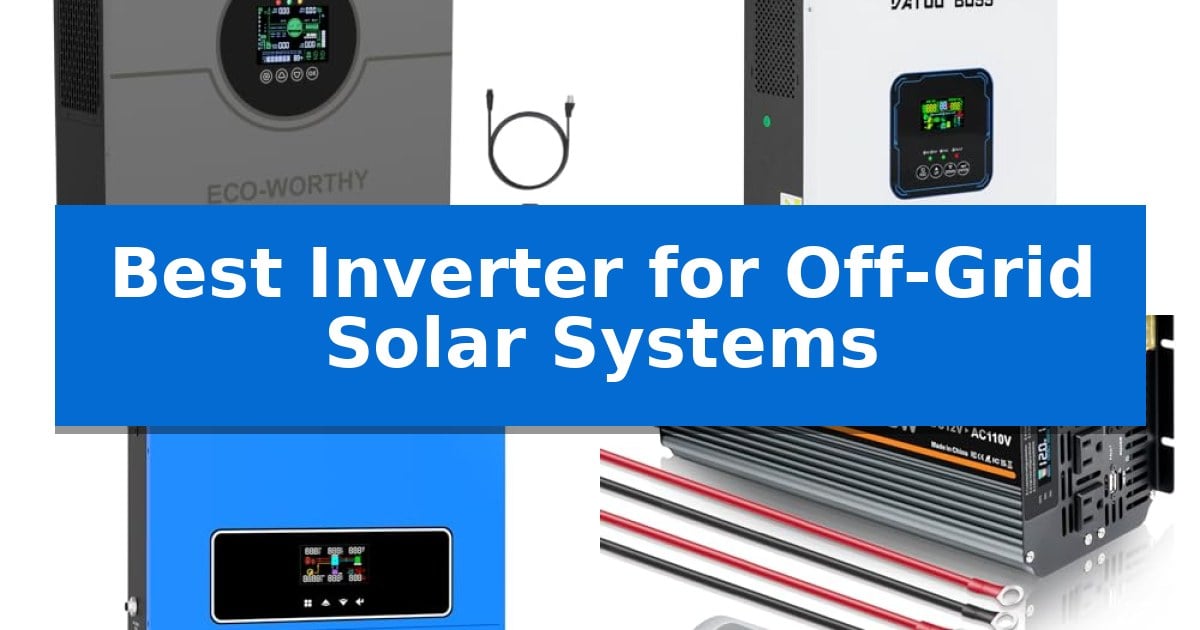
Finding the right power conversion solution is the most critical step in building a reliable independent energy setup. Whether you are powering a remote cabin or upgrading an RV, the Best Inverter for Off-Grid Solar Systems must handle your specific load requirements while managing battery health and solar input efficiently.
Selecting the wrong unit can lead to inefficient energy harvest or damage to sensitive electronics. We have analyzed current market offerings to help you identify which inverter aligns with your battery bank voltage, power output needs, and system architecture for a stable, long-term off-grid experience.
Best Inverter for Off-Grid Solar Systems in 2026
Quick Comparison
| Product | Best For | Key Strength | Score |
|---|---|---|---|
| ECO-WORTHY Liber 10000W Solar Inverter | Best Overall | High-capacity 10KW output with parallel scalability up to 60KW. | 4.9 |
| DATOUBOSS 48V Hybrid Solar Inverter | Flexible Programmable Power Management | High-capacity 8500W PV input for extensive solar arrays. | 4.4 |
| SUMRY Hybrid Solar Inverter Charger | Versatile Battery-Optional Operation | Battery-optional operation allows for flexible system configuration. | 4.7 |
| EFFORTWAY 5000W Power Inverter | Simple Remote-Controlled Power Conversion | High power capacity with 5000W continuous and 10000W peak output. | 4.5 |
How We Chose
- Power Output and Surge Capacity: Assessing continuous wattage to ensure it meets your specific appliance demands.
- Battery Compatibility and Charging: Verifying support for 12V, 24V, or 48V systems and integrated charge controller efficiency.
- System Flexibility: Evaluating options for parallel expansion, hybrid operation, and battery-less functionality.
- Safety and Protection: Checking for certified safety standards and built-in protections against overloads and short circuits.
- Control and Monitoring: Reviewing the ease of configuring parameters via LCD displays or remote interfaces.
1 ECO-WORTHY Liber 10000W Solar Inverter — Best for Large Off-Grid Homes
Managing high-capacity power for remote locations requires a robust, integrated solution, and the ECO-WORTHY Liber 10000W Solar Inverter offers a comprehensive approach by combining a pure sine wave inverter, an inverter charger, and dual MPPT charge controllers into one 48V system. This unit is specifically engineered for off-grid environments such as cabins, workshops, and independent solar setups, delivering stable 120V or 240V output to meet diverse electrical demands.
The system is built for scalability, supporting the parallel connection of up to 6 units to achieve a total output of 60KW. With dual independent MPPT controllers, it handles up to 11,000W of PV input and features a 500VDC maximum open-circuit voltage, providing significant flexibility for solar array configurations. It is compatible with various 48V battery chemistries, including Lithium, AGM, Gel, and Flooded types, ensuring adaptability for different energy storage preferences.
Operational efficiency is supported by built-in Time-of-Use (TOU) energy control, which allows users to schedule charging and discharging cycles to optimize electricity costs during peak and off-peak periods. The unit includes a clear LED display for real-time monitoring and utilizes CAN, USB, and RS485 communication ports for system integration. Safety is prioritized through UL1741 certification and 14 integrated protection functions, including safeguards against short-circuits, overloads, and voltage fluctuations.
Designed for permanent installation, this all-in-one device requires integration with both DC and AC wiring. Due to the complexity of these connections, professional installation by a licensed electrician or an experienced installer is recommended to ensure compliance with local electrical codes and to maintain optimal performance.
Best for: Large-scale off-grid solar systems requiring high power output, scalability, and integrated charge management.
Skip if: Users seeking a grid-tie capable inverter or those without the technical expertise for permanent, complex electrical system installation.
PROS
- High-capacity 10KW output with parallel scalability up to 60KW.
- Dual MPPT controllers supporting 11,000W total PV input.
- Versatile battery compatibility including Lithium and lead-acid types.
- UL1741 certified for North American safety standards.
CONS
- Off-grid use only, lacking grid-tie functionality.
- Requires professional installation due to complex wiring requirements.
2 DATOUBOSS 48V Hybrid Solar Inverter — Flexible Programmable Power Management
Managing energy in off-grid environments requires precise control over power distribution and solar harvesting. The DATOUBOSS 48V Hybrid Solar Inverter addresses this by integrating an intelligent LCD display that allows users to configure critical parameters such as battery charging current and charging priority modes directly through simple button operations.
This unit is engineered for high-capacity systems, supporting a maximum PV input power of up to 8500W. It features a 100A MPPT controller that accommodates a wide PV input voltage range of up to 500V, which enhances solar energy harvesting efficiency. The system is capable of simultaneously powering loads up to 5500W while directing up to 3000W of surplus energy toward battery charging, optimizing overall energy utilization.
Safety and stability are central to its design, incorporating built-in overload, over-temperature, and short-circuit protections. It also includes an automatic restart function and a cold start capability for reliable operation in varied environmental conditions. The device complies with international safety standards, including EN-IEC 60335-1 and IEC 62109-1, ensuring rigorous electrical safety for long-term deployment.
Maintenance is streamlined through a user-friendly, tool-free display screen replacement design. While the system offers robust performance for off-grid setups, it is important to note that this specific model does not support parallel operation or split-phase configurations, making it best suited for standalone, single-inverter applications.
Best for: Off-grid solar setups requiring a single, high-capacity hybrid inverter with flexible, programmable charging and load management.
Skip if: Users who require parallel inverter operation or split-phase electrical configurations will need a different system.
PROS
- High-capacity 8500W PV input for extensive solar arrays.
- Intelligent LCD interface for programmable charging and priority settings.
- Integrated 100A MPPT controller for optimized energy harvesting.
- Comprehensive safety protections including overload and short-circuit safeguards.
CONS
- Does not support parallel operation for scaling power output.
- Incompatible with split-phase configurations.
3 SUMRY Hybrid Solar Inverter Charger — Versatile Battery-Optional Operation
The SUMRY Hybrid Solar Inverter Charger provides a flexible power solution for off-grid environments by offering the unique ability to operate with or without a battery bank. This all-in-one unit integrates a 3600W rated inverter, a 120A MPPT solar charge controller, and a 100A AC battery charger into a single chassis, simplifying the installation process for those managing household or workshop energy needs.
Engineered to deliver a pure sine wave output, this inverter ensures stable 110V/120VAC power suitable for general household appliances and sensitive electronic devices. The system is designed for versatility, supporting a wide PV input voltage range of 60V-500VDC and a maximum PV input power of 4200W, which allows users to scale their solar array effectively.
For users prioritizing energy independence, the hybrid solar inverter functionality allows for configurable charging and output priorities between solar panels, batteries, and utility power. While the unit can function without a battery when PV input exceeds 120V, the manufacturer recommends a 24V battery connection—such as AGM, Gel, Lead-acid, or LiFePO4—to minimize reliance on grid power during outages or low-light conditions.
Operation and maintenance are supported by an integrated LCD display that provides real-time status updates and parameter adjustments, including battery charging current. To ensure longevity, the system includes multiple safety protections for overload, overheat, and short circuits, complemented by built-in silent cooling fans to maintain optimal operating temperatures.
Best for: Off-grid solar setups where the user requires a versatile, all-in-one power management system that can operate with or without a battery bank.
Skip if: Users requiring a higher output capacity than 3600W or those who need a system compatible with 12V or 48V battery architectures.
PROS
- Battery-optional operation allows for flexible system configuration.
- All-in-one design integrates inverter, MPPT controller, and AC charger.
- Pure sine wave output ensures compatibility with sensitive electronics.
- Configurable priority settings for solar, battery, and utility power management.
CONS
- Requires 24V battery for optimal performance and reduced grid reliance.
- Remote monitoring module is sold separately.
4 EFFORTWAY 5000W Power Inverter — Simple Remote-Controlled Power Conversion
Managing high-demand power requirements in remote locations requires a reliable conversion solution, and the EFFORTWAY 5000W Power Inverter is engineered to handle substantial loads with its 5000W continuous and 10000W peak power output. This unit is designed to bridge the gap between DC 12V battery banks and AC 110V/120V appliances, making it a functional choice for RVs, motorhomes, and off-grid solar setups.
The device prioritizes operational visibility through an integrated LCD display that provides real-time data on input/output voltage, battery capacity, and current load. For added convenience, the included 150ft wireless remote control allows users to manage the inverter from a distance, provided the unit’s main switch is set to off before activation.
Safety and efficiency are central to its design, featuring an energy conversion efficiency of over 90% and a high-performance cooling fan housed within a durable aluminum alloy chassis. To protect connected equipment, the system includes built-in safeguards against overcurrent, short circuits, overload, and overheating, with specific error codes displayed on the screen to simplify troubleshooting.
The package includes essential accessories such as two pairs of battery cables, ensuring the unit is ready for integration into existing power systems. With its four AC outlets and one USB port, it offers versatile connectivity for multiple devices, supported by a 12-month manufacturer warranty.
Best for: Off-grid solar systems, RVs, and emergency power setups requiring high-wattage continuous AC power.
Skip if: Users with 24V or 48V battery systems, as this unit is strictly designed for 12V DC input.
PROS
- High power capacity with 5000W continuous and 10000W peak output.
- Integrated LCD display for real-time monitoring of voltage and load.
- Wireless remote control functionality for operation up to 150 feet away.
- Comprehensive safety suite including overload, short circuit, and overheat protection.
CONS
- Strict 12V input requirement limits compatibility with higher-voltage battery banks.
- Manual power switch management required for remote control activation.
Best Inverter for Off-Grid Solar Systems Buying Guide
Understanding Inverter Capacity
The most important factor is matching the inverter's continuous power rating to the total wattage of all appliances you intend to run simultaneously. An inverter that is too small will trigger constant overload protection, while one that is significantly oversized may waste energy through higher idle consumption.
Always account for surge power requirements. Many appliances, such as refrigerators or water pumps, require a momentary spike in power to start. Ensure your chosen unit can handle these peaks without shutting down the system.
Battery System Voltage
Inverters are designed for specific DC input voltages, typically 12V, 24V, or 48V. You must align your inverter with your battery bank configuration. Higher voltage systems, such as 48V, are generally more efficient for larger setups because they require less current to deliver the same amount of power, resulting in less heat loss in your wiring.
Check the battery type compatibility as well. Modern hybrid inverters allow you to select settings for Lithium (LiFePO4), AGM, or Gel batteries to ensure the correct charging profiles are applied, which is essential for maximizing battery lifespan.
Pure Sine Wave vs. Modified Sine Wave
For off-grid solar systems, a pure sine wave output is non-negotiable. It mimics the high-quality electricity provided by the utility grid, ensuring that sensitive electronics like laptops, medical equipment, and modern appliances operate without interference or damage.
While modified sine wave inverters are cheaper, they can cause buzzing in audio equipment and overheating in motor-driven appliances. Investing in a pure sine wave unit protects your long-term investment in household electronics.
Integrated Charge Controllers
Many modern units are all-in-one hybrid inverters, which include a built-in MPPT (Maximum Power Point Tracking) charge controller. This simplifies installation by reducing the number of components and cables required to connect your solar panels to your battery bank.
An MPPT controller is significantly more efficient than older PWM models, as it optimizes the voltage from your solar array to match the battery charging requirements, especially in varying light conditions.
Safety and Installation
Off-grid power systems involve high-voltage DC and AC electricity, which requires strict adherence to safety protocols. Look for units that carry UL1741 certification or similar international safety standards, which indicate the device has been tested for electrical safety and reliability.
Proper installation is vital. Always use the recommended wire gauges for your system's amperage and ensure the unit is placed in a well-ventilated area. If you are not experienced with electrical wiring, consult a licensed electrician to ensure your system complies with local codes.
Frequently Asked Questions
Can I use these inverters for grid-tie systems?
Most of the units listed are designed specifically for off-grid use only and do not have the necessary certifications or hardware to feed power back into the utility grid.
What is the benefit of a hybrid inverter?
A hybrid inverter combines the functions of a power inverter, an AC battery charger, and a solar charge controller into a single unit, which simplifies system design and installation.
Do I need a battery for these inverters?
While some models offer battery-less operation using solar power directly, it is highly recommended to use a battery bank to ensure a stable power supply during cloudy weather or at night.
How do I know which size inverter I need?
Calculate the sum of the continuous wattage of all devices you plan to run at once, then add a 20-30% buffer to ensure the inverter operates within its optimal efficiency range.
What does 'parallel connection' mean?
Parallel connection allows you to link multiple identical inverters together to increase the total power output of your system, which is useful if your energy needs grow over time.
Conclusion: Our Top Pick
For those seeking a robust and scalable solution, the ECO-WORTHY Liber 10000W Solar Inverter stands out as the most comprehensive option for large off-grid homes. Its ability to support parallel connections up to 60KW and its dual MPPT controllers make it highly adaptable to expanding energy needs.
While this unit is powerful, it requires a permanent installation and a 48V battery system. If your project is smaller or requires more portability, consider the other hybrid or pure sine wave options in our list, ensuring you verify the DC input voltage matches your specific battery bank.