

Finding the right power solution for your electric bike can be a challenge when you are away from home. Whether you are planning a long-distance road trip or camping in remote areas, having the Best Inverter for E-bike Chargers ensures your ride never comes to an abrupt halt due to a drained battery.
Selecting an inverter requires balancing your e-bike charger's specific power demands with the capacity of your vehicle's electrical system. We have analyzed several models to help you understand which units provide the necessary output and safety features to keep your gear running reliably while you travel.
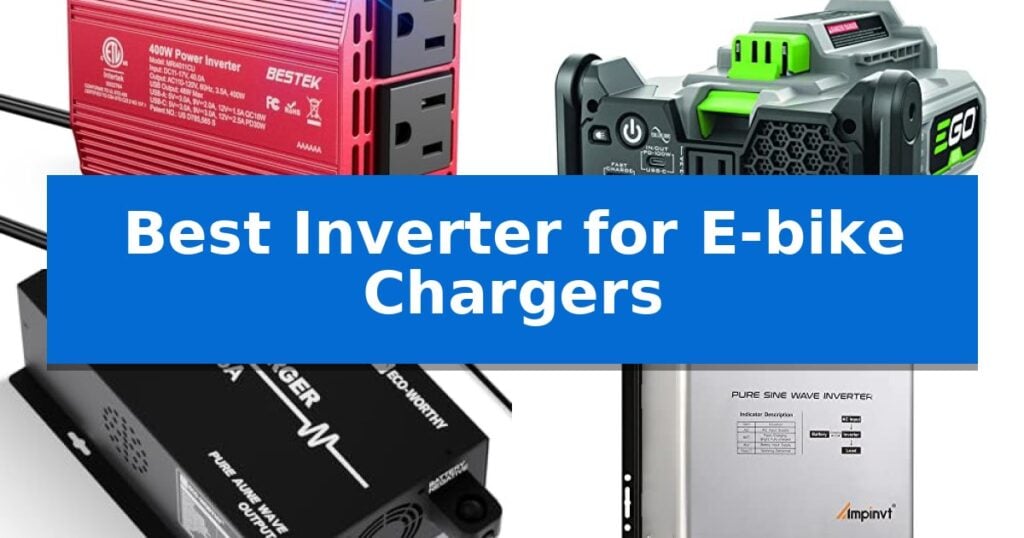
Best Inverter for E-bike Chargers in 2026: Power Your Rides Anywhere
Quick Comparison
| Product | Best For | Key Strength | Score |
|---|---|---|---|
| BESTEK 400W Car Power Inverter | Best Overall | Compact, portable design similar in size to a smartphone. | 4.9 |
| EGO Power+ 400W Portable Inverter | Clean Power for Sensitive Electronics | Pure Sine Wave output ensures safe, clean power for sensitive electronics. | 4.9 |
| ECO-WORTHY 1000W Inverter Charger | Reliable UPS for Battery Backup | 2-in-1 design combines a 1000W inverter and 55A battery charger. | 4.8 |
| Ampinvt 1200W Pure Sine Inverter | Adjustable Current for Lithium Batteries | Integrated functionality combining inverter, charger, and auto-transfer switch. | 4.7 |
| ExpertPower 3000W Inverter Charger | High Capacity for Heavy Loads | High power capacity with 3000W continuous and 9000W peak output. | 4.5 |
How We Chose
- Power Output: Evaluating continuous wattage to ensure it meets the specific draw of your e-bike charger.
- Waveform Type: Prioritizing pure sine wave technology to protect sensitive electronic components within the charger.
- Safety Protections: Checking for built-in safeguards against overvoltage, short circuits, and overheating.
- Portability: Assessing the physical footprint and mounting options for vehicle-based use.
- Compatibility: Verifying support for various battery chemistries and input voltage standards.
1 BESTEK 400W Car Power Inverter — Compact Power for Mobile Charging
Maintaining your e-bike battery levels during extended trips requires a reliable power source, and the BESTEK 400W Car Power Inverter provides a compact solution for converting vehicle DC power to AC. Its design, roughly the size of an iPhone, integrates easily into vehicle interiors, offering a practical way to keep essential charging equipment powered while on the move.
This unit delivers a stable 400W DC-to-AC output through dual 110V AC outlets, which can accommodate devices within the 300W to 400W range. Beyond the AC outlets, it features a PD 30W USB-C port and a QC 3.0 USB-A port, allowing for simultaneous charging of mobile devices alongside your primary e-bike charging hardware.
Safety is managed through a built-in 40-amp fuse and a design engineered to mitigate risks from overheating, overvoltage, undervoltage, and short circuits. The device is ETL-certified, providing a verified standard of safety for mobile power applications. For installation, it utilizes a standard 32-pin cigarette lighter plug, ensuring compatibility with most vehicle power sockets.
While the inverter offers versatile charging options, users should verify the specific wattage requirements of their e-bike charger to ensure it falls within the supported 300W-400W continuous output range. The inclusion of a 12-month warranty and 24/7 technical support provides a structured framework for addressing potential operational concerns.
Best for: Travelers and e-bike riders who need a compact, ETL-certified inverter to power chargers and mobile devices from a vehicle's cigarette lighter socket.
Skip if: Users with high-draw e-bike chargers exceeding 400W continuous power requirements will need a more robust, hardwired inverter system.
PROS
- Compact, portable design similar in size to a smartphone.
- Includes PD 30W USB-C and QC 3.0 USB-A ports for fast mobile charging.
- ETL-certified with built-in 40-amp fuse protection.
- Dual 110V AC outlets for versatile device compatibility.
CONS
- 400W limit may be insufficient for high-capacity or rapid-charge e-bike power bricks.
- Requires a functional vehicle cigarette lighter socket for operation.
2 EGO Power+ 400W Portable Inverter — Clean Power for Sensitive Electronics
The EGO Power+ 400W Portable Inverter provides a versatile solution for riders needing mobile power, utilizing the same 56V ARC Lithium battery system found in EGO outdoor equipment. This compact unit delivers 400W of continuous power with an 800W peak capacity, ensuring that sensitive electronics receive stable energy through its Pure Sine Wave output.
Designed for high utility, the inverter features a 120V power outlet alongside a comprehensive array of USB ports, including a USB-C PD 100W in/out port. This specific port enables pass-through charging, allowing you to power your devices while simultaneously charging an EGO battery. The inclusion of three USB ports—USB-C, USB-C PD, and USB-A—accommodates multiple devices at once.
Portability is a core design element, with the device measuring approximately 7.7 x 4.72 x 8.2 inches and weighing 3.31 pounds. It also integrates built-in LED lights, which serve as a practical feature for low-light conditions or emergency situations. The system is compatible with the entire range of EGO 56V ARC Lithium batteries, offering flexibility for those already invested in the ecosystem.
While the unit provides significant power for its size, it is important to note that the battery and charger are sold separately. The 5-year tool warranty underscores the manufacturer's commitment to durability, making it a reliable choice for those who require a robust, portable power source for charging e-bike batteries or other mobile gear.
Best for: Riders already using the EGO 56V battery ecosystem who need a portable, high-quality power source for charging e-bike batteries and mobile devices on the go.
Skip if: Users who do not own EGO 56V ARC Lithium batteries or those who require a higher continuous wattage output than 400W for heavy-duty equipment.
PROS
- Pure Sine Wave output ensures safe, clean power for sensitive electronics.
- 100W USB-C PD port supports fast charging and pass-through power.
- Compact and lightweight design makes it easy to transport for outdoor use.
- Integrated LED lights provide useful ambient illumination.
CONS
- Battery and charger must be purchased separately.
- 400W continuous power limit may be insufficient for high-draw appliances.
3 ECO-WORTHY 1000W Inverter Charger — Reliable UPS for Battery Backup
Maintaining a consistent power flow for sensitive electronics during grid instability requires a reliable bridge between your battery bank and your devices. The ECO-WORTHY 1000W Pure Sine Wave Inverter Charger distinguishes itself by integrating a 55A LiFePO4 battery charger and a 1000W inverter into a single, space-saving unit, providing a streamlined solution for off-grid power management.
This device functions as an Uninterrupted Power Supply (UPS), capable of switching to battery power within 20ms during grid failures. This rapid transition is essential for protecting sensitive equipment from power drops. The unit utilizes pure sine wave technology, which ensures a stable electrical output, reducing the risk of damage to connected electronics compared to modified sine wave alternatives.
Designed for longevity and safety, the system includes comprehensive protections against high/low voltage, overload, overcurrent, and short circuits. It features an intelligent LiFePO4 charger with 0V charging capability, allowing it to effectively activate BMS-protected lithium batteries. For thermal management, an internal cooling fan engages automatically when the internal temperature reaches 50℃ or the load exceeds 750W.
The interface is straightforward, incorporating LED indicators and a buzzer to provide real-time status updates and alarm notifications. With a weight of 6.94 pounds and dimensions of 13.2 x 3.9 x 8.4 inches, it offers a compact footprint for installation in RVs or home setups where space is at a premium.
Best for: Users needing a compact, all-in-one solution for charging LiFePO4 batteries and powering sensitive AC devices with automatic UPS functionality.
Skip if: Users requiring more than 1000W of continuous power or those who do not have a 12V battery system to pair with the unit.
PROS
- 2-in-1 design combines a 1000W inverter and 55A battery charger.
- 20ms UPS switch time protects sensitive electronics during power failures.
- Pure sine wave output ensures safe, stable power for appliances.
- 0V charging capability helps recover BMS-protected lithium batteries.
CONS
- 1000W continuous output may limit the number of high-draw appliances used simultaneously.
- Internal fan activation is dependent on specific temperature or load thresholds.
4 Ampinvt 1200W Pure Sine Inverter — Adjustable Current for Lithium Batteries
Managing power for e-bike charging while off-grid requires a reliable conversion system that handles various battery chemistries. The Ampinvt 1200W Pure Sine Inverter distinguishes itself by integrating an inverter, a battery charger, and an AC auto-transfer switch into a single unit, providing a versatile solution for maintaining power to your charging equipment.
This device offers high transfer efficiency, rated at above 90%, and features a built-in AVR stabilizer to ensure a continuous, stable pure sine wave output. It is designed to support a wide range of battery types, including Li-ion, LiFePO4, Sealed, Gel, AGM, and Flooded batteries, making it highly adaptable to different energy storage setups.
Usability is enhanced through five distinct working modes, such as AC priority, battery priority, and ECO mode, allowing users to tailor power management to their specific environment. The Ampinvt 1200W Pure Sine Inverter also includes an adjustable charging current feature, which can be set from 0-15A, providing control over how quickly your storage bank is replenished.
Safety remains a priority with comprehensive protection mechanisms, including alarms for battery high and low voltage, as well as safeguards against over-temperature, overload, and short circuits. With its robust design and flexible configuration options, this unit serves as a capable power management hub for those requiring consistent energy for e-bike chargers.
Best for: Users who need an integrated power management system that combines an inverter, battery charger, and auto-transfer switch for diverse battery types.
Skip if: Users who only require a simple, portable power inverter without integrated battery charging or advanced multi-mode switching capabilities.
PROS
- Integrated functionality combining inverter, charger, and auto-transfer switch.
- Wide battery compatibility including Li-ion, LiFePO4, AGM, and Gel.
- Adjustable charging current from 0-15A for flexible power management.
- High transfer efficiency rated at above 90%.
CONS
- Heavyweight design at 19 pounds may limit portability for some users.
- Complex setup required to utilize all five working modes effectively.
5 ExpertPower 3000W Inverter Charger — High Capacity for Heavy Loads
Managing high-power charging requirements for e-bike batteries while off-grid requires a robust power conversion solution. The ExpertPower 3000W Pure Sine Wave Inverter Charger provides a heavy-duty platform for this purpose, featuring a 3000W continuous output and a 9000W peak capacity to handle the initial surge loads often associated with multiple high-capacity chargers.
This unit distinguishes itself with wide-spectrum compatibility, supporting various battery chemistries including LiFePO4, AGM, Wet, and Gel. Its integrated 80A adjustable charger and 30A transfer switch allow for seamless transitions between shore power and battery storage, with a 5ms response time that ensures your charging setup remains uninterrupted during power source shifts.
Designed for complex power management, the system includes an Intelligence Driven CPU that monitors load, frequency, and battery status via an external LED display. For remote operation, the package includes a 26ft wired controller, providing the flexibility to adjust settings from within a camper or workshop environment without needing direct access to the main unit.
The hardware is built for durability, featuring a steel-hardened iron case and copper terminals. To maintain efficiency under sustained loads, the inverter utilizes a double ball-bearing fan for cooling. Furthermore, the system incorporates comprehensive protection algorithms to guard against short circuits, overheating, and deep discharge, ensuring the safety of both the inverter and the connected battery bank.
Best for: Off-grid e-bike charging setups requiring high-wattage capacity and automatic power source switching.
Skip if: Users seeking a lightweight or portable power station, as this unit is a heavy-duty, fixed-installation component weighing 56 pounds.
PROS
- High power capacity with 3000W continuous and 9000W peak output.
- Versatile battery support compatible with LiFePO4 and other common chemistries.
- Fast 5ms transfer switch for reliable UPS-style power management.
- Remote monitoring via the included 26ft wired controller.
CONS
- Heavy physical footprint at 56 pounds, requiring permanent installation.
- Limited remote flexibility as only one controller can be used at a time.
Best Inverter for E-bike Chargers Buying Guide
Understanding Power Requirements
Before purchasing, you must check the power rating on your e-bike charger. Most chargers require a specific wattage to operate efficiently, and using an inverter that provides insufficient power can lead to slow charging or system failure. Always look for a unit that offers a continuous wattage rating higher than your charger's maximum draw.
It is also vital to consider the peak power, or surge capacity, of the inverter. Some chargers experience a brief power spike when first plugged in, and a robust inverter will handle this demand without triggering a shutdown or safety reset.
Pure Sine Wave vs. Modified Sine Wave
For e-bike chargers, a pure sine wave inverter is highly recommended. These units produce a clean, smooth electrical current that mimics the power from a standard wall outlet, which is essential for the delicate circuitry found in modern lithium-ion battery chargers.
While modified sine wave inverters are often more affordable, they can cause excessive heat, buzzing, or even damage to sensitive electronics over time. Investing in a pure sine wave model provides better protection for your expensive e-bike battery system.
Safety and Protection Features
Charging an e-bike battery involves significant energy transfer, making safety features non-negotiable. Look for inverters that include protection against overheating, short circuits, and voltage fluctuations. These features act as a buffer, preventing damage to both your vehicle's electrical system and your bike's battery.
ETL certification or similar safety ratings provide additional peace of mind, indicating that the device has been tested against industry standards for electrical safety and reliability.
Vehicle Compatibility and Installation
Most portable inverters connect via a cigarette lighter socket, which is convenient for smaller devices but limited in total power output. For higher-wattage chargers, you may need an inverter that connects directly to your vehicle's battery terminals to ensure a stable, high-current connection.
Always verify the input voltage of your vehicle. Most passenger cars operate on a 12V system, but some larger trucks or RVs may use 24V, requiring an inverter specifically designed for that voltage to avoid permanent damage.
Monitoring and Control
Modern inverters often include digital displays or LED indicators that provide real-time data on battery status, output load, and error codes. Having this visibility allows you to monitor the charging process closely and catch potential issues before they escalate.
Some advanced models also feature remote controllers or smart monitoring, which are particularly useful if the inverter is mounted in a hard-to-reach area of your vehicle or camper.
Frequently Asked Questions
Can I use any inverter to charge my e-bike?
You should only use an inverter that meets or exceeds the wattage requirements of your specific e-bike charger and ideally provides a pure sine wave output to protect the charger's internal components.
Will charging my e-bike drain my car battery?
Yes, if the engine is not running. It is best to charge your e-bike while the vehicle is running or connected to a secondary battery system to prevent the starting battery from becoming depleted.
What is the benefit of a pure sine wave inverter?
A pure sine wave inverter provides clean, stable power that is safe for sensitive electronics, preventing the overheating and potential damage associated with lower-quality modified sine wave units.
How do I know if my inverter is powerful enough?
Check the label on your e-bike charger for its power consumption in watts. Ensure your inverter's continuous wattage rating is higher than this number to allow for safe and efficient operation.
Do I need a special cable to connect the inverter?
Smaller inverters often come with a cigarette lighter plug, but for high-wattage units, you will likely need heavy-duty battery cables to connect directly to your vehicle's battery terminals for sufficient current flow.
Conclusion: Our Top Pick
Choosing the right equipment is essential for maintaining your e-bike's longevity while on the road. For most users, the BESTEK 400W Car Power Inverter stands out as a reliable and compact solution, offering the necessary power and safety features for mobile charging needs.
While higher-capacity models are available for heavy-duty setups, the BESTEK 400W model provides an excellent balance of portability and performance for standard e-bike chargers. Always ensure your vehicle's electrical system is capable of supporting the inverter's draw before beginning your trip.