
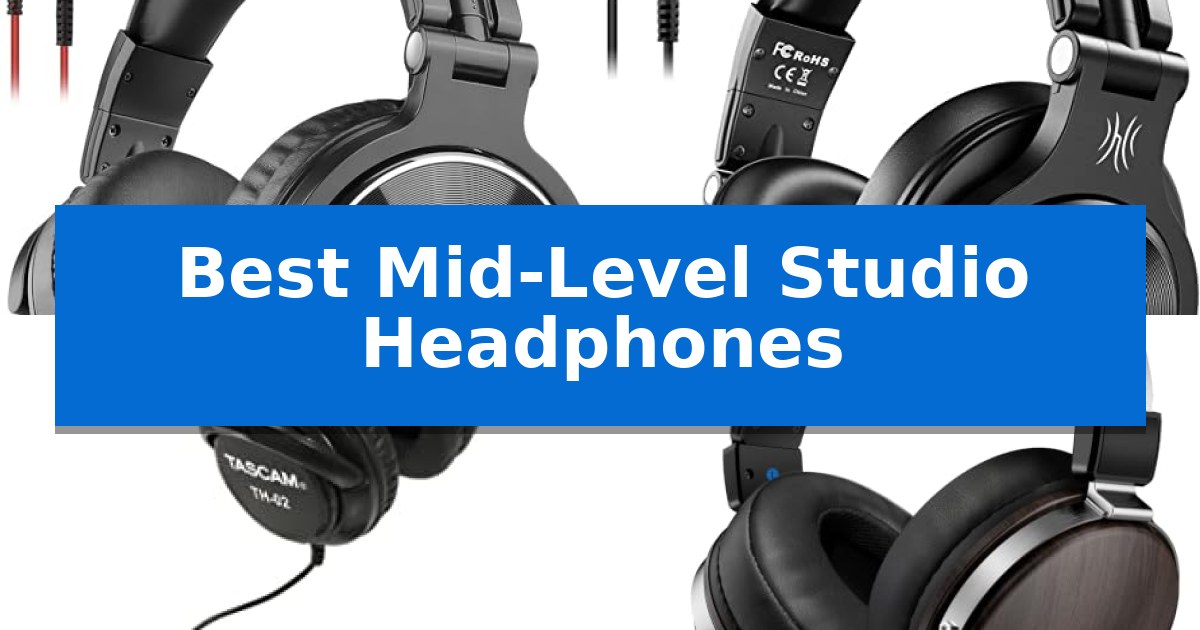
Finding the right audio gear often feels like a balancing act between professional requirements and budget constraints. When you need reliable, accurate sound reproduction for tracking or mixing, you do not necessarily need to invest in high-end flagship models to achieve clarity. The Best Mid-Level Studio Headphones offer a practical middle ground, providing the essential frequency response and build quality required for critical listening without the premium price tag.
Our selection focuses on wired, closed-back designs that prioritize isolation and consistent performance across various studio tasks. Whether you are setting up a home recording space or need a durable pair for DJ monitoring, these models deliver the necessary precision to help you hear your audio as it truly is. We have evaluated these options based on their build, connectivity, and sound profile to help you make an informed decision for your studio setup.
You may also want to compare Best Mid-Level Point and Shoot Camera, Best Mid-Level Nikon Cameras, and Best Mid-Level Mirrorless Camera.

Best Mid-Level Studio Headphones
Quick Comparison
| Product | Best For | Key Strength | Score |
|---|---|---|---|
| OneOdio Pro Wired Studio Headphones | Best Overall | Dual-jack compatibility for 3.5mm and 6.35mm equipment | 4.9 |
| OneOdio A71 Wired Studio Headphones | Precision Mixing and Recording | Dual-plug connectivity with 3.5mm and 6.35mm options for wide hardware compatibility. | 4.3 |
| Tascam TH-02 Studio Monitor Headphones | Standard Choice for Tracking | Foldable design for efficient storage and portability. | 4.6 |
| AOC Wired Studio Headphones | Detailed Sound with Retro Style | 50mm dynamic drivers provide a clear, full-range sound profile for accurate monitoring. | 4.7 |
How We Chose
- Frequency response consistency for accurate monitoring
- Physical build quality and long-term comfort for extended sessions
- Connectivity options, including adapter inclusion and cable versatility
- Noise isolation capabilities through closed-back design
- Suitability for specific studio roles like mixing, tracking, or DJing
1 OneOdio Pro Wired Studio Headphones — Versatile Dual-Jack Monitoring
Achieving precise audio monitoring requires equipment that balances clarity with practical studio utility. The OneOdio Pro Wired Studio Headphones address this need by integrating 50mm speaker drivers and neodymium magnets, which are engineered to produce a balanced stereo sound profile featuring powerful bass, clear vocals, and crisp highs.
Designed for the rigors of studio environments, these headphones prioritize both comfort and functionality. The soft, padded ear cushions provide effective noise isolation, while the adjustable, stretchable headband allows for a customized fit during extended recording or mixing sessions. For professionals who require single-ear monitoring, the 90° swiveling ear cups offer the necessary flexibility for DJing or quick audio checks.
Versatility is a core component of the OneOdio Pro Wired Studio Headphones design. They feature a dual-jack system that accommodates both 3.5mm and 6.35mm audio jacks, ensuring compatibility with a wide array of professional gear including audio interfaces, mixers, amplifiers, and standard consumer electronics. Additionally, the share audio port allows users to daisy-chain a second pair of headphones for collaborative listening without the need for external splitters.
These headphones are built exclusively for wired operation, ensuring a consistent connection for critical tasks like podcasting and mixing. With a 2-year warranty provided by the manufacturer, they offer a reliable solution for creators looking for a dedicated monitoring tool that fits seamlessly into existing studio setups.
Best for: Creators and studio professionals who require versatile, wired monitoring across multiple audio devices using both 3.5mm and 6.35mm connections.
Skip if: Users who prioritize wireless freedom or Bluetooth connectivity will find this exclusively wired model restrictive for their needs.
PROS
- Dual-jack compatibility for 3.5mm and 6.35mm equipment
- 50mm drivers providing balanced, high-resolution sound
- 90° swiveling ear cups for professional single-side monitoring
- Share audio port for easy collaborative listening
CONS
- Wired-only operation limits mobility compared to wireless alternatives
2 OneOdio A71 Wired Studio Headphones — Precision Mixing and Recording
Achieving precise audio monitoring in a home or project studio requires gear that balances clarity with practical utility. The OneOdio A71 Wired Studio Headphones are built specifically for these environments, featuring 40mm drivers that provide high-resolution sound reproduction. This driver configuration is designed to capture the nuance and detail necessary for accurate mixing, recording, and DJ monitoring.
Designed for long sessions, these headphones prioritize user comfort through soft padded ear cushions and an adjustable, stretchable headband. The build includes 90° swiveling earcups, which allow for single-sided monitoring, a common requirement for DJs and engineers who need to keep one ear open to their immediate surroundings.
Connectivity is streamlined for professional and consumer hardware alike. The headphones include a long-style 6.6-9.8 ft coiled cord that minimizes clutter while providing reach. They come equipped with both 3.5mm and 6.35mm plugs, ensuring direct compatibility with amplifiers, guitars, keyboards, and standard computer audio interfaces without the need for additional adapters.
A unique feature of the OneOdio A71 Wired Studio Headphones is the share audio port, which allows a second pair of headphones to be daisy-chained directly to the unit. This enables collaborative listening or monitoring without the need for external splitters or complex cabling, making it a versatile tool for shared studio spaces.
Best for: Home studio engineers and DJs who require versatile, wired monitoring with dual-plug compatibility and a comfortable, foldable design.
Skip if: Users who require wireless Bluetooth connectivity or active noise cancellation will need to look for a different model, as these are strictly wired headphones.
PROS
- Dual-plug connectivity with 3.5mm and 6.35mm options for wide hardware compatibility.
- 90° swiveling earcups facilitate efficient single-sided monitoring.
- Coiled cable design provides flexible reach while reducing workspace clutter.
- Share audio port allows for easy daisy-chaining of a second pair of headphones.
CONS
- Wired-only operation limits mobility compared to wireless alternatives.
- No active noise cancellation features for high-noise environments.
3 Tascam TH-02 Studio Monitor Headphones — Standard Choice for Tracking
The Tascam TH-02 Studio Monitor Headphones utilize a closed-back dynamic design to provide a controlled listening environment, making them a functional tool for tracking sessions, podcasting, or general studio monitoring. By isolating sound, these headphones assist in maintaining focus on the audio source while minimizing bleed during recording tasks.
Designed for versatility, the Tascam TH-02 features a foldable design that allows for compact storage and transport between studio locations. The build incorporates a tightly-stitched, padded headband and ear pads, which are intended to provide comfort during extended periods of use in the studio or at a mixing desk.
The audio profile is engineered to deliver clean sound with a rich bass response and crisp highs, providing a balanced frequency representation suitable for monitoring various instruments, including guitars and DJ setups. This tonal clarity is essential for identifying nuances in a mix during the production process.
Connectivity is streamlined through a standard 1/8-inch (3.5 millimeter) plug, and the package includes a snap-on 1/4-inch (6.3 millimeter) adapter. This ensures immediate compatibility with both portable devices and professional studio interfaces or mixing consoles without requiring additional hardware.
Best for: Home studio owners and creators who need a reliable, foldable pair of headphones for tracking and monitoring across multiple audio devices.
Skip if: Users who require an open-back design for a wider soundstage or those who prefer wireless connectivity for casual listening.
PROS
- Foldable design for efficient storage and portability.
- Closed-back architecture provides effective sound isolation.
- Includes a snap-on 1/4-inch adapter for broad equipment compatibility.
- Padded headband and ear pads designed for extended comfort.
CONS
- Wired-only connection limits movement compared to wireless models.
4 AOC Wired Studio Headphones — Detailed Sound with Retro Style
Achieving precise audio monitoring requires equipment that balances acoustic accuracy with long-term comfort. The AOC Wired Studio Headphones are built with 50mm dynamic drivers designed to deliver a balanced frequency range of 20Hz–20kHz, providing the clarity needed for critical tasks like recording, mixing, and podcasting.
These headphones utilize a closed-back design paired with over-ear protein leather cushions to effectively minimize ambient noise, allowing for better focus during sessions. The construction features a flexible spring-steel headband and memory-foam cushions, resulting in a 300g unit that remains comfortable during extended periods of use.
Versatility is a core component of this model, as it includes both a 1.5m cable with an inline microphone for communication and a 3m extension cable for studio reach. The inclusion of a 6.35mm adapter ensures compatibility with professional audio interfaces, mixers, and guitar amplifiers, while the walnut-grain finish and ABS earcups provide a distinct, resilient aesthetic.
Designed for those who need reliable monitoring without sacrificing style, these headphones offer a practical solution for both home studios and professional environments. The detachable cable system allows for easy replacement or adjustment, ensuring the hardware remains functional as your studio setup evolves.
Best for: The AOC Wired Studio Headphones are best for studio professionals and creators who require reliable, closed-back monitoring for mixing, recording, and instrument practice.
Skip if: Skip these if you require a wireless connection or ultra-lightweight portability, as this is a wired, full-sized studio monitor headset.
PROS
- 50mm dynamic drivers provide a clear, full-range sound profile for accurate monitoring.
- Closed-back design with protein leather cushions helps isolate audio from surrounding noise.
- Flexible connectivity via detachable cables and an included 6.35mm adapter for professional gear.
- Durable construction featuring a spring-steel headband and a distinctive walnut-grain finish.
CONS
- Wired-only operation limits mobility compared to wireless alternatives.
- 300g weight may feel substantial during extremely long sessions for some users.
Best Mid-Level Studio Headphones Buying Guide
Understanding Frequency Response
In a studio context, you want headphones that provide a neutral or flat frequency response. This means the headphones do not artificially boost bass or treble, allowing you to hear the mix exactly as it was recorded. This accuracy is essential for making informed decisions during the mixing and mastering process.
While some consumer-grade headphones are tuned for excitement, studio monitor headphones aim for transparency. Look for models that specify a balanced sound profile, as this helps prevent you from over-correcting your audio during the editing stage.
The Importance of Closed-Back Design
A closed-back design is critical for recording and tracking. By sealing the earcups, these headphones prevent sound from leaking out into your microphone, which is vital when recording vocals or acoustic instruments. They also provide better passive noise isolation, keeping external sounds from interfering with your monitoring.
If you primarily use your headphones for mixing in a quiet room, you might consider open-back alternatives, but for most home studios, the versatility of closed-back models makes them the standard choice for all-around studio utility.
Comfort and Ergonomics
Studio sessions can last for hours, making ergonomic design a non-negotiable factor. Look for models with adjustable headbands and high-quality, soft ear cushions. The ability to swivel the earcups is also a significant benefit, especially for DJs who need to perform single-ear monitoring.
Weight distribution plays a major role in comfort. A lighter build, combined with a well-padded headband, ensures that you can focus on your work rather than the pressure on your head or ears.
Connectivity and Cable Management
Most studio headphones utilize a 3.5mm jack, but they often include a 6.35mm (1/4 inch) adapter to ensure compatibility with professional audio interfaces, mixers, and guitar amplifiers. Having a detachable cable is a major advantage, as it allows for easy replacement if the cable is damaged or if you need a different length for specific studio tasks.
Consider the cable type as well. Coiled cables are often preferred in studio settings because they stay out of the way and reduce clutter, while straight cables might be more convenient if you move around frequently while monitoring.
Durability and Build Materials
Studio gear is meant to be used daily, so durable construction is essential. Look for headphones that use resilient materials like reinforced plastic or metal in the headband structure. Replaceable parts, such as ear pads, can significantly extend the lifespan of your headphones.
While lightweight materials are good for comfort, ensure the hinges and adjustment mechanisms feel sturdy. A well-built pair of headphones should withstand the rigors of being folded, transported, and worn daily without losing their structural integrity.
Frequently Asked Questions
Are these headphones suitable for casual listening?
Yes, many studio headphones are perfectly capable of casual listening. However, because they are tuned for accuracy, they may sound less 'exciting' or bass-heavy than consumer headphones designed for entertainment.
Do I need a dedicated headphone amplifier?
Most mid-level studio headphones are designed to be driven easily by standard audio interfaces, laptops, and mixers. Unless you choose a high-impedance model, you likely will not need a dedicated amplifier.
Can I use these for gaming?
Absolutely. The detailed sound profile and noise isolation of closed-back studio headphones can provide a competitive advantage in gaming by allowing you to hear subtle audio cues more clearly.
What is the benefit of a 6.35mm adapter?
The 6.35mm adapter allows you to connect your headphones to professional-grade equipment like audio interfaces, mixing consoles, and high-end guitar amplifiers, which typically feature larger output jacks.
How often should I replace my ear pads?
Ear pads should be replaced when they begin to crack, flake, or lose their cushioning. Replacing them is a cost-effective way to restore comfort and maintain the seal required for good noise isolation.
Conclusion: Our Top Pick
Choosing the right equipment for your studio does not have to be an overwhelming process. By focusing on build quality, accurate sound reproduction, and the specific connectivity needs of your gear, you can find a reliable pair of headphones that will serve you well for years to come.
For most users, the OneOdio Pro Wired Studio Headphones stand out as the top choice due to their versatile dual-jack design, comfortable fit, and balanced sound profile. They offer the necessary features for both professional monitoring and general studio use, making them an excellent investment for any creator looking to upgrade their audio setup without overspending.