
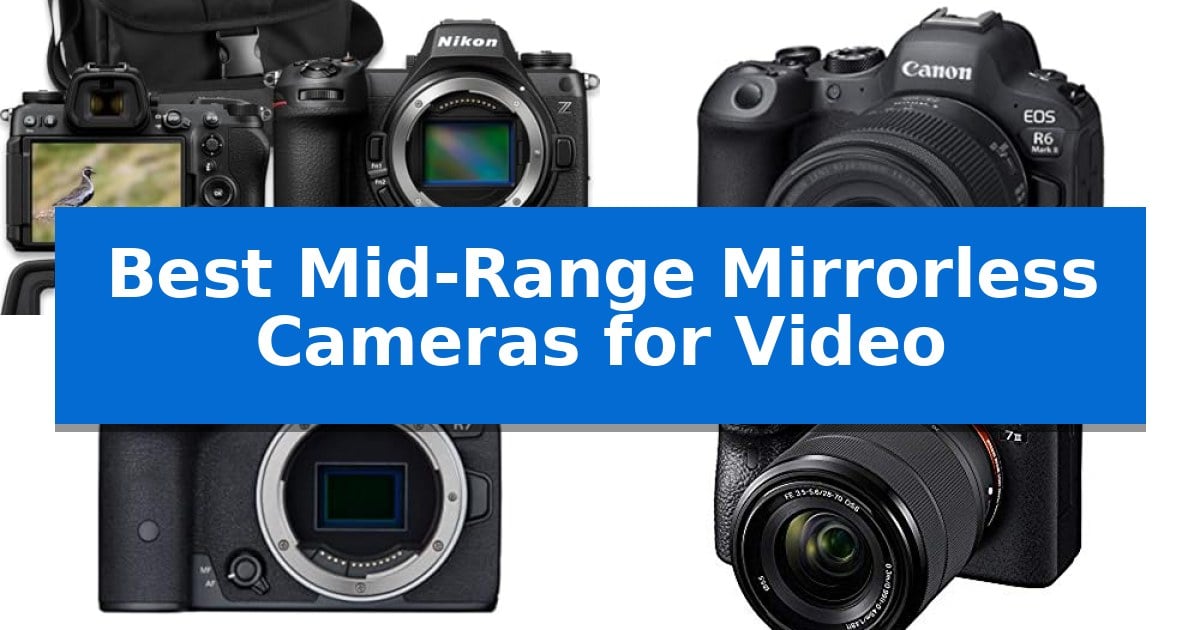
Finding the right camera for video production often feels like a balancing act between professional-grade features and budget-friendly accessibility. Whether you are a content creator upgrading your setup or an aspiring filmmaker, selecting from the Best Mid-Range Mirrorless Cameras for Video requires a clear understanding of your specific workflow needs, such as sensor size, autofocus reliability, and internal recording capabilities.
We have analyzed the latest hybrid mirrorless options to help you navigate the current market. By focusing on essential video specifications like bit depth, stabilization, and lens compatibility, this guide highlights models that offer the most practical performance for your creative projects.
You may also want to compare Best Mid-Range Mirrorless Cameras for Photography, Best Mid-Range Mirrorless Cameras, and Best Mid-Range Mini-LED TV.
Best Mid-Range Mirrorless Cameras for Video
Quick Comparison
| Product | Best For | Key Strength | Score |
|---|---|---|---|
| Nikon Z6 III Mirrorless Camera | Best Overall | Partially-stacked CMOS sensor for faster readout and reduced rolling shutter. | 4.9 |
| Canon EOS R6 Mark II Mirrorless Camera | Versatile Full-Frame Hybrid | Advanced subject detection for people, animals, and vehicles using deep learning. | 4.6 |
| Canon EOS R7 Mirrorless Camera | Fast Action and Video Specialist | Advanced Dual Pixel CMOS AF with 100% frame coverage for reliable subject tracking. | 4.5 |
| Sony Alpha a7 III Mirrorless Camera | Reliable Full-Frame Video Workhorse | Advanced 24.2MP BSI Full-frame Sensor for high-quality imaging. | 4.4 |
| Panasonic LUMIX G100 Mirrorless Camera | Compact Vlogging Powerhouse | Advanced 360-degree tracking microphone for superior audio capture. | 4.5 |
How We Chose
- Sensor technology and resolution capabilities for high-bitrate video recording.
- Autofocus performance, specifically subject detection and tracking accuracy.
- In-body image stabilization (IBIS) effectiveness for handheld shooting.
- Connectivity options, including external recording support and microphone integration.
- Ergonomics and physical design, focusing on portability and ease of use during long shoots.
1 Nikon Z6 III Mirrorless Camera — Flagship-Level Video Performance
The Nikon Z6 III Mirrorless Camera introduces a partially-stacked CMOS sensor to the mid-range category, enabling significantly faster scan and readout speeds compared to its predecessor. This architectural shift serves as the foundation for its professional-grade capabilities, including reduced rolling shutter and high-speed performance that benefits both still photography and high-resolution video production.
Engineered with the EXPEED 7 image processor, this camera delivers processing speeds approximately 10x faster than the Z6II. This engine supports advanced features like 6K 60p N-RAW and 6K 30p ProRes RAW internal recording, alongside 4K 120p for high-frame-rate capture. The combination of the sensor and processor allows for a blackout-free EVF experience and AI-based subject detection, providing a responsive interface for creators who require precision in fast-paced environments.
Designed for versatility, the body features a 3.2-inch 4-axis tilting touchscreen LCD and dual card slots supporting both CFx Type B and SD media. The system is built to handle intensive workflows, offering a high buffer capacity and burst shooting up to 20 fps in Raw or 60 fps in JPEG. With its included accessories, this 11-piece bundle provides a comprehensive starting point for those looking to integrate professional-level video tools into their existing setup.
While the Nikon Z6 III Mirrorless Camera offers flagship-level performance, its feature set is specifically tuned for users who need a balance of speed and high-resolution raw video. The inclusion of Full HD 240p slow motion and advanced autofocus tracking makes it a robust tool for diverse production needs, though its weight and dimensions should be considered for those prioritizing ultra-compact travel gear.
Best for: Aspiring professionals and creators who require flagship-level internal raw video recording and high-speed autofocus performance in a mid-range body.
Skip if: Users who prioritize a lightweight, ultra-compact camera body or those who do not require high-bitrate raw video recording capabilities.
PROS
- Partially-stacked CMOS sensor for faster readout and reduced rolling shutter.
- 6K internal raw video recording in N-RAW and ProRes RAW formats.
- EXPEED 7 processor provides 10x faster speeds than the previous generation.
- Blackout-free EVF and AI-based subject detection for improved tracking.
CONS
- Larger physical footprint compared to entry-level mirrorless options.
- Advanced video features may exceed the requirements of casual hobbyists.
2 Canon EOS R6 Mark II Mirrorless Camera — Versatile Full-Frame Hybrid
The Canon EOS R6 Mark II Mirrorless Camera centers its performance around a new 24.2 megapixel full-frame CMOS sensor, providing a high-resolution foundation for both detailed photography and high-quality video production. This hybrid system is built for versatility, utilizing the RF mount to support a wide range of optics while maintaining a compact, manageable form factor for various shooting environments.
At the heart of its video capabilities is the DIGIC X Image Processor, which enables an ISO range of 100-102400, expandable up to 204800 for challenging lighting conditions. The camera integrates Dual Pixel CMOS AF II, offering 1,053 AF zones that cover 100% x 100% of the frame. This autofocus system leverages deep learning technology to automatically detect and track people, animals, and vehicles, including specialized recognition for aircraft, trains, and horses.
For high-speed action, the camera supports continuous shooting up to 12 fps with the mechanical shutter and reaches 40 fps using the electronic silent shutter. It also features a RAW burst mode and pre-shooting capabilities that capture frames at approximately 30 fps, ensuring that fleeting moments are not missed during fast-paced recording sessions.
Designed as a balanced hybrid solution, the body measures 5.45 x 3.87 x 3.48 inches and weighs 2.17 pounds. The included RF24-105mm F4-7.1 IS STM lens provides a flexible focal range, making it a practical choice for creators who require a single, reliable setup for diverse video projects without needing to constantly swap lenses.
Best for: Content creators and videographers who need a versatile, full-frame hybrid system with advanced subject-tracking autofocus.
Skip if: Users who require a lightweight, pocketable camera or those who do not need full-frame sensor performance for their specific video workflows.
PROS
- Advanced subject detection for people, animals, and vehicles using deep learning.
- High-speed continuous shooting up to 40 fps with the electronic shutter.
- Full-frame 24.2 megapixel sensor for high image quality.
- Dual Pixel CMOS AF II covering 100% of the frame for precise focus.
CONS
- Larger physical footprint compared to APS-C or Micro Four Thirds mirrorless systems.
- Weight of 2.17 pounds may be noticeable during extended handheld shooting.
3 Canon EOS R7 Mirrorless Camera — Fast Action and Video Specialist
The Canon EOS R7 Mirrorless Camera distinguishes itself with a high-speed 32.5-megapixel APS-C CMOS sensor, specifically engineered for creators who require both rapid continuous shooting and professional-grade 4K video capture. Its design prioritizes versatility, offering a compact, lightweight body that maintains a firm, ergonomic grip for stable handling during extended vlogging sessions or field work.
Performance is driven by advanced Dual Pixel CMOS AF technology, which utilizes 651 AF zones to provide near-total sensor coverage for precise subject tracking. This autofocus system is deeply integrated into the camera's video capabilities, ensuring that subjects remain sharp even while moving. The inclusion of a 5-Axis In-body Image Stabilization (IBIS) system further enhances video quality by compensating for camera shake, which is particularly beneficial when shooting handheld in challenging lighting.
For those focused on high-speed action, the camera supports a 15 fps mechanical shutter and a 30 fps electronic shutter, complemented by a RAW Burst Mode with pre-shooting functionality. The device is optimized for long-form content, supporting recording times exceeding 30 minutes. To ensure reliability during long shoots, the package includes an LP-E6NH battery pack, allowing users to maintain momentum without frequent power interruptions.
The combination of high-resolution imaging and specialized video features makes this a robust tool for hybrid creators. While it provides significant power, its compact form factor ensures it remains portable enough for travel, fitting easily into standard camera bags without sacrificing the professional controls required for sophisticated production work.
Best for: Content creators and hybrid shooters who need a portable, high-speed camera capable of professional-grade 4K video and rapid-fire action photography.
Skip if: Users who require a full-frame sensor for specific low-light depth-of-field aesthetics or those who prefer a larger, heavier body for balance with massive telephoto lenses.
PROS
- Advanced Dual Pixel CMOS AF with 100% frame coverage for reliable subject tracking.
- 5-Axis In-body Image Stabilization for steady handheld video and low-light shooting.
- High-speed shooting capabilities including 30 fps electronic shutter and RAW burst mode.
- Extended recording time exceeding 30 minutes for long-form video projects.
CONS
- APS-C sensor size may not meet the specific low-light or depth-of-field requirements of full-frame users.
- Compact body design might feel less balanced when paired with very large or heavy professional lenses.
4 Sony Alpha a7 III Mirrorless Camera — Reliable Full-Frame Video Workhorse
The Sony Alpha a7 III Mirrorless Camera distinguishes itself through a high-performance 24.2MP Back-Illuminated 35mm Full-frame Image Sensor, which utilizes a 1.8X readout speed to deliver professional-grade clarity for video production. This sensor architecture is engineered to handle demanding lighting conditions, offering a wide 15-stop dynamic range and a broad ISO sensitivity span from 50 to 204,800.
For videographers, the autofocus system is a primary asset, featuring 693 phase-detection and 425 contrast AF points that cover 93% of the image area. This extensive coverage ensures consistent subject tracking during motion, while the camera's ability to capture at 10fps—using either a silent or mechanical shutter—provides flexibility for diverse shooting environments.
The included SEL2870 lens provides a versatile starting point for various video applications, and the camera body is designed with a durable, compact form factor weighing 1.75 pounds. The integration of the Exmor R CMOS sensor technology allows for efficient data processing, making this a reliable choice for creators who require a balance of high-resolution imaging and responsive autofocus performance.
While this system offers significant technical advantages, users should consider that the 35mm full-frame format requires specific lens compatibility to maximize the sensor's potential. The Sony Alpha a7 III Mirrorless Camera remains a foundational tool for those prioritizing sensor quality and autofocus reliability in their video workflow.
Best for: Creators requiring a reliable full-frame sensor and advanced autofocus tracking for professional video production.
Skip if: Users who require a smaller sensor format for lighter weight setups or those who do not need full-frame lens compatibility.
PROS
- Advanced 24.2MP BSI Full-frame Sensor for high-quality imaging.
- Extensive 693-point phase-detection autofocus system.
- 15-stop dynamic range for superior lighting flexibility.
- 10fps continuous shooting capability.
CONS
- Full-frame sensor size increases the weight and footprint compared to smaller formats.
- Requires specific full-frame lens compatibility to utilize the sensor's full capabilities.
5 Panasonic LUMIX G100 Mirrorless Camera — Compact Vlogging Powerhouse
The Panasonic LUMIX G100 Mirrorless Camera is engineered for creators who prioritize portability and high-quality audio without the bulk of traditional cinema gear. Its standout feature is the advanced 360-degree sound system, which utilizes a high-performance microphone with tracking technology that automatically adjusts to capture clear audio in diverse environments, from crowded streets to quiet nature settings.
Designed for versatility, this camera supports 4K 24p/30p video recording and provides 5-axis hybrid image stabilization to ensure footage remains smooth during handheld shooting. The inclusion of V-Log L recording offers professional-grade dynamic range for those looking to color grade their content, while the Micro Four Thirds interchangeable lens system allows users to swap optics as their creative needs evolve.
Usability is a core focus, evidenced by the iA (intelligent auto) mode for quick captures and dedicated manual controls for more experienced users. The device also functions as a webcam via a simple computer connection, providing a professional visual upgrade for livestreams and video calls. For social media creators, the camera includes helpful frame markers for various aspect ratios, simplifying the composition process for different platforms.
This system is a practical choice for those seeking a balance between performance and size. While it excels in compact, one-handed operation, users should note that the 12-32mm lens is optimized for general versatility rather than extreme telephoto reach. It is a capable tool for those transitioning from mobile devices to a dedicated mirrorless setup.
Best for: Vloggers and content creators who need a compact, lightweight camera with integrated high-quality audio tracking.
Skip if: Professional filmmakers requiring high-bitrate internal codecs, advanced weather sealing, or extensive telephoto lens compatibility.
PROS
- Advanced 360-degree tracking microphone for superior audio capture.
- Compact and lightweight design ideal for one-handed vlogging.
- 5-axis hybrid image stabilization for steady handheld video.
- Webcam functionality for professional-looking remote communication.
CONS
- Limited lens reach with the included 12-32mm kit lens.
- Micro Four Thirds sensor size may be a trade-off for those prioritizing extreme low-light performance.
Best Mid-Range Mirrorless Cameras for Video Buying Guide
Understanding Sensor Types
The sensor is the heart of your camera, dictating low-light performance and depth of field. Full-frame sensors are generally preferred for their superior dynamic range and cleaner images at high ISO settings, making them ideal for cinematic work.
Conversely, APS-C and Micro Four Thirds sensors offer a distinct advantage in terms of size and weight. These smaller sensors often allow for more compact lens systems, which can be a significant benefit for travel vlogging or run-and-gun production styles.
The Importance of Autofocus
Modern video work often relies on advanced subject detection to keep moving targets sharp. Look for cameras that utilize deep learning to track people, animals, or vehicles, as this significantly reduces the need for manual focus adjustments.
Reliable autofocus systems ensure that your subject remains in focus even when moving erratically. This is particularly critical for solo creators who cannot rely on a dedicated focus puller to manage the lens during a shoot.
Stabilization and Handheld Shooting
If you frequently shoot without a gimbal, In-body Image Stabilization (IBIS) is a non-negotiable feature. This technology compensates for micro-jitters and larger movements, resulting in smoother, more professional-looking handheld footage.
Some systems offer coordinated control between the camera body and stabilized lenses. This synergy provides a more robust correction factor, allowing you to capture stable shots even in challenging, low-light conditions where slower shutter speeds are required.
Video Recording Formats
Professional-grade video requires high-quality recording formats. Features like 6K internal raw video or ProRes RAW provide extensive flexibility during the color grading process, allowing you to recover highlights and shadows that would be lost in standard compressed formats.
Always check the recording time limits of a camera. While many modern mirrorless bodies have moved past the 30-minute recording barrier, it remains a vital specification for those filming long-form interviews, events, or extended vlogs.
Audio and Connectivity
High-quality audio is just as important as crisp video. Cameras with built-in microphones with tracking or advanced audio processing can improve your production value significantly without the need for complex external setups.
Ensure your chosen camera has the necessary ports and connectivity for your workflow. This includes reliable microphone inputs, headphone jacks for monitoring, and the ability to output a clean signal to external monitors or recorders.
Frequently Asked Questions
What is the main benefit of a partially-stacked sensor?
A partially-stacked sensor design allows for faster data readouts, which significantly reduces rolling shutter artifacts and enables faster autofocus performance and higher frame rates.
Can I use these cameras as a webcam?
Many modern mirrorless cameras, such as the Panasonic LUMIX G100, feature dedicated webcam functionality, allowing you to connect them to your computer for professional-quality livestreams and video calls.
Is full-frame always better for video?
While full-frame sensors offer better low-light performance and depth-of-field control, smaller sensor formats like APS-C are often more practical for action-oriented shooting due to their reach and compact lens options.
Why does bit depth matter for video?
Higher bit depth allows for a greater range of colors and smoother gradients, which is essential for professional color grading and preventing banding in your final output.
Do I need a gimbal if my camera has IBIS?
While IBIS is excellent for smoothing out handheld footage, a gimbal is still recommended for cinematic camera movements like pans, tilts, and tracking shots where absolute stability is required.
Conclusion: Our Top Pick
For creators seeking the most versatile and high-performing tool, the Nikon Z6 III Mirrorless Camera stands out as the premier choice. Its partially-stacked sensor and EXPEED 7 processor deliver flagship-level video capabilities, including 6K internal raw recording and exceptional autofocus speed, making it a reliable workhorse for professional-grade projects.
While other models offer specific advantages in portability or lens ecosystems, the Z6 III provides the most balanced feature set for those who refuse to compromise on image quality. Its combination of blackout-free performance and advanced subject detection ensures that you can capture fast-paced action with confidence, cementing its status as an ideal investment for aspiring professionals.