
Capturing clear images in dim environments often requires more than just a standard smartphone lens. When you are working with limited illumination, the internal sensor and image processing capabilities of your camera become the deciding factors between a crisp shot and a grainy, unusable image.
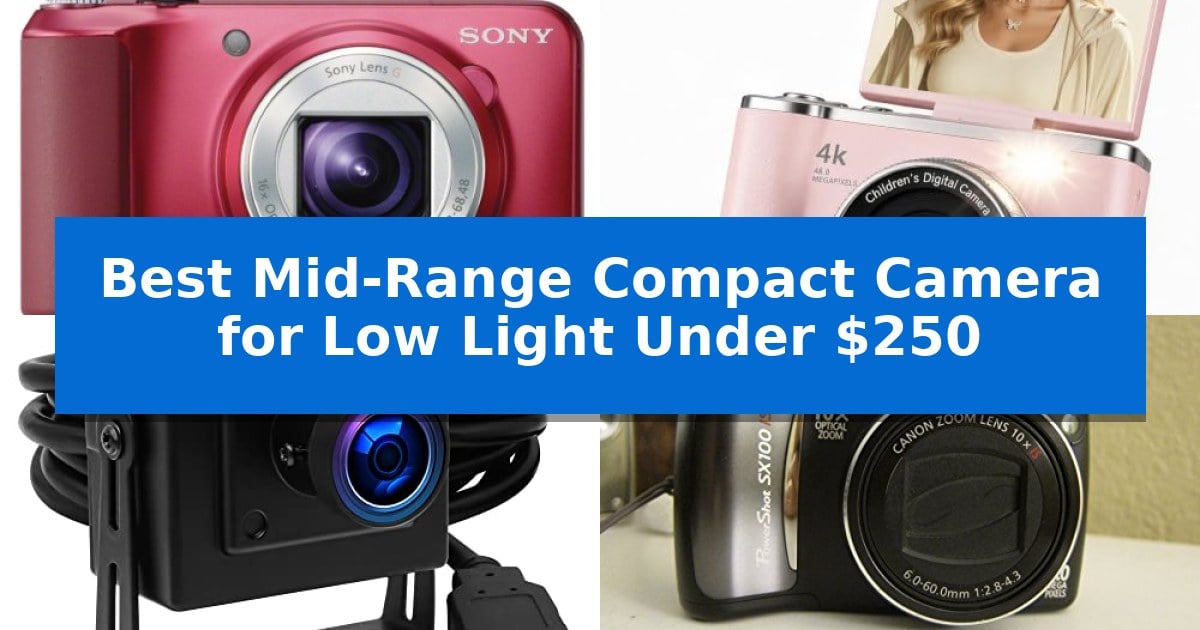
Finding the Best Mid-Range Compact Camera for Low Light Under $250 involves balancing sensor sensitivity with practical features like optical stabilization and zoom range. We have analyzed four distinct models to help you identify which device best aligns with your specific photography requirements and budget constraints.
You may also want to compare Best Mid-Range CNC Machine, Best Mid-Range Closed Back Planar Magnetic Headphones, and Best Mid-Range Cell Phone Camera.
Best Mid-Range Compact Camera for Low Light Under $250
Quick Comparison
| Product | Best For | Key Strength | Score |
|---|---|---|---|
| Sony Cyber-shot DSC-H90 Digital Camera | Best Overall | Exmor R CMOS sensor for enhanced low-light performance | 4.9 |
| Kiisda 64MP Digital Camera | Built-in Flash for Night Scenes | Comprehensive kit includes a 64GB SD card and phone adapter for immediate use. | 4.9 |
| ELP Sony IMX323 USB Camera Module | Specialized Low-Illumination Sensor | Sony IMX323 low-illumination sensor for improved performance in dark environments. | 4.4 |
| Canon PowerShot SX100IS Digital Camera | Stabilized Zoom for Dim Environments | 10x optical image-stabilized zoom for steady shots in low light. | 4.5 |
How We Chose
- Sensor technology and low-light sensitivity ratings.
- Optical zoom range and its impact on framing flexibility.
- Image stabilization effectiveness for reducing motion blur.
- Ease of use and interface accessibility for quick adjustments.
- Physical build and portability for varied shooting environments.
1 Sony Cyber-shot DSC-H90 Digital Camera — Enhanced Low-Light Sensor Performance
Capturing clear images in dim environments requires a sensor capable of managing light sensitivity effectively, which is the primary focus of the Sony Cyber-shot DSC-H90 Digital Camera. This compact model utilizes a 16.1-megapixel Exmor R CMOS sensor, specifically engineered to improve image quality when natural or artificial light is limited.
Beyond its sensor capabilities, the camera offers significant versatility for varied shooting distances through its 16X optical zoom lens. This range allows users to frame subjects from a distance without sacrificing the portability of a compact frame, which measures approximately 4.13 by 2.36 inches.
Usability is centered around the 3.0-inch LCD screen, providing a clear interface for navigating menus and reviewing captured media. For those interested in video, the device includes a 720p MP4 HD Movie Mode, offering a straightforward way to record high-definition clips without complex setup requirements.
Creative features such as the Sweep Panorama mode allow for capturing wide-angle shots up to 360 degrees by panning the camera. This functionality expands the utility of the device for landscape photography, making it a practical tool for travel or general daily use where a balance of zoom and low-light performance is required.
Best for: Travelers and casual photographers who need a compact camera with significant zoom range and improved low-light sensor performance.
Skip if: Users who require professional-grade manual controls, RAW image support, or high-speed burst shooting capabilities will find this point-and-shoot model too limited.
PROS
- Exmor R CMOS sensor for enhanced low-light performance
- Versatile 16X optical zoom lens
- Sweep Panorama mode for wide-angle shots
- Compact and portable design
CONS
- Limited to 720p HD video resolution
- Fixed lens design restricts advanced manual adjustments
2 Kiisda 64MP Digital Camera — Built-in Flash for Night Scenes
Capturing clear imagery in dim environments often requires specialized equipment, but the Kiisda 64MP Digital Camera simplifies this task with its integrated built-in flash and fill light. This feature is specifically engineered to brighten low-light scenes, ensuring that evening gatherings, concerts, or late-night events remain vibrant and visible.
Beyond its lighting capabilities, this device incorporates anti-shake technology to maintain image stability. By reducing the impact of minor hand movements, it helps produce sharper results, which is particularly beneficial for users who may struggle with steadying a camera during handheld shooting.
Designed with a 3-inch 180° flip screen, the camera offers a practical solution for vloggers and selfie enthusiasts who need to monitor their framing in real-time. The inclusion of a 64MP sensor and 16X digital zoom provides the flexibility to capture both wide shots and distant details, while the CCD sensor is utilized to achieve a distinct, nostalgic color profile.
The camera arrives as a comprehensive kit, including a 64GB SD card, a card reader, and a phone adapter. This out-of-the-box readiness allows for immediate use and simplifies the file transfer process to mobile devices, bypassing the need for a computer. With its one-button operation and fast autofocus, it is built for straightforward, accessible photography.
Best for: Beginners and content creators seeking an all-in-one, compact camera kit for casual vlogging and social media photography in varied lighting conditions.
Skip if: Users requiring professional-grade manual controls, advanced optical zoom lenses, or high-end sensor performance for large-format printing will find this entry-level model limiting.
PROS
- Comprehensive kit includes a 64GB SD card and phone adapter for immediate use.
- 180° flip screen facilitates easy framing for vlogging and self-portraits.
- Built-in flash and anti-shake technology support clearer shots in low-light environments.
- Simple one-button operation designed for beginner-friendly, point-and-shoot functionality.
CONS
- Digital zoom may result in reduced image quality compared to optical zoom alternatives.
- Entry-level sensor technology is optimized for social media rather than high-resolution professional editing.
3 ELP Sony IMX323 USB Camera Module — Specialized Low-Illumination Sensor
Capturing clear imagery in challenging environments requires specialized hardware, and the ELP Sony IMX323 USB Camera Module is engineered specifically for these conditions. By utilizing a Sony IMX323 low-illumination image sensor, this device is built to maintain visibility where standard webcams often struggle, providing a practical solution for low-light surveillance or specialized imaging tasks.
This module supports 1080P HD high resolution at 30fps, ensuring that captured footage remains sharp despite the lack of ambient light. The integration of H.264 compression format allows for efficient data handling, which is essential for maintaining stream quality without overwhelming system resources. Its 170-degree fisheye lens provides an expansive field of view, making it suitable for monitoring wide areas.
Designed with a mini size form factor and enclosed in a durable metal case, the unit is highly adaptable for integration into compact spaces, such as robotic projects or custom enclosures. It connects via USB 2.0 and is UVC compliant, facilitating straightforward setup across various computer systems without the need for complex driver installations.
While this camera excels in specialized low-light applications, its fixed fisheye perspective and industrial design prioritize function over traditional consumer aesthetics. It is a purpose-built tool for those requiring a compact, high-sensitivity imaging solution rather than a general-purpose desktop webcam.
Best for: Users requiring a compact, low-light capable camera module for custom surveillance, robotics, or specialized wide-angle imaging projects.
Skip if: Users looking for a standard plug-and-play desktop webcam with autofocus, adjustable zoom, or a natural, non-distorted field of view.
PROS
- Sony IMX323 low-illumination sensor for improved performance in dark environments.
- H.264 compression support for efficient video streaming.
- Compact metal case design ideal for tight spaces and robotic integration.
- 170-degree wide-angle fisheye lens for expansive coverage.
CONS
- Fixed-focus fisheye lens creates significant barrel distortion.
- Industrial design lacks the mounting flexibility of consumer-grade webcams.
4 Canon PowerShot SX100IS Digital Camera — Stabilized Zoom for Dim Environments
Capturing clear images in challenging lighting is often the primary hurdle for entry-level photography. The Canon PowerShot SX100IS Digital Camera addresses this with its 10x image-stabilized optical zoom, which helps maintain sharpness by compensating for camera shake—a vital feature when shooting in dim environments where slower shutter speeds might otherwise lead to blur.
Equipped with an 8-megapixel CCD sensor, this camera provides sufficient resolution for producing detailed prints up to 16 x 22 inches. The inclusion of Face Detection technology and an in-camera red-eye fix simplifies the process of capturing portraits, ensuring that subjects remain the focus even in varied lighting conditions.
Versatility is built into the interface, which offers 18 shooting modes, including 7 special scene modes tailored for specific environments. Users can quickly manage their workflow using the dedicated Print/Share button, which streamlines the process of transferring or outputting images directly from the device.
The camera is designed for practical portability, measuring 4.29 inches in length and weighing 0.7 pounds. It operates on 2 AA-size batteries and utilizes SD memory cards for storage, offering a familiar power and media solution that is easy to manage while traveling.
Best for: Photographers seeking a compact, stabilized zoom camera for versatile shooting in varied light conditions.
Skip if: Users who require high-speed performance or advanced manual controls beyond standard scene modes will find this entry-level model limiting.
PROS
- 10x optical image-stabilized zoom for steady shots in low light.
- 8-megapixel CCD sensor suitable for large-format printing.
- Face Detection technology for improved portrait accuracy.
- 18 shooting modes for flexible scene-specific adjustments.
CONS
- AA battery power may require frequent replacements compared to modern rechargeable lithium-ion packs.
- Limited internal memory, necessitating the use of external SD cards.
Best Mid-Range Compact Camera for Low Light Under $250 Buying Guide
Understanding Sensor Performance
The sensor is the heart of any digital camera, acting as the component that converts light into digital data. In low-light scenarios, a larger or more advanced sensor, such as an Exmor R CMOS or a CCD sensor, is essential for capturing more light without introducing excessive digital noise.
When shopping for a budget-friendly camera, look for sensors specifically noted for low-illumination performance. These sensors allow for higher sensitivity settings, which can make the difference when shooting indoors or during evening hours.
The Role of Optical Zoom
Optical zoom is fundamentally different from digital zoom because it uses physical lens elements to magnify the image. This preserves the resolution and clarity of your photos, which is critical when you cannot physically get closer to your subject.
A higher optical zoom range provides greater versatility, allowing you to capture distant details or tight compositions. However, remember that as you zoom in, the aperture often narrows, which can reduce the amount of light reaching the sensor.
Importance of Image Stabilization
Image stabilization is a vital feature for handheld photography, especially in dim environments where slower shutter speeds are often necessary. By compensating for minor hand movements, stabilization helps prevent blurry photos.
Whether it is lens-based or sensor-shift technology, stabilized zoom ensures that your images remain sharp even when you are fully extended. This is a non-negotiable feature for anyone who frequently shoots without a tripod.
Connectivity and Transfer
Modern photography workflows often require quick access to your files. Look for cameras that offer straightforward data transfer methods, such as direct SD card access or USB connectivity, to move your images to a computer or mobile device.
Some models include phone adapters or card readers in the box, which can save you time and additional expenses. Efficient file management ensures you spend more time shooting and less time struggling with cables.
Form Factor and Ergonomics
The physical design of the camera, including the LCD screen size and overall weight, dictates how comfortable it is to use for extended periods. A flip screen can be particularly useful for vlogging or taking selfies, offering a clear view of your framing.
Consider the compact design of the unit to ensure it fits your lifestyle. A camera that is easy to carry is one that you are more likely to have with you when the perfect low-light opportunity arises.
Frequently Asked Questions
Does a higher megapixel count always mean better low-light photos?
Not necessarily. While high resolution is great for prints, the quality of the sensor and its ability to handle light is more important for low-light performance than the raw pixel count.
What is the benefit of a CCD sensor?
CCD sensors are often praised for their specific color reproduction and a distinct, nostalgic look that many creators find appealing for social media and artistic photography.
Can I use these cameras for video?
Yes, many compact cameras in this range offer HD video recording capabilities, often in formats like 720p or 1080p, suitable for casual vlogging and social media content.
Do I need a tripod for low-light shooting?
While image stabilization helps significantly, a tripod is always recommended for long exposures or very dark environments to ensure absolute sharpness.
Are these cameras suitable for beginners?
Most of these models feature simple, one-button operation and intuitive menus, making them excellent choices for teens, students, or anyone new to dedicated digital photography.
Conclusion: Our Top Pick
Choosing the right camera for low-light conditions requires a careful look at sensor technology and stabilization features. Among the options reviewed, the Sony Cyber-shot DSC-H90 Digital Camera stands out for its specific focus on low-light performance through its advanced sensor design.
By combining a high-quality sensor with a versatile 16x optical zoom, this camera provides a reliable foundation for capturing clear images in challenging environments. It remains a strong contender for those who prioritize image clarity and zoom capability within a modest budget.