
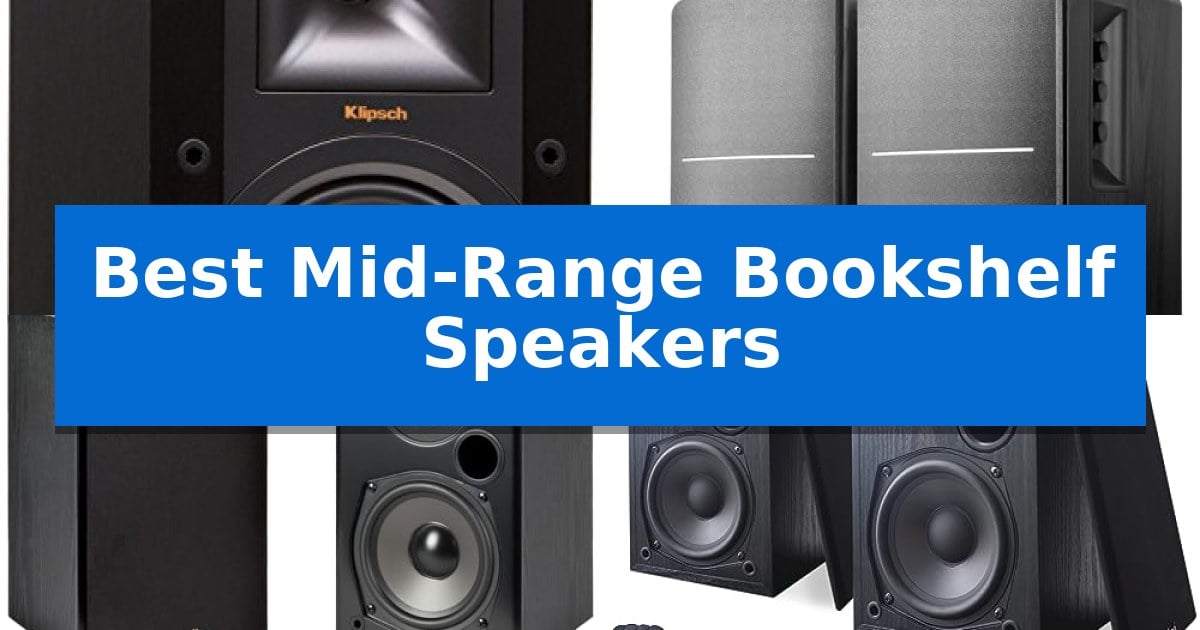
Selecting the right audio equipment often feels overwhelming, especially when balancing budget with high-fidelity performance. The Best Mid-Range Bookshelf Speakers serve as the heart of a home audio system, providing a crucial bridge between entry-level gear and high-end audiophile setups.
Whether you are building a dedicated music listening station or upgrading your home theater, finding a pair that offers balanced frequency response and durable construction is essential. We have analyzed five distinct models to help you identify which speaker configuration best aligns with your specific room size and amplifier capabilities.
You may also want to compare Best Mid-Range Bookshelf Bluetooth TV Speakers, Best Mid-Range Bluetooth Speakers, and Best Mid-Range Bluetooth Speaker.
Best Mid-Range Bookshelf Speakers
Quick Comparison
| Product | Best For | Key Strength | Score |
|---|---|---|---|
| Klipsch R-15M Bookshelf Speaker | Best Overall | Tractrix Horn technology for enhanced high-end imaging and dynamics. | 4.9 |
| Edifier R1280T Powered Bookshelf Speakers | Versatile Dual-Input Active Monitors | Dual AUX inputs enable simultaneous connection to two different audio sources. | 4.7 |
| Polk Audio T15 Bookshelf Speakers | Balanced Home Theater Foundation | Wall-mountable design for flexible room placement. | 4.9 |
| Audio Express Koe B102 Bookshelf Speakers | Precision-Matched Audiophile Performance | Individually tested for performance accuracy with included frequency response charts. | 4.3 |
| Edifier P12 Passive Bookshelf Speaker | Compact Wall-Mountable Surround Sound | Built-in wall-mount bracket for flexible placement | 4.9 |
How We Chose
- Driver and Tweeter Material: Evaluating the construction of cones and domes for sound accuracy.
- Amplification Requirements: Distinguishing between active models with built-in power and passive speakers requiring external receivers.
- Cabinet Construction: Assessing the use of MDF and port design for resonance control and bass response.
- Connectivity Options: Checking for input versatility, such as AUX, RCA, or standard binding posts.
- Placement Flexibility: Considering physical dimensions and mounting options for diverse room layouts.
1 Klipsch R-15M Bookshelf Speaker — High-Efficiency Horn-Loaded Sound
Achieving high-efficiency audio in a compact footprint often requires specialized engineering, such as the Klipsch R-15M Bookshelf Speaker and its signature 90×90 Tractrix Horn. This technology is paired with aluminum tweeters to maximize high-end response and imaging, ensuring a clean and dynamic sound profile that minimizes distortion through a Linear Travel Suspension (LTS) system.
The low-frequency performance is handled by a spun copper Injection Molded Graphite (IMG) woofer. This material choice balances weight and rigidity, which helps reduce cone breakup and distortion during playback. The speaker also utilizes a rear-firing port that is precisely flared to manage airflow turbulence, allowing for more consistent output at lower frequencies.
Designed for versatility, the Klipsch R-15M Bookshelf Speaker features a durable MDF cabinet finished with a brushed polymer veneer, allowing it to integrate into various home environments. Connectivity is managed via 5-way binding posts, which offer the flexibility needed for different wiring setups. The unit also includes a removable, acoustically transparent grille that protects the drivers while maintaining a refined aesthetic.
These speakers are built for those who prioritize efficiency and clarity in a mid-range package. By combining horn-loaded technology with rigid woofer construction, they provide a distinct approach to sound reproduction that emphasizes detail and dynamics.
Best for: Listeners seeking a high-efficiency, horn-loaded audio solution for a compact home stereo or surround sound setup.
Skip if: Users who require integrated amplification or wireless connectivity, as these are passive speakers that necessitate an external receiver or amplifier.
PROS
- Tractrix Horn technology for enhanced high-end imaging and dynamics.
- LTS tweeter design minimizes distortion for detailed performance.
- Rigid IMG woofer construction provides efficient low-frequency response.
- 5-way binding posts ensure versatile and secure cable connections.
CONS
- Passive design requires a separate amplifier or receiver to function.
- Rear-firing port placement requires careful positioning to avoid unwanted bass reflections.
2 Edifier R1280T Powered Bookshelf Speakers — Versatile Dual-Input Active Monitors
Achieving a balanced audio profile for a desktop setup often requires finding equipment that bridges the gap between basic computer speakers and professional studio gear. The Edifier R1280T Powered Bookshelf Speakers address this by integrating a 13mm silk dome tweeter and a 4-inch full-range unit, designed to deliver natural sound reproduction in a compact, near-field environment.
These speakers prioritize functional versatility through dual AUX inputs, which allow users to connect two separate devices simultaneously without the need for constant cable swapping. This makes them a practical choice for users who frequently switch between a computer, turntable, or mobile device at their workstation.
Control and aesthetics are handled with a focus on user convenience and home integration. The side-mounted dials provide direct access to bass and treble adjustments, while the included remote control allows for quick volume changes from a distance. The housing is constructed from MDF wood with a wood-effect vinyl finish, offering a classic look that fits into various decor styles.
With a total power output of 42 Watts RMS, these speakers provide sufficient volume for typical office or bedroom listening. The active design eliminates the need for an external amplifier, simplifying the setup process for those who want a straightforward, plug-and-play audio solution.
Best for: Desktop users who need a compact, active speaker system with dual-input flexibility for multiple audio sources.
Skip if: Users requiring high-fidelity studio-grade monitoring or those seeking built-in wireless Bluetooth connectivity.
PROS
- Dual AUX inputs enable simultaneous connection to two different audio sources.
- Side-mounted controls allow for precise bass and treble tuning.
- Active design removes the requirement for an external amplifier.
- MDF wood construction provides a durable and aesthetic build.
CONS
- Lacks wireless connectivity options such as Bluetooth.
- Fixed cable configuration may limit placement flexibility for some users.
3 Polk Audio T15 Bookshelf Speakers — Balanced Home Theater Foundation
Achieving a balanced soundstage in a home theater setup often begins with selecting versatile hardware that integrates seamlessly into existing audio chains. The Polk Audio T15 Bookshelf Speakers utilize a 0.75-inch tweeter paired with a 5.25-inch Dynamic Balance driver to provide clear, balanced audio output, even when operating at lower volume levels.
These passive speakers are designed for flexibility, functioning effectively as front, left-right, or rear channels within a larger surround sound configuration. Their compact dimensions—measuring 10.7 inches in height and 6.5 inches in width—allow for placement on shelves or integration into wall-mounted setups, making them a practical choice for those beginning their home audio journey.
Installation is straightforward, requiring only standard speaker wire connections to an AV receiver. The system is built to serve as a foundation for a 5.1 surround sound environment, allowing users to expand their setup over time by incorporating additional components like T50 towers, T30 center channels, or dedicated subwoofers.
With a 5-year warranty on parts and labor, these speakers offer a reliable entry point for listeners seeking a consistent audio profile. While they provide clear vocal reproduction and deep bass response for their size, they are intended for use with an external amplifier or receiver, which is a necessary consideration for any passive speaker system.
Best for: Users building a modular home theater system who need compact, versatile speakers that can serve as front or rear channels.
Skip if: Listeners who require active, self-powered speakers with built-in Bluetooth or direct streaming capabilities.
PROS
- Wall-mountable design for flexible room placement.
- Dynamic Balance driver technology for clear, balanced audio.
- Modular compatibility with other Polk T-series components for 5.1 expansion.
- 5-year warranty on parts and labor.
CONS
- Passive design requires an external AV receiver or amplifier to function.
- Limited low-end extension compared to larger floor-standing towers or dedicated subwoofers.
4 Audio Express Koe B102 Bookshelf Speakers — Precision-Matched Audiophile Performance
Achieving a balanced soundstage in a compact footprint requires precision, and the Audio Express Koe B102 Bookshelf Speakers address this by including an individual SPL/Frequency Response chart with every pair. This documentation verifies that each unit meets strict performance standards, providing the consistency necessary for accurate stereo imaging in home theater or 2-channel setups.
These are passive speakers, which offers the flexibility to pair them with any amplifier of your choosing. This design choice allows you to tailor your system's power and sound signature to your specific room environment and personal listening preferences. The internal architecture utilizes precision-wound voice coils and optimized crossover networks to maintain clarity across the frequency spectrum, from crisp highs to controlled bass.
The Audio Express Koe B102 Bookshelf Speakers are engineered with low-resonance materials to minimize distortion, ensuring that the output remains clean even during demanding playback. Their compact dimensions—measuring approximately 10.68 inches in height—make them suitable for placement on desktops, in dedicated studios, or as part of a larger home theater configuration.
Because the left and right speakers are precision-matched during the manufacturing process, they provide a cohesive and balanced stereo field. Whether you are setting up a dedicated music listening station or upgrading your media room, these speakers offer a reliable foundation for high-fidelity audio reproduction.
Best for: Audiophiles and home theater enthusiasts seeking a precision-matched, passive speaker system that allows for custom amplifier pairing.
Skip if: Users who prefer the simplicity of active, powered speakers with integrated amplification and wireless connectivity.
PROS
- Individually tested for performance accuracy with included frequency response charts.
- Precision-matched pair ensures balanced output and accurate stereo imaging.
- Passive design provides maximum flexibility for amplifier selection and system customization.
- Compact, wall-mountable form factor fits diverse room layouts and setups.
CONS
- Requires an external amplifier to function, adding to the total system footprint and cost.
5 Edifier P12 Passive Bookshelf Speaker — Compact Wall-Mountable Surround Sound
Building a balanced audio environment often requires hardware that offers both sonic clarity and flexible installation options. The Edifier P12 Passive Bookshelf Speaker is designed for those who prefer a 2-way speaker design to manage their own audio signal chain, providing a foundation for custom home theater or music setups.
These speakers utilize 19mm silk dome tweeters to handle high-frequency reproduction, aiming for detailed treble performance. The low-end is managed by 4-inch bass drivers integrated with a bass reflex port, which helps maintain a natural sound profile. Because this is a passive system, it requires an external amplifier or receiver to function, allowing users to select amplification that matches their specific power requirements and audio preferences.
Practicality is a core focus of the Edifier P12 Passive Bookshelf Speaker, which features a built-in wall-mount bracket. This design choice is particularly useful for users looking to integrate these units as rear surround channels in a home theater system, effectively saving floor or shelf space. The package includes the necessary speaker wires to facilitate immediate connection to your existing receiver.
By opting for a passive design, users gain the flexibility to build a system that can be upgraded or adjusted over time. While this approach requires an external power source and lacks built-in volume or power controls, it provides a straightforward, modular solution for listeners who want to curate their own audio components.
Best for: Users seeking compact, wall-mountable passive speakers to serve as rear channels in a home theater or as part of a custom-amplified audio system.
Skip if: Users who prefer an all-in-one active speaker solution with built-in amplification and Bluetooth connectivity.
PROS
- Built-in wall-mount bracket for flexible placement
- Silk dome tweeters for detailed treble reproduction
- 4-inch bass drivers with reflex port for balanced sound
- Passive design allows for custom amplifier pairing
CONS
- Requires external amplifier or receiver to operate
- No built-in power or volume controls
Best Mid-Range Bookshelf Speakers Buying Guide
Understanding Passive vs. Active Speakers
The most critical decision when choosing speakers is whether you need an active or passive system. Active bookshelf speakers contain built-in amplifiers, meaning you can connect them directly to a source like a turntable or computer without extra hardware.
Conversely, passive speakers require a separate amplifier or AV receiver to function. This setup offers greater long-term flexibility, as you can upgrade your amplifier or add components like a subwoofer later without replacing your entire speaker system.
The Role of Cabinet Material
The physical housing of your speakers, often made from MDF (Medium Density Fiberboard), plays a significant role in sound quality. A rigid, well-constructed cabinet minimizes unwanted vibrations that can muddy the audio output.
Look for models that emphasize brushed polymer veneers or high-quality vinyl finishes. These materials not only provide a clean aesthetic for your home decor but also contribute to the overall durability and acoustic integrity of the speaker enclosure.
Tweeter and Woofer Technology
High-frequency clarity is typically handled by the tweeter, with materials like silk domes or aluminum being common in this category. Silk domes often provide a smoother, more natural sound, while aluminum tweeters are frequently used for detailed, crisp high-end response.
For low frequencies, the woofer material—such as Injection Molded Graphite (IMG)—is designed to be both light and rigid. This combination allows for faster, more accurate movement, which results in tighter bass and less distortion during demanding musical passages.
Placement and Mounting Considerations
Before purchasing, measure your available shelf or stand space. Some speakers feature rear-firing ports, which require a small amount of distance from the wall to prevent bass buildup and turbulence.
If your space is limited, look for models that include built-in wall-mount brackets. This feature is particularly useful for surround sound setups where you need to position speakers at ear level without occupying valuable surface area.
Connectivity and Terminals
For passive speakers, check for 5-way binding posts. These high-quality terminals allow for a variety of connection methods, including banana plugs, spade lugs, or bare wire, ensuring a secure and reliable signal path.
If you choose an active system, verify the number of inputs. Having dual AUX or RCA inputs allows you to keep two devices connected simultaneously, such as a computer and a record player, eliminating the need to constantly swap cables.
Frequently Asked Questions
Do I need a subwoofer with these speakers?
While many of these speakers provide balanced bass, a subwoofer can add depth to the lowest frequencies, especially in larger rooms or for home theater applications.
Can I mount these speakers on the wall?
Some models, like the Edifier P12, come with built-in wall-mount brackets. Always check the specific product features to ensure your chosen model supports wall mounting.
What is the benefit of a horn-loaded tweeter?
Horn-loaded technology, such as the Tractrix Horn, is designed to improve sound imaging and efficiency, helping to deliver a more dynamic and detailed high-end response.
Are these speakers compatible with any amplifier?
Passive speakers are generally compatible with most standard stereo amplifiers, but you should always verify that your amplifier's power output matches the recommended range of the speakers.
What does '2-way' mean in speaker specs?
A 2-way speaker uses two distinct drivers: one for high frequencies (tweeter) and one for mid-to-low frequencies (woofer), which helps in reproducing a wider range of sound accurately.
Conclusion: Our Top Pick
Selecting the right audio gear depends largely on your existing setup and space. For those seeking a balance of efficiency and high-end detail, the Klipsch R-15M Bookshelf Speaker stands out due to its specialized horn-loaded technology and rigid IMG woofer construction.
If you prefer a simpler, all-in-one solution, the active models in our list offer immediate connectivity without the need for external amplifiers. Regardless of your choice, ensuring proper placement and using high-quality cables will help you achieve the best possible sound from your new speakers.