
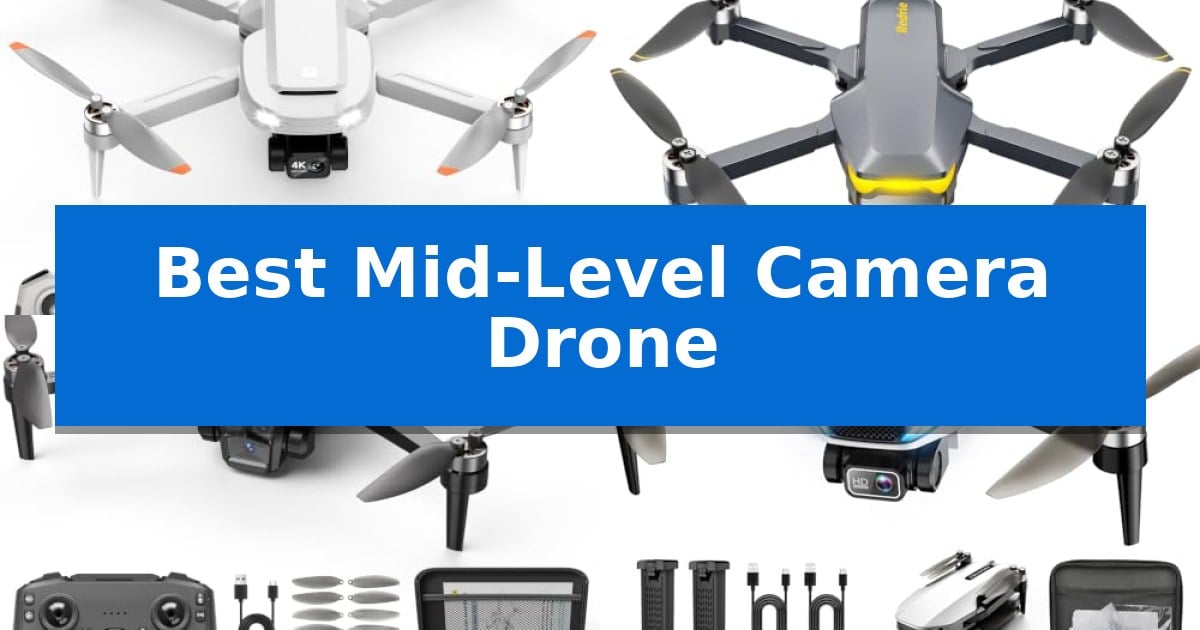
Finding the right aerial platform often feels like a balancing act between advanced stabilization and user-friendly controls. Whether you are capturing sweeping landscapes or documenting outdoor adventures, the Best Mid-Level Camera Drone should provide reliable flight performance without requiring a professional pilot's license to operate.
We have analyzed the latest models to help you identify which drone offers the most practical features for your specific needs. From integrated controller screens that eliminate the need for a smartphone to advanced GPS return-to-home functions, these drones are designed to make high-quality aerial photography accessible for enthusiasts and hobbyists alike.
You may also want to compare Best Mid-Level Business Laptops, Best Mid-Level Bookshelf Speakers, and Best Mid-Level Bluetooth Headphones.
Best Mid-Level Camera Drone
Quick Comparison
| Product | Best For | Key Strength | Score |
|---|---|---|---|
| PLEGBLE PL-711 GPS Drone | Best Overall | Integrated 5-inch touchscreen eliminates the need for a separate smartphone. | 4.9 |
| REDRIE HK33 GPS Drone | Extended Flight for Landscapes | Extended flight time of 60–70 minutes via three included batteries. | 4.8 |
| Vvoqeote GPS Drone | Built-in Controller Screen | Built-in 4.5-inch HD screen on the remote controller removes the need for a smartphone. | 4.9 |
| BLINORY HK55 GPS Drone | Precise Optical Flow Hovering | Under 250g weight eliminates FAA/Remote ID registration requirements. | 4.8 |
| Scrubuz HK22 GPS Drone | Wind-Resistant Brushless Power | Under 249g weight avoids specific registration requirements. | 4.7 |
How We Chose
- Flight Stabilization: We assessed the use of mechanical gimbals and electronic image stabilization (EIS) to ensure smooth, professional-looking footage.
- Control Interface: We prioritized models that offer intuitive remote controllers, including those with built-in screens for real-time monitoring.
- Portability and Registration: We focused on drones weighing under 249g, which simplifies travel and avoids complex FAA registration requirements for recreational users.
- Intelligent Flight Modes: We looked for built-in GPS features like Follow Me, Orbit, and automatic return-to-home for safer, more versatile operation.
- Battery Efficiency: We compared total flight time across multiple batteries to ensure you have enough airtime to capture your shots.
1 PLEGBLE PL-711 GPS Drone — Steady 3-Axis Gimbal Footage
Capturing aerial footage without the complexity of traditional setups is the primary advantage of the PLEGBLE PL-711 GPS Drone. By integrating a 5-inch touchscreen controller directly into the remote, this drone allows users to monitor live video feeds in 1080P without needing to tether a smartphone, streamlining the pre-flight and recording process.
The PLEGBLE PL-711 GPS Drone is engineered for stability and ease of use, featuring a 3-axis mechanical gimbal paired with Electronic Image Stabilization (EIS). This combination works to maintain steady 4K video and photo capture even during flight maneuvers. The unit includes a 135° wide-angle lens that can be tilted 90° downward, providing flexibility for various overhead perspectives.
Designed for portability and regulatory convenience, the drone weighs under 249g, which eliminates the need for FAA registration for recreational use in the United States. Its foldable design makes it suitable for travel, while the included three batteries provide a cumulative flight time of up to 60 minutes. The system also supports long-range operation with a live video transmission capability of up to 9,840 ft, depending on environmental conditions.
Safety and flight assistance are central to its operation, utilizing GPS Return to Home functionality that triggers automatically if the battery runs low or the signal is lost. Beginners can utilize specific flight modes to practice, while advanced features like GPS Follow Me, Circle Fly, and various automated movement patterns like Rocket and Helix offer creative options for capturing dynamic aerial content.
Best for: Travelers and beginners seeking a portable, registration-free drone with an integrated screen for simplified flight monitoring.
Skip if: Professional cinematographers requiring higher frame rates or advanced manual camera controls beyond the provided 4K at 20 fps.
PROS
- Integrated 5-inch touchscreen eliminates the need for a separate smartphone.
- Under 249g weight avoids FAA registration requirements for recreational use.
- 3-axis mechanical gimbal combined with EIS ensures stable 4K imagery.
- Three included batteries provide up to 60 minutes of total flight time.
CONS
- 4K video capture is limited to 20 fps, which may not suit all cinematic needs.
- Transmission range is subject to significant variation based on local obstacles and signal interference.
2 REDRIE HK33 GPS Drone — Extended Flight for Landscapes
Capturing expansive aerial views is made accessible through the REDRIE HK33 GPS Drone, which features a 4K camera mounted on a 2-axis gimbal. This stabilization system, combined with an F2.15 large aperture and a 110° ultra-wide-angle lens, allows for smooth footage and clear imagery. The camera angle is remote-controlled up to 90°, providing flexibility for framing landscapes or family activities from the air.
Designed for extended sessions, the package includes 3 rechargeable batteries that provide a total flight time of 60–70 minutes. The drone is powered by upgraded brushless motors, which contribute to a quieter and more stable flight experience. Beginners can utilize the 5G WiFi FPV transmission for low-latency viewing on a mobile device, with a signal range extending up to 500m/1640ft.
Safety and ease of use are prioritized through integrated GPS smart flight modes, including GPS Follow, Route Planning, and Fly Around. The system supports automatic return functions triggered by low battery levels or signal loss. Weighing under 250g, the drone does not require FAA registration for recreational use, making it a straightforward entry point for new pilots.
The foldable body and included carrying case enhance portability for travel. While the drone offers robust features for its class, users should note that the 300m/985ft video transmission limit is distinct from the overall signal range. This model balances technical capability with a design intended for hobbyists seeking a reliable, portable aerial photography tool.
Best for: Beginners and hobbyists looking for a portable, sub-250g drone with extended flight time and automated GPS flight modes.
Skip if: Professional videographers requiring high-end obstacle avoidance sensors or transmission ranges beyond 500 meters.
PROS
- Extended flight time of 60–70 minutes via three included batteries.
- No FAA registration required due to the sub-250g weight.
- 2-axis gimbal for improved video stability.
- GPS-enabled smart flight modes like Follow and Route Planning.
CONS
- Video transmission range is limited to 300 meters despite the 500-meter signal range.
- MicroSD card required for high-quality file storage.
3 Vvoqeote GPS Drone — Built-in Controller Screen
The Vvoqeote GPS Drone simplifies the aerial photography experience by integrating a 4.5-inch HD screen directly into the remote controller, eliminating the need for a smartphone or external app to monitor live flight footage. This design choice provides immediate visual feedback for pilots, ensuring that flight data and camera views are accessible the moment the system is powered on.
Equipped with a 4K camera and a remotely adjustable 90-degree lens, this quadcopter allows users to modify shooting angles mid-flight to capture diverse perspectives. The inclusion of FPV real-time image transmission supports both the controller screen and mobile device viewing, making it a versatile tool for recording outdoor activities or conducting routine tasks like roof inspections.
Reliability during outdoor operation is managed through GPS positioning, which enables automated features such as One-Key Return, Low Battery Return, and Signal Loss Return. These safety protocols are complemented by smart flight modes including Follow Me, Tap Fly, and Point of Interest, which assist in tracking moving subjects like cyclists or skateboarders.
Power and portability are central to its build, featuring brushless motors for efficient flight and a foldable design that keeps the unit under 249g. The package includes two rechargeable batteries, providing a combined 60 minutes of total flight time, with each battery offering up to 30 minutes of operation to extend exploration sessions.
For ease of use, the drone incorporates Altitude Hold, Headless Mode, and One-Key Takeoff/Landing. With 3 speed modes available, the flight characteristics can be adjusted to accommodate different skill levels, from beginners practicing basic maneuvers to experienced users seeking more responsive control.
Best for: Beginners and hobbyists who prefer an all-in-one flight system with a dedicated controller screen rather than relying on a smartphone app.
Skip if: Professional photographers or videographers requiring advanced sensor sizes, professional-grade stabilization, or high-bitrate video recording capabilities.
PROS
- Built-in 4.5-inch HD screen on the remote controller removes the need for a smartphone.
- Dual-battery setup provides up to 60 minutes of total flight time.
- GPS-enabled safety features including automatic return-to-home functions.
- Foldable, lightweight design under 249g for easy transport.
CONS
- No advanced obstacle avoidance sensors mentioned in the specifications.
- Fixed-focus lens system may limit professional-grade depth of field control.
4 BLINORY HK55 GPS Drone — Precise Optical Flow Hovering
The BLINORY HK55 GPS Drone simplifies aerial photography by integrating a 90° electrically adjustable 4K camera with built-in shock absorption, ensuring stable footage for outdoor enthusiasts. Designed for portability, this quadcopter weighs under 250 grams, which eliminates the need for FAA or Remote ID registration while making it a convenient companion for hiking or camping trips.
Equipped with a powerful brushless motor, the drone offers a quieter and more durable flight experience compared to standard brushed alternatives. Users benefit from a total flight time of 32 minutes across two modular batteries, allowing for extended sessions when capturing sport moments or scenic landscapes. The 5GHz FPV transmission provides real-time video streaming directly to a smartphone app, facilitating easy content sharing.
Safety and ease of use are central to the design, featuring precise GPS positioning and an automatic return function that triggers if the signal is lost, the range is exceeded, or power levels drop. For beginners, the inclusion of one-button takeoff and landing, headless mode, and optical flow hovering ensures the drone remains steady in the air, reducing the learning curve for new pilots.
Beyond manual control, the drone supports automated flight modes such as Follow Me, Waypoint Flight, and Point of Interest. These features allow the device to handle navigation and filming independently, providing a hands-free way to record activities like running, riding, or climbing. The foldable design and included storage case further emphasize its utility as a travel-ready tool for capturing creative perspectives.
Best for: Beginners and outdoor enthusiasts who need a portable, FAA-compliant drone for automated tracking and stable 4K video recording.
Skip if: Professional photographers requiring high-end gimbal stabilization or advanced obstacle avoidance sensors for complex commercial environments.
PROS
- Under 250g weight eliminates FAA/Remote ID registration requirements.
- Brushless motor provides increased durability and quieter operation.
- GPS-assisted flight includes reliable auto-return and stable hovering.
- Automated flight modes like Follow Me and Waypoint simplify creative shooting.
CONS
- Limited to 5G transmission which requires a compatible smartphone for FPV viewing.
- Fixed storage capacity relies entirely on the connected mobile device app.
5 Scrubuz HK22 GPS Drone — Wind-Resistant Brushless Power
Capturing aerial footage requires a balance of portability and flight stability, and the Scrubuz HK22 GPS Drone addresses this by weighing only 248g. This design choice keeps the unit under the 249g FAA registration threshold, making it a practical choice for hobbyists who want to travel light without sacrificing core flight features.
The drone utilizes brushless motors to provide the necessary thrust for Level 5 wind resistance, ensuring steady performance during outdoor sessions. Pilots can maintain a fixed altitude using the built-in altitude hold feature, which simplifies the process of framing shots. The included 4K camera offers a 90-degree adjustable tilt and a 100-degree field of view, with footage transmitted via a 5GHz connection for a low-latency live view on the X DRONE app.
Intelligent flight modes such as Follow Me, Orbit Mode, and Waypoint Flight allow for automated cinematic movements, while gesture control enables hands-free photo and video capture. The system is supported by a GPS module that facilitates an auto-return function triggered by low battery or signal loss, providing a layer of security during operation.
Power management is handled by two included 7.4V 1800mAh batteries, which provide a combined total of 48 minutes of flight time. The remote controller provides real-time battery monitoring, allowing for better planning of flight sessions. The drone is foldable and includes a carry bag, emphasizing its role as a portable solution for capturing aerial content on the go.
Best for: Beginners and hobbyists who need a lightweight, portable drone with automated flight modes for casual aerial photography.
Skip if: Professional videographers requiring high-end sensor stabilization or advanced obstacle avoidance systems not present in this model.
PROS
- Under 249g weight avoids specific registration requirements.
- Brushless motors provide stable flight in moderate wind.
- 48 minutes of total flight time with two included batteries.
- Intelligent GPS modes like Follow Me and Waypoint Flight.
CONS
- Manual calibration of the compass is required at startup.
- MicroSD card for storage is not included.
Best Mid-Level Camera Drone Buying Guide
Understanding Gimbal Stabilization
A mechanical 3-axis gimbal is the gold standard for aerial video. It physically compensates for the drone's movement, ensuring your footage remains level and steady even in windy conditions. While electronic image stabilization (EIS) is a helpful secondary feature, it cannot replace the smooth, cinematic motion provided by a mechanical gimbal.
When choosing your drone, consider whether you need professional-grade stabilization or if basic EIS is sufficient for your casual social media clips. For those aiming to capture high-quality landscapes, investing in a model with a dedicated gimbal is almost always worth the trade-off in weight and cost.
The Importance of Controller Design
Many modern drones rely on a smartphone app for the live FPV (First-Person View) feed. However, models with a built-in touchscreen controller offer a more reliable and streamlined experience. By removing the need to connect your phone, you avoid potential app compatibility issues and battery drain on your mobile device.
A dedicated controller with a high-brightness screen also ensures better visibility in direct sunlight. If you plan to fly frequently in outdoor environments, the convenience of an all-in-one controller setup can significantly improve your overall workflow and enjoyment.
Weight and Regulatory Compliance
In the United States, drones weighing under 249 grams are exempt from mandatory FAA registration for recreational use. This makes them an ideal choice for travelers and those who want to start flying immediately without navigating bureaucratic hurdles.
While these lightweight drones are highly portable, they can be more susceptible to strong winds compared to heavier, professional-grade models. Always check local regulations and weather conditions before taking off to ensure a safe and legal flight experience.
GPS and Intelligent Flight Modes
GPS technology is essential for modern drones, providing features like automatic return-to-home if the battery gets low or the signal is lost. This provides a critical safety net, especially for beginners who are still learning to manage flight distance and orientation.
Intelligent flight modes such as Follow Me, Circle Fly, and Waypoint Flight allow the drone to perform complex maneuvers autonomously. These features are excellent for capturing dynamic shots of yourself while hiking, cycling, or participating in other outdoor activities.
Battery Management and Flight Time
Most mid-level drones come with multiple batteries to extend your total flight time. Pay close attention to the manufacturer's rated flight time per battery, as real-world conditions like wind and aggressive maneuvering will typically reduce this duration.
Having a set of spare batteries is crucial for longer outings. Ensure you have a reliable way to charge your batteries between flights, and always keep track of your remaining power levels to prevent the drone from needing an emergency landing.
Frequently Asked Questions
Do I need to register my drone with the FAA?
If your drone weighs less than 249 grams and is used strictly for recreational purposes, you generally do not need to register it with the FAA in the United States. Always verify current local and federal regulations before your first flight.
What is the benefit of a 3-axis gimbal?
A 3-axis gimbal physically stabilizes the camera, correcting for pitch, roll, and yaw. This results in significantly smoother video footage compared to drones that rely solely on electronic software stabilization.
Can I fly these drones without a smartphone?
Some models, such as those with built-in screens on the remote controller, allow you to fly and view live footage without needing a smartphone or a dedicated app. Check the specific product features to confirm.
How does GPS help with flying?
GPS allows the drone to maintain a stable hover, follow pre-set paths, and automatically return to its takeoff point if the signal is lost or the battery reaches a critical level.
Are these drones suitable for beginners?
Yes, many of these models include beginner-friendly features like one-key takeoff/landing, altitude hold, and GPS-assisted stability, making them accessible for those new to drone piloting.
Conclusion: Our Top Pick
For those seeking the most reliable and feature-rich experience, the PLEGBLE PL-711 GPS Drone stands out as the top choice. Its combination of a 3-axis mechanical gimbal, a dedicated 5-inch touchscreen controller, and an FAA-exempt weight makes it a versatile tool for both beginners and experienced hobbyists.
While other models offer specific advantages like extended flight times or specialized hover modes, the overall balance of stability and ease of use provided by the PLEGBLE PL-711 makes it the most well-rounded option for capturing high-quality aerial content.