
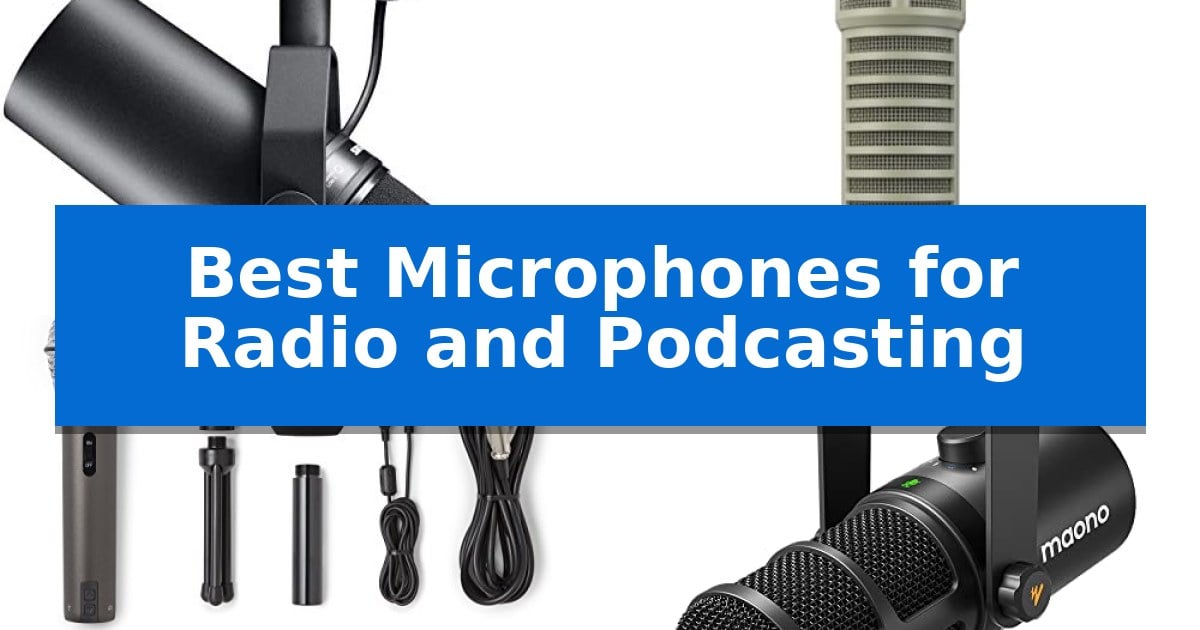
Finding the right gear for your voice is the most critical step in building a professional audio setup. Whether you are launching a new series or upgrading a broadcast studio, the Best Microphones for Radio and Podcasting must balance clarity, noise rejection, and ease of use to ensure your message arrives exactly as intended.
Selecting the right tool depends on your specific environment and technical requirements. From industry-standard XLR setups to versatile hybrid microphones that connect directly to your computer, this guide evaluates the top options to help you achieve consistent, high-quality vocal recordings.
You may also want to compare Best Microphones for R&B Vocals, Best Microphones for Quartets, and Best Microphones for Public Speaking.
Best Microphones for Radio and Podcasting
Quick Comparison
| Product | Best For | Key Strength | Score |
|---|---|---|---|
| Shure SM7B Dynamic Vocal Microphone | Best Overall | Advanced electromagnetic shielding to prevent unwanted hum. | 4.9 |
| Electro-Voice RE20 Broadcast Microphone | Classic radio voice signature | Variable-D design eliminates proximity effect for consistent sound. | 4.6 |
| Samson Q2U Dynamic Microphone | Best value for hybrid setups | Dual USB-C and XLR outputs for maximum interface compatibility. | 4.6 |
| MAONO PD400X Dynamic Microphone | Advanced software-controlled audio | Dual USB/XLR output provides flexible connectivity for different recording setups. | 4.3 |
| FIFINE AmpliGame AM8T Dynamic Microphone | Complete kit for streamers | Dual USB/XLR connectivity for versatile recording setups. | 4.9 |
How We Chose
- Audio Quality and Frequency Response: Assessing how each microphone captures vocal warmth and clarity.
- Connectivity Options: Evaluating the flexibility of XLR and USB interfaces for different studio setups.
- Noise Rejection: Analyzing pickup patterns and shock isolation to ensure clean recordings in imperfect rooms.
- Build Quality and Durability: Considering the construction materials and long-term reliability for frequent use.
- Ease of Use and Features: Reviewing built-in controls, software integration, and included accessories.
1 Shure SM7B Dynamic Vocal Microphone — Industry standard for broadcast vocals
Achieving professional-grade audio for broadcasts requires equipment that prioritizes vocal clarity and isolation. The Shure SM7B Dynamic Vocal Microphone is engineered with a specialized dynamic cartridge and a wide-range frequency response, designed to capture warm, balanced vocals while effectively rejecting off-axis sound.
This microphone utilizes a precise cardioid pickup pattern paired with an integrated air suspension shock isolation system. These features work in tandem to minimize background noise and mechanical vibrations, ensuring the audio remains focused on the speaker even in less-than-ideal recording environments. The inclusion of a built-in pop filter and a detachable windscreen further assists in reducing plosives and breath noise, providing a polished output without requiring external accessories.
Constructed with a rugged all-metal exterior, the Shure SM7B Dynamic Vocal Microphone incorporates advanced electromagnetic shielding to combat hum and interference. This build quality is intended to provide consistent performance across various studio and streaming setups. The professional XLR output allows for seamless integration with external audio interfaces and mixers, granting users granular control over gain, EQ, and tone shaping.
Measuring 13.5 x 7 x 4.5 inches and weighing 2.7 pounds, this microphone offers a substantial, durable form factor. It is backed by a 2-year limited warranty, reflecting its design for long-term use in broadcast and podcasting applications.
Best for: Professional podcasters and broadcasters who require a high-isolation, dynamic XLR microphone for studio-quality vocal recording.
Skip if: Users who prefer a plug-and-play USB connection or those who lack an audio interface or mixer to provide the necessary gain for an XLR dynamic microphone.
PROS
- Advanced electromagnetic shielding to prevent unwanted hum.
- Integrated air suspension for effective vibration isolation.
- Built-in pop filtering and windscreen for cleaner vocal capture.
- Rugged all-metal construction for long-term durability.
CONS
- Requires an external audio interface or mixer for operation.
- Heavy design may require a robust microphone arm or stand.
2 Electro-Voice RE20 Broadcast Microphone — Classic radio voice signature
Achieving a professional broadcast sound often begins with the microphone choice, and the Electro-Voice RE20 Broadcast Announcer Microphone is engineered specifically for this purpose. Utilizing a unique Variable-D design, this microphone minimizes proximity effect, ensuring consistent tonal quality even when the speaker is positioned very close to the capsule.
The Electro-Voice RE20 features a large diaphragm dynamic element paired with an internal pop filter to manage plosives effectively during intense voice work. To maintain signal integrity, it includes a humbucking coil that guards against line hum, which is essential for clean audio in studio environments filled with electronic equipment.
Beyond its primary use in radio and podcasting, the microphone is built for versatility. It includes a mid-bass tone-shaping switch that allows users to adjust the frequency response to better suit different voice profiles or instrument recording needs. An internal element shock-mount is also integrated to reduce vibration-induced noise, providing a stable recording foundation.
With a robust construction and a weight of one pound, this microphone is designed for durability in demanding studio settings. Its ability to deliver the classic FM radio voice signature makes it a staple for those prioritizing broadcast-grade audio quality.
Best for: Professional podcasters, radio hosts, and studio engineers seeking a classic, consistent broadcast voice signature with minimal proximity effect.
Skip if: Users who require a lightweight, portable microphone for mobile setups or those on a strict budget may find the size and professional-grade requirements of this unit less suitable.
PROS
- Variable-D design eliminates proximity effect for consistent sound.
- Internal pop filter and shock-mount reduce unwanted noise and plosives.
- Humbucking coil protects against electromagnetic line hum.
- Mid-bass tone-shaping switch offers flexible frequency control.
CONS
- Professional-grade size and weight may be cumbersome for compact or mobile desk setups.
3 Samson Q2U Dynamic Microphone — Best value for hybrid setups
The Samson Q2U USB/XLR Dynamic Microphone Recording and Podcasting Pack offers a versatile solution for creators by providing both USB-C and XLR connectivity in a single handheld dynamic microphone. This dual-output design allows users to plug directly into a computer for digital recording or connect to professional audio interfaces and mixers for studio-grade setups.
Designed for flexibility, the microphone includes a comprehensive accessory kit that simplifies the setup process. The package comes with a tripod desktop stand, a tripod extension, a mic clip, and a windscreen, ensuring that users have the essential hardware to begin recording immediately upon unboxing.
The dynamic capsule is engineered to capture clear audio, making it a practical choice for radio and podcasting applications where background noise rejection is necessary. By offering both digital and analog paths, the Samson Q2U serves as a bridge for users who may start with a simple USB connection and later transition to more complex hardware without needing to replace their primary microphone.
With its compact dimensions and durable build, this microphone is well-suited for home studios or mobile recording environments. The inclusion of both a USB-C cable and an XLR cable ensures compatibility with a wide range of devices, providing a straightforward, reliable tool for capturing speech and vocal performances.
Best for: Creators who need a versatile, entry-level microphone that can transition from simple USB computer recording to professional XLR-based audio interfaces.
Skip if: Users who require a high-end condenser microphone for extreme sensitivity or those who prefer a dedicated studio arm mount, as this kit is optimized for desktop tripod use.
PROS
- Dual USB-C and XLR outputs for maximum interface compatibility.
- Complete accessory bundle including stand, cables, and windscreen.
- Dynamic capsule design helps minimize ambient room noise during recording.
- Two-year warranty provides long-term support for the hardware.
CONS
- Desktop tripod stand may have limited height and positioning compared to a boom arm.
- Handheld form factor might not be ideal for users seeking a traditional large-diaphragm studio aesthetic.
4 MAONO PD400X Dynamic Microphone — Advanced software-controlled audio
Achieving professional-grade audio in an untreated home environment requires a microphone capable of isolating the voice from ambient noise. The MAONO PD400X Dynamic Microphone addresses this through a specialized dynamic capsule and a cardioid polar pattern, ensuring that unwanted background sounds are effectively rejected during recording or streaming sessions.
This device offers significant flexibility for various setups by providing both USB and XLR outputs. When utilizing the USB connection, users gain access to the Maono Link App, which enables advanced control over vocal tone, distance settings, EQ, limiter, and compressor functions. This software-driven approach allows for precise audio shaping without the need for external hardware.
Usability is enhanced by a 3-in-1 digital knob that provides tactile control over microphone gain, headphone volume, and monitor mix. A dedicated tap-to-mute function with an LED indicator allows for immediate silence during live broadcasts, providing a reliable way to manage audio input on the fly.
Designed for versatility, this microphone serves as a comprehensive solution for podcasters and broadcasters who require a balance between digital convenience and analog professional standards. Its dual-mode connectivity ensures it can integrate into a simple plug-and-play desktop setup or a more complex professional mixer environment.
Best for: Creators and podcasters who need a versatile microphone that functions equally well in simple USB setups and professional XLR-based studio environments.
Skip if: Users who prefer a dedicated condenser microphone for capturing high-frequency detail in perfectly sound-treated studio environments may find the dynamic capsule's focus on isolation less suitable.
PROS
- Dual USB/XLR output provides flexible connectivity for different recording setups.
- Integrated Maono Link App allows for advanced software-based audio processing like EQ and compression.
- 3-in-1 digital knob offers convenient, centralized control over gain and monitoring.
- Cardioid dynamic capsule excels at rejecting background noise in untreated rooms.
CONS
- Software features are only accessible when using the USB connection mode.
5 FIFINE AmpliGame AM8T Dynamic Microphone — Complete kit for streamers
Achieving professional-grade audio for broadcasts requires equipment that balances versatility with ease of use. The FIFINE AmpliGame AM8T Dynamic Microphone provides a dual-interface solution, featuring both USB and XLR connectivity to accommodate diverse recording environments, from direct-to-PC streaming to complex studio setups involving mixers or sound cards.
Designed with a cardioid polar pattern and -50dB sensitivity, this microphone is engineered to minimize background noise, ensuring that vocal clarity remains the priority during podcasting or voice-over sessions. The inclusion of a mute button and a dedicated gain knob allows for immediate, tactile control over audio levels, while the headphones jack enables real-time monitoring to maintain consistent output quality.
The kit simplifies the setup process by including a sturdy metal boom arm stand with elastic springs, which provides stable positioning for various desk configurations. The desk clamp, which fits surfaces up to 2 inches thick, features an anti-scratch pad to protect furniture. For those who prefer visual customization, the integrated RGB lighting offers adjustable modes and colors, controllable via a dedicated button on the device.
Practicality is further enhanced by the external windscreen, which helps filter out plosive sounds during speech. Because it functions as a plug-and-play device via USB, it integrates seamlessly with common software like OBS and Streamlabs, making it a functional choice for creators who need a reliable, all-in-one recording kit.
Best for: Streamers and podcasters who require a flexible microphone that supports both direct USB connection and professional XLR studio interfaces.
Skip if: Users who require a high-end dedicated studio microphone without integrated RGB lighting or those who need a desk clamp for surfaces thicker than 2 inches.
PROS
- Dual USB/XLR connectivity for versatile recording setups.
- Integrated hardware controls including mute, gain, and headphone volume.
- Complete kit including a durable metal boom arm stand and windscreen.
- Plug-and-play USB functionality requiring no additional drivers.
CONS
- XLR cable not included in the package.
- Desk clamp limitation of 2 inches maximum thickness.
Best Microphones for Radio and Podcasting Buying Guide
Understanding Microphone Types
For most radio and podcasting applications, dynamic microphones are the preferred choice. Unlike condenser mics, which are highly sensitive to room acoustics, dynamic capsules are designed to focus on the sound source directly in front of them. This makes them ideal for home studios or untreated rooms where background noise can be an issue.
When choosing between models, consider the polar pattern. Most broadcast mics use a cardioid pattern, which is highly directional. This design helps isolate your voice while rejecting sounds from the sides and rear, ensuring that your listeners hear you clearly without distracting ambient noise.
Connectivity: XLR vs. USB
The connection type determines how your microphone integrates with your existing equipment. XLR microphones require an external audio interface or mixer, providing professional-grade control over gain, EQ, and signal processing. This is the standard for permanent studio setups where audio quality and signal chain customization are paramount.
USB microphones offer a simpler, plug-and-play experience. These are excellent for creators who need to record directly into a computer without extra hardware. Many modern hybrid microphones now include both USB and XLR outputs, giving you the flexibility to start with a simple setup and upgrade to a professional interface later.
The Importance of Noise Isolation
A microphone's ability to handle vibrations and plosives is essential for a polished sound. Look for models with internal shock mounting or air suspension systems, which prevent low-frequency rumbles from desk bumps or microphone stands from reaching the recording.
Additionally, built-in pop filtering is a major benefit. These features reduce the harsh 'p' and 'b' sounds that can cause clipping. If a microphone lacks these features, you may need to invest in an external windscreen or pop filter to maintain professional clarity.
Software and Control Features
Modern microphones often include integrated software or hardware controls that simplify the recording process. Features like tap-to-mute buttons, gain knobs, and headphone monitoring jacks allow you to make adjustments in real-time without needing to navigate complex computer menus.
Some advanced models also offer companion applications that provide access to EQ, limiters, and compressors. These digital tools can help you shape your vocal tone and maintain consistent volume levels, saving you significant time during the post-production editing phase.
Build Quality and Ergonomics
Since microphones are often handled frequently, the build material matters. All-metal construction is preferred for its durability and its ability to provide electromagnetic shielding, which prevents unwanted hums and interference from nearby electronics.
Consider the mounting options as well. A sturdy boom arm or a reliable desktop stand is necessary to position the microphone at the correct distance from your mouth. Ensure the microphone you choose is compatible with the mounting hardware you plan to use in your space.
Frequently Asked Questions
Do I need an audio interface for all these microphones?
No. While XLR-only microphones require an interface or mixer, many modern microphones feature USB connectivity, allowing you to plug them directly into your computer.
Why are dynamic microphones recommended for podcasting?
Dynamic microphones are less sensitive to ambient room noise than condenser microphones, making them perfect for recording in home environments that lack professional acoustic treatment.
Can I use these microphones for gaming and streaming?
Yes, many of these microphones are designed with features like mute buttons and RGB lighting that make them highly suitable for gaming and live streaming setups.
What is a cardioid pickup pattern?
A cardioid pickup pattern is heart-shaped, meaning the microphone is most sensitive to sound coming from the front and least sensitive to sound coming from the back, which helps reduce background noise.
Do I need a pop filter if the microphone has one built-in?
Built-in pop filters are often sufficient for most users, but an external pop filter can provide extra protection against plosives if you find your recordings still have harsh 'p' or 'b' sounds.
Conclusion: Our Top Pick
For those seeking the most reliable and industry-proven performance, the Shure SM7B Dynamic Vocal Microphone remains the top recommendation. Its ability to capture warm, clear vocals while rejecting background noise makes it a staple in professional broadcast environments.
While it requires an external interface to function, the investment is justified by its rugged build and consistent sound quality. If you are looking for a microphone that will serve as the foundation of your studio for years to come, this model provides the professional clarity and reliability that radio and podcasting demand.