
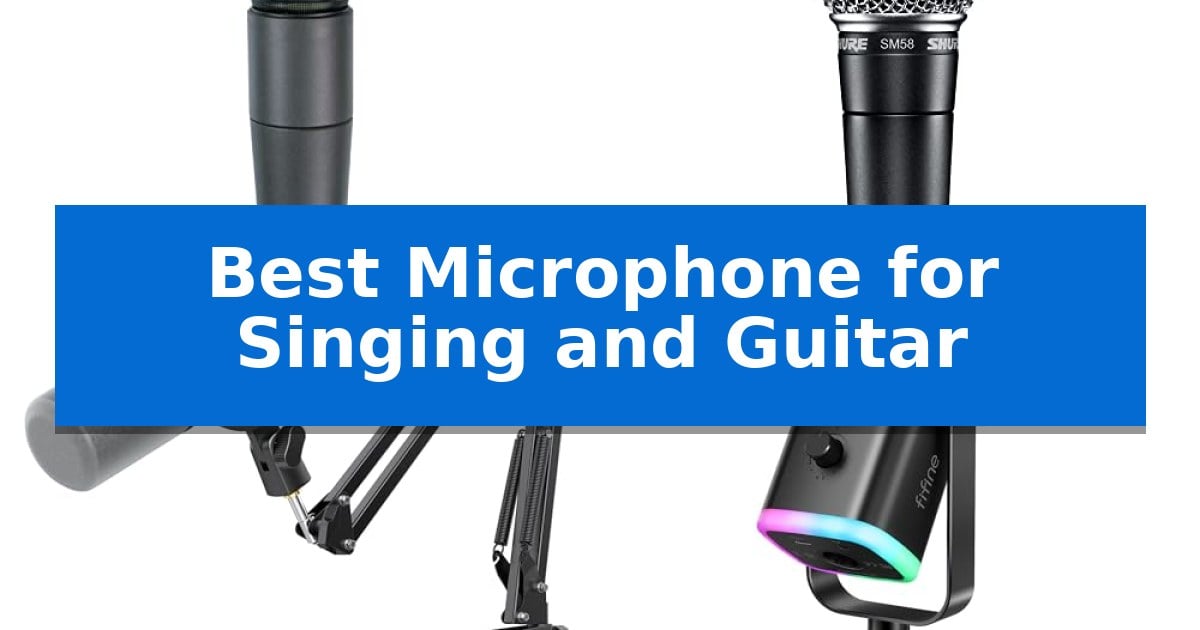
Finding the right microphone for capturing both vocal performances and acoustic or electric guitar requires a balance of sensitivity and isolation. Whether you are tracking in a home studio or performing live, the Best Microphone for Singing and Guitar must handle varying sound pressure levels while maintaining the nuance of your performance.
Dynamic microphones are often the preferred choice for these dual applications due to their rugged construction and ability to reject off-axis noise. By focusing on models that offer consistent frequency response and reliable build quality, you can ensure your recordings sound professional without needing an overly complex setup.
You may also want to compare Best Microphone for Singing, Best Microphone for Self-Tapes, and Best Microphone for Screencasting.
Best Microphone for Singing and Guitar
Quick Comparison
| Product | Best For | Key Strength | Score |
|---|---|---|---|
| Shure SM57 Dynamic Instrument Microphone | Best Overall | Contoured frequency response enhances instrument clarity and detail. | 4.9 |
| Shure SM58 Dynamic Vocal Microphone | Legendary Vocal Clarity for Performers | Rugged metal construction for long-term durability. | 4.8 |
| FIFINE AmpliTank K688CT Dynamic Microphone | Versatile Dual XLR and USB Output | Dual USB/XLR connectivity for maximum setup flexibility. | 4.8 |
| FIFINE AmpliGame AM8 Dynamic Microphone | Dynamic Sound with Modern Connectivity | Dual-connection flexibility with both XLR and USB outputs. | 4.5 |
| Pyle PDMIC59 Dynamic Vocal Microphone | Budget-Friendly Stage and Studio Option | Unidirectional cardioid pattern minimizes feedback and background noise. | 4.7 |
How We Chose
- Frequency response accuracy for both vocal and instrument capture
- Cardioid pickup pattern effectiveness for background noise rejection
- Build durability for consistent stage and studio performance
- Connectivity options including XLR and USB integration
- Handling of high sound pressure levels without distortion
1 Shure SM57 Dynamic Instrument Microphone — Industry Standard for Guitar Amps
Achieving professional-grade audio for both vocals and instrumentation requires equipment that prioritizes signal integrity and isolation. The Shure SM57 Pro XLR Dynamic Instrument Microphone is engineered with a contoured frequency response and a refined presence boost, specifically designed to enhance the attack and clarity of acoustic instruments and guitar amplifiers.
This microphone is a studio and stage staple because of its precise cardioid pickup pattern. By focusing on the sound source and minimizing background noise and bleed, it allows for clean, isolated captures even in complex recording environments. Whether you are miking a guitar cabinet or recording vocals, the design ensures that the energy and nuance of the performance remain the primary focus.
Constructed with legendary rugged durability, this unit is built to withstand high sound pressure levels and the rigors of frequent transport. Its versatile application makes it a dependable choice for musicians who need a single, reliable tool that adapts seamlessly from daily studio sessions to demanding live gigs.
While it excels in capturing detailed instrument sounds, users should note that as a dynamic XLR microphone, it requires an external audio interface or mixer to connect to a computer or recording system. This professional-grade connection ensures high-quality signal transmission but necessitates a bit more setup than a simple plug-and-play USB device.
Best for: Musicians and engineers seeking a durable, versatile microphone for close-miking guitar cabinets, acoustic instruments, and live performance vocals.
Skip if: Users who require a simple plug-and-play USB connection without the need for an external audio interface or XLR mixer.
PROS
- Contoured frequency response enhances instrument clarity and detail.
- Precise cardioid pattern effectively reduces background noise and bleed.
- Rugged construction ensures reliability during transport and high-pressure live use.
- Versatile performance across a wide range of instruments and vocal applications.
CONS
- Requires an XLR interface or mixer for operation, which adds to the total setup complexity.
2 Shure SM58 Dynamic Vocal Microphone — Legendary Vocal Clarity for Performers
The Shure SM58 Pro XLR Dynamic Vocal Microphone is engineered with a refined spherical grille and built-in filter that effectively minimizes plosives and breath noise, ensuring vocal clarity without requiring extra accessories. This design choice makes it a reliable tool for capturing both singing and acoustic guitar performances in various environments.
At the core of its performance is a precision cardioid pickup pattern that focuses tightly on the sound source. By isolating the voice or instrument, it helps reduce unwanted background noise and feedback, which is essential when recording or performing in spaces that are not acoustically treated.
The microphone features a finely tuned frequency response with a subtle midrange lift. This characteristic provides a warm, articulate sound profile that helps vocals and acoustic instruments sit clearly within a mix, maintaining balance across different performance settings.
Built for longevity, the Shure SM58 Pro XLR Dynamic Vocal Microphone utilizes a rugged metal construction and a reinforced stand adapter. This durable build quality is designed to withstand the physical demands of touring and frequent transport, making it a practical choice for performers who need consistent equipment.
Best for: Performers and creators who need a durable, reliable microphone for live stage use or studio recording of vocals and acoustic instruments.
Skip if: Users who require a USB-based connection or a condenser microphone specifically for high-frequency detail in professional studio environments.
PROS
- Rugged metal construction for long-term durability.
- Integrated pop protection reduces the need for external filters.
- Cardioid pickup pattern effectively isolates sound and minimizes feedback.
- Warm, articulate frequency response tailored for vocal and instrument clarity.
CONS
- XLR connection requires an external audio interface or mixer.
3 FIFINE AmpliTank K688CT Dynamic Microphone — Versatile Dual XLR and USB Output
Capturing the nuance of both vocals and acoustic instruments requires a versatile setup, and the FIFINE AmpliTank K688CT Dynamic Microphone addresses this by offering dual USB and XLR connectivity. This hybrid design allows users to switch between the plug-and-play simplicity of a USB connection for quick digital recording and the professional-grade signal path of an XLR interface for studio-level sound reproduction.
The microphone features a cardioid polar pattern specifically engineered to reduce ambient noise, ensuring that the primary sound source—your voice or guitar—remains the focus. With a 120dB SPL handling capacity, it is built to manage the sharp transients and high sound pressure levels often produced by acoustic instruments, preventing distortion during intense performances.
Usability is enhanced by an integrated tap-to-mute button and a dedicated gain knob, which provide immediate control over your recording environment when using the USB connection. The inclusion of a headphone monitoring jack allows for real-time audio feedback, helping you maintain consistent levels without relying on external software adjustments.
The kit includes a durable metal boom arm and a shock mount, which work together to isolate the microphone from vibrations and desktop noise. This physical stability is essential for maintaining clear, uninterrupted audio, while the included windscreen helps mitigate plosive sounds during vocal tracking.
Best for: Musicians and podcasters who need a versatile microphone capable of switching between simple USB streaming and professional XLR studio setups.
Skip if: Users who exclusively require a high-end XLR-only microphone and do not need the integrated USB interface or the included boom arm accessories.
PROS
- Dual USB/XLR connectivity for maximum setup flexibility.
- 120dB SPL handling capable of managing loud instruments.
- Integrated gain and mute controls for convenient USB operation.
- Robust metal boom arm included for stable positioning.
CONS
- Function keys are inactive when using the XLR connection.
- C-clamp limitation restricts mounting to desks under 2 inches thick.
4 FIFINE AmpliGame AM8 Dynamic Microphone — Dynamic Sound with Modern Connectivity
Capturing the nuance of both vocal performance and acoustic instrumentation requires a versatile signal chain, and the FIFINE AmpliGame AM8 Dynamic Microphone provides a dual-interface solution designed to bridge this gap. By offering both XLR and USB connectivity, this microphone allows creators to transition from a simple plug-and-play setup for quick demos to a professional-grade interface connection for more complex studio recording.
The cardioid dynamic capsule is engineered to reject off-axis noise, ensuring that your voice remains the primary focus while minimizing ambient room interference. This directional design is particularly beneficial when recording in environments that are not acoustically treated, as it helps maintain vocal originality and intelligibility. For optimal results, the device performs best when positioned two to six inches from the audio source.
Usability is enhanced through thoughtful hardware controls available in USB mode. The tap-to-mute button provides an immediate way to silence the signal, while the LED mute indicator offers visual confirmation of your status. Additionally, the integrated headphone jack with volume monitoring allows for real-time feedback, and the mic gain knob provides tactile control over input levels to minimize the need for heavy post-production adjustments.
Built for both stability and convenience, the microphone includes 3/8'' and 5/8'' metal threads that ensure compatibility with most standard boom arms and desktop stands without requiring extra adapters. The inclusion of a noise-canceling windscreen further assists in reducing unwanted hum, making this a practical, all-in-one tool for those balancing singing, guitar tracking, and streaming duties.
Best for: Beginner to intermediate creators who need a versatile microphone that can switch between simple USB recording and professional XLR studio setups.
Skip if: Users who require a condenser microphone for capturing high-frequency airiness or those who need full control functionality while using an XLR interface.
PROS
- Dual-connection flexibility with both XLR and USB outputs.
- Cardioid dynamic capsule effectively rejects off-axis ambient noise.
- Integrated hardware controls including gain, monitoring, and tap-to-mute.
- Standard metal threads for broad compatibility with existing mic stands.
CONS
- Limited functionality as RGB lighting and function keys are inactive when using the XLR connection.
- XLR cable not included in the package.
5 Pyle PDMIC59 Dynamic Vocal Microphone — Budget-Friendly Stage and Studio Option
Capturing clear audio for both vocals and acoustic instruments requires a microphone that can handle high sound pressure levels without sacrificing detail. The Pyle PDMIC59 Dynamic Vocal Microphone utilizes a moving coil dynamic design, which provides the necessary robustness for live stage use while maintaining the sensitivity required for recording guitar amplifiers and vocal performances.
This microphone features a cardioid pickup pattern, which is specifically engineered to be unidirectional. By focusing on the source signal directly in front of the capsule, it effectively shuns off-axis sound, minimizing unwanted background noise and feedback during performances. This makes it a reliable choice for musicians who need to isolate their vocals or instruments in busy environments.
Built for longevity, the Pyle PDMIC59 Dynamic Vocal Microphone features a rugged, all-metal construction with a zinc die-cast case and a steel mesh windscreen equipped with an anti-dent ring. The inclusion of an integrated pop filter helps reduce breath and plosive noises, ensuring a cleaner recording signal right out of the box.
The package includes a professional-grade 15 ft. XLR-to-1/4 inch cable, allowing for immediate connection to most standard audio interfaces, mixers, or guitar amplifiers. With an ultra-wide frequency response, this microphone is designed to deliver a transparent sound profile that suits a variety of studio and stage applications.
Best for: Musicians and vocalists who need a durable, all-in-one microphone solution for live stage performances and home studio recording.
Skip if: Users requiring a condenser microphone for high-sensitivity studio capturing or those who need phantom power-based features will find this dynamic model less suitable.
PROS
- Unidirectional cardioid pattern minimizes feedback and background noise.
- Rugged all-metal construction ensures long-term reliability.
- Includes 15ft XLR-to-1/4 cable for immediate connectivity.
- Integrated pop filter reduces breath and plosive interference.
CONS
- Dynamic capsule may lack the extreme high-frequency sensitivity of condenser microphones.
Best Microphone for Singing and Guitar Buying Guide
Understanding Pickup Patterns
The cardioid pickup pattern is essential for most home recording and live performance scenarios. This pattern is highly sensitive to sound directly in front of the microphone while significantly reducing noise from the sides and rear.
When recording both singing and guitar, a cardioid mic helps isolate the vocal from the instrument, allowing for cleaner mixing later. This is particularly useful in untreated rooms where ambient noise or reflections can compromise your audio quality.
Dynamic vs. Condenser Microphones
For most musicians, dynamic microphones are the most practical starting point. They are generally more durable and better at handling high sound pressure levels, such as those found near loud guitar amplifiers or powerful vocalists.
While condenser microphones offer more sensitivity to high-frequency detail, they often require phantom power and are more susceptible to picking up unwanted room noise. A dynamic mic provides a more forgiving and robust solution for versatile recording needs.
Connectivity and Compatibility
Modern microphones often offer dual connectivity, providing both traditional XLR outputs for professional audio interfaces and USB outputs for direct computer recording. This flexibility is a major advantage for creators who switch between studio hardware and mobile setups.
Always check if your chosen microphone requires additional hardware like an audio interface. While USB mics are plug-and-play, XLR microphones offer a more permanent upgrade path for professional-grade recording chains.
Frequency Response and Presence
A contoured frequency response is designed to boost specific ranges, often adding clarity to vocals or attack to guitar strings. Look for microphones that feature a presence boost, which helps the sound source cut through a dense mix.
Flat frequency response is better for neutral, transparent recording, but most musicians prefer a slight coloration that enhances the natural character of their voice or instrument. Consider what kind of sound profile best complements your specific style.
Durability and Build Quality
If you plan to take your gear on the road, rugged metal construction is non-negotiable. Microphones that feature reinforced grilles and high-quality internal components are less likely to fail after repeated transport and setup cycles.
Investing in a well-built microphone ensures that your equipment remains reliable over years of use. Features like anti-dent rings and moisture-resistant designs are indicators of a microphone built to withstand the rigors of frequent performance.
Frequently Asked Questions
Can I use the same microphone for both singing and guitar?
Yes, many dynamic microphones are designed to be versatile. Models with a cardioid pattern are particularly effective at capturing both vocals and instruments by isolating the sound source.
Do I need an audio interface for these microphones?
For XLR-only microphones, an audio interface is required to connect to your computer. USB-compatible microphones can connect directly to a computer without additional hardware.
What is the benefit of a cardioid pickup pattern?
A cardioid pattern focuses on the sound directly in front of the mic, which helps reduce background noise and prevents feedback during live performances.
Are these microphones suitable for live performances?
Yes, the models listed are built for durability and are commonly used on stages worldwide to handle both vocal and instrument miking.
What does 'presence boost' mean in a microphone?
A presence boost is a subtle increase in the midrange frequencies that helps vocals and instruments sound clearer and more defined in a mix.
Conclusion: Our Top Pick
When selecting the right tool for your music, the Shure SM57 Dynamic Instrument Microphone stands out as the most reliable choice for both singing and guitar. Its legendary durability and contoured frequency response make it an industry staple that performs consistently across a wide variety of recording applications.
While other options offer modern conveniences like USB connectivity, the professional-grade clarity and focused capture of the SM57 remain unmatched for those seeking a long-term, versatile solution for their studio or stage setup.