
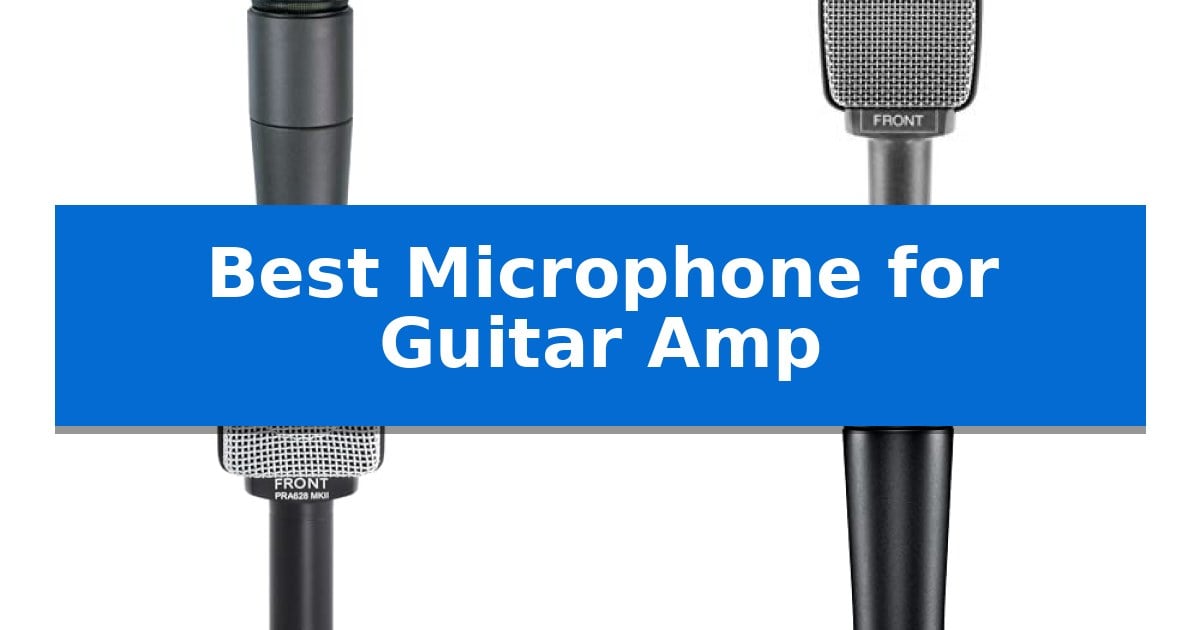
Capturing the raw energy of an electric guitar cabinet requires a microphone that can handle high sound pressure levels while maintaining tonal integrity. Whether you are tracking in a home studio or miking a combo amp on a loud stage, finding the Best Microphone for Guitar Amp is essential for achieving a professional, mix-ready sound.
The right choice depends on your specific environment and the character of your amplifier. From industry-standard dynamic workhorses to specialized side-address designs, we have evaluated five distinct options to help you isolate your sound and minimize unwanted bleed, ensuring your guitar tone cuts through the mix with clarity and punch.
You may also want to compare Best Microphone for Group Podcast, Best Microphone for Grand Piano, and Best Microphone for GoXLR.
Best Microphone for Guitar Amp
Quick Comparison
| Product | Best For | Key Strength | Score |
|---|---|---|---|
| Shure SM57 Dynamic Instrument Microphone | Best Overall | Contoured frequency response enhances guitar attack and clarity. | 4.9 |
| Sennheiser e 609 Instrument Microphone | Side-Address Design for Tight Placement | Side-address design allows for flush, space-saving placement against amplifier grilles. | 4.7 |
| Superlux PRA628MKII Instrument Microphone | Handles High SPL Guitar Tones | Handles high SPL up to 150dB without distortion | 4.8 |
| Shure SM58 Dynamic Vocal Microphone | Versatile Durable Stage Staple | Rugged metal construction ensures longevity in demanding environments. | 4.6 |
| Pyle PDMIC59 Dynamic Microphone | Budget Friendly All-Purpose Choice | Cardioid pickup pattern minimizes feedback and off-axis interference. | 4.6 |
How We Chose
- Polar Pattern: We prioritized microphones with cardioid or supercardioid patterns to ensure focused capture and rejection of off-axis stage noise.
- SPL Handling: We evaluated each microphone's ability to withstand high volume levels without introducing distortion or capsule damage.
- Frequency Response: We looked for contoured responses that enhance guitar-specific frequencies, such as the midrange attack and high-end detail.
- Durability and Form Factor: We considered the physical build quality and mounting options, focusing on units that allow for tight, close-miking placement.
- Application Versatility: We assessed how well each microphone performs across different cabinet types and recording environments.
1 Shure SM57 Dynamic Instrument Microphone — Industry Standard for Cabinet Miking
Capturing the raw energy of a guitar cabinet requires a microphone that can withstand high sound pressure levels without sacrificing detail. The Shure SM57 Pro XLR Dynamic Instrument Microphone is engineered specifically for this task, utilizing a contoured frequency response with a refined presence boost to ensure your guitar tone cuts through a mix with clarity and defined attack.
Designed as a true studio and stage staple, this microphone features a precise cardioid pickup pattern. This focused capture is essential for close-miking applications, as it effectively isolates the amplifier while minimizing unwanted background noise and bleed from other instruments. Whether you are in a home studio or on a major stage, it maintains a consistent, professional sound that preserves the nuance of your performance.
Beyond its acoustic capabilities, the Shure SM57 is built for the realities of active musicians. Its legendary rugged construction ensures it can handle the physical demands of frequent transport and high-volume sessions. This durability makes it a reliable tool for capturing not just guitar amps, but also drums, brass, and percussion, providing a versatile solution for various recording environments.
Measuring just 6.19 inches in length and weighing 0.625 pounds, the microphone is compact enough to position easily in tight spaces around a cabinet. It comes backed by a 2-year limited warranty, offering peace of mind for daily use. By choosing this dynamic XLR microphone, you are investing in a tool that prioritizes signal integrity and mechanical reliability for demanding audio tasks.
Best for: Guitarists and engineers who need a durable, reliable microphone for close-miking cabinets and capturing high-pressure sound sources.
Skip if: Users looking for a large-diaphragm condenser microphone specifically for capturing room ambiance or delicate, low-volume acoustic textures.
PROS
- Contoured frequency response enhances guitar attack and clarity.
- Precise cardioid pickup reduces bleed in complex recording setups.
- Legendary rugged construction withstands high sound pressure levels.
- Versatile performance across guitar amps, drums, and brass instruments.
CONS
- Dynamic design may lack the ultra-high-frequency sensitivity of some condenser microphones.
2 Sennheiser e 609 Instrument Microphone — Side-Address Design for Tight Placement
Achieving a clean signal from a guitar cabinet often requires precise positioning, and the Sennheiser e 609 Instrument Microphone is engineered specifically for this task. Its distinctive side-address design allows the microphone to be hung directly over the front of a guitar amplifier, enabling the capsule to sit flush against the grille cloth for optimal sound capture without the need for bulky boom stands.
This dynamic supercardioid microphone is built to handle the high sound pressure levels typical of guitar amplifiers. By utilizing a supercardioid polar pattern, the Sennheiser e 609 Instrument Microphone effectively isolates the desired sound source while rejecting off-axis noise, which is essential for maintaining clarity in both live stage environments and studio recording sessions.
With a compact form factor measuring approximately 5.7 inches in width and 1.3 inches in height, this unit is designed for unobtrusive placement. The rugged construction is backed by a 10-year parts and labor warranty, reflecting a focus on long-term reliability for musicians and audio engineers who frequently transport their gear.
The flat-profile housing is a significant departure from traditional end-address microphones, providing a practical solution for tight spaces where standard stands might be cumbersome. By placing the capsule closer to the speaker cone, users can achieve a more direct, punchy tone that captures the nuances of the amplifier's output.
Best for: Guitarists and sound engineers who need a low-profile, side-address microphone that can be hung directly against a speaker cabinet for precise, isolated sound capture.
Skip if: Users who prefer a traditional end-address microphone or those who require a multi-pattern condenser microphone for capturing broader room ambience.
PROS
- Side-address design allows for flush, space-saving placement against amplifier grilles.
- Supercardioid polar pattern provides excellent off-axis sound rejection.
- Durable construction supported by a 10-year parts and labor warranty.
- Compact, lightweight form factor simplifies setup in crowded stage or studio environments.
CONS
- Form factor is specialized for instrument use and may be less versatile for vocal applications.
3 Superlux PRA628MKII Instrument Microphone — Handles High SPL Guitar Tones
Capturing the raw energy of a live guitar performance requires a microphone capable of handling extreme sound pressure levels without coloring the signal. The Superlux PRA628MKII Instrument Microphone is engineered specifically for this purpose, featuring a supercardioid polar pattern that isolates the speaker cabinet while effectively rejecting unwanted stage or room noise.
Designed for close-miking applications, this microphone utilizes a low-profile, flat form factor that allows for precise placement directly against a guitar or bass cabinet. Its robust metal housing ensures durability in demanding environments, while the included gooseneck clamp provides the flexibility needed to position the mic at the optimal angle relative to the speaker cone.
The internal architecture is tuned with a tailored 80Hz–18kHz frequency response, which preserves the midrange punch and high-frequency detail essential for electric guitar tones. Because it is built to withstand high SPL up to 150dB, it maintains signal integrity even when placed in front of high-wattage amplifiers driven to their limits, preventing the distortion often associated with less capable transducers.
While this microphone is highly specialized for high-volume sound sources, it remains a versatile tool for studio and live production. Beyond guitar and bass cabinets, its ability to handle high-pressure transients makes it a viable option for miking toms and brass instruments, providing a consistent, focused sound across various high-volume applications.
Best for: Best for guitarists and sound engineers needing a high-SPL, low-profile microphone for close-miking guitar and bass cabinets in live or studio settings.
Skip if: Skip if you require a multi-purpose microphone for vocal recording or acoustic instruments, as this model is specifically voiced and shaped for high-volume, close-proximity instrument miking.
PROS
- Handles high SPL up to 150dB without distortion
- Supercardioid polar pattern for superior off-axis noise rejection
- Low-profile design optimized for close-miking speaker cones
- Tailored frequency response specifically for guitar and bass cabinets
CONS
- XLR cable not included in the package
- Specialized design is less versatile for general-purpose recording
4 Shure SM58 Dynamic Vocal Microphone — Versatile Durable Stage Staple
Capturing the raw energy of a guitar cabinet requires a tool built for high-pressure environments, and the Shure SM58 Pro XLR Dynamic Vocal Microphone is engineered to handle these intense conditions with ease. Its rugged metal construction and reinforced stand adapter provide the mechanical stability needed when positioned directly in front of a vibrating amplifier, ensuring the microphone remains secure during long recording sessions or live sets.
The precision cardioid pickup pattern is a critical asset for guitarists, as it focuses exclusively on the sound source while rejecting off-axis noise and potential feedback from the room. This directional control allows for precise placement against a speaker grille, helping to isolate the specific tone of the amplifier without capturing unwanted ambient reflections.
Designed with a finely tuned frequency response, this microphone delivers a balanced capture that preserves the warmth and articulation of an electric guitar. The integrated pop protection and refined spherical grille serve a dual purpose, acting as a robust shield against the physical air pressure generated by high-volume speakers, which helps maintain signal clarity.
Reliability is central to the design of the Shure SM58 Pro XLR Dynamic Vocal Microphone, which is built to withstand the rigors of professional use. Whether in a home studio or on a touring stage, its consistent performance and durable build make it a dependable choice for capturing guitar tones accurately.
Best for: Guitarists and engineers seeking a durable, directional microphone capable of handling high sound pressure levels at the amplifier grille.
Skip if: Users requiring a condenser microphone's high-frequency sensitivity or a wide-pattern pickup for capturing room ambiance alongside the amplifier.
PROS
- Rugged metal construction ensures longevity in demanding environments.
- Precision cardioid pickup pattern minimizes unwanted background noise and feedback.
- Integrated pop protection helps maintain signal integrity against high-pressure air movement.
CONS
- Dynamic design may lack the extreme high-frequency detail found in specialized condenser microphones.
5 Pyle PDMIC59 Dynamic Microphone — Budget Friendly All-Purpose Choice
Capturing the raw output of a guitar amplifier requires a microphone capable of handling high sound pressure levels without introducing unwanted distortion or feedback. The Pyle Professional Dynamic Vocal Microphone utilizes a cardioid pickup pattern to isolate the source signal, effectively shunning off-axis noise from other stage instruments or nearby speakers.
Designed for durability, this microphone features a rugged, all-metal construction with a zinc die-cast case and a steel mesh windscreen equipped with an anti-dent ring. This build quality ensures it remains reliable through frequent use in both studio and live environments, while the integrated pop filter helps mitigate breath and plosive noises during recording.
The Pyle PDMIC59 is a moving coil dynamic microphone that excels at achieving high gain before feedback, making it a practical choice for miking amplified instruments. Its ultra-wide frequency response is engineered to provide a transparent sound profile, ensuring that the character of your guitar amplifier is reproduced with clarity.
Each unit includes a professional grade 15 ft. XLR-to-1/4 inch cable, allowing for immediate connection to most standard guitar amplifiers or mixing consoles. With its on/off switch for quick muting and a design optimized for moisture resistance, this microphone serves as a versatile tool for musicians looking for a straightforward, dependable solution for their recording or performance setup.
Best for: Musicians and home studio users seeking a durable, all-purpose dynamic microphone for miking guitar amplifiers and live vocal applications.
Skip if: Users requiring a specialized condenser microphone for capturing high-frequency detail or those who prefer a wireless setup for stage mobility.
PROS
- Cardioid pickup pattern minimizes feedback and off-axis interference.
- Rugged all-metal construction provides long-term durability.
- Includes 15ft XLR-to-1/4 cable for immediate plug-and-play compatibility.
- High gain before feedback makes it ideal for loud amplified sources.
CONS
- Wired-only connection limits movement compared to wireless alternatives.
- Dynamic capsule design may lack the sensitivity of condenser microphones for subtle acoustic nuances.
Best Microphone for Guitar Amp Buying Guide
Understanding Polar Patterns
The polar pattern of a microphone determines how it captures sound from different directions. For guitar amps, a cardioid or supercardioid pattern is standard because it focuses on the speaker cone while rejecting noise from the sides and rear.
A tighter pattern is particularly beneficial in live settings where you need to isolate the guitar signal from drums and other stage noise. This focus helps prevent feedback and ensures that the recorded signal remains clean and articulate.
High SPL Handling
Guitar amplifiers can produce significant sound pressure levels, especially when pushed to achieve natural tube saturation. A microphone must be able to handle these high SPL levels without clipping or distorting the signal.
Dynamic microphones are generally preferred for this task due to their robust construction and ability to handle loud sources. Always check the manufacturer's specifications to ensure the microphone can withstand the volume output of your specific amplifier.
Frequency Response and Presence
A microphone with a contoured frequency response can help a guitar track sit better in a mix. Many instrument-specific mics feature a presence boost in the upper-midrange, which helps emphasize the attack and clarity of the guitar strings.
Flat responses are useful if you prefer to shape the tone entirely through EQ during the mixing process. However, for most guitarists, a mic that naturally highlights the 'sweet spot' of the speaker cone saves time and effort.
Placement and Form Factor
The physical design of the microphone dictates how closely you can place it to the speaker grille. Side-address microphones or compact designs allow for easier positioning in tight spaces, such as when miking a combo amp on a crowded stage.
Consider the mounting hardware included with the microphone. A secure, adjustable clamp or stand adapter is crucial for maintaining consistent mic placement throughout a performance or recording session.
Connectivity and Durability
Most professional guitar microphones utilize XLR connectivity, which provides a balanced signal and reduces interference over long cable runs. Ensure your audio interface or mixer has the necessary XLR inputs to support your chosen microphone.
Durability is paramount for gear that is frequently moved or used in live environments. Look for rugged metal construction and reinforced grilles, as these features protect the internal capsule from the rigors of touring and daily studio use.
Frequently Asked Questions
Why are dynamic microphones preferred for guitar amps?
Dynamic microphones are favored because they are rugged, can handle high sound pressure levels without distorting, and have a focused pickup that helps isolate the guitar amp from other instruments.
What is the benefit of a supercardioid pattern?
A supercardioid pattern provides a narrower, more focused pickup area than a standard cardioid pattern, which is excellent for rejecting background noise and preventing feedback in loud environments.
Can I use a vocal microphone on a guitar amp?
Yes, many dynamic microphones are versatile enough to handle both vocals and instruments. However, instrument-specific mics often feature frequency responses tailored to the midrange characteristics of guitar cabinets.
How close should I place the mic to the speaker?
Close-miking, typically 1 to 3 inches from the speaker grille, is standard for capturing a direct, punchy sound. Placing the mic closer to the center of the cone usually results in a brighter tone, while moving it toward the edge produces a warmer, darker sound.
Do I need a special cable for these microphones?
Most of these microphones require a standard XLR cable. Some budget-friendly options may include an XLR to 1/4-inch cable, but for professional recording, a balanced XLR to XLR connection is recommended.
Conclusion: Our Top Pick
Selecting the right tool for your cabinet is a balance of durability, tonal character, and placement flexibility. For most users, the Shure SM57 Dynamic Instrument Microphone stands out as the most reliable choice due to its legendary build quality and ability to consistently capture the nuance of guitar amps in both studio and live environments.
While other options offer specialized form factors or specific frequency profiles, the SM57 remains the industry standard for a reason. Its focused cardioid pattern and high SPL handling make it a versatile, long-term investment for any guitarist looking to achieve professional-grade recordings.