
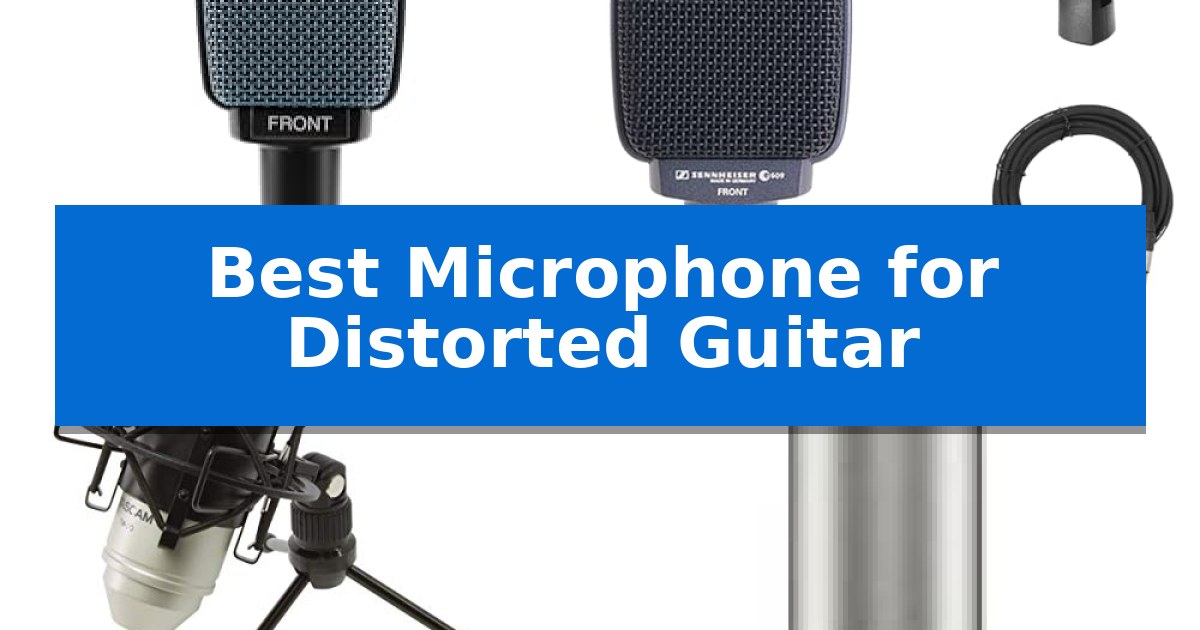
Capturing the aggressive energy of a high-gain amplifier requires a microphone that can handle extreme sound pressure levels without introducing unwanted harshness. Finding the Best Microphone for Distorted Guitar is essential for ensuring your recordings retain the grit and punch of your performance while maintaining clarity in the mix.
Whether you are tracking in a professional studio or a home environment, the right choice depends on how you want to shape your tone. We have analyzed several industry-standard options to help you determine which model best suits your specific recording needs and amplifier setup.
You may also want to compare Best Microphone for Distant Sound Capture, Best Microphone for Distance Recording, and Best Microphone for Discord.
Best Microphone for Distorted Guitar
Quick Comparison
| Product | Best For | Key Strength | Score |
|---|---|---|---|
| Sennheiser E906 Instrument Microphone | Best Overall | Three switchable presence settings for customizable high-frequency response | 4.9 |
| Sennheiser E609 Instrument Microphone | Side-Address Design for Easy Placement | Side-address design allows for flush placement against guitar cabinets. | 4.5 |
| Tascam TM-80 Condenser Microphone | High SPL Handling for Loud Amps | 136dB SPL rating allows for safe recording of loud guitar cabinets. | 4.9 |
| Shure SM81 Instrument Microphone | Flat Response for Accurate Capture | Flat frequency response for accurate, uncolored sound reproduction. | 4.6 |
How We Chose
- Maximum Sound Pressure Level (SPL) handling to prevent capsule distortion.
- Frequency response tailoring to manage the high-frequency sizzle of distorted signals.
- Polar pattern effectiveness for isolating the amplifier from room reflections.
- Physical form factor and mounting convenience for close-miking applications.
- Build quality and long-term reliability for frequent studio use.
1 Sennheiser E906 Instrument Microphone — Switchable Presence for Amp Tones
Capturing the complex harmonic textures of a driven amplifier requires a microphone capable of handling high sound pressure levels while maintaining clarity. The Sennheiser Pro Audio E906 Microphone is engineered specifically for this task, featuring a flat-profile design that allows for precise placement directly against a guitar cabinet grille.
At the heart of the Sennheiser Pro Audio E906 Microphone is a supercardioid dynamic capsule, which excels at isolating the desired sound source from unwanted stage or room noise. This directional pattern is essential for maintaining the integrity of a distorted signal, ensuring that the grit and character of the amplifier remain the primary focus of the recording or live mix.
Versatility is integrated through the three switchable presence settings, which allow users to tailor the high-frequency response to match the specific tonal profile of their amplifier. By toggling between bright, moderate, and dark settings, you can compensate for overly harsh treble or add definition to a muddy signal without needing external equalization.
Built for the rigors of professional use, the microphone features a durable construction and a standard XLR3 connector for reliable signal transmission. Its compact dimensions and side-address orientation make it an unobtrusive choice for tight stage setups or crowded studio environments, fitting easily into any professional audio workflow.
Best for: Guitarists and sound engineers seeking a versatile, high-SPL capable microphone with adjustable tonal profiles for close-miking guitar amplifiers.
Skip if: Users who require a large-diaphragm condenser microphone for capturing nuanced room ambience or those who prefer a traditional end-address microphone form factor.
PROS
- Three switchable presence settings for customizable high-frequency response
- Supercardioid polar pattern for excellent off-axis sound rejection
- Flat-profile design ideal for precise close-miking of guitar cabinets
- 10-year warranty reflecting robust build quality
CONS
- Side-address orientation may require different positioning techniques than standard end-address microphones
2 Sennheiser E609 Instrument Microphone — Side-Address Design for Easy Placement
Capturing the raw energy of a cabinet requires a microphone that can handle high sound pressure levels while maintaining precise placement. The Sennheiser E609 Silver Instrument Microphone features a unique side-address design that allows the capsule to sit flush against a guitar cabinet grille, ensuring the diaphragm remains in the optimal position to capture the speaker's output without requiring bulky stands.
Engineered for the rigors of live performance, this microphone utilizes a rugged metal construction that provides durability for frequent transport and stage use. The super-cardioid pick-up pattern is specifically tuned to isolate the desired sound source, effectively rejecting bleed from other instruments or stage noise. This directional focus is essential when tracking distorted guitars, as it keeps the signal clean and defined.
Internal electronics are designed to maintain signal integrity in challenging environments. A built-in hum compensating coil works to minimize electrical interference, while the neodymium ferrous magnet with boron ensures the microphone remains stable and consistent regardless of temperature fluctuations or climate changes. These technical considerations help maintain a reliable signal path during long sessions or touring.
The bundle includes a 20ft XLR cable and a microfiber cleaning cloth, providing the necessary components for immediate setup. With its compact form factor and specialized mounting capabilities, the Sennheiser E609 Instrument Microphone serves as a practical tool for guitarists seeking a consistent, isolated sound from their amplifiers.
Best for: Guitarists and studio engineers who need a compact, side-address microphone capable of high-isolation placement directly against a speaker cabinet.
Skip if: Users who require a multi-pattern microphone or a traditional end-address design for vocal recording or general-purpose studio applications.
PROS
- Side-address design allows for flush placement against guitar cabinets.
- Super-cardioid pattern provides excellent isolation from stage noise.
- Hum compensating coil reduces unwanted electrical interference.
- Rugged metal construction ensures long-term durability.
CONS
- Fixed polar pattern limits versatility for non-instrument recording tasks.
3 Tascam TM-80 Condenser Microphone — High SPL Handling for Loud Amps
Capturing the raw energy of a loud amplifier requires hardware capable of handling significant acoustic output without compromising signal integrity. The Tascam TM-80 Large Diaphragm Condenser Microphone, Silver is engineered for this exact challenge, featuring a maximum sound pressure rating of 136dB SPL. This high tolerance allows it to sit directly in front of guitar cabinets, capturing distorted textures while maintaining clarity.
At the heart of the Tascam TM-80 is an 18mm aluminum diaphragm housed within a cardioid pickup pattern. This design choice focuses on the sound source directly in front of the mic, helping to isolate the guitar amp from ambient room noise. The internal circuitry is specifically optimized to minimize noise and distortion, ensuring that the rich, full character of a driven guitar tone remains intact during the recording process.
The package is designed for immediate integration into a home studio setup. It includes a dedicated tabletop stand, a six-foot XLR cable, and an elastic shockmount. The shockmount is a practical addition for guitar recording, as it helps reduce unwanted rumble and mechanical noise that can otherwise interfere with the signal path during high-volume sessions.
While this microphone excels at handling high-decibel sources like guitar amps and drums, its versatility extends to vocals and acoustic instruments as well. The combination of its robust SPL handling and included accessories makes it a comprehensive solution for those building a recording environment focused on capturing aggressive, high-gain guitar tones.
Best for: Home studio users who need a reliable microphone capable of handling high-volume guitar amplifier output without distortion.
Skip if: Users requiring a multi-pattern microphone for complex room-miking techniques or those who prefer a side-address microphone with integrated gain controls.
PROS
- 136dB SPL rating allows for safe recording of loud guitar cabinets.
- Cardioid pickup pattern provides effective isolation of the sound source.
- Included elastic shockmount helps minimize mechanical rumble and noise.
- Optimized internal circuitry retains full sound quality while reducing self-noise.
CONS
- Fixed cardioid pattern limits flexibility for stereo or room-miking configurations.
4 Shure SM81 Instrument Microphone — Flat Response for Accurate Capture
Capturing the complex harmonics of a distorted guitar requires a microphone capable of handling high sound pressure levels without introducing unwanted coloration. The Shure SM81-LC Cardioid Condenser Instrument Microphone is engineered for this precision, featuring a flat response curve that ensures the raw, aggressive character of your amplifier is translated accurately to your recording interface.
Designed with a rugged steel construction, this condenser mic is built to withstand the demanding environment of a studio or stage. It provides a 0 dB/10 dB lockable attenuator switch, which is essential when miking loud guitar cabinets, as it prevents clipping and maintains signal integrity even when faced with high-output sources. Its cardioid polar pattern remains uniform across the frequency spectrum, ensuring that off-axis noise is effectively rejected while the primary signal remains focused.
Performance is maintained through its low self-noise and low RF susceptibility, allowing for clean captures even in setups with significant electronic interference. The microphone requires phantom power (48 Vdc preferred) and utilizes a balanced XLR connection, making it a reliable choice for integration into professional or home studio signal chains. With a frequency response spanning 20 Hz to 20 kHz, it captures the full range of a guitar's frequency output, from deep low-end chugs to biting high-frequency transients.
The Shure SM81-LC includes a swivel adapter, foam windscreen, and a protective carrying case, providing the necessary tools for immediate deployment. Its ability to operate across a wide range of temperature and humidity conditions makes it a versatile instrument microphone for various recording environments, ensuring consistent results regardless of the climate.
Best for: Recording engineers and guitarists seeking a neutral, high-headroom condenser microphone to accurately capture the nuances of high-gain amplifier cabinets.
Skip if: You require a dynamic microphone specifically designed for high-SPL handling without the need for external phantom power or a flat, uncolored frequency response.
PROS
- Flat frequency response for accurate, uncolored sound reproduction.
- Lockable 10 dB attenuator to prevent signal clipping from loud sources.
- Rugged steel construction ensures long-term durability.
- Low self-noise and high RF immunity for clean signal paths.
CONS
- Requires phantom power to operate, necessitating a compatible interface or mixer.
- Sensitive condenser design may require careful placement to avoid excessive room noise compared to dynamic alternatives.
Best Microphone for Distorted Guitar Buying Guide
Understanding Polar Patterns
The polar pattern of a microphone determines how it captures sound from different directions. For distorted guitar, supercardioid and cardioid patterns are preferred because they provide excellent off-axis rejection, ensuring the mic focuses strictly on the speaker cone rather than the surrounding room acoustics.
Choosing a tighter pattern helps minimize bleed from other instruments if you are recording live, and it helps keep the signal clean by reducing the amount of ambient noise captured during high-gain sessions.
The Role of SPL Handling
Distorted guitar amplifiers produce massive sound pressure levels that can easily overwhelm sensitive diaphragms. A microphone with high SPL handling is critical to avoid internal clipping or damage, ensuring the signal remains transparent even when the amp is pushed to its limits.
Always verify the maximum decibel rating of your microphone. While dynamic mics are naturally robust, some condensers are specifically engineered with internal circuitry to withstand the intense acoustic energy generated by loud guitar cabinets.
Frequency Response and Presence
High-gain distortion often introduces harsh upper-mid frequencies that can sound fatiguing. Microphones with a switchable presence boost or a naturally tailored frequency response can help you tame these frequencies at the source, saving you time during the mixing process.
A flat response is useful for capturing the exact sound of the amp, but many engineers prefer a mic that subtly emphasizes the midrange to help the guitar cut through a dense mix without needing aggressive equalization.
Dynamic vs. Condenser Microphones
Dynamic microphones are the industry standard for distorted guitar due to their rugged construction and ability to handle high volume without requiring external power. They offer a warm, punchy sound that complements the aggressive nature of high-gain tones.
Condenser microphones offer greater detail and a faster transient response. While they are more sensitive, modern models designed for high SPL can provide a more nuanced capture of the cabinet's texture, provided they are used with appropriate gain staging.
Placement and Positioning
The physical design of the microphone significantly impacts your workflow. Side-address designs allow for easier placement against the grille cloth, while compact, flat-profile mics can be positioned precisely to capture the sweet spot of the speaker cone.
Experimenting with the distance and angle relative to the center of the speaker will drastically change the tone. A mic that is easy to mount and adjust will encourage more experimentation, leading to better final results.
Frequently Asked Questions
Do I need a condenser or dynamic mic for distorted guitar?
Dynamic mics are generally preferred for their durability and natural ability to handle high volumes. However, high-SPL condenser mics are excellent if you want to capture more high-frequency detail and nuance.
What is the benefit of a supercardioid pattern?
A supercardioid pattern provides a narrower pickup area than a standard cardioid, which is highly effective for isolating the specific speaker you are miking and rejecting sound from the sides.
Can I use a standard vocal mic for my guitar amp?
While some vocal mics can handle the volume, they are often not designed for the extreme SPL of a guitar cabinet. It is safer and more effective to use an instrument-specific microphone designed for high-gain applications.
Does the microphone cable matter?
Using a high-quality, balanced XLR cable is essential to prevent interference and signal loss, especially in environments with multiple electronic devices and power cables.
How close should the mic be to the amp?
Most engineers start with the microphone very close to the grille cloth, roughly one to two inches away, to capture a direct, dry signal before adjusting the distance to introduce more room sound.
Conclusion: Our Top Pick
Selecting the right microphone is a foundational step in achieving a professional guitar tone. For most applications involving high-gain amplifiers, the Sennheiser E906 Instrument Microphone stands out as the most versatile option due to its switchable presence settings and flat, side-address profile that makes precise placement effortless.
By offering three distinct sound profiles, it allows you to adapt to different amplifier characteristics without needing to swap hardware. Its ability to handle high sound pressure levels while maintaining clarity makes it a reliable workhorse for any studio looking to capture the true character of a distorted guitar.