
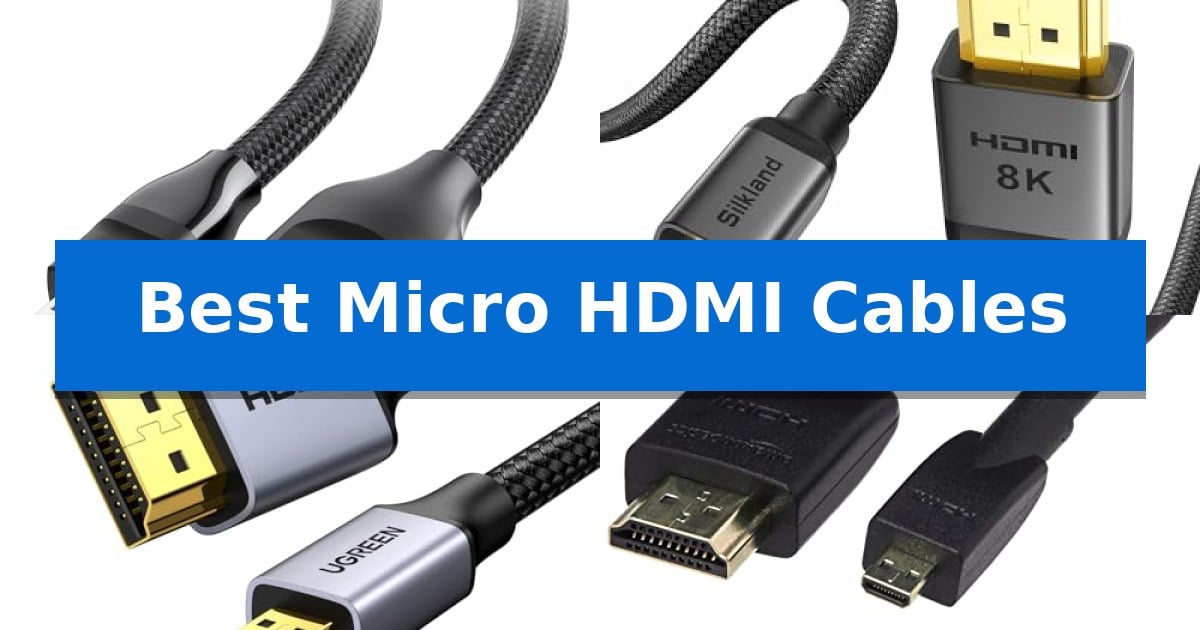
Finding the right connection for your high-definition devices can be surprisingly complex, especially when dealing with the smaller Micro HDMI interface. Whether you are connecting a digital camera to a field monitor, linking a Raspberry Pi to a display, or streaming from a laptop, the quality of your cable directly impacts signal stability and resolution.
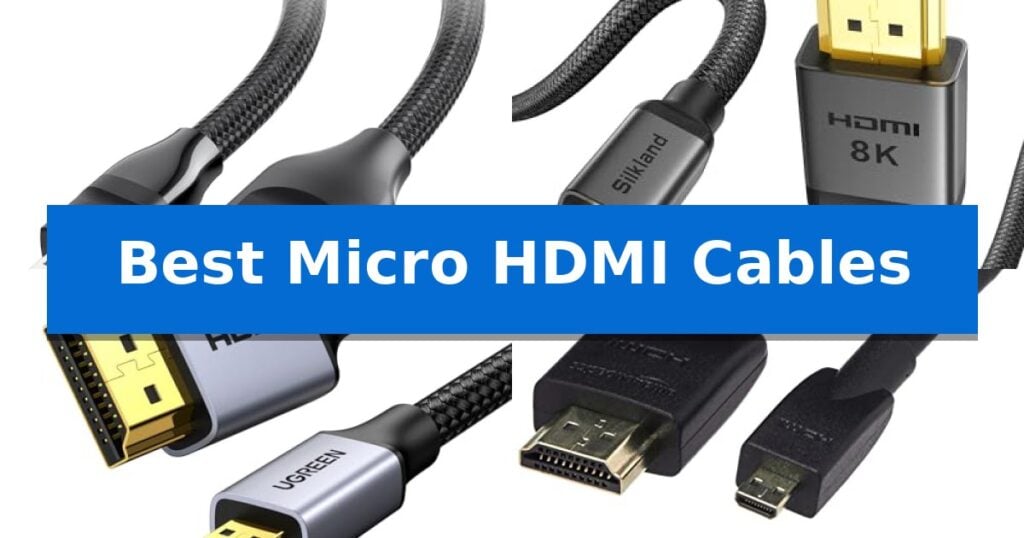
We have evaluated the Best Micro HDMI Cables currently available to help you navigate the technical specifications and build quality differences. Our focus is on identifying cables that provide reliable bandwidth for your specific resolution needs, ensuring your setup remains flicker-free and responsive during use.
You may also want to compare Best Micro HDMI Cable for Lumix 4K, Best Micro HDMI Cable for Gimbals and External Monitors, and Best Micro HDMI Cable for G85.
Best Micro HDMI Cables
Quick Comparison
| Product | Best For | Key Strength | Score |
|---|---|---|---|
| Cable Matters 8K Micro HDMI Cable | Best Overall | Supports 48Gbps bandwidth for 8K@60Hz and 4K@240Hz output. | 4.9 |
| Silkland 8K Micro HDMI Cable | High-Performance HDMI 2.1 Standard | 48Gbps bandwidth supports high-refresh-rate gaming and 8K resolution. | 4.4 |
| UGREEN Braided Micro HDMI Cable | Durable Nylon for Frequent Use | High-resolution support up to 4K@60Hz and 2K@165Hz. | 4.5 |
| Amazon Basics Micro HDMI Cable | Reliable Standard for Daily Tasks | Supports 4K@60Hz and HDR for high-quality video output. | 4.7 |
| ZeniKon Micro HDMI Cable 2-Pack | Compact Length for Minimal Clutter | Bi-directional transmission supports flexible setup configurations. | 4.4 |
How We Chose
- Resolution and Bandwidth Support: Verifying support for 4K and 8K standards to ensure compatibility with modern displays.
- Connector Integrity: Assessing the build quality of the Micro HDMI interface to prevent signal loss or physical damage.
- Cable Durability: Evaluating materials like nylon braiding and shielding that protect against daily wear and EMI interference.
- Device Compatibility: Confirming the specific interface requirements for cameras, single-board computers, and mobile workstations.
- Length and Flexibility: Considering how cable dimensions and design impact cable management in compact setups.
1 Cable Matters 8K Micro HDMI Cable — Advanced 48Gbps Bandwidth for 8K
Achieving high-bandwidth connectivity for compact devices requires a cable that balances physical flexibility with technical performance. The Cable Matters 48Gbps 8K Micro HDMI to HDMI 2.1 Cable provides a robust solution for users needing to bridge the gap between micro-HDMI equipped hardware and standard displays, supporting resolutions up to 8K@60Hz and 4K@240Hz.
Engineered with 48Gbps bandwidth, this cable facilitates advanced features such as Dynamic HDR, HDMI eARC, and Variable Refresh Rate (VRR). These specifications ensure that data-heavy tasks, such as high-resolution video playback or gaming, maintain signal integrity through bare copper conductors and a protective braided jacket.
The bi-directional design adds significant utility, allowing for seamless transitions between source devices like the Raspberry Pi 5/4, GoPro, or digital cameras and output monitors or TVs. The easy-grip connectors are specifically shaped to assist with frequent plugging and unplugging in tight port configurations, a common necessity when working with portable electronics.
Compatibility remains a primary focus, with the cable supporting a wide array of hardware including the Sony A7 III, Lenovo Yoga laptops, and various OLED displays. At a length of 6.6 feet, it offers sufficient reach for desktop setups or studio environments without excessive cable clutter, making it a reliable choice for photographers and DIY enthusiasts alike.
Best for: Photographers, videographers, and DIY enthusiasts requiring high-bandwidth, 8K-capable connectivity for micro-HDMI devices like cameras and Raspberry Pi boards.
Skip if: Users who require a significantly longer cable length or those whose devices utilize a standard HDMI or USB-C port rather than micro-HDMI.
PROS
- Supports 48Gbps bandwidth for 8K@60Hz and 4K@240Hz output.
- Features bi-directional connectivity for versatile use across cameras, tablets, and computers.
- Includes a braided jacket and easy-grip connectors for enhanced durability and handling.
- Compatible with HDMI 2.1 features like VRR, ALLM, and Dynamic HDR.
CONS
- Fixed 6.6ft length may be limiting for specific permanent installations.
2 Silkland 8K Micro HDMI Cable — High-Performance HDMI 2.1 Standard
Connecting high-resolution cameras, tablets, or single-board computers to modern displays requires a reliable link that maintains signal integrity. The Silkland 8K Micro HDMI Cable addresses this need by utilizing a 48Gbps bandwidth capacity, ensuring that high-definition data streams remain stable without the flickering or black screens often associated with lower-quality cabling.
Engineered with exclusive E-Braid technology, this cable features double-layer fishnet winding and nylon braiding for enhanced durability. Internally, the inclusion of copper cores and ferrite magnetic beads works to minimize interference, providing a consistent connection for demanding tasks like 4K gaming at 240Hz or 8K streaming at 60Hz.
This cable supports advanced standards including Dynamic HDR, HDCP 2.2 and 2.3 compliance, and immersive audio formats like Dolby Atmos and DTS:X via eARC. It is designed for bi-directional use, allowing for versatile setups between Micro HDMI-equipped source devices and standard HDMI displays, such as Samsung G8 and G9 OLED monitors.
Compatibility is a primary focus, covering a wide range of hardware including Raspberry Pi 5/4, various Canon EOS R series cameras, and specific Sony Alpha models. Users should verify that their device utilizes a Micro HDMI interface, as this cable is not compatible with Mini HDMI or Micro USB ports, including those found on certain Samsung mobile devices.
Best for: Users needing a high-bandwidth, durable connection for Micro HDMI-equipped cameras, tablets, or single-board computers to 4K/8K displays.
Skip if: Users whose devices utilize Mini HDMI or Micro USB ports, as this cable is strictly for Micro HDMI interfaces.
PROS
- 48Gbps bandwidth supports high-refresh-rate gaming and 8K resolution.
- E-Braid technology with nylon braiding provides increased physical durability.
- Ferrite magnetic beads help reduce signal interference.
- Bi-directional design allows for flexible connectivity between source and display.
CONS
- Strict interface requirement means it will not fit Mini HDMI or Micro USB ports.
3 UGREEN Braided Micro HDMI Cable — Durable Nylon for Frequent Use
The UGREEN Braided Micro HDMI Cable provides a reliable connection for high-definition hardware, supporting 4K@60Hz and 2K@165Hz resolutions for crisp, clear visual output. Designed for versatility, this cable facilitates bi-directional transmission, allowing users to stream audio and video from cameras, tablets, or laptops to larger displays like HDTVs and projectors.
Built for longevity, the cable features an upgraded nylon braided exterior that is rated for over 25,000 flex times, offering significant resistance to wear and tear. The inclusion of an aluminum shell aids in heat dissipation, while 30AWG tinned copper conductors and triple shielding work together to minimize EMI interference, ensuring a stable signal during operation.
Compatibility is a primary focus of this design, making it a suitable choice for devices such as the Raspberry Pi 5, GoPro Hero series, and various portable monitors or cameras. Users should note that this cable is specifically engineered for Micro HDMI ports and is not compatible with devices utilizing Micro USB or Mini HDMI interfaces.
This cable balances physical durability with technical performance, utilizing gold-plated connectors to maintain connection quality over time. By supporting Audio Return Channel (ARC) and uncompressed multichannel digital audio, it serves as a comprehensive solution for both video and audio connectivity needs in a compact, 6.6-foot length.
Best for: Users needing a durable, high-resolution connection between Micro HDMI-equipped portable electronics and standard HDMI displays.
Skip if: Users whose devices utilize Micro USB or Mini HDMI ports, as this cable is physically incompatible with those interfaces.
PROS
- High-resolution support up to 4K@60Hz and 2K@165Hz.
- Superior durability with a nylon braided exterior tested for 25,000 flexes.
- Stable signal transmission provided by triple shielding and 30AWG tinned copper.
- Bi-directional functionality for flexible device-to-display streaming.
CONS
- Specific port requirement limits use to Micro HDMI devices only.
- Fixed 6.6ft length may not suit all desk or studio configurations.
4 Amazon Basics Micro HDMI Cable — Reliable Standard for Daily Tasks
Connecting portable electronics to high-definition displays requires a reliable physical link that maintains signal integrity. The Amazon Basics Micro HDMI to HDMI Cable is engineered to bridge this gap, utilizing solid copper conductors and full metal jacket shielding to ensure consistent data transmission between devices like digital cameras or tablets and standard HDTVs or projectors.
This cable is built to handle high-bandwidth requirements, supporting 18Gbps bandwidth which enables the transfer of high-definition audio and video content. It is capable of delivering 4K@60Hz resolution and 4K HDR content, providing a clear and vibrant picture for media playback. The inclusion of Ethernet and ARC (Audio Return Channel) support allows for a simplified setup where audio and video signals are managed through a single interface, reducing the clutter often associated with home theater systems.
Designed for versatility, the cable features a 6-foot length with a flexible, round construction that aids in cable management. Its backwards compatibility with earlier HDMI versions ensures it remains functional across a wide range of hardware, from older legacy equipment to modern devices. This combination of features makes it a practical tool for users who need a dependable, standard-length connection for their daily media tasks.
Best for: Users needing a reliable, standard-length connection between portable Micro HDMI devices and full-size HDMI displays for home media.
Skip if: Users requiring specialized lengths beyond 6 feet or those with devices lacking a Micro HDMI port.
PROS
- Supports 4K@60Hz and HDR for high-quality video output.
- Full metal jacket shielding provides durable construction.
- Integrated Ethernet and ARC support for simplified connectivity.
- Backwards compatible with older HDMI standards.
CONS
- Fixed 6-foot length may not suit all installation layouts.
5 ZeniKon Micro HDMI Cable 2-Pack — Compact Length for Minimal Clutter
The ZeniKon Micro HDMI Cable 2-Pack provides a compact 1-foot length ideal for reducing cable clutter in setups involving cameras, field monitors, and portable devices. These cables support high-resolution output up to 4K@60Hz and 2K@144Hz, ensuring compatibility with demanding visual tasks like high-definition video monitoring or secondary display connectivity.
Built for durability and signal integrity, each cable features 24K gold-plated connectors and 30AWG pure copper wire. The inclusion of triple shielding and a high-quality aluminum shell works to minimize electromagnetic interference, which is essential for maintaining a stable, clear connection between your source and display.
This bi-directional cable is designed for versatility, allowing for signal transmission from Micro HDMI to standard HDMI or vice versa. It is compatible with a wide range of hardware, including the Raspberry Pi 5 and 4, various DSLR cameras, and ultrabooks, making it a practical addition for users who frequently switch between different portable electronics.
While the 1-foot length is excellent for tight spaces, users should ensure their specific hardware utilizes a Micro HDMI port rather than Mini HDMI or Micro USB, as these interfaces are not interchangeable. The braided cord design adds a layer of physical protection, helping the cable withstand the rigors of frequent travel and equipment adjustments.
Best for: Users needing a short, durable, and reliable connection between portable devices like cameras or Raspberry Pi boards and external monitors.
Skip if: Users requiring a longer reach for their setup, as the 1-foot length is strictly intended for close-proximity connections.
PROS
- Bi-directional transmission supports flexible setup configurations.
- Triple shielding and gold-plated connectors ensure stable signal quality.
- Braided cord design provides enhanced physical durability.
- High-resolution support including 4K@60Hz and 2K@144Hz.
CONS
- 1-foot length may be too short for non-portable desktop configurations.
- Port specificity requires careful verification of device compatibility.
Best Micro HDMI Cables Buying Guide
Understanding Micro HDMI vs. Other Ports
It is critical to distinguish between Micro HDMI, Mini HDMI, and Micro USB before purchasing. While they may look similar to the untrained eye, they are not interchangeable. A Micro HDMI port is significantly smaller than a standard HDMI port and features a distinct, flatter shape.
Always check your device's manual or technical specifications to confirm the port type. Attempting to force a cable into the wrong port can cause permanent damage to your equipment's internal pins and housing.
The Importance of Bandwidth
Bandwidth determines how much data your cable can carry, which directly dictates the maximum resolution and refresh rate you can achieve. Cables supporting HDMI 2.1 offer up to 48Gbps, which is necessary for 8K@60Hz or 4K@240Hz output.
If you are using a device for high-speed gaming or professional video monitoring, prioritize cables that explicitly state their bandwidth capacity. For standard 1080p or 4K@60Hz tasks, a high-speed 18Gbps cable is often sufficient and more cost-effective.
Shielding and Signal Stability
Electromagnetic interference (EMI) can cause flickering, black screens, or complete signal drops. High-quality cables utilize triple shielding and tinned copper conductors to minimize this interference, especially in environments with many electronic devices.
Look for cables that mention shielding specifications. This is particularly important for longer cable runs, where signal degradation is more likely to occur without proper protection.
Durability and Cable Management
Since Micro HDMI cables are frequently used with portable devices like cameras and tablets, they are subject to more movement and bending than stationary home theater cables. Nylon braiding provides an extra layer of protection against fraying and pet damage.
Consider the length of the cable relative to your setup. A cable that is too long can create unnecessary clutter, while one that is too short may put undue stress on the delicate Micro HDMI port, potentially leading to connection failure over time.
Bi-Directional Functionality
Most modern Micro HDMI cables are bi-directional, meaning they can transmit signals from a source (like a camera) to a display (like a monitor) or vice versa. This versatility is essential for users who switch between different hardware configurations.
Always verify the directionality if you are using specialized adapters or converters, as some legacy hardware may have specific input/output requirements that standard cables cannot meet.
Frequently Asked Questions
Can I use a Micro HDMI cable for my smartphone?
No. Most modern smartphones use USB-C or Micro USB ports. Micro HDMI is a video-specific interface and will not fit or function with standard mobile charging ports.
Does cable length affect video quality?
Yes. Longer cables are more susceptible to signal attenuation. For high-resolution 8K or 4K@240Hz signals, shorter, high-quality cables are generally more reliable.
Is 8K support necessary for a 4K monitor?
Not necessarily. An 8K-capable cable is backwards compatible and will work perfectly with 4K displays, often providing a higher safety margin for signal stability.
Why is my screen flickering?
Flickering is often caused by a loose connection or EMI interference. Ensure the cable is firmly seated in both ports and that it is not running parallel to power cords that could cause interference.
Are these cables compatible with Raspberry Pi 5?
Yes, many of the listed cables are specifically designed to work with the Micro HDMI ports found on the Raspberry Pi 4 and 5 series.
Conclusion: Our Top Pick
Choosing the right cable depends on your specific resolution requirements and the physical constraints of your workspace. For users demanding the highest bandwidth and future-ready performance, the Cable Matters 8K Micro HDMI Cable stands out as the most robust option due to its 48Gbps support and durable construction.
While this cable is excellent for high-end setups, ensure your source device and display actually support the HDMI 2.1 standard to take full advantage of its capabilities. For simpler, short-range tasks or budget-conscious projects, other options in our list may provide a more practical fit without sacrificing essential signal reliability.