
Struggling with inconsistent internet in the far corners of your home is a common frustration that often stems from outdated or limited routing hardware. When a single router fails to penetrate thick walls or reach multiple floors, the result is buffering, dropped video calls, and dead zones that disrupt your daily digital life.
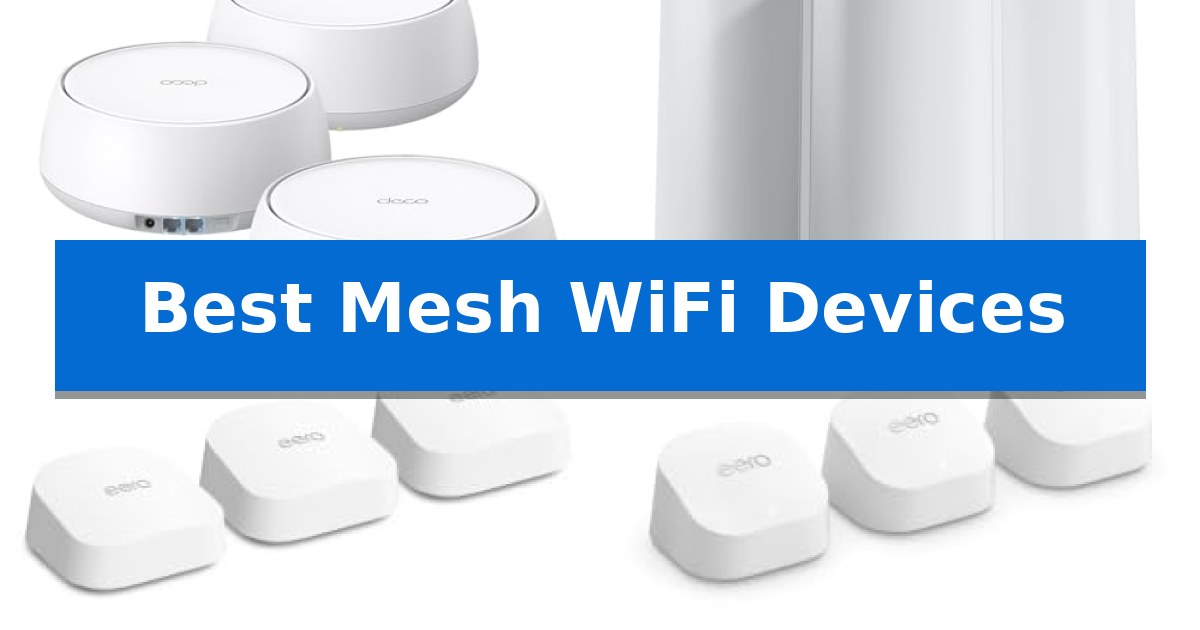
Transitioning to the Best Mesh WiFi Devices provides a unified network that intelligently manages traffic across your entire living space. By utilizing multiple nodes that communicate seamlessly, these systems ensure your devices stay connected to the strongest signal as you move from room to room, offering a robust solution for modern, multi-device households.
You may also want to compare Best Mesh WiFi 6 Systems for Thick Walls, Best Mesh WiFi 6 Systems, and Best Mesh Wi-Fi with Existing Router.
Best Mesh WiFi Devices
Quick Comparison
| Product | Best For | Key Strength | Score |
|---|---|---|---|
| TP-Link Deco BE25 Mesh System | Best Overall | WiFi 7 performance with high-speed dual-band throughput. | 4.9 |
| NETGEAR Orbi 770 Mesh System | High-Capacity Tri-Band Coverage | WiFi 7 support for next-generation speed and capacity. | 4.7 |
| Amazon eero 7 Mesh Router | Reliable Multi-Gigabit Connectivity | Supports high-bandwidth internet plans up to 2.5 Gbps. | 4.5 |
| Amazon eero 6+ Mesh System | Affordable Gigabit Speed Upgrade | Supports gigabit speeds on the 160 MHz radio channel. | 4.5 |
| DBIT AX1500 Mesh System | Expansive Coverage for Large Homes | 5,600 sq ft coverage via a 3-pack mesh system. | 4.6 |
How We Chose
- Coverage area and scalability for different home sizes.
- Support for current wireless standards and multi-gigabit throughput.
- Ease of setup and ongoing network management via mobile applications.
- Integration of security features and parental control options.
- Availability of wired backhaul ports for enhanced stability.
1 TP-Link Deco BE25 Mesh System — Future-Proof WiFi 7 Performance
The TP-Link Deco BE25 Mesh System leverages advanced WiFi 7 technology to deliver high-speed connectivity across large residential spaces, supporting up to 6,600 sq. ft. of coverage. By utilizing 4-stream BE5000 dual-band performance, this system provides the bandwidth necessary for demanding tasks like 8K streaming and AR/VR gaming.
Designed for versatility, the system features 2.5G Ethernet ports that facilitate both wired and wireless backhaul, ensuring stable traffic distribution between units. The integration of AI-Roaming technology allows the mesh network to adapt to your environment, creating a unified network name that maintains consistent performance as you move between rooms.
Security is a foundational element, as the device is built under the CISA Secure-by-Design pledge. Users gain access to TP-Link HomeShield, which includes network security scans, IoT device identification, and parental controls. Additionally, the built-in VPN client and server support enables secure remote access for connected devices without requiring individual software installations.
Setup and ongoing management are streamlined through the Deco App, which handles firmware updates and network configuration. The system is backward compatible with all previous WiFi generations and maintains interoperability with other Deco mesh units, providing a flexible foundation for expanding your home network as needed.
Best for: Large homes requiring high-speed WiFi 7 coverage and advanced network security features for multiple connected devices.
Skip if: Users who do not have a separate modem or those who prefer a single-router setup without the need for multi-unit mesh coverage.
PROS
- WiFi 7 performance with high-speed dual-band throughput.
- 2.5G Ethernet ports for stable wired backhaul.
- AI-Roaming for seamless device handoff.
- Built-in VPN support for enhanced network security.
CONS
- Requires a separate modem for internet connectivity.
- Backhaul performance relies on having at least two units active.
2 NETGEAR Orbi 770 Mesh System — High-Capacity Tri-Band Coverage
Maintaining a consistent, high-speed connection across a large property requires hardware capable of handling modern traffic demands without bottlenecks. The NETGEAR Orbi 770 Mesh System addresses this by utilizing WiFi 7 technology, which provides up to 11 Gbps of throughput to support bandwidth-heavy activities like 8K streaming, VR gaming, and simultaneous video calls.
This system utilizes a tri-band architecture with an enhanced backhaul to ensure that data travels efficiently between the router and its two included satellite extenders. By offloading traffic to dedicated bands, the system maintains speed even when multiple devices are active, effectively blanketing up to 8,000 square feet of space while managing up to 100 connected devices.
Installation is managed through the Orbi app, which provides a guided, step-by-step process to get the network operational. The hardware is designed for broad compatibility, working with existing cable or fiber modems and featuring a 2.5 Gig port to accommodate high-speed internet plans. For those with larger or multi-story layouts, the network can be scaled by adding additional Orbi 770 Series satellites.
Security is integrated directly into the system, featuring Advanced Router Protection and automatic firmware updates to defend against digital threats. Users also have access to a 30-day trial of NETGEAR Armor, a suite of tools designed to provide enhanced protection against malware and identity theft across all connected devices.
Best for: Large homes requiring high-capacity, multi-device connectivity and the latest WiFi 7 performance standards.
Skip if: Users living in smaller apartments or those with basic internet plans who do not require the high-throughput capabilities or the extensive square-footage coverage of a tri-band mesh system.
PROS
- WiFi 7 support for next-generation speed and capacity.
- Tri-band technology with enhanced backhaul to prevent slowdowns.
- Extensive coverage of up to 8,000 square feet with the included 3-pack.
- 2.5 Gig port compatibility for high-speed internet service providers.
CONS
- Requires a separate subscription for continued access to advanced NETGEAR Armor security features after the trial.
- Designed for US use only, limiting its deployment in other regions.
3 Amazon eero 7 Mesh Router — Reliable Multi-Gigabit Connectivity
Maintaining a consistent, high-speed network across a large home requires hardware that can handle modern bandwidth demands without constant manual intervention. The Amazon eero 7 Mesh Router addresses this by integrating Wi-Fi 7 technology, which utilizes multi-link operation to optimize traffic flow across your connected environment.
This system is built for scalability, with a 3-pack configuration capable of providing coverage for up to 6,000 square feet. It features two auto-sensing 2.5 GbE ports, allowing it to support internet service plans up to 2.5 Gbps. The hardware is designed to manage over 120 devices simultaneously, ensuring that high-demand tasks remain stable even as more smart home gadgets are added to the network.
Usability is centered on the brand's proprietary software suite, which includes TrueMesh, TrueRoam, and TrueChannel. These features work in the background to proactively manage connections, ensuring devices remain on the most reliable path. For those looking to manage their network security, an optional eero Plus subscription provides access to tools like malware protection, ad blocking, and integrated VPN services.
The system maintains backward compatibility with all previous eero generations, making it a viable upgrade for existing users. Each unit is compact, measuring roughly 5.12 inches in height and width, and the entire system is supported by a three-year warranty, providing a clear path for technical support if setup or connectivity challenges arise.
Best for: Large homes requiring multi-gigabit speeds and support for a high volume of concurrent smart devices.
Skip if: Users who do not have internet service plans exceeding 1 Gbps or those who prefer granular, manual control over advanced router settings.
PROS
- Supports high-bandwidth internet plans up to 2.5 Gbps.
- Covers up to 6,000 square feet with a 3-pack system.
- Utilizes Wi-Fi 7 technology for improved network efficiency.
- Includes an industry-leading three-year warranty.
CONS
- Advanced security and management features require an optional subscription.
- Performance benefits are limited by the user's existing internet service plan.
4 Amazon eero 6+ Mesh System — Affordable Gigabit Speed Upgrade
Managing a modern home network requires hardware that can keep pace with multiple high-bandwidth activities. The Amazon eero 6+ mesh wifi system is designed to extend coverage across 4,500 sq. ft. while supporting internet plans up to a gigabit. By utilizing the 160 MHz radio channel, this system provides the necessary bandwidth for households where family members simultaneously stream media, participate in video calls, and work from home without experiencing signal degradation.
At the heart of the system is eero TrueMesh technology, which intelligently routes network traffic to minimize dead spots and prevent signal drop-offs. This automated management ensures that devices maintain a stable connection as users move throughout their home. The setup process is streamlined through the dedicated eero mobile app, which guides users through the installation and allows for remote network management from any location.
Beyond its primary function as a router, the Amazon eero 6+ mesh wifi system acts as a built-in smart home hub. It supports Thread and Zigbee protocols, enabling direct integration with Alexa-compatible hardware. This feature eliminates the need for separate, dedicated hubs for individual smart devices, simplifying the overall smart home ecosystem.
The hardware is compact, measuring 3.94 inches in length and 3.82 inches in width, allowing for discreet placement in various living spaces. To maintain network integrity, the system receives automatic software updates. While the core functionality is robust, advanced security and additional network management features are available through a separate subscription service.
Best for: Users seeking a simple, integrated mesh network that supports gigabit speeds and includes a built-in smart home hub for Zigbee and Thread devices.
Skip if: Users who require advanced, granular manual network configuration or those who prefer a system without a subscription-based model for extended security and management features.
PROS
- Supports gigabit speeds on the 160 MHz radio channel.
- Built-in smart home hub for Thread and Zigbee device connectivity.
- TrueMesh technology for intelligent traffic routing and coverage.
- Simple setup process via the dedicated mobile app.
CONS
- Subscription required for certain advanced security and management features.
- Limited manual configuration options compared to traditional routers.
5 DBIT AX1500 Mesh System — Expansive Coverage for Large Homes
Maintaining a consistent, high-speed connection across a multi-story or sprawling home often requires more than a standard router. The DBIT AX1500 Mesh System addresses this by utilizing a 3-pack configuration that provides coverage for up to 5,600 square feet, effectively eliminating dead zones through smart roaming technology.
This system leverages WiFi 6 AX1500 technology to deliver combined wireless speeds of up to 1500Mbps, supporting demanding tasks like 4K/8K streaming and video conferencing. With the capacity to handle 120+ simultaneous connections, it is engineered to maintain stability in environments dense with smart home devices and gaming hardware.
Each node is equipped with 4 Gigabit Ethernet ports, allowing for reliable wired connections to consoles or PCs. Security is managed through WPA3-SAE encryption, which provides a robust defense against unauthorized access, while the dedicated guest network feature keeps visitor traffic isolated from your primary devices.
Setup is streamlined via an intuitive mobile app or web GUI, and the system supports one-click networking for adding additional nodes. Parental controls are integrated directly into the management interface, enabling users to filter content and manage screen time across the network.
Best for: Large homes and households with numerous smart devices requiring stable, whole-home WiFi 6 coverage.
Skip if: Users with very small living spaces or those who require multi-gigabit wired backhaul speeds beyond standard Gigabit Ethernet.
PROS
- 5,600 sq ft coverage via a 3-pack mesh system.
- 4 Gigabit Ethernet ports per node for wired device stability.
- WPA3-SAE encryption for enhanced network security.
- Supports 120+ devices simultaneously.
CONS
- Dual-band limitation compared to tri-band systems for high-traffic backhaul.
Best Mesh WiFi Devices Buying Guide
Understanding Mesh Coverage
The primary advantage of a mesh system is its ability to create a single, unified network name throughout your home. Unlike traditional range extenders that often create separate networks and reduce bandwidth, mesh nodes communicate with each other to intelligently route data, ensuring your devices always connect to the node with the strongest signal.
When planning your setup, consider the physical layout of your home. Large, multi-story buildings or homes with dense construction materials like brick or concrete may require additional nodes. Most systems allow you to expand your coverage by adding compatible satellites, making it easy to eliminate remaining dead zones as your needs evolve.
The Importance of Backhaul
Backhaul refers to the method by which mesh nodes communicate with the main router. While wireless backhaul is convenient, many high-performance systems offer wired backhaul options using Ethernet cables. This connection is generally more stable and faster, as it frees up wireless bands for your client devices.
If you have an Ethernet-wired home, look for systems that include multiple 2.5G or Gigabit ports on each unit. This allows you to connect stationary devices like gaming consoles, smart TVs, or desktop computers directly to the mesh node, ensuring maximum stability for bandwidth-intensive tasks.
Security and Network Management
Modern networking hardware serves as the gateway to your digital life, making security a critical consideration. Many manufacturers now include built-in protection against malware and unauthorized access, often managed through intuitive mobile apps. These apps also simplify the setup process, allowing you to monitor connected devices and manage firmware updates with minimal technical knowledge.
Parental controls are another essential feature for families. These tools allow you to filter content, schedule internet access times, and pause connectivity for specific devices. When selecting a system, check if these features are included out of the box or if they require an additional subscription service.
Future-Proofing Your Connection
As internet service providers continue to offer faster plans, your hardware must keep pace. Investing in a system that supports the latest WiFi standards ensures that you can take full advantage of multi-gigabit speeds. Look for routers that feature auto-sensing ports, which can automatically adjust to the speed of your incoming internet connection.
Backward compatibility is equally important. A high-quality mesh system should seamlessly integrate with your existing devices, including those that use older WiFi generations. This ensures that your entire ecosystem, from legacy smart home sensors to the latest laptops, remains connected without requiring a complete hardware overhaul.
Capacity and Device Management
The number of devices in the average home is growing rapidly, from smartphones and tablets to smart lights and security cameras. A capable mesh system uses advanced algorithms to manage this traffic, preventing congestion and ensuring that high-priority devices receive the bandwidth they need.
Systems with high device capacity are particularly important for smart homes. By offloading traffic from a single router to multiple nodes, the network remains responsive even when dozens of devices are active simultaneously. Always check the manufacturer's rated device capacity to ensure the system can handle your household's specific needs.
Frequently Asked Questions
Do I need a separate modem for these mesh systems?
Yes, most mesh WiFi systems function as routers and require a separate modem provided by your internet service provider to connect to the internet.
Can I mix different brands of mesh routers?
Generally, no. Mesh systems rely on proprietary software to communicate between nodes, so it is best to stick to a single brand or product line to ensure full compatibility and performance.
How many nodes do I need for my home?
The number of nodes depends on your home's square footage and layout. Most 3-pack systems cover between 4,500 and 8,000 square feet, but physical obstacles like walls can reduce this range.
What is the benefit of a tri-band system?
Tri-band systems provide an extra frequency band, which is often used as a dedicated backhaul for communication between nodes. This reduces congestion and improves overall speed for your connected devices.
Are these systems difficult to set up?
Most modern mesh systems are designed for easy setup via a mobile app. The app typically provides step-by-step instructions to guide you through the initial configuration and node placement.
Conclusion: Our Top Pick
Selecting the right networking hardware is essential for maintaining a stable and fast internet connection throughout your home. After evaluating various options, the TP-Link Deco BE25 Mesh System stands out as a top choice for those seeking to balance modern performance with ease of use.
This system offers robust coverage and supports the latest standards, making it a reliable foundation for a connected household. While individual home layouts will always impact signal strength, the flexibility and advanced management features of the TP-Link Deco BE25 Mesh System provide a comprehensive solution for eliminating dead zones and supporting multiple high-bandwidth devices simultaneously.