
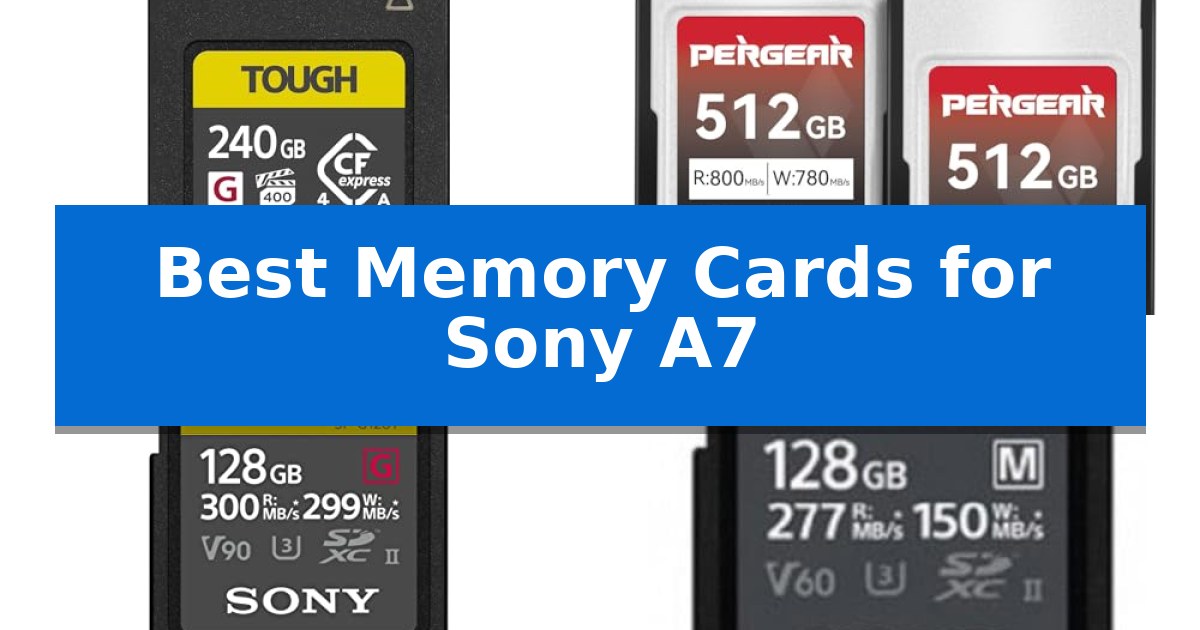
Selecting the right storage for your camera is essential to ensure you never miss a shot due to buffer delays or write errors. The Best Memory Cards for Sony A7 series depend heavily on whether your specific model utilizes the high-speed CFexpress Type A interface or the more traditional SD UHS-II standard.
Understanding the balance between read/write speeds and physical durability is key to protecting your footage in the field. This guide evaluates top-tier options to help you match your storage media to your camera's specific recording requirements and your own shooting style.
You may also want to compare Best Memory Cards for Sony 4K Cameras, Best Memory Cards for Smartphones, and Best Memory Cards for SJCAM SJ7 Star.
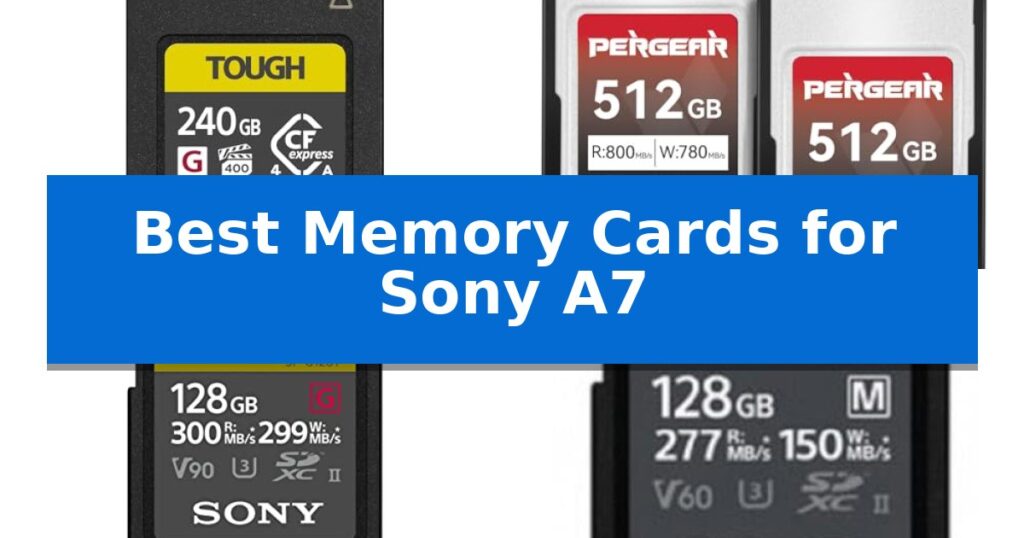
Best Memory Cards for Sony A7
Quick Comparison
| Product | Best For | Key Strength | Score |
|---|---|---|---|
| Sony CEA-G CFexpress Type A Card | Best Overall | Next-gen PCIe Gen 4 technology for rapid 1800MB/s read and 1700MB/s write speeds. | 4.9 |
| Pergear CFexpress Type A Card | High-capacity 8K recording value | High-capacity 512GB storage suitable for long-duration 8K recording. | 4.5 |
| Sony TOUGH-G SDXC UHS-II Card | Maximum durability for field work | One-piece molded construction offers superior bend strength compared to standard SD cards. | 4.4 |
| Sony TOUGH-M SDXC UHS-II Card | Reliable 4K video performance | 18x stronger than standard UHS-II cards for improved physical durability. | 4.6 |
| Lexar Silver SD Memory Card | Versatile option for enthusiasts | V30 speed class ensures smooth 4K 60FPS video capture. | 4.9 |
How We Chose
- Interface Compatibility: Verifying support for CFexpress Type A versus SD UHS-II/UHS-I standards.
- Sustained Write Speeds: Evaluating VPG and class ratings for reliable high-bitrate video recording.
- Durability Standards: Assessing physical construction, including moisture and impact resistance for field use.
- Transfer Efficiency: Comparing maximum read speeds to minimize downtime during post-production file offloading.
- Capacity Suitability: Analyzing storage density relative to the needs of 4K and 8K workflows.
1 Sony CEA-G CFexpress Type A Card — Next-gen speed for pro video
High-resolution video production and rapid-fire burst photography demand storage media that can keep pace with the latest camera sensors. The Sony CEA-G Series CFexpress Type A Memory Card CEA-G240T is engineered to meet these rigorous professional standards by utilizing next-gen PCIe Gen 4 technology. This architecture enables substantial data throughput, allowing users to clear camera buffers quickly during intense shooting sessions.
Reliability during long-form recording is addressed through the integration of VPG400 certification, which guarantees stable, high-bitrate video capture without dropped frames. To maintain consistent operation during demanding workflows, the card features enhanced heat dissipation designed to manage thermal output effectively. This focus on stability ensures that the card remains a dependable component for 4K and 8K production environments.
Physical durability is a core aspect of the card's design, featuring a reinforced Tough construction that protects internal components from the rigors of field use. With read speeds reaching up to 1800MB/s and write speeds up to 1700MB/s, the card significantly reduces wait times when offloading large files to a workstation. This combination of speed and structural integrity makes it a specialized tool for creators who require consistent performance in varied shooting conditions.
Best for: Professional videographers and photographers using Sony cameras that require the high-speed, stable performance of CFexpress Type A media for 4K/8K workflows.
Skip if: Users who do not own a camera specifically compatible with the CFexpress Type A standard, or those who only require standard SD card speeds for casual photography.
PROS
- Next-gen PCIe Gen 4 technology for rapid 1800MB/s read and 1700MB/s write speeds.
- VPG400 certification ensures consistent high-bitrate video recording.
- Reinforced Tough construction provides increased physical durability.
- Enhanced heat dissipation maintains stable performance during intensive tasks.
CONS
- Proprietary CFexpress Type A format limits compatibility to specific high-end camera models.
2 Pergear CFexpress Type A Card — High-capacity 8K recording value
High-resolution video production requires reliable storage that can keep pace with the demanding data rates of modern cameras. The Pergear 512GB CFexpress Type A Memory Card is specifically engineered to support continuous recording for high-resolution formats, including 8K RAW video, ensuring that data throughput remains stable during intensive shooting sessions.
Designed for professional workflows, this card provides max read speeds up to 800 MB/s and write speeds up to 780 MB/s, with a sustained write speed of 380 MB/s. These specifications allow it to handle the high data demands of 4K 120P and 8K 30P recording modes found in compatible Sony Alpha and FX series cameras, such as the A7 IV, A1, A7SIII, A7RV, FX3, FX6, and A9III.
The Pergear 512GB CFexpress Type A Memory Card is built for specialized use and is not compatible with CFexpress Type B, CompactFlash, or CFast 2.0 slots. To achieve the highest transfer speeds, the card must be used in conjunction with a dedicated CFexpress Type-A reader. Each purchase includes a 5-year support policy, providing a replacement in the event of non-human damage.
When integrating this storage into your kit, ensure your camera firmware is updated to support the CFexpress Type A format. Because these cards are high-capacity, they are best suited for long-form video projects where swapping media frequently is impractical. The 2-pack configuration offers a practical solution for multi-slot camera setups or for maintaining a backup during extended shoots.
Best for: Professional videographers and creators using Sony Alpha or FX cameras who require high-capacity, sustained write speeds for 8K RAW recording.
Skip if: Users who do not own a camera specifically supporting the CFexpress Type A format or those who only require standard SD card storage for photography.
PROS
- High-capacity 512GB storage suitable for long-duration 8K recording.
- Sustained write speed of 380 MB/s for reliable video capture.
- 5-year support policy covering non-human damage.
- Compatible with a wide range of Sony Alpha and FX series cameras.
CONS
- Not compatible with CFexpress Type B, CompactFlash, or CFast 2.0 slots.
- Requires a CFexpress Type-A reader to achieve maximum transfer speeds.
3 Sony TOUGH-G SDXC UHS-II Card — Maximum durability for field work
The Sony TOUGH-G SDXC UHS-II Card is engineered with a unique one-piece molded construction that provides 18 times the bend strength of standard SD cards, making it a reliable choice for demanding field environments. This design choice eliminates traditional ribs and write-protection switches, which are common points of failure in high-intensity photography workflows.
Designed for professional-grade performance, this card supports fast file transfers with read speeds up to 300 MB/s and write speeds up to 299 MB/s. These specifications make it well-suited for high-resolution 4K video recording and continuous burst mode shooting, ensuring that data is captured and cleared efficiently during intensive sessions.
Durability is a core focus, as the card features an IPX8 waterproof and IP6X dustproof rating. The monolithic, sealed structure allows it to operate reliably in temperatures ranging from -13℉ to +185℉. This robust build protects your data against environmental hazards encountered during outdoor shoots.
While optimized for UHS-II compatible cameras, the card maintains backward compatibility with UHS-I equipment, providing flexibility for photographers using different camera bodies. It offers a practical balance of high-speed performance and physical resilience for those who prioritize equipment longevity.
Best for: Professional photographers and videographers who require high-speed data transfer and extreme physical durability for outdoor or field-based 4K recording.
Skip if: Users who primarily utilize older hardware that does not benefit from UHS-II speeds or those who prefer a physical write-protection switch for their workflow.
PROS
- One-piece molded construction offers superior bend strength compared to standard SD cards.
- High-speed performance with up to 300 MB/s read and 299 MB/s write speeds.
- IPX8 waterproof and IP6X dustproof ratings ensure reliability in harsh environments.
- Ribless, switchless design removes fragile components prone to breakage.
CONS
- Lack of a physical write-protection switch may be a limitation for users accustomed to manual lock toggles.
4 Sony TOUGH-M SDXC UHS-II Card — Reliable 4K video performance
Reliable storage is essential for capturing high-resolution media, and the Sony TOUGH-M series SDXC UHS-II Card 128GB is engineered with a specialized Toughness design that is rated 18x stronger than standard UHS-II cards. This durability makes it a practical choice for photographers and videographers who frequently operate in demanding environments where equipment protection is a priority.
Beyond its physical resilience, this card is built to handle intensive data tasks. It supports 4K video recording and offers read speeds up to 277MB/s alongside write speeds of 150MB/s. These specifications ensure that data transfer from the card to a computer is efficient, reducing downtime during post-production workflows.
The card is also designed for environmental versatility, featuring IPX8 waterproof and IP66 dustproof ratings. These protections help safeguard stored content against accidental exposure to the elements, providing added peace of mind during outdoor shoots.
Users benefit from a five-year limited warranty, reflecting the manufacturer's commitment to the longevity of the hardware. With a 128GB capacity, it provides ample space for extended shooting sessions, making it a robust companion for the Sony A7 series.
Best for: Photographers and videographers who require a durable, weather-resistant storage solution for 4K video and high-speed burst shooting.
Skip if: Users who do not require extreme physical durability or high-speed UHS-II performance may find more cost-effective options with lower-rated cards.
PROS
- 18x stronger than standard UHS-II cards for improved physical durability.
- IPX8 waterproof and IP66 dustproof ratings for environmental protection.
- Supports 4K video recording with reliable write speeds.
- Includes a five-year limited warranty.
CONS
- Higher price point compared to standard SD cards due to the reinforced construction.
5 Lexar Silver SD Memory Card — Versatile option for enthusiasts
Capturing high-resolution imagery and 4K video requires a storage medium that balances speed with reliability. The Lexar 128GB Silver SD Memory Card is engineered to support demanding workflows, featuring a V30 speed class that ensures stable performance for recording 4K 60FPS video without dropped frames.
For photographers and videographers, time spent offloading files is time away from the next shoot. This card utilizes a 225MB/s maximum read speed to expedite file transfers to your workstation, while the 160MB/s maximum write speed provides the necessary headroom to keep up with high-burst shooting modes on your camera.
Beyond raw speed, the card is built for the rigors of field work. It is designed to be wearproof, drop-proof, temperature-proof, x-ray-proof, shockproof, magnetic-proof, and vibration-resistant, offering peace of mind when working in unpredictable environments. Its UHS-I interface ensures broad compatibility across various camera systems, including Sony, Canon, and Nikon.
With a 128GB capacity, it provides a practical balance between storage space and file management for enthusiasts and professionals alike. Backed by a Lifetime Limited Warranty, this card is a dependable choice for those who need a consistent storage solution that integrates seamlessly into a multi-camera setup.
Best for: Enthusiasts and professionals who need a reliable, high-speed storage solution for 4K video recording and high-burst photography.
Skip if: Users requiring extreme write speeds for high-bitrate RAW cinema formats or those needing higher capacity tiers beyond 128GB.
PROS
- V30 speed class ensures smooth 4K 60FPS video capture.
- 225MB/s read speed significantly reduces file transfer times.
- Extensive durability ratings protect data against environmental hazards like shocks and temperature fluctuations.
- Lifetime Limited Warranty provides long-term support.
CONS
- 128GB capacity may be limiting for long-duration 4K recording sessions.
- UHS-I interface is slower than UHS-II alternatives for professional-grade high-speed burst workflows.
Best Memory Cards for Sony A7 Buying Guide
Interface and Compatibility
The most critical step in choosing a card is identifying your camera's supported media. While many Sony A7 models are backward compatible with SD cards, newer high-performance models require CFexpress Type A cards to unlock features like high-frame-rate 4K or 8K recording.
Always verify your camera's manual to see if it supports the UHS-II standard. Using a UHS-I card in a UHS-II slot will significantly limit your burst shooting capabilities and video recording options, creating a bottleneck in your camera's performance.
Understanding Video Speed Classes
Video Speed Class ratings, such as V30, V60, or V90, indicate the minimum sustained write speed of the card. For professional video workflows, these ratings are more important than the advertised maximum speed, as they guarantee the card can keep up with the camera's data stream.
If you frequently record in high-bitrate formats, look for cards with VPG (Video Performance Guarantee) certification. This ensures that the card maintains a consistent write speed, preventing dropped frames or sudden recording stops during long takes.
Durability in the Field
Professional photographers often work in challenging environments. Cards featuring one-piece molded construction or reinforced materials offer superior bend strength and impact resistance compared to standard plastic SD cards.
Look for IPX8 waterproof and IP6X dustproof ratings if you shoot outdoors. These features provide a necessary layer of protection against the elements, ensuring your data remains safe even if the card is exposed to moisture or debris.
Read Speeds and Workflow
While write speed is vital for capturing the image, read speed is what determines how quickly you can move your files from the card to your computer. High-speed cards can save significant time when offloading large 8K files or massive bursts of RAW photos.
To take full advantage of these high read speeds, ensure you are using a compatible high-speed card reader. A slow reader will negate the benefits of a premium memory card, creating a bottleneck during your editing workflow.
Capacity Considerations
Choosing the right capacity involves balancing your budget with your shooting habits. High-resolution video and burst photography consume space rapidly, making larger cards like 512GB options attractive for long-duration recording.
However, some professionals prefer using multiple smaller cards rather than one massive card. This strategy mitigates the risk of total data loss if a single card fails or is misplaced, providing a safer redundancy for critical assignments.
Frequently Asked Questions
Can I use a CFexpress Type A card in an SD card slot?
No, CFexpress Type A and SD cards have different physical shapes and electrical interfaces. You must use the card format specifically supported by your camera's memory card slot.
What does the V90 rating mean for my video?
A V90 rating guarantees a minimum sustained write speed of 90MB/s. This is generally sufficient for high-bitrate 4K video recording, ensuring the camera does not stop recording due to a slow write speed.
Do I need a special reader for these cards?
Yes, to achieve the maximum transfer speeds advertised for CFexpress Type A and UHS-II SD cards, you should use a dedicated, compatible high-speed card reader.
Are these cards backward compatible with older cameras?
Most UHS-II SD cards are backward compatible with UHS-I devices, though they will operate at the slower UHS-I speed. CFexpress cards are generally not backward compatible with older SD-only camera slots.
How do I know if my card is failing?
Common signs include slow write times, error messages on your camera's display, or files that appear corrupted after transfer. If you notice these issues, back up your data immediately and consider replacing the card.
Conclusion: Our Top Pick
Choosing the right memory card is a vital investment in your camera's performance. For users requiring the absolute highest speeds for professional video and burst photography, the Sony CEA-G CFexpress Type A Card stands out as the most reliable option, offering the necessary PCIe Gen 4 speeds and VPG400 certification to handle demanding 4K and 8K workflows without compromise.
While high-capacity or budget-friendly alternatives exist for less intensive tasks, the stability provided by the Sony CEA-G series makes it the best choice for critical professional work where data integrity and speed are non-negotiable. Always ensure your camera firmware is up to date to maintain full compatibility with the latest high-speed media.