
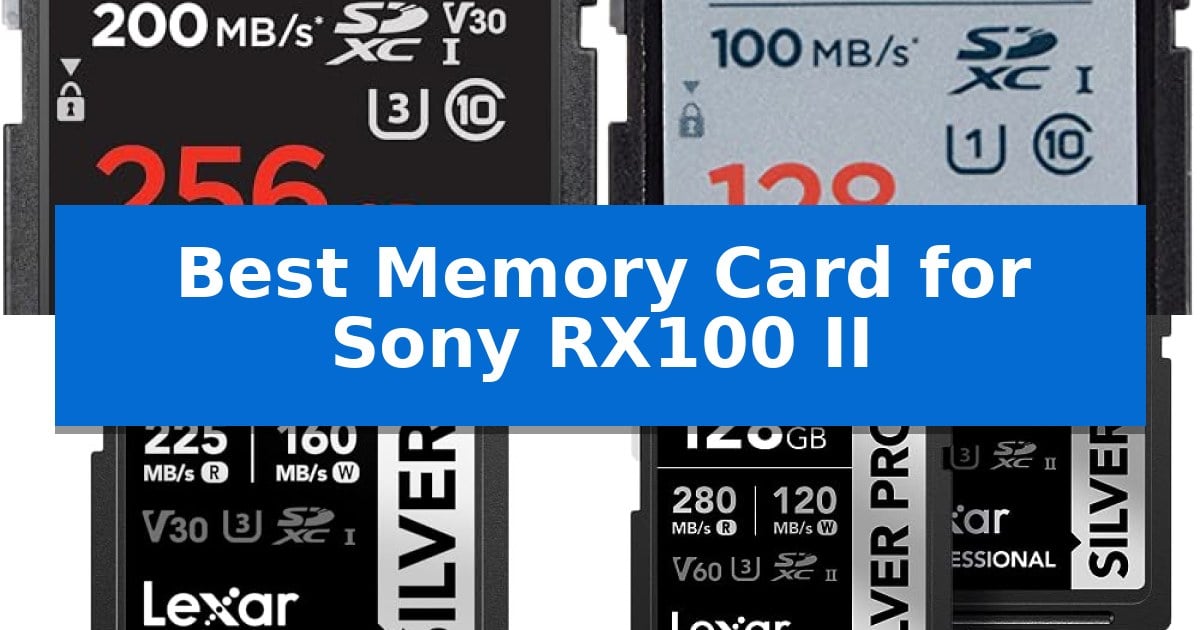
Choosing the right storage media for your camera is essential for capturing high-quality images and video without interruption. The Best Memory Card for Sony RX100 II must balance read and write speeds with the specific file handling requirements of your device to prevent data loss or buffering during critical shots.
Whether you are shooting high-resolution stills or recording Full HD video, selecting a card that matches your camera's interface ensures consistent performance. This guide examines several reliable SD card options to help you find the right fit for your photography workflow and storage needs.
You may also want to compare Best Memory Card for Sony RX10 III, Best Memory Card for Sony DSC-HX400V, and Best Memory Card for Sony AX53.
Best Memory Card for Sony RX100 II
Quick Comparison
| Product | Best For | Key Strength | Score |
|---|---|---|---|
| SanDisk Extreme PRO SD Card | Best Overall | High-speed offloading with up to 200MB/s read performance. | 4.9 |
| SanDisk Ultra SD Card | Reliable Choice for Daily Shooting | 128GB high-capacity storage allows for extensive shooting without frequent card changes. | 4.6 |
| Lexar Silver SD Card | Durable Build for Outdoor Use | V30 speed class supports smooth 4K 60FPS video recording. | 4.3 |
| Lexar Silver Pro SD Card | High-Speed Workflow Efficiency | Blazing-fast transfer speeds up to 280MB/s read. | 4.9 |
| Sony Tough-M SD Card | Rugged Design for Harsh Environments | 18x stronger than standard UHS-II cards for superior physical durability. | 4.6 |
How We Chose
- Read and write speed ratings to ensure efficient file transfers and reliable video recording.
- Compatibility with UHS-I and UHS-II standards to match the camera's internal hardware capabilities.
- Storage capacity options to accommodate varying volumes of photo and video files.
- Durability features such as resistance to temperature, moisture, and physical impact for outdoor reliability.
- Manufacturer warranty terms as an indicator of long-term product support.
1 SanDisk Extreme PRO SD Card — Fast Offload for Quick Editing
The SANDISK 256GB Extreme PRO SD Memory Card is engineered for high-performance workflows, utilizing proprietary SanDisk QuickFlow Technology to achieve read speeds of up to 200MB/s. This capability significantly reduces wait times when transferring large media files from the card to a computer, provided the host device supports these advanced speeds.
Designed to meet the demands of modern imaging, this card carries a UHS Speed Class 3 (U3) and Video Speed Class 30 (V30) rating. These specifications ensure a sustained video capture rate of 30MB/s, which is essential for reliable 4K UHD video recording and high-speed sequential burst mode photography on compatible cameras like the Sony RX100 II.
For photographers who prioritize efficiency, the card supports write speeds of up to 140MB/s. To unlock the full potential of the 200MB/s read performance, the manufacturer recommends pairing the card with the SanDisk Professional PRO-READER SD and microSD, which is sold separately.
Built for longevity and peace of mind, the SANDISK 256GB Extreme PRO SD Memory Card includes a lifetime limited manufacturer warranty. Its robust construction makes it a dependable choice for capturing high-resolution content without worrying about storage bottlenecks during critical shooting sessions.
Best for: Photographers and videographers who require high-speed data offloading and reliable 4K video recording performance.
Skip if: Users who do not require high-capacity storage or the specific speed advantages of UHS-I V30 cards for their current camera workflows.
PROS
- High-speed offloading with up to 200MB/s read performance.
- V30 and U3 ratings ensure stable 4K UHD video capture.
- Lifetime limited warranty provides long-term reliability.
- Fast write speeds of up to 140MB/s support burst photography.
CONS
- Maximum read speeds require a compatible host device or specific reader.
- Proprietary technology is required to exceed standard UHS-I 104MB/s limits.
2 SanDisk Ultra SD Card — Reliable Choice for Daily Shooting
Capturing high-resolution stills and full HD video with a compact camera requires a storage medium that balances reliability with sufficient capacity. The SanDisk 128GB Ultra SDXC UHS-I Memory Card is engineered specifically for point-and-shoot devices, providing the necessary overhead to manage large image files and extended video clips without frequent swapping.
This memory card utilizes a Class 10 rating and UHS Speed Class 1 (U1), which are essential specifications for supporting real-time video recording in 1080p. By meeting these standards, the card ensures that the data throughput remains stable during continuous shooting, reducing the risk of dropped frames or write errors during critical moments.
With read speeds reaching up to 100MB/s, moving large batches of photos or long video files from the card to a computer is efficient, minimizing downtime between shoots. The 128GB capacity provides ample space to store thousands of high-resolution images, making it a practical choice for travel or long events where carrying multiple smaller cards is inconvenient.
Designed for durability, the card is backed by a 10-year limited manufacturer warranty, offering long-term peace of mind for your data. Its compact form factor ensures full compatibility with the SD card slot of the Sony RX100 II, allowing for a seamless fit that does not interfere with the camera's portable design.
Best for: Photographers using compact point-and-shoot cameras who need reliable, high-capacity storage for daily photo and Full HD video capture.
Skip if: Professional videographers requiring high-bitrate 4K recording or extreme burst-mode speeds, as this card is optimized for standard Full HD and general photography.
PROS
- 128GB high-capacity storage allows for extensive shooting without frequent card changes.
- UHS Speed Class 1 (U1) and Class 10 ratings ensure stable Full HD video recording.
- 100MB/s read speeds enable quick file transfers to external devices.
- 10-year limited manufacturer warranty provides long-term reliability.
CONS
- Write speeds are lower than read speeds, which may impact performance during high-speed burst photography.
3 Lexar Silver SD Card — Durable Build for Outdoor Use
Capturing high-resolution imagery and video requires a storage medium that balances speed with physical resilience. The Lexar 256GB Silver SD Memory Card is engineered to meet these demands, offering a V30 speed class rating that ensures stable performance for recording up to 4K 60FPS video. This makes it a reliable choice for photographers and videographers who need to move large files quickly between their camera and workstation.
Performance is driven by a 225MB/s maximum read speed, which significantly reduces wait times during file transfers. When you are ready to capture the action, the card provides a 160MB/s maximum write speed, ensuring the buffer clears efficiently. This combination of speed and capacity allows for extended shooting sessions without the frequent need to swap cards.
Beyond raw speed, the Lexar 256GB Silver SD Memory Card is built to withstand challenging environments. It features a robust design that is wearproof, drop-proof, temperature-proof, x-ray-proof, shockproof, magnetic-proof, and vibration-resistant. These protective measures provide peace of mind when shooting in unpredictable outdoor conditions or during travel.
Compatibility is a primary strength of this card, as it is designed to work seamlessly with a wide range of devices from manufacturers including Sony, Canon, and Nikon. Whether you are using it for professional photography or enthusiast projects, the card is backed by a Lifetime Limited Warranty, underscoring its long-term utility in your camera kit.
Best for: Photographers and videographers requiring reliable 4K video recording and high-speed file transfers across multiple camera systems.
Skip if: Users who require extreme UHS-II speeds for high-burst professional sports photography or cinema-grade raw video workflows.
PROS
- V30 speed class supports smooth 4K 60FPS video recording.
- 225MB/s read speed enables rapid file offloading to computers.
- Comprehensive durability features protect against shocks, drops, and temperature extremes.
- Backed by a Lifetime Limited Warranty.
CONS
- UHS-I interface limits maximum speeds compared to UHS-II alternatives.
4 Lexar Silver Pro SD Card — High-Speed Workflow Efficiency
Reliable storage is essential for capturing high-resolution images and video on your camera, and the Lexar 128GB 2-Pack SILVER PRO SD Card provides a robust solution for photographers who need to move large files quickly. With blazing-fast transfer speeds of up to 280MB/s read and 120MB/s write, this card minimizes wait times when offloading content to your computer or editing software.
Designed to handle demanding tasks, this card is capable of recording high-resolution 4K UHD and 1080p Full-HD video without dropped frames or buffering. Its high-capacity design makes it a practical choice for point-and-shoot cameras that require consistent, high-speed storage for extended shooting sessions.
The Lexar Silver Pro SD Card offers hassle-free compatibility by remaining backwards-compatible with UHS-I devices, ensuring it works seamlessly with your existing equipment. Built to perform under pressure, the card has been rigorously tested for quality and reliability across various camera systems.
To provide long-term peace of mind, every card is backed by a lifetime limited warranty and includes access to the free Lexar Recovery Tool. This combination of speed, durability, and support makes it a dependable component for any photography workflow.
Best for: Photographers and videographers who require high-speed, reliable storage for 4K video capture and rapid file transfers.
Skip if: Users who only need basic, low-capacity storage for casual, low-resolution photography and do not require high-speed UHS-II performance.
PROS
- Blazing-fast transfer speeds up to 280MB/s read.
- Optimized for 4K UHD video recording without buffering.
- Includes a lifetime limited warranty for long-term reliability.
- Backwards-compatible with UHS-I devices.
CONS
- UHS-II performance may be limited when used in older cameras that only support UHS-I standards.
5 Sony Tough-M SD Card — Rugged Design for Harsh Environments
Reliability in the field starts with physical resilience, and the Sony TOUGH-M series SDXC UHS-II Card 128GB is engineered to withstand demanding environments. Featuring a specialized toughness design, this card is rated as 18x stronger than standard UHS-II cards, providing a robust storage solution for photographers who prioritize hardware durability during travel or outdoor shoots.
Beyond its physical construction, this memory card is built for high-performance imaging tasks. It supports 4K video recording and delivers impressive data transfer capabilities with up to 277MB/s read speed and 150MB/s write speed. These specifications ensure that high-resolution files are handled efficiently, reducing wait times when transferring large media batches to a computer.
The card is also designed to resist environmental hazards, boasting IPX8 waterproof and IP66 dustproof ratings. These protections offer peace of mind when operating in unpredictable conditions, ensuring that your captured data remains secure against common elements. With a 128GB capacity, it provides ample space for extended shooting sessions without the need for frequent card swaps.
Backed by a five-year limited warranty, this storage medium represents a long-term investment for your camera setup. Its combination of structural integrity and high-speed throughput makes it a dependable choice for those who need to rely on their equipment in diverse shooting scenarios.
Best for: Photographers and videographers who require a high-capacity, rugged storage solution capable of withstanding harsh outdoor environments.
Skip if: Users who only perform light, indoor photography and do not require the premium durability or high-speed performance of a UHS-II, IPX8-rated card.
PROS
- 18x stronger than standard UHS-II cards for superior physical durability.
- IPX8 waterproof and IP66 dustproof ratings for protection in harsh conditions.
- High-speed performance with 277MB/s read and 150MB/s write speeds.
- Supports 4K video recording for high-resolution production.
CONS
- Premium pricing associated with the specialized 'Tough' construction.
- Performance benefits may be limited by the camera's internal interface compatibility.
Best Memory Card for Sony RX100 II Buying Guide
Understanding Speed Classes and Ratings
Memory cards are categorized by speed classes, such as UHS Speed Class (U3) and Video Speed Class (V30), which dictate their minimum sustained write performance. These ratings are critical for ensuring that your camera can write data to the card fast enough to keep up with continuous burst shooting or high-bitrate video recording.
While higher speed ratings often command a higher price, they are necessary for professional-grade tasks. For standard point-and-shoot photography, a card meeting the minimum requirements of your camera is often sufficient, whereas advanced video work requires cards with higher V-class ratings to avoid dropped frames.
The Importance of Read and Write Speeds
Read speeds determine how quickly you can offload your photos and videos to a computer or editing station. Cards with high read speeds, such as those utilizing proprietary technology, significantly reduce the time spent waiting for large files to transfer, which is a major benefit for photographers on tight deadlines.
Write speeds are equally important, as they determine how quickly the camera can clear its internal buffer. A card with a fast write speed allows you to continue shooting without waiting for the camera to finish saving the previous image, ensuring you never miss a fleeting moment.
Storage Capacity Requirements
Selecting the right storage capacity depends on your shooting habits and the resolution of your files. A 128GB or 256GB card provides ample space for thousands of high-resolution JPEGs or hours of video, reducing the need to swap cards frequently during a shoot.
However, it is often safer to carry multiple smaller-capacity cards rather than one massive card. This strategy minimizes the risk of losing all your data if a single card fails or is misplaced, providing a layer of redundancy for your important projects.
Durability and Environmental Protection
If you frequently shoot in challenging environments, look for cards that feature rugged designs. Many modern SD cards are built to be waterproof, shockproof, temperature-proof, and x-ray-proof, protecting your data from common hazards encountered during travel or outdoor photography.
While these features may not be necessary for studio work, they are invaluable for photographers who work in unpredictable weather or harsh conditions. Checking the manufacturer's specifications for these protections can provide peace of mind when your gear is exposed to the elements.
Compatibility and Future-Proofing
Always ensure that the memory card you choose is backwards-compatible with your camera's card slot. While many newer cards support advanced standards like UHS-II, they will generally function in older UHS-I slots, albeit at the lower speed limit of the camera's hardware.
Investing in a high-quality card that exceeds your current camera's requirements can be a smart move if you plan to upgrade your equipment in the future. A card that supports faster standards will remain useful long after you have moved on to a newer camera body.
Frequently Asked Questions
What does the V30 rating mean on an SD card?
The V30 rating indicates a minimum sustained write speed of 30MB/s, which is designed to support real-time video recording, including 4K UHD content.
Can I use a UHS-II card in a UHS-I camera slot?
Yes, most UHS-II cards are backwards-compatible with UHS-I devices, though the card will operate at the speed limitations of the UHS-I interface.
How do I know if my card is failing?
Common signs of a failing card include slow write times, files that cannot be read by your computer, or error messages appearing on your camera's display.
Is a higher capacity card always better?
Not necessarily. While higher capacity allows for more storage, it also increases the impact of a potential card failure. Many professionals prefer using several medium-capacity cards.
Do I need a special reader for high-speed cards?
To achieve the maximum advertised read speeds, especially with UHS-II or proprietary high-speed cards, you should use a compatible high-speed card reader.
Conclusion: Our Top Pick
Selecting the right storage is a vital step in maintaining your camera's performance. For most users, the SanDisk Extreme PRO SD Card offers the best balance of speed, reliability, and capacity, making it an excellent choice for both photography and video recording.
By choosing a card that meets or exceeds your camera's requirements, you ensure that your workflow remains efficient and your data stays secure. Always consider your specific shooting volume and environmental needs when making your final selection to get the most out of your equipment.