
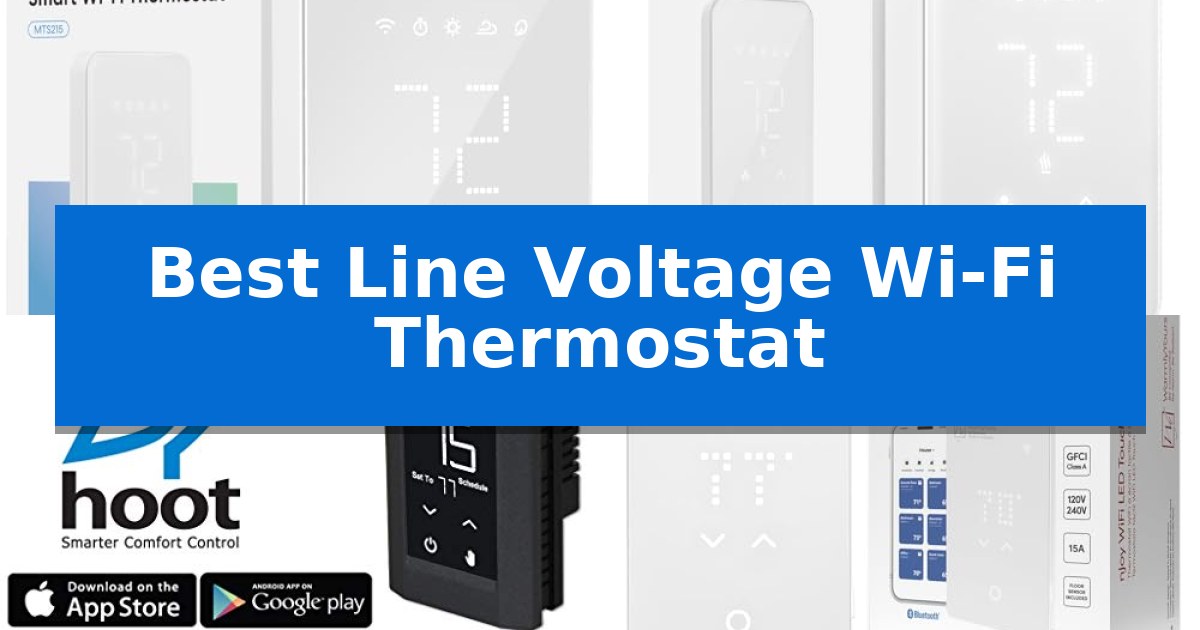
Managing electric heating systems often feels like a balancing act between comfort and rising electricity costs. Finding the Best Line Voltage Wi-Fi Thermostat can simplify this process by providing precise temperature control and remote access directly from your smartphone.
Whether you are upgrading a baseboard heater or a radiant floor system, these devices offer advanced scheduling and energy monitoring to help you optimize your home's climate. We have reviewed the top models to help you identify which unit fits your specific heating setup and smart home ecosystem.
You may also want to compare Best Line Voltage Programmable Thermostat, Best Line Preamplifier, and Best Line Laser Levels.
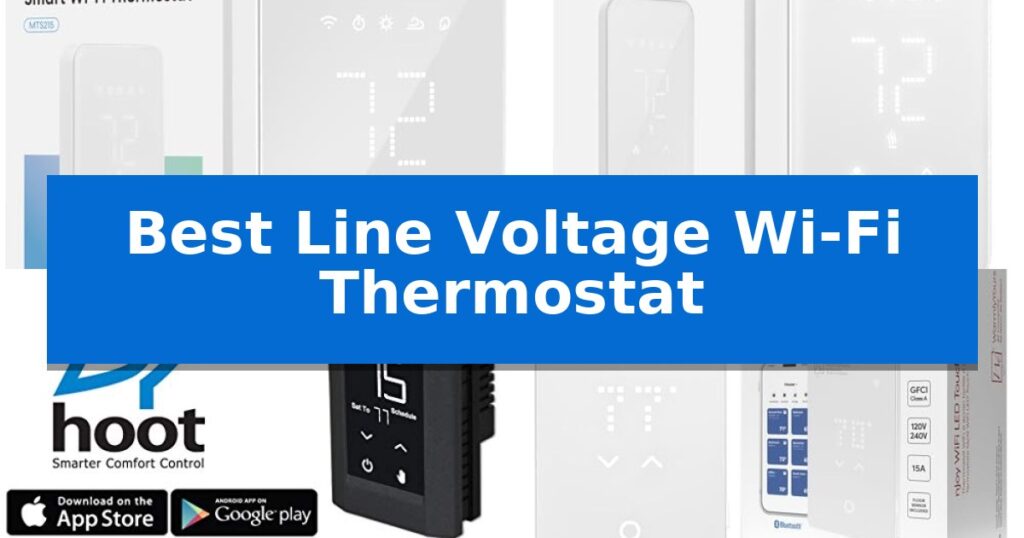
Best Line Voltage Wi-Fi Thermostat
Quick Comparison
| Product | Best For | Key Strength | Score |
|---|---|---|---|
| Meross Matter Smart Thermostat | Best Overall | Universal Matter compatibility for seamless integration across major smart home platforms. | 4.9 |
| Meross Smart Baseboard Thermostat | Easy App-Controlled Heating | High-voltage compatibility supporting up to 3840W at 240V. | 4.3 |
| King K902-B Hoot Thermostat | Precision Touchscreen Control | Multi-volt compatibility for 120V, 208V, and 240V systems. | 4.3 |
| WarmlyYours nJoy Radiant Thermostat | Ideal for Floor Heating | Smart WiFi Control for remote adjustments via smartphone. | 4.7 |
How We Chose
- Voltage Compatibility: Ensuring the device supports 120V-240V systems to prevent electrical hazards.
- Smart Ecosystem Support: Verifying integration with platforms like Apple Home, Alexa, Google Home, and Matter.
- Energy Management: Assessing the availability of real-time power monitoring and historical usage data.
- Installation Requirements: Checking for necessary wiring configurations, such as the common 4-wire setup.
- Automation Features: Evaluating scheduling flexibility, open-window detection, and remote access capabilities.
1 Meross Matter Smart Thermostat — Universal Smart Home Integration
Managing high-voltage electric heating systems requires specialized hardware, and the Meross Matter Smart Thermostat is engineered specifically for these demanding applications. Unlike standard low-voltage HVAC controllers, this unit supports 120-240 VAC systems, including baseboard, convector, and fan-forced heaters, providing a direct digital interface for systems that often rely on manual dials.
The integration of Matter compatibility serves as a core advantage, allowing the device to connect simultaneously with Apple Home, Alexa, Google Home, and SmartThings. This cross-ecosystem support removes the need for proprietary hubs, enabling centralized control through voice commands or the Meross app from any location with a Wi-Fi connection.
Efficiency is central to the design, featuring 24/7 visual scheduling that allows users to automate temperature adjustments based on their daily routines. The inclusion of energy monitoring provides real-time and historical data on electricity consumption, while the open window detection feature automatically pauses heating to prevent energy waste when a drop in temperature is sensed.
Installation and daily operation are streamlined for users looking to modernize their heating setup without replacing the entire system. By replacing traditional manual thermostats with this programmable model, homeowners gain precise control over their environment while maintaining compatibility with high-line voltage electrical standards.
Best for: Homeowners with 120-240V electric baseboard or convector heating systems who want centralized smart home control and energy tracking.
Skip if: Users with 24V conventional HVAC systems, heat pumps, or central air conditioning, as this device is not compatible with those low-voltage setups.
PROS
- Universal Matter compatibility for seamless integration across major smart home platforms.
- Real-time energy monitoring to track electricity usage and heating habits.
- Open window detection to prevent unnecessary energy consumption.
- Programmable 24/7 scheduling for automated climate management.
CONS
- Incompatible with 24V HVAC systems such as standard heat pumps or central air.
2 Meross Smart Baseboard Thermostat — Easy App-Controlled Heating
Managing high-voltage heating systems requires a specialized controller that integrates directly into your existing electrical infrastructure. The Meross Smart Baseboard Thermostat offers a precise solution for electric baseboard, convector, and fan-forced heaters, providing a 16A maximum output load capable of handling 1920W at 120V or 3840W at 240V.
Designed for seamless home integration, this device supports major ecosystems including Apple Home, Alexa, Google Home, and SmartThings. Users can manage their environment through voice commands or the Meross app, which features a 7×24 hours smart graphic schedule to automate temperature adjustments and optimize energy usage.
The unit prioritizes efficiency with Open Window Detection, which automatically pauses heating when ventilation is detected, and provides real-time energy monitoring to track consumption patterns. Its pure white LCD display offers a clean aesthetic, while the power-off memory ensures that your programmed settings remain intact following any electrical interruptions.
Installation is straightforward for those with the required 4-wire configuration in their electric box. By allowing for granular control over heating conditions, the thermostat enables users to trigger other smart home devices based on specific temperature thresholds, creating a more responsive and automated living space.
Best for: Homeowners with high-voltage electric heating systems looking for app-based scheduling and smart home ecosystem integration.
Skip if: Users whose existing wall boxes lack the required 4-wire configuration or those with low-voltage heating systems.
PROS
- High-voltage compatibility supporting up to 3840W at 240V.
- Smart ecosystem integration with Apple Home, Alexa, and Google Home.
- Energy monitoring features for tracking real-time and historical power consumption.
- Open Window Detection to prevent energy waste during ventilation.
CONS
- Requires 4 or more wires in the electric box for installation.
- Not compatible with low-voltage heating systems.
3 King K902-B Hoot Thermostat — Precision Touchscreen Control
Managing electric heating systems requires precise control, and the KING K902-B Hoot WiFi Line Voltage Smart Programmable Thermostat offers a direct solution for baseboard, fan-forced, and radiant heaters. This unit features a Double Pole 4-Wire installation design, providing a robust interface for high-voltage setups. By integrating a large LCD touchscreen display, it simplifies manual adjustments while maintaining a clean aesthetic.
Connectivity is a core strength of this model, as it is programmable via the Hoot Smart Phone App. This allows for remote adjustments and scheduling, enabling users to set up to 4 or 6 time periods per day for tailored heating cycles. The inclusion of Over-The-Air (OTA) firmware upgradeability ensures the device can receive software improvements without requiring hardware replacement.
Accuracy is maintained through electronic sensing with a thermistor, which provides temperature control within ±1ºF. The device is multi-volt rated for 120/208/240V systems, making it versatile for various residential electric heating configurations. Safety and efficiency are further supported by a user-defined max temperature lock, preventing unauthorized or accidental setting changes.
Designed for specific electrical applications, this thermostat operates within a temperature range of 41º to 90ºF (5º to 32ºC). Its straightforward design focuses on reliability for fixed-wire electric heating, offering a balance between digital scheduling capabilities and the high-voltage requirements of traditional heating elements.
Best for: Homeowners with 120V, 208V, or 240V electric heating systems who want smartphone-based scheduling and precise temperature management.
Skip if: Users with low-voltage HVAC systems or those requiring compatibility with smart home ecosystems other than the Hoot app.
PROS
- Multi-volt compatibility for 120V, 208V, and 240V systems.
- Remote scheduling via the Hoot smartphone app.
- Precise temperature control within ±1ºF using an electronic thermistor.
- Flexible programming with 4 or 6 time periods per day.
CONS
- No warranty provided by the manufacturer.
- Limited ecosystem integration compared to universal smart home platforms.
4 WarmlyYours nJoy Radiant Thermostat — Ideal for Floor Heating
Managing radiant floor heating requires precise control, and the WarmlyYours nJoy Radiant Thermostat simplifies this by integrating directly into your home network. This line voltage thermostat is designed to handle 120V/240V systems, providing a centralized interface to manage your floor temperature with ease.
The device features a responsive LED touchscreen for direct interaction, but its primary utility lies in its Smart WiFi Control. By connecting to your home network, you can adjust your heating schedules remotely via a smartphone or tablet. It supports up to 10 heating periods per day, allowing for granular control over your energy usage and comfort levels throughout the week.
Safety and convenience are central to its design. The unit includes a built-in GFCI for electrical protection and a Child-Lock feature to prevent unauthorized adjustments. Furthermore, it offers voice-activated convenience through compatibility with Amazon Alexa and Google Assistant, enabling hands-free temperature changes when you are busy around the house.
Installation is straightforward for compatible radiant floor systems, and the unit comes with a 10k ohm floor sensor to ensure accurate temperature monitoring. With its 3-year warranty and automatic software updates, this thermostat provides a reliable, modern solution for maintaining consistent warmth in your living space.
Best for: Homeowners seeking remote, app-based control and voice integration for their 120V/240V radiant floor heating systems.
Skip if: Users who require a low-voltage thermostat or those whose heating system does not fall within the 15A max load requirement.
PROS
- Smart WiFi Control for remote adjustments via smartphone.
- Voice-activated convenience compatible with Alexa and Google Assistant.
- Advanced system protection including built-in GFCI and child-lock.
- Custom heating schedules with up to 10 programmable periods.
CONS
- Limited to line voltage systems with a 15A maximum load.
- Requires stable WiFi for remote and voice-control features.
Best Line Voltage Wi-Fi Thermostat Buying Guide
Understanding Line Voltage Compatibility
The most critical step in selecting a thermostat is confirming it is designed for line voltage systems. Unlike standard 24V HVAC systems, line voltage thermostats handle the full power load of electric baseboard heaters, convectors, or radiant floor systems.
Always verify your current wiring before purchase. Many smart models require a 4-wire configuration to function properly. Installing a low-voltage thermostat on a high-voltage system can cause immediate damage to the device and poses a significant fire risk.
Smart Home Ecosystem Integration
Modern thermostats act as a hub for your home's climate. Look for devices that support Matter or native integration with your preferred platform, such as Apple HomeKit, Amazon Alexa, or Google Home.
Universal compatibility allows you to create complex automation routines. For example, you can trigger your heater to turn off automatically when your smart security system detects that you have left the house, maximizing your energy savings.
Energy Monitoring and Efficiency
One of the primary benefits of a Wi-Fi-enabled thermostat is the ability to track your consumption. Models with energy monitoring provide real-time reports and historical data, allowing you to identify which rooms or heating zones are the most expensive to maintain.
Features like open window detection provide an automated layer of efficiency. By sensing a sudden drop in temperature caused by an open window, the thermostat can pause heating to prevent unnecessary energy waste while you ventilate your space.
Scheduling and Precision Control
A high-quality thermostat should offer granular control over your heating schedule. Look for units that allow for 7×24 hour programming, enabling you to set different temperatures for when you are sleeping, working, or away from home.
Temperature accuracy is equally important. A device with ±1°F accuracy ensures that your home stays at your desired comfort level without constant cycling, which can prolong the life of your heating equipment.
Safety and Installation Features
Safety features like GFCI protection are essential for radiant floor heating installations to prevent electrical faults. Additionally, look for power-off memory functionality, which ensures your programmed settings are saved during an unexpected power outage.
Consider the physical design as well. A sleek, low-profile LCD display integrates better with modern wall aesthetics, while a child-lock feature prevents unauthorized changes to your carefully calibrated heating schedule.
Frequently Asked Questions
Can I use these thermostats with my central air conditioning?
No. These thermostats are specifically designed for high-voltage electric heating systems like baseboards and radiant floors. They are not compatible with 24V central HVAC or heat pump systems.
Do I need a C-wire for these thermostats?
Most line voltage smart thermostats require a specific wiring configuration, often involving 4 or more wires in the electrical box. Always check the installation manual for your specific model to confirm requirements.
What is the benefit of Matter compatibility?
Matter is a universal smart home standard that allows your thermostat to work seamlessly across different ecosystems like Apple, Google, and Alexa simultaneously, reducing the need for specific brand-locked hubs.
How does open window detection work?
The thermostat uses its internal sensors to detect a rapid, significant drop in ambient temperature. When this threshold is met, it assumes a window is open and pauses the heating cycle to save energy.
Can these thermostats handle 240V heaters?
Yes, most of the models listed are dual-voltage rated, meaning they can safely operate on both 120V and 240V circuits commonly found in electric baseboard heating installations.
Conclusion: Our Top Pick
When selecting the right device for your home, the Meross Matter Smart Thermostat stands out as the most versatile option due to its broad ecosystem support and energy-saving automation. Its ability to integrate with multiple smart platforms simultaneously ensures that your heating system remains future-proof as your home technology evolves.
While other models offer excellent touchscreen interfaces or specific features for radiant floors, the universal connectivity and real-time energy monitoring of the Meross unit make it the most practical choice for most high-voltage electric heating setups.