
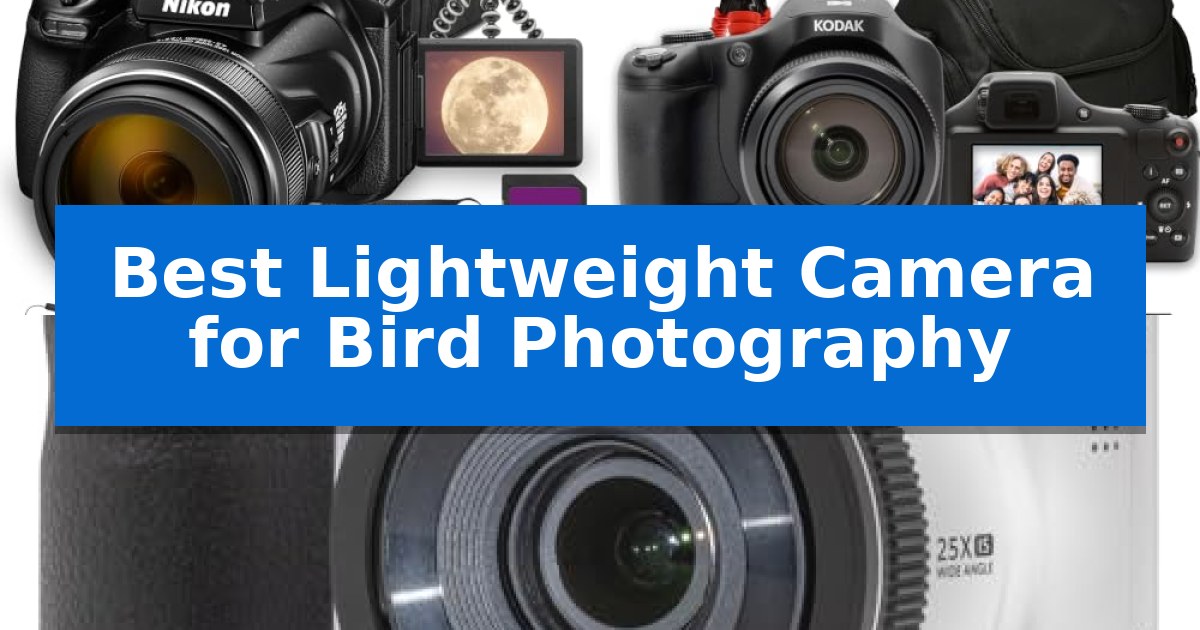
Capturing elusive wildlife requires a balance of extreme focal reach and portability that standard gear often fails to provide. When you are trekking through dense brush or waiting in a blind, the Best Lightweight Camera for Bird Photography must offer enough zoom to bring distant subjects into frame without weighing you down.
We have analyzed current bridge camera models to identify which devices provide the necessary optical range and stabilization for birding. By focusing on sensor capabilities and zoom versatility, we help you choose a camera that keeps your kit manageable while ensuring you never miss a shot of a perched bird or a bird in flight.
You may also want to compare Best Lightweight Camera for Beginners, Best Lightweight Camera for Advanced Photography, and Best Lightweight Camera Drones.
Best Lightweight Camera for Bird Photography
Quick Comparison
| Product | Best For | Key Strength | Score |
|---|---|---|---|
| Nikon COOLPIX P1100 Digital Camera | Best Overall | 3000mm equivalent focal range for extreme distance reach. | 4.9 |
| Kodak PIXPRO AZ653 Digital Camera | Versatile 65x Optical Zoom Range | Extensive 65x optical zoom range for long-distance reach | 4.7 |
| KODAK PIXPRO AZ255 Digital Camera | Compact Bridge Camera for Travel | 25x Optical Zoom provides significant reach for distant subjects. | 4.3 |
How We Chose
- Optical Zoom Range: We prioritized cameras offering significant telephoto reach to capture small subjects from a distance.
- Image Stabilization: We assessed the integration of vibration reduction technology essential for maintaining clarity at high zoom levels.
- Sensor Performance: We looked for sensors capable of delivering detailed, high-resolution images in varying lighting conditions.
- Portability and Handling: We evaluated the physical weight and ergonomic design to ensure the camera is suitable for long field sessions.
- Specialized Shooting Modes: We identified models with dedicated settings designed to optimize exposure for wildlife and nature subjects.
1 Nikon COOLPIX P1100 Digital Camera — Extreme 3000mm Super Telephoto Reach
Capturing distant wildlife requires significant reach, and the Nikon COOLPIX P1100 Digital Camera addresses this with a massive 3000mm equivalent focal range. This super telephoto capability allows for detailed shots of birds and other subjects from great distances without needing to physically approach and potentially disturb them.
Beyond its zoom, the camera features a 16MP backside illuminated sensor paired with an image processor to maintain image detail. To ensure stability at such extreme focal lengths, it integrates advanced vibration reduction technology, which is essential for keeping handheld shots sharp. The inclusion of UHD 4K recording also provides flexibility for those who want to capture video alongside their still photography.
Usability is enhanced by a tilting display and viewfinder, allowing for comfortable framing from various angles. The camera also includes specialized shooting modes specifically optimized for bird and moon photography, which helps streamline exposure settings. For remote operations and quick file management, the device supports wireless connectivity.
This bundle is designed for immediate use, arriving with a 64GB memory card, a flexible tripod for steadying long-range shots, and a professional MC 3-piece filter kit. These accessories provide a comprehensive starting point for outdoor photography, though the unit's size and weight should be considered for long treks.
Best for: Wildlife photographers who require extreme telephoto reach and a comprehensive, ready-to-use bundle for bird and nature photography.
Skip if: Photographers who prioritize a compact, pocketable camera or those who require interchangeable lenses for specific low-light performance needs.
PROS
- 3000mm equivalent focal range for extreme distance reach.
- Advanced vibration reduction for stable handheld long-zoom shots.
- Dedicated bird and moon shooting modes for optimized settings.
- Comprehensive bundle includes 64GB memory card and flexible tripod.
CONS
- Large physical footprint and weight may be cumbersome for long-distance hiking.
- Fixed-lens design limits optical flexibility compared to interchangeable lens systems.
2 Kodak PIXPRO AZ653 Digital Camera — Versatile 65x Optical Zoom Range
Capturing distant wildlife requires a lens capable of significant reach, and the Kodak PIXPRO AZ653 Digital Camera addresses this with an integrated 65x optical zoom lens. This lens provides a versatile focal range equivalent to 24-1560mm, allowing photographers to frame birds and other wildlife from a distance without needing to swap lenses.
The camera utilizes a 20MP 1/2.3" BSI CMOS sensor designed to balance color reproduction and detail. To assist with handheld shooting at high zoom levels, the device includes Optical Image Stabilization, which works to minimize the impact of camera shake. These features are supported by a 3.0" LCD screen for framing and reviewing shots in the field.
Designed for portability, the unit is a lightweight, all-in-one solution for outdoor exploration. It features Full HD 1080p video recording capabilities and built-in Wi-Fi, which allows for image sharing via the Kodak PIXPRO app. The inclusion of USB-C connectivity and Micro-HDMI output ensures compatibility with modern display and transfer standards.
This bundle includes essential accessories such as a 64GB memory card, a soft case, and a tripod, providing a ready-to-use kit for nature photography. The 360° Panorama Mode and continuous shooting options offer additional creative flexibility for various subjects beyond bird photography.
Best for: Bird and wildlife photographers seeking an all-in-one, lightweight camera with an extensive zoom range for distant subjects.
Skip if: Photographers who require interchangeable lenses, advanced manual controls, or larger sensors for professional-grade low-light performance.
PROS
- Extensive 65x optical zoom range for long-distance reach
- Integrated Optical Image Stabilization for handheld stability
- Comprehensive pro bundle including memory card and tripod
- Lightweight, all-in-one design for travel convenience
CONS
- Fixed lens limits sensor-based low-light performance compared to DSLR or mirrorless systems
- Limited to 1/2.3" sensor size which may impact detail in challenging lighting
3 KODAK PIXPRO AZ255 Digital Camera — Compact Bridge Camera for Travel
Capturing distant wildlife requires significant reach, and the KODAK PIXPRO AZ255 Digital Camera provides a 25x Optical Zoom lens that brings subjects into frame without relying on digital cropping. This bridge camera is built to handle the varied demands of outdoor photography, offering a 24mm wide angle lens that transitions from expansive landscape shots to tight, detailed close-ups of birds in their natural habitat.
Stability is essential when shooting at high magnification, where even minor hand movements can blur an image. The integrated Optical Image Stabilization (OIS) works to counteract these vibrations, helping to maintain clarity during handheld sessions. This feature is particularly useful for birders who need to track movement quickly without the immediate setup of a tripod.
Designed for versatility in the field, this model utilizes standard AA batteries, ensuring that power is easily accessible regardless of your location. This design choice removes the need for proprietary charging cables or spare battery packs, making it a practical option for extended travel or remote outings where power outlets are unavailable.
The camera features a 16MP CMOS sensor capable of producing high-resolution images suitable for cropping or printing. For those interested in capturing motion, it records 1080p Full HD video, which can be transferred via USB for review. It supports SD, SDHC, and SDXC cards up to 512GB, providing ample storage for long days of shooting.
Best for: Travelers and outdoor enthusiasts who need a versatile, long-zoom camera that runs on widely available AA batteries.
Skip if: Users who require advanced manual controls, high-speed burst modes for fast-moving birds, or the superior low-light performance of a larger sensor interchangeable lens system.
PROS
- 25x Optical Zoom provides significant reach for distant subjects.
- Optical Image Stabilization helps reduce blur during handheld shooting.
- AA battery compatibility ensures power availability in remote areas.
- 24mm wide angle lens offers flexibility for both landscapes and wildlife.
CONS
- AA battery dependency may lead to higher recurring costs compared to rechargeable lithium-ion packs.
- Bridge camera sensor size may limit performance in challenging low-light conditions.
Best Lightweight Camera for Bird Photography Buying Guide
Understanding Optical Zoom vs. Digital Zoom
When shopping for the Best Lightweight Camera for Bird Photography, it is vital to distinguish between optical and digital zoom. Optical zoom uses the physical movement of lens elements to magnify the subject, preserving the full resolution of your sensor.
In contrast, digital zoom simply crops the image, which often leads to a loss of detail and increased noise. For birding, always prioritize a camera with a high optical zoom range to ensure your final images remain sharp enough for cropping or large prints.
The Importance of Vibration Reduction
At the extreme focal lengths required for bird photography, even the slightest hand movement can result in a blurry image. Optical Image Stabilization (or Vibration Reduction) is a critical feature that compensates for these micro-movements.
This technology is particularly important when shooting handheld at maximum zoom. A camera with robust stabilization allows you to maintain a steady frame, significantly increasing your chances of capturing a crisp, clear shot of a distant bird.
Sensor Size and Low-Light Capability
The sensor is the heart of your camera, determining how much light and detail you can capture. A backside illuminated sensor is often preferred in bridge cameras because it improves performance in challenging lighting conditions, such as dawn or dusk when birds are most active.
While bridge cameras typically use smaller sensors than interchangeable lens systems, look for models that balance high megapixel counts with advanced image processing to ensure your photos retain vibrant colors and fine textures.
Ergonomics for Field Use
Bird photography often involves long hours in the field. A camera that is too heavy or poorly balanced can lead to fatigue, making it harder to track fast-moving subjects. Look for a lightweight chassis that provides a secure grip.
Features like a tilting LCD display or a high-quality electronic viewfinder can also make a significant difference. These allow you to compose shots from awkward angles or maintain visibility even in bright, direct sunlight.
Battery and Storage Considerations
Reliable power is essential for wildlife photography. Some cameras use proprietary battery packs, while others are compatible with standard AA batteries, which can be a lifesaver during extended trips away from power sources.
Additionally, ensure your camera supports high-capacity SD, SDHC, or SDXC memory cards. High-resolution photos and 4K video files consume space quickly, so having a card with fast write speeds and ample capacity is a necessary investment.
Frequently Asked Questions
Do I need a tripod for bird photography?
While modern cameras feature advanced stabilization, a tripod is highly recommended for bird photography, especially when using maximum zoom. It provides a stable base that helps you track subjects and ensures maximum sharpness.
What is the benefit of a bridge camera over a smartphone?
Bridge cameras offer significant optical zoom ranges that smartphones cannot match. They also provide manual control over exposure settings and better sensor performance, which are crucial for capturing detailed wildlife images.
Can these cameras record video?
Yes, most modern bridge cameras support at least Full HD 1080p video, and many offer UHD 4K recording, allowing you to capture both high-quality stills and smooth video of wildlife in action.
Are these cameras suitable for beginners?
Many bridge cameras are designed with intuitive interfaces and automatic modes, making them accessible for beginners while still offering manual controls for those who want to refine their photography skills.
How do I transfer photos from these cameras?
Most models include built-in Wi-Fi or USB connectivity, allowing you to easily transfer your images to a smartphone app or a computer for editing and sharing.
Conclusion: Our Top Pick
Finding the right gear is essential for success in the field. The Nikon COOLPIX P1100 Digital Camera stands out as our top recommendation due to its extreme 3000mm focal reach and specialized bird photography modes. Its ability to maintain stability at long distances makes it a powerful tool for capturing detailed wildlife shots without the need for a massive, heavy lens setup.
While it is a feature-rich option, users should note that the significant zoom capabilities require a steady hand or a tripod for the best results. For those looking for a versatile, all-in-one solution that prioritizes reach and image clarity, this camera provides the performance needed to elevate your bird photography.