
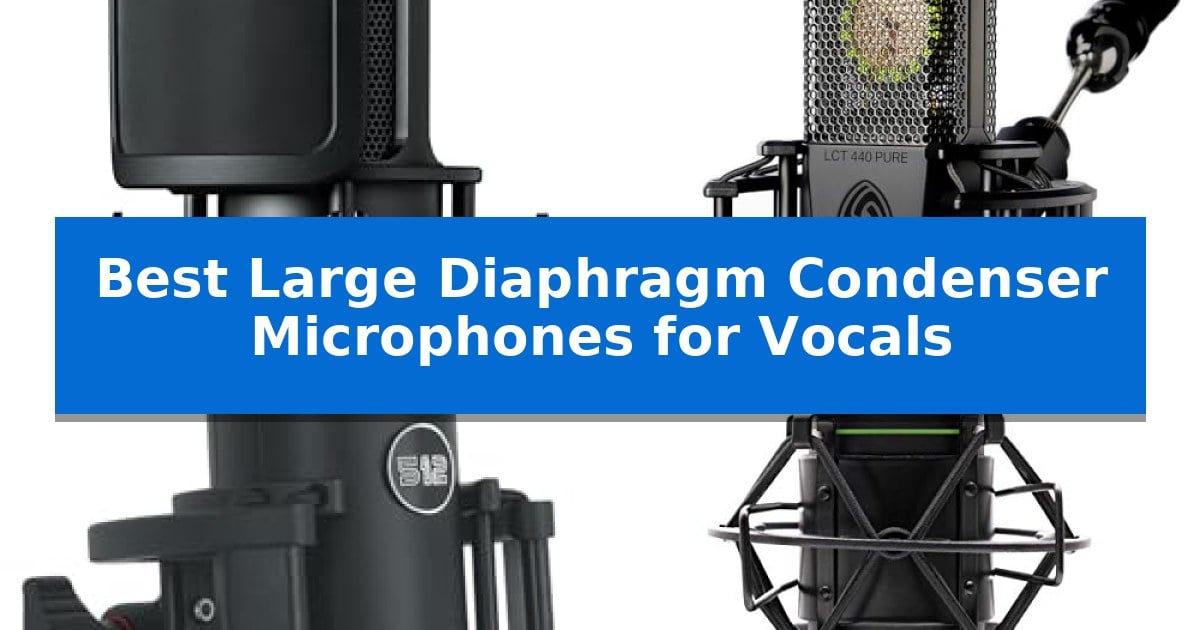
Capturing professional-grade vocal recordings requires equipment that can translate the nuances of a performance into a clean, digital format. Whether you are building a home studio or upgrading your current setup, finding the right hardware is essential for achieving a balanced, mix-ready sound that retains natural character.
We have evaluated the Best Large Diaphragm Condenser Microphones for Vocals to help you navigate the technical specifications that impact your recording quality. By focusing on capsule design, polar patterns, and interference shielding, we provide the insights needed to select a microphone that fits your specific vocal style and recording environment.
Best Large Diaphragm Condenser Microphones for Vocals in 2026
Quick Comparison
| Product | Best For | Key Strength | Score |
|---|---|---|---|
| Shure SM4 Condenser Microphone | Best Overall | Interference shielding blocks RF noise from common home electronics. | 4.9 |
| Lewitt LCT 440 Pure Condenser Microphone | Captures nuanced vocal depth | 1-inch true condenser capsule for high-depth audio capture | 4.8 |
| 512 Audio Skylight Condenser Microphone | Modern warmth for vocals | 34mm gold-plated capsule provides a rich and modern sound profile. | 4.7 |
| Mackie EM-91C Condenser Microphone | Budget-friendly studio performance | Includes shock mount and XLR cable for immediate use | 4.3 |
| MXL 990 Condenser Microphone | Classic silky high-end | Complete bundle includes shock mount, pop filter, and XLR cable. | 4.8 |
How We Chose
- Capsule design and diaphragm size for frequency response accuracy.
- Polar pattern consistency to ensure effective off-axis noise rejection.
- Maximum SPL handling for versatility across different vocal intensities.
- Integrated shielding and accessory kits that simplify setup and reduce ambient interference.
- Build quality and physical dimensions for studio or streaming compatibility.
1 Shure SM4 Condenser Microphone — Interference-free vocal clarity
Achieving professional-grade vocal clarity in a home studio environment requires a microphone capable of isolating the voice while minimizing environmental interference. The Shure SM4 XLR Studio Condenser Microphone addresses this with its patent-pending interference shielding technology, which specifically blocks RF noise generated by common household electronics like laptops, cell phones, and Wi-Fi routers.
At the heart of this microphone is a brass 1-inch dual-diaphragm capsule designed to deliver smooth, detailed high frequencies alongside controlled low-end response. This configuration provides a natural audio reproduction that is often sought after for vocal tracking. The uniform cardioid polar pattern further enhances performance by ensuring superior off-axis rejection, effectively focusing on the sound source while ignoring unwanted background noise.
Usability is a core focus of the Shure SM4 Condenser Microphone, which features a large "sweet spot" that reduces the proximity effect. This design choice allows for more consistent audio quality during close-miking techniques, making it easier to maintain a balanced sound even if the performer moves slightly. Additionally, the high-SPL handling of up to 140dB ensures that the microphone can capture loud instruments or powerful vocal performances without distortion.
The physical design emphasizes both durability and convenience. Constructed with a rugged, all-metal build, the microphone is built to withstand the rigors of frequent use. It includes an integrated pop filter and a woven mesh Faraday cage to minimize plosive sounds and rumble, resulting in a mix-ready signal that simplifies the post-production process. The sleek, low-profile form factor ensures it remains unobtrusive during video recordings or live-streaming sessions.
Best for: Home studio vocalists and streamers who need a durable, interference-shielded microphone that delivers mix-ready audio without complex post-processing.
Skip if: Users who require a multi-pattern microphone for specialized stereo or omnidirectional recording techniques will find the fixed cardioid pattern too limiting.
PROS
- Interference shielding blocks RF noise from common home electronics.
- Integrated pop filter and Faraday cage minimize plosives and rumble.
- High-SPL handling up to 140dB prevents distortion on loud sources.
- Rugged all-metal construction ensures long-term durability.
CONS
- Fixed cardioid polar pattern lacks the versatility of multi-pattern microphones.
2 Lewitt LCT 440 Pure Condenser Microphone — Captures nuanced vocal depth
Achieving professional-grade vocal clarity requires a microphone capable of capturing subtle performance nuances without coloration. The LEWITT LCT440PURE Large Diaphragm Condenser Mic centers its design around a 1-inch true condenser capsule, engineered to provide significant depth and detail for studio, stage, and home recording environments.
This microphone utilizes a cardioid polar pattern, which is specifically tuned for effective rear rejection. This design choice minimizes unwanted background noise, allowing the microphone to focus exclusively on the primary sound source. Its versatility extends beyond vocals, as it is also suited for capturing acoustic instruments, drums, cymbals, and amplifiers.
The LEWITT LCT440PURE Large Diaphragm Condenser Mic arrives as a comprehensive kit, including both a shock mount and a magnetic pop filter. These accessories are essential for maintaining signal integrity by reducing mechanical vibrations and plosive sounds during vocal tracking, ensuring a cleaner recording chain.
While this microphone excels in diverse recording scenarios, users should note its specific form factor. Measuring approximately 5.43 inches in length and weighing 1.7 pounds, it is a compact unit that fits into various studio setups. It is backed by a limited two-year warranty, providing long-term support for its internal components.
Best for: The LEWITT LCT440PURE is best for vocalists and instrumentalists seeking a versatile, high-clarity condenser microphone for home or professional studio recording.
Skip if: Skip this microphone if you require a multi-pattern condenser for complex room-miking techniques, as this model is strictly limited to a cardioid polar pattern.
PROS
- 1-inch true condenser capsule for high-depth audio capture
- Effective rear rejection via a precise cardioid polar pattern
- Included shock mount and magnetic pop filter for immediate studio readiness
- Versatile application range covering both vocals and various acoustic instruments
CONS
- Fixed cardioid polar pattern limits flexibility for non-directional recording needs
3 512 Audio Skylight Condenser Microphone — Modern warmth for vocals
The 512 Audio Skylight Condenser Microphone centers its design around a 34mm gold-plated large diaphragm capsule, engineered to provide a rich, modern sound profile specifically tuned for vocal clarity. By utilizing a cardioid pickup pattern, this microphone focuses on capturing sound directly in front of the capsule while actively rejecting ambient room noise, making it a functional choice for focused vocal recording and podcasting environments.
Built upon the professional audio legacy of Warm Audio, the 512 Audio Skylight Condenser Microphone integrates premium components to ensure consistent performance. It features a custom-tuned frequency response ranging from 20Hz to 20kHz, which allows for detailed capture of both speech and singing. The unit is designed to handle high sound pressure levels up to 144dB, providing versatility for various vocal intensities without compromising signal integrity.
Usability is enhanced through the inclusion of essential studio accessories. The package comes with a custom metal mesh pop filter designed to mitigate plosives and a low-profile shockmount that isolates the microphone from vibrations. These additions support a cleaner recording signal, reducing the need for extensive post-processing.
Integration into existing setups is straightforward via the professional XLR connection. This interface ensures compatibility with standard audio mixers and USB interfaces. With a weight of 2.20 lbs and a robust build, the microphone is intended for stable placement in a home or professional studio, offering a reliable foundation for creators seeking a dedicated vocal recording solution.
Best for: This microphone is best for vocalists, podcasters, and streamers who require a dedicated XLR condenser microphone with a focus on warm, detailed vocal reproduction.
Skip if: Skip this product if you require a USB-native microphone, as this unit necessitates an external audio interface or mixer to function.
PROS
- 34mm gold-plated capsule provides a rich and modern sound profile.
- Cardioid pickup pattern effectively reduces unwanted ambient noise.
- Includes a custom metal mesh pop filter and low-profile shockmount for immediate studio readiness.
- High SPL handling of 144dB accommodates a wide range of vocal dynamics.
CONS
- Requires an external XLR interface or mixer for operation.
- Heavy construction at 2.20 lbs requires a sturdy microphone stand.
4 Mackie EM-91C Condenser Microphone — Budget-friendly studio performance
Capturing vocal performances with clarity requires a reliable foundation, and the Mackie EM-91C Condenser Microphone provides an accessible entry point for those building out their recording space. Designed for versatility, this microphone is engineered to perform effectively in both professional large-scale environments and home-based studio setups.
The Mackie EM-91C Condenser Microphone utilizes a cardioid polar pattern, which is a standard choice for vocalists as it focuses on sound directly in front of the capsule while rejecting off-axis noise. This directional design helps isolate the voice, making it a practical tool for tracking vocals where background interference needs to be minimized.
Built with rugged, reliable construction, the microphone is intended to withstand the rigors of frequent use. It arrives as a complete package, including a shock mount to reduce handling noise and an XLR cable, allowing for immediate integration into an existing audio interface or mixer setup.
For those starting their recording journey, this microphone offers a balance of professional-grade features without unnecessary complexity. Its straightforward design ensures that users can focus on their performance, knowing the hardware is built to maintain signal integrity across various recording sessions.
Best for: Home studio vocalists and creators seeking an affordable, all-in-one XLR condenser microphone solution.
Skip if: Users requiring a USB-powered microphone or those needing specialized polar patterns beyond the standard cardioid configuration.
PROS
- Includes shock mount and XLR cable for immediate use
- Cardioid polar pattern effectively isolates vocal sources
- Rugged construction suitable for frequent studio use
- Affordable professional-quality performance
CONS
- Requires an XLR interface for operation
- Limited to a fixed cardioid pattern
5 MXL 990 Condenser Microphone — Classic silky high-end
Achieving a professional vocal sound in a home studio often begins with the right signal chain, and the MXL 990/991 Large & Small Diaphragm Condenser Microphone Bundle provides a comprehensive starting point. This kit centers on the MXL 990, a large-diaphragm condenser microphone that utilizes a 6-micron gold-sputtered diaphragm and a FET-based design to deliver detailed audio capture.
The MXL 990 is engineered for versatility, offering a cardioid polar pattern that effectively rejects off-axis noise, helping to isolate the vocalist from room reflections. With a frequency response of 20 Hz – 20 kHz, it is capable of capturing a wide range of vocal textures, from deep lows to a silky high end, making it suitable for various voice-over, podcasting, and musical applications.
Designed for integration into standard recording setups, this microphone requires +48V phantom power to operate. It is compatible with most modern audio interfaces and microphone preamps, ensuring a straightforward connection via the included 20-foot XLR cable. The bundle also includes a shock mount and pop filter, providing the essential hardware needed to manage mechanical noise and plosives right out of the box.
While the MXL 990 serves as the primary tool for vocalists, the included MXL 991 small-diaphragm condenser offers additional utility for recording instruments. Together, this bundle provides a balanced solution for creators looking to build a functional recording environment without needing to source individual components separately.
Best for: Home studio vocalists and creators who need a complete, entry-level microphone package that includes essential mounting and connectivity hardware.
Skip if: Users who require a USB-direct connection or those who do not have an audio interface capable of providing +48V phantom power.
PROS
- Complete bundle includes shock mount, pop filter, and XLR cable.
- Cardioid polar pattern effectively reduces background noise.
- FET-based design provides a detailed, balanced sound profile.
- Versatile frequency response suitable for both vocals and instruments.
CONS
- Requires +48V phantom power from an external interface or preamp.
- XLR-only connectivity necessitates additional hardware for computer integration.
Best Large Diaphragm Condenser Microphones for Vocals Buying Guide
Understanding Polar Patterns
Most studio microphones for vocals utilize a cardioid polar pattern. This design is highly sensitive to sound directly in front of the capsule while rejecting noise from the sides and rear. This is crucial for home studios where you need to isolate your voice from computer fan noise or room reflections.
When choosing your microphone, consider the consistency of this pattern. A well-engineered cardioid polar pattern ensures that even if you move slightly while singing or speaking, the tonal quality of your voice remains stable, preventing the 'hollow' sound often caused by poor off-axis response.
The Role of Diaphragm Size
A large diaphragm condenser is typically defined by a capsule size of one inch or greater. These microphones are favored for vocals because they tend to provide a rich, detailed sound that captures both the low-end body and the high-end air of a voice.
The larger surface area allows the microphone to be more sensitive to subtle transients, making your recordings feel more intimate and professional. This is a primary reason why these units are the industry standard for vocal tracking in both professional and project studios.
Managing Proximity Effect
The proximity effect is a natural phenomenon where low frequencies are boosted as you get closer to the microphone. While this can add a 'radio-ready' warmth to a voice, it can also make a recording sound muddy if not controlled.
Some modern microphones are specifically designed with a 'sweet spot' to mitigate this effect, providing a more consistent frequency response even during close-miking. This feature is particularly helpful for podcasters and vocalists who prefer to stay close to the mic for maximum isolation.
Interference and Shielding
Modern recording environments are filled with electronic noise from laptops, Wi-Fi routers, and mobile devices. High-quality microphones now incorporate interference shielding technology to block this RF noise before it enters your signal chain.
Look for microphones that feature internal mesh cages or specialized shielding. These features ensure that your vocal tracks remain clean and free from the digital artifacts or 'buzz' that can be difficult to remove during post-production.
Essential Accessories
A microphone is only as good as its mounting system. A shock mount is essential to decouple the microphone from vibrations caused by mic stand bumps or desk movements, which can ruin a perfect take.
Additionally, an integrated pop filter or a high-quality external mesh screen is vital for managing plosives—the harsh 'p' and 'b' sounds that can cause digital clipping. Choosing a kit that includes these accessories ensures you are ready to record immediately without needing additional purchases.
Frequently Asked Questions
Do I need an audio interface for these microphones?
Yes, all the microphones listed are XLR-based condenser microphones. They require an audio interface or a dedicated preamp that provides +48V phantom power to operate.
What is the difference between a large and small diaphragm?
Large diaphragm microphones are generally preferred for vocals because they offer a richer, more detailed sound and are more sensitive to the subtle nuances of the human voice.
Can I use these for instruments as well as vocals?
Absolutely. Large diaphragm condensers are highly versatile and are frequently used for acoustic guitars, pianos, and percussion in addition to vocal tracking.
Why does my microphone need a shock mount?
A shock mount prevents low-frequency vibrations from traveling through the mic stand and into the microphone capsule, which would otherwise create unwanted rumble in your recording.
How do I prevent plosives without a pop filter?
While you can angle the microphone slightly off-axis to reduce plosives, using a dedicated pop filter is the most effective way to eliminate these sounds without compromising the frequency response of your recording.
Conclusion: Our Top Pick
Selecting the right microphone depends on your specific vocal needs and the environment in which you record. For those seeking a balance of modern interference shielding, high-SPL handling, and a natural, mix-ready sound, the Shure SM4 Condenser Microphone stands out as a highly capable choice for diverse recording setups.
By integrating a brass 1-inch dual-diaphragm capsule with effective noise rejection, the Shure SM4 Condenser Microphone provides a consistent foundation for vocalists and podcasters alike. Its durable build and included accessory kit make it a practical, long-term investment for any studio.