
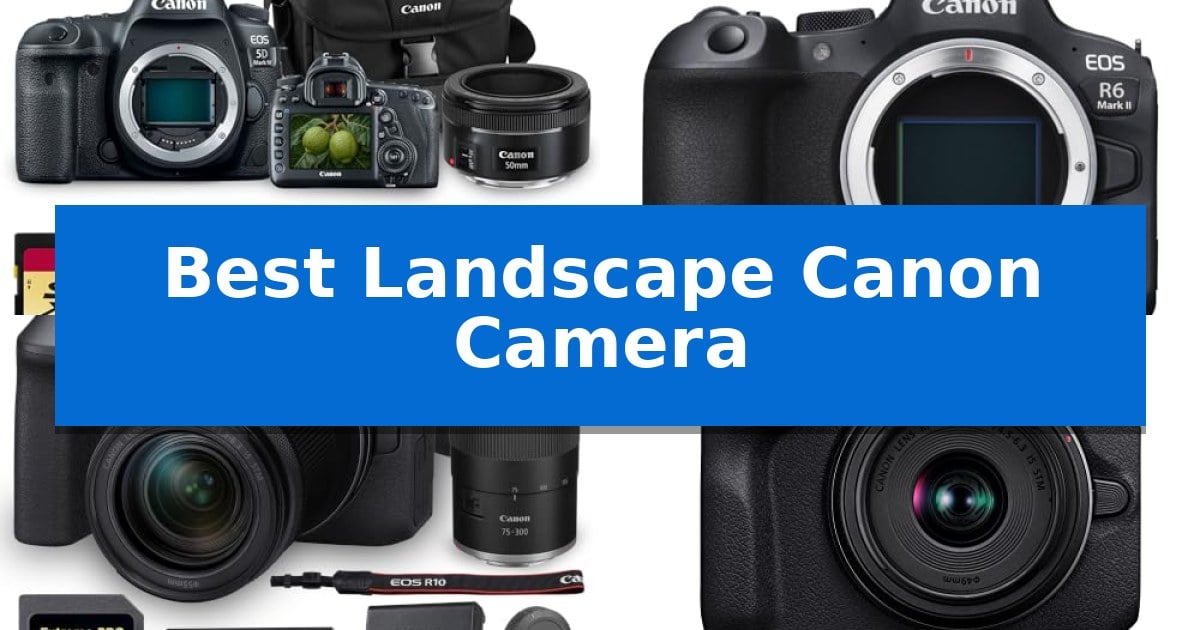
Capturing the vast beauty of the natural world requires equipment that can resolve fine textures and handle challenging lighting conditions. Finding the Best Landscape Canon Camera involves balancing high-resolution sensor output with the portability needed for long treks into the wilderness.
Whether you are a professional seeking maximum dynamic range or a traveler prioritizing a lightweight kit, selecting the right body is essential for your workflow. We have analyzed the latest Canon offerings to help you identify which camera aligns with your specific landscape photography requirements.
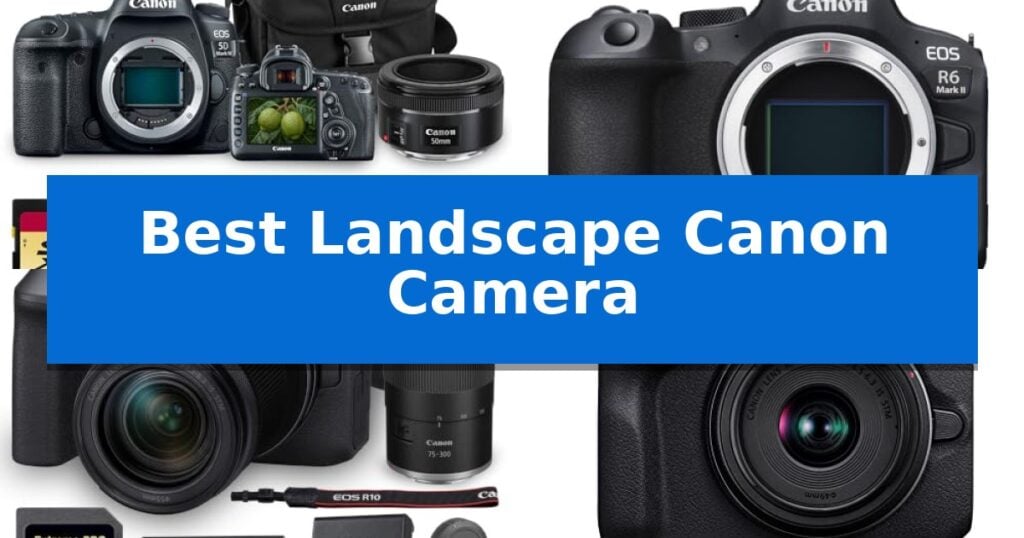
Best Landscape Canon Camera in 2026: Full-Frame Detail for Landscapes
Quick Comparison
| Product | Best For | Key Strength | Score |
|---|---|---|---|
| Canon EOS 5D Mark IV | Best Overall | 30.4MP full-frame sensor delivers exceptional image detail and dynamic range. | 4.9 |
| Canon EOS R6 Mark II | High-Speed Mirrorless Precision | 24.2-megapixel full-frame sensor provides high-detail imaging. | 4.3 |
| Canon EOS R10 | Compact Travel Mirrorless | Versatile lens bundle covering both wide-angle and telephoto focal lengths. | 4.4 |
| Canon EOS R100 | Lightweight Mirrorless Entry | Extremely compact and lightweight design for superior portability. | 4.3 |
| Canon EOS Rebel T7 | Versatile DSLR Starter Kit | Double zoom lens kit provides immediate versatility for wide and telephoto shots. | 4.3 |
How We Chose
- Sensor resolution and dynamic range capabilities for capturing intricate textures.
- Lens mount ecosystem compatibility and availability of wide-angle glass.
- Physical build, including weather sealing and overall weight for outdoor portability.
- Autofocus performance for sharp foreground-to-background detail.
- Video versatility for creators who also document their outdoor excursions.
1 Canon EOS 5D Mark IV — Full-Frame Detail for Landscapes
Capturing expansive vistas requires a tool that balances resolution with reliable field performance, and the Canon EOS 5D Mark IV is engineered specifically for this demand. Featuring a high-resolution 30.4MP full-frame CMOS sensor, this camera provides the dynamic range and color depth necessary to render intricate landscape textures with professional clarity.
The integration of Dual Pixel CMOS AF ensures that focusing remains sharp and responsive, which is essential when transitioning between static landscape compositions and dynamic subjects. For those who incorporate cinematography into their workflow, the device supports 4K video recording at up to 30 fps, complemented by Canon Log for extended dynamic range during post-production.
This kit includes the EF 50mm f/1.8 STM lens, a versatile prime that excels in low-light conditions and provides a shallow depth of field for creative compositions. The inclusion of a 64GB memory card and a dedicated shoulder bag makes the system ready for immediate field deployment, catering to photographers who prioritize a complete, portable setup.
While the 30.4MP sensor offers significant detail, the camera maintains a robust build quality suitable for varied environments. Users benefit from built-in Wi-Fi and GPS functionality, which streamlines the process of transferring files and geotagging images during extensive outdoor excursions.
Best for: Landscape and hybrid photographers who require a high-resolution full-frame sensor and professional-grade video capabilities in a single, ready-to-use kit.
Skip if: Photographers who prioritize an ultra-lightweight, mirrorless body or those who do not require the specific optical characteristics of the included 50mm prime lens.
PROS
- 30.4MP full-frame sensor delivers exceptional image detail and dynamic range.
- Dual Pixel CMOS AF provides fast and accurate subject tracking for stills and video.
- Professional 4K video capabilities with Canon Log support.
- Complete kit includes a versatile 50mm lens, memory card, and carrying bag.
CONS
- Weight and size of the DSLR body may be less portable than modern mirrorless alternatives.
2 Canon EOS R6 Mark II — High-Speed Mirrorless Precision
Capturing expansive vistas requires a camera that balances high-resolution detail with reliable autofocus performance. The Canon EOS R6 Mark II is built around a 24.2-megapixel full-frame CMOS sensor, providing the clarity necessary for intricate landscape textures while maintaining effective performance in varying light conditions.
For photographers who incorporate wildlife or moving elements into their landscape compositions, the DIGIC X image processor works alongside an advanced Dual Pixel CMOS AF system. This combination allows for precise subject acquisition, including automatic detection of animals, vehicles, and aircraft, ensuring that focus remains sharp even when subjects enter the frame unexpectedly.
Composition flexibility is a key requirement for outdoor photography. The 3.0-inch Vari-angle touchscreen allows for precise framing from low or awkward angles, while the 0.5-inch OLED electronic viewfinder offers a 120 fps refresh rate for a clear, real-time preview of the scene. These tools assist in achieving accurate exposure and composition in the field.
The camera supports efficient workflows through built-in 5GHz Wi-Fi and Bluetooth 5, enabling quick transfers via the Canon Camera Connect app. For studio or tethered work, the USB Type-C port supports data transfer speeds up to 10Gbps, facilitating rapid movement of high-resolution files to external storage or editing devices.
Best for: Landscape and nature photographers who require high-resolution full-frame imaging combined with advanced subject tracking for wildlife or moving subjects.
Skip if: Users who require ultra-high megapixel counts for large-format printing may find the 24.2MP sensor resolution limiting compared to higher-resolution alternatives.
PROS
- 24.2-megapixel full-frame sensor provides high-detail imaging.
- Advanced subject detection tracks animals and vehicles automatically.
- Vari-angle touchscreen improves composition from difficult angles.
- 10Gbps USB-C connectivity enables fast file transfers.
CONS
- 24.2MP resolution may be insufficient for extreme cropping or massive print enlargements.
3 Canon EOS R10 — Compact Travel Mirrorless
Capturing expansive vistas requires equipment that balances portability with focal versatility, and the Canon EOS R10 is engineered specifically for this mobile workflow. By pairing a high-resolution sensor with a comprehensive lens kit, this system provides the necessary reach to isolate distant mountain peaks or capture wide-angle panoramas without requiring a heavy gear bag.
At the heart of the Canon EOS R10 is a 24.2MP APS-C CMOS sensor, which delivers the sharp detail and color reproduction essential for landscape photography. The included RF-S 18-150mm lens serves as a primary tool for wide-angle compositions, while the bundled RF 75-300mm f/4-5.6 lens extends your capability to pull in distant textures and compression effects, making this a complete kit for outdoor exploration.
Beyond still imagery, the camera supports 4K UHD video oversampled from 6K, providing high-fidelity footage for those who document their travels in motion. The Dual Pixel CMOS AF II system ensures that subjects—whether they are moving wildlife or foreground elements—remain in focus with precision, a significant benefit when working in unpredictable outdoor environments.
Designed for the active photographer, the Canon EOS R10 maintains a compact form factor that minimizes bulk during long hikes. The inclusion of a 64GB memory card and a dedicated shoulder bag ensures that the system is ready for immediate field use, allowing you to focus on composition rather than equipment logistics.
Best for: Travel photographers and outdoor enthusiasts who need a lightweight, versatile system capable of switching between wide-angle landscapes and telephoto wildlife shots.
Skip if: Professional photographers requiring a full-frame sensor for extreme low-light performance or those who prioritize weather-sealed bodies for harsh, high-altitude environments.
PROS
- Versatile lens bundle covering both wide-angle and telephoto focal lengths.
- High-resolution 24.2MP sensor optimized for sharp, detailed landscape stills.
- Advanced Dual Pixel CMOS AF II for reliable subject tracking in both photo and video.
- Compact and lightweight design ideal for travel and hiking.
CONS
- APS-C sensor size may limit extreme low-light performance compared to full-frame alternatives.
- Variable aperture on the telephoto lens requires careful light management in dim conditions.
4 Canon EOS R100 — Lightweight Mirrorless Entry
Capturing expansive vistas requires a balance of portability and image fidelity, and the Canon EOS R100 provides a specialized solution for those prioritizing a lightweight kit. As the smallest and lightest body in the EOS R series, it is engineered for photographers who need to maintain mobility while trekking to remote shooting locations.
At the heart of the system is a 24.1 megapixel CMOS (APS-C) sensor, which delivers the high resolution necessary for detailed landscape photography. The inclusion of the DIGIC 8 image processor ensures that the camera handles data efficiently, allowing for natural bokeh and consistent image clarity across varied lighting conditions.
The RF-S18-45mm F4.5-6.3 IS STM lens included in the kit offers a versatile focal range suitable for wide-angle landscape compositions. For those who also document their travels through video, the camera supports 4K video recording at up to 24 fps, alongside high-speed options like 120 fps for HD footage, providing flexibility for creative storytelling.
Usability is enhanced by an advanced Dual Pixel CMOS AF system that covers up to 143 zones. This autofocus capability includes human face and eye detection, as well as animal and vehicle detection, ensuring that foreground subjects or moving elements within a landscape remain sharp. With a continuous shooting speed of up to 6.5 shots per second in One-Shot AF mode, the camera is well-equipped to capture fleeting moments in the field.
Best for: Beginner landscape photographers who prioritize a compact, lightweight system for travel and outdoor mobility.
Skip if: Photographers requiring weather-sealed bodies or advanced physical controls for rapid manual adjustments in extreme environments.
PROS
- Extremely compact and lightweight design for superior portability.
- High-resolution 24.1 megapixel APS-C sensor for detailed images.
- Advanced Dual Pixel CMOS AF with subject detection for precise focus.
- Versatile 4K video capabilities for hybrid creators.
CONS
- Limited manual control interface compared to higher-tier EOS R models.
- Fixed rear screen design may restrict viewing angles during low-to-ground landscape shots.
5 Canon EOS Rebel T7 — Versatile DSLR Starter Kit
Capturing expansive vistas requires equipment that balances portability with focal versatility, and the Canon EOS Rebel T7 addresses this through its included double zoom lens kit. By pairing an EF-S 18-55mm lens for standard wide-angle compositions with an EF 75-300mm telephoto lens, this system provides the reach needed to isolate distant landscape features or capture sweeping horizons without requiring additional optics.
At the core of this camera is a 24.1 Megapixel CMOS (APS-C) sensor, which delivers the resolution necessary for detailed landscape prints. The system utilizes an optical viewfinder with approximately 95% coverage, allowing photographers to frame their shots naturally in various lighting conditions. For those who prefer working from a tripod, the camera includes built-in Wi-Fi and NFC technology, facilitating easier image transfers to compatible mobile devices.
The camera features a 9-Point AF system with AI Servo AF, which assists in maintaining focus accuracy. While primarily designed for ease of use, the unit remains functional in temperatures ranging from 32-104°F, making it suitable for diverse outdoor environments. Beyond still photography, the device supports Full HD 1080p video capture, providing an option for documenting dynamic landscape elements like moving clouds or flowing water.
Practicality is further enhanced by the EOS Utility Webcam Beta Software compatibility, which allows the camera to function as a high-quality webcam when connected to a Mac or Windows computer. This dual-purpose design ensures that the investment remains useful even when not actively shooting in the field.
Best for: Beginner photographers seeking a versatile, all-in-one lens system for capturing diverse landscape perspectives.
Skip if: Professional landscape photographers requiring weather-sealed bodies or ultra-wide-angle lenses not included in this kit.
PROS
- Double zoom lens kit provides immediate versatility for wide and telephoto shots.
- 24.1 Megapixel sensor offers high resolution for detailed landscape imagery.
- Integrated Wi-Fi and NFC for convenient wireless image sharing.
- Dual-purpose functionality as a high-quality webcam via software.
CONS
- 95% viewfinder coverage means the final image may capture slightly more than what is seen while framing.
- Limited lens range for extreme wide-angle landscape photography.
Best Landscape Canon Camera Buying Guide
Sensor Size and Resolution
For landscape photography, the full-frame sensor is often the gold standard. It provides superior light-gathering capabilities and typically offers higher megapixel counts, which are crucial for large-format prints and capturing fine details like foliage or distant mountain ridges.
While APS-C sensors are more compact and lightweight, they may require different lens considerations to achieve the same wide-angle field of view. Consider your final output needs; if you primarily share images online, an APS-C sensor might offer the perfect balance of quality and portability.
Lens Compatibility
The camera body is only half the equation. Ensure your chosen system supports a wide range of wide-angle lenses, which are essential for expansive vistas. Canon's RF mount offers modern optical designs, while the EF mount provides access to a massive library of established, high-quality glass.
If you are transitioning from a DSLR to a mirrorless system, check if you need an adapter to use your existing lenses. Using native lenses generally provides the best autofocus performance and weather resistance for outdoor shooting.
Portability and Build Quality
Landscape photography often involves hiking to remote locations. A camera's weight and dimensions can significantly impact your comfort during long days in the field. Mirrorless bodies often provide a more compact form factor without sacrificing the robust build quality required for outdoor use.
Look for features like weather sealing if you plan to shoot in diverse environments. A camera that can withstand dust and moisture will provide peace of mind when you are miles away from shelter.
Autofocus and Precision
While landscapes are often static, modern autofocus systems like Canon's Dual Pixel CMOS AF are invaluable. They ensure that your focus is tack-sharp across the entire frame, which is particularly important when shooting at wide apertures or focusing on complex foreground elements.
Advanced subject detection can also be helpful if your landscapes include wildlife or moving subjects. Reliable tracking ensures you don't miss a fleeting moment of perfect light while adjusting your settings.
Battery Life and Connectivity
Outdoor shooting sessions can be long, and cold weather can drain batteries faster than usual. Always carry spares and look for cameras that support USB-C charging for convenient power replenishment on the go.
Built-in Wi-Fi and Bluetooth connectivity allows for quick image transfers to your smartphone or tablet. This is ideal for checking your composition on a larger screen or sharing your work while still in the field.
Frequently Asked Questions
Is a full-frame camera necessary for landscape photography?
While not strictly necessary, a full-frame sensor offers better dynamic range and low-light performance, which are highly beneficial for capturing the subtle tones in sunrise or sunset landscapes.
Can I use my old lenses with a new Canon mirrorless camera?
Yes, Canon offers mount adapters that allow you to use most EF and EF-S lenses on their RF-mount mirrorless cameras, often with full functionality.
What is the benefit of Dual Pixel AF for landscapes?
Dual Pixel AF provides fast and accurate focusing, ensuring that your images are sharp and allowing you to quickly switch focus points when using the rear LCD for composition.
How important is weather sealing?
Weather sealing is critical if you shoot in unpredictable environments, as it helps protect the internal electronics from dust, moisture, and light rain.
Which Canon camera is best for travel landscapes?
Compact mirrorless options like the EOS R10 are excellent for travel, as they provide high image quality in a significantly smaller and lighter package than traditional DSLRs.
Conclusion: Our Top Pick
For photographers who demand the highest level of detail and professional reliability, the Canon EOS 5D Mark IV remains a standout choice. Its 30.4MP full-frame sensor delivers exceptional dynamic range and color depth, making it a powerful tool for capturing complex natural scenes with precision.
While mirrorless technology offers modern advantages in size and speed, the robust build and proven performance of this DSLR make it a trusted companion for serious landscape work. If your priority is maximum image fidelity and you prefer the handling of a traditional DSLR, this kit provides a comprehensive solution.