
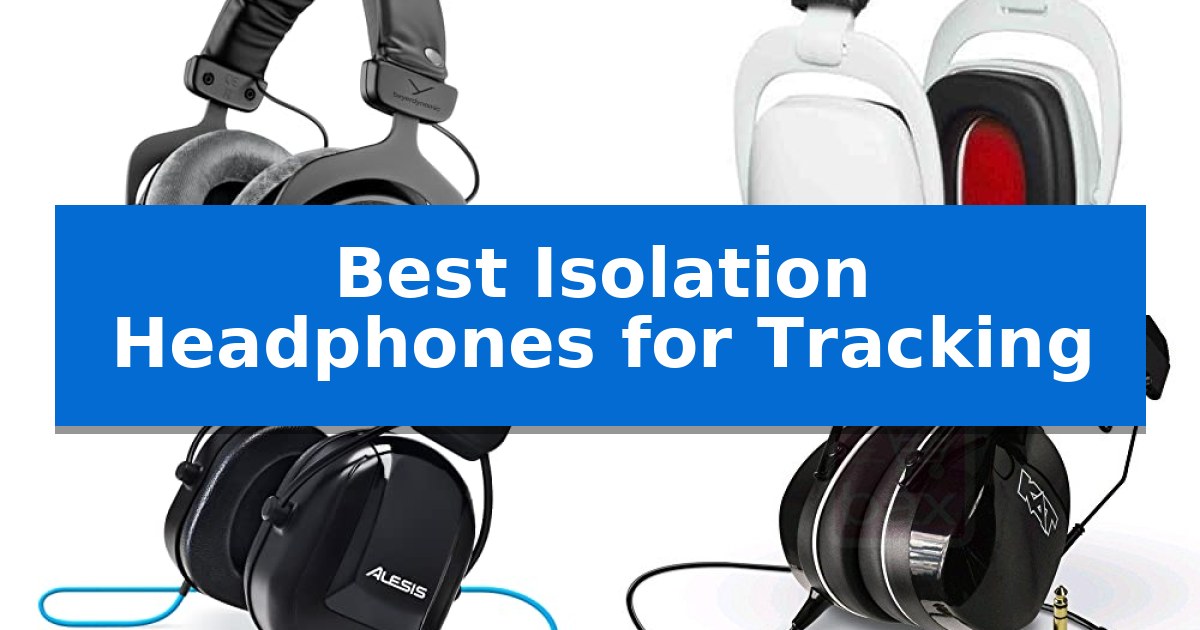
Achieving a clean recording requires more than just a high-quality microphone; it demands a monitoring environment free from bleed and external distractions. When you are recording vocals or instruments, the wrong pair of headphones can leak your click track or backing mix directly into your sensitive microphones, ruining an otherwise perfect take.
Finding the Best Isolation Headphones for Tracking means prioritizing passive noise reduction and a design that keeps your audio contained. We have evaluated five professional-grade options to help you identify which model provides the necessary shielding and frequency accuracy for your specific recording workflow.
Best Isolation Headphones for Tracking in 2026
Quick Comparison
| Product | Best For | Key Strength | Score |
|---|---|---|---|
| beyerdynamic DT 770 Pro Headphones | Best Overall | Closed-back isolation effectively prevents audio bleed into microphones. | 4.9 |
| Direct Sound EX29 Isolation Headphones | Maximum passive noise reduction | Natural passive isolation eliminates the need for batteries or electronic noise cancellation. | 4.6 |
| Alesis DRP100 Drum Isolation Headphones | Engineered for high-volume monitoring | Extreme audio isolation via an over-ear design. | 4.4 |
| KAT Percussion KTUI26 Isolation Headphones | Passive shielding for loud sessions | Passive isolation design eliminates the need for batteries or charging. | 4.3 |
| Superlux HD667 Drummer Isolation Headphones | Precise monitoring for percussionists | Superior noise isolation via closed-back design. | 4.4 |
How We Chose
- Passive noise reduction capabilities for vocal and instrument isolation.
- Driver accuracy and frequency response for critical monitoring.
- Build quality and long-term comfort for extended studio sessions.
- Compatibility with standard audio interfaces and headphone amplifiers.
- Cable design and included connectivity adapters for studio versatility.
1 beyerdynamic DT 770 Pro Headphones — Industry standard for studio tracking
The beyerdynamic DT 770 Pro (80 Ohm) is engineered as a dedicated tracking solution, utilizing a closed-back design to provide the passive isolation necessary to prevent click tracks or monitor mixes from bleeding into sensitive vocal or instrument microphones. This German-made headset is built for the rigors of daily studio use, featuring a robust spring-steel headband and replaceable velour ear pads designed to maintain comfort during extended recording sessions.
Designed as an 80-ohm all-rounder, this model balances compatibility with versatility. While it is capable of producing sufficient volume when connected directly to most laptops, it is optimized to perform at its best when driven by a dedicated audio interface or headphone amplifier. This ensures the signal remains clean and accurate, which is critical when monitoring high-fidelity audio during the tracking process.
The physical construction prioritizes durability and utility in a professional environment. The unit includes a fixed 3m straight cable, providing ample reach for performers in a vocal booth or at a podcast desk, and comes with a 1/4-inch adapter to ensure compatibility with standard studio hardware. By focusing on passive shielding and a reliable, wired connection, these headphones serve as a consistent reference point for recording tasks.
When selecting equipment for a studio setup, the primary trade-off involves the fixed cable and the impedance requirements. Because the cable is not detachable, users must manage the full 3m length at all times. Additionally, while the 80-ohm impedance is manageable for many devices, those relying on low-power mobile sources may find that an external amplifier is necessary to achieve the desired monitoring levels.
Best for: Studio engineers, vocalists, and podcasters who require reliable passive isolation and a durable, wired monitoring solution for recording sessions.
Skip if: Users who require a detachable cable for portability or those who primarily monitor from low-power mobile devices without an external amplifier.
PROS
- Closed-back isolation effectively prevents audio bleed into microphones.
- Replaceable velour ear pads and spring-steel headband ensure long-term comfort and durability.
- Optimized 80-ohm impedance provides a balance between laptop compatibility and studio-grade performance.
- Made in Germany construction standards.
CONS
- Fixed 3m cable cannot be removed or swapped if damaged.
- Requires an audio interface or amplifier to reach optimal performance levels.
2 Direct Sound EX29 Isolation Headphones — Maximum passive noise reduction
Achieving a clean recording environment requires minimizing bleed, and the Direct Sound EX29 Extreme Isolation Professional Headphones are engineered specifically to address this challenge. By utilizing environmentally responsible natural passive isolation, these headphones reduce ambient noise without the need for batteries or active circuitry, making them a reliable choice for studio tracking sessions where silence is paramount.
The construction features dynamic closed-back drivers housed within a robust frame, designed to keep sound contained during high-volume monitoring. The IncrediFlex padded, fully adjustable headband ensures a secure fit for extended periods of use, while the foldable design allows for efficient storage when not in use.
Connectivity is handled via a straight stereo 1/8" (3.5 mm) gold-plated plug, which includes a screw-on 1/4" (6.3 mm) gold-plated adapter for compatibility with professional audio interfaces and mixing consoles. This dual-standard approach ensures the headphones integrate seamlessly into most studio setups without requiring additional hardware.
While these headphones excel at blocking external sound, their design prioritizes isolation over portability or wireless convenience. Users should note that the physical build is tailored for stationary studio work rather than mobile listening, providing a focused, wired experience that maintains signal integrity throughout the tracking process.
Best for: Professional studio engineers and musicians who require maximum passive noise attenuation during vocal or instrument tracking sessions.
Skip if: Users who prioritize lightweight portability, wireless connectivity, or an open-back soundstage for critical mixing and mastering tasks.
PROS
- Natural passive isolation eliminates the need for batteries or electronic noise cancellation.
- Gold-plated connectors with a screw-on 1/4" adapter ensure broad studio compatibility.
- Foldable design and adjustable headband offer a balance of durability and storage convenience.
CONS
- Wired-only connection limits movement compared to modern wireless alternatives.
- Passive-focused design is optimized for isolation rather than lightweight comfort or travel.
3 Alesis DRP100 Drum Isolation Headphones — Engineered for high-volume monitoring
Achieving precise monitoring during high-volume sessions requires gear that physically blocks external noise while remaining comfortable for extended use. The Alesis DRP100 Electric Drum Set Headphones are engineered specifically for this purpose, featuring an over-ear design that provides extreme audio isolation. This construction is tailored for studio, practice, and stage environments where maintaining focus on the performance is essential.
These headphones utilize 40mm full-range drivers to deliver a wide frequency response, ensuring that every detail of your instrument is audible. The build prioritizes durability and stability through a rugged, lightweight design that stands up to the rigors of daily practice. A standout feature is the sweat-proof silicone headband, which provides fit flexibility and maintains comfort even during long, intense sessions.
Practicality is integrated into the design with a 6-foot (1.8m) attached cable that offers enough length for most setups without becoming cumbersome. The unit includes a 1/8-inch (3.5mm) stereo mini-plug for standard connections and comes with a 1/4-inch (6.3mm) headphone plug adapter, ensuring compatibility with a wide range of electronic drum modules and audio interfaces.
While these headphones are built for performance, the fixed cable length and specialized focus on isolation mean they are best suited for stationary monitoring rather than portable use. The Alesis DRP100 provides a focused, reliable solution for musicians who need to hear their mix clearly without distraction from their immediate surroundings.
Best for: Drummers and musicians requiring high audio isolation and a secure, sweat-resistant fit for long practice sessions.
Skip if: Users who require a detachable cable or a compact, folding design for frequent travel and portability.
PROS
- Extreme audio isolation via an over-ear design.
- Sweat-proof silicone headband for stability during long sessions.
- Powerful 40mm drivers for detailed sound reproduction.
- Universal connectivity with included 1/4-inch adapter.
CONS
- Attached cable limits flexibility compared to detachable models.
- Fixed design may be less portable than folding alternatives.
4 KAT Percussion KTUI26 Isolation Headphones — Passive shielding for loud sessions
Maintaining a quiet monitoring environment is essential for capturing clean audio, and the KAT Percussion KTUI26 Ultra Isolation Headphones are engineered specifically to address this need. By utilizing passive isolation to reduce external noise by 26dB, these headphones allow performers to focus on their mix without the intrusion of ambient sound, all without the complexity of batteries or active circuitry.
The design prioritizes long-term wearability through an adjustable padded headband and large foam ear cushions. Weighing just 10.8 oz, the unit remains lightweight, which is a significant advantage during extended tracking sessions. The construction is built for durability, ensuring the hardware holds up to the rigors of frequent studio use.
Connectivity is handled via a standard 1/8" stereo headphone jack, and the inclusion of a 1/4" adapter ensures compatibility with professional audio interfaces, mixers, and drum modules. With a frequency response of 20 – 20,000 Hz, these headphones provide a standard range suitable for monitoring a variety of instruments and vocal performances.
These headphones represent a straightforward, reliable tool for those who require effective sound dampening. Because they rely on physical design rather than active noise cancellation, they offer a consistent, maintenance-free experience that fits seamlessly into any wired studio setup.
Best for: Drummers and studio musicians who need reliable passive noise reduction to monitor their performance clearly in loud environments.
Skip if: Users who require active noise cancellation, wireless connectivity, or a specific sound signature for critical mixing and mastering applications.
PROS
- Passive isolation design eliminates the need for batteries or charging.
- Significant 26dB reduction in external ambient noise.
- Lightweight 10.8 oz construction enhances comfort during long sessions.
- Includes 1/4" adapter for broad studio equipment compatibility.
CONS
- Wired-only connection limits mobility compared to wireless alternatives.
- Passive-only design lacks the advanced noise-canceling capabilities of active models.
5 Superlux HD667 Drummer Isolation Headphones — Precise monitoring for percussionists
The Superlux HD667 Drummer Isolation Headphones are engineered specifically for percussionists, featuring a closed-back design and premium ear cushions that provide the necessary noise isolation to monitor drum tracks in loud environments. By effectively blocking external sound, these headphones allow drummers to focus on the nuances of their performance during rehearsals, studio sessions, or live gigs.
Equipped with 40 mm neodymium drivers, the Superlux HD667 Drummer Isolation Headphones deliver a frequency response of 10–20,000 Hz and a sensitivity of 102 dB SPL. This hardware configuration is designed to capture the full dynamic range of acoustic and electronic drum kits, ensuring that every beat is monitored with clarity.
Usability is enhanced by a 2 m detachable cable that includes an in-line volume control, allowing for quick adjustments without needing to reach for the mixing console or interface. The package includes a 3.5 mm to 6.3 mm adapter, ensuring seamless compatibility with a wide range of studio gear, including bass amps, keyboards, and professional recording equipment.
Designed for portability and long-term comfort, the headphones feature a foldable design and weigh 335 g (11.81 oz). A soft velvet pouch is included to protect the unit during transport, making it a practical choice for musicians who frequently move between practice spaces and recording studios.
Best for: Drummers and musicians needing reliable noise isolation and direct volume control for monitoring during tracking or live performance.
Skip if: Users who require open-back headphones for a wider soundstage or those who prefer wireless connectivity for their monitoring setup.
PROS
- Superior noise isolation via closed-back design.
- Convenient in-line volume control for rapid adjustments.
- Versatile instrument compatibility with included 6.3 mm adapter.
- Foldable, travel-ready design with protective pouch.
CONS
- Wired-only connection limits movement compared to wireless alternatives.
Best Isolation Headphones for Tracking Buying Guide
Understanding Passive Isolation
Passive isolation is the primary defense against bleed during tracking. Unlike active noise cancellation, which uses electronics to mask sound, passive isolation relies on the physical construction of the ear cups, the density of the padding, and the seal against your head. For tracking, a closed-back design is essential to prevent sound from escaping the ear cups.
When selecting headphones, look for high-density foam cushions and a secure clamping force. These features ensure that the headphones stay in place and maintain a consistent seal, which is critical when you are moving or performing in front of a microphone.
Impedance and Power Requirements
The impedance of your headphones, measured in ohms, dictates how much power they require to reach optimal volume. Headphones with higher impedance, such as 80-ohm models, often benefit from a dedicated headphone amplifier or a high-quality audio interface to perform at their best.
If you are tracking in a mobile setup or using a laptop without an external interface, lower-impedance headphones may provide more consistent volume levels. Always check your interface's output specifications to ensure it can drive your chosen headphones effectively.
Comfort for Long Sessions
Tracking sessions can last for hours, making comfort a non-negotiable factor. Look for materials like velour ear pads or sweat-resistant silicone, which provide better breathability than standard synthetic leather. A well-padded headband also helps distribute weight evenly, reducing fatigue during long recording days.
Weight is another factor to consider. While heavier headphones often indicate robust construction, they can become uncomfortable over time. Balancing durability with a lightweight build is key for professional studio gear.
Connectivity and Cable Management
Studio environments require versatile connectivity. Most professional headphones come with a standard 1/8-inch (3.5mm) plug and include a screw-on 1/4-inch (6.3mm) adapter. This ensures compatibility with everything from portable devices to large-format mixing consoles.
Consider the cable length and type. A 3-meter cable is often ideal for studio use, allowing you to move freely within a vocal booth. Some models offer detachable cables, which are a significant advantage for maintenance; if the cable fails, you can simply replace it rather than the entire headset.
Frequency Response for Monitoring
While isolation is the priority for tracking, the headphones must also provide an accurate representation of the sound. A wide frequency response ensures you can hear the nuances of your performance, from the low-end of a kick drum to the high-end detail of a vocal track.
Look for drivers that offer a flat or balanced profile. This allows you to monitor your performance without coloration, ensuring that what you hear in your ears matches what is being captured by your recording equipment.
Frequently Asked Questions
What is the main difference between open-back and closed-back headphones for tracking?
Closed-back headphones are designed to seal the ear, preventing sound from leaking out and blocking external noise from entering. This makes them the only suitable choice for tracking, as open-back headphones leak sound that would be picked up by your microphone.
Do I need a headphone amplifier for 80-ohm headphones?
While 80-ohm headphones can often be driven by a laptop or phone, they perform best when connected to a dedicated audio interface or headphone amplifier. This ensures they reach their full potential in terms of volume and frequency clarity.
Can I use these headphones for mixing as well as tracking?
Yes, many closed-back headphones are suitable for both tracking and initial mixing. However, some engineers prefer open-back headphones for final mixing because they provide a more natural soundstage, though they lack the isolation required for recording.
How do I clean the ear pads on my studio headphones?
For velour pads, a soft brush or a slightly damp cloth is usually sufficient to remove dust and debris. If the pads are removable, check the manufacturer's instructions, as some can be hand-washed, while others should be replaced once they wear out.
Why do some tracking headphones have higher clamping force?
Higher clamping force is intentional in isolation headphones. It ensures a tighter seal against the head, which is necessary to maximize passive noise reduction and prevent sound bleed during loud recording sessions.
Conclusion: Our Top Pick
When selecting the right gear for your studio, the beyerdynamic DT 770 Pro Headphones stand out as the industry standard for reliable tracking. Their closed-back design provides the necessary passive shielding to keep your mix out of your microphones, while the velour ear pads ensure comfort during long sessions.
While these headphones perform best when paired with an audio interface or dedicated amplifier, their build quality and consistent performance make them a staple in professional environments. For those needing a balance of comfort, durability, and isolation, they represent a highly effective investment for any recording setup.