
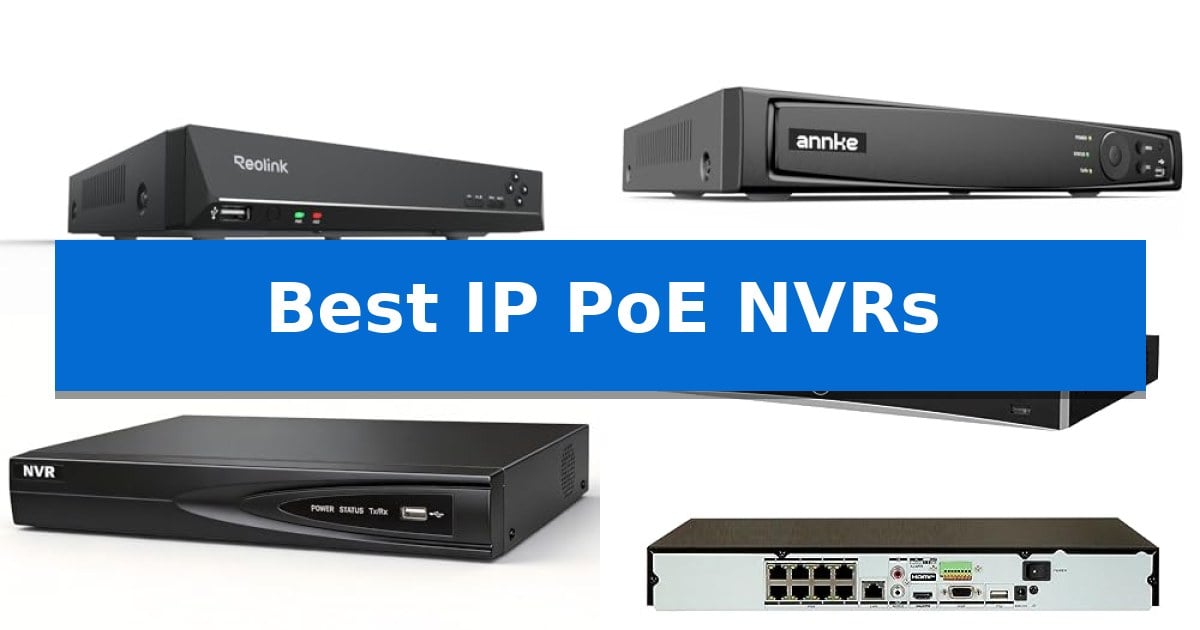
Managing a reliable security network requires a robust central hub, and finding the Best IP PoE NVRs is the first step toward achieving a stable, 24/7 surveillance system. These devices serve as the backbone of your security, handling power delivery and data management for multiple cameras through a single, efficient connection.
Whether you are upgrading an existing home setup or outfitting a business, selecting the right hardware depends on your specific camera ecosystem and storage requirements. We have analyzed current market options to help you navigate the technical nuances of PoE integration, storage capacity, and smart detection features to ensure your property remains monitored without the need for recurring cloud service fees.
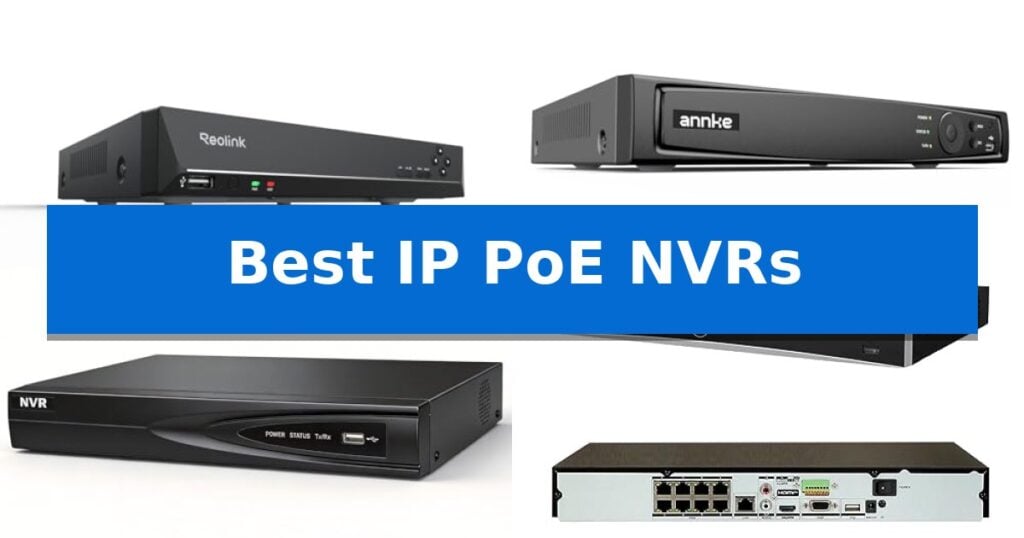
Best IP PoE NVRs in 2026: Streamline Your Local Surveillance Setup
Quick Comparison
| Product | Best For | Key Strength | Score |
|---|---|---|---|
| Reolink RLN8-410 NVR | Best Overall | Simplified PoE installation using a single Ethernet cable for both power and data. | 4.9 |
| ANNKE 8CH PoE NVR | Efficient Storage with H.265+ | Simplified installation using single-cable PoE for both power and data. | 4.7 |
| Seculink 8CH PoE NVR | Universal ONVIF Compatibility | Built-in 8-port PoE switch for simplified camera installation. | 4.3 |
| Hikvision AcuSense NVR | Advanced AI Face Recognition | Plug-and-play setup with 8 dedicated PoE ports. | 4.7 |
| Reolink RLN16-410 NVR | Scalable for Larger Installations | Simplified installation using single-cable PoE for power and data. | 4.9 |
How We Chose
- Compatibility with IP camera protocols and ecosystem integration
- Power-over-Ethernet (PoE) port capacity and power budget
- Storage flexibility and maximum supported hard drive capacity
- Video compression standards and bandwidth efficiency
- Remote access features and local management software
1 Reolink RLN8-410 NVR — Best for Reolink Ecosystem Users
Managing a multi-camera security setup requires a reliable core to handle data transmission and storage. The Reolink RLN8-410 NVR serves as a centralized hub, specifically engineered to support up to 8 Reolink PoE IP cameras through a single-cable Power over Ethernet (PoE) connection. By transmitting both power and data over distances up to 330ft, it simplifies installation while maintaining a dedicated, independent network for your security hardware.
This system is designed for continuous operation, featuring a pre-installed 2TB hard drive capable of 24/7 recording. For users requiring extended retention, the NVR includes an eSATA port that supports an additional 8TB HDD. The unit integrates advanced camera features, including human, vehicle, and animal detection, allowing you to leverage the intelligent playback capabilities of connected Reolink IP cameras.
Usability is centered around the free Reolink App and Client, which provide local and remote access across iOS, Android, Windows, and Mac platforms without recurring monthly fees. The NVR operates independently via a built-in DHCP function, ensuring that your security system remains functional even if your local internet connection is interrupted.
Compatibility is a primary consideration, as this NVR is optimized exclusively for Reolink PoE cameras, including 16MP, 12MP, 4K, 5MP, and 4MP models. Users should ensure their specific camera models are supported and that the NVR firmware is updated to the latest version to maintain full functionality and integration with advanced features like two-way talk and motion-triggered spotlights.
Best for: Users already invested in the Reolink PoE camera ecosystem who require a dedicated, subscription-free local recording solution.
Skip if: Users who utilize non-Reolink IP cameras or those requiring a wireless, battery-powered camera system that does not support PoE connectivity.
PROS
- Simplified PoE installation using a single Ethernet cable for both power and data.
- Subscription-free remote access via the Reolink App and Client software.
- Scalable storage with a pre-installed 2TB drive and support for an additional 8TB via eSATA.
- Intelligent detection integration for human, vehicle, and animal alerts directly from compatible cameras.
CONS
- Exclusive compatibility limited strictly to Reolink PoE IP cameras.
- Firmware management required to ensure ongoing compatibility with newer camera models.
2 ANNKE 8CH PoE NVR — Efficient Storage with H.265+
Managing high-definition surveillance feeds requires a robust infrastructure, and the ANNKE 8CH PoE NVR simplifies this by utilizing a single-cable Power over Ethernet (PoE) system. By consolidating both power and data transmission into one connection per camera, this unit eliminates the need for complex, multi-cable setups, supporting up to 30W of output power to keep your security network organized.
Designed for efficiency, the system leverages H.265+ video compression, which significantly reduces bandwidth usage and storage requirements by up to 75% compared to older standards. This allows for continuous 24/7 recording without sacrificing image quality, ensuring that your surveillance footage remains clear and accessible for playback.
The ANNKE 8CH PoE NVR is engineered to integrate with ANNKE AI-enabled cameras, enabling advanced features like human and vehicle detection, line crossing, and region intrusion alerts. While the recorder itself does not contain built-in AI, it acts as a central hub for these intelligent monitoring functions, providing a cohesive security ecosystem for home or business environments.
Remote management is handled through the ANNKE Vision App, which provides live stream viewing and playback across iOS, Android, Windows, and Mac platforms without requiring monthly subscription fees. The unit offers flexible storage options, accommodating both 2.5-inch and 3.5-inch hard drives to suit your specific data retention needs.
Best for: Users who already own or plan to invest in an ANNKE-based security ecosystem and require a simplified, single-cable PoE installation.
Skip if: Users who rely on a wide variety of third-party IP cameras, as this system is optimized specifically for ANNKE hardware and may require technical support for cross-brand compatibility.
PROS
- Simplified installation using single-cable PoE for both power and data.
- Efficient storage management through H.265+ compression technology.
- No monthly fees for remote access via the ANNKE Vision App.
- Broad camera support for resolutions ranging from 4MP up to 12MP.
CONS
- Proprietary optimization means it works best exclusively with ANNKE IP cameras.
- No built-in AI; advanced detection features depend on using compatible ANNKE AI cameras.
3 Seculink 8CH PoE NVR — Universal ONVIF Compatibility
The Seculink 8CH PoE NVR simplifies security infrastructure by integrating a built-in 8-port PoE switch, allowing users to power and connect up to eight IP cameras directly to the recorder without needing external networking hardware. This all-in-one design reduces cabling complexity and installation costs for wired surveillance setups, making it a practical choice for those building a dedicated, wired security network who prioritize ease of setup.
Designed for high-definition monitoring, this system supports up to 8MP IP cameras and provides a 4K HDMI output for clear live views and playback. It utilizes H.265+ video compression to optimize storage efficiency, enabling longer continuous recording periods without compromising video quality. This compression standard is particularly beneficial for users aiming to maximize their hard drive capacity while maintaining high-resolution footage.
The unit includes smart features such as human and vehicle motion detection on selected channels, which assists in filtering activity and locating specific events during playback. As an ONVIF-compatible device, it offers flexibility for integration with various third-party PoE IP cameras and existing security hardware. Its two-year warranty provides additional assurance for long-term operation in a fixed monitoring environment.
Best for: Users looking for a streamlined, all-in-one wired security system that eliminates the need for an external PoE switch.
Skip if: Users who require wireless camera connectivity or a system that supports non-ONVIF proprietary camera protocols.
PROS
- Built-in 8-port PoE switch for simplified camera installation.
- Supports 4K HDMI output for high-resolution monitoring.
- H.265+ compression for efficient storage management.
- ONVIF compatibility for third-party camera integration.
CONS
- Wired-only design limits placement options compared to wireless systems.
4 Hikvision AcuSense NVR — Advanced AI Face Recognition
The DS-7608NXI-K2/8P is a specialized network video recorder designed to streamline surveillance through integrated AcuSense technology, which provides advanced human and vehicle detection to reduce false alarms. This unit serves as a central hub for security setups, offering 8 independent PoE interfaces for a true plug-and-play experience with compatible IP cameras.
Engineered for high-efficiency management, the device supports H.265+ video compression, capable of reducing storage requirements by up to 75% compared to standard formats. It provides substantial storage flexibility with two SATA interfaces, supporting up to 16TB per drive for a total of 32TB of potential capacity, ensuring long-term footage retention.
The recorder excels in intelligent monitoring, featuring Motion Detection 2.0 across all channels and sophisticated facial recognition capabilities. Users can perform smart searches for specific areas or utilize face picture comparison to quickly locate relevant events, significantly improving playback efficiency during critical reviews.
Connectivity and output options are robust, featuring independent HDMI and VGA outputs with support for 4K resolution via HDMI. The system maintains secure operations through TLS encryption for stream transmission and offers straightforward network management via the Hik-Connect platform, making it a reliable choice for professional-grade surveillance environments.
Best for: Users requiring a dedicated, high-capacity NVR with advanced AI-driven human and vehicle detection for Hikvision or ONVIF-compliant camera systems.
Skip if: Users who do not have cameras that fully support ONVIF Profile S/G or those who prefer a cloud-only storage solution without local hardware management.
PROS
- Plug-and-play setup with 8 dedicated PoE ports.
- Advanced AcuSense AI for accurate human and vehicle analysis.
- High-capacity storage support up to 32TB total.
- Efficient H.265+ compression to maximize storage space.
CONS
- Strict compatibility requirements for non-Hikvision cameras (must support ONVIF Profile S/G).
- No hard drive included with the unit.
5 Reolink RLN16-410 NVR — Scalable for Larger Installations
Managing a high-definition security network requires hardware that simplifies data transmission and storage. The Reolink RLN16-410 NVR serves as a centralized hub, specifically engineered to handle up to 16 cameras with a pre-installed 4TB hard drive for continuous 24/7 recording.
This system utilizes Power over Ethernet (PoE) technology, which is a significant advantage for simplifying installation. By using a single Ethernet cable for both power and data transmission, users can connect cameras up to 330 feet away from the unit. The NVR also features a DHCP function, allowing it to operate as an independent system even without an active internet connection.
Integration is a core strength of this model, as it is designed to work exclusively with Reolink PoE IP cameras. It supports advanced features like human, vehicle, and pet detection, along with playback capabilities from compatible cameras. For those requiring additional capacity, the unit supports an extra 8TB HDD to expand storage for long-term footage retention.
Users can manage their security setup through the free Reolink App or Client on mobile or desktop platforms. This software provides intuitive local and remote access to live views and recorded files without the burden of monthly subscription fees. The unit is built with a compact profile, measuring approximately 1.77 inches in height, making it suitable for standard equipment racks or shelf placement.
Best for: Users who have already invested in or plan to build a comprehensive security network using Reolink PoE cameras.
Skip if: Users who require a universal NVR that supports third-party ONVIF cameras from different manufacturers.
PROS
- Simplified installation using single-cable PoE for power and data.
- Expandable storage with support for an additional 8TB hard drive.
- No monthly fees for remote access and mobile app usage.
- Intelligent detection integration for human, vehicle, and pet alerts.
CONS
- Limited compatibility as it only functions with Reolink PoE IP cameras.
Best IP PoE NVRs Buying Guide
Understanding PoE Compatibility
The most critical factor when choosing an NVR is ensuring it communicates effectively with your cameras. Many manufacturers design their NVRs to work best within their own ecosystem, utilizing proprietary protocols for features like motion detection, human/vehicle analysis, and auto-tracking.
If you plan to mix and match brands, you must verify ONVIF compatibility. While ONVIF provides a standard for interoperability, it does not guarantee that every advanced feature—such as AI-based smart alerts—will function across different brands. Always confirm the specific profile support if you intend to use third-party cameras.
Storage and Compression Efficiency
Continuous 24/7 recording demands significant storage space. Most modern NVRs support high-efficiency compression standards like H.265+, which significantly reduces file sizes without compromising image quality. This allows you to store more footage on the same hard drive capacity compared to older H.264 systems.
Consider the maximum hard drive capacity supported by the NVR. Some units include pre-installed drives, while others allow you to add your own. If you require long-term archival, look for models that support multiple SATA interfaces or external eSATA expansion to scale your storage as your system grows.
Power-over-Ethernet (PoE) Limitations
A primary benefit of a PoE NVR is the ability to transmit both power and data through a single Ethernet cable. This simplifies installation by eliminating the need for separate power supplies at each camera location. However, you must ensure the NVR's total power budget is sufficient for all connected cameras.
Check the maximum wattage per port and the total power output of the NVR. High-draw cameras, such as those with motorized zoom, pan-tilt-zoom (PTZ) functions, or active spotlights, may require more power than standard fixed cameras. Exceeding the power budget can lead to system instability or camera failure.
Remote Access and Management
Modern security systems are designed for remote monitoring. Most NVRs provide free mobile apps and desktop clients that allow you to view live streams, play back recorded footage, and manage settings from anywhere. These apps typically operate without monthly subscription fees, making them a cost-effective choice for long-term use.
When evaluating software, look for intuitive interfaces that support smart search functions. Being able to filter recordings by human or vehicle movement can save hours of manual review time, allowing you to quickly identify relevant events rather than scrolling through endless hours of idle footage.
Installation and Bandwidth Considerations
The incoming bandwidth of an NVR determines how many high-resolution cameras it can handle simultaneously. If you are using 4K or 12MP cameras, ensure the NVR has sufficient incoming bandwidth to process the data stream without dropping frames or causing latency.
Proper cable management is also essential. Using high-quality Ethernet cabling (Cat5e or Cat6) is recommended to ensure stable data transmission over long distances. Most PoE NVRs support cable runs up to 330 feet, providing flexibility in where you place your cameras relative to the central recording unit.
Frequently Asked Questions
Can I use cameras from different brands with these NVRs?
Yes, provided the cameras and the NVR support the ONVIF protocol. However, advanced features like AI-based human/vehicle detection may only work when using cameras and NVRs from the same manufacturer.
Do I need an internet connection for the NVR to work?
No, these NVRs can function as an independent, local recording system without an internet connection. An internet connection is only required if you wish to access the system remotely via a mobile app or computer.
What is the benefit of H.265+ compression?
H.265+ is a highly efficient video compression standard that can reduce storage usage by up to 75% compared to older standards like H.264, allowing for longer recording times on the same hard drive.
Can I expand the storage capacity later?
Many NVRs allow for storage expansion. Some models feature internal SATA ports for larger hard drives, while others may include an eSATA port for connecting external storage devices.
What happens if the power budget of the NVR is exceeded?
If the total power draw of your connected cameras exceeds the NVR's power budget, the system may become unstable, cameras may reboot frequently, or some cameras may fail to power on entirely.
Conclusion: Our Top Pick
Selecting the right network video recorder is essential for a reliable security system. For most users looking for a balance of ease-of-use, robust integration, and smart detection features, the Reolink RLN8-410 NVR stands out as a top choice. It offers seamless compatibility with the Reolink camera ecosystem, ensuring that advanced features like human and vehicle detection work right out of the box.
While other models offer specific advantages like broader ONVIF support or higher channel counts, the Reolink ecosystem provides a streamlined experience that minimizes setup time and maintenance. By choosing a system that integrates natively, you ensure consistent performance and reliable access to your security footage when you need it most.