
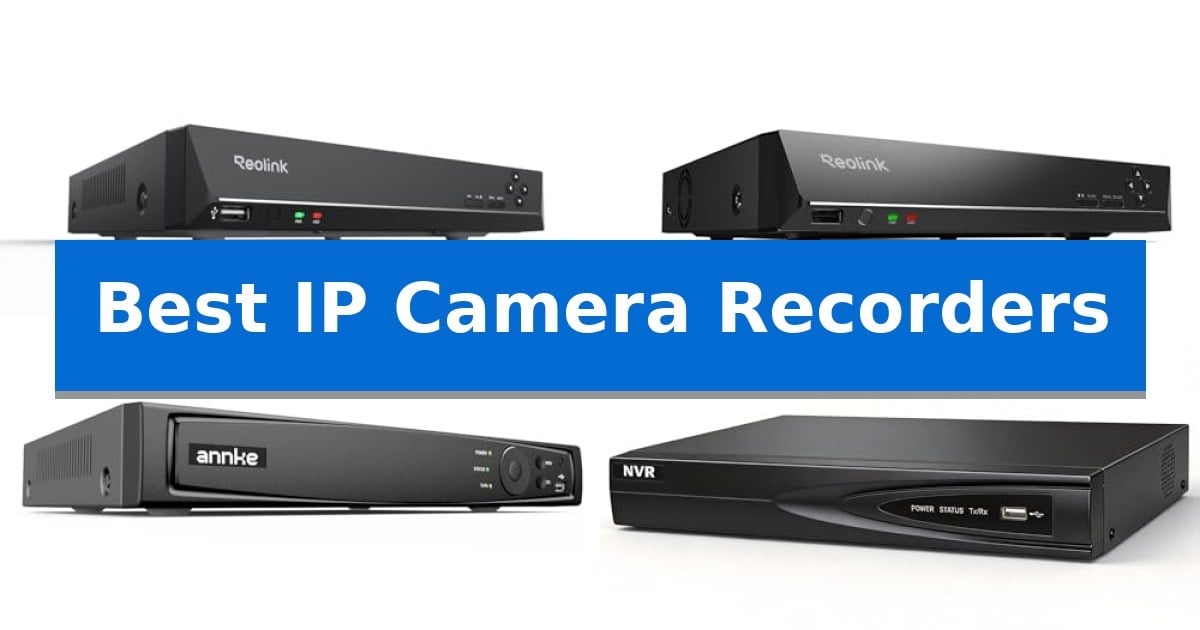
Finding the right hardware to manage your security footage is essential for a reliable monitoring system. Whether you are upgrading an existing setup or building a new one from scratch, selecting the Best IP Camera Recorders requires careful consideration of compatibility, storage capacity, and network integration.
A high-quality recorder acts as the central hub for your surveillance, ensuring that your video data is captured, stored, and accessible whenever you need it. We have analyzed several leading network video recorders and hybrid systems to help you navigate the technical requirements and find a solution that matches your specific camera ecosystem.
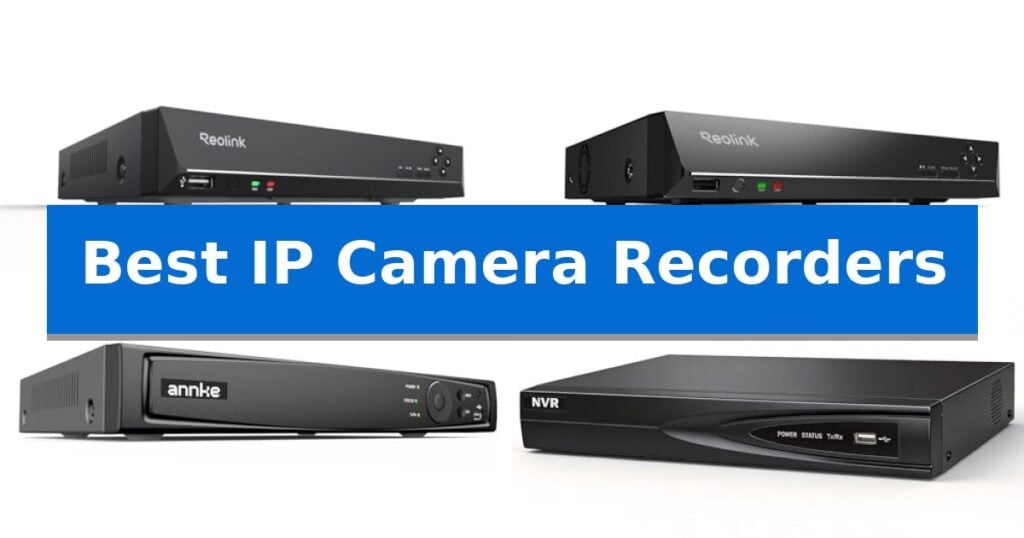
Best IP Camera Recorders in 2026
Quick Comparison
| Product | Best For | Key Strength | Score |
|---|---|---|---|
| Reolink RLN8-410 NVR | Best Overall | Dedicated 24/7 recording with a pre-installed 2TB hard drive. | 4.9 |
| Reolink RLN16-410 NVR | Best for Large-Scale IP Installations | 16-channel PoE support simplifies installation with single-cable power and data. | 4.6 |
| ANNKE 12MP 8CH PoE NVR | Best for High-Resolution IP Monitoring | Simplified installation using single-cable PoE for power and data. | 4.4 |
| Seculink NVR608-Q1/8P PoE NVR | Best for ONVIF Compatibility | Built-in 8-port PoE switch simplifies cabling and power management. | 4.9 |
| ANNKE 8CH Hybrid DVR | Best for Mixed Analog-IP Systems | Hybrid 5-in-1 compatibility supports both analog and IP camera standards. | 4.5 |
How We Chose
- Compatibility with specific IP camera protocols and ecosystems.
- Storage capacity and the flexibility to expand via internal or external drives.
- Ease of setup, focusing on Power over Ethernet (PoE) functionality for streamlined cabling.
- Remote access capabilities through dedicated mobile and desktop applications.
- Advanced features such as AI-based motion detection support and video compression standards.
1 Reolink RLN8-410 NVR — Best for Reolink Camera Ecosystems
Managing a multi-camera security setup requires a reliable central hub, and the Reolink RLN8-410 NVR simplifies this by acting as a dedicated, 24/7 recording station. This unit is designed specifically to handle up to 8 Reolink PoE IP cameras, providing a centralized location for both power and data transmission through a single Ethernet connection per camera.
The system utilizes Power over Ethernet (PoE) technology, which allows for a clean installation with cables up to 330ft long. Because the NVR features a built-in DHCP function, it can operate as an independent system, maintaining functionality even without an active internet connection. This makes it a robust choice for users who prioritize local control and consistent uptime for their security footage.
Storage is handled by a pre-installed 2TB hard drive, which supports continuous 24/7 recording across all connected channels. For users requiring longer retention periods, the unit includes an eSATA port that allows for the addition of an external 8TB hard drive. The device also integrates seamlessly with Reolink’s intelligent camera features, including human, vehicle, and animal detection, ensuring that playback remains organized and searchable.
Remote access is managed through the free Reolink App and Client software, which is available for mobile and desktop platforms without monthly subscription fees. The interface provides intuitive navigation for live viewing and footage retrieval, offering a straightforward way to monitor property from any location. Users should ensure their specific Reolink camera models are compatible and that the NVR firmware is updated to the latest version for optimal performance.
Best for: Users who have already invested in the Reolink PoE camera ecosystem and require a dedicated, subscription-free local recording solution.
Skip if: Users who rely on non-Reolink camera brands or those who prefer a cloud-only storage solution without the need for physical hardware.
PROS
- Dedicated 24/7 recording with a pre-installed 2TB hard drive.
- PoE support simplifies installation by combining power and data into one cable.
- No monthly fees for remote access via the Reolink app or client.
- Expandable storage via an eSATA port for up to 8TB of additional capacity.
CONS
- Limited compatibility as it only functions with Reolink PoE IP cameras.
- Firmware updates are required to ensure full functionality with newer camera models.
2 Reolink RLN16-410 NVR — Best for Large-Scale IP Installations
Managing a high-density security installation requires a centralized hub capable of handling multiple high-resolution streams simultaneously. The Reolink RLN16-410 NVR simplifies this by providing a dedicated 16-channel recording solution that utilizes Power over Ethernet (PoE) to transmit both power and data through a single cable for each camera, supporting runs up to 330 feet.
Designed for deep integration within the Reolink ecosystem, this unit supports 24/7 recording to a pre-installed 4TB hard drive, with the option to expand storage by adding an extra 8TB HDD. It is engineered to work exclusively with Reolink PoE IP cameras, including 16MP, 12MP, 4K, 5MP, and 4MP models, ensuring full compatibility with advanced features like human, vehicle, and pet detection.
The system offers flexible management through the free Reolink App and Client, available on iOS, Android, Windows, and Mac. Because the NVR features a built-in DHCP function, it can operate as an independent, locally managed system even without an active internet connection, providing reliable surveillance for your property.
While the unit is powerful, it is a closed ecosystem device. Users must rely on Reolink-branded hardware to maintain full functionality, which is a critical consideration if you are planning to integrate cameras from other manufacturers.
Best for: Users who require a centralized, high-capacity 16-channel surveillance system exclusively using Reolink PoE cameras.
Skip if: Users who need to integrate third-party IP cameras or require a non-proprietary NVR system.
PROS
- 16-channel PoE support simplifies installation with single-cable power and data.
- Pre-installed 4TB hard drive provides immediate capacity for 24/7 recording.
- Independent operation via DHCP allows for local management without internet.
- Full integration with Reolink smart detection features and mobile applications.
CONS
- Exclusively compatible with Reolink IP cameras, limiting hardware flexibility.
3 ANNKE 12MP 8CH PoE NVR — Best for High-Resolution IP Monitoring
Managing high-resolution surveillance requires a robust backend, and the ANNKE 12MP 8CH PoE NVR simplifies this by utilizing a single-cable Power over Ethernet (PoE) system. This design handles both power and data transmission for up to eight cameras, eliminating the need for complex, multi-cable wiring setups while providing up to 30W of output power per port.
Efficiency is central to its operation, as the device supports H.265+ video compression. This standard significantly reduces bandwidth and storage requirements by up to 75% compared to older H.264 formats, facilitating reliable 24/7 recording without sacrificing image quality. The unit is designed for flexibility, supporting both 2.5-inch and 3.5-inch hard drives to accommodate various storage needs.
For those needing intelligent monitoring, the system integrates with ANNKE AI cameras to enable advanced features like human and vehicle detection, line crossing, and region intrusion. While the recorder itself does not contain built-in AI processing, it acts as the central hub for these camera-side analytics. Users can manage live feeds and playback remotely via the ANNKE Vision App, which offers cross-platform support for mobile and desktop devices without requiring monthly subscription fees.
Compatibility is a primary consideration for this system. It is engineered to work optimally with ANNKE IP cameras, specifically the C500, C800, and C1200 series, supporting resolutions up to 12MP. While it is a powerful tool for home or business security, users intending to integrate third-party hardware should consult support to ensure proper functionality.
Best for: Users who want a centralized, high-resolution security hub with simplified PoE installation and no monthly subscription fees.
Skip if: Users who primarily rely on non-ANNKE third-party IP cameras or those who require an NVR with built-in AI processing capabilities.
PROS
- Simplified installation using single-cable PoE for power and data.
- Efficient storage management through H.265+ compression technology.
- No monthly fees for remote access via the ANNKE Vision App.
- High-resolution support for up to 12MP IP cameras.
CONS
- Limited third-party compatibility; optimized specifically for ANNKE hardware.
- No built-in AI processing; relies on camera-side AI features.
4 Seculink NVR608-Q1/8P PoE NVR — Best for ONVIF Compatibility
Managing a multi-camera security setup is simplified with the Seculink NVR608-Q1/8P PoE NVR, which features a built-in 8-port PoE switch. This design allows users to connect and power up to eight IP cameras directly into the recorder, eliminating the need for an external switch and reducing overall installation complexity.
The system is engineered for high-resolution monitoring, supporting up to 8MP IP cameras and providing a 4K HDMI output for clear live viewing and playback. To manage the high data volume associated with high-resolution video, it utilizes H.265+ video compression, which optimizes storage efficiency while maintaining image quality for 24/7 continuous recording.
For enhanced security management, the recorder includes smart motion detection capable of identifying humans and vehicles on specific channels. This functionality is paired with smart search tools that allow for quick retrieval of recorded events, streamlining the process of reviewing footage.
As a wired security system, this unit is ONVIF compatible, ensuring it can integrate with a wide range of third-party IP cameras and NVR systems. This flexibility makes it a practical choice for users looking to build or expand a reliable, centralized surveillance network.
Best for: Users requiring a centralized, wired security system with broad ONVIF compatibility and integrated PoE power for up to eight cameras.
Skip if: Users who prefer a wireless or cloud-based security setup, as this unit is designed specifically for wired PoE connections.
PROS
- Built-in 8-port PoE switch simplifies cabling and power management.
- Supports 4K HDMI output for high-resolution monitoring.
- H.265+ compression maximizes hard drive storage efficiency.
- ONVIF compatibility allows for integration with various third-party cameras.
CONS
- Requires wired Ethernet cabling for all connected cameras.
- Limited to 8-channel capacity for larger surveillance needs.
5 ANNKE 8CH Hybrid DVR — Best for Mixed Analog-IP Systems
Upgrading a security infrastructure often requires balancing the reliability of legacy analog hardware with the high-definition capabilities of modern digital systems. The ANNKE 8CH Hybrid DVR serves as a bridge for this transition, offering a 5-in-1 Hybrid architecture that supports up to 8 analog cameras alongside 2 additional IP cameras. This configuration allows property owners to maintain their existing cabling while integrating newer digital cameras, providing a scalable path for system expansion without a total hardware overhaul.
Data management is handled through Advanced H.265+ Coding, a compression standard that significantly reduces file sizes compared to traditional H.264. By optimizing storage efficiency by up to 80%, this technology enables longer recording retention on the included 1TB Hard Drive without sacrificing stream integrity. This is particularly beneficial for users who require continuous 24/7 monitoring but have limited local storage capacity.
To minimize unnecessary alerts, the system incorporates Smart Human & Vehicle Detection. This AI-driven feature analyzes movement to distinguish between people or vehicles and common environmental triggers like foliage or pets. By filtering out these false positives, the system ensures that notifications sent to your mobile device are relevant, reducing the time spent reviewing non-essential footage.
Management is centralized through the ANNKE Vision App, which facilitates remote access via smartphones, tablets, or web browsers. The unit is designed with a focus on data security, ensuring compliance with GDPR standards for secure transmission. Whether accessing the feed over 3G, 4G, or 5G networks, users can maintain oversight of their property with consistent, secure connectivity.
Best for: Home or business owners looking to integrate legacy analog cameras with modern IP surveillance in a single, unified recording system.
Skip if: Users who require a purely IP-based NVR system or those who need more than two IP camera connections will find this hybrid model's analog-focused architecture limiting.
PROS
- Hybrid 5-in-1 compatibility supports both analog and IP camera standards.
- AI-powered detection filters out false alarms from non-human movement.
- H.265+ compression significantly increases storage efficiency.
- Secure remote access via mobile and desktop applications.
CONS
- Limited to 2 IP camera channels, which may restrict future expansion for all-digital setups.
Best IP Camera Recorders Buying Guide
Understanding NVR vs. DVR Systems
The primary difference between an NVR (Network Video Recorder) and a DVR (Digital Video Recorder) lies in how they process video data. An NVR is designed specifically for IP cameras, receiving processed video streams over a network. This allows for higher resolution and more advanced analytics, provided your cameras are compatible with the recorder's software.
A DVR typically processes video at the recorder level, making it the standard choice for analog camera systems. However, modern hybrid DVRs offer flexibility by supporting both analog and IP inputs, allowing users to transition to digital surveillance without replacing their entire existing infrastructure.
The Importance of PoE Connectivity
Power over Ethernet (PoE) is a critical feature for simplifying the installation of IP camera systems. By using a single Ethernet cable to transmit both power and data, you eliminate the need for separate power supplies at every camera location.
When choosing an NVR, ensure it has enough PoE ports to accommodate your current camera count, plus room for future expansion. This centralized power management also makes it easier to keep your system running during power outages if the recorder is connected to a battery backup.
Storage and Compression Standards
Continuous 24/7 recording requires significant storage space. Most recorders come with a pre-installed hard drive, but you should verify if the unit supports eSATA or additional internal drive bays for future upgrades. Always check the maximum supported capacity to ensure your system won't run out of space prematurely.
Look for support for H.265+ video compression. This technology significantly reduces the file size of your recordings without sacrificing image quality, allowing you to store more footage on the same hard drive compared to older H.264 standards.
Remote Access and Software Integration
A modern security recorder should offer a robust mobile app or desktop client for remote viewing. This allows you to check live feeds, review playback, and receive motion alerts from anywhere with an internet connection.
Check if the software supports smart detection features, such as human, vehicle, or animal recognition. These features are often dependent on the camera's capabilities, but the recorder must be able to properly interpret and display these alerts within its interface.
Compatibility and ONVIF Standards
If you are mixing and matching camera brands, ONVIF compatibility is essential. This industry-standard protocol allows devices from different manufacturers to communicate with each other, ensuring that your recorder can recognize and display video from third-party cameras.
While many recorders work best within their own brand ecosystem, an ONVIF-compliant NVR provides the flexibility to integrate specialized cameras, such as doorbells or wide-angle units, into your central security hub.
Frequently Asked Questions
Can I use any IP camera with these recorders?
Not necessarily. While many recorders support ONVIF for third-party cameras, some models are optimized for specific brands. Always check the manufacturer's compatibility list to ensure your cameras will work correctly.
What happens when the hard drive is full?
Most security recorders feature 'loop recording.' Once the storage is full, the system will automatically overwrite the oldest footage with new recordings, ensuring you always have the most recent data.
Do I need an internet connection to use these recorders?
No, these systems can function as an independent, local network. However, an internet connection is required if you wish to use remote viewing features or receive push notifications on your mobile device.
Can I add more cameras later?
Yes, provided your recorder has available channels. If you have an 8-channel NVR, you can add up to 8 cameras. If you reach the limit, you would need to upgrade the recorder or add a second unit.
What is the maximum cable length for PoE cameras?
Most PoE systems support Ethernet cable runs up to 330 feet (100 meters). Beyond this distance, you may experience signal degradation or power loss, requiring a PoE extender or a switch.
Conclusion: Our Top Pick
Selecting the right hardware is the foundation of a reliable home or business security system. For those already invested in or planning to build a robust surveillance network, the Reolink RLN8-410 NVR stands out as our top recommendation. Its seamless integration with Reolink's wide range of PoE cameras and intuitive, fee-free software make it a highly efficient choice for managing high-resolution 24/7 recording.
While the system is optimized for its own ecosystem, the flexibility it offers through its plug-and-play PoE setup and expandable storage makes it a practical solution for most users. Ensure you keep your firmware updated to maintain compatibility with the latest camera models and features.