
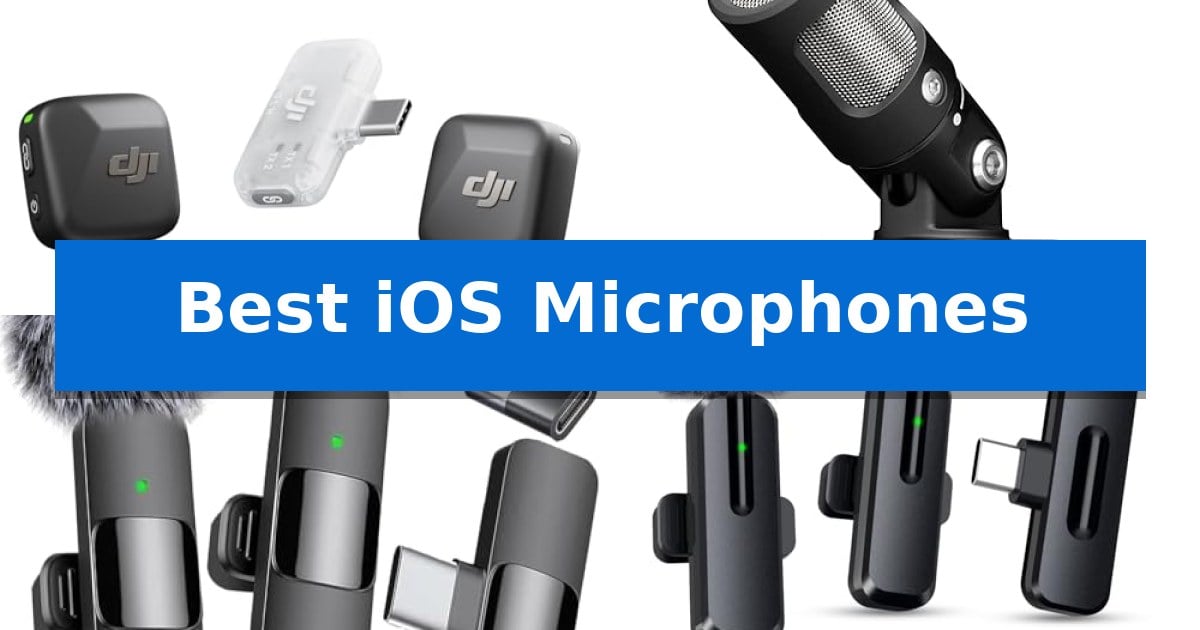
Capturing high-quality audio on an iPhone or iPad often requires more than the built-in hardware, especially when wind, distance, or background noise are involved. Whether you are filming a vlog, recording an interview, or capturing live music, finding the right gear is essential for professional results.
Our guide explores the Best iOS Microphones currently available, focusing on ease of use, connectivity, and audio clarity. We have analyzed various models to help you identify which device best fits your specific recording environment and mobile setup.
Best iOS Microphones in 2026: Compact Audio for Mobile Creators
Quick Comparison
| Product | Best For | Key Strength | Score |
|---|---|---|---|
| DJI Mic Mini | Best Overall | Ultralight 10g transmitter design for discreet, comfortable wear. | 4.9 |
| Shure MV88 USB-C Microphone | Professional Audio for Mobile Devices | Auto Level Mode for consistent, hands-free gain adjustment. | 4.4 |
| Mini Mic Pro | Seamless Plug-and-Play Performance | Plug-and-play connectivity via included USB-C and Lightning adapters. | 4.7 |
| Wedaniya Wireless Mini Microphone | Broadcast-Ready Audio on the Go | Dual-receiver compatibility with both USB-C and Lightning connectors. | 4.9 |
| Zoom iQ7 iOS Microphone | Best for High-Fidelity Music Recording | Rotatable capsule for flexible stereo positioning | 4.5 |
How We Chose
- Compatibility with modern iOS devices via USB-C or Lightning connectors.
- Audio quality features such as noise cancellation and gain control.
- Portability and weight for on-the-go content creation.
- Ease of setup, prioritizing plug-and-play functionality.
- Versatility in recording environments, including outdoor and studio settings.
1 DJI Mic Mini — Ultralight Choice for Mobile Creators
Capturing professional-grade audio for mobile content creation requires balancing portability with sound clarity. The DJI Mic Mini addresses this by offering an ultralight 10g transmitter design that remains discreet during interviews, vlogging, or livestreaming sessions, ensuring the hardware never distracts from the subject.
Engineered for versatility, the system features powerful noise cancellation with two distinct levels: Basic for quiet indoor environments and Strong for bustling outdoor settings. To ensure audio integrity, the device includes automatic limiting to prevent clipping, maintaining consistent levels even when input signals peak unexpectedly during dynamic recording sessions.
Connectivity is a primary strength, utilizing a USB-C mobile receiver for plug-and-play compatibility with the iPhone 17/16/15 series, Android devices, tablets, and PCs. For users within the DJI ecosystem, the transmitters offer direct connection to devices like the Osmo Pocket 3 and Osmo Action 5 Pro, eliminating the need for a receiver while maintaining high-quality 48 kHz, 24-bit audio.
Reliability is supported by a 300m maximum transmission range, providing stability in crowded areas. With a combined operating time of 11.5 hours using the two included transmitters and mobile receiver, the kit is well-suited for extended recording sessions without frequent recharging.
Best for: Mobile content creators and vloggers who require a lightweight, plug-and-play wireless audio solution for smartphones, tablets, and DJI ecosystem cameras.
Skip if: Users who require professional XLR inputs, phantom power, or complex multi-channel mixing capabilities beyond a standard two-transmitter setup.
PROS
- Ultralight 10g transmitter design for discreet, comfortable wear.
- Powerful noise cancellation with two selectable intensity levels.
- 300m transmission range for stable outdoor recording.
- Universal USB-C compatibility with modern smartphones and PCs.
CONS
- Requires specific adapter for older DJI Osmo Mobile series hardware.
- Limited to two-transmitter configuration for larger multi-person setups.
2 Shure MV88 USB-C Microphone — Professional Audio for Mobile Devices
Achieving professional-grade audio on a mobile device often requires overcoming the limitations of built-in hardware, particularly in unpredictable environments. The Shure MV88 USB-C Microphone addresses this by offering a compact, plug-and-play solution designed specifically for creators who need to capture high-quality sound without complex external interfaces.
This microphone distinguishes itself with an integrated Auto Level Mode, which dynamically adjusts gain in real time to prevent clipping or overly quiet recordings. For those working in challenging acoustic spaces, the built-in Real-Time Denoiser actively processes audio to reduce background interference, ensuring that spoken word or ambient recordings remain clear.
Versatility is central to its design, featuring four selectable polar patterns—stereo, mono cardioid, mono bi-directional, and raw mid-side. This allows users to switch between focused directional recording and wider ambient capture depending on the specific requirements of the project. The unit connects directly to USB-C devices, facilitating an immediate workflow for vlogging or field recording.
To ensure consistent performance, users should verify their firmware is updated to v1.3.0.3 or later via the MOTIV Mix application. This maintenance step is essential for maintaining compatibility with current iOS versions and ensuring the microphone functions as intended during mobile sessions.
Best for: Content creators and vloggers who require a portable, versatile microphone with automated gain and noise reduction for mobile recording.
Skip if: Users who require a dedicated XLR interface or those who prefer a stationary, large-diaphragm studio microphone for professional voiceover work.
PROS
- Auto Level Mode for consistent, hands-free gain adjustment.
- Real-Time Denoiser to mitigate background noise in dynamic environments.
- Four selectable polar patterns for flexible recording configurations.
- Instant USB-C connectivity for streamlined mobile workflows.
CONS
- Firmware dependency requires occasional updates via software to maintain compatibility.
3 Mini Mic Pro — Seamless Plug-and-Play Performance
Capturing high-quality audio for mobile content creation is simplified with the Mini Mic Pro, a compact wireless lavalier system designed to bypass complex setups. By utilizing a direct plug-and-play interface, this device eliminates the need for external apps or Bluetooth pairing, allowing creators to begin recording immediately upon connection.
The Mini Mic Pro features a versatile design that includes both USB-C and Lightning adapters, ensuring compatibility across a wide range of iPhones, Android devices, tablets, and laptops. Weighing under an ounce, the microphone is built for portability, making it a practical choice for field interviews, voiceovers, or spontaneous social media content.
To maintain audio clarity in diverse environments, the system includes dedicated wind protection, specifically high-density foam and a dead cat cover to minimize background noise. The integrated rechargeable battery supports up to 6 hours of continuous recording per charge, and the system allows for simultaneous device charging during use, preventing power interruptions during long sessions.
Engineered for durability, the Mini Mic Pro is constructed from premium materials intended for daily use. The system provides a straightforward, friction-free workflow that prioritizes rapid deployment, making it a functional tool for creators who require consistent audio performance without the overhead of professional-grade studio equipment.
Best for: Content creators and mobile journalists who need a reliable, plug-and-play wireless audio solution for smartphones and tablets.
Skip if: Users who require multi-channel professional XLR inputs, advanced gain staging, or long-range broadcast-grade transmission distances.
PROS
- Plug-and-play connectivity via included USB-C and Lightning adapters.
- Ultra-portable design weighing less than one ounce.
- Simultaneous charging capability while the microphone is in use.
- Includes wind protection for improved outdoor audio quality.
CONS
- Limited battery life of 6 hours per charge may require planning for extended shoots.
4 Wedaniya Wireless Mini Microphone — Broadcast-Ready Audio on the Go
Capturing professional-grade audio for mobile content creation is simplified with the Wedaniya Wireless Mini Microphone, which features a high-sensitivity design engineered for studio-level vocal clarity. This system is built for creators who need to move quickly, offering a plug-and-play experience that eliminates the need for complex app configurations or Bluetooth pairing.
The system includes both USB-C and Lightning receivers, ensuring broad compatibility with various mobile devices and tablets. For challenging recording environments, the microphone utilizes advanced DSP noise reduction technology paired with high-density sponge and deadcat windshields to isolate voices from background interference and wind, making it a practical choice for outdoor vlogging or busy street interviews.
Usability is enhanced through real-time monitoring, allowing users to connect headphones directly to the receiver to audit audio levels during a session. The interface also provides quick-toggle buttons for Standard, Reverb, and Mute modes, granting immediate control over the recording output without interrupting the workflow.
Designed for portability, the unit weighs under 1oz and is constructed from premium, durable materials intended for frequent daily use. The integrated battery supports up to 6 hours of continuous recording time and reaches a full charge in approximately 1 hour, providing a reliable power cycle for extended production days.
Best for: Content creators and vloggers who require a lightweight, plug-and-play wireless audio solution for mobile devices.
Skip if: Users who require professional XLR connectivity, multi-channel mixing, or advanced gain staging controls for complex studio setups.
PROS
- Dual-receiver compatibility with both USB-C and Lightning connectors.
- Advanced DSP noise reduction and included windshields for clear outdoor audio.
- Real-time monitoring and onboard audio mode toggles for immediate control.
- Ultra-lightweight design under 1oz for maximum portability.
CONS
- Limited 6-hour battery life may require mid-day charging for long production sessions.
5 Zoom iQ7 iOS Microphone — Best for High-Fidelity Music Recording
Capturing professional-grade audio on a mobile device requires a reliable signal path, and the Zoom iQ7 iOS Microphone addresses this by utilizing a direct Lightning connection. This hardware-based interface ensures a stable digital signal, bypassing the potential latency or compression issues sometimes associated with wireless alternatives. Its rotatable capsule design is a standout feature, allowing creators to adjust the microphone orientation for optimal stereo imaging whether they are filming in landscape or portrait mode.
Designed for portability, the device measures just 2.2 inches in height and weighs 0.3 pounds. This compact form factor makes it a practical addition to a mobile kit for musicians, podcasters, or videographers who need to record high-fidelity audio on the go. The microphone integrates with the free handy recorder app, which provides a dedicated interface for managing input levels and monitoring audio in real-time during recording sessions.
To maintain signal integrity, users must place their host iOS device in airplane mode during operation. This step is essential to prevent electromagnetic interference from cellular signals, which can introduce unwanted artifacts into the recording. By adhering to this requirement, creators can ensure that their audio capture remains clean and professional, free from the noise typically caused by active wireless radios.
The Zoom iQ7 iOS Microphone is specifically engineered for devices equipped with a Lightning port. This physical compatibility constraint means it serves as a dedicated tool for older iOS hardware. While this limits its use with newer USB-C devices, it provides a consistent, plug-and-play experience for users within the Lightning ecosystem who prioritize direct, high-quality stereo capture.
Best for: Content creators and musicians who require a portable, high-fidelity stereo microphone for direct recording to Lightning-equipped iOS devices.
Skip if: Users with newer iOS devices featuring USB-C ports or those who require a wireless microphone solution will find this Lightning-based hardware incompatible.
PROS
- Rotatable capsule for flexible stereo positioning
- Direct Lightning connection for reliable digital audio transfer
- Compact and lightweight design for easy transport
- Dedicated app support for enhanced recording control
CONS
- Lightning connector limitation restricts use to older iOS devices
- Airplane mode requirement may interrupt connectivity features
Best iOS Microphones Buying Guide
Connectivity and Compatibility
The most critical factor when choosing an iOS microphone is how it connects to your device. Modern iPhones use USB-C, while older models rely on Lightning. Many current microphones now include adapters or dual-receiver systems to ensure you can switch between devices without needing extra dongles.
Always verify if the microphone requires a specific app for full functionality or if it operates as a native plug-and-play device. Native support is generally preferred for quick, spontaneous recording sessions where you cannot afford to troubleshoot software.
Noise Reduction and Audio Processing
Mobile recording often happens in unpredictable environments, from busy streets to windy outdoor locations. Look for microphones that feature DSP (Digital Signal Processing) or active noise cancellation to isolate your voice from ambient sound.
Some models offer multiple noise-cancellation levels, allowing you to choose between a natural sound for quiet indoor spaces or a stronger setting for loud, crowded areas. This flexibility is vital for maintaining vocal clarity in challenging acoustic conditions.
Polar Patterns and Recording Versatility
The polar pattern determines how the microphone captures sound from different directions. A cardioid pattern is ideal for focusing on a single subject, while stereo or bi-directional patterns are better for capturing ambient sound or two-person interviews.
Advanced microphones may offer selectable polar patterns, giving you the ability to adapt your setup based on whether you are recording a music performance, a podcast, or a simple video blog.
Portability and Build Quality
Since these microphones are intended for mobile use, their physical footprint matters. Ultralight transmitters that clip discreetly onto clothing are preferred for vlogging, as they do not distract from the visual content.
Durability is equally important. Look for microphones that include protective accessories like high-density foam windshields or dead cat covers, which are essential for preventing wind noise during outdoor recordings.
Battery Life and Power Management
Wireless microphones rely on internal batteries, so check the maximum operating time per charge. A reliable microphone should offer at least 6 hours of continuous recording to handle long interview sessions or extended filming days.
Some advanced systems allow you to charge your phone while the microphone receiver is plugged in, preventing your device from dying mid-shoot. This feature is a significant advantage for long-form content creators.
Frequently Asked Questions
Do I need an app to use these microphones?
Most modern iOS microphones are designed for plug-and-play use. However, some professional-grade models may offer companion apps for firmware updates or advanced gain adjustments.
Can I use these microphones with an Android phone?
Many of the microphones listed, especially those with USB-C receivers, are cross-compatible with Android devices, PCs, and tablets.
How do I prevent wind noise while recording outside?
Using a windshield, such as a foam cover or a 'dead cat' (furry windscreen), is the most effective way to reduce wind interference during outdoor recording.
What is the benefit of a wireless lavalier microphone?
Wireless lavalier microphones provide freedom of movement, allowing the speaker to move away from the camera without being tethered by cables, which is ideal for vlogging and interviews.
Does the microphone affect my iPhone's battery life?
Wireless receivers draw a small amount of power from your phone. Some models include a pass-through charging port on the receiver, allowing you to keep your phone charged while recording.
Conclusion: Our Top Pick
Choosing the right microphone depends on your specific recording needs, whether you prioritize ultra-portability for vlogging or high-fidelity sound for music. For most creators, a wireless system that offers reliable transmission and effective noise cancellation provides the best balance of performance and convenience.
Our top recommendation is the DJI Mic Mini. Its ultralight design, combined with active noise cancellation and long battery life, makes it an excellent choice for mobile creators who need a dependable, plug-and-play solution for high-quality audio in any environment.