
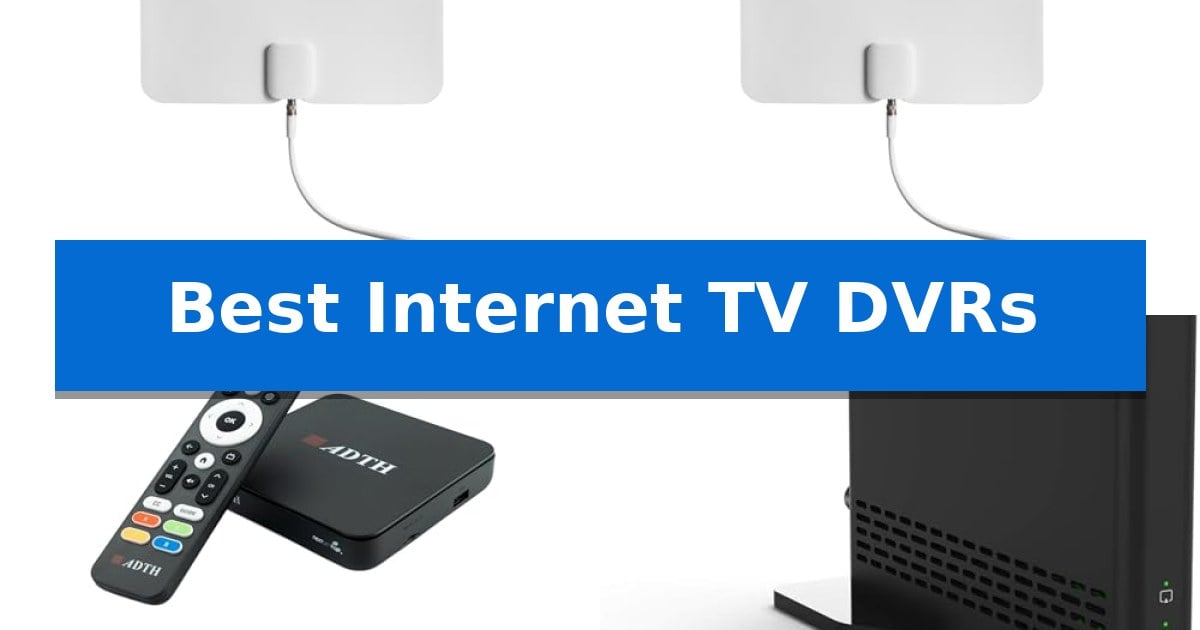
Finding a reliable way to record and manage local broadcast television without the burden of expensive cable contracts is a priority for many modern households. The Best Internet TV DVRs provide a bridge between traditional over-the-air signals and the convenience of digital streaming, allowing you to watch, pause, and record your favorite shows on your own terms.
Whether you are looking to cut the cord entirely or simply want to integrate local network programming into your existing streaming ecosystem, these devices offer diverse solutions. From multi-tuner systems designed for busy households to compact, future-ready tuners, we have evaluated the top options to help you find the right fit for your home entertainment setup.
Best Internet TV DVRs in 2026: Simplify Local Channel Access
Quick Comparison
| Product | Best For | Key Strength | Score |
|---|---|---|---|
| Tablo 4th Gen 2-Tuner DVR | Best Overall | No subscription fees or ongoing contracts required. | 4.9 |
| Tablo 4th Gen 4-Tuner DVR | Best for Multi-Show Recording | Four ATSC 1.0 tuners for simultaneous recording and viewing flexibility. | 4.6 |
| ADTH NextGen TV Box | Best for Future-Proofing | Dual-tuner support for both ATSC 3.0 and ATSC 1.0 broadcasts. | 4.5 |
| Sling AirTV 2 Streamer | Best for Sling Integration | Dual-tuner capability allows for recording two shows simultaneously. | 4.8 |
| DIRECTV Gemini Air | Best for Cloud-Based Recording | Compact HDMI dongle design that attaches directly to the TV. | 4.3 |
How We Chose
- Tuner Capacity: We assessed how many simultaneous recordings or streams each device supports to determine its suitability for different household sizes.
- Network Integration: We prioritized devices that offer flexible connectivity options, including Wi-Fi and Ethernet, to ensure smooth streaming performance.
- Storage Flexibility: We examined whether devices provide built-in storage or support external drives to accommodate varying recording needs.
- Compatibility: We verified the range of supported streaming platforms and devices to ensure the DVR fits into your current home entertainment environment.
- Subscription Requirements: We focused on the ongoing cost of ownership, favoring systems that do not require monthly fees for core DVR functionality.
1 Tablo 4th Gen 2-Tuner DVR — Best for Cord Cutting
The Tablo 4th Gen 2-Tuner DVR simplifies the cord-cutting experience by integrating live broadcast television with streaming content into a single, subscription-free interface. By utilizing its two ATSC 1.0 tuners, the device enables users to record one program while simultaneously watching another, providing essential flexibility for managing local network broadcasts like ABC, CBS, FOX, and NBC.
Designed for modern home networks, this DVR offers whole-home access by streaming content to multiple devices, including smart TVs, streaming players, and mobile platforms. The setup process is streamlined through a dedicated mobile app and a provided QR code, requiring only a connection to an indoor antenna and your existing Wi-Fi or Ethernet network to begin operation.
The included 35-mile range TV antenna provides the necessary hardware to capture local signals, while the internal storage capacity supports over 50 hours of recorded content. Because the system is designed to function without ongoing contracts or hidden fees, it serves as a straightforward solution for households looking to maintain access to local channels without recurring monthly costs.
Compatibility is a key consideration, as the device is specifically engineered for smart TVs and streaming devices like Roku, Amazon Fire TV, and Apple TV. It is important to note that the system is not compatible with non-smart TVs, standard computers, or Apple TV Voice over, necessitating a check of your existing hardware before integration.
Best for: Cord cutters who want to record and stream local broadcast TV across multiple smart devices without monthly subscription fees.
Skip if: Users who rely on non-smart televisions, desktop computers, or require compatibility with specific accessibility features like Apple TV Voice over.
PROS
- No subscription fees or ongoing contracts required.
- Dual ATSC 1.0 tuners allow for simultaneous recording and viewing.
- Includes a 35-mile range TV antenna for immediate local signal reception.
- Supports whole-home streaming to various smart TVs and mobile devices.
CONS
- Compatibility limitations exclude non-smart TVs and standard computers.
- Antenna performance is subject to local topography and signal obstructions.
2 Tablo 4th Gen 4-Tuner DVR — Best for Multi-Show Recording
The Tablo 4th Gen 4-Tuner DVR simplifies local broadcast management by integrating four ATSC 1.0 tuners into a single device, allowing users to record one live channel while simultaneously watching another. This setup provides the flexibility to manage multiple shows without the need for recurring service contracts or hidden monthly fees.
Designed for modern home networks, the unit connects via Wi-Fi or Ethernet to distribute content across various platforms. It supports whole-home access, enabling playback on smartphones, tablets, and streaming devices like Roku, Amazon Fire TV, and Apple TV. The inclusion of a 35-mile range TV antenna ensures that users have the necessary hardware to begin receiving over-the-air signals immediately upon setup.
Installation is streamlined through the Tablo app, which guides users through the process using a QR code. Once connected, the system provides access to major networks such as ABC, CBS, FOX, and NBC, alongside a curated selection of free live streaming TV channels. The device features a compact footprint, measuring approximately 5 by 5 inches, making it easy to integrate into existing entertainment centers.
While the system is robust for cord-cutters, it is important to note that it is designed specifically for smart TVs and streaming players. It is not compatible with non-smart TVs, standard computers, or Apple TV Voice over, so verifying device compatibility before purchase is essential for a seamless experience.
Best for: Users looking to record multiple over-the-air broadcast shows simultaneously without monthly subscription fees.
Skip if: Users who rely on non-smart TVs or desktop computers for their primary viewing, as this device requires specific smart platform compatibility.
PROS
- Four ATSC 1.0 tuners for simultaneous recording and viewing flexibility.
- No subscription fees or long-term contracts required.
- Included 35-mile range antenna for immediate out-of-the-box functionality.
- Broad device support across major streaming platforms and mobile devices.
CONS
- Limited compatibility with non-smart TVs and desktop computers.
- HDMI cable not included in the box.
3 ADTH NextGen TV Box — Best for Future-Proofing
Modernizing your home entertainment setup often involves balancing legacy hardware with the latest broadcast standards. The ADTH NextGen TV Box simplifies this transition by integrating an ATSC 3.0 and ATSC 1.0 tuner into a single, compact device, allowing users to access free over-the-air broadcasts without recurring cable or subscription fees.
Beyond its core tuning capabilities, this unit functions as a capable DVR. It features 64GB of built-in storage, enabling users to pause, rewind, and record live television directly out of the box. For those requiring more space, the device supports expanded capacity via external USB flash drives or microSD cards, providing flexibility for time-shifted viewing.
Designed for high-definition clarity, the receiver supports 4K HDR output, ensuring that compatible broadcasts are displayed with improved contrast and color depth. The inclusion of Dolby Digital Plus and AC-4 audio support further enhances the experience, delivering clearer dialogue and immersive sound when paired with an appropriate audio system.
Setup is straightforward, requiring only an HDMI connection to your display and a coaxial input for your antenna. The device also includes dual-band Wi-Fi and Bluetooth, which facilitate firmware updates and future-proofing for evolving broadcast enhancements. Its small footprint makes it a practical addition to various environments, from primary living rooms to secondary TVs or RVs.
Best for: Cord-cutters who want to access and record free over-the-air ATSC 3.0 and 1.0 broadcasts in 4K resolution.
Skip if: You do not have access to an over-the-air TV antenna or live in an area without broadcast coverage.
PROS
- Dual-tuner support for both ATSC 3.0 and ATSC 1.0 broadcasts.
- 64GB of onboard storage included for immediate DVR functionality.
- Supports 4K HDR output for high-quality visual performance.
- Compact, space-saving design suitable for diverse installation locations.
CONS
- Requires a separate TV antenna for signal reception.
- Smart TV required to utilize advanced audio formats like AC-4.
4 Sling AirTV 2 Streamer — Best for Sling Integration
The Sling AirTV 2 Dual-Tuner Local Channel Streamer bridges the gap between over-the-air broadcasting and modern streaming by connecting a single HD antenna to your home Wi-Fi network. This device enables the distribution of local channels like ABC, CBS, Fox, and NBC to various connected devices throughout your home, including Roku, Fire TV, and Android TV platforms.
Designed for those who want to consolidate their viewing experience, the Sling AirTV 2 Streamer allows users to integrate local channels directly into the Sling TV app interface. While the system is optimized for Sling, a subscription is not required to access and stream local content. The unit features a dual-tuner setup, allowing for the simultaneous recording of up to two shows when paired with an external hard drive.
Functionality extends beyond the living room with mobile support, enabling users to watch live or recorded content on iOS and Android devices even when away from home. Users can manage their library by setting single-episode or series recordings. When playing back recorded content, the system supports standard playback controls such as pausing, rewinding, and fast-forwarding.
To utilize this system, a stable broadband internet connection of at least 25Mbps is recommended. The setup requires an HD antenna and a compatible media streaming player. Because the DVR functionality relies on external storage, users must provide their own hard drive to enable recording capabilities.
Best for: Users who want to integrate over-the-air local channels into their existing streaming ecosystem and watch live or recorded TV on multiple devices.
Skip if: Users who do not have an HD antenna or those who prefer a traditional cable box experience without the need for external media players or hard drives.
PROS
- Dual-tuner capability allows for recording two shows simultaneously.
- Seamless integration of local channels into the Sling TV app interface.
- Mobile access for watching live or recorded content away from home.
- Wireless distribution of local channels to multiple streaming devices in the house.
CONS
- External hard drive required for DVR functionality and sold separately.
- HD antenna required for signal reception and sold separately.
5 DIRECTV Gemini Air — Best for Cloud-Based Recording
The DIRECTV Gemini Air simplifies home entertainment by consolidating live television, on-demand content, and major streaming applications into a single, compact HDMI dongle. Designed for internet-only customers, this device eliminates the need for a traditional satellite dish or a bulky cable box, allowing users to plug directly into a TV's HDMI port for immediate access to their subscription services.
Powered by Android TV 11, the device offers a familiar and customizable interface with full access to the Google Play Store. Users can navigate through live channels and streaming platforms like Netflix, Prime Video, and Max using the included voice-enabled remote, which also integrates Google Assistant for hands-free control of the TV and compatible smart home devices.
For those who prioritize time-shifted viewing, the hardware supports Cloud DVR functionality and a 72-hour lookback feature, ensuring that recorded shows and past broadcasts are easily accessible. The unit is engineered for high-definition playback, featuring support for 4K Ultra HD and High Dynamic Range (HDR) to provide clear visuals on compatible displays.
Setup is straightforward, requiring only a Wi-Fi connection to begin streaming. As an official product from an authorized dealer, it provides a streamlined alternative for viewers who want a unified interface for both cable-style live TV and modern streaming apps without the hardware footprint of legacy equipment.
Best for: Users who want to combine live TV and streaming apps in a single, compact device without installing a satellite dish.
Skip if: Users who do not have an active DIRECTV Stream subscription or those who prefer a dedicated, non-subscription-based streaming hardware platform.
PROS
- Compact HDMI dongle design that attaches directly to the TV.
- Unified interface for live TV, on-demand content, and streaming apps.
- Voice remote with integrated Google Assistant.
- Supports 4K HDR streaming for high-quality visuals.
CONS
- Requires a DIRECTV Stream subscription to function.
- Cloud DVR features are dependent on subscription service tiers.
Best Internet TV DVRs Buying Guide
Understanding Tuner Requirements
The number of tuners in your DVR directly dictates how many shows you can record or watch at the same time. A 2-tuner system is generally sufficient for smaller households, allowing you to record one program while watching another.
For larger families or those who frequently record multiple shows simultaneously, a 4-tuner device provides significantly more flexibility. Choosing the right tuner count prevents scheduling conflicts and ensures you never miss a broadcast.
Storage and Recording Capacity
DVRs manage your recorded content either through internal storage or by connecting to an external hard drive. Some devices come with a fixed amount of onboard memory, while others allow you to expand capacity as your library grows.
Consider how much high-definition content you typically store. If you frequently record long series or sports events, prioritizing a device with expandable storage options will provide better long-term value.
Network Connectivity and Streaming
Since these DVRs are designed to stream content to your devices, a stable home network connection is essential. Most units support Wi-Fi, but using an Ethernet cable is often recommended for the most consistent, high-bandwidth performance.
Ensure the device is compatible with your preferred streaming platform, such as Roku, Fire TV, or Apple TV. The ease of the setup process and the responsiveness of the dedicated app are critical factors for a frustration-free experience.
NextGen TV (ATSC 3.0) Compatibility
The transition to ATSC 3.0 technology promises improved signal quality and 4K capabilities for over-the-air broadcasts. If you want to future-proof your setup, look for devices that explicitly support this newer standard alongside legacy ATSC 1.0 signals.
While many current broadcasts still rely on older standards, investing in a NextGen TV-ready tuner ensures your hardware remains relevant as broadcasters upgrade their infrastructure.
Subscription-Free vs. Cloud-Based Models
One of the biggest trade-offs in the DVR market is between subscription-free hardware and cloud-based services. Subscription-free models require a higher upfront investment but eliminate monthly costs.
Cloud-based DVRs often integrate directly with streaming services like DIRECTV Stream, offering a seamless experience at the cost of a recurring subscription fee. Choose based on whether you prefer ownership or service-integrated convenience.
Frequently Asked Questions
Do I need an antenna for these DVRs?
Yes, almost all over-the-air DVRs require a compatible TV antenna to receive local broadcast signals. Some models include an antenna in the box, while others require a separate purchase.
Can I watch my recordings away from home?
Many modern DVRs, such as the Tablo and AirTV series, allow you to stream your recorded content to mobile devices, provided you have a stable internet connection.
Are these devices compatible with all TVs?
Most DVRs are designed for smart TVs and streaming players. They are generally not compatible with older, non-smart TVs unless you connect them through a compatible streaming device.
What is the difference between ATSC 1.0 and ATSC 3.0?
ATSC 1.0 is the current standard for digital TV. ATSC 3.0, or NextGen TV, is the newer standard that supports higher resolutions like 4K and improved audio, though its availability depends on your local broadcasters.
Do I need a high-speed internet connection?
Yes, a consistent, high-speed internet connection is required for the DVR to download program guides, manage recordings, and stream content to your various devices.
Conclusion: Our Top Pick
Selecting the right DVR depends on your specific household needs, such as the number of simultaneous recordings required and your preference for subscription-free hardware. For most users looking to balance performance and ease of use, the Tablo 4th Gen 2-Tuner DVR stands out as the most versatile choice for cord cutting.
This device offers a straightforward, subscription-free experience that integrates well with major streaming platforms. While it requires a stable network connection and a compatible antenna, its ability to pause and record local TV across multiple devices makes it a reliable foundation for any modern home entertainment system.