
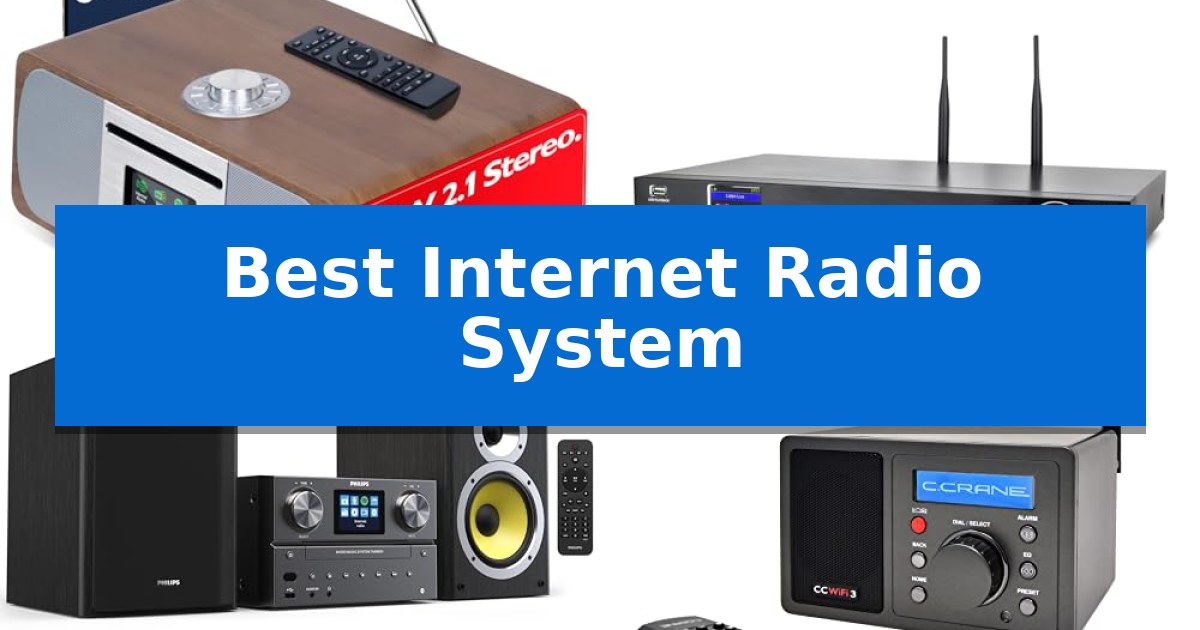
Finding the right audio equipment to bridge the gap between traditional broadcasting and modern streaming can be challenging. Whether you are looking to replace an aging tuner or want a dedicated device to explore thousands of international stations, selecting the Best Internet Radio System requires balancing your existing setup with your listening habits.
Our guide examines five distinct systems, ranging from compact bedside units to full-size components designed for high-fidelity audio stacks. By focusing on connectivity options, user interface design, and output versatility, we help you identify which system integrates most seamlessly into your home environment.
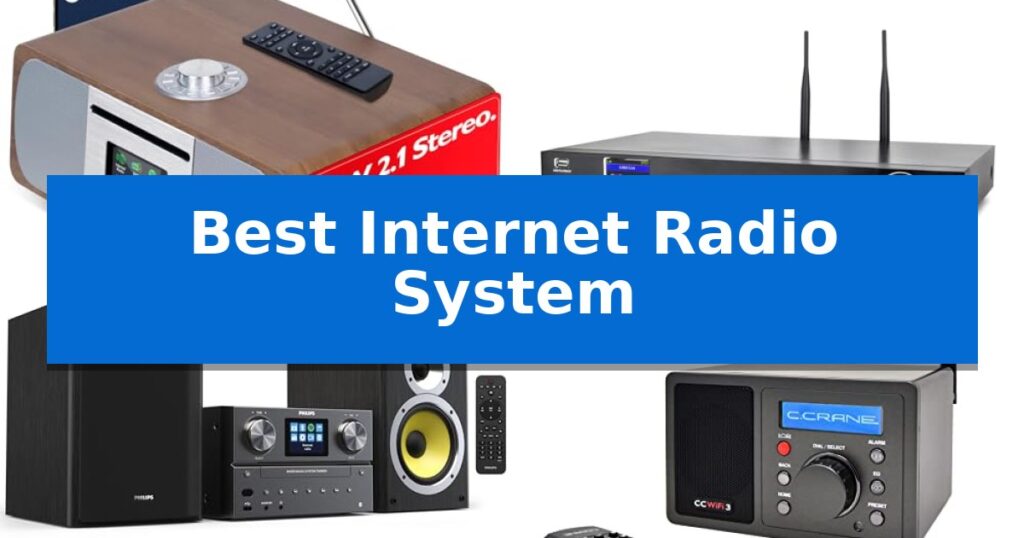
Best Internet Radio System in 2026: Global Audio Access
Quick Comparison
| Product | Best For | Key Strength | Score |
|---|---|---|---|
| Lemega M5P Stereo System | Best Overall | 135 Watts 2.1 Stereo sound with an integrated subwoofer. | 4.9 |
| Ocean Digital WR-50 Internet Radio Tuner | Ideal for Component Audio Stacks | Standard 17-inch component width fits perfectly in traditional stereo stacks. | 4.7 |
| Philips Stereo System | Classic Design with CD Playback | All-in-one functionality including CD, USB, Bluetooth, and Internet Radio. | 4.4 |
| C. Crane CC WiFi 3 Radio | Compact Pick for Bedside Use | Access to 25,000+ internet radio stations globally. | 4.7 |
| Grace Link Internet Radio Tuner | Seamless Smart Home Integration | High-resolution audio support up to 24-bit/192kHz for superior sound quality. | 4.3 |
How We Chose
- Network Connectivity: We assessed the reliability of Wi-Fi and Ethernet options for stable streaming.
- Audio Output Versatility: We prioritized units offering diverse connections like optical, coaxial, and RCA for integration with existing amplifiers.
- User Interface and Control: We examined the ease of navigating station presets and the availability of dedicated apps or remote controls.
- Build and Form Factor: We considered how each unit fits into different home setups, from compact bedside tables to dedicated audio racks.
- Source Flexibility: We looked for additional playback options such as CD support, Bluetooth, and USB media compatibility.
1 Lemega M5P Stereo System — Best All-in-One Hi-Fi Solution
Accessing global audio content requires a versatile interface, and the Lemega M5P Stereo System provides a comprehensive solution by combining WIFI-enabled Internet Radio with traditional FM capabilities. This system is designed for those who want to transition between thousands of digital stations and their own physical media collections without switching devices.
The unit features a 135 Watts 2.1 Stereo configuration with an in-built subwoofer housed in an acoustically engineered solid wood cabinet. Users can refine their listening experience using customisable EQ modes to adjust bass, treble, and mid-range frequencies, ensuring the audio profile matches the content, whether it is music or speech-based programming.
Connectivity is a primary focus, offering Spotify HIFI integration and a dedicated Podcast Player with bookmarking features. The system can be managed via the OKTIV App, which allows for wireless control of settings, presets, and music libraries. A 2.8-inch full-colour display provides visual feedback, including station information and artist artwork.
For those with diverse media needs, the system includes a CD player, Bluetooth streaming, and physical inputs including USB and AUX. With 50 preset modes available, users can store their preferred radio stations and podcasts for rapid access, making it a functional hub for varied home audio requirements.
Best for: Users seeking an all-in-one audio hub that integrates modern streaming services, podcasts, and physical CD playback in a single wooden cabinet.
Skip if: Users who require a portable, battery-operated radio or those with limited shelf space who need a significantly smaller footprint than the 34.5cm width of this unit.
PROS
- 135 Watts 2.1 Stereo sound with an integrated subwoofer.
- Comprehensive connectivity including WIFI, Bluetooth, USB, and AUX.
- OKTIV App control for wireless management of settings and presets.
- 50 preset slots for quick access to radio and podcast favorites.
CONS
- Fixed wooden cabinet design requires a dedicated surface space of 34.5 x 24 cm.
- No internal battery for portable operation.
2 Ocean Digital WR-50 Internet Radio Tuner — Ideal for Component Audio Stacks
Integrating a modern digital audio source into a classic home stereo setup requires a device that respects traditional form factors while offering contemporary streaming capabilities. The Ocean Digital WR-50 Internet Radio Tuner is built specifically for this purpose, featuring a 17-inch wide, full-size chassis with an aluminum front panel that allows it to sit flush within a standard audio component stack.
Beyond its aesthetic fit, the unit provides extensive access to audio content through Wi-Fi or wired Ethernet, supporting over 30,000 internet radio stations and podcasts. Users can manage their listening experience via the 2.4-inch color display using the included IR remote or the front-panel control dial, with the ability to store up to 150 custom presets or manually add stream URLs through a web browser.
Connectivity options are designed for versatility, offering optical (Toslink), coaxial S/PDIF, and stereo RCA outputs to integrate with various amplifiers or DACs. The device also includes Bluetooth 5.0 for wireless streaming from mobile devices, a front-panel 3.5 mm headphone jack for private listening, and a USB port for playing local media files.
For those with existing digital libraries, the tuner supports UPnP/DLNA, enabling seamless streaming from NAS drives or PC media servers. This combination of traditional component design and modern networking protocols makes it a practical solution for listeners looking to modernize their high-fidelity audio systems.
Best for: Audiophiles who want to integrate internet radio and network streaming into a traditional, component-based home stereo system.
Skip if: Users seeking a compact, portable, or battery-powered radio, as this unit is designed for stationary, rack-mounted home audio setups.
PROS
- Standard 17-inch component width fits perfectly in traditional stereo stacks.
- Versatile output options including optical, coaxial, and RCA for high-quality audio integration.
- Direct web management allows for custom station URL entry without needing a smartphone app.
- Dual connectivity via Wi-Fi and Ethernet ensures stable streaming performance.
CONS
- Full-size form factor requires significant shelf space compared to compact tabletop radios.
3 Philips Stereo System — Classic Design with CD Playback
The Philips Stereo System serves as a versatile audio hub for the modern home, combining traditional physical media playback with contemporary wireless streaming capabilities. This all-in-one unit features a built-in CD player, USB playback, and Bluetooth connectivity, allowing users to transition between diverse audio sources without needing multiple devices.
Engineered for sound quality, the system delivers 100W of power through a configuration of dome tweeters and 5.25-inch woofers. The inclusion of bass-reflex ports is designed to enhance low-end performance, while the system offers digital sound controls and presets to tailor the audio output to specific genres like rock, symphony, or hip-hop.
The design prioritizes both aesthetics and functionality, featuring a matte aluminum central unit paired with wooden speaker cabinets. A built-in color display provides visual feedback, showing album art, artist information, and track details. For added convenience, the system includes a remote control and supports a 30-foot wireless Bluetooth range.
Connectivity options extend beyond wireless streaming, with an aux-in port and a dedicated headphone jack for private listening. The system also functions as a tuner for both Internet Radio and local FM stations, with preset functionality to store favorite channels for quick access.
Best for: Users seeking a single, compact audio system that bridges the gap between legacy CD collections and modern streaming services like Spotify.
Skip if: Those requiring a multi-room audio setup or a portable, battery-powered speaker, as this system is strictly AC-powered and designed for stationary home use.
PROS
- All-in-one functionality including CD, USB, Bluetooth, and Internet Radio.
- 100W output with dedicated dome tweeters and 5.25-inch woofers.
- Premium build quality featuring wooden speaker cabinets and a matte aluminum finish.
- Comprehensive control via an included remote and digital sound presets.
CONS
- AC-powered only, limiting placement options to areas near power outlets.
- Stationary design is not intended for portable or outdoor use.
4 C. Crane CC WiFi 3 Radio — Compact Pick for Bedside Use
Accessing global audio content requires a reliable connection, and the C. Crane CC WiFi 3 Internet Radio simplifies this by providing direct entry to over 25,000 stations categorized by genre, location, and popularity. This compact device functions as a versatile bedside companion, integrating a clock, dual alarm, and sleep timer into a small 6.5-inch wide footprint.
Performance is anchored by a 5dBi external antenna designed to optimize 2.4 GHz Wi-Fi reception throughout the home. For users who prefer local media, the unit includes Bluetooth receiving capabilities, allowing for wireless audio streaming from smartphones or tablets. The system also supports custom station additions by submitting URLs via Skytune.
Audio output is highly customizable, featuring an adjustable equalizer with five frequency bands centered at 105, 300, 850, 2400, and 6800 Hz, plus a 3D depth setting. A dedicated line-out port enables connection to external amplified speakers or stereo receivers, providing flexibility for those seeking to integrate the radio into a larger home audio setup.
Usability is managed through a large remote control that provides quick access to presets, while the front panel includes an adjustable backlight for comfort in low-light environments. The package includes a 5-volt AC adapter and a USB power cord, backed by a 2-year limited warranty and U.S.-based technical support.
Best for: Users seeking a compact, dedicated internet radio for bedside use that offers extensive station access and flexible audio output options.
Skip if: Users who require a high-fidelity standalone speaker system with integrated subwoofers or those who do not have a stable 2.4 GHz Wi-Fi network.
PROS
- Access to 25,000+ internet radio stations globally.
- Bluetooth receiver functionality for streaming from mobile devices.
- Advanced adjustable equalizer and 3D depth settings for personalized audio.
- Includes 5dBi external antenna for improved Wi-Fi range.
CONS
- Limited to 2.4 GHz Wi-Fi connectivity.
- Requires external amplification for high-volume or high-fidelity listening.
5 Grace Link Internet Radio Tuner — Seamless Smart Home Integration
Integrating high-fidelity streaming into a traditional audio setup requires a bridge that maintains signal integrity while offering modern connectivity. The Grace Link Internet Radio Tuner serves this purpose by acting as a dedicated network-to-analog interface, allowing users to bypass the limitations of older receivers by adding comprehensive streaming capabilities without requiring built-in speakers.
This system provides access to over 100,000 internet radio stations and supports a wide range of platforms, including Spotify Connect, Pandora, Amazon Music HD, and SiriusXM. With Chromecast built-in, the device enables seamless casting from mobile devices and laptops. It handles high-resolution audio files up to 24-bit/192kHz, ensuring that digital sources are processed with high fidelity before reaching your existing amplifier or powered speakers.
Control is managed through the Grace smartphone app, the included infrared remote, or the front panel interface featuring a 2.8-inch color display. The unit is built for versatility, offering both analog and digital outputs, as well as analog inputs for connecting legacy equipment like turntables or CD players. Connectivity options include an RJ45 Ethernet jack, dual-band Wi-Fi, and Bluetooth 5.0, which functions as both a receiver and a transmitter for private listening via headphones.
The Grace Link Internet Radio Tuner is a specialized tool for those looking to modernize a high-quality stereo system. By including a 5-band equalizer and support for UPnP/DLNA media servers, it provides granular control over the audio output, making it a robust choice for enthusiasts who prioritize sound quality and ecosystem integration over all-in-one smart speaker solutions.
Best for: Audiophiles looking to add modern high-resolution streaming and internet radio capabilities to an existing high-quality stereo receiver or amplifier.
Skip if: Users seeking an all-in-one audio solution with built-in speakers, as this device requires an external amplifier or active speaker system to produce sound.
PROS
- High-resolution audio support up to 24-bit/192kHz for superior sound quality.
- Versatile connectivity including analog, digital, Bluetooth 5.0, and Ethernet.
- Chromecast built-in for broad compatibility with mobile and desktop streaming apps.
- Dedicated analog inputs to integrate legacy audio equipment into a modern network.
CONS
- No built-in speakers, necessitating an external stereo system or powered speakers.
- Subscription-based services like SiriusXM require separate accounts.
Best Internet Radio System Buying Guide
Understanding Audio Connectivity
The Best Internet Radio System often depends on how you plan to connect it to your speakers. If you already own a high-quality amplifier or receiver, a dedicated tuner component is usually the best choice, as it focuses on signal processing rather than amplification.
Conversely, if you need an all-in-one solution, look for systems that include built-in speakers and subwoofers. These units simplify your setup by combining the tuner, amplifier, and speakers into a single, cohesive cabinet.
Network Stability and Streaming
Reliable internet connectivity is the backbone of any digital radio experience. While Wi-Fi is convenient, a system that includes an RJ45 Ethernet port provides a more stable connection, which is crucial for high-resolution streaming without interruptions.
Check if the device supports dual-band Wi-Fi, as this helps avoid interference from other household devices. A strong, external antenna can also significantly improve signal reception in rooms further away from your router.
Station Management and Presets
With tens of thousands of stations available globally, efficient management is essential. Look for systems that offer a large number of customizable presets, allowing you to save your favorite news, music, and podcast channels for quick access.
Some advanced units allow you to add custom stream URLs via a web browser. This feature is invaluable if you have specific niche stations that are not automatically indexed by the system's default directory.
Integration with Smart Home Ecosystems
Modern radio systems often act as hubs for your digital music library. Features like Chromecast built-in or support for services like Spotify Connect allow you to control playback directly from your smartphone or tablet.
Consider whether you need a system that can stream audio to other devices in your home. Multi-room capability can transform your listening experience, allowing you to synchronize audio across different rooms or zones.
Physical Design and Display
The physical interface matters when you want to change stations without reaching for your phone. A full-color display is highly recommended, as it provides clear information about the station, artist, and album artwork.
Consider the dimensions of the unit, especially if you have limited shelf space. A wooden cabinet not only provides a classic aesthetic but can also contribute to better acoustic performance compared to plastic enclosures.
Frequently Asked Questions
Do I need a subscription to use an internet radio system?
Most internet radio stations are free to access. However, some specific services integrated into these systems, such as SiriusXM or premium tiers of music streaming platforms, may require a separate subscription.
Can I connect an internet radio tuner to my old stereo receiver?
Yes. If your receiver has analog RCA inputs or digital optical/coaxial inputs, you can connect an internet radio tuner component to it to bring modern streaming capabilities to your vintage audio stack.
What is the advantage of a system with an Ethernet port?
An Ethernet port provides a wired connection to your router, which is generally more stable and faster than Wi-Fi. This helps prevent buffering issues during high-resolution audio playback.
Can I play my own music files through these systems?
Many internet radio systems support UPnP/DLNA, allowing you to stream music files stored on your PC or NAS drive. Some also include USB ports for playing music directly from a flash drive.
How do I control the radio if I don't want to use an app?
Most of the systems listed here come with a dedicated IR remote control and front-panel buttons, allowing you to navigate menus and change stations without needing a smartphone or app.
Conclusion: Our Top Pick
Selecting the right system depends on whether you need an integrated hi-fi solution or a component tuner to enhance your existing setup. For those seeking a complete, high-quality audio experience, the Lemega M5P Stereo System stands out as the most versatile choice, combining a powerful 2.1 stereo system with extensive streaming options and a premium wooden cabinet.
While other options like the Ocean Digital tuner are excellent for audiophiles with dedicated stacks, the Lemega M5P offers the best balance of ease of use and acoustic performance for most home environments. Its ability to handle CDs, internet radio, and Bluetooth streaming makes it a comprehensive hub for all your audio needs.