
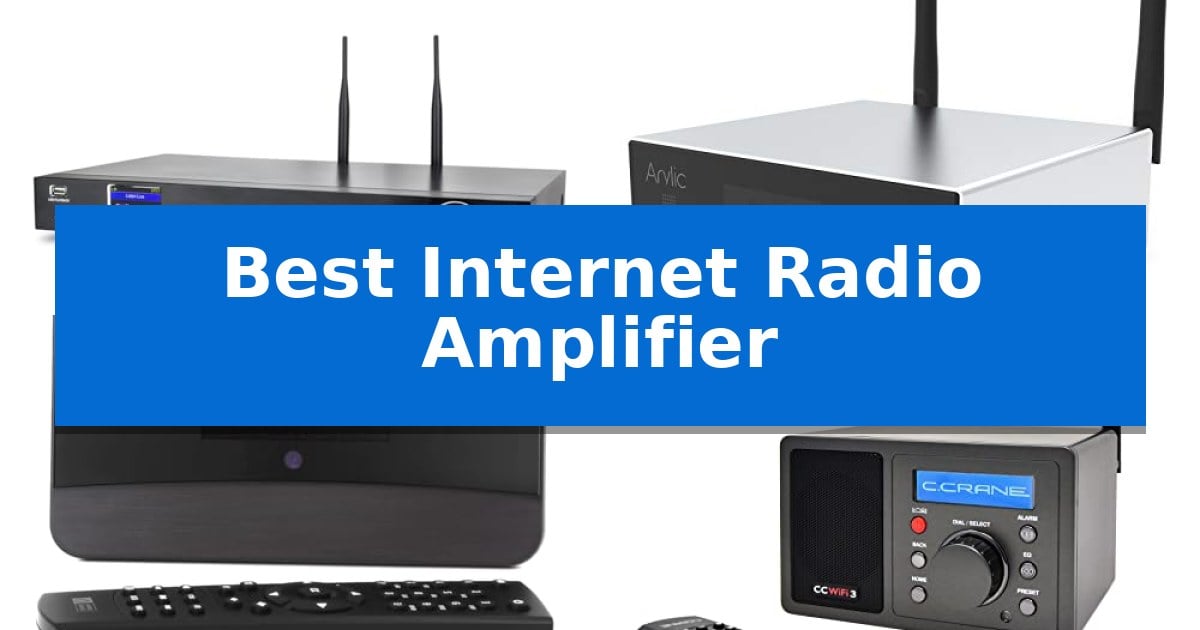
Finding the right hardware to bring global streaming into a traditional home audio environment can be a challenge. Whether you are looking to revitalize a vintage receiver or add modern streaming capabilities to a high-end stereo stack, the Best Internet Radio Amplifier or tuner serves as the essential bridge between your local speakers and the vast world of digital broadcasts.
Our selection focuses on devices that prioritize signal stability, versatile output options, and ease of use. By evaluating how these units handle network connectivity and integrate with existing amplifiers, we help you identify the hardware that best matches your specific listening habits and current audio equipment.
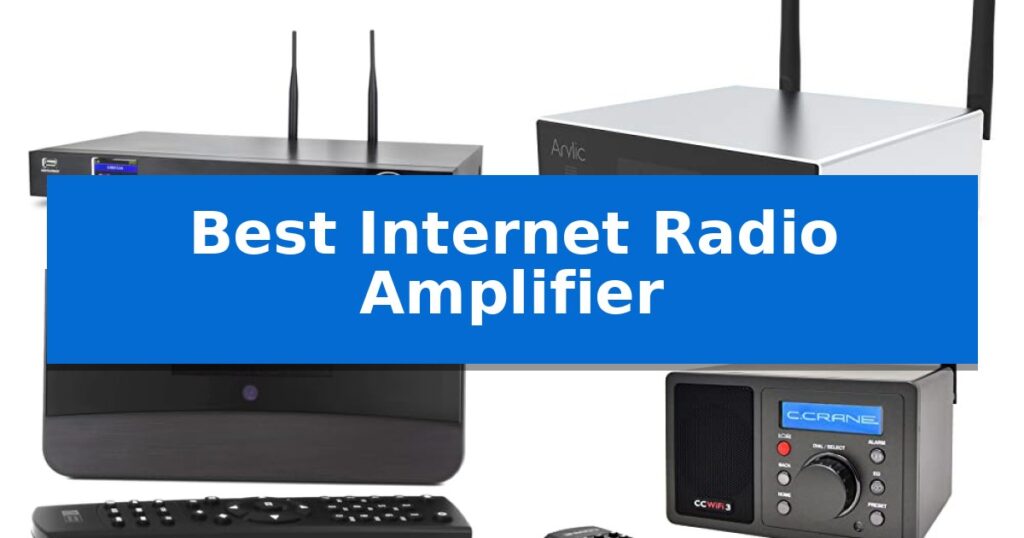
Best Internet Radio Amplifier in 2026
Quick Comparison
| Product | Best For | Key Strength | Score |
|---|---|---|---|
| Ocean Digital WR-50 Internet Radio Tuner | Best Overall | Standard 17-inch component width fits seamlessly into existing home stereo racks. | 4.9 |
| Arylic Up2stream S50 Pro+ Preamplifier | High-Res Wireless Streaming Preamplifier | High-resolution audio support via SABER ESS9023 DAC and aptX HD. | 4.6 |
| Ocean Digital WR-03M Internet Radio Receiver | Compact Tuner for Existing Amplifiers | Versatile connectivity including Wi-Fi, LAN, and Bluetooth for diverse streaming sources. | 4.7 |
| C. Crane CC WiFi 3 Radio | Clear Reception with Line-Out | Extensive station access with over 25,000 categorized internet radio options. | 4.8 |
| ACEMAX M5 AudioCast Adapter | Smart Streaming for Passive Speakers | Multi-room audio support for synchronized playback across multiple units. | 4.5 |
How We Chose
- Connectivity Versatility: Assessing the range of output interfaces, including optical, coaxial, and RCA, to ensure compatibility with diverse amplifier setups.
- Network Reliability: Evaluating support for both wired Ethernet and Wi-Fi to maintain stable, uninterrupted streaming of global stations.
- Control Interface: Analyzing the ease of navigation through dedicated remote controls, web-based management, or mobile applications.
- Integration Potential: Determining how well each unit fits into existing stereo stacks or connects to passive speaker systems.
- Streaming Protocol Support: Checking for compatibility with DLNA, UPnP, and AirPlay to ensure flexible media playback from local and online sources.
1 Ocean Digital WR-50 Internet Radio Tuner — Full-Size Component for Stereo Stacks
Integrating a modern digital audio source into a classic home stereo setup is simplified by the Ocean Digital WR-50, a full-size component featuring a 17-inch wide aluminum front panel designed to match traditional audio equipment stacks. This unit functions as a central hub for diverse audio streams, providing access to over 30,000 internet radio stations and podcasts via Wi-Fi or a wired RJ45 Ethernet connection.
The Ocean Digital WR-50 offers extensive versatility for both modern streaming and legacy media. Users can connect the tuner to an existing amplifier or receiver using optical, coaxial, or stereo RCA outputs. For personal listening, a front-mounted 3.5 mm headphone jack is included, while Bluetooth 5.0 functionality allows for wireless audio streaming from mobile devices.
Navigation is handled through a 2.4-inch color display, which can be operated via the included IR remote or the front-panel control dial. For those with local digital libraries, the device supports UPnP/DLNA streaming from NAS drives or PCs, and features a front-panel USB port for playing music files directly from flash drives.
Management of the tuner is streamlined through a web-based interface, allowing users to organize up to 150 custom presets or manually add specific station stream URLs without needing a dedicated smartphone app. This approach provides a stable, hardware-focused control experience that avoids the complexities of frequent software updates or account-based ecosystems.
Best for: Audiophiles and home theater enthusiasts looking to add internet radio and network streaming capabilities to a traditional, component-based stereo stack.
Skip if: Users seeking a compact, portable, or battery-powered radio, as this unit requires a permanent location in a stereo rack and a dedicated power connection.
PROS
- Standard 17-inch component width fits seamlessly into existing home stereo racks.
- Versatile output options including optical, coaxial, and RCA for broad compatibility.
- Web-based management allows for easy preset and stream URL organization without app dependency.
- Dual connectivity via Wi-Fi or wired Ethernet ensures stable network performance.
CONS
- Large physical footprint may be too bulky for smaller desk or shelf setups.
- Lacks integrated amplification, requiring an external receiver or amplifier to drive speakers.
2 Arylic Up2stream S50 Pro+ Preamplifier — High-Res Wireless Streaming Preamplifier
Transforming a traditional stereo system into a modern streaming hub requires a versatile bridge, and the Arylic Up2stream S50 Pro+ Preamplifier serves as a centralized command unit for high-resolution audio. By integrating aptX HD Bluetooth 5.0 and a SABER ESS9023 DAC, this device enables stable, high-fidelity wireless playback from a wide array of digital sources.
The unit functions as a comprehensive audio hub, offering extensive connectivity options including RCA analog input/output, optical input/output, coaxial output, and a dedicated subwoofer output. This flexibility allows users to integrate the preamplifier into existing home audio setups, supporting lossless formats such as FLAC, WAV, and APE for listeners prioritizing audio clarity.
Managing your audio environment is streamlined through the 4STREAM app, which provides granular control over multi-room and multi-zone streaming configurations. Users can adjust equalization, manage presets, and handle firmware updates directly from their mobile devices or via a web browser by accessing the device's IP address.
Beyond wireless streaming, the system supports a variety of protocols including AirPlay, DLNA, and UPnP, ensuring compatibility with major music services like Spotify, TIDAL, and Qobuz. The inclusion of a 12V trigger output further enhances its utility, allowing for automated power control of connected amplifiers or other compatible audio equipment.
Best for: Users looking to add high-resolution wireless streaming and multi-room capabilities to an existing traditional stereo or home audio system.
Skip if: Users who require a built-in power amplifier to drive passive speakers directly, as this unit functions strictly as a preamplifier.
PROS
- High-resolution audio support via SABER ESS9023 DAC and aptX HD.
- Versatile connectivity including optical, coaxial, and subwoofer outputs.
- Multi-room and multi-zone streaming control via the 4STREAM app.
- Broad protocol support including AirPlay, DLNA, and UPnP.
CONS
- Requires external amplification to power passive speakers.
- App-dependent setup for advanced features and multi-room grouping.
3 Ocean Digital WR-03M Internet Radio Receiver — Compact Tuner for Existing Amplifiers
Integrating modern digital audio into a legacy home stereo system requires a specialized component that bridges the gap between internet connectivity and traditional amplification. The Ocean Digital WR-03M Internet Radio Receiver serves this purpose by acting as a dedicated, speaker-less tuner that feeds high-fidelity audio directly into your existing setup.
Designed for versatility, this unit provides multiple output options including stereo line-out and optical output, ensuring compatibility with a wide range of amplifiers and receivers. Because it lacks an internal speaker driver, it functions purely as an audio source, making it an ideal choice for users who already own high-quality speakers and amplifiers but lack modern streaming capabilities.
The device offers extensive connectivity through Wi-Fi or LAN, granting access to thousands of global internet radio stations via Skytune. Beyond radio, it supports UPnP and DLNA streaming, allowing you to play music directly from networked PCs or NAS drives. For quick, local playback, the integrated Bluetooth receiver enables seamless streaming from smartphones and tablets.
Navigation is managed through a 3.2-inch color screen and an included full-function remote control. Users can manage playlists, adjust EQ sound modes, and configure multiple alarms or sleep timers. The interface also provides an option to display a clock with adjustable dimmer settings, making it a functional addition to a home audio rack or desktop setup.
Best for: Audiophiles and home audio enthusiasts who want to add internet radio and network streaming capabilities to an existing amplifier or stereo system.
Skip if: Users looking for an all-in-one radio solution with built-in speakers will need a different product, as this unit requires an external amplifier and speaker setup.
PROS
- Versatile connectivity including Wi-Fi, LAN, and Bluetooth for diverse streaming sources.
- HiFi integration ready with dedicated optical and stereo line-out ports.
- Smart streaming support via UPnP and DLNA for home network media access.
- Comprehensive control via a 3.2-inch color display and included remote.
CONS
- No built-in speaker, requiring an external audio system for sound output.
4 C. Crane CC WiFi 3 Radio — Clear Reception with Line-Out
Expanding your audio horizons requires more than just a standard receiver; it demands a dedicated interface capable of pulling global content directly from the web. The C. Crane CC WiFi 3 Internet Radio provides this gateway, featuring access to over 25,000 radio stations categorized by location and genre, all managed through a reliable Wi-Fi connection.
Beyond its streaming capabilities, this device functions as a versatile hub for your existing audio equipment. It includes a line-out connection designed to integrate with an amplified speaker system or an external stereo receiver, allowing you to route high-clarity internet audio through your preferred home setup. For those who prefer a more personal experience, the unit features an adjustable equalizer with settings centered at 105, 300, 850, 2400, and 6800 Hz, alongside a 3D depth setting to tailor the output to your specific listening preferences.
The device is built for practical, everyday use, measuring a compact 6.5 inches wide by 3.9 inches high. It serves as an effective bedside companion with a dual alarm system, a sleep timer ranging from 15 to 180 minutes, and an adjustable backlight. Connectivity is further enhanced by Bluetooth receiving, which allows you to stream audio directly from a smartphone or tablet, while the included 5dBi external antenna helps maintain stable 2.4 GHz Wi-Fi reception throughout the home.
Navigation is streamlined through an included large-sized remote control, providing quick access to your favorite stations. Users can save up to 10 presets directly on the remote, with a total capacity of over 100 presets available in a sequence list. With its combination of streaming versatility, external audio integration, and compact design, it offers a focused solution for listeners looking to modernize their radio experience.
Best for: Listeners who want to integrate thousands of global internet radio stations into an existing amplified speaker or home stereo system.
Skip if: Users who require a standalone, high-wattage speaker system with built-in amplification, as this device functions primarily as a tuner and requires external speakers for audio playback.
PROS
- Extensive station access with over 25,000 categorized internet radio options.
- Flexible audio integration via a dedicated line-out for external amplifiers or receivers.
- Customizable sound profile using an adjustable five-band equalizer and 3D depth settings.
- Convenient connectivity including Bluetooth receiving and a high-gain 5dBi external antenna.
CONS
- Requires external amplification to produce sound, as it does not contain a built-in high-power speaker.
- Limited to 2.4 GHz Wi-Fi, which may be slower than 5 GHz networks in congested environments.
5 ACEMAX M5 AudioCast Adapter — Smart Streaming for Passive Speakers
The ACEMAX M5 AudioCast Adapter enables wireless audio streaming by connecting to your existing speaker system via an AUX input, effectively upgrading traditional hardware into a modern smart audio setup. This compact device facilitates high-quality music playback over a 2.4 GHz Wi-Fi network, allowing users to cast audio directly from smartphones, tablets, or PCs.
Designed for versatility, the adapter supports multiple streaming protocols including AirPlay (1), DLNA, and UPnP. This compatibility ensures that users can stream content from a wide range of applications. For those who prefer curated content, the device is Spotify and Internet Radio ready, with direct support managed through the dedicated AudioCast app.
The system supports multi-room music playback, allowing users to group multiple units together to synchronize audio across different areas or play distinct tracks on individual speakers simultaneously. Setup is streamlined through the free app, which handles the connection to most standard Wi-Fi routers.
Measuring approximately 2 inches in width and length, the ACEMAX M5 AudioCast Adapter maintains a minimal footprint while integrating into existing home audio environments. It is important to note that the package does not include a power adapter, requiring users to source a compatible power supply for operation.
Best for: Users looking to add wireless streaming, multi-room functionality, and internet radio support to their existing wired speaker systems.
Skip if: Users who require a built-in amplifier to drive passive speakers, as this device only provides a signal to an existing audio system and does not include a power adapter.
PROS
- Multi-room audio support for synchronized playback across multiple units.
- Broad compatibility with AirPlay, DLNA, and UPnP protocols.
- Direct integration for Spotify and internet radio via the AudioCast app.
- Compact, low-profile design that fits easily into existing setups.
CONS
- Power adapter not included in the package.
- Requires an existing speaker system with an AUX input to function.
Best Internet Radio Amplifier Buying Guide
Understanding Connectivity Standards
The primary function of an internet radio tuner is to provide a high-quality signal to your existing amplifier. Look for units that offer optical (Toslink) or coaxial S/PDIF outputs if you want to maintain a pure digital signal path to your DAC or receiver. These connections minimize interference and ensure the best possible audio fidelity.
For older analog-only systems, ensure the device features stereo RCA outputs. These allow you to connect the tuner directly to any auxiliary or line-level input on your amplifier, providing a straightforward way to add modern streaming to classic hardware.
Network Stability and Streaming
Reliable audio streaming depends heavily on your network connection. While Wi-Fi offers flexibility in placement, a wired Ethernet (RJ45) connection is often superior for high-bitrate audio, as it eliminates the potential for interference or signal drops common in crowded wireless environments.
If you must use Wi-Fi, prioritize devices that include external antennas. These provide significantly better range and signal strength, ensuring that your radio stations remain clear and buffer-free even if the unit is placed inside a cabinet or away from your router.
Control and User Experience
Managing thousands of radio stations requires an intuitive interface. Devices that offer web-based management allow you to easily add custom stream URLs and manage presets from a computer browser, which is often more efficient than using a small screen on the unit itself.
A full-function remote control remains a critical feature for those who prefer not to rely on a smartphone app. Look for units that provide direct access to presets and volume control, as this allows for a more traditional, tactile listening experience.
Multi-Room and Local Media
Many modern internet radio adapters support UPnP and DLNA protocols, which allow you to stream your own digital music collection from a NAS drive or PC. This transforms your tuner into a comprehensive media hub for your entire home library.
If you want to expand your system, look for multi-room streaming capabilities. This feature allows you to group multiple compatible devices together, enabling you to play the same audio across different rooms simultaneously, provided they are on the same network.
Form Factor and System Integration
Consider the physical footprint of the device in relation to your current setup. A full-size component with a standard 17-inch width is designed to stack perfectly with other high-fidelity equipment, offering a clean, professional look.
Conversely, compact tuners or adapters are ideal for hidden installations or smaller spaces. These units can often be tucked behind an amplifier or placed on a shelf without dominating your decor, while still providing the same essential streaming functionality.
Frequently Asked Questions
Do I need an external amplifier for these devices?
Most internet radio tuners and adapters are designed as line-level sources. While some may have a small headphone jack, they generally require connection to an external amplifier, receiver, or powered speakers to drive traditional passive speakers.
Can I add my own radio stations?
Many of the listed devices support custom URL entry. This is typically managed through a web browser interface by entering the device's IP address, allowing you to add specific streams that may not be in the default database.
What is the benefit of an optical output?
An optical output carries a digital audio signal directly to your amplifier or DAC. This bypasses the internal digital-to-analog converter of the tuner, allowing your higher-quality external equipment to handle the signal processing.
Is a wired Ethernet connection better than Wi-Fi?
A wired Ethernet connection is generally more stable and less prone to interference than Wi-Fi. It is recommended for the most consistent streaming experience, especially if you are listening to high-resolution audio files.
Can these devices play music from my computer?
Yes, if the device supports UPnP or DLNA, it can access music files stored on your PC or NAS drive, provided all devices are connected to the same local network.
Conclusion: Our Top Pick
Choosing the right hardware depends on your existing setup and how you prefer to interact with your music. For those building a dedicated stereo stack, the Ocean Digital WR-50 Internet Radio Tuner stands out as an excellent choice due to its full-size component design, robust connectivity options, and easy-to-use web management interface.
This unit provides the necessary flexibility to integrate seamlessly with high-fidelity systems while offering the stability of both wired and wireless connectivity. By balancing traditional component aesthetics with modern streaming protocols, it serves as a reliable and comprehensive solution for accessing global radio and digital media.