
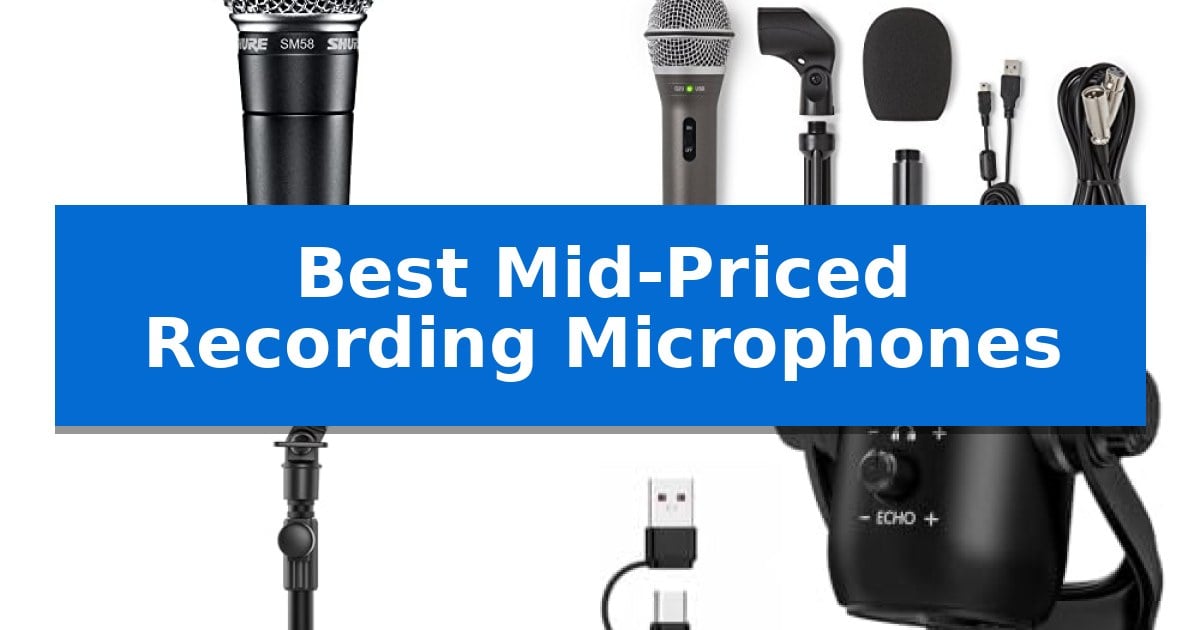
Finding the right gear for your home studio often feels like a balancing act between professional quality and budget constraints. When you need reliable audio for podcasting, streaming, or vocal recording, you do not necessarily need to spend thousands of dollars to achieve a clean, broadcast-ready sound. The Best Mid-Priced Recording Microphones offer a sweet spot, providing the essential clarity and build quality required for serious content creation without the steep entry cost of high-end studio equipment.
Whether you are looking for the versatility of a hybrid USB/XLR setup or the rugged reliability of a classic dynamic mic, there are several excellent options available today. This guide examines key models that excel in vocal reproduction, noise rejection, and ease of use, helping you make an informed decision based on your specific recording environment and technical needs.
You may also want to compare Best Mid-Priced Portable FLAC MP3 Players, Best Mid-Priced PC Laptops, and Best Mid-Priced On-Ear Headphones.
Best Mid-Priced Recording Microphones
Quick Comparison
| Product | Best For | Key Strength | Score |
|---|---|---|---|
| Shure SM58 Dynamic Vocal Microphone | Best Overall | Legendary vocal clarity with a midrange lift that enhances vocal presence. | 4.9 |
| Samson Q2U Dynamic Microphone | Versatile USB and XLR Connectivity | Dual-output design featuring both USB-C and XLR connectivity. | 4.7 |
| MAONO PD200W Hybrid Podcast Microphone | Flexible Wireless and Wired Recording | Hybrid connectivity supporting wireless, USB, and XLR interfaces. | 4.8 |
| ZealSound Podcast Microphone | Feature-Rich with On-Mic Controls | On-mic controls for gain, echo, and monitoring volume. | 4.5 |
| TONOR TC777 USB Microphone | Simple Plug-and-Play Desktop Setup | Plug-and-play USB 2.0 connectivity for immediate use. | 4.5 |
How We Chose
- Connectivity Options: Evaluating whether a microphone offers USB, XLR, or hybrid connections to ensure compatibility with your existing interface or computer.
- Pickup Patterns: Focusing on cardioid designs that prioritize vocal clarity while minimizing unwanted background noise and room reflections.
- Build Quality: Assessing the durability of the housing and the quality of included accessories like stands, shock mounts, and pop filters.
- On-Mic Controls: Checking for integrated features like gain adjustment, mute buttons, and headphone monitoring that simplify real-time audio management.
- Frequency Response: Looking for tuned responses that enhance vocal presence and reduce the need for heavy post-production processing.
1 Shure SM58 Dynamic Vocal Microphone — Industry Standard for Live Vocals
Achieving professional vocal clarity in a home studio or on stage often hinges on the reliability of your hardware, and the Shure SM58 Pro XLR Dynamic Vocal Microphone remains a cornerstone for this purpose. Known for its finely tuned frequency response with a subtle midrange lift, this microphone is engineered to deliver warm, articulate vocals that effectively cut through any mix.
Designed for versatility, the Shure SM58 Pro XLR Dynamic Vocal Microphone utilizes a precision cardioid pickup pattern. This uniform design focuses tightly on the sound source while actively minimizing background noise and unwanted feedback, making it a dependable choice for both live performances and controlled recording environments.
Usability is enhanced by an integrated pop protection system. A refined spherical grille and built-in filter work together to reduce plosives, breath, and wind noise, preserving vocal balance without requiring external accessories. This design choice simplifies your setup while maintaining high audio standards.
Built for longevity, the microphone features road-ready durability with a rugged metal construction and a reinforced stand adapter. These elements ensure the device can withstand the physical demands of frequent touring and professional use, backed by a 2-year warranty.
Best for: Performers and podcasters who require a durable, industry-standard microphone that excels at isolating vocals in noisy or live environments.
Skip if: Users who require a USB-connected microphone for plug-and-play computer recording without an external audio interface or XLR mixer.
PROS
- Legendary vocal clarity with a midrange lift that enhances vocal presence.
- Precision cardioid pickup that effectively rejects off-axis background noise.
- Integrated pop filter and spherical grille design to minimize plosives.
- Rugged metal construction built to withstand professional touring demands.
CONS
- XLR connection only, requiring an external interface or mixer for digital recording.
2 Samson Q2U Dynamic Microphone — Versatile USB and XLR Connectivity
The Samson Q2U USB/XLR Dynamic Microphone provides a dual-output design that allows users to connect directly to a computer via USB-C or to professional audio interfaces using an XLR cable. This flexibility makes it a practical choice for those who need to transition between simple plug-and-play setups and more complex studio environments without changing hardware.
Designed as a dynamic handheld microphone, this unit is built to capture sound while minimizing background noise, which is beneficial for recording in untreated spaces. The inclusion of a tripod desktop stand, tripod extension, mic clip, and windscreen ensures that users have the necessary accessories to begin recording immediately upon unboxing.
The integration of both USB-C and XLR connectivity enables the microphone to adapt to various workflows, whether you are recording a podcast on a laptop or tracking vocals through a dedicated mixer. Its compact form factor, measuring approximately 10.05 inches in length, allows for easy integration into crowded desk setups or travel kits.
While the Samson Q2U USB/XLR Dynamic Microphone offers significant versatility, it is important to note its role as a dynamic microphone, which typically requires closer proximity to the sound source compared to condenser alternatives. The provided 2-year warranty supports the long-term utility of this recording pack for consistent use.
Best for: Users who require a versatile microphone that can switch between USB-C digital recording and professional XLR analog workflows.
Skip if: Users who specifically require a high-sensitivity condenser microphone for capturing distant sound sources or subtle acoustic nuances.
PROS
- Dual-output design featuring both USB-C and XLR connectivity.
- Comprehensive accessory pack including a tripod stand, extension, and windscreen.
- Dynamic capsule helps reduce unwanted background noise in home recording environments.
CONS
- Dynamic design requires the user to remain close to the microphone for optimal signal capture.
- Physical footprint of the included tripod stand may occupy significant desk space.
3 MAONO PD200W Hybrid Podcast Microphone — Flexible Wireless and Wired Recording
The MAONO PD200W Hybrid Podcast Microphone offers a versatile recording solution by integrating wireless, USB, and XLR connectivity into a single dynamic microphone. Designed for creators who need flexibility, this device allows users to switch between a professional wired interface setup and a cable-free wireless workflow, making it a strong contender for those seeking Best Mid-Priced Recording Microphones that adapt to changing production environments.
At the heart of its performance is a 30mm dynamic capsule with a cardioid pickup pattern, which is engineered to focus on vocal clarity while rejecting off-axis background noise. The microphone features advanced three-stage noise cancellation to ensure broadcast-ready audio even in non-treated spaces. It handles high sound pressure levels up to 128dB SPL, providing distortion-free capture for loud vocalists or intense streaming sessions.
Usability is enhanced through the MaonoLink app, which provides access to four master-tuned preset modes and precise control over EQ and reverb settings. For duo-recording scenarios, the system supports connecting two wireless mics to a single receiver, with the ability to record each voice to a separate track for streamlined post-production. The unit also offers up to 60 hours of battery life when RGB lighting is disabled, ensuring reliability during long recording sessions.
The package includes a comprehensive creator kit with a desktop stand, receiver, and necessary cables, providing an immediate out-of-the-box setup. While the wireless freedom is a significant advantage, users should note that specific camera or Lightning accessories required for certain mobile integrations are sold separately, and the unit's weight of approximately 2.9 pounds should be considered if planning to mount it on lightweight boom arms.
Best for: Content creators and podcasters who require a versatile microphone that can switch between wireless, USB, and XLR connectivity for varied recording environments.
Skip if: Users who exclusively require a high-end studio XLR microphone and do not need the added complexity of wireless functionality or software-based processing.
PROS
- Hybrid connectivity supporting wireless, USB, and XLR interfaces.
- Dual-mic support for recording two sources to separate tracks.
- Advanced noise cancellation and 30mm dynamic capsule for vocal clarity.
- Long-lasting battery life of up to 60 hours.
CONS
- External accessories required for specific mobile or camera connections.
- Weight of 2.9 lbs may require a sturdy mounting solution.
4 ZealSound Podcast Microphone — Feature-Rich with On-Mic Controls
The ZealSound Podcast Microphone distinguishes itself with a heavy-duty metal stand and a weighted base, providing a stable foundation for desktop recording that minimizes unwanted movement. This unit is designed for creators who need a versatile, all-in-one solution that integrates essential audio adjustments directly onto the hardware, eliminating the need to navigate complex software menus during a live session.
Engineered for high-fidelity capture, this microphone features 48 kHz/24-bit audio and a cardioid pickup pattern to isolate vocals while reducing ambient room noise. Users can further refine their output using the dedicated noise reduction mode, which is easily toggled via the mute button. The inclusion of a foam windscreen helps manage plosive sounds, ensuring cleaner vocal tracks for podcasting and voice-over work.
Usability is a core focus, with on-mic controls that allow for real-time adjustments of microphone gain, headphone monitoring volume, and echo effects. The zero-latency monitoring capability, accessed through a 3.5 mm jack, provides immediate audio feedback, which is critical for maintaining consistent volume levels. The RGB light ring serves a dual purpose, offering a customizable aesthetic while acting as a clear status indicator for the mute function.
Compatibility is broad, supporting PC, Mac, tablets, and USB-C mobile devices through a straightforward plug-and-play interface. The kit arrives ready to use with a 70.87-inch USB-C to USB-A/USB-C cable, making it a practical choice for those who frequently switch between desktop setups and mobile recording environments.
Best for: Content creators and podcasters who require an all-in-one desktop microphone with physical controls for monitoring and noise reduction.
Skip if: Users who require an XLR-based professional studio setup or those who need a multi-pattern microphone for recording group discussions.
PROS
- On-mic controls for gain, echo, and monitoring volume.
- Zero-latency monitoring via a 3.5 mm headphone jack.
- Stable metal stand with a weighted base.
- Plug-and-play compatibility with PC, Mac, and mobile devices.
CONS
- Cardioid-only pickup pattern limits use for multi-person recording.
- Fixed desktop stand lacks the reach of an external boom arm.
5 TONOR TC777 USB Microphone — Simple Plug-and-Play Desktop Setup
The TONOR TC777 USB Microphone simplifies desktop audio recording with a plug-and-play design that requires no additional drivers or complex assembly. Its cardioid pickup pattern is specifically engineered to capture clear, crisp voice audio from the front while suppressing unwanted background noise, making it a practical choice for podcasting, streaming, and teleconferencing.
Designed for stability and ease of use, the unit includes a non-slip foldable tripod stand that occupies minimal desk space. The inclusion of a shock mount and pop filter helps prevent audio disturbances caused by vibrations or plosive sounds. Users can easily adjust the angle of both the microphone and the pop filter to optimize the recording position.
The TC-777 offers broad compatibility across multiple platforms, including Windows, Mac, and PS4/PS5 systems. It is recognized immediately by common communication software such as Zoom, Skype, and Discord. The device connects via a USB 2.0 data port and comes with a generous 180 cm (70-inch) cable, providing flexibility for various workspace configurations.
This microphone represents a straightforward solution for those who need a reliable, entry-level recording setup without the technical overhead of professional interfaces. While it lacks advanced features like onboard gain control or analog XLR outputs, its focus on simplicity and immediate functionality makes it a functional tool for creators starting their journey.
Best for: The TONOR TC777 USB Microphone is best for beginners and creators who need a simple, reliable, and space-saving audio solution for podcasting, streaming, or remote communication.
Skip if: Skip this microphone if you require professional-grade XLR connectivity, advanced onboard audio processing, or compatibility with Xbox consoles.
PROS
- Plug-and-play USB 2.0 connectivity for immediate use.
- Includes essential accessories: shock mount, pop filter, and tripod.
- Cardioid pickup pattern effectively isolates voice from background noise.
- Broad compatibility with Windows, Mac, and PlayStation consoles.
CONS
- Not compatible with Xbox systems.
- Lacks advanced hardware controls like onboard gain adjustment.
Best Mid-Priced Recording Microphones Buying Guide
Understanding Microphone Types
The two primary types of microphones you will encounter are dynamic and condenser. Dynamic microphones, such as the Shure SM58, are renowned for their ruggedness and ability to handle high sound pressure levels, making them ideal for live performance or untreated rooms where background noise is a concern. They are generally less sensitive to subtle room echoes, which helps keep your recording focused.
Condenser microphones are typically more sensitive and capture a wider frequency range, which can result in a more detailed, 'airy' sound. These are often preferred for controlled studio environments where you want to capture every nuance of a voice. However, they may require more careful placement to avoid picking up unwanted ambient sounds.
The Importance of Connectivity
Your choice of connectivity depends on your current setup. A USB microphone is the most straightforward solution, as it plugs directly into your computer and often includes a built-in audio interface. This is perfect for beginners or those who need a portable, plug-and-play solution for remote work or quick podcasting.
An XLR microphone requires an external audio interface, which provides more control over your signal chain and allows for professional-grade preamps. Many modern microphones, like the Samson Q2U or MAONO PD200W, offer both USB and XLR outputs, giving you the flexibility to start with a simple USB connection and upgrade to a dedicated interface later.
Polar Patterns and Noise Rejection
Most recording microphones feature a cardioid pickup pattern, which is designed to capture sound primarily from the front while rejecting noise from the sides and rear. This is the gold standard for solo recording, as it helps isolate your voice from keyboard clicks, computer fans, or room reflections.
If you are recording in a space that is not soundproofed, a microphone with a tight cardioid pattern is essential. Some models also include noise cancellation features or software integration that can further clean up your audio signal, ensuring your recordings remain crisp and professional even in less-than-ideal conditions.
Essential Accessories
A microphone is only as good as its mounting and filtering. A shock mount is critical for preventing low-frequency vibrations—like bumps on your desk—from reaching the capsule. Similarly, a pop filter or windscreen is necessary to soften plosive sounds, such as 'p' and 'b' consonants, which can otherwise cause harsh peaks in your audio.
Always check if your chosen microphone comes as a complete kit. Many mid-priced options include a desktop stand, cables, and filters, which can save you significant money compared to purchasing these items separately. A stable, weighted stand is particularly important for keeping your mic positioned correctly during long recording sessions.
Monitoring and Real-Time Control
Zero-latency monitoring is a vital feature for any recording setup. By plugging your headphones directly into the microphone, you can hear your voice in real-time without any delay, which helps you maintain consistent volume and tone. This is especially useful for streamers and podcasters who need to stay aware of their audio levels.
Look for microphones that offer on-mic controls for headphone volume, gain, and mute. Having these adjustments at your fingertips allows you to make quick changes without needing to navigate through computer software, keeping your focus entirely on your performance or conversation.
Frequently Asked Questions
Do I need an audio interface for a USB microphone?
No, USB microphones have built-in converters that allow them to connect directly to your computer's USB port, eliminating the need for an external interface.
What is the benefit of a hybrid USB/XLR microphone?
A hybrid microphone provides the convenience of USB for quick setups while offering an XLR output that allows you to connect to professional audio interfaces for higher-quality preamps and long-term studio growth.
How do I reduce background noise in my recordings?
Using a cardioid microphone, positioning the mic closer to your mouth, and using a pop filter are the most effective ways to isolate your voice and minimize room noise.
Are dynamic microphones better than condenser microphones for home studios?
Dynamic microphones are often better for untreated home studios because they are less sensitive to ambient noise and room reflections, whereas condenser microphones are better for quiet, controlled spaces.
Can I use these microphones with a smartphone or tablet?
Many USB microphones are compatible with mobile devices using the appropriate adapter, such as a USB-C to Lightning or USB-C to USB-C cable, though you should verify specific model compatibility.
Conclusion: Our Top Pick
When selecting from the best mid-priced recording microphones, the Shure SM58 Dynamic Vocal Microphone stands out as the most reliable choice for those prioritizing durability and consistent, industry-standard vocal reproduction. Its legendary ability to handle high sound pressure levels and its tight cardioid pattern make it an exceptional tool for both studio recording and live performance, ensuring your voice remains clear and articulate regardless of your environment.
While other options offer more integrated digital features like USB connectivity or RGB lighting, the Shure SM58 remains a staple for its pure performance and rugged build quality. If you require a versatile, all-in-one solution for a home studio, it is worth considering the hybrid models listed above, but for a microphone that will last for years and deliver professional results every time, the Shure SM58 is the definitive recommendation.