
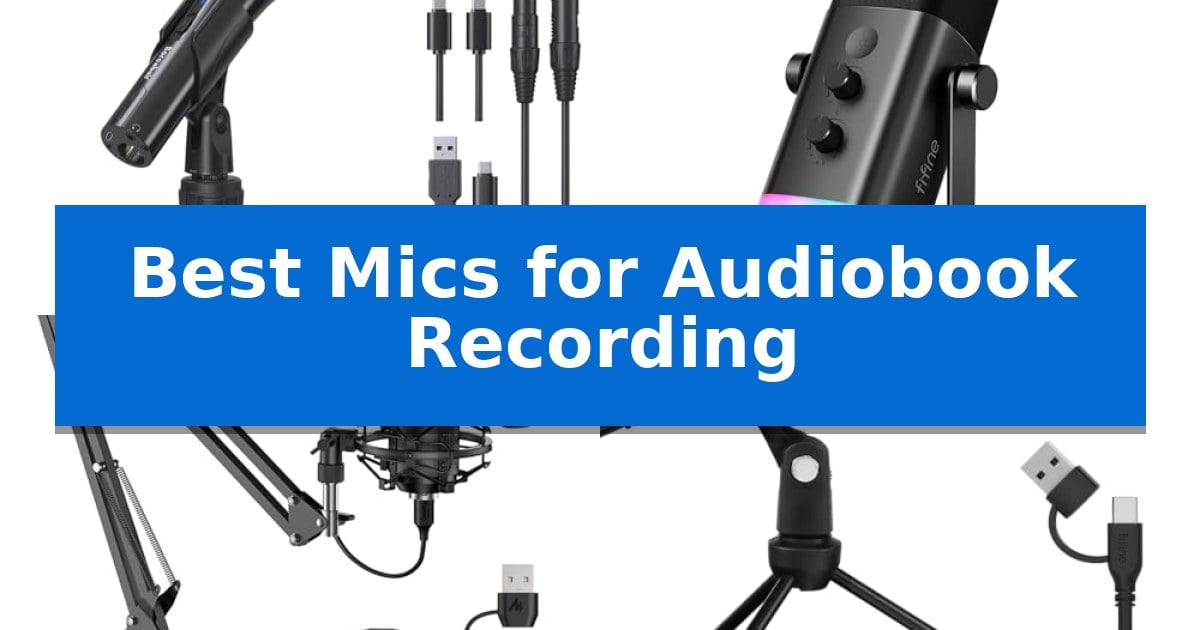
Recording a compelling audiobook requires more than just a good script; it demands audio quality that keeps listeners engaged from the first chapter to the last. Finding the Best Mics for Audiobook Recording is the most critical step in ensuring your narration sounds professional, warm, and free from distracting background noise.
Whether you are a seasoned voice actor or just starting your first home project, the right equipment can make a significant difference in your production workflow. We have analyzed several top-rated microphones to help you identify the best tool for your specific recording environment and technical setup.
You may also want to compare Best Mics for Audio Clarity, Best Mics for Apex Legends, and Best Microsoft Wireless Keyboards.
Best Mics for Audiobook Recording
Quick Comparison
| Product | Best For | Key Strength | Score |
|---|---|---|---|
| Borenbuir BL-550USB Dynamic Microphone | Best Overall | Dual-mode USB/XLR output for flexible studio or portable setups. | 4.9 |
| FIFINE AM8 Dynamic Microphone | Versatile Dual USB and XLR | Dual-connection versatility with both USB and XLR outputs. | 4.6 |
| MAONO A04 Condenser Microphone | High Resolution Vocal Clarity | High-resolution 192kHz/24Bit sampling for detailed vocal reproduction. | 4.3 |
| FIFINE K669B Condenser Microphone | Simple Setup for Voiceovers | Plug-and-play USB connectivity for quick setup. | 4.5 |
| TONOR TC777 Condenser Microphone | Compact Desktop Recording Solution | Plug-and-play USB 2.0 connectivity for rapid setup. | 4.3 |
How We Chose
- Vocal clarity and frequency response tailored for narration.
- Noise reduction capabilities to suppress ambient room hum.
- Connectivity options including USB and XLR compatibility.
- Ease of use and integrated monitoring features.
- Build quality and stability for long-form recording sessions.
1 Borenbuir BL-550USB Dynamic Microphone — Optimized for Audiobook Narration
The Borenbuir BL-550USB Dynamic Microphone is engineered specifically for audiobook creators and narrators, featuring a built-in audio processor calibrated to enhance vocal warmth and richness. This focus on vocal clarity helps narrators achieve professional-grade audio that meets ACX standards, allowing for a more efficient workflow by reducing the need for extensive post-production editing.
Versatility is a core component of this device, as it offers dual-mode USB and XLR outputs. The USB connection provides a simple plug-and-play experience for computers and tablets without requiring additional drivers, while the XLR output allows for integration with professional mixing consoles and audio interfaces. The inclusion of intelligent gain stabilization helps maintain consistent recording levels, which is essential for long-form narration projects.
To ensure high-quality captures, the microphone utilizes a cardioid pickup pattern that effectively minimizes ambient noise, such as computer fan hum or household disturbances. For real-time monitoring, a built-in 3.5mm headphone jack provides zero-latency audio, enabling the narrator to hear their performance clearly without echo. A dedicated volume control button on the microphone body allows for quick adjustments during a session.
Constructed with a sturdy aluminum alloy body, the microphone is designed to withstand frequent use. The kit includes a height-adjustable tripod for stability and a foam windshield to suppress plosive sounds like "p" and "b" during speech. The manufacturer also provides a 24-month replacement service to support long-term use.
Best for: Audiobook narrators and voice actors seeking a versatile, dual-output microphone that simplifies the recording process with built-in gain stabilization and noise reduction.
Skip if: Users who require a specialized studio condenser microphone for ultra-sensitive, high-frequency room capture may find the dynamic nature of this mic less suitable for their specific acoustic environment.
PROS
- Dual-mode USB/XLR output for flexible studio or portable setups.
- Intelligent gain stabilization ensures consistent vocal levels.
- Cardioid pickup pattern effectively reduces ambient background noise.
- Zero-latency monitoring with integrated volume control.
CONS
- Dynamic capsule design may require closer mic placement compared to condenser alternatives.
2 FIFINE AM8 Dynamic Microphone — Versatile Dual USB and XLR
Achieving professional-grade vocal clarity for narration requires a microphone that balances sensitivity with noise rejection. The FIFINE AM8 Dynamic Microphone offers a specialized cardioid dynamic capsule designed to isolate your voice while minimizing off-axis ambient noise, making it a practical choice for home studios where acoustic treatment may be limited.
This microphone provides significant flexibility through its dual-connection design. You can utilize the USB connection for a straightforward, plug-and-play experience that includes convenient features like a tap-to-mute button with an LED indicator and a headphone jack for real-time monitoring. For those looking to integrate the mic into a more complex audio setup, the XLR connection allows you to bypass internal processing and connect directly to a dedicated audio interface or mixer for greater fidelity.
Usability is enhanced by the inclusion of physical controls, such as a mic gain knob that provides tactile resistance for precise adjustments. The unit also features an integrated RGB ring with multiple modes and colors, which can be managed via a dedicated button when using the USB interface. Its construction includes built-in 3/8'' and 5/8'' metal threads, ensuring compatibility with most standard microphone stands without the need for additional adapters.
To ensure the cleanest possible recording, the FIFINE AM8 Dynamic Microphone comes with a windscreen cover designed to mitigate hum from nearby electrical appliances. While the RGB lighting and advanced function keys are exclusive to USB operation, the microphone remains a versatile tool for creators who need to transition between casual podcasting and more formal, interface-driven recording sessions.
Best for: Creators who need a versatile microphone that can switch between simple USB plug-and-play and professional XLR interface setups.
Skip if: Users who require RGB lighting or the integrated mute button functionality, as these features are inactive when using the XLR connection.
PROS
- Dual-connection versatility with both USB and XLR outputs.
- Cardioid dynamic capsule effectively rejects unwanted background noise.
- Built-in mounting threads for 3/8'' and 5/8'' stands.
- Tactile gain control and real-time headphone monitoring.
CONS
- Limited feature set when using the XLR connection, as RGB and mute controls are disabled.
- XLR cable not included in the package.
3 MAONO A04 Condenser Microphone — High Resolution Vocal Clarity
Achieving professional-grade vocal clarity for narration requires a reliable signal chain, and the MAONO A04 USB Microphone provides a straightforward entry point for home studios. This condenser microphone kit centers on a 16mm electret condenser transducer designed to capture detailed speech with a strong bass response, making it a practical choice for those focusing on voice-over work.
The core of this setup is the Pro Sound Chipset, which supports a 192kHz/24Bit sampling rate. This high-resolution capability ensures that the microphone maintains a smooth, flat frequency response, which is essential for reproducing the natural nuances of a narrator's voice. Because it utilizes a USB data port, the device offers Plug and Play functionality, eliminating the need for external sound cards or complex driver installations on most computer operating systems.
Usability is enhanced by the included all-in-one set, which features an adjustable scissor arm stand, a metal shock mount, and a pop filter. These components work together to minimize mechanical noise and plosives during recording sessions. The microphone cable also includes a magnet ring to provide an anti-interference function, helping to maintain a clean signal path during extended recording sessions.
While the MAONO A04 USB Microphone is optimized for voice-over and podcasting, it is important to note its specific connectivity profile. It is compatible with most PCs, laptops, and consoles like the PS4 and PS5, but it is not compatible with Xbox systems. Users should also be aware that this model does not support the Maono Link software, which is reserved for the manufacturer's newer product generations.
Best for: The MAONO A04 USB Microphone is best for beginners seeking an all-in-one, plug-and-play solution for high-resolution voice-over and audiobook narration.
Skip if: Skip this model if you require advanced software control via Maono Link or if you need compatibility with Xbox gaming consoles.
PROS
- High-resolution 192kHz/24Bit sampling for detailed vocal reproduction.
- Plug and Play connectivity simplifies the setup process.
- Comprehensive kit includes a shock mount, pop filter, and boom arm.
- 16mm condenser transducer provides a strong, clear bass response.
CONS
- Not compatible with Xbox systems.
- Lacks support for Maono Link software features.
4 FIFINE K669B Condenser Microphone — Simple Setup for Voiceovers
Achieving a professional-grade vocal capture for narration requires hardware that prioritizes signal clarity and ease of use. The FIFINE K669B Condenser Microphone is built with a solid metal construction and a cardioid polar pattern, which focuses on the primary sound source while minimizing background noise—an essential trait for clean audiobook recording.
This microphone simplifies the recording process through its plug-and-play USB connectivity, eliminating the need for complex external audio interfaces or 48v phantom power. It connects directly to a laptop or desktop via a 5.9-foot USB cable, providing enough reach for most home studio desk setups. The inclusion of a dedicated volume knob directly on the microphone body allows for immediate gain adjustments, helping to prevent clipping or low-level signal issues during a recording session.
Designed for durability, the FIFINE K669B Condenser Microphone includes a stable tripod stand, ensuring the mic remains secure during long recording sessions. While it is a versatile tool for voiceovers, creators should note that it is strictly a USB-based device and is not compatible with Xbox or mobile phones. Its straightforward design is intended to streamline the workflow for those using software like Audacity, making it a practical choice for entry-level voice work.
Best for: The FIFINE K669B Condenser Microphone is best for creators seeking a simple, plug-and-play USB solution for voiceovers and narration on a PC or Mac.
Skip if: Skip this microphone if you require compatibility with gaming consoles like Xbox or mobile devices, or if you need an XLR connection for professional studio interfaces.
PROS
- Plug-and-play USB connectivity for quick setup.
- Durable metal construction for long-term use.
- Integrated volume knob for real-time gain control.
- Cardioid polar pattern to reduce background noise.
CONS
- Not compatible with Xbox or mobile phones.
- USB-only interface limits use with professional XLR-based audio equipment.
5 TONOR TC777 Condenser Microphone — Compact Desktop Recording Solution
Capturing professional-grade audio for voiceovers requires a reliable foundation, and the TONOR TC777 Condenser Microphone provides a streamlined approach for those entering the world of spoken-word recording. By utilizing a specialized cardioid pickup pattern, this microphone focuses on sound sources directly in front of the capsule while effectively suppressing ambient noise from the sides and rear, which is essential for maintaining clarity in home environments.
The device features a plug-and-play USB 2.0 interface, removing the need for external audio interfaces or complex driver installations. This simplicity allows creators to connect directly to Windows, Mac, or gaming consoles like the PS4 and PS5, ensuring immediate compatibility with standard recording software. The included 180 cm cable provides sufficient length for flexible desk placement, while the one-click mute and volume control allows for quick adjustments during a recording session without requiring software navigation.
Stability and noise reduction are addressed through the included accessory kit. The foldable tripod stand keeps the microphone secure on a desk, while the mini shock mount helps isolate the capsule from vibrations and bumps. Furthermore, the adjustable pop filter is a critical addition for managing plosives, helping to produce a cleaner, more professional vocal track by softening harsh consonant sounds.
While this microphone is designed for ease of use and accessibility rather than high-end studio requirements, its comprehensive design offers a functional entry point for beginners. The TONOR TC777 Condenser Microphone balances essential features like noise rejection and physical stability with a straightforward setup, making it a practical tool for those prioritizing efficiency in their recording workflow.
Best for: Beginners seeking a simple, all-in-one USB microphone solution for basic vocal recording and podcasting.
Skip if: Users requiring professional-grade audio fidelity, XLR connectivity, or compatibility with Xbox consoles should consider more advanced hardware.
PROS
- Plug-and-play USB 2.0 connectivity for rapid setup.
- Includes essential accessories like a shock mount, pop filter, and tripod stand.
- Integrated one-click mute and volume controls for convenient operation.
- Broad multi-device compatibility across PC, Mac, and PlayStation.
CONS
- Not compatible with Xbox consoles.
- Limited to USB-only connectivity, lacking XLR flexibility.
Best Mics for Audiobook Recording Buying Guide
Understanding Microphone Types
When selecting a microphone, you will primarily choose between condenser and dynamic designs. Condenser microphones are highly sensitive and excellent at capturing the subtle nuances and high-frequency details of a voice, making them a popular choice for quiet, treated studio environments.
Conversely, dynamic microphones are generally more robust and better at rejecting background noise, such as computer fans or air conditioning. For home studios that may not have professional soundproofing, a dynamic mic often provides a more forgiving and focused recording experience.
Connectivity: USB vs. XLR
The choice between USB and XLR connectivity depends on your current setup and future goals. USB microphones offer a true plug-and-play experience, connecting directly to your computer without the need for additional hardware, which is ideal for beginners.
XLR microphones provide a more professional signal path, requiring an external audio interface or mixer. This setup allows for greater control over your gain staging and signal processing, which can be beneficial if you plan to expand your studio equipment over time.
The Importance of Polar Patterns
Most audiobook recording is done using a cardioid polar pattern. This pattern is designed to pick up sound primarily from the front of the microphone while rejecting sound from the sides and rear.
By focusing on the sound source directly in front of the capsule, a cardioid mic helps isolate your voice from the rest of the room. This is essential for maintaining a clean, professional sound that meets industry standards for narration.
Monitoring and Control
Zero-latency monitoring is a vital feature for any narrator. By plugging your headphones directly into the microphone, you can hear your voice in real-time without any delay, allowing you to adjust your pacing and articulation instantly.
Look for microphones that include built-in volume controls for your headphones. Having these controls directly on the mic body allows you to make quick adjustments during a session without having to navigate through complex software menus.
Essential Accessories
Even the best microphone needs support to perform at its peak. A pop filter or foam windshield is mandatory for suppressing plosive sounds—those harsh 'p' and 'b' sounds that can ruin a take.
A stable shock mount or high-quality stand is also crucial. These accessories prevent vibrations from your desk or floor from traveling up the mic stand and being recorded as low-frequency thumps in your audio.
Frequently Asked Questions
Do I need a professional studio to record audiobooks?
No, you do not need a professional studio. Many narrators achieve excellent results in a quiet room at home by using a dynamic microphone and basic sound-dampening materials like blankets or acoustic foam.
What is the main benefit of a dual USB/XLR microphone?
A dual-mode microphone offers versatility. You can start with a simple USB connection for immediate recording and later upgrade to an XLR interface for more professional control without needing to buy a new microphone.
Why do I hear popping sounds in my recordings?
Popping sounds, or plosives, are caused by bursts of air hitting the microphone capsule when you pronounce 'p' or 'b' sounds. Using a pop filter effectively diffuses this air before it reaches the mic.
Is a condenser mic better than a dynamic mic for narration?
It depends on your room. Condenser mics capture more detail but also more background noise. If your recording space is not perfectly quiet, a dynamic mic is often the better choice for reducing ambient interference.
How close should I be to the microphone?
For most audiobook recording, a distance of 2 to 6 inches is recommended. This range helps capture the warmth and intimacy of your voice while maintaining a consistent volume level.
Conclusion: Our Top Pick
Selecting the right equipment is a foundational step in your journey as an audiobook narrator. After reviewing the available options, the Borenbuir BL-550USB Dynamic Microphone stands out as the most effective choice for those prioritizing vocal warmth and background noise rejection. Its dual-mode connectivity ensures it can grow with your studio, while the built-in processor helps you achieve professional results with minimal post-production effort.
While other models offer great value for specific needs, the Borenbuir provides the most comprehensive feature set for dedicated narration. By focusing on a microphone that minimizes ambient interference and offers intuitive monitoring, you can dedicate more of your energy to the emotional delivery of your performance.