
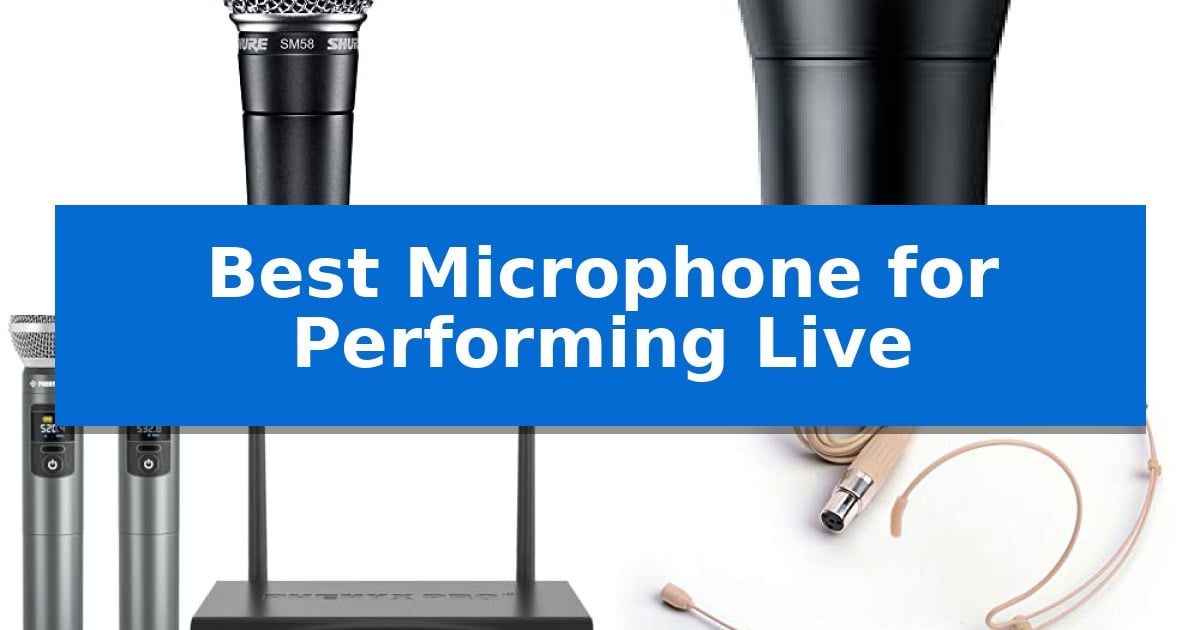
Finding the Best Microphone for Performing Live requires balancing vocal clarity, stage isolation, and rugged reliability. Whether you are a lead vocalist in a loud band or a presenter needing hands-free movement, the right microphone transforms how your voice cuts through the mix.
This guide examines essential stage microphones, focusing on how different pickup patterns and connectivity options impact your performance. We evaluate these models based on their ability to handle high sound pressure levels and resist feedback in demanding live environments.
You may also want to compare Best Microphone for Percussion: Small vs. Large Diaphragm Condenser, Best Microphone for PC Gaming, and Best Microphone for PC Chatting.
Best Microphone for Performing Live
Quick Comparison
| Product | Best For | Key Strength | Score |
|---|---|---|---|
| Shure SM58 Dynamic Vocal Microphone | Best Overall | Rugged metal construction ensures long-term durability for touring. | 4.9 |
| Shure Nexadyne 8/S Dynamic Vocal Microphone | Advanced Clarity for Dense Mixes | Revonic Dual-Engine Technology for natural and consistent vocal reproduction. | 4.5 |
| Phenyx Pro Dual Wireless Microphone System | Reliable Dual-Channel Wireless Freedom | Durable metal construction for both receiver and microphones. | 4.5 |
| Sujeetec Headworn Earset Microphone | Hands-Free Performance for Stage | Slim double earhook design for secure, comfortable fit | 4.5 |
| Pyle Classic Retro Dynamic Microphone | Vintage Aesthetic for Live Gigs | Iconic retro aesthetic provides a distinct visual style for stage performances. | 4.5 |
How We Chose
- Pickup Pattern: Evaluating cardioid and supercardioid designs for their ability to isolate vocals and reject unwanted stage bleed.
- Durability: Assessing build materials and grille construction to ensure the microphone can withstand the rigors of frequent touring and handling.
- Frequency Response: Reviewing the tuning of each capsule to determine how well it captures vocal presence and minimizes the need for corrective equalization.
- Connectivity and Versatility: Comparing wired XLR reliability against wireless freedom and specialized form factors like headworn sets.
- Feedback Rejection: Analyzing how well the microphone maintains stability in high-volume environments.
1 Shure SM58 Dynamic Vocal Microphone — Industry Standard for Live Vocals
Achieving consistent audio quality on stage requires equipment that can withstand the rigors of frequent transport and high-volume environments. The Shure SM58 Pro XLR Dynamic Vocal Microphone is engineered with a rugged metal construction and a reinforced stand adapter, making it a reliable choice for performers who need gear that survives the demands of touring.
At the heart of its performance is a finely tuned frequency response with a subtle midrange lift. This design choice helps vocals cut through a dense mix, providing the warmth and articulation necessary for live settings. The precision cardioid pickup pattern is specifically calibrated to focus on the sound source directly in front of the mic, which effectively minimizes background noise and reduces the risk of feedback during live performances.
Usability is enhanced by an integrated pop protection system. A refined spherical grille and a built-in filter work together to mitigate plosives, breath, and wind noise without requiring external accessories. This setup ensures that the audio remains balanced and clear, allowing the performer to focus on the delivery rather than mic placement or external interference.
This microphone is a versatile tool for various professional applications, including broadcast and recording, thanks to its industry-standard sound profile. By prioritizing durability and focused vocal reproduction, it remains a staple for those who require consistent, professional-grade audio in any live venue.
Best for: Performing artists and presenters who require a durable, feedback-resistant microphone for consistent vocal clarity in live venues.
Skip if: Users who require a condenser microphone for high-frequency detail in controlled studio environments or those needing built-in USB connectivity.
PROS
- Rugged metal construction ensures long-term durability for touring.
- Precision cardioid pickup pattern minimizes feedback and background noise.
- Integrated pop filter reduces plosives without extra accessories.
- Midrange-tuned frequency response provides clear, articulate vocal projection.
CONS
- XLR-only connectivity requires an external audio interface or mixer.
2 Shure Nexadyne 8/S Dynamic Vocal Microphone — Advanced Clarity for Dense Mixes
Achieving consistent vocal presence in a crowded live environment requires a microphone that can isolate the performer's voice from the surrounding stage noise. The Shure Nexadyne 8/S Supercardioid Dynamic Vocal Microphone addresses this challenge through its proprietary Revonic Dual-Engine Technology, which utilizes two transducers to provide a more natural and reliable vocal reproduction across various ranges.
This microphone is specifically engineered to help vocals remain detailed and present in dense live mixes, often reducing the need for extensive corrective equalization. Its supercardioid polar pattern is a critical design choice for live performance, as it actively helps reduce background noise and stage bleed, ensuring that the sound captured remains focused on the artist.
Built for the rigors of touring and frequent use, the Shure Nexadyne 8/S features a rugged all-metal construction paired with a dent-resistant hardened grille. These materials are selected to withstand the physical demands of stage life while maintaining consistent performance. Additionally, the unit offers compatibility with interchangeable wireless microphone capsules, providing flexibility for performers who may transition between wired and wireless setups.
By prioritizing signal clarity and structural durability, this microphone serves as a specialized tool for those who need their vocals to cut through complex arrangements. Its design focuses on delivering strong output and consistent sound, making it a practical choice for professional stage applications where reliability and audio definition are paramount.
Best for: Professional vocalists and performers who require high vocal clarity and isolation in dense, loud live stage mixes.
Skip if: Performers who prefer a wider pickup pattern or those who do not require the specific noise-rejection benefits of a supercardioid transducer design.
PROS
- Revonic Dual-Engine Technology for natural and consistent vocal reproduction.
- Supercardioid polar pattern effectively reduces stage bleed and background noise.
- Rugged all-metal construction with a dent-resistant grille for stage durability.
- Interchangeable wireless capsule compatibility for flexible system integration.
CONS
- Supercardioid pattern requires more precise mic technique compared to wider polar patterns.
3 Phenyx Pro Dual Wireless Microphone System — Reliable Dual-Channel Wireless Freedom
Reliable audio performance for live events requires gear that balances durability with consistent signal stability. The Phenyx Pro Dual Wireless Microphone System is built with a metal UHF receiver and handheld microphones designed to withstand the rigors of frequent use in environments like karaoke, church services, and live performances.
This system features 30 tunable frequency groups within the 500MHz band, allowing up to three units to operate simultaneously without interference. If a preset frequency encounters issues, users can manually switch to an alternative, providing flexibility during live setups. The cardioid capsule and enhanced circuitry are engineered to minimize feedback and hiss, ensuring stable audio transmission over a range of up to 200 feet in open space.
Setup is streamlined through automatic pair-up technology that uses frequency hopping to connect the transmitters and receiver in seconds. Connectivity options include two XLR outputs and one mixed 1/4'' output, making the system compatible with standard mixers, speakers, and power amplifiers. The package includes essential accessories such as anti-rolling rings, windscreens, and a 1/4'' audio cable.
While this system offers robust construction and reliable signal management, users should ensure their venue setup accommodates the 500MHz frequency band. The inclusion of AA batteries and color-coded anti-rolling rings provides immediate utility for multi-mic applications, though operators should manage battery levels to maintain consistent performance during extended events.
Best for: Live performers, karaoke hosts, and event organizers requiring a reliable, multi-channel wireless setup for vocals.
Skip if: Users operating in environments with significant 500MHz band congestion or those requiring digital encryption features not present in this analog UHF system.
PROS
- Durable metal construction for both receiver and microphones.
- 30 tunable frequencies to avoid interference.
- Automatic pairing for quick deployment.
- Versatile output options including dual XLR and mixed 1/4''.
CONS
- Manual frequency management required if interference occurs.
- Battery-dependent operation using AA cells.
4 Sujeetec Headworn Earset Microphone — Hands-Free Performance for Stage
The Sujeetec Headworn Earset Microphone is engineered for performers who require a hands-free, low-profile audio solution that maintains visibility at a minimum. This slim double earhook design ensures the microphone remains secure during active stage movements, making it a practical choice for theater actors, lecturers, and live musicians who need reliable voice amplification without the distraction of a handheld device.
Designed specifically for integration with Shure wireless systems, this microphone utilizes a Mini XLR TA4F connector. It is a condenser microphone that relies on power supplied directly from the bodypack transmitter, ensuring a stable signal and crisp audio transmission. The 3.9-foot cable provides sufficient length for most stage setups, allowing for freedom of movement while maintaining a secure connection to your wireless gear.
The build focuses on comfort and portability, featuring a supremely lightweight construction that is ideal for extended wear during long performances or presentations. Its beige finish helps the unit blend in, providing a discreet appearance that does not detract from the performer's presence. By prioritizing a hands-free operation, this headset allows presenters and singers to focus entirely on their delivery.
Compatibility is a critical consideration for this unit, as it is strictly wired for Shure wireless systems including the BLX, SLX, and ULX series. Because internal wiring configurations vary across manufacturers, this microphone is not intended for use with other wireless brands. Users must ensure their specific bodypack transmitter is capable of providing the necessary power to the condenser element to ensure proper functionality.
Best for: Performers and presenters already using Shure wireless bodypack systems who need a discreet, hands-free microphone for live stage use.
Skip if: Users who do not own a compatible Shure wireless system or those who require a microphone for non-powered audio interfaces, as this unit requires specific power from the transmitter.
PROS
- Slim double earhook design for secure, comfortable fit
- Discreet beige finish for minimal stage visibility
- Lightweight construction suitable for long-duration wear
- Hands-free operation ideal for active performers
CONS
- Compatibility limited exclusively to Shure wireless systems
- Requires power from the connected bodypack transmitter
5 Pyle Classic Retro Dynamic Microphone — Vintage Aesthetic for Live Gigs
The Pyle Classic Retro Dynamic Vocal Microphone brings a distinct visual aesthetic to the stage, combining a classic iconic design with modern audio utility. Its polished silver finish and vintage-inspired housing offer a unique look for performers who want to pair their sound with a specific stage presence.
Engineered for vocal clarity, this microphone features a 30Hz-15kHz ultra-wide frequency response and integrated low-noise circuitry. The unidirectional cardioid pickup pattern is designed to focus on sound sources directly in front of the capsule while rejecting noise from other directions, which helps maintain audio integrity during live performances.
Usability is enhanced by a built-in pop filter, which serves to reduce mechanical impact sounds caused by fast-moving air. The unit includes a universal mic stand adapter with an internal cartridge shock and a self-tensioning swivel mount, allowing performers to adjust the angle of the microphone to suit their specific height or positioning needs.
The package includes a 16-foot XLR cable, providing immediate connectivity for standard audio setups. With an output impedance of 600 ohms, it is built to integrate into common live sound environments, balancing its decorative vintage style with the functional requirements of a reliable stage microphone.
Best for: Performers who prioritize a vintage aesthetic for live stage or studio recording without sacrificing standard directional audio pickup.
Skip if: Users who require a lightweight, compact, or handheld microphone, as the retro design and integrated stand mount are optimized for stationary stage use.
PROS
- Iconic retro aesthetic provides a distinct visual style for stage performances.
- Unidirectional cardioid pattern effectively isolates vocals by rejecting off-axis sound.
- Integrated pop filter reduces unwanted noise from air impact.
- Adjustable swivel mount allows for precise positioning on standard microphone stands.
CONS
- Heavier, bulky form factor compared to modern handheld dynamic microphones.
- Stationary design is primarily intended for use with a microphone stand rather than handheld use.
Best Microphone for Performing Live Buying Guide
Understanding Polar Patterns
The polar pattern of a microphone dictates how it captures sound from different directions. For live performance, cardioid and supercardioid patterns are the industry standard because they focus on the sound source directly in front of the capsule while rejecting noise from the sides and rear.
A cardioid pattern is generally more forgiving for singers who move around the mic, while a supercardioid pattern provides tighter isolation, which is highly beneficial in dense, loud mixes where feedback is a constant concern.
Wired vs. Wireless Reliability
Wired XLR microphones remain the gold standard for reliability, as they eliminate the risk of signal dropouts or battery failure during a set. They are the preferred choice for stationary vocalists who prioritize a consistent, interference-free signal chain.
Wireless microphone systems offer essential freedom for performers who need to move across the stage. When choosing wireless, look for systems with tunable frequency groups to ensure you can switch channels if you encounter local radio frequency interference.
Durability and Build Quality
Live microphones take a significant amount of abuse, from being dropped to being packed into crowded gear bags. A rugged metal construction and a dent-resistant hardened grille are critical features that protect the internal transducer from damage.
Internal components, such as shock mounts, also play a vital role in reducing handling noise, which can otherwise be amplified through the sound system when the microphone is held or moved.
Handling Plosives and Breath Noise
Vocalists often produce sharp bursts of air when pronouncing 'p' or 'b' sounds, known as plosives. High-quality live microphones include integrated pop protection or internal filters designed to diffuse this air before it hits the diaphragm.
While external foam windscreens can be used, a microphone with a well-engineered internal filter provides a cleaner look and ensures that the vocal clarity is preserved without needing extra accessories.
Compatibility and Integration
Always verify that your microphone's output matches your existing equipment. Most professional live mics use a standard XLR connection, but specialized headset microphones often use proprietary connectors like Mini XLR TA4F for bodypack transmitters.
If you are using a headset, ensure that your wireless bodypack provides the necessary phantom power or bias voltage required by the condenser element, as these microphones will not function without a compatible power source.
Frequently Asked Questions
What is the main difference between cardioid and supercardioid microphones?
A cardioid microphone picks up sound primarily from the front and is less sensitive to sound from the rear. A supercardioid microphone has a narrower pickup angle, offering better isolation and feedback rejection, but requires the performer to stay more directly on-axis.
Do I need a wireless system for live performances?
Wireless systems are only necessary if you require freedom of movement on stage. If you are a stationary vocalist, a wired XLR microphone is often more reliable, cost-effective, and easier to set up.
How can I prevent feedback during a live show?
Feedback is often caused by the microphone picking up sound from the stage monitors. Using a microphone with a tight polar pattern, positioning monitors correctly, and keeping the microphone close to your mouth can significantly reduce feedback.
Are headset microphones better than handheld ones?
Headset microphones are ideal for performers who need their hands free, such as dancers or lecturers. Handheld microphones are generally preferred for lead vocalists because they allow for more control over proximity effect and microphone technique.
What should I look for in a microphone for a loud band?
For loud environments, prioritize a microphone with a supercardioid pattern and high feedback rejection. These features help isolate your voice from the drums and amplifiers, keeping your vocals clear in the mix.
Conclusion: Our Top Pick
When selecting the Best Microphone for Performing Live, the Shure SM58 Dynamic Vocal Microphone stands out as the most reliable choice for a wide range of stage applications. Its legendary durability and tuned frequency response make it a dependable tool that consistently delivers clear, warm vocals in any venue.
While other specialized microphones offer advanced features for dense mixes or hands-free movement, the Shure SM58 remains the industry benchmark for its ability to handle the demands of professional touring while maintaining a natural, articulate sound.