
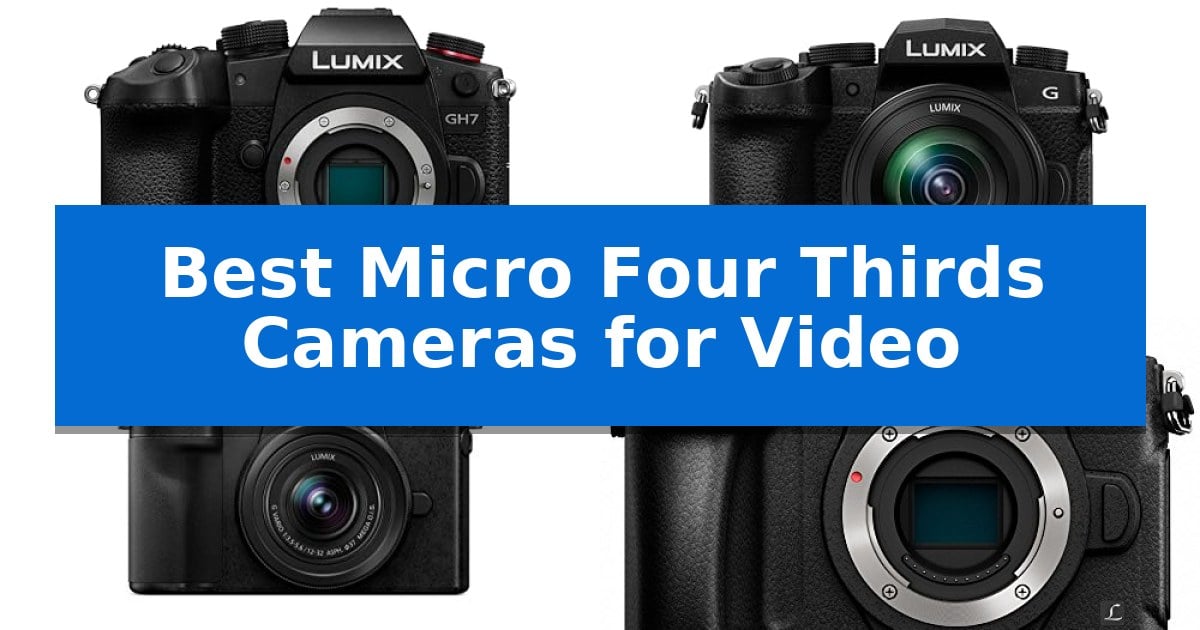
Finding the right camera for video production requires balancing sensor capabilities, recording formats, and physical ergonomics. The Micro Four Thirds system has long been a favorite for creators who need a compact, versatile setup without sacrificing professional-grade features like high-bitrate recording or advanced stabilization.
Whether you are building a professional cinema rig or a lightweight vlogging kit, selecting the Best Micro Four Thirds Cameras for Video depends on your specific workflow needs. We have analyzed the latest offerings to help you identify which camera provides the essential tools for your next project.
You may also want to compare Best Micro Four Thirds Cameras for Beginners, Best Micro Form Factor PC, and Best Micro Ethernet Switch.
Best Micro Four Thirds Cameras for Video
Quick Comparison
| Product | Best For | Key Strength | Score |
|---|---|---|---|
| Panasonic LUMIX GH7 Mirrorless Camera | Best Overall | Internal Apple ProRes RAW recording for high-fidelity post-production. | 4.9 |
| Panasonic LUMIX G97 Mirrorless Camera | Unlimited 4K Recording Performance | Unlimited 4K 30p recording prevents session interruptions. | 4.3 |
| Panasonic LUMIX G100 Mirrorless Camera | Compact Vlogging and Streaming | Advanced 360-degree tracking microphone for clear audio in various environments. | 4.3 |
| Panasonic LUMIX G85 Mirrorless Camera | Weather-Sealed 4K Hybrid | Class-leading 5-axis body stabilization for steady handheld video. | 4.3 |
How We Chose
- Internal recording formats and codec support for post-production flexibility.
- Sensor performance regarding dynamic range and low-light capability.
- Stabilization systems and their impact on handheld shooting stability.
- Physical form factor, including weight, weather sealing, and interface accessibility.
- Audio recording features and external connectivity options for professional sound.
1 Panasonic LUMIX GH7 Mirrorless Camera — Pro-Grade Internal ProRes Recording
Achieving professional-grade video production within a compact form factor is the primary focus of the Panasonic LUMIX GH7 Mirrorless Camera. This device introduces significant advancements for creators, most notably the inclusion of internal Apple ProRes RAW recording and the industry-first 32-bit float audio recording capability when paired with the DMW-XLR2 adaptor.
At the core of its performance is a 25.2M BSI CMOS sensor, which provides a 13+ stop dynamic range boost to ensure rich gradation and detail in varied lighting conditions. The camera is built to streamline professional workflows, offering internal recording of 5.7K 30p Apple ProRes 422 HQ and Apple ProRes RAW HQ, alongside direct integration with Adobe Cloud for uploading still images and proxy videos to Frame.io.
Usability is enhanced through thoughtful design choices, such as the Open Gate shooting mode, which allows for capturing content in all aspect ratios from a single shot, ideal for multi-platform social media output. The system is engineered to eliminate the need for manual audio level adjustments during recording, relying on its advanced 32-bit float technology to maintain signal integrity.
While the camera offers extensive professional features, its specialized workflow requirements—such as the need for external adaptors for specific audio functions—mean it is best suited for those already invested in high-end production environments. Its robust build and technical depth make it a powerful tool for those prioritizing resolution and post-production flexibility.
Best for: Professional videographers and content creators who require high-bitrate internal recording and advanced audio integration for streamlined post-production workflows.
Skip if: Casual users or those who do not require professional-grade codecs like ProRes or advanced audio interfaces will find the technical complexity and cost of this system unnecessary.
PROS
- Internal Apple ProRes RAW recording for high-fidelity post-production.
- 32-bit float audio recording capability for simplified sound management.
- Open Gate shooting for versatile social media aspect ratio cropping.
- Adobe Cloud compatibility for direct proxy and image uploads.
CONS
- Requires DMW-XLR2 adaptor to unlock the 32-bit float audio recording feature.
- Complex feature set may exceed the needs of non-professional users.
2 Panasonic LUMIX G97 Mirrorless Camera — Unlimited 4K Recording Performance
Reliable video production often hinges on equipment that can handle extended shooting sessions without interruption. The Panasonic LUMIX G97 Mirrorless Camera addresses this with its unlimited 4K 30p video recording capability, specifically designed to mitigate overheating issues that often plague compact systems during long-form content creation.
For creators who prioritize stability, the camera features a 5-stop 5-axis Dual I.S.2 system. This stabilization technology is engineered to keep footage sharp even when shooting handheld or in challenging conditions. The inclusion of 12-stops of V-Log L provides a foundation for cinematic color grading, offering greater flexibility for those looking to achieve a professional aesthetic.
Usability is enhanced through a 1,840k-dot free-angle LCD and a high-resolution 2,360k-dot OLED Live View Finder. These components allow for precise framing and focus, even under bright ambient light. The camera also includes the Live View Composite Mode, which enables the creation of complex long-exposure scenes like star trails by combining multiple exposures in real-time.
The system is built for versatility, featuring the LUMIX Photo Style feature for direct in-camera color adjustments. This reduces the need for external post-processing apps, streamlining the workflow for quick-turnaround projects. With its compact form factor and included LUMIX G Vario 12-60mm lens, it serves as a comprehensive kit for hybrid shooters.
Best for: Content creators and hybrid shooters who require unlimited 4K recording and reliable stabilization for long-form video projects.
Skip if: Users who require higher frame rates like 4K 60p or 120p for slow-motion capture will find the 30p limitation restrictive for their specific workflow.
PROS
- Unlimited 4K 30p recording prevents session interruptions.
- 5-axis Dual I.S.2 stabilization ensures steady handheld footage.
- V-Log L support enables advanced cinematic color grading.
- Free-angle LCD provides flexible framing for self-recording.
CONS
- 4K recording limited to 30p, which may not suit all high-speed action needs.
3 Panasonic LUMIX G100 Mirrorless Camera — Compact Vlogging and Streaming
Capturing high-quality video in a portable form factor requires a balance of stabilization and audio clarity, which is where the Panasonic LUMIX G100 Mirrorless Camera excels. Designed specifically for creators who need to move quickly, this camera integrates a high-performance microphone with tracking audio that automatically adjusts to your environment, whether you are recording in a crowded space or a quiet room.
The Micro Four Thirds interchangeable lens system provides significant versatility, allowing you to swap lenses for different shooting scenarios while maintaining a lightweight profile. The included 12-32mm lens covers a wide range of focal lengths, and the 5-Axis Hybrid I.S. works to ensure your handheld footage remains smooth and blur-free even when you are on the move.
For those transitioning from mobile devices, the LUMIX G100 offers an intuitive path to professional results. The iA (intelligent auto) mode simplifies exposure for beginners, while advanced users can utilize manual modes and V-Log L recording for greater control over the final look of their content. The camera also includes a frame marker feature to help you compose shots specifically for social media aspect ratios.
Beyond field recording, this device functions as a capable webcam when connected to a computer, making it a practical tool for livestreams and professional video calls. With facial recognition and seamless smartphone transfer capabilities, the workflow from shooting to sharing is streamlined, ensuring your media is ready for upload without unnecessary complexity.
Best for: Vloggers and content creators who require a lightweight, portable camera with advanced audio tracking and easy social media integration.
Skip if: Professional filmmakers requiring high-bitrate internal recording codecs or those who need a full-frame sensor for extreme low-light performance.
PROS
- Advanced 360-degree tracking microphone for clear audio in various environments.
- 5-Axis Hybrid I.S. provides effective stabilization for handheld video.
- Compact and lightweight design ideal for one-handed recording.
- Versatile Micro Four Thirds mount compatible with a wide range of lenses.
CONS
- Limited to Micro Four Thirds sensor size, which may not match the low-light performance of larger sensor formats.
- Fixed-lens kit limitations may require additional lens purchases for specialized focal lengths.
4 Panasonic LUMIX G85 Mirrorless Camera — Weather-Sealed 4K Hybrid
Capturing high-quality footage in unpredictable environments requires a tool that balances portability with robust stabilization. The Panasonic LUMIX G85 Mirrorless Camera addresses this by integrating class-leading 5-axis body stabilization, which works in tandem with compatible lenses to create a Dual IS effect. This system is designed to minimize shake, providing a steadier handheld experience for video creators who frequently move while shooting.
Beyond its stabilization capabilities, the camera is built for durability with a weather-sealed, splash-proof, and dustproof body. This rugged construction allows for use in challenging outdoor conditions where moisture or dust might otherwise be a concern. The compact form factor ensures it remains less bulky than traditional DSLRs, making it a practical choice for travel or run-and-gun production.
For video-centric workflows, the device supports 4K recording at 30p/24p with a bitrate of 100 Mbps. It also includes a dedicated 3.5 millimeter port for external microphones, allowing for better audio capture than internal options typically provide. The 16 Megapixel MFT sensor is engineered without a low-pass filter to maximize fine detail, ensuring sharp, true-to-life image quality for both stills and video.
Usability is enhanced by a 3-inch touch LCD, which provides intuitive control over settings and framing. By eliminating the low-pass filter, the sensor focuses on resolving power, offering a clear advantage for those prioritizing detail in their visual projects. This combination of weather resistance, advanced stabilization, and high-resolution video makes it a versatile hybrid tool.
Best for: Video creators who need a weather-sealed, compact camera with advanced in-body stabilization for handheld shooting.
Skip if: Users who require higher than 4K resolution or specific advanced professional video codecs not supported by this 16-megapixel sensor.
PROS
- Class-leading 5-axis body stabilization for steady handheld video.
- Weather-sealed construction for protection against dust and splashes.
- 3.5mm microphone input for improved audio recording.
- Compact, lightweight design compared to traditional DSLR systems.
CONS
- 16 Megapixel sensor resolution may be lower than newer high-end alternatives.
- Fixed 4K bitrate options may limit post-processing flexibility for some professional workflows.
Best Micro Four Thirds Cameras for Video Buying Guide
Sensor and Image Quality
The sensor is the heart of your video quality. Micro Four Thirds sensors offer a unique balance of depth of field and reach, making them ideal for run-and-gun shooting. Look for models with high-resolution sensors that support advanced color profiles like V-Log, which provide greater latitude during color grading.
Consider the dynamic range boost features found in newer sensors. These technologies help retain detail in both shadows and highlights, ensuring your footage looks professional even in high-contrast lighting conditions.
Recording Formats and Codecs
For serious video work, the ability to record in high-quality codecs like Apple ProRes is a significant advantage. These formats reduce the need for heavy compression, allowing for smoother editing workflows and better color fidelity.
Check for internal recording capabilities that eliminate the need for external recorders. Features such as 32-bit float audio recording also simplify your setup by removing the need to manually adjust gain levels during a shoot.
Stabilization Systems
Handheld video requires robust stabilization. Many Micro Four Thirds cameras utilize a 5-axis in-body image stabilization (I.S.) system. When paired with compatible lenses, this creates a 'Dual I.S.' effect that significantly reduces camera shake.
If you frequently shoot without a gimbal, prioritize models with advanced electronic and mechanical stabilization. This ensures your footage remains smooth even when walking or shooting at longer focal lengths.
Ergonomics and Weather Sealing
The physical build of the camera dictates how you use it in the field. Weather-sealed bodies are essential for outdoor shoots, protecting your gear from dust and moisture. A rugged construction allows you to focus on the shot rather than the environment.
Pay attention to the screen design. A free-angle or articulating LCD screen is vital for vlogging and capturing difficult angles, providing a clear view of your framing regardless of the camera's position.
Audio and Connectivity
Professional video requires professional audio. Look for cameras with dedicated microphone inputs and support for XLR adapters. These connections allow you to use high-quality external microphones for clear, reliable sound.
Modern connectivity features like cloud compatibility or direct streaming support can also streamline your workflow. Being able to upload proxies or stream directly to platforms saves time and simplifies the post-production process.
Frequently Asked Questions
Why choose Micro Four Thirds for video over full-frame?
Micro Four Thirds cameras are generally more compact and lightweight, making them easier to carry for long shoots. They also offer a greater depth of field, which can be beneficial for keeping subjects in focus during active video production.
What is the benefit of ProRes recording?
ProRes is a high-quality, intermediate codec that is easier for computers to process during editing. It preserves more image data than standard compressed formats, resulting in better color accuracy and detail retention.
Do I need a gimbal with these cameras?
Many of these cameras feature advanced in-body stabilization that can handle minor shakes. However, for cinematic tracking shots or very long focal lengths, a gimbal remains a useful tool for achieving perfectly smooth movement.
Can these cameras be used for live streaming?
Yes, many of these models are designed to function as high-quality webcams or streaming devices, offering much better resolution and color depth than standard computer cameras.
What is 32-bit float recording?
32-bit float audio recording allows you to capture a wider dynamic range of sound, effectively preventing clipping or distortion even if the audio levels are too high. It provides peace of mind that your audio will be usable in post-production.
Conclusion: Our Top Pick
For creators seeking the most advanced video features, the Panasonic LUMIX GH7 Mirrorless Camera stands out as the premier choice. Its internal ProRes RAW recording and 32-bit float audio support provide a professional-grade workflow that is unmatched in the Micro Four Thirds ecosystem, making it ideal for high-end production needs.
While other models in the lineup offer excellent portability or specific vlogging advantages, the GH7's combination of dynamic range, codec support, and seamless post-production integration ensures it remains the most capable tool for serious video work.