
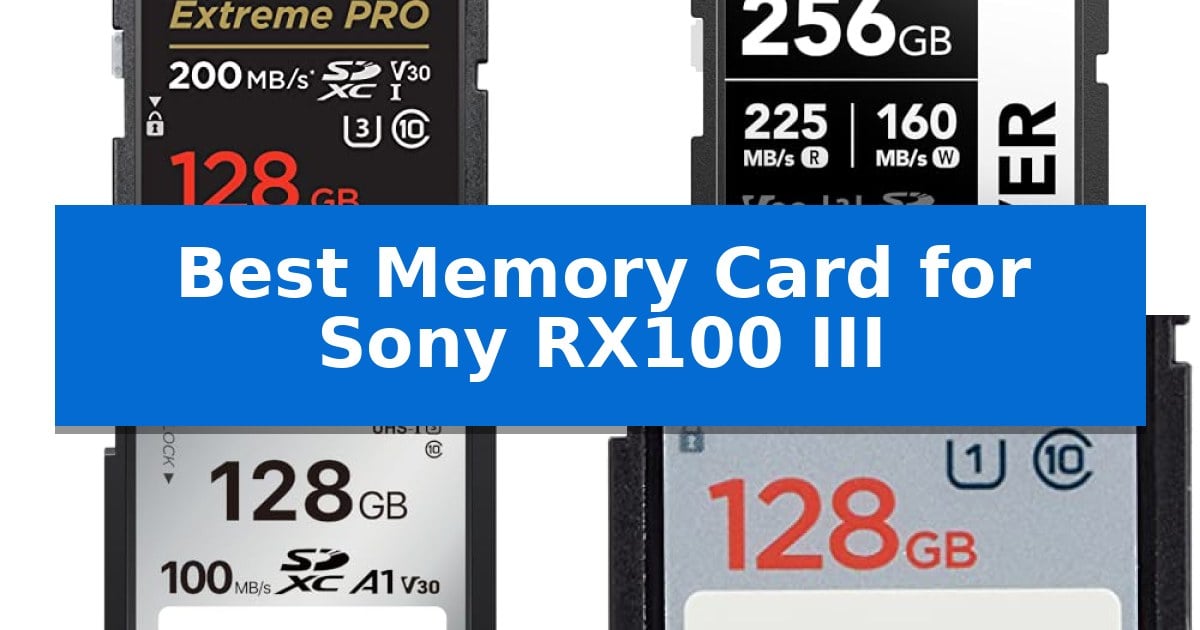
The Sony RX100 III is a capable compact camera that relies on stable, high-speed storage to handle its image processing and video recording demands. Finding the Best Memory Card for Sony RX100 III requires balancing the camera's specific interface limitations with the need for reliable data management during burst photography or video capture.
Whether you are shooting high-resolution stills or Full HD video, the right card ensures your camera operates without interruption. We have evaluated five memory card options to help you determine which storage solution best aligns with your shooting style and technical requirements.
You may also want to compare Best Memory Card for Sony RX100 II, Best Memory Card for Sony RX10 III, and Best Memory Card for Sony DSC-HX400V.
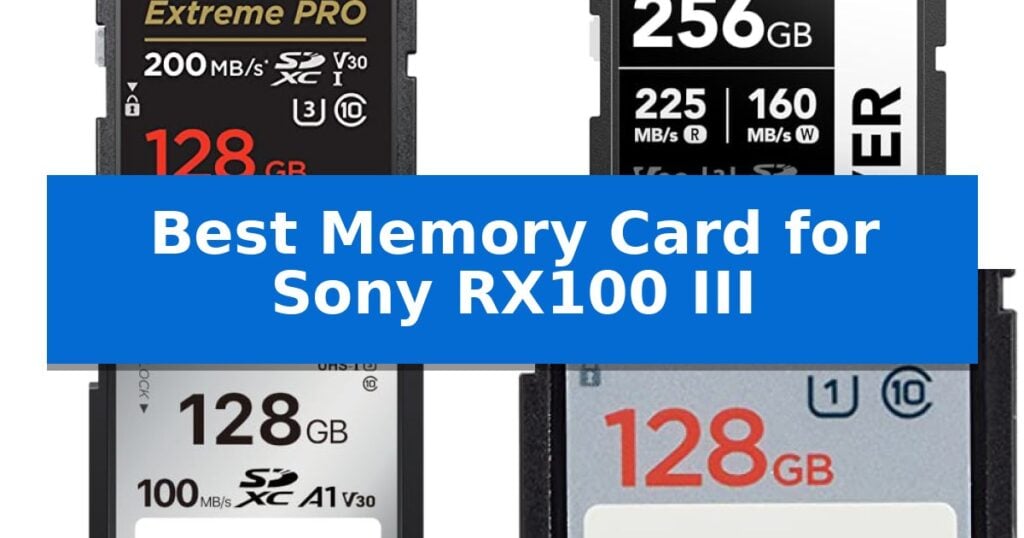
Best Memory Card for Sony RX100 III
Quick Comparison
| Product | Best For | Key Strength | Score |
|---|---|---|---|
| SanDisk Extreme PRO SD Memory Card | Best Overall | Fast read speeds up to 200MB/s for efficient file transfers. | 4.9 |
| Lexar Silver SD Memory Card | Reliable Speed for Enthusiasts | V30 rating supports stable 4K 60FPS video recording. | 4.7 |
| Gigastone 4K Camera Pro SD Card | Budget Friendly 4K Recording | 4K Ultra HD compatibility for reliable video recording. | 4.4 |
| SanDisk Ultra SDXC Memory Card | Ideal for Everyday Photography | 128GB high-capacity storage for extensive photo and video libraries. | 4.3 |
| Sony TOUGH-G SDXC Memory Card | Maximum Durability for Travel | One-piece molded construction offers extreme bend and impact resistance. | 4.9 |
How We Chose
- Interface Compatibility: Ensuring the card meets the UHS-I standard required for consistent performance with this camera model.
- Write Speed Reliability: Evaluating sustained write speeds that support the camera's burst mode and video recording capabilities.
- Durability and Build: Assessing the physical resilience of the card against environmental factors like temperature and shock.
- Capacity and Value: Comparing storage sizes to ensure they provide sufficient space for typical photography workflows.
- Data Integrity: Considering manufacturer warranties and features that protect stored media from corruption.
1 SanDisk Extreme PRO SD Memory Card — Fast Transfers for 4K Video
The SanDisk 128GB Extreme PRO SD Memory Card is engineered to support demanding photography and videography workflows, offering sustained write speeds of up to 90MB/s. This performance level is essential for users of the Sony RX100 III who require reliable capture for high-bitrate video or rapid sequential burst mode photography.
Designed with UHS Speed Class 3 (U3) and Video Speed Class 30 (V30) ratings, this card ensures a consistent minimum write speed of 30MB/s, which is critical for maintaining stable 4K UHD video recording. The card's architecture allows it to handle the data throughput required by modern compact cameras without dropping frames during intensive write operations.
Beyond capture, the card utilizes SanDisk QuickFlow Technology to achieve read speeds of up to 200MB/s. When paired with a compatible reader like the SanDisk Professional PRO-READER, this feature significantly reduces the time spent offloading large files to a computer, streamlining the post-production process.
Built for durability and consistent performance, the card is a practical choice for photographers who need a balance of high-speed transfer capabilities and reliable storage. Its 128GB capacity provides ample space for high-resolution stills and extended video clips, making it a versatile companion for travel or long shooting sessions.
Best for: Photographers and videographers who need reliable, high-speed storage for 4K video recording and rapid burst photography.
Skip if: Users who do not require high-speed offloading or 4K recording capabilities may find lower-spec, more affordable cards sufficient for their needs.
PROS
- Fast read speeds up to 200MB/s for efficient file transfers.
- V30 and U3 ratings ensure stable performance for 4K video.
- Reliable write speeds of up to 90MB/s for burst shooting.
- Lifetime limited warranty provides long-term peace of mind.
CONS
- Maximum read speeds require a compatible device to achieve the full 200MB/s potential.
2 Lexar Silver SD Memory Card — Reliable Speed for Enthusiasts
Capturing high-resolution stills and smooth video with the Sony RX100 III requires a reliable storage medium that keeps pace with the camera's processing capabilities. The Lexar 128GB Silver SD Memory Card provides a robust solution for photographers and videographers who need consistent performance during extended shooting sessions.
Engineered to handle demanding workflows, this card features a 225MB/s max read speed, which significantly reduces wait times when transferring large files to a computer. For recording, it offers a 160MB/s max write speed, ensuring the camera remains responsive when capturing bursts or high-bitrate footage. The card is V30 rated, confirming its capability to support 4K 60FPS video recording without dropped frames.
Beyond raw speed, the card is built with a focus on physical resilience. It is designed to be wearproof, drop-proof, temperature-proof, x-ray-proof, shockproof, magnetic-proof, and vibration-resistant, providing peace of mind when shooting in varied environments. With a 128GB capacity, it offers ample space for high-resolution images and long-form video clips.
The Lexar 128GB Silver SD Memory Card is backed by a Lifetime Limited Warranty, reflecting its long-term utility for enthusiasts and professionals alike. Its broad compatibility ensures it integrates seamlessly with the Sony RX100 III, making it a dependable choice for those who prioritize data integrity and efficient file management.
Best for: Photographers and videographers using the Sony RX100 III who require reliable 4K video recording and fast file transfer speeds.
Skip if: Users who do not require 128GB of storage or those whose specific workflow demands higher UHS-II or V60/V90 speed classes for professional cinema-grade RAW recording.
PROS
- V30 rating supports stable 4K 60FPS video recording.
- 225MB/s max read speed enables rapid data offloading.
- Comprehensive durability features including shock, temperature, and x-ray resistance.
- Lifetime Limited Warranty provides long-term support.
CONS
- UHS-I interface may limit maximum burst speeds compared to higher-tier UHS-II cards.
3 Gigastone 4K Camera Pro SD Card — Budget Friendly 4K Recording
Capturing high-resolution video and photos with the Sony RX100 III requires a reliable storage medium capable of handling intensive data throughput. The Gigastone 4K Camera Pro SD Card provides a robust solution for this compact camera, offering 4K Ultra HD video compatibility to ensure smooth recording sessions without interruption.
Designed with durability in mind, this memory card is built to withstand challenging environments. It features waterproof, temperature-proof, x-ray-proof, and shock-proof construction, along with magnetic resistance. These protective measures help safeguard your captured media against accidental exposure to the elements during travel or outdoor photography.
With a 128GB capacity, the card offers ample space for high-bitrate video files and large image formats. It utilizes the UHS-I A1 V30 U3 Class 10 standard, which is engineered to maintain the consistent write speeds necessary for high-definition video capture. The inclusion of a 5-year limited warranty provides long-term assurance for your storage investment.
The card includes a mini case for secure storage when not in use, preventing physical damage to the contacts. While it offers a read speed of up to 100 MB/s, users should ensure their workflow accounts for the specific transfer requirements of their post-processing software. This card serves as a dependable, all-around storage choice for photographers utilizing the Sony RX100 III.
Best for: Photographers and videographers using the Sony RX100 III who require a durable, high-capacity card for 4K video recording.
Skip if: Users who require ultra-high-speed transfer rates exceeding 100 MB/s for professional-grade, rapid-fire burst photography or cinema-standard RAW video workflows.
PROS
- 4K Ultra HD compatibility for reliable video recording.
- Comprehensive environmental protection including waterproof and shock-proof ratings.
- Generous 5-year limited warranty for long-term reliability.
- Includes a protective mini case for safe transport.
CONS
- 100 MB/s transfer speed may be a bottleneck for users needing faster offloading of massive file batches.
4 SanDisk Ultra SDXC Memory Card — Ideal for Everyday Photography
Capturing high-resolution stills and Full HD video with your camera requires reliable storage that keeps pace with your workflow. The SanDisk 128GB Ultra SDXC UHS-I Memory Card is engineered to support consistent performance for compact and mid-range point-and-shoot devices, making it a practical choice for everyday photography.
This memory card features UHS Speed Class 1 (U1) and a Class 10 rating, which are specifically designed to handle Full HD (1920×1080) video recording. With read speeds reaching up to 100MB/s, the card facilitates efficient file transfers to your computer, reducing the time spent waiting for large batches of photos or long video clips to move.
With a generous 128GB capacity, you have ample space to store extensive libraries of images and video without needing to swap cards frequently. The design is built for durability, backed by a 10-year limited manufacturer warranty, providing long-term assurance for your digital archives.
While this card is optimized for standard Full HD recording, it is important to note that actual performance can vary based on the specific host device and file attributes. It serves as a dependable, high-capacity solution for users who prioritize storage volume and reliable data handling for general photography needs.
Best for: Photographers using compact cameras who need high-capacity, reliable storage for Full HD video and everyday image capture.
Skip if: Professional videographers requiring high-speed bus interfaces for 4K video or high-bitrate continuous burst shooting, as this card is optimized for standard Full HD workflows.
PROS
- 128GB high-capacity storage for extensive photo and video libraries.
- Class 10 and U1 ratings ensure stable performance for Full HD video recording.
- 100MB/s read speeds allow for quick data transfers.
- 10-year limited manufacturer warranty provides long-term reliability.
CONS
- Performance variability depending on host device and specific usage conditions.
5 Sony TOUGH-G SDXC Memory Card — Maximum Durability for Travel
The Sony TOUGH-G series SDXC UHS-II Card 128GB distinguishes itself through a unique one-piece molded construction that provides the highest level of bend strength, rated 18 times greater than the standard SD specification. This design choice eliminates the traditional rib structure and write-protection switch, creating a monolithic, sealed unit that is both IPX8 waterproof and IP6X dustproof, making it a robust choice for protecting data during travel.
Engineered for high-performance imaging, this card supports transfer speeds up to 300 MB/s and write speeds up to 299 MB/s. These specifications meet UHS-II, Class 10, and U3 standards, ensuring the necessary throughput for 4K video recording and continuous burst mode shooting. The card is designed to operate reliably in extreme environments, with an operating temperature range spanning from -13℉ to +185℉.
While the card is optimized for UHS-II compatible hardware, it remains backward compatible with UHS-I equipment. When used in older devices, it will default to standard UHS-I performance levels, reaching up to 95 MB/s for transfers and 90 MB/s for writing. This versatility ensures the card can be utilized across different camera systems while maintaining its physical durability benefits.
The 128GB capacity provides ample space for high-resolution stills and extended video clips. With its five-year limited warranty and specialized construction, this card is built to withstand the physical rigors of frequent use in the field, prioritizing structural integrity alongside high-speed data management.
Best for: Photographers and travelers who require maximum physical durability and high-speed performance for 4K video and burst shooting.
Skip if: Users who only require basic storage for casual photography and do not need the high-speed UHS-II interface or the specialized impact-resistant construction.
PROS
- One-piece molded construction offers extreme bend and impact resistance.
- IPX8 waterproof and IP6X dustproof rating for environmental protection.
- High-speed performance with up to 300 MB/s read and 299 MB/s write speeds.
- Ribless, switchless design removes common points of physical failure.
CONS
- Premium cost associated with specialized high-durability construction.
- Performance limited to UHS-I speeds when used in non-UHS-II compatible cameras.
Best Memory Card for Sony RX100 III Buying Guide
Understanding Speed Classes
Memory cards are categorized by speed classes, such as UHS-I, U3, and V30. For the Sony RX100 III, a UHS-I card is essential for maintaining the necessary data throughput. These ratings indicate the minimum sustained write speed, which is critical for preventing recording errors during video capture.
While some cards offer much higher read speeds, the camera's internal hardware may limit the actual performance. Prioritizing a card with a V30 or U3 rating ensures that you meet the minimum requirements for high-quality video recording without overspending on features your camera cannot utilize.
Capacity Considerations
The capacity you choose should reflect your typical shooting volume. A 128GB card provides a substantial amount of storage, allowing for thousands of high-resolution JPEGs or hours of video without needing to swap cards frequently.
If you primarily shoot short sessions or use the camera for casual travel, smaller capacities may suffice. However, for those who prefer to keep their media organized on a single card, a larger capacity offers the convenience of fewer transfers and less risk of losing small cards.
Durability and Protection
Since the Sony RX100 III is often used as a travel camera, the physical durability of your memory card is important. Many modern cards are rated as waterproof, temperature-proof, shockproof, and x-ray-proof.
These features provide peace of mind when shooting in diverse environments, from humid climates to cold mountain peaks. Investing in a card with robust construction helps protect your images from physical damage and environmental exposure.
Read Speeds and Workflow
While write speed determines how well the camera records, read speed determines how quickly you can transfer your files to a computer. Cards with higher read speeds, such as those utilizing QuickFlow Technology, can significantly reduce the time spent waiting for large batches of photos to copy.
Using a compatible high-speed card reader can further optimize this process. This is particularly beneficial for photographers who frequently shoot in burst mode and need to clear their cards quickly for the next session.
Compatibility and Standards
Always ensure your card is formatted correctly within the camera before use. The Sony RX100 III is designed to work with SDXC and SDHC standards, which are widely supported by the cards listed in this guide.
It is also wise to check for firmware updates for your camera, as these can sometimes improve compatibility with newer, higher-capacity memory cards. Sticking to reputable brands ensures that the card meets the stated performance standards.
Frequently Asked Questions
Does the Sony RX100 III support UHS-II cards?
The Sony RX100 III is designed for UHS-I cards. While UHS-II cards are backward compatible and will work, you will not see the performance benefits of the UHS-II interface, making them a less cost-effective choice for this specific camera.
What is the maximum capacity card I can use?
The camera is compatible with SDXC cards, which support high capacities. A 128GB card is generally well-supported and provides ample space for most users.
Why is my camera showing a recording error?
Recording errors are often caused by using a card that does not meet the required speed class or by file system corruption. Ensure you are using a card rated at least U3 or V30 and format the card in-camera.
Should I format my card in the computer or the camera?
It is always recommended to format your memory card inside the Sony RX100 III. This ensures the file system is optimized for the camera's specific requirements.
How often should I replace my memory card?
Memory cards do not have a set expiration date, but they can wear out over time with heavy use. If you notice slow performance or errors, it may be time to replace the card.
Conclusion: Our Top Pick
For most users, the SanDisk Extreme PRO SD Memory Card stands out as the most reliable choice for the Sony RX100 III. Its combination of UHS-I, V30, and U3 ratings ensures consistent performance for both 4K-ready video and high-speed burst photography, while its up to 200MB/s read speeds help streamline your post-processing workflow.
While other options offer specific benefits like extreme durability or budget-friendly pricing, the SanDisk Extreme PRO provides a balanced feature set that aligns perfectly with the camera's capabilities. By choosing this card, you gain a dependable storage solution backed by a lifetime limited warranty, ensuring your photos and videos remain secure.