
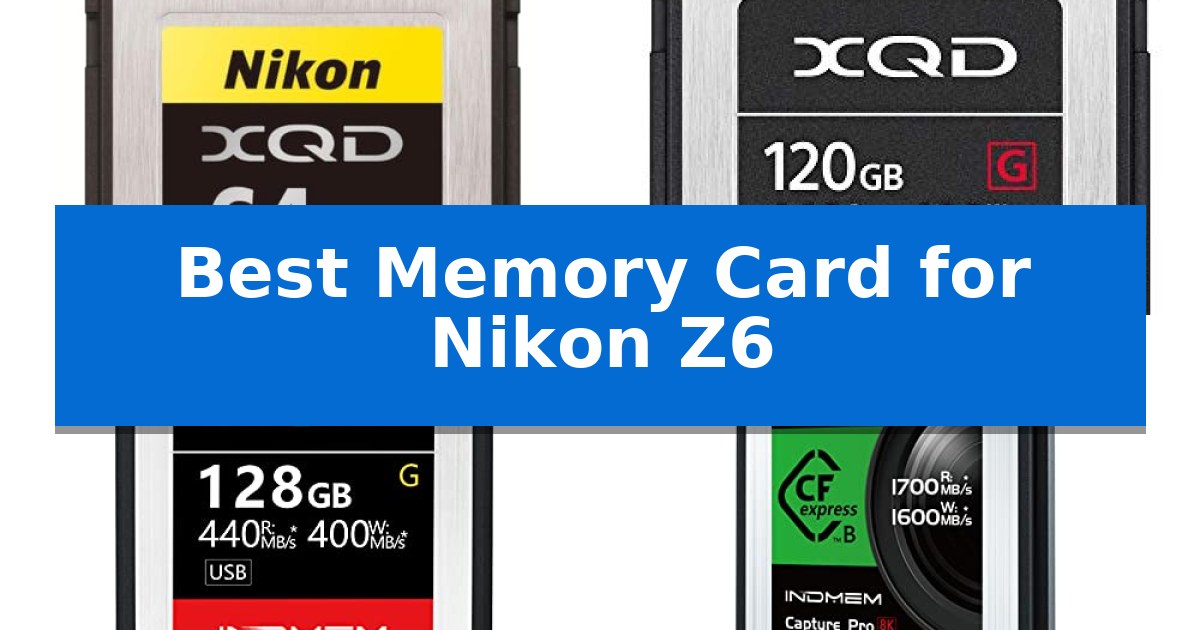
Finding the right storage medium is essential for maintaining the integrity of your photographic workflow. When using a high-performance camera, the Best Memory Card for Nikon Z6 must provide consistent write speeds to handle large RAW files and high-bitrate video without dropping frames or causing buffer bottlenecks.
Whether you are shooting in demanding outdoor environments or capturing fast-paced action, your choice of media directly impacts your camera's reliability. This guide evaluates top XQD and CFexpress options to help you select a card that balances your specific storage needs with the technical requirements of your equipment.
You may also want to compare Best Memory Card for Nikon Z5II, Best Memory Card for Nikon Z5 II, and Best Memory Card for Nikon Z5.
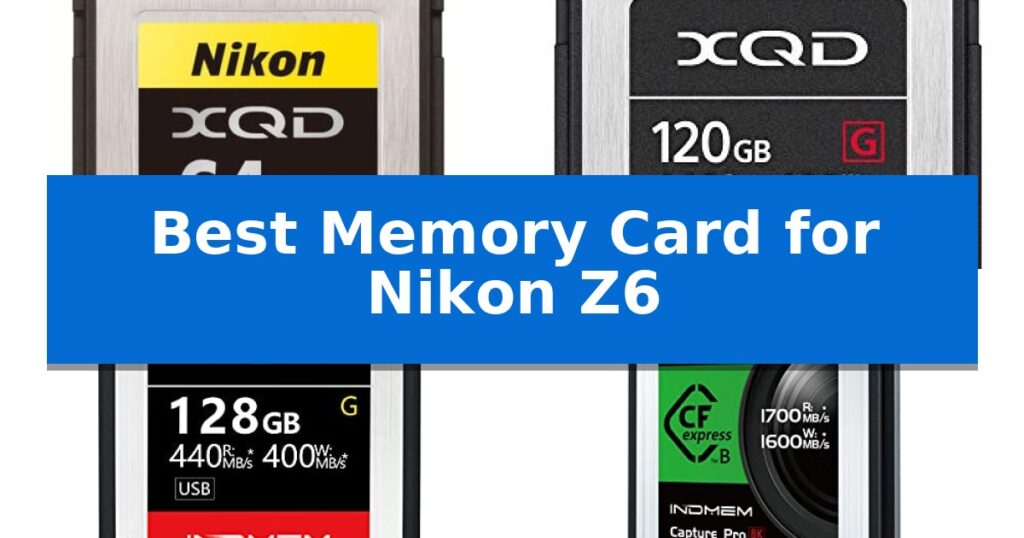
Best Memory Card for Nikon Z6
Quick Comparison
| Product | Best For | Key Strength | Score |
|---|---|---|---|
| Nikon XQD Memory Card | Best Overall | High-speed performance with 440MB/s read and 400MB/s write speeds. | 4.9 |
| Sony XQD G Series Memory Card | Durable High-Speed Choice | High-speed performance with up to 440MB/s read and 400MB/s write speeds. | 4.9 |
| INDMEM XQD Memory Card | Reliable Burst Mode Performance | High-speed performance with up to 440MB/s read and 400MB/s write speeds. | 4.9 |
| INDMEM CFexpress Type B Card | Future-Proof Faster Transfers | High-speed data transfer with up to 1700MB/s read and 1600MB/s write speeds. | 4.4 |
| VVRUIER CFexpress Type B Card | Budget-Friendly Upgrade Path | High-speed write performance up to 1000MB/s for 4K and 8K capture. | 4.7 |
How We Chose
- Interface compatibility with XQD and CFexpress Type B standards.
- Maximum read and write speed ratings for burst shooting and 4K video.
- Physical durability against temperature extremes and impact.
- Storage capacity options for varied project lengths.
- Brand-specific reliability and technical support.
1 Nikon XQD Memory Card — Official Brand Compatibility
Maintaining a seamless workflow with the Nikon Z6 requires storage that can keep pace with high-resolution image capture and continuous burst shooting. The Nikon XQD 64GB Memory Card is engineered specifically for this purpose, utilizing the PCI-Express 2.0 bus to facilitate rapid file processing and efficient data handling.
This card is built for professional environments, offering a maximum read speed of 440 MB/s and a write speed of 400 MB/s. These high-speed specifications allow the camera's buffer to clear quickly during intensive sessions, effectively reducing downtime between frames and ensuring that the camera is ready for the next shot without delay.
Beyond speed, the card is designed for resilience in challenging conditions, capable of operating in temperatures ranging from -13 to 149 degrees F (-25 to 65 degrees C). This durability ensures data integrity when working in extreme climates or demanding outdoor locations, providing a reliable foundation for critical projects.
With a 64GB storage capacity, this card provides sufficient space for extensive photo and video projects. It is optimized for seamless compatibility with the Nikon Z6, as well as the Z7, D850, D5, and D500, making it a versatile and dependable choice for photographers who are already invested in the Nikon ecosystem.
Best for: Professional photographers and videographers using the Nikon Z6 who require high-speed, reliable storage for burst shooting and high-resolution media.
Skip if: Users who require significantly higher storage capacities than 64GB or those using cameras that do not support the XQD format.
PROS
- High-speed performance with 440MB/s read and 400MB/s write speeds.
- Robust durability across a wide temperature range.
- Optimized compatibility with specific professional Nikon camera models.
- Advanced bus technology utilizing PCI-Express 2.0 for efficient data handling.
CONS
- Fixed 64GB capacity may be limiting for long-duration 4K video recording.
- Proprietary XQD format lacks the universal compatibility of standard SD cards.
2 Sony XQD G Series Memory Card — Durable High-Speed Choice
Reliable data capture for the Nikon Z6 requires a card that balances high-speed throughput with physical resilience. The Sony 120GB Memory Card utilizes the PCI Express Gen. 2 interface to achieve maximum read speeds of up to 440MB/s and write speeds of up to 400MB/s, ensuring the camera's buffer clears efficiently during continuous burst shooting or high-bitrate 4K video recording.
Beyond raw speed, this XQD card is engineered for demanding environments. It features a rugged design that is shock-proof, anti-static, and resistant to breakage, with testing to withstand drops from up to 5 meters. This durability is complemented by resistance to extreme temperatures, UV exposure, X-rays, and magnetic interference, providing a secure storage solution for critical footage.
Practical usability is enhanced by the included downloadable File Rescue software. This utility employs a specialized algorithm designed to recover raw images, MOV files, and 4K XAVC-S video files that may have been accidentally deleted or corrupted. With a 5-year limited warranty, it offers a stable, long-term storage option for professional and enthusiast photographers alike.
Choosing the right media involves balancing performance needs against the specific requirements of your workflow. While the Sony 120GB Memory Card provides robust protection and high-speed data transfer, users should ensure their specific Z6 firmware is updated to maintain optimal compatibility with XQD media standards.
Best for: Photographers and videographers requiring high-speed buffer clearing for burst shooting and reliable data protection in harsh shooting conditions.
Skip if: Users who do not require the specific high-speed throughput of XQD media or those whose workflow relies exclusively on CFexpress Type B cards without XQD backward compatibility.
PROS
- High-speed performance with up to 440MB/s read and 400MB/s write speeds.
- Exceptional durability including shock-proof and temperature-resistant construction.
- File Rescue software support for recovering lost or corrupted media files.
- 5-year limited warranty providing long-term reliability.
CONS
- Higher cost per gigabyte compared to standard SD storage media.
- Limited to XQD-compatible devices, restricting cross-camera utility.
3 INDMEM XQD Memory Card — Reliable Burst Mode Performance
Reliable high-speed data handling is essential for maintaining the workflow of a high-resolution camera like the Nikon Z6, and the INDMEM XQD 128GB Memory Card is engineered specifically to meet these demands. Featuring a PCI Express Gen2 interface and USB 3.0 support, this card provides the necessary throughput for demanding tasks such as continuous burst mode shooting and high-bitrate 4K video recording.
The card is built with a focus on stability and data integrity. Its unique EB stream function is designed to maintain consistent high frame rates during video capture, effectively preventing the speed drops that can interrupt professional recording sessions. This controller-level optimization ensures that the card can keep up with the camera's buffer during intensive use.
Durability is a core component of the design, with recessed pins that protect the contact points from dust, electrostatic shock, and physical damage. These features allow the card to operate across a range of extreme temperatures, providing a robust storage solution for photographers working in varied environments.
With a maximum read speed of 440MB/s and a maximum write speed of 400MB/s, the card facilitates rapid offloading of large files to host devices. This performance profile makes it a practical choice for users who need to move significant amounts of data quickly while ensuring their camera's burst and video capabilities remain unhindered.
Best for: Photographers and videographers using Nikon Z6 cameras who require consistent write speeds for 4K video and continuous burst shooting.
Skip if: Users who do not own an XQD-compatible camera or those who require a different form factor like SD or CFexpress Type B.
PROS
- High-speed performance with up to 440MB/s read and 400MB/s write speeds.
- EB stream function ensures stable frame rates for 4K video recording.
- Recessed pins provide enhanced protection against dust and electrostatic damage.
- PCIe 2.0 and USB 3.0 support for efficient data transfer.
CONS
- Limited to XQD-compatible devices, making it incompatible with standard SD card slots.
4 INDMEM CFexpress Type B Card — Future-Proof Faster Transfers
Capturing high-resolution video and continuous bursts requires a storage medium that can keep pace with the high data throughput of modern cameras. The INDMEM CFexpress Type B Card is engineered to handle these intensive tasks, utilizing the PCIe 3.0 and NVMe protocol to achieve transfer speeds of up to 1700MB/s read and 1600MB/s write.
This card is specifically optimized for 8K RAW video recording, ensuring that data writes remain stable during demanding cinematography sessions. Its architecture is designed to support the high-bandwidth requirements of professional-grade cameras, including the Nikon Z6, Z7, and Z9, as well as several Canon and Panasonic models.
Beyond its primary function, the INDMEM CFexpress Type B Card offers versatility through its compatibility with select XQD devices, provided the camera has received the necessary firmware update. This allows photographers to transition between different hardware ecosystems without needing to overhaul their entire storage collection.
With a focus on long-term utility, this memory card is built for reliability in professional environments. Users benefit from the card's ability to maintain high-speed performance, which is essential for clearing camera buffers quickly during rapid-fire shooting sequences.
Best for: Professional photographers and videographers requiring high-speed, reliable storage for 8K video and high-frame-rate burst photography.
Skip if: Users who do not own a camera compatible with the CFexpress Type B or updated XQD standard, or those who do not require high-bandwidth 8K recording capabilities.
PROS
- High-speed data transfer with up to 1700MB/s read and 1600MB/s write speeds.
- Optimized for 8K RAW video recording to prevent dropped frames.
- Broad compatibility across major camera brands including Nikon, Canon, and Panasonic.
- Backwards compatible with select XQD devices via firmware updates.
CONS
- Requires specific hardware support or firmware updates for older XQD-based cameras.
- Limited capacity of 128GB may necessitate frequent offloading for long-form 8K projects.
5 VVRUIER CFexpress Type B Card — Budget-Friendly Upgrade Path
The VVRUIER CFexpress Type B Memory Card is engineered to support demanding photography and videography workflows by offering a write speed of up to 1000MB/s. This high-speed performance is designed to facilitate the capture of 4K and 8K video content while ensuring that camera buffers clear rapidly during high-speed burst shooting sequences.
Built for professional environments, this media is constructed with high-quality components and subjected to rigorous testing to ensure data reliability. The design is weather-resistant and capable of withstanding significant temperature fluctuations, providing a durable solution for photographers working in challenging field conditions.
Compatibility is a core strength of this card, as it is designed to work seamlessly with the Nikon Z6, Z7, Z9, and various other professional camera systems from Canon and Panasonic. It also offers backward compatibility with select XQD devices, allowing for a more flexible transition for users upgrading their existing equipment.
As a value-oriented option, this card provides a cost-effective alternative for users who require reliable high-speed storage without the premium price point of higher-tier alternatives. It is backed by a three-year limited warranty, providing additional assurance for long-term use in critical production scenarios.
Best for: Photographers and videographers using the Nikon Z6 who require a reliable, high-speed storage solution for 4K video and burst photography at a competitive price point.
Skip if: Users who require extreme write speeds exceeding 1000MB/s for specialized high-bitrate 8K cinema production may find this card's performance ceiling limiting.
PROS
- High-speed write performance up to 1000MB/s for 4K and 8K capture.
- Durable, weather-resistant construction for harsh shooting environments.
- Broad compatibility with Nikon Z-series and select XQD-enabled devices.
- Three-year limited warranty included for added peace of mind.
CONS
- Performance ceiling may not meet the requirements of the most demanding high-bitrate 8K cinema workflows.
Best Memory Card for Nikon Z6 Buying Guide
Understanding Interface Standards
The Nikon Z6 utilizes a single card slot that supports both XQD and CFexpress Type B media. While XQD cards were the original standard for this camera, CFexpress Type B cards offer significantly higher potential transfer speeds, which can be beneficial for offloading large volumes of data to your computer.
It is important to note that if you choose to use a CFexpress card, your camera may require a firmware update to ensure full compatibility. Always verify your camera's current firmware version before purchasing newer media standards to avoid connectivity issues.
The Importance of Write Speeds
For photographers who frequently use continuous burst mode, a card's write speed is the most critical factor. A card that cannot keep up with the camera's buffer will force the device to slow down or stop shooting entirely while it waits for data to be written to the storage medium.
When recording 4K video, sustained write speeds are equally vital. Look for cards that explicitly mention support for high-bitrate video recording to ensure your footage remains smooth and free of corrupted frames or unexpected recording stops.
Durability and Environmental Protection
Professional photography often takes place in unpredictable environments. Many high-end memory cards are engineered to be shock-proof, anti-static, and resistant to extreme temperatures, ranging from sub-zero conditions to intense heat.
These physical protections help safeguard your data against accidental drops or exposure to harsh elements. If you frequently shoot in challenging locations, prioritize cards that provide specific ratings for temperature resistance and impact durability.
Storage Capacity Considerations
Choosing the right capacity depends on your file format and shooting volume. If you primarily shoot RAW images, your files will be significantly larger than JPEGs, requiring more frequent card swaps or higher-capacity media.
For video creators, 128GB or higher is often recommended to avoid the need to change cards in the middle of a long take. However, if you are a casual shooter, a 64GB card may provide a more cost-effective balance between storage space and investment.
Data Recovery and Reliability
Even with the most durable hardware, data loss can occur due to software errors or accidental deletion. Some manufacturers provide downloadable file rescue software that uses specialized algorithms to recover RAW images and video files.
While software is not a substitute for proper backup habits, having access to recovery tools can provide an extra layer of security for your critical projects. Always check if your chosen brand includes or offers these utilities as part of their support package.
Frequently Asked Questions
Can I use a CFexpress Type B card in my Nikon Z6?
Yes, the Nikon Z6 is compatible with CFexpress Type B cards, but you must ensure your camera has the latest firmware installed to recognize the card correctly.
What is the difference between XQD and CFexpress?
CFexpress Type B is a newer, faster standard that uses the NVMe protocol to achieve much higher read and write speeds compared to the older XQD standard.
Do I need the fastest card available for my camera?
If you shoot 4K video or high-speed bursts, faster cards are beneficial. For slower, single-shot photography, a standard XQD card may provide sufficient performance.
Are these cards compatible with other camera brands?
Compatibility varies by brand and model. While CFexpress Type B is a standard, always check your specific camera's manual to confirm it supports the card's interface.
How do I protect my memory card from damage?
Keep cards in a protective case when not in use, avoid touching the gold contact pins, and ensure they are stored in a cool, dry place away from magnetic fields.
Conclusion: Our Top Pick
For most users, the Nikon XQD Memory Card remains the most reliable choice for the Nikon Z6 due to its official brand compatibility and optimized performance for the camera's specific workflow. Its ability to handle high-resolution photo and video capture with consistent speeds makes it a dependable foundation for your photography.
While newer CFexpress options offer faster transfer speeds for offloading, the Nikon XQD card provides a proven, stable experience that minimizes compatibility concerns. If your primary goal is reliable, out-of-the-box performance without the need for firmware updates, this card is the recommended path.