
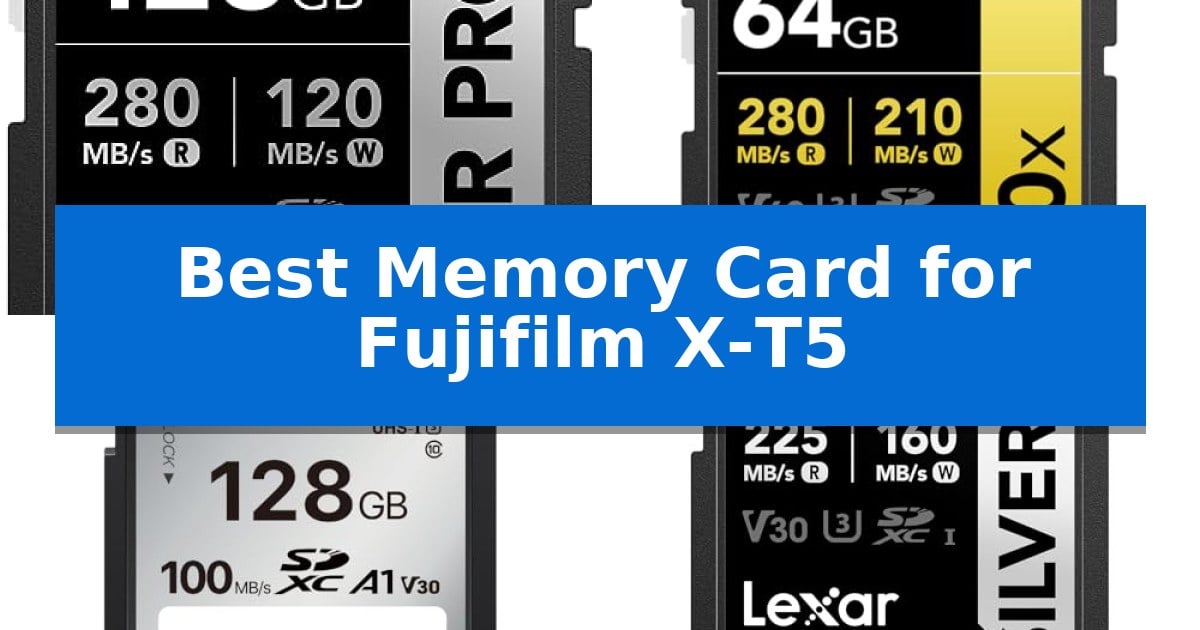
Selecting the right storage media is essential for maintaining the high-speed performance of your camera. The Best Memory Card for Fujifilm X-T5 must balance write speeds with the specific bus interface requirements of the device to prevent buffer bottlenecks during high-resolution burst shooting or 4K video capture.
Whether you are a professional photographer needing rapid offload times or an enthusiast looking for dependable storage, understanding the distinction between UHS-II and UHS-I standards is vital. We have analyzed the current market to help you find a card that matches your shooting habits and technical needs.
You may also want to compare Best Memory Card for Fujifilm X-T4, Best Memory Card for Fujifilm X-T1, and Best Memory Card for Fujifilm X-M5.
Best Memory Card for Fujifilm X-T5
Quick Comparison
| Product | Best For | Key Strength | Score |
|---|---|---|---|
| Lexar Silver Pro SD Memory Card | Best Overall | Blazing-fast transfer speeds up to 280MB/s. | 4.9 |
| Lexar Gold Professional 1800X SD Card | Reliable UHS-II Video Performance | UHS-II technology enables rapid 280MB/s read and 205MB/s write speeds. | 4.9 |
| Gigastone 4K Camera Pro SD Card | Budget-Friendly 4K Capture | Durable construction with waterproof, shock-proof, and temperature-proof ratings. | 4.7 |
| Lexar Silver SD Memory Card | Balanced UHS-I Speed | V30 speed class supports smooth 4K 60FPS video recording. | 4.9 |
| PNY Elite-X SDXC Flash Card | Steady Burst Mode Support | Class 10 U3 V30 speed rating supports 4K Ultra HD video capture. | 4.9 |
How We Chose
- Bus Interface Compatibility: Prioritizing UHS-II support to leverage the camera's full potential for high-bitrate video and rapid buffer clearing.
- Write Speed Consistency: Evaluating stated write performance to ensure sustained recording without dropped frames during 4K capture.
- Read Speed Efficiency: Assessing data transfer rates to minimize downtime when moving large files to post-production workstations.
- Durability Ratings: Checking for environmental protections such as shock, temperature, and X-ray resistance to safeguard data in field conditions.
- Capacity and Value: Balancing storage volume against cost to provide options for both heavy-duty professional use and casual shooting.
1 Lexar Silver Pro SD Memory Card — Fast UHS-II Workflow Speeds
Capturing high-resolution imagery requires a storage solution that can keep pace with the demands of modern mirrorless systems. The Lexar 128GB SILVER PRO SD Memory Card is engineered to support professional workflows by providing blazing-fast transfer speeds of up to 280MB/s read and 120MB/s write, ensuring that large photo and video files move in seconds rather than minutes.
Designed for reliability, this card is capable of handling high-resolution 4K UHD and 1080p Full-HD capture without dropped frames or buffering. Its performance is backed by rigorous testing across various cameras and camcorders, making it a dependable choice for photographers and videographers who need to maintain a consistent pace during intensive shooting sessions.
The card offers hassle-free compatibility by remaining backwards-compatible with UHS-I devices, allowing it to integrate into existing camera setups or card readers seamlessly. This flexibility ensures that users can transition between different hardware environments without needing to replace their entire storage library.
For long-term peace of mind, the Lexar 128GB SILVER PRO SD Memory Card includes a lifetime limited warranty and access to the free Lexar Recovery Tool. This support structure is intended to provide confidence for years of professional use, helping to protect data integrity during critical projects.
Best for: Professional photographers and videographers who require high-speed, reliable storage for 4K video recording and rapid file offloading.
Skip if: Users who do not require UHS-II speeds or those using older legacy equipment that cannot benefit from the advanced performance capabilities of this card.
PROS
- Blazing-fast transfer speeds up to 280MB/s.
- Supports stunning 4K video capture without buffering.
- Backwards-compatible with UHS-I devices.
- Includes a lifetime limited warranty.
CONS
- Performance limited to the capabilities of the host device's card slot.
2 Lexar Gold Professional 1800X SD Card — Reliable UHS-II Video Performance
The Lexar Gold Professional 1800X SD Card leverages advanced UHS-II technology to deliver rapid data throughput, reaching read speeds of up to 280MB/s and write speeds of 205MB/s. This performance profile is engineered to support the high-resolution imaging and 4K UHD video requirements of the Fujifilm X-T5, ensuring that buffer clearing and file offloading remain efficient during demanding shooting sessions.
Designed for professional environments, this card carries V60, U3, and Class 10 speed ratings. These specifications guarantee the sustained write performance necessary for uninterrupted 4K video recording, preventing dropped frames or recording errors. The 256GB capacity provides significant storage headroom, allowing photographers to capture extensive high-resolution sequences without the need for frequent card swaps.
Reliability is central to the design, with the card built to operate across a wide temperature range from 32°F to 158°F. It is also rated for storage temperatures as low as -13°F, providing security for data in varied climates. The card is manufactured in Taiwan and includes a lifetime limited warranty, reflecting a focus on long-term durability for professional workflows.
Compatibility is broad, as the card meets multiple international standards including FCC, CE, and UKCA. Its UHS-II interface is backward compatible with UHS-I devices, though maximum speeds are realized only in UHS-II enabled slots like those found in the X-T5. This versatility makes it a practical choice for users managing multiple camera bodies or card readers.
Best for: Photographers and videographers requiring reliable, high-capacity storage for 4K video and high-speed burst photography on the Fujifilm X-T5.
Skip if: Users who do not require V60-rated sustained write speeds or those who prefer smaller, lower-cost storage capacities for casual, non-professional use.
PROS
- UHS-II technology enables rapid 280MB/s read and 205MB/s write speeds.
- V60 and U3 ratings ensure stable performance for 4K UHD video recording.
- Durable construction supports operation in temperatures from 32°F to 158°F.
- Lifetime limited warranty provides long-term support for professional data storage.
CONS
- UHS-II interface is required to achieve the highest advertised transfer speeds.
- Higher capacity may be more than necessary for users who do not shoot high-bitrate video.
3 Gigastone 4K Camera Pro SD Card — Budget-Friendly 4K Capture
Reliable storage is essential for capturing high-resolution imagery and video, and the Gigastone 4K Camera Pro SD Card provides a dependable foundation for your workflow. This full-sized SDXC card is engineered to handle the demands of 4K UHD video recording, ensuring your files are saved securely during extended shooting sessions.
The card features a UHS-I A1 V30 U3 Class 10 rating, which supports the data throughput necessary for high-bitrate video capture. With up to 100 MB/s data transfer speeds and a 150MB/s read speed, it facilitates efficient file offloading to your computer, minimizing the time spent waiting for large batches of photos or long video clips to transfer.
Durability is a key consideration for field work, and this card is built to withstand challenging environments. It is certified waterproof, temperature-proof, x-ray-proof, shock-proof, and magnetic-proof, providing peace of mind when shooting outdoors. Each unit also includes a mini case for organized storage and a 5-year limited warranty.
While this card offers robust protection and performance for standard 4K workflows, it is important to note that it is a UHS-I interface. Users requiring the absolute highest burst-mode speeds for continuous high-speed sports photography may find that UHS-II cards offer faster clearing times for the buffer, though for general photography and 4K video, this card remains a practical and capable choice.
Best for: Photographers and videographers seeking a reliable, durable, and budget-friendly storage solution for 4K video and high-resolution stills.
Skip if: Professional sports or wildlife photographers who require the ultra-fast write speeds of UHS-II cards to clear large camera buffers during high-speed continuous shooting.
PROS
- Durable construction with waterproof, shock-proof, and temperature-proof ratings.
- V30 speed class ensures stable performance for 4K UHD video recording.
- 5-year limited warranty provides long-term support.
- Includes a protective mini case for safe transport.
CONS
- UHS-I interface may be slower than UHS-II alternatives for clearing large camera buffers.
- 100 MB/s transfer speed is sufficient for most tasks but not the fastest available on the market.
4 Lexar Silver SD Memory Card — Balanced UHS-I Speed
Reliable data management is essential for high-resolution workflows, and the Lexar 256GB Silver SD Memory Card offers a dependable storage foundation for the Fujifilm X-T5. Engineered with a V30 speed class rating, this card is specifically optimized to handle the sustained data demands of 4K 60FPS video recording, ensuring that high-bitrate footage is captured without dropped frames or interruptions.
Efficiency in post-production starts with offloading files quickly. The card features a 225MB/s maximum read speed, which significantly reduces the time spent transferring large video files or high-resolution image bursts to a workstation. Complementing this, the 160MB/s maximum write speed maintains camera responsiveness, allowing for consistent performance during active shooting sessions.
Built for the realities of field photography, the Lexar 256GB Silver SD Memory Card features a robust, resilient design. It is constructed to be wearproof, drop-proof, temperature-proof, x-ray-proof, shockproof, magnetic-proof, and vibration-resistant. These physical safeguards provide security for data stored in varied environments, from extreme temperatures to high-vibration settings.
Versatility is a core benefit of this storage solution, as it maintains broad compatibility across major camera systems including Canon, Sony, and Nikon. Backed by a Lifetime Limited Warranty, the card provides long-term assurance for both professional and enthusiast users who require consistent, reliable performance for their daily creative work.
Best for: Photographers and videographers who need a durable, high-capacity UHS-I card for 4K video recording and reliable daily shooting.
Skip if: Users requiring the extreme write speeds of UHS-II or CFexpress cards for high-speed continuous burst shooting or high-bitrate RAW video formats.
PROS
- V30 speed class supports smooth 4K 60FPS video recording.
- 225MB/s read speed enables fast file transfers.
- Comprehensive durability features including shock and temperature resistance.
- Lifetime Limited Warranty for long-term peace of mind.
CONS
- UHS-I interface limits maximum potential write speeds compared to UHS-II alternatives.
5 PNY Elite-X SDXC Flash Card — Steady Burst Mode Support
Capturing high-resolution images and 4K video with the Fujifilm X-T5 requires a reliable storage medium capable of handling intensive data throughput. The PNY 256GB Elite-X C10 U3 V30 SDXC Flash Memory Card is engineered to meet these demands, offering a Class 10 U3 V30 speed rating that ensures consistent performance for burst mode photography and high-bitrate video recording.
Designed for versatility, this card provides up to 100MB/s read speeds, which facilitates efficient file transfers to your computer after a long shoot. Its compatibility extends beyond the X-T5 to include a wide range of DSLR and advanced video cameras, making it a flexible addition to any photographer's gear bag.
Durability is a core component of its design, as the card is built to be magnet proof, shock proof, temperature proof, and waterproof. These protective features help safeguard your captured content against the rigors of field work and unpredictable environments.
With a 256GB capacity, this memory card offers substantial space for extended sessions, reducing the frequency of card swaps. It is backed by a lifetime limited warranty, providing long-term assurance for your storage investment.
Best for: Photography and videography enthusiasts who require reliable, high-capacity storage for 4K video and burst-mode photography.
Skip if: Professional users who require higher UHS-II or V60/V90 speed classes for the most demanding high-bitrate video formats or ultra-fast continuous shooting buffers.
PROS
- Class 10 U3 V30 speed rating supports 4K Ultra HD video capture.
- Durable construction including shock, temperature, and waterproof protection.
- Large 256GB capacity ideal for long shooting sessions.
- Lifetime limited warranty for long-term reliability.
CONS
- UHS-I interface may limit maximum write speeds compared to UHS-II alternatives.
Best Memory Card for Fujifilm X-T5 Buying Guide
Understanding UHS-II vs. UHS-I
The Fujifilm X-T5 features dual SD card slots that support the UHS-II interface. Choosing a UHS-II card is recommended for users who frequently shoot 4K video or high-speed bursts, as these cards utilize an extra row of pins to achieve significantly higher data transfer rates compared to standard UHS-I cards.
While UHS-I cards are often more affordable and sufficient for casual photography or lower-bitrate video, they may become a bottleneck during intensive tasks. Always verify the V-class rating, such as V60 or V90, to ensure the card meets the minimum sustained write speed required for your specific video quality settings.
The Importance of V-Class Ratings
Video Speed Class (V-Class) ratings are a critical indicator of a card's ability to handle sustained data streams. A V30 card is generally the minimum requirement for 4K video, while V60 and V90 ratings offer more headroom for higher bitrates and frame rates.
Selecting a card with an appropriate V-rating prevents the camera from stopping recording unexpectedly. If you plan to utilize the full video capabilities of the X-T5, investing in a V60 or higher card ensures that your footage remains smooth and free of buffer-related errors.
Data Transfer and Workflow
High-resolution files from modern sensors can take considerable time to transfer to a computer. Cards with faster read speeds significantly reduce the time spent waiting for imports, which is a major advantage for photographers working on tight deadlines.
When choosing a card, consider the read speed alongside the write speed. A card that writes quickly but reads slowly will still create a bottleneck during your post-production workflow, effectively negating the time saved during the actual shooting process.
Durability and Reliability
Since cameras are often used in diverse environments, the physical durability of a memory card is a key consideration. Many modern SD cards are rated to be temperature-proof, shockproof, and X-ray-proof, providing an extra layer of security for your captured media.
Always look for cards that have been rigorously tested for reliability. While no storage medium is immune to failure, cards from reputable manufacturers often include data recovery tools or lifetime warranties, which can be invaluable if you encounter file corruption issues.
Capacity Requirements
The capacity you need depends entirely on your file format and shooting volume. RAW files and high-bitrate video consume storage rapidly, making 128GB or 256GB cards a common choice for professionals who do not want to swap media frequently.
For those who shoot primarily in JPEG or lower-resolution video, smaller capacities may suffice. However, it is generally better to have a single high-capacity card that can handle a full day of shooting rather than managing multiple smaller cards, which increases the risk of loss or data mismanagement.
Frequently Asked Questions
Does the Fujifilm X-T5 require UHS-II cards?
The X-T5 is compatible with both UHS-I and UHS-II cards. While UHS-I cards will work, UHS-II cards are recommended to fully utilize the camera's high-speed burst and video recording capabilities.
What is the difference between V30 and V60 cards?
The V-rating indicates the minimum sustained write speed. A V30 card guarantees at least 30MB/s, while a V60 card guarantees 60MB/s, making V60 better suited for high-bitrate 4K video.
Can I use a 256GB card in my camera?
Yes, the X-T5 supports high-capacity SDXC cards, including 256GB and larger, provided they are formatted correctly within the camera menu.
Why is my card not reaching the advertised speed?
Advertised speeds are often maximum theoretical limits. Actual performance can be affected by the card reader, the host device's interface, and the specific file sizes being transferred.
Should I format my card in the camera?
Yes, it is highly recommended to format your memory card inside the Fujifilm X-T5 itself to ensure the file system is optimized for the camera's specific requirements.
Conclusion: Our Top Pick
For most users, the Lexar Silver Pro SD Memory Card stands out as the best choice due to its balance of high-speed UHS-II performance and reliable write speeds. It provides the necessary throughput for demanding 4K video and burst photography while offering a lifetime limited warranty for long-term peace of mind.
While other options like the Lexar Gold 1800X offer similar performance, the Silver Pro series provides a compelling combination of speed and value. Ensure you pair your chosen card with a high-speed UHS-II compatible reader to fully realize the workflow benefits during your post-production process.