
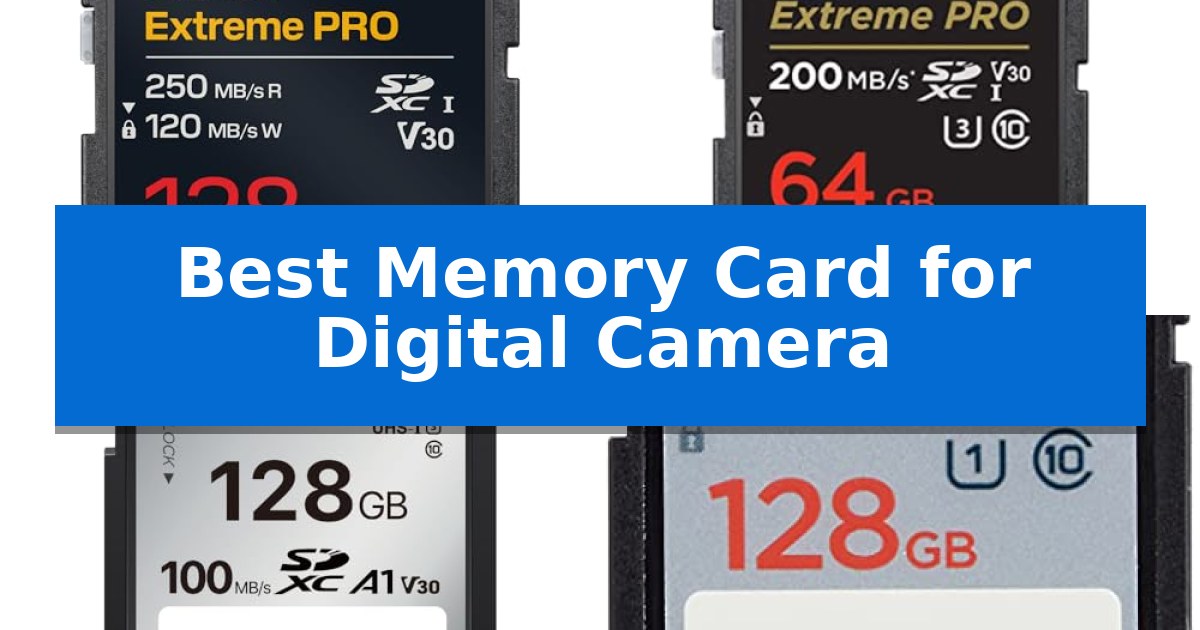
Choosing the right storage media is essential for ensuring your camera performs at its peak. Whether you are capturing high-resolution stills or recording long-form video, the Best Memory Card for Digital Camera must balance transfer speeds with reliable capacity to avoid dropped frames or lost data.
Our guide focuses on matching specific card standards—such as UHS-I, V30, and capacity ratings—to your unique photography and videography requirements. By understanding these technical specifications, you can select a card that ensures your workflow remains efficient and your files stay secure.
You may also want to compare Best Memory Card for Computer, Best Memory Card for Compact Digital Camera, and Best Memory Card for CCTV.
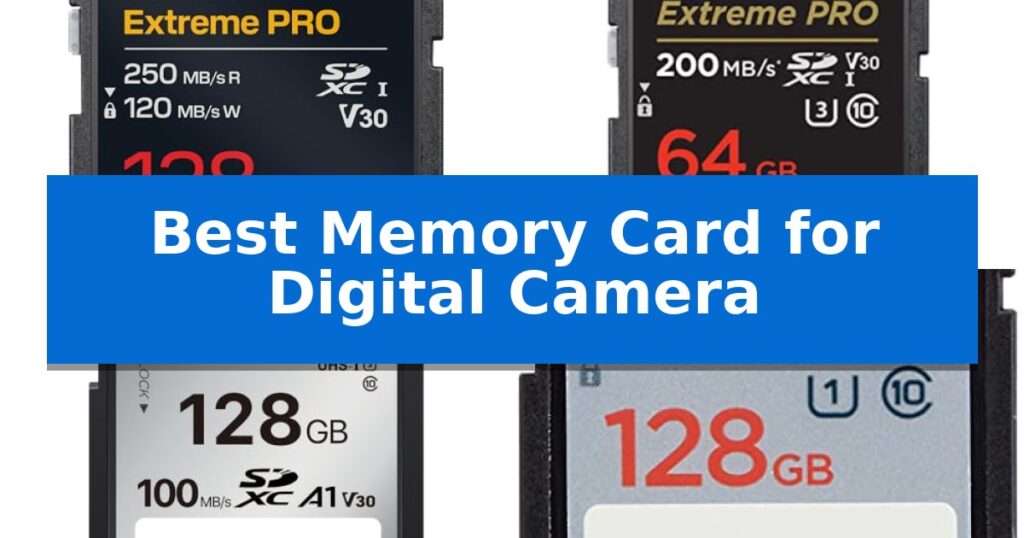
Best Memory Card for Digital Camera
Quick Comparison
| Product | Best For | Key Strength | Score |
|---|---|---|---|
| SanDisk Extreme PRO SD Card | Best Overall | U3 and V30 speed ratings ensure stable 4K UHD video capture. | 4.9 |
| SanDisk Extreme PRO SDXC Card | Rapid offload for burst photography | High-speed offloading up to 200MB/s with compatible readers. | 4.8 |
| Gigastone 4K Camera Pro SD Card | Reliable high-resolution video capture | 4K Ultra HD video compatibility for high-resolution recording. | 4.8 |
| SanDisk Ultra SDXC Memory Card | Ideal for point-and-shoot cameras | 128GB high-capacity storage for extensive photo and video libraries. | 4.6 |
| INDMEM Class 4 SD Card | Stable choice for legacy devices | SLC flash technology for stable performance in legacy devices. | 4.5 |
How We Chose
- Speed Class Ratings: Prioritizing V30 and U3 standards for consistent 4K video recording.
- Transfer Performance: Assessing read and write speeds to determine offload efficiency.
- Capacity Versatility: Selecting options that accommodate both casual storage and high-volume professional needs.
- Device Compatibility: Ensuring a range of cards that fit modern digital cameras and older legacy devices.
- Durability Standards: Considering cards engineered to withstand environmental challenges.
1 SanDisk Extreme PRO SD Card — Fastest for 4K UHD recording
Capturing high-resolution stills and demanding video formats requires a reliable storage foundation that can keep pace with modern digital sensors. The SanDisk 128GB Extreme PRO SD UHS-I Card is engineered to support 4K UHD recording, providing the necessary throughput for high-bitrate footage while ensuring consistent performance during extended shooting sessions.
Designed for versatility, this card features U3 and V30 video speed class ratings, which are essential for maintaining the sustained write speeds required for smooth video capture. With read speeds reaching up to 250MB/s and write speeds up to 120MB/s, it enables efficient offloading of large media files to your workstation, reducing downtime between shoots.
Durability is a core component of its design, as the card is built to defy the elements and withstand the rigors of field use. Whether you are working in challenging environments or frequently swapping media, its resilient construction is intended to handle rough handling and consistent, long-term operation.
To assist with organization, the card integrates with the SanDisk Memory Zone desktop app, simplifying the process of backing up and managing your assets. With a Lifetime Limited warranty and capacities available up to 2TB, it offers a scalable storage solution for photographers and videographers who need to maximize their capacity for longer projects.
Best for: Photographers and videographers who require reliable, high-speed storage for 4K UHD video recording and high-resolution still photography.
Skip if: Users who require the extreme performance of UHS-II or CFexpress cards for high-speed burst shooting or 8K RAW video workflows.
PROS
- U3 and V30 speed ratings ensure stable 4K UHD video capture.
- High read speeds up to 250MB/s for faster file transfers.
- Resilient design built to perform in extreme conditions.
- Lifetime Limited warranty provides long-term peace of mind.
CONS
- UHS-I interface limits maximum transfer speeds compared to UHS-II alternatives.
2 SanDisk Extreme PRO SDXC Card — Rapid offload for burst photography
Capturing high-resolution 4K UHD video and rapid sequential bursts requires a storage medium that keeps pace with your camera's buffer. The SANDISK 64GB Extreme PRO SDXC UHS-I Memory Card is engineered to handle these demanding tasks, utilizing UHS Speed Class 3 (U3) and Video Speed Class 30 (V30) ratings to ensure sustained write performance for real-time recording.
Beyond its recording capabilities, this card prioritizes efficiency during post-production workflows. When paired with the SanDisk Professional PRO-READER, the card leverages SanDisk QuickFlow Technology to achieve offload speeds of up to 200MB/s. This significantly reduces the time spent transferring large media files from the field to your editing workstation.
Designed for reliability in various shooting environments, the card maintains a consistent write speed of up to 90MB/s. This throughput is essential for photographers who rely on high-speed burst modes, ensuring the camera can clear its internal memory quickly without stalling during critical action sequences.
While the card is optimized for UHS-I host devices, users should note that maximum read speeds are dependent on using compatible hardware. It serves as a robust solution for creators who need a balance of sustained video capture support and accelerated data transfer, backed by a lifetime limited manufacturer warranty.
Best for: Photographers and videographers requiring reliable 4K recording and fast file offloading on UHS-I compatible cameras.
Skip if: Users with cameras requiring UHS-II or CFexpress interfaces for higher-end professional cinema workflows will find this card's interface speed limiting.
PROS
- High-speed offloading up to 200MB/s with compatible readers.
- V30 and U3 ratings ensure stable 4K UHD video capture.
- Reliable write speeds of up to 90MB/s for burst photography.
- Includes a lifetime limited manufacturer warranty.
CONS
- Maximum speeds require specific compatible host devices.
- Performance is limited by the UHS-I interface.
3 Gigastone 4K Camera Pro SD Card — Reliable high-resolution video capture
The Gigastone 4K Camera Pro SD Card is engineered for high-resolution workflows, offering 4K Ultra HD video compatibility to ensure smooth data capture for modern digital cameras. This full-sized SDXC memory card measures 32mm by 24mm, providing a standard form factor that fits most professional and enthusiast-grade camera bodies. By utilizing a UHS-I A1 V30 U3 Class 10 rating, the card maintains the consistent write speeds required for high-bitrate video recording, making it a reliable choice for creators who need to capture detailed footage without frame drops.
Built to withstand challenging environments, this card features waterproof, temperature-proof, x-ray-proof, and shock-proof construction, along with magnetic resistance. These physical protections help safeguard stored media when shooting in diverse outdoor or studio settings. The package also includes a mini case for secure storage during transit, which helps prevent physical damage to the card's contact points when it is not inside a camera.
Performance-wise, the card supports data transfer speeds of up to 100 MB/s, facilitating efficient file offloading to computers or storage devices. This speed is particularly beneficial for photographers who need to move large batches of high-resolution images or long video clips quickly. While it is optimized for standard digital camera use, the 5-year limited warranty provides long-term assurance for users who prioritize data integrity and consistent equipment performance across a wide range of digital camera setups.
Best for: Photographers and videographers who require a durable, high-capacity storage solution for 4K video recording and high-resolution photography.
Skip if: Users who require ultra-high-speed UHS-II or UHS-III interfaces for professional cinema cameras with extreme burst-rate requirements.
PROS
- 4K Ultra HD video compatibility for high-resolution recording.
- Comprehensive environmental protection including waterproof and shock-proof design.
- Includes a mini case for organized storage and protection.
- Supported by a 5-year limited warranty.
CONS
- 100 MB/s transfer speed may be a bottleneck for users needing faster offload times compared to higher-tier cards.
4 SanDisk Ultra SDXC Memory Card — Ideal for point-and-shoot cameras
Capturing high-resolution images and recording Full HD video requires a reliable storage medium that keeps pace with your camera. The SanDisk 128GB Ultra SDXC UHS-I Memory Card is engineered to support these demands, offering a balance of capacity and performance for photographers using compact to mid-range point-and-shoot devices.
This card features a Class 10 rating and UHS Speed Class 1 (U1), which are specifically designed to facilitate real-time video recording on UHS-enabled host devices. With transfer speeds up to 100MB/s, it allows for efficient movement of large files from the card to a computer, minimizing downtime during post-processing.
With a 128GB capacity, this memory card provides substantial space to store a high volume of photos and extended Full HD (1920×1080) video footage. The design is optimized for versatility, ensuring that users can focus on their subjects rather than worrying about remaining storage space during a shoot.
Backed by a 10-year limited manufacturer warranty, this card is built with durability in mind. Its compact form factor ensures compatibility with a wide range of digital cameras, making it a practical addition to any photography kit.
Best for: Photographers using compact or mid-range point-and-shoot cameras who need reliable storage for Full HD video and high-resolution still images.
Skip if: Professional videographers or photographers using high-end cinema cameras that require higher UHS Speed Class ratings (such as U3 or V30) for 4K video recording.
PROS
- 128GB high-capacity storage for extensive photo and video libraries.
- Class 10 and U1 speed ratings optimized for Full HD video recording.
- Fast 100MB/s read speeds for quick file transfers.
- 10-year limited manufacturer warranty for long-term peace of mind.
CONS
- Write speeds may vary depending on the specific host device and usage conditions.
- Not designed for 4K video or high-bitrate professional recording requirements.
5 INDMEM Class 4 SD Card — Stable choice for legacy devices
Maintaining compatibility with legacy hardware requires specialized storage solutions, and the INDMEM Class 4 SD Card is engineered to bridge that gap. This 2GB storage capacity card utilizes SLC high-speed read/write technology, specifically designed to function reliably in older digital cameras, trail cameras, and industrial equipment that may not support modern, high-capacity SDXC standards.
The INDMEM Class 4 SD Card adheres to the Class 4 standard, ensuring consistent performance for devices that require slower, more stable data transfer rates. With an actual allowable capacity of approximately 1.83GB to 1.87GB, it provides a dedicated space for specific tasks like GPS logging, CNC machine data, or legacy photography workflows where high-speed throughput is not the primary requirement.
Built for durability and broad compatibility, this card is designed to work with mainstream SD card readers while maintaining a compact form factor. The unit is made in Japan and assembled in China, reflecting a focus on manufacturing standards for specialized legacy hardware. It includes a 1-year manufacturer's limited service warranty, offering a baseline of support for users maintaining older technical setups.
Choosing the right media for older electronics involves balancing capacity with device limitations. While modern cards often exceed the storage limits or speed protocols of older hardware, this card serves as a focused tool for those specific environments. It remains a practical choice for users who need a reliable, low-capacity storage medium that avoids the compatibility hurdles often associated with modern, high-density flash memory.
Best for: Users needing reliable, low-capacity storage for legacy digital cameras, trail cameras, and industrial equipment that requires Class 4 compatibility.
Skip if: Users requiring high-speed data transfer or large storage capacities for modern 4K video recording or high-resolution burst photography.
PROS
- SLC flash technology for stable performance in legacy devices.
- Class 4 compatibility ensures functionality with older digital cameras and industrial hardware.
- Includes a 1-year manufacturer's limited service warranty.
- Specifically designed for broad legacy device support including GPS, CNC, and PDA units.
CONS
- Limited 2GB capacity is insufficient for modern high-resolution media.
- Class 4 speed is not suitable for high-bandwidth modern applications.
Best Memory Card for Digital Camera Buying Guide
Understanding Speed Classes
Speed classes are the most critical factor when selecting a card. The UHS Speed Class (U3) and Video Speed Class (V30) are essential for users recording 4K UHD video, as they guarantee a minimum sustained write speed of 30MB/s. This prevents the camera from stopping during high-bitrate recording.
For photographers shooting in burst mode, higher write speeds are equally important. A faster card clears the camera's internal buffer more quickly, allowing you to capture more frames in rapid succession without waiting for the device to catch up.
Capacity and Storage Needs
Your storage capacity should align with your file formats and shooting frequency. A 128GB card is often a sweet spot for many users, providing enough space for thousands of high-resolution stills or hours of 4K video without the need for constant offloading.
If you are a high-volume shooter, capacities reaching 2TB allow for extended sessions. However, always verify that your specific camera model supports high-capacity SDXC standards, as older devices may have limitations on the maximum card size they can recognize.
Read Speeds and Workflow Efficiency
While write speed is vital for the camera, read speed determines how quickly you can move your files to a computer or external drive. Cards with speeds up to 250MB/s significantly reduce the time spent waiting for large video files to transfer.
To achieve these maximum transfer rates, ensure you are using a compatible card reader. Using an outdated or low-speed reader can create a bottleneck, negating the performance benefits of a high-end memory card.
Durability and Reliability
Digital cameras are often used in varied environments, from dusty trails to humid climates. Many modern cards are engineered to be waterproof, temperature-proof, and shock-proof, providing an extra layer of protection for your data.
For those working in demanding conditions, these physical safeguards are as important as the electronic specifications. Always look for cards that explicitly state their resilience to environmental factors to ensure your footage remains intact.
Compatibility with Legacy Devices
Not every device requires the latest high-speed technology. Older cameras, trail cams, or specialized industrial equipment may function better with Class 4 standard cards. These cards are often built with different flash technology, such as SLC, which can be more stable for specific legacy hardware.
Always check your camera's manual to see if it requires a specific card type. Using a card that is too advanced for an older device can sometimes lead to recognition errors or performance instability.
Frequently Asked Questions
What does V30 mean on an SD card?
V30 stands for Video Speed Class 30, which guarantees a minimum sustained write speed of 30MB/s, making it suitable for recording 4K UHD video.
Can I use a 128GB card in an older camera?
It depends on the camera's compatibility. While many devices support SDXC cards, some older models have a maximum capacity limit, often 32GB or 64GB. Check your camera's specifications before purchasing.
Why is my card not reaching the advertised speed?
Advertised speeds are often maximums achieved under specific testing conditions. Your actual speed may be limited by the camera's internal hardware, the card reader you are using, or the connection interface.
Is there a difference between SD and SDXC?
Yes, they refer to the capacity standard. SD cards are generally up to 2GB, SDHC cards are up to 32GB, and SDXC cards cover capacities from 64GB up to 2TB.
How often should I format my memory card?
It is recommended to format your card in the camera itself after you have successfully backed up your files. This helps maintain file system integrity and reduces the risk of data corruption.
Conclusion: Our Top Pick
Selecting the right storage is a fundamental step in ensuring your photography equipment performs reliably. For most users, the SanDisk Extreme PRO SD Card stands out as the most versatile choice, offering the necessary V30 and U3 speed ratings to handle demanding 4K video recording while maintaining excellent compatibility with a wide array of modern digital cameras.
If your needs are more specialized, such as requiring support for legacy devices or specific burst-photography workflows, consider the other options in our list. Regardless of your choice, prioritizing a card with reliable speed class ratings will help protect your work and streamline your creative process.