
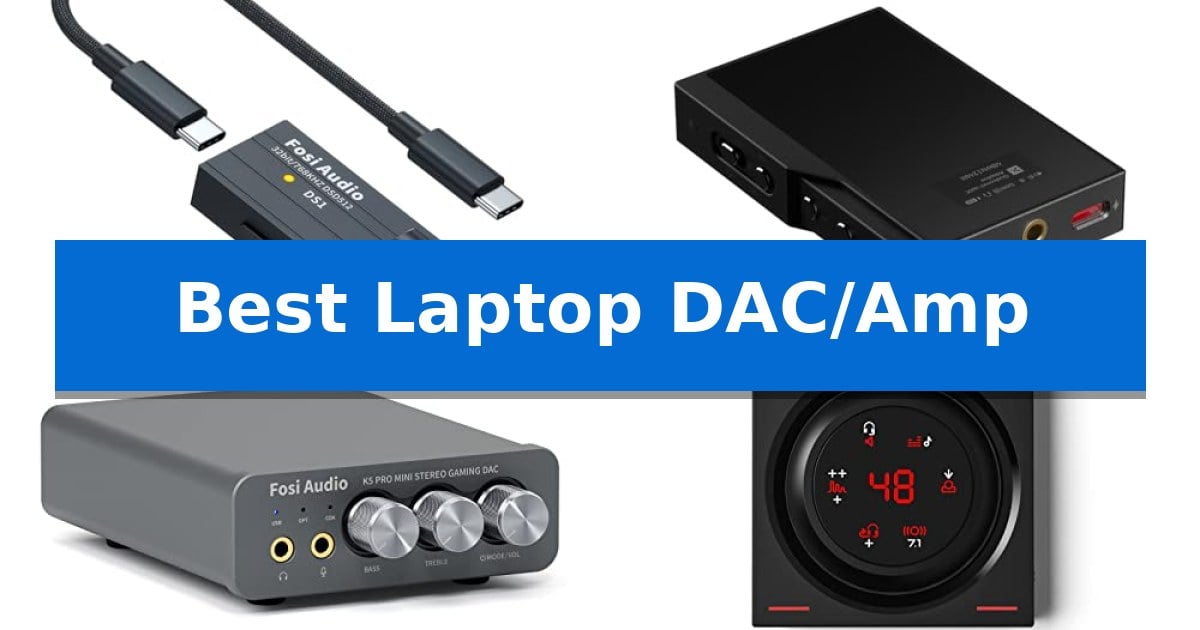
If you find that your laptop's built-in audio output lacks the power to drive high-impedance headphones or suffers from audible background hiss, you are likely missing out on the full potential of your music and media. A dedicated digital-to-analog converter and amplifier can bypass your computer's internal sound card to deliver cleaner, more detailed audio.
Finding the Best Laptop DAC/Amp requires balancing your specific headphone requirements with the portability and connectivity options that fit your workflow. Whether you are a gamer looking for immersive surround sound or an audiophile seeking high-resolution playback, our selection helps you navigate the technical specifications to find the right match for your desk.
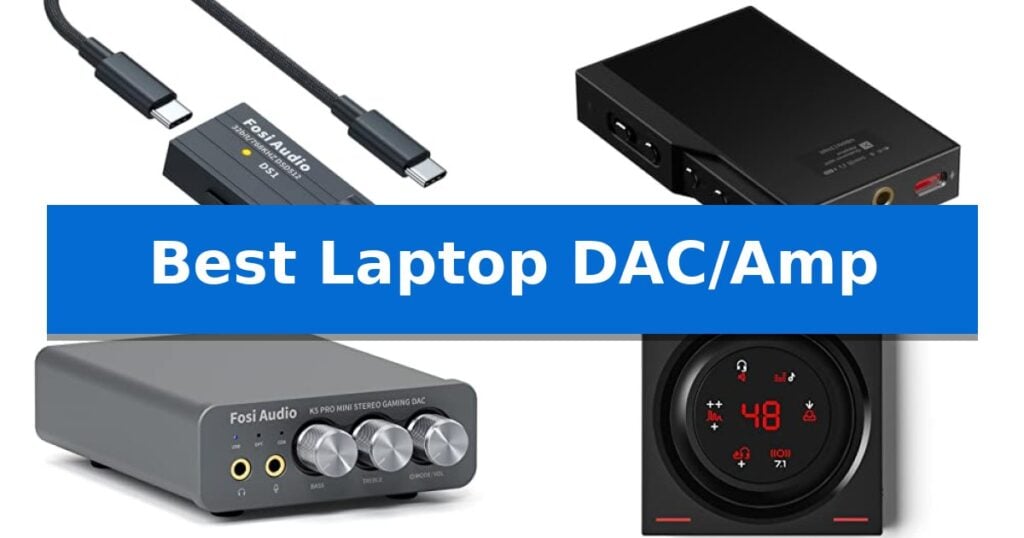
Best Laptop DAC/Amp in 2026: Enhance Your Audio Fidelity
Quick Comparison
| Product | Best For | Key Strength | Score |
|---|---|---|---|
| Fosi Audio DS1 USB DAC | Best Overall | Supports high-resolution DSD 512 and 32Bit/768kHz PCM audio. | 4.9 |
| Questyle M18i Max DAC Amp | Lossless wireless and wired flexibility | Dual output options with both 3.5mm and 4.4mm balanced ports. | 4.5 |
| Fosi Audio K5 Pro DAC | Versatile desktop gaming control | Integrated microphone input for gaming communication | 4.8 |
| EPOS GSX 1000 2nd Edition | Immersive surround sound for gaming | Dedicated binaural rendering engine for 7.1 surround sound | 4.4 |
| MECHEN AP10 USB DAC | Balanced output for demanding headphones | Dual output options including a 4.4mm balanced port for high-power headphone driving. | 4.4 |
How We Chose
- Decoding support for high-bitrate PCM and DSD formats.
- Output power measured in milliwatts to ensure compatibility with various headphone impedances.
- Connectivity options including 3.5mm single-ended and 4.4mm balanced ports.
- Ease of integration with Windows, Mac, and mobile operating systems.
- Physical build quality and portability for desktop or travel use.
1 Fosi Audio DS1 USB DAC — Ultra-portable high-resolution audio
Achieving high-fidelity audio output from a computer often requires moving beyond standard onboard sound cards. The Fosi Audio DS1 USB DAC addresses this by utilizing the ESS Technology ES9038Q2M DAC chip, which provides support for DSD 512 and 32Bit/768kHz PCM high-resolution audio files.
Designed for versatility, this compact device features both 3.5mm single-ended and 4.4mm balanced headphone outputs. The inclusion of the 4.4mm output allows for a more detailed audio experience, while the unit's high-power architecture is capable of driving demanding headphones with impedance above 200Ω.
The Fosi Audio DS1 USB DAC is engineered for a low noise floor and minimal distortion, boasting a THD+N < 0.0001% and noise < 1.6uV. This ensures a cleaner signal path for sensitive equipment, making it a suitable upgrade for users seeking to improve their desktop or mobile listening setup.
Usability is prioritized through an independently controlled volume system that operates separately from the host device. The unit is compatible with Android, iOS, Windows, and Mac systems, and includes a Type-C to Type-C cable along with a USB-A to USB-C converter to facilitate connection across various laptops, smartphones, and tablets.
Best for: Users seeking a compact, high-resolution DAC/Amp capable of driving high-impedance headphones via balanced or single-ended connections.
Skip if: Users who require wireless Bluetooth connectivity or those who do not use headphones with high impedance requirements.
PROS
- Supports high-resolution DSD 512 and 32Bit/768kHz PCM audio.
- Includes both 3.5mm and 4.4mm balanced headphone outputs.
- Capable of driving demanding headphones with impedance above 200Ω.
- Features an independent volume control separate from the source device.
CONS
- Requires an additional Lightning to USB-C cable for OTG functionality on older iOS devices.
- Lacks wireless or Bluetooth connectivity options.
2 Questyle M18i Max DAC Amp — Lossless wireless and wired flexibility
The Questyle M18i Max DAC Amp integrates a high-performance ESS flagship ES9219Q DAC chip and patented quad-core Current Mode Amplifier SiP modules to deliver audio with a recorded distortion level of 0.0002%. Designed for versatility, this portable device bridges the gap between wired and wireless listening by offering seamless switching between USB DAC and Bluetooth 5.4 modes.
For wired connections, the unit features both 3.5mm unbalanced and 4.4mm balanced outputs, allowing users to pair it with a wide range of headphones. The device includes manual gain control and 60 levels of volume adjustment, providing precise control over output intensity to match specific headphone characteristics.
Wireless functionality is driven by Qualcomm Snapdragon Sound technology, supporting high-resolution codecs including LDAC, aptX Adaptive, and aptX HD. This ensures high-fidelity audio transmission at up to 24-bit/96kHz. Additionally, the device incorporates cVc Generation 8.0 call solution and an Infineon flagship microphone to facilitate clear voice communication during calls.
Measuring just 3.35 by 2.17 inches, the Questyle M18i Max DAC Amp is engineered to balance compact portability with powerful drive capabilities. Its dual-mode architecture makes it a flexible solution for users who require high-resolution wired audio at their desk and lossless wireless convenience while on the move.
Best for: Users who require a high-resolution portable DAC that supports both balanced wired connections and lossless wireless Bluetooth streaming.
Skip if: Users who do not require balanced output or advanced wireless codec support may find more cost-effective, single-purpose wired DAC options.
PROS
- Dual output options with both 3.5mm and 4.4mm balanced ports.
- Advanced wireless support including LDAC, aptX Adaptive, and aptX HD via Bluetooth 5.4.
- Ultra-low distortion architecture using patented Current Mode Amplifier SiP modules.
- Integrated microphone and cVc 8.0 technology for clear voice calls.
CONS
- Complex feature set may be more than needed for users seeking a simple plug-and-play wired DAC.
3 Fosi Audio K5 Pro DAC — Versatile desktop gaming control
The Fosi Audio K5 Pro Gaming DAC Headphone Amp serves as a versatile desktop interface, functioning effectively as an external sound card for gaming systems, PCs, and consoles like the PS5. By integrating a microphone input alongside traditional audio outputs, it provides a centralized control point for both audio playback and voice communication.
Engineered with the Texas Instruments NE5532 op-amp chip, this device is optimized for a low-noise floor and clean sound reproduction. It supports high-resolution audio, with USB Type-C input handling up to 24-bit/96kHz, while optical and coaxial inputs extend support to 24-bit/192kHz. Users can drive a wide range of headphones, from 16 Ohm to 300 Ohm, using the dedicated 3.5mm AUX port.
The hardware design prioritizes desktop convenience, featuring a combined volume and power knob along with dedicated bass and treble controls for real-time audio adjustment. Its 2-in-1 USB Type-C interface allows for both power and audio data transmission, simplifying cable management for users connecting to mobile devices or computers.
With a THD of ≤0.003% and an SNR of ≥110dB, the unit maintains signal integrity across various inputs. The inclusion of RCA outputs allows for seamless integration with active speakers or external amplifiers, making it a flexible component for both headphone-centric setups and desktop speaker systems.
Best for: Gamers and desktop users needing a compact, multi-input DAC/Amp with microphone support for headphones and active speakers.
Skip if: Users requiring balanced XLR outputs or those needing support for sample rates higher than 192kHz.
PROS
- Integrated microphone input for gaming communication
- Versatile input options including USB-C, Optical, and Coaxial
- Adjustable bass and treble controls for sound customization
- Wide headphone impedance support from 16 Ohm to 300 Ohm
CONS
- Limited to 96kHz via USB-C connection
- Requires specific port usage for audio source connectivity
4 EPOS GSX 1000 2nd Edition — Immersive surround sound for gaming
The EPOS GSX 1000 2nd Edition distinguishes itself with a dedicated binaural rendering engine, providing EPOS-engineered 7.1 surround sound designed to enhance spatial awareness during gaming sessions. This external USB sound card serves as a specialized DAC and amplifier, offering a streamlined interface for users looking to elevate their audio setup without complex software configurations.
Equipped with a dedicated USB-C DAC chip, this device provides precision control over game audio through integrated EQ presets tailored for music, story, and competitive play. The unit features a physical aluminum volume wheel and intuitive controls, allowing for quick adjustments during intense gameplay. Users can easily switch between headphone and speaker outputs without the need to unplug cables, simplifying the transition between different listening modes.
Designed for clear communication, the amplifier includes an adjustable sidetone feature, enabling users to monitor their own voice in real-time at a customizable volume level. Its construction utilizes high-quality materials to ensure durability, and the unit functions effectively as an audio mixer for PC, making it a versatile addition to any desktop or laptop configuration.
While this device excels in providing a dedicated hardware-based audio solution, it is primarily optimized for Windows and Mac environments. Its compact design and plug-and-play functionality make it a practical choice for those who prioritize ease of use and consistent audio performance over extensive, multi-device compatibility.
Best for: Competitive gamers seeking a dedicated hardware-based DAC/Amp with physical controls and integrated 7.1 surround sound.
Skip if: Users requiring extensive multi-platform support beyond PC and Mac or those who prefer software-based audio processing solutions.
PROS
- Dedicated binaural rendering engine for 7.1 surround sound
- Physical aluminum volume wheel for tactile, precision control
- Adjustable sidetone for real-time voice monitoring
- Seamless switching between headphone and speaker outputs
CONS
- Limited to PC and Mac environments
- Lacks advanced software-based customization options
5 MECHEN AP10 USB DAC — Balanced output for demanding headphones
Achieving high-fidelity audio output from a computer requires a dedicated path for signal conversion, and the MECHEN AP10 USB DAC addresses this by integrating the ESS Sabre ES9028Q2M chip. This hardware-based solution provides native decoding for DSD256 and 32-bit/384kHz audio, ensuring that digital files are processed with high precision before reaching your headphones.
The device is built for versatility, featuring both a 3.5mm single-ended output and a 4.4mm balanced output. The balanced connection is particularly notable for its robust power delivery, capable of outputting up to 522mW at 32Ω, which provides the necessary headroom to drive demanding headphones effectively. With a signal-to-noise ratio exceeding 120dB and a noise floor below 1.6μV, it maintains a clean, transparent background for your music.
Usability is centered on a straightforward, plug-and-play design that functions across iPhone, Android, and desktop operating systems. The MECHEN AP10 USB DAC includes a 100-level stepless volume adjustment system with memory functionality, allowing for granular control over output levels. Its chassis is constructed from solid metal using CNC precision machining, providing a durable and tactile feel for portable use.
This unit serves as a comprehensive upgrade for users seeking to bypass standard onboard audio components. By acting as an external sound card, it ensures consistent audio quality regardless of the host device's internal hardware. The inclusion of a USB-C cable ensures immediate compatibility with modern mobile devices and laptops, making it a practical choice for those who prioritize audio fidelity in a compact, travel-friendly form factor.
Best for: Users who need a high-power balanced output to drive demanding headphones from a mobile device or laptop.
Skip if: Users who only require a basic 3.5mm connection and do not need the additional power or balanced output capabilities of the 4.4mm interface.
PROS
- Dual output options including a 4.4mm balanced port for high-power headphone driving.
- Native hardware decoding for DSD256 and 32-bit/384kHz high-resolution audio.
- 100-level stepless volume control for precise audio adjustment.
- Solid metal CNC construction for durability and a premium feel.
CONS
- Requires USB-C connectivity, which may necessitate adapters for older hardware.
Best Laptop DAC/Amp Buying Guide
Understanding DAC and Amp Roles
A Digital-to-Analog Converter (DAC) is responsible for translating the digital files stored on your laptop into an analog signal that your headphones can play. While every laptop has an internal DAC, external units often utilize superior chips to reduce distortion and improve signal clarity.
The Amplifier (Amp) portion of the device provides the necessary voltage and current to drive your headphones. If you use high-impedance headphones, a standard laptop jack may not provide enough power, leading to weak volume or thin sound. A dedicated amp ensures your headphones perform at their intended capacity.
Balanced vs. Unbalanced Outputs
Many high-end DAC/Amps offer both 3.5mm single-ended and 4.4mm balanced outputs. A balanced connection uses a separate signal path for each channel, which can significantly reduce crosstalk and noise interference, providing a more detailed soundstage.
While the 3.5mm output is the universal standard for most consumer headphones, the 4.4mm balanced port is a critical feature for users with professional-grade gear. Always check your headphone cable termination before choosing a device to ensure you can take full advantage of the balanced output.
Sampling Rates and High-Resolution Audio
You will often see specifications like 32bit/768kHz or DSD512 listed for these devices. These numbers indicate the maximum resolution the DAC can process. While most streaming services do not reach these extremes, having high-resolution support ensures your hardware is not a bottleneck for high-fidelity master recordings.
For the average listener, support for 24-bit/96kHz is usually sufficient. However, if you maintain a library of lossless files, choosing a device that supports higher sampling rates can offer better future-proofing for your audio setup.
Desktop vs. Portable Form Factors
The physical size of your DAC/Amp should match your primary use case. Dongle-style DACs are incredibly portable and draw power directly from your laptop's USB-C port, making them ideal for commuters or those with limited desk space.
Desktop units often include additional features like physical volume knobs, bass/treble controls, and multiple input types like optical or coaxial. If your setup involves permanent speakers or a dedicated gaming station, a larger desktop unit provides better ergonomics and control.
Gaming-Specific Features
Some DAC/Amps are designed specifically for gaming, incorporating features like 7.1 surround sound engines or dedicated microphone inputs. These devices act as external sound cards, often providing software-based EQ presets to help highlight footsteps or environmental cues in competitive titles.
If your primary goal is gaming, look for devices that offer low-latency performance and easy switching between headphone and speaker outputs. These convenience features can significantly improve your daily interaction with your PC.
Frequently Asked Questions
Do I need a DAC/Amp if I use wireless headphones?
No, wireless headphones have their own internal DAC and amplifier. External DAC/Amps are designed specifically for wired headphones.
What is the benefit of a balanced 4.4mm output?
A balanced output reduces electrical noise and crosstalk, which can result in a cleaner, more precise audio signal for compatible headphones.
Will a DAC/Amp make my cheap headphones sound better?
While a DAC/Amp can improve the clarity and power delivery, it cannot fundamentally change the sound signature of low-quality drivers.
Can I use these devices with my smartphone?
Most modern USB-C DAC dongles are compatible with smartphones, provided the phone supports OTG (On-The-Go) functionality.
What does the gain control do?
Gain control allows you to adjust the power output level to match the sensitivity of your specific headphones, preventing distortion at high volumes.
Conclusion: Our Top Pick
For most users seeking a significant upgrade in audio quality without the bulk of a desktop unit, the Fosi Audio DS1 USB DAC stands out as the most versatile choice. Its compact design, combined with support for high-resolution audio and dual headphone outputs, makes it an excellent companion for both laptops and mobile devices.
While it offers impressive power for its size, users with extremely demanding, high-impedance audiophile headphones may still prefer a dedicated desktop amplifier for maximum headroom. However, for the vast majority of listeners, the Fosi Audio DS1 provides the best balance of performance, portability, and value.