
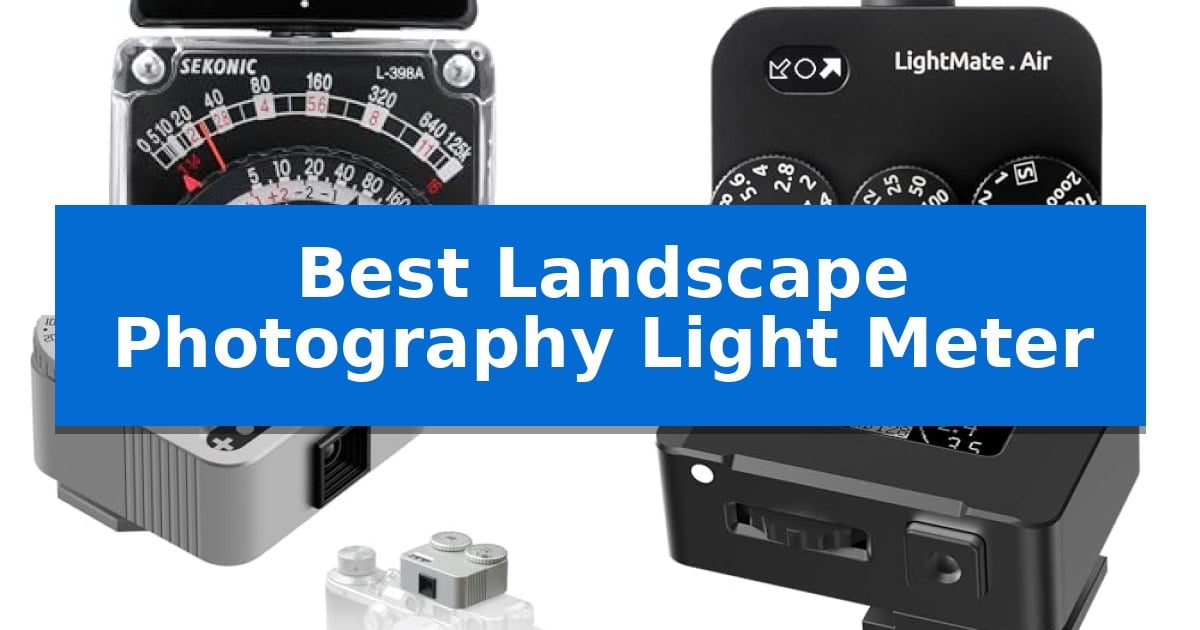
Capturing the perfect landscape requires more than just a keen eye; it demands precise control over light. Whether you are working with vintage film cameras or modern digital systems, finding the Best Landscape Photography Light Meter is essential for achieving accurate exposures in challenging outdoor environments.
From battery-free analog tools to high-precision digital devices with laser rangefinders, the right meter helps you master complex lighting scenarios. We have evaluated the top options to help you determine which tool best fits your specific workflow and camera equipment.
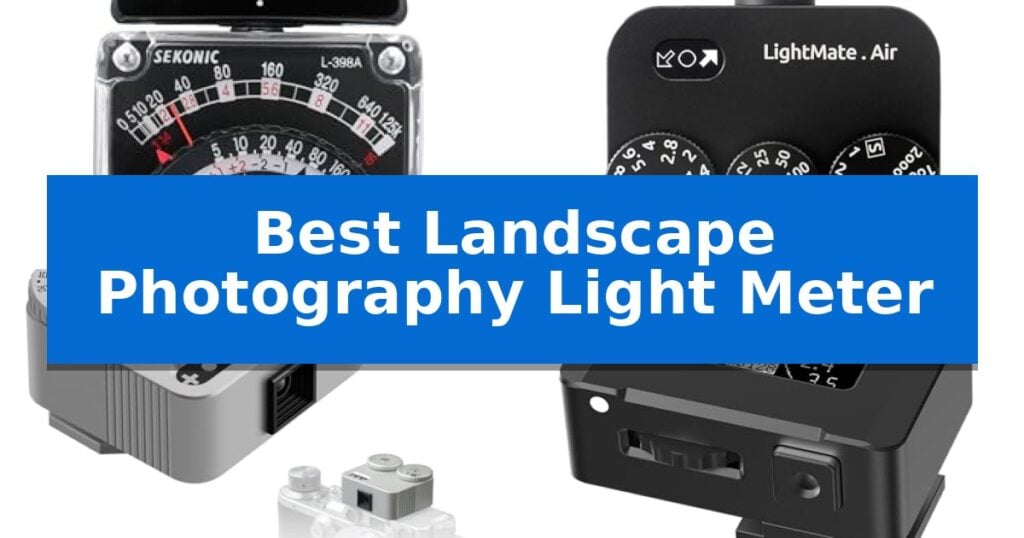
Best Landscape Photography Light Meter in 2026: Master Manual Exposure
Quick Comparison
| Product | Best For | Key Strength | Score |
|---|---|---|---|
| Sekonic L-398A Studio Deluxe III | Best Overall | Battery-free operation via an integrated amorphous photocell. | 4.9 |
| LightNova LightMate AirPro | High-precision wide-angle metering | Tactile independent dials for aperture, ISO, and shutter speed. | 4.5 |
| TTArtisan Light Meter II | Compact choice for vintage cameras | Featherlight 34g aluminum construction adds minimal weight to camera setups. | 4.6 |
| LightNova LightMate Lite 2R | Ultra-portable with OLED display | Ultra-compact 1.24oz design for maximum portability. | 4.5 |
| CHI L.D. Light Meter Pro | Pinpoint exposure with laser rangefinder | 7° ultra-narrow spot metering for precise exposure control | 4.4 |
How We Chose
- Metering Precision: Assessing the accuracy and range of light sensitivity for various ISO and aperture settings.
- Portability and Build: Evaluating the size, weight, and durability of the chassis for field use.
- Power Management: Comparing battery-free designs against rechargeable options to ensure reliability in remote locations.
- Ease of Use: Reviewing the interface, including dial feedback, display clarity, and mounting options for different camera systems.
- Versatility: Checking for additional features like spot metering, incident/reflected modes, and rangefinding capabilities.
1 Sekonic L-398A Studio Deluxe III — Battery-free reliability for field use
Reliability in the field often hinges on simplicity, and the Sekonic L-398A Studio Deluxe III prioritizes this by eliminating the need for batteries entirely. By utilizing an amorphous photosensor, this meter generates its own power from ambient light, ensuring it remains operational during long outdoor shoots where power sources are unavailable.
The device features a swivel head design that allows photographers to orient the incident dome toward the light source while maintaining a clear, direct line of sight to the analog display. This physical configuration streamlines the workflow, as it avoids the need to navigate complex electronic menus, providing an immediate readout of aperture and shutter speed combinations via its mechanical calculator dial.
Versatility is built into the core design, supporting both incident and reflected light measurement through the use of interchangeable accessories. The package includes a lumisphere, lumidisc, and lumigrid, which allow for precise adjustments based on the specific lighting conditions of a landscape or studio environment.
Constructed with a compact and durable frame, the Sekonic L-398A Studio Deluxe III is built to withstand the rigors of field use. While it lacks the digital memory or backlit screens found in modern electronic meters, its mechanical nature offers a consistent, battery-independent solution for those who prefer tactile control over their exposure settings.
Best for: Landscape photographers who prioritize battery-free reliability and tactile, analog-style exposure calculation in remote field environments.
Skip if: Photographers who require digital features like backlit displays, internal memory for storing multiple readings, or high-speed electronic integration with modern camera systems.
PROS
- Battery-free operation via an integrated amorphous photocell.
- Swivel head design for improved ergonomics and ease of use.
- Full dial readout provides instant, menu-free exposure calculations.
- Includes a comprehensive set of professional accessories for varied lighting scenarios.
CONS
- Analog display lacks the convenience of backlit digital screens.
- Manual operation requires more user input compared to electronic, automated metering systems.
2 LightNova LightMate AirPro — High-precision wide-angle metering
Achieving precise exposure settings in the field requires a reliable tool that balances portability with granular control. The LightNova LightMate AirPro addresses this need with a 35-degree wide-angle metering system, providing a focused yet practical field of view for landscape photographers who need to balance highlights and shadows accurately.
Designed for those who prefer tactile feedback, the device features three independent dials for aperture, ISO, and shutter speed. These dials provide audible and physical clicks, allowing for adjustments without needing to look at the screen. The unit supports half-stop resolution and can be customized to 1/3 or 2/3 stops, ensuring compatibility with the specific requirements of various film cameras.
The LightMate AirPro offers versatile operation through multiple modes, including Aperture Auto (A), Shutter Auto (S), Manual (M), and EV (A+S). Photographers can utilize either manual trigger metering or long-press auto-triggering for faster workflows. The inclusion of exposure compensation and the ability to set independent X ISO values beyond standard scales provides significant flexibility for challenging lighting conditions.
Built for the rigors of outdoor use, the full metal shell offers durability while maintaining an ultra-compact form factor. Power management is handled via USB-C charging, with a battery life exceeding 20 hours of active use and a standby time of over six months, making it a dependable companion for extended landscape photography trips.
Best for: Film photographers requiring a compact, tactile, and highly adjustable light meter for precise manual exposure control in the field.
Skip if: Photographers who require an incident metering dome or those who prefer a large, high-resolution color touchscreen interface over physical dials.
PROS
- Tactile independent dials for aperture, ISO, and shutter speed.
- Durable full metal body in an ultra-compact size.
- Long battery life exceeding 20 hours with USB-C charging.
- Flexible metering modes including manual and auto-trigger options.
CONS
- Reflective metering only (lacks incident metering dome).
- Manual interface may be less intuitive for users accustomed to modern digital camera menus.
3 TTArtisan Light Meter II — Compact choice for vintage cameras
Achieving precise exposure in the field requires reliable instrumentation, and the TTARTISAN Light Meter II offers a dedicated solution for analog photographers seeking to integrate modern metering into their workflow. Designed to mount directly onto a camera's cold shoe, this device provides a streamlined way to manage lighting conditions without the bulk of traditional handheld meters.
The TTARTISAN Light Meter II features 45° average metering, which is engineered to calculate exposure values twice as fast as its predecessor. This speed is particularly useful when transitioning between varying light environments, such as moving from open landscapes to shaded areas. The unit is constructed from featherlight aircraft-grade aluminum, weighing only 34g, ensuring it maintains the balance of vintage rangefinders and SLRs.
Usability is centered on precision-tuned controls, including clicked aperture dials and an upgraded 23-stop shutter speed range. These mechanical-style dual wheels are designed to prevent accidental adjustments during transport or operation. The interface is built to replicate the tactile experience of manual camera settings, allowing for quick, intuitive adjustments while composing a shot.
Power efficiency is a core design choice, with advanced double power-saving technology that supports up to 60 hours of continuous metering. The device utilizes user-replaceable batteries, avoiding the limitations of non-rechargeable internal power sources. With its 3-position adjustable cold shoe mount, the meter offers flexible positioning to accommodate different camera top-plate layouts.
Best for: Photographers using vintage film cameras who require a compact, cold-shoe-mounted meter for quick exposure adjustments in the field.
Skip if: Users who prefer incident light metering or those whose specific camera setup lacks a standard cold shoe mount.
PROS
- Featherlight 34g aluminum construction adds minimal weight to camera setups.
- 60-hour continuous metering capacity via user-replaceable batteries.
- Precision-tuned clicked dials prevent accidental setting changes.
- 45° average metering provides rapid exposure calculations.
CONS
- Battery not included with the device.
- Cold shoe mount requirement limits compatibility with cameras lacking this specific interface.
4 LightNova LightMate Lite 2R — Ultra-portable with OLED display
Achieving precise exposure in variable outdoor lighting requires a tool that balances portability with granular control. The LightNova LightMate Lite 2R addresses this by integrating a 30° field-of-view metering lens into an ultra-compact, 1.24oz chassis, making it a practical addition for field photographers who prioritize weight without sacrificing functionality.
Designed for versatility, the device features a 0.96-inch OLED screen with adjustable brightness for improved visibility in daylight. It supports both aperture priority and shutter priority modes, alongside specialized options like exposure compensation, ND filter compensation, and depth of field calculation. These tools allow for quick adjustments directly on the unit, which can be customized by inputting specific lens focal lengths.
Practicality in the field is enhanced by the adjustable cold shoe mounting position, allowing the meter to sit flush with various film camera bodies. The interface is powered by a rechargeable battery that provides over 20 hours of operation, with convenient USB-C charging. For added convenience, users can map the metering trigger to a camera's shutter release button cap.
The LightNova LightMate Lite 2R offers a streamlined workflow for manual photography. While its small size is an asset for travel, users should ensure the 30° metering angle aligns with their specific lens focal lengths to maintain accuracy, as this fixed field of view is optimized for general-purpose rather than telephoto-specific metering.
Best for: Film photographers who require a lightweight, highly portable exposure meter that integrates directly with camera cold shoes.
Skip if: Photographers who rely on spot metering for extreme telephoto work, as the fixed 30-degree field of view may not provide the necessary precision for distant subjects.
PROS
- Ultra-compact 1.24oz design for maximum portability.
- Versatile metering modes including aperture and shutter priority.
- Integrated depth of field calculation and ND filter compensation.
- Rechargeable USB-C battery with 20-hour runtime.
CONS
- Fixed 30-degree field of view may limit precision for specialized telephoto applications.
5 CHI L.D. Light Meter Pro — Pinpoint exposure with laser rangefinder
Achieving precise exposure in challenging outdoor environments requires more than just intuition, and the CHI L.D. Light Meter Pro addresses this by integrating a built-in laser rangefinder directly into its compact frame. This tool allows photographers to calculate both exposure and distance with a single tap, providing a streamlined workflow for those working with vintage cameras or film setups that lack modern metering systems.
The device is engineered for granular control, featuring 7° ultra-narrow angle spot metering that enables photographers to isolate specific areas of a landscape for accurate exposure readings. All essential data, including ISO, shutter speed, aperture, distance, and EV readings, is displayed clearly on a 0.96-inch OLED screen, ensuring visibility even in varying light conditions.
Designed for field reliability, the unit includes a rechargeable 370mAh battery that supports USB-C charging and offers up to 90 days of standby time. Its compact physical footprint, measuring approximately 1.4 inches in length and 0.8 inches in height, ensures it remains unobtrusive in a camera bag while providing the necessary technical support for complex lighting scenarios.
The integration of a continuous-on laser mode allows for precise focus measurements from 0.1 to 50 meters, making it a versatile companion for landscape work where depth and light intensity are critical. By combining light metering with distance measurement, this tool reduces the amount of gear required in the field without sacrificing the technical data needed for consistent film results.
Best for: Film photographers and landscape artists using vintage cameras who need a compact, all-in-one tool for spot metering and distance measurement.
Skip if: Users who prefer a traditional incident light meter or those who do not require integrated laser distance measurement for their specific photography workflow.
PROS
- 7° ultra-narrow spot metering for precise exposure control
- Built-in laser rangefinder for distance calculation up to 50m
- Compact, pocket-sized design ideal for travel
- Rechargeable battery with convenient USB-C charging
CONS
- Specialized feature set may be more than required for casual hobbyists
Best Landscape Photography Light Meter Buying Guide
Understanding Metering Modes
Landscape photographers often choose between incident and reflected metering. Incident metering measures the light falling onto your subject, providing a neutral, consistent reading regardless of the subject's reflectivity. This is ideal for most outdoor scenes where you want to capture the true luminance of the environment.
Reflected metering, conversely, measures the light bouncing off your subject. This is useful when you cannot reach the subject or when you want to prioritize the exposure of a specific highlight or shadow area. Many modern meters offer both, giving you the flexibility to switch modes based on the scene's complexity.
The Importance of Portability
Landscape photography often involves hiking to remote locations where every ounce of gear counts. A compact, lightweight light meter is a significant advantage, as it allows you to keep your kit streamlined without sacrificing the ability to get accurate exposure data.
Look for devices that offer durable metal construction to withstand the rigors of field use. While smaller meters are easier to carry, ensure the controls remain tactile and easy to operate, even when wearing gloves or working in low-light conditions.
Power Reliability in the Field
Reliability is paramount when you are miles from the nearest power source. Battery-free light meters utilize amorphous photocells to generate their own power, ensuring they are always ready to function without the risk of a dead battery ruining a shot.
If you prefer digital meters with OLED screens, prioritize models with long battery life and USB-C charging. These modern units often provide more detailed information, such as EV readings or distance calculations, but require a proactive approach to power management.
Integration with Vintage Cameras
Many landscape photographers use classic film cameras that lack built-in metering. A cold shoe-mounted light meter is a popular solution, as it keeps the device attached to your camera for quick, intuitive adjustments.
When selecting a mountable meter, check for adjustable mounting positions to ensure compatibility with your specific camera's layout. This integration allows you to maintain your shooting rhythm, keeping your focus on the composition rather than fumbling with separate handheld devices.
Advanced Features for Precision
For photographers who demand absolute precision, features like laser rangefinders and spot metering can be game-changers. A laser rangefinder helps you calculate distance for depth-of-field management, while narrow-angle spot metering allows you to isolate specific areas of a landscape for perfect exposure control.
While these features add complexity, they provide the data necessary for high-stakes landscape work. Evaluate whether your style requires this level of technical detail or if a simpler, more direct metering approach better serves your creative process.
Frequently Asked Questions
Do I need a light meter if my camera has a built-in one?
While many cameras have built-in meters, a dedicated light meter often provides more accurate incident readings and greater control over specific exposure zones, especially in high-contrast landscape scenes.
Are battery-free meters as accurate as digital ones?
Battery-free analog meters are highly reliable and accurate for standard ambient light measurement. Digital meters may offer more features like OLED displays and faster response times, but they depend on battery power.
What is the benefit of a swivel head on a light meter?
A swivel head allows you to position the incident dome toward the light source while keeping the display visible, which is crucial for maintaining a smooth workflow during complex lighting setups.
Can I use a light meter for both film and digital photography?
Yes, light meters are universal tools. The exposure data they provide is based on the physics of light, making them equally useful for setting exposure on film cameras or manual digital setups.
How do I choose between incident and reflected metering?
Use incident metering for general scene luminance and consistent results. Use reflected metering when you need to measure the light specifically bouncing off a subject or when you want to spot-meter a particular highlight.
Conclusion: Our Top Pick
For photographers seeking a dependable, field-ready solution, the Sekonic L-398A Studio Deluxe III remains a standout choice. Its battery-free design ensures that you are never left without a reading, while its robust construction and intuitive analog dial make it a reliable companion for long days in the field.
While digital options offer modern conveniences like OLED screens and laser rangefinders, the simplicity and longevity of the Sekonic make it the most trustworthy tool for landscape work. It provides the essential precision you need without the worry of battery failure, allowing you to focus entirely on capturing the perfect vista.