
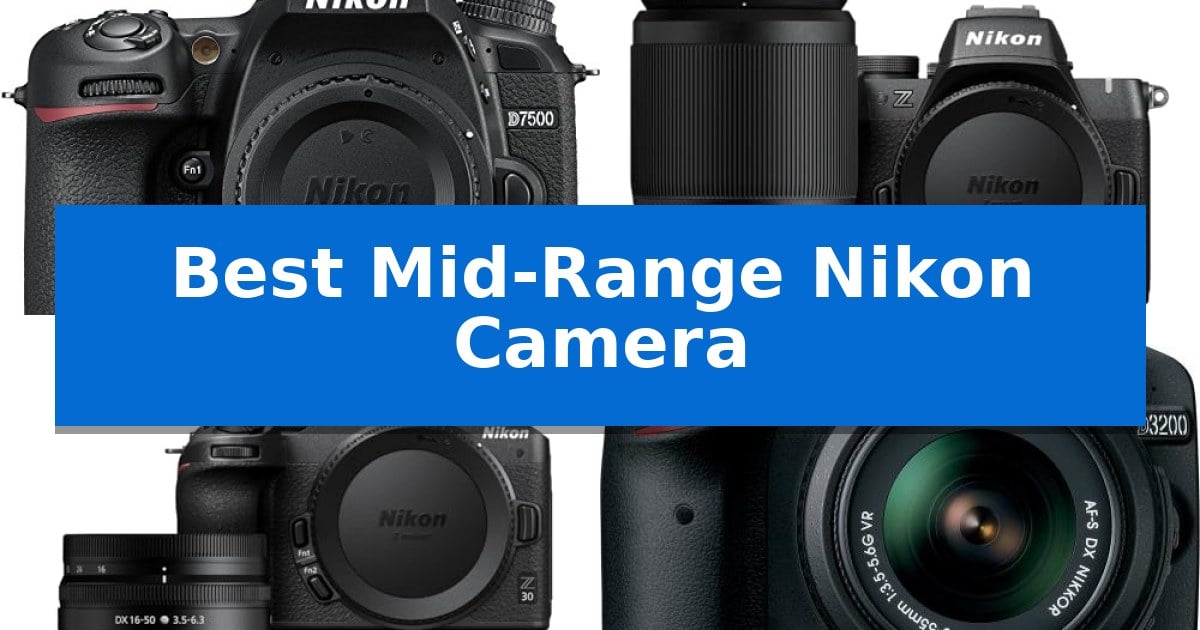
Selecting the Best Mid-Range Nikon Camera requires balancing advanced imaging capabilities with practical design choices that fit your specific shooting style. Whether you are transitioning from a smartphone or upgrading from an entry-level body, finding a camera that offers the right mix of sensor performance and ergonomics is essential for capturing high-quality stills and video.
Our guide evaluates current Nikon options, focusing on technical specifications and functional benefits to help you identify which model aligns with your creative goals. By understanding the differences between DSLR and mirrorless systems, you can make an informed decision that supports your growth as a photographer.
You may also want to compare Best Mid-range MP3 Player, Best Mid-Range Mouse for Gaming, and Best Mid-Range Mouse.
Best Mid-Range Nikon Camera
Quick Comparison
| Product | Best For | Key Strength | Score |
|---|---|---|---|
| Nikon D7500 DSLR Camera | Best Overall | High-performance imaging pipeline shared with the D500 | 4.9 |
| Nikon Z50 II Mirrorless Camera | Advanced Features for Modern Creators | Advanced subject-tracking autofocus with dedicated modes for birds and airplanes. | 4.3 |
| Nikon Z 30 Mirrorless Camera | Streamlined Design for Vlogging | Compact and lightweight form factor for easy portability. | 4.5 |
| Nikon D3200 DSLR Camera | Accessible Entry to DSLR Photography | High-resolution 24.2 MP sensor for detailed imaging. | 4.8 |
| Nikon D3100 DSLR Camera | Reliable Foundation for Beginners | 14.2-megapixel CMOS sensor for high-resolution image capture. | 4.4 |
How We Chose
- Sensor technology and image processing capabilities for varied lighting conditions.
- Autofocus system accuracy and subject tracking versatility.
- Video resolution, frame rate support, and stabilization features.
- Ergonomics, including screen articulation, weight, and physical control layout.
- Connectivity options for efficient file transfer and remote operation.
1 Nikon D7500 DSLR Camera — Versatile Performance for Enthusiasts
The Nikon D7500 DSLR Camera centers its appeal on a high-performance imaging pipeline that shares core technology with the professional-grade D500. By integrating an advanced image processing engine and metering system into a versatile DX-format body, this camera provides a robust foundation for photographers who require consistent results across varying lighting conditions.
Designed for speed and precision, the camera features a 51-point AF system equipped with 15 cross-type sensors. This autofocus array, combined with 8 fps continuous shooting, allows for reliable subject tracking during action-oriented photography. The inclusion of 4K UHD video capabilities, supported by power aperture control and stereo sound, further expands its utility for those transitioning between still and motion capture.
Practicality in the field is enhanced by a 3.2-inch tilting LCD screen featuring touch functionality, which facilitates easier composition from difficult angles. Connectivity is streamlined through built-in Wi-Fi and Bluetooth, enabling seamless image transfer via the Nikon SnapBridge app. These features collectively ensure that the device remains a capable tool for enthusiasts looking to balance technical control with modern workflow requirements.
The D7500 represents a strategic middle ground, offering advanced internal components within a manageable form factor. While it provides significant processing power, users should consider that its performance is tied to the DX-format lens ecosystem, which dictates the overall reach and optical versatility of the setup.
Best for: Enthusiasts who need a balance of high-speed autofocus, 4K video, and professional-grade image processing in a durable, portable DSLR body.
Skip if: Users who prefer the compact size and electronic viewfinder experience of a mirrorless system or those who require full-frame sensor performance for specific wide-angle or low-light applications.
PROS
- High-performance imaging pipeline shared with the D500
- 51-point AF system with 15 cross-type sensors for precise tracking
- 8 fps continuous shooting for action photography
- Tilting 3.2-inch touchscreen for flexible composition
- Integrated Wi-Fi and Bluetooth for wireless connectivity
CONS
- Fixed-lens ecosystem limited to DX-format compatibility
- Larger physical footprint compared to modern mirrorless alternatives
2 Nikon Z50 II Mirrorless Camera — Advanced Features for Modern Creators
The Nikon Z50 II Mirrorless Camera distinguishes itself with a dedicated Picture Control button, providing immediate access to 31 built-in presets that allow creators to adjust the aesthetic of their stills and videos in real-time. This compact mirrorless system is built around a 20.9-megapixel DX format (APS-C) sensor, offering a significant surface area increase over typical smartphone sensors to capture lifelike colors and fine details.
Designed for versatility, the camera features an advanced autofocus system capable of detecting and tracking nine distinct subjects, including people, animals, and vehicles, with specialized modes for birds and airplanes. For those focused on video production, the device supports 4K UHD/60p recording and in-camera 120p slow-motion in Full HD, complemented by built-in electronic vibration reduction and a dedicated product review mode.
The system includes the NIKKOR Z DX 16-50mm f/3.5-6.3 VR and NIKKOR Z DX 50-250mm f/4.5-6.3 VR lenses, providing a comprehensive focal range for various shooting scenarios. Connectivity is streamlined through the Nikon SnapBridge app, which facilitates rapid wireless photo and video sharing to smart devices, while the integrated flash and Night Portrait mode assist in achieving balanced exposure during low-light indoor shooting.
The Nikon Z50 II Mirrorless Camera balances its high-resolution imaging capabilities with a portable form factor, making it a practical choice for users who require a dedicated camera that remains easy to transport. By integrating cloud-based preset downloads via the Nikon Imaging Cloud, it offers a modern workflow for photographers looking to refine their style directly within the camera body.
Best for: Content creators and enthusiasts seeking a compact, versatile mirrorless system with advanced subject-tracking autofocus and integrated creative presets.
Skip if: Users requiring full-frame sensor performance or those who do not need the included dual-lens kit for their specific photography requirements.
PROS
- Advanced subject-tracking autofocus with dedicated modes for birds and airplanes.
- Dual-lens kit included covering a wide focal range for diverse shooting needs.
- Real-time creative control via 31 built-in Picture Control presets.
- High-quality video capabilities including 4K UHD/60p and slow-motion options.
CONS
- APS-C sensor format may not meet the needs of users specifically requiring full-frame sensor performance.
3 Nikon Z 30 Mirrorless Camera — Streamlined Design for Vlogging
The Nikon Z 30 Mirrorless Camera is engineered specifically for creators who require a portable, high-performance solution for both stills and video content. Its most distinctive feature is its compact, lightweight design paired with a versatile 16-50mm wide-angle zoom lens, making it an ideal choice for those who need to capture high-quality footage on the go without the bulk of traditional camera systems.
Designed with vlogging and streaming in mind, the camera includes a flip-out touchscreen selfie monitor that allows for easy framing and control. The device supports 4K resolution video and features an integrated stereo microphone with adjustable sensitivity, providing creators with the tools to capture clear audio alongside their visuals. For those focused on streaming, the camera offers plug-and-play webcam operation and supports Full HD 60p streaming over USB-C.
Performance is bolstered by an advanced autofocus system with eye tracking for both people and pets, ensuring subjects remain sharp even during dynamic movement. The camera also boasts outstanding low-light performance and rock-steady image stabilization, which help maintain visual clarity in challenging environments. A red REC light provides a clear visual indicator when recording is active, simplifying the workflow for solo creators.
As part of the NIKKOR Z ecosystem, this camera is compatible with a wide array of lenses, from fast primes to macro options, allowing the system to grow alongside your creative needs. It offers constant power over USB-C, ensuring that long streaming sessions or extended recording times are not interrupted by battery depletion, making it a reliable workhorse for consistent content production.
Best for: Content creators and vloggers who prioritize a compact, lightweight mirrorless system for high-quality 4K video and live streaming.
Skip if: Photographers who require a dedicated electronic viewfinder for eye-level shooting or those who need a camera with an integrated flash, as this model lacks both.
PROS
- Compact and lightweight form factor for easy portability.
- Flip-out touchscreen designed specifically for vlogging and self-recording.
- Advanced autofocus with eye tracking for people and pets.
- Versatile connectivity including plug-and-play USB-C streaming and HDMI output.
CONS
- Lacks an electronic viewfinder, which may be a limitation for traditional photographers.
- No built-in flash, requiring external lighting solutions for certain environments.
4 Nikon D3200 DSLR Camera — Accessible Entry to DSLR Photography
Stepping into the world of high-resolution digital photography requires a balance between image fidelity and operational ease. The Nikon D3200 DSLR Camera addresses this by pairing a high-resolution 24.2 MP DX-format CMOS sensor with the EXPEED III Image Processing engine, which works to efficiently manage large image files while maintaining color accuracy and detail. This combination provides a robust foundation for those looking to move beyond basic point-and-shoot capabilities.
Practical utility is centered around the 3.0-inch rear LCD screen, which features 921,000 dots for sharp image review and menu navigation. The camera offers a wide ISO sensitivity range, allowing photographers to adjust for varying ambient light levels without needing immediate access to external lighting. For those who value versatility, the included 18-55mm f/3.5-5.6 AF-S DX NIKKOR zoom lens serves as a capable starting point for diverse subjects, from landscapes to portraits.
Beyond still photography, the device supports one-touch Full HD 1080p movie recording, enabling quick transitions to video capture. Its physical design is optimized for portability, measuring approximately 4.92 inches in length and weighing roughly one pound. This compact form factor makes it a suitable choice for travel or daily carry, ensuring the system remains accessible when opportunities arise.
This specific unit is Certified Refurbished, meaning it has been manufacturer-checked to ensure it shows limited or no wear. It includes all original accessories and is covered by a 90-day limited warranty. This provides a practical, cost-effective entry point into the Nikon ecosystem for users who prioritize value without sacrificing the core performance of a dedicated DSLR.
Best for: Beginners or enthusiasts seeking a high-resolution, compact DSLR system that includes a versatile kit lens for immediate use.
Skip if: Users who require professional-grade weather sealing, high-speed burst shooting for sports, or modern wireless connectivity features.
PROS
- High-resolution 24.2 MP sensor for detailed imaging.
- Includes 18-55mm NIKKOR zoom lens for immediate versatility.
- Certified Refurbished status ensures manufacturer-checked quality.
- Compact and lightweight design for easier portability.
CONS
- Limited 90-day warranty compared to new equipment.
- Lacks advanced modern connectivity features.
5 Nikon D3100 DSLR Camera — Reliable Foundation for Beginners
The Nikon D3100 DSLR Camera serves as a foundational entry point for photography, centered around a 14.2-megapixel CMOS sensor that provides high-definition image capture with detailed rendering. This model integrates the EXPEED 2 image-processing engine, which is specifically engineered to suppress noise in both still images and movie files while maintaining vivid color reproduction.
Designed for versatility in varying light conditions, the camera supports a standard sensitivity range up to ISO 3200, with an expandable setting reaching ISO 12800 equivalent. This capability, combined with the included AF-S DX 18-55mm f/3.5-5.6 VR zoom lens, allows for steady shooting in dim environments or during fast-moving scenes, supported by integrated Vibration Reduction technology.
For those interested in videography, the device features D-Movie recording in full HD, complemented by an AF-F full-time servo autofocus mode to maintain focus during capture. The rear of the camera houses a 3-inch, 230,000-dot TFT LCD monitor, providing a clear interface for Live View shooting and menu navigation, while the eye-level penta-dach mirror viewfinder includes diopter adjustment for personalized viewing.
The system is equipped with a comprehensive suite of flash options, including Slow-Sync, Rear-Curtain Sync, and Fill-In modes to manage lighting in complex scenarios. With its Auto Scene Selector and robust sensor architecture, this camera provides a structured, reliable platform for those learning the mechanics of DSLR photography.
Best for: Beginners seeking a reliable, dedicated DSLR platform with manual control options and an included versatile zoom lens.
Skip if: Users who prioritize a lightweight, pocketable form factor or advanced connectivity features like wireless image transfer will find this traditional DSLR design too bulky.
PROS
- 14.2-megapixel CMOS sensor for high-resolution image capture.
- EXPEED 2 engine effectively suppresses noise in low-light conditions.
- Vibration Reduction lens included to minimize blur during handheld shooting.
- Full HD movie recording with continuous autofocus capabilities.
CONS
- Fixed 3-inch LCD monitor lacks articulation for varied shooting angles.
- Discontinued model status limits access to modern wireless connectivity and software updates.
Best Mid-Range Nikon Camera Buying Guide
Sensor Format and Image Quality
The DX-format sensor is a hallmark of mid-range Nikon cameras, offering a balance between physical size and image resolution. These sensors are significantly larger than those found in typical smartphones, which allows for better light gathering, improved dynamic range, and more effective background blur.
When choosing your camera, consider the megapixel count in relation to your output needs. Higher resolutions provide more flexibility for cropping images during post-processing, while the image processing engine determines how effectively the camera handles noise at higher ISO settings.
Autofocus and Subject Tracking
Modern autofocus systems have evolved to include sophisticated subject detection for people, animals, and vehicles. This technology is critical for maintaining sharpness in dynamic scenes, such as sports or wildlife photography, where subjects move quickly across the frame.
Look for cameras that offer a high number of cross-type sensors or advanced phase-detection points. These features ensure that the camera can lock onto subjects with precision, even in challenging lighting or when the subject is not centered in the frame.
Video Capabilities and Vlogging Features
For those interested in video production, look for 4K UHD recording capabilities. Features like in-camera slow-motion and dedicated product review modes can significantly streamline your workflow, reducing the amount of time spent on editing.
Connectivity is also vital for video creators. Features such as USB-C power delivery allow for extended shooting sessions, while flip-out touchscreens provide essential feedback when you are recording yourself or shooting from difficult angles.
Ergonomics and Build Design
The physical design of the camera affects how comfortable it is to use during long shooting sessions. A tilting or articulating LCD screen is highly beneficial for composing shots from low or high vantage points, while a deep grip ensures the camera remains stable in your hand.
Consider the overall weight and dimensions of the body, especially if you plan to travel frequently. Mirrorless systems generally offer a more compact footprint, which can be an advantage for street photography or when carrying multiple lenses in a small bag.
Connectivity and Workflow
Efficient file management is a key part of the modern photography experience. Built-in Wi-Fi and Bluetooth connectivity allows you to transfer images directly to a smartphone or tablet, facilitating quick sharing or remote camera control via dedicated apps.
Compatibility with a wide range of lenses is another factor to consider. Ensure the camera mount supports the lenses you intend to use, or check if an adapter is available to expand your creative options as your collection grows.
Frequently Asked Questions
What is the main difference between DSLR and mirrorless Nikon cameras?
DSLR cameras use a mirror mechanism to reflect light into an optical viewfinder, whereas mirrorless cameras send the image directly to an electronic viewfinder or the rear LCD. Mirrorless models are typically more compact and offer advanced digital features like real-time exposure previews.
Are DX-format lenses compatible with all Nikon cameras?
DX-format lenses are designed for cameras with APS-C sensors. While they can often be mounted on full-frame (FX) bodies, the camera may automatically crop the image to compensate for the smaller image circle of the lens.
Does the camera include a lens in the box?
Many Nikon cameras are sold as kits that include a versatile zoom lens, such as the 16-50mm or 18-55mm. Always check the specific product listing to confirm if a lens is bundled with the camera body.
Can I use my smartphone to control these cameras?
Yes, most modern Nikon cameras feature built-in Wi-Fi or Bluetooth that works with the Nikon SnapBridge app, allowing for remote shooting and wireless image transfer to your mobile device.
Is a tilting screen necessary for photography?
A tilting or articulating screen is not strictly necessary, but it is highly recommended for macro photography, low-angle shots, or vlogging, as it allows you to compose your shot without having to lie on the ground or guess your framing.
Conclusion: Our Top Pick
Choosing the right camera depends on your specific needs, but the Nikon D7500 DSLR Camera stands out as a highly versatile option for enthusiasts. Its robust 51-point autofocus system and class-leading image quality make it a reliable tool for a wide range of photographic styles, from fast-paced action to detailed landscape work.
While mirrorless options offer modern advantages in size and video-centric features, the D7500 remains a powerful choice for those who prefer the tactile experience of a traditional DSLR. Its combination of performance, durability, and extensive lens compatibility ensures it remains a relevant and effective camera for years to come.