
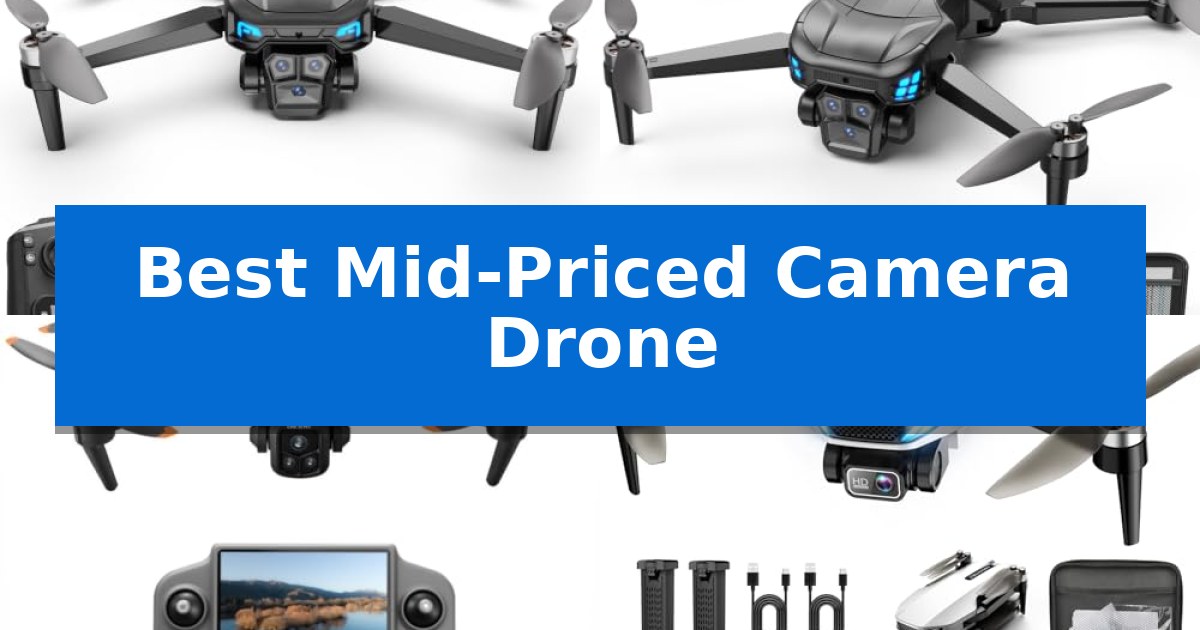
Finding the right aerial platform can be challenging when balancing advanced features with a reasonable budget. A Best Mid-Priced Camera Drone should offer a reliable flight experience, high-quality imaging, and intuitive controls that do not require constant smartphone tethering or complex setups.
Whether you are capturing travel scenery or inspecting hard-to-reach areas, the right drone provides stability and ease of use. We have analyzed several models to help you identify which features—such as integrated displays, obstacle avoidance, or extended battery life—best align with your specific flying needs.
You may also want to compare Best Mid-Priced Bookshelf Speakers, Best Mid-Priced Bluetooth Speakers, and Best Mid-Priced Bluetooth Noise Cancelling Headphones.
Best Mid-Priced Camera Drone
Quick Comparison
| Product | Best For | Key Strength | Score |
|---|---|---|---|
| PRAGYM 4K GPS Camera Drone | Best Overall | Built-in 4.5-inch screen eliminates the need for smartphone app setup. | 4.9 |
| Vvoqeote 4K GPS Camera Drone | Integrated Display for Phone-Free Flying | Integrated 4.5-inch HD screen removes the need for a smartphone. | 4.4 |
| Zoiskn 4K GPS Camera Drone | Advanced 360-Degree Obstacle Avoidance | Under 249g lightweight design simplifies regulatory compliance. | 4.6 |
| BLINORY 4K GPS Camera Drone | Precise Optical Flow Hover Stability | Under 250g weight eliminates the need for FAA or Remote ID registration. | 4.5 |
| REDRIE 4K GPS Camera Drone | Gimbal Stabilization for Smoother Footage | 2-axis gimbal for improved video stability | 4.8 |
How We Chose
- Imaging capabilities including 4K resolution and gimbal or lens stabilization.
- Flight control systems featuring GPS, optical flow, and return-to-home functionality.
- Controller design, specifically the presence of built-in screens for phone-free operation.
- Battery performance and total flight time provided by included power solutions.
- Portability and weight, focusing on models under 249g to simplify regulatory compliance.
1 PRAGYM 4K GPS Camera Drone — Built-in Screen Controller Convenience
Capturing aerial footage often requires juggling a drone, a smartphone, and an app, but the PRAGYM 4K GPS Camera Drone simplifies this process with its 4.5-inch built-in screen controller. By integrating the display directly into the remote, this drone allows users to view real-time FPV footage immediately upon power-up, removing the need for external mobile device connectivity.
Designed for versatility, the drone features a 90-degree adjustable 4K lens suitable for recording travel scenery or inspecting hard-to-reach areas. It utilizes GPS positioning for stable outdoor flight and includes three Return-to-Home modes—One-Key, Low Battery, and Signal Loss—to assist in retrieval. For indoor environments, Optical Flow positioning helps maintain a steady hover.
Efficiency is central to its operation, as the brushless motors provide low-noise performance and long-term durability. The package includes two 7.4V 1600mAh batteries, offering a combined 60 minutes of flight time, allowing users to swap power sources quickly to extend sessions. Weighing under 249g, the unit avoids the need for FAA registration, making it a portable choice for outdoor activities.
The PRAGYM 4K GPS Camera Drone caters to varying skill levels with 3 speed modes and automated features like One-Key Takeoff and Landing, Headless Mode, and Gesture Control. Its foldable design ensures it remains compact for transport during camping or cycling trips, providing a balance of advanced flight modes and beginner-friendly handling.
Best for: Beginners and travelers who want a complete, all-in-one flight system without the complexity of smartphone app integration.
Skip if: Users who require professional-grade image stabilization or advanced obstacle avoidance sensors for complex cinematography.
PROS
- Built-in 4.5-inch screen eliminates the need for smartphone app setup.
- Under 249g weight removes the requirement for FAA registration.
- 60 minutes of total flight time via two included batteries.
- Brushless motors offer efficient and quiet operation.
CONS
- Lack of advanced obstacle avoidance sensors for complex flight environments.
- Fixed storage capacity dependent on external memory requirements not specified.
2 Vvoqeote 4K GPS Camera Drone — Integrated Display for Phone-Free Flying
Capturing aerial footage without the complexity of a smartphone connection is the primary advantage of the Vvoqeote 4K GPS Camera Drone. By integrating a 4.5-inch HD screen directly into the remote controller, this device allows users to monitor live flight paths and camera views immediately upon startup, eliminating the need for external mobile apps or additional hardware during operation.
The drone is built for versatility, featuring a 4K camera paired with a remotely adjustable 90-degree lens. This configuration enables users to modify shooting angles mid-flight, making it practical for diverse applications ranging from recording outdoor scenery to performing routine roof inspections. Real-time FPV transmission ensures that the pilot maintains a clear view of the drone's perspective throughout the flight.
Reliability during outdoor sessions is supported by GPS positioning, which powers essential safety features such as One-Key Return, Low Battery Return, and Signal Loss Return. Beyond safety, the drone includes intelligent flight modes like Follow Me, Tap Fly, and Point of Interest, providing automated paths for capturing dynamic activities like cycling or skateboarding.
Engineered for efficiency, the brushless motors provide consistent power, while the included dual-battery system delivers a total of 60 minutes of flight time—30 minutes per battery. The foldable design and lightweight frame, weighing under 249g, enhance portability, making it a straightforward choice for those who prioritize ease of transport and simple, intuitive flight controls.
Best for: Beginners and travelers who want a complete, phone-free aerial photography system with integrated monitoring.
Skip if: Professional videographers requiring advanced sensor sizes, professional-grade stabilization, or high-bitrate recording capabilities.
PROS
- Integrated 4.5-inch HD screen removes the need for a smartphone.
- Dual-battery system provides up to 60 minutes of total flight time.
- GPS-enabled safety features including automatic return-to-home functions.
- Brushless motors for efficient and reliable flight performance.
CONS
- Fixed camera sensor lacks the advanced image quality found in professional-grade drones.
- Limited to standard flight modes compared to high-end commercial alternatives.
3 Zoiskn 4K GPS Camera Drone — Advanced 360-Degree Obstacle Avoidance
Capturing aerial footage requires a balance of portability and stability, and the Zoiskn 4K GPS Camera Drone addresses this by integrating 360° obstacle avoidance into a frame that weighs less than 249g. This lightweight design is particularly useful for pilots who want to avoid complex registration requirements while maintaining a compact setup for travel.
The drone is built for consistent flight, utilizing GPS auto-return-to-home and optical-flow hover to maintain position even when GPS signals are weak. These features provide a safety net for beginners, helping to reduce collision risks during operation. The inclusion of 3 rechargeable batteries provides a total of 75 minutes of flight time, allowing for extended sessions without needing to stop for frequent recharging.
For imaging, the 4K camera features a 90° remote angle adjustment, enabling users to reframe shots mid-flight without landing. The system includes a 5G large screen controller, which allows for direct viewing of footage without the immediate need for a smartphone. While a phone is required for advanced features like gesture photography and intelligent following, the dedicated controller simplifies the basic flying experience.
Operating the Zoiskn 4K GPS Camera Drone is supported by a brushless motor system, which contributes to the drone's overall stability. Users should note that the device requires careful adherence to the provided manual and tutorial videos to ensure proper calibration of the GPS and obstacle avoidance sensors before takeoff.
Best for: Beginners and hobbyists looking for a portable, lightweight drone with integrated obstacle avoidance and extended flight time.
Skip if: Professional photographers requiring high-end gimbal stabilization or advanced cinematic transmission protocols beyond standard 5G connectivity.
PROS
- Under 249g lightweight design simplifies regulatory compliance.
- 360° obstacle avoidance and GPS assist improve flight safety.
- 75-minute total flight time via three included batteries.
- Remote 90° camera adjustment for flexible framing.
CONS
- Smartphone required for advanced flight modes like intelligent following.
- Sensor calibration requires careful attention to manual instructions.
4 BLINORY 4K GPS Camera Drone — Precise Optical Flow Hover Stability
Capturing aerial footage without the burden of complex regulatory paperwork is a primary advantage of the BLINORY 4K GPS Camera Drone. Weighing under 250 grams, this quadcopter bypasses the need for FAA or Remote ID registration, making it a practical choice for those who want to start flying immediately upon arrival.
The drone centers its performance around a 90° electrically adjustable 4K camera paired with 5GHz FPV transmission for real-time viewing. To ensure stability during flight, it utilizes GPS positioning and Optical Flow hover technology, which helps maintain a steady position even when the pilot is not making manual adjustments. The inclusion of a brushless motor contributes to a quieter, more efficient flight experience compared to standard brushed alternatives.
For users focused on creative output, the system offers automated flight modes including Follow Me, Waypoint Flight, and Point of Interest. These hands-free features allow the drone to handle the navigation while the pilot focuses on framing shots, whether for sports like hiking or cycling. The package includes two modular batteries, supporting a total flight time of up to 32 minutes.
Ease of use is addressed through one-button take off/landing and headless mode, which simplify operation for those new to drone piloting. The foldable design and included storage case enhance portability, allowing the unit to be easily packed for outdoor excursions. Should the drone lose signal or run low on power, the GPS Auto return function provides a safety net by navigating the craft back to its starting point.
Best for: Beginners and outdoor enthusiasts who need an ultra-lightweight, portable drone with automated flight modes for casual aerial photography.
Skip if: Professional videographers requiring high-end sensor stabilization or advanced obstacle avoidance systems will find this entry-level model too limited.
PROS
- Under 250g weight eliminates the need for FAA or Remote ID registration.
- GPS and Optical Flow sensors provide stable hovering for easier control.
- Brushless motors offer increased longevity and quieter operation.
- Two modular batteries included for extended 32-minute flight time.
CONS
- Entry-level sensor technology may not meet the demands of professional-grade aerial cinematography.
5 REDRIE 4K GPS Camera Drone — Gimbal Stabilization for Smoother Footage
Capturing expansive aerial footage is simplified by the REDRIE 4K GPS Camera Drone, which features a 2-axis gimbal and an F2.15 large aperture lens to minimize shakiness. This compact, foldable device is designed for those who want to record high-resolution content without the complexity of heavy equipment, as it weighs under 250g and requires no FAA registration for recreational use.
Performance is driven by upgraded brushless motors that provide increased thrust and durability while maintaining lower noise levels during flight. To ensure extended operation, the package includes three rechargeable batteries, offering a total flight time of 60-75 minutes. This allows users to spend more time in the air and less time tethered to a power outlet.
The drone integrates 5G WiFi FPV transmission for low-latency viewing on a mobile device, supporting a video transmission range of up to 300m and a total signal range of 500m. Beginners can utilize GPS-assisted smart flight modes, including GPS Follow, Route Planning, and Fly Around, which provide automated control options for more professional-looking shots.
Safety and ease of use are central to the design, with automatic return-to-home functionality triggered by low battery or signal loss. This Best Mid-Priced Camera Drone serves as an accessible entry point for hobbyists, combining essential stabilization technology with a portable form factor that fits easily into a carrying case for travel.
Best for: Beginners and hobbyists seeking a portable, stabilized 4K drone with extended flight time for recreational aerial photography.
Skip if: Users requiring professional-grade obstacle avoidance sensors or long-range transmission capabilities exceeding 500 meters.
PROS
- 2-axis gimbal for improved video stability
- Three-battery bundle for 60-75 minutes of total flight time
- Under 250g weight eliminates the need for FAA registration
- Brushless motors for quieter and more durable operation
CONS
- 500m maximum signal range limits long-distance flight
- Fixed 2-axis stabilization lacks the full 3-axis compensation found in higher-end models
Best Mid-Priced Camera Drone Buying Guide
Understanding Flight Stability
Flight stability is determined by a combination of GPS positioning and optical flow sensors. These technologies ensure the drone maintains a steady hover, which is essential for capturing clear, shake-free 4K footage.
For beginners, these systems are critical as they help prevent the drone from drifting during wind or signal fluctuations. Models that include brushless motors also contribute to smoother, quieter flight and increased durability over time.
The Importance of Controller Design
Many modern drones now feature built-in screen controllers, which allow you to view live FPV footage without needing to connect a smartphone. This design choice significantly reduces setup time and eliminates the risk of app-related connectivity issues.
If you prefer a more traditional setup, ensure the drone supports 5G transmission for low-latency video. Always verify whether the controller requires a specific app or if it functions as a standalone unit for your preferred flying style.
Battery Life and Power Management
Total flight time is often a combination of multiple batteries included in the package. Look for drones that offer at least 25-30 minutes of flight per battery, as this allows for meaningful exploration without constant landing.
Modular battery designs are preferred because they allow for quick swaps in the field. Always check if the package includes spare batteries, as these are essential for extended outdoor sessions like hiking or camping.
Camera Quality and Stabilization
A 90-degree adjustable lens is a standard feature that allows you to frame shots from various angles while the drone is in the air. This is particularly useful for inspecting rooftops or capturing wide landscape views.
While some models feature electronic stabilization, others utilize a 2-axis gimbal to physically reduce shaky footage. If your primary goal is high-quality video, a gimbal-stabilized camera will generally provide more professional-looking results.
Regulatory Compliance and Weight
Drones weighing under 249g are highly sought after because they often do not require FAA registration for recreational use. This makes them significantly easier to manage for hobbyists and travelers.
Always confirm the specific weight of the drone with the battery installed. A foldable, lightweight design is also a major advantage for portability, ensuring your equipment fits easily into a backpack for any adventure.
Frequently Asked Questions
Do I need a smartphone to fly these drones?
Many models listed here feature built-in screen controllers, allowing you to fly and view live footage without a smartphone. However, some advanced features like gesture control or intelligent flight path mapping may still require an app.
What does the 249g weight limit mean?
In many regions, drones weighing less than 249 grams are exempt from certain registration requirements for recreational use. Always check your local aviation authority's specific rules before your first flight.
How does GPS help a beginner?
GPS provides the drone with precise location data, enabling features like 'Return-to-Home' if the signal is lost or the battery runs low. It also keeps the drone stable in the air, making it much easier to control.
Are brushless motors better than brushed motors?
Yes, brushless motors are more efficient, quieter, and offer a longer service life. They provide the consistent power needed for stable flight and are standard in higher-quality mid-priced drones.
Can I adjust the camera angle mid-flight?
Most of the drones featured include a remotely adjustable lens, usually up to 90 degrees, allowing you to change your perspective without landing the aircraft.
Conclusion: Our Top Pick
When selecting the PRAGYM 4K GPS Camera Drone, you are choosing a model that prioritizes user convenience through its integrated 4.5-inch screen controller. By removing the need for a smartphone connection, it allows for a more focused and reliable flight experience, making it an excellent choice for those who want to get into the air quickly.
This drone balances essential features like GPS auto-return, brushless motors, and a foldable, lightweight design. While other models offer specific advantages like obstacle avoidance or gimbal stabilization, the PRAGYM stands out for its all-in-one controller approach and ease of use for beginners and hobbyists alike.