
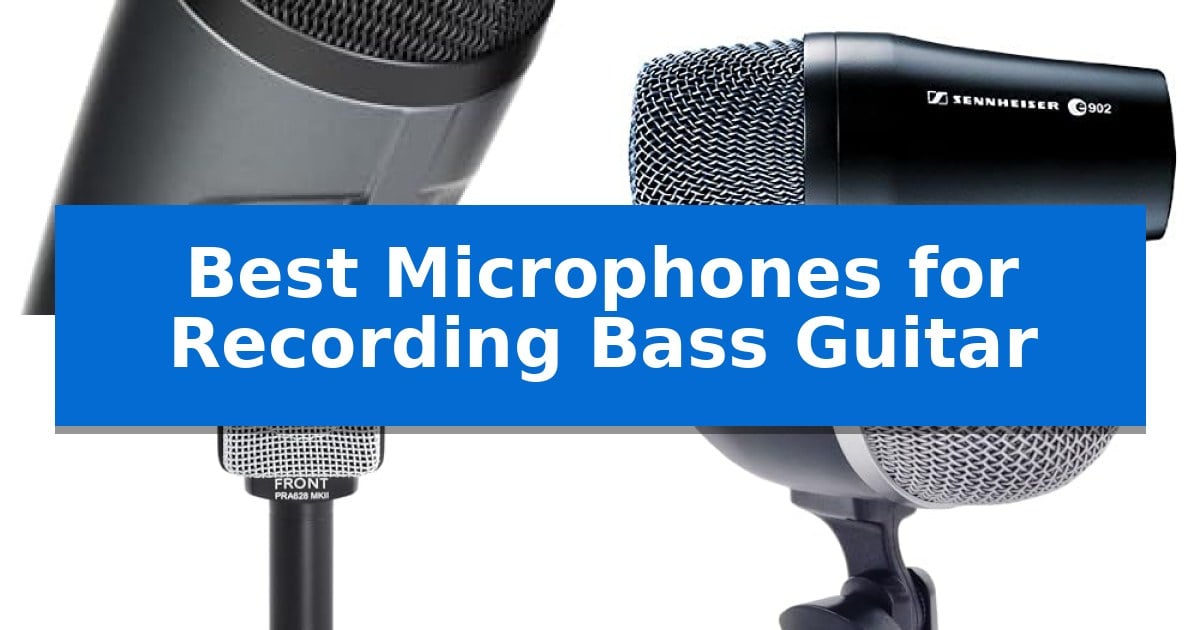
Capturing the weight and nuance of a bass guitar requires a microphone capable of handling significant sound pressure levels while maintaining clarity in the low-frequency spectrum. Whether you are tracking a clean jazz line or a distorted rock riff, the right transducer makes all the difference in how your instrument sits in the final mix.
Selecting the Best Microphones for Recording Bass Guitar involves balancing sensitivity, frequency response, and the ability to handle high-volume sources without distortion. We have evaluated five distinct dynamic microphones to help you find the ideal tool for your specific recording environment and tonal goals.
You may also want to compare Best Microphones for Recording Audiobooks, Best Microphones for Recording Audio in Short Movies, and Best Microphones for Recording Audio for Video.
Best Microphones for Recording Bass Guitar
Quick Comparison
| Product | Best For | Key Strength | Score |
|---|---|---|---|
| Sennheiser e602 II Dynamic Microphone | Best Overall | Large diaphragm capsule specifically tuned for bass frequencies. | 4.9 |
| Sennheiser e902 Dynamic Microphone | Optimized for Bass Instruments | Frequency response optimized for low-end instruments | 4.3 |
| Superlux PRA628MKII Instrument Microphone | Handles High SPL Cabinets | Handles up to 150dB SPL for distortion-free recording of loud cabinets. | 4.4 |
| HEIMU Bass Drum Microphone | Shaped for Low-End Clarity | Frequency response shaped specifically for low-end instruments. | 4.5 |
| Shure SM57 Instrument Microphone | Versatile Studio Standard | Rugged construction designed for high sound pressure levels and frequent transport. | 4.5 |
How We Chose
- Frequency response tailoring for low-frequency emphasis
- Maximum SPL capacity for high-volume cabinet miking
- Polar pattern precision for focused, low-bleed capture
- Build quality and integrated mounting hardware for studio stability
- Compatibility with standard XLR interfaces and recording chains
1 Sennheiser e602 II Dynamic Microphone — Enhanced Low-Frequency Response
Capturing the deep, resonant frequencies of a bass guitar requires a microphone capable of handling high sound pressure levels without distortion. The Sennheiser e602 II Evolution Series Dynamic Bass-drum Microphone is engineered specifically for this purpose, utilizing a large diaphragm capsule that emphasizes low-frequency response to ensure the fundamental notes of a bass cabinet are captured with clarity.
Designed for durability and ease of placement, the Sennheiser e602 II Evolution Series Dynamic Bass-drum Microphone features an integrated stand mount that provides stability for its high-mass housing. This design choice allows engineers to position the microphone securely in front of a bass amplifier or kick drum, minimizing the risk of movement during a recording session.
The microphone is built to withstand intense acoustic environments, boasting a capability of handling greater than 155 dB SPL. This high threshold ensures that even when placed close to a loud bass cabinet, the signal remains clean and free from the clipping often associated with more sensitive studio microphones.
Backed by a 10 year warranty, this unit is a long-term investment for studio or live sound setups. Its specialized focus on low-end capture makes it a reliable tool for those who prioritize a punchy, well-defined bass sound in their recordings.
Best for: Recording bass guitar cabinets or kick drums where high SPL handling and emphasized low-frequency response are required.
Skip if: You require a versatile, flat-response microphone for capturing high-frequency instruments like acoustic guitars or vocals.
PROS
- Large diaphragm capsule specifically tuned for bass frequencies.
- Handles greater than 155 dB SPL without distortion.
- Integrated stand mount for secure, stable positioning.
- Includes a 10 year warranty for long-term reliability.
CONS
- Specialized frequency response is less ideal for general-purpose recording.
2 Sennheiser e902 Dynamic Microphone — Optimized for Bass Instruments
Capturing the low-end frequencies of a bass guitar requires a microphone capable of handling high sound pressure levels while maintaining clarity. The Sennheiser e902 Cardioid Dynamic Mic for Kick Drum is engineered with a frequency response specifically optimized for low-frequency instruments, making it a specialized tool for bass cabinets.
This microphone features a very fast attack response, which is essential for preserving the transient detail of plucked or slapped bass strings. By utilizing a hum compensating coil, the unit effectively reduces electrical interference, ensuring a cleaner signal path when placed near high-gain amplifiers or power sources.
Designed for professional utility, the Sennheiser e902 includes an integrated stand mount, allowing for precise positioning directly in front of a speaker cone without the need for additional hardware. Its durable construction is backed by a 10 year warranty, reflecting the manufacturer's focus on long-term reliability in demanding studio or stage environments.
While primarily marketed for percussion, its technical profile makes it a strong candidate for those seeking to isolate the punch and fundamental weight of a bass guitar. Users should note that as a dynamic microphone, it is best suited for close-miking applications where capturing the direct output of a cabinet is the primary goal.
Best for: Recording bass guitar cabinets or kick drums where a fast transient response and high-SPL handling are required.
Skip if: You require a condenser microphone for capturing high-frequency room ambiance or delicate acoustic bass textures.
PROS
- Frequency response optimized for low-end instruments
- Very fast attack for precise transient capture
- Integrated stand mount for easy positioning
- Hum compensating coil to minimize interference
- 10 year warranty for long-term support
CONS
- Dynamic capsule design may lack the high-end detail of a large-diaphragm condenser
3 Superlux PRA628MKII Instrument Microphone — Handles High SPL Cabinets
Capturing the low-end frequencies of a bass cabinet requires a microphone capable of handling significant acoustic energy without distortion. The Superlux PRA628MKII is engineered specifically for this purpose, featuring a robust build that withstands sound pressure levels up to 150dB SPL. This high-threshold capacity ensures that even the most powerful bass amplifiers can be recorded with clarity and precision.
The microphone utilizes a supercardioid polar pattern, which is essential for isolating the sound source while rejecting unwanted background noise and potential feedback. This focused pickup is particularly beneficial in both studio environments and live stage settings where bleed from other instruments can compromise a clean recording. Its tailored 80Hz–18kHz frequency response is optimized to capture the rich midrange and crisp highs necessary to define the character of a bass guitar.
Designed for practical utility in tight spaces, the Superlux PRA628MKII features a low-profile, compact design that allows for precise placement directly in front of speaker cones. The inclusion of a gooseneck clamp simplifies the mounting process on cabinets, while the rugged metal housing provides the durability needed for frequent transport and setup.
While this microphone excels at handling high-volume sources, users should note that an XLR cable is not included in the package, requiring a separate purchase to complete the signal chain. Its specialized design makes it a versatile tool for engineers looking to capture bass cabs, toms, and other high-output instruments with a single, reliable solution.
Best for: Recording high-volume bass and guitar cabinets in environments where background noise rejection is critical.
Skip if: Users who require a microphone with an included XLR cable or those seeking a large-diaphragm condenser for nuanced, low-SPL acoustic recordings.
PROS
- Handles up to 150dB SPL for distortion-free recording of loud cabinets.
- Supercardioid polar pattern provides excellent off-axis noise rejection.
- Compact, low-profile design facilitates easy placement in tight studio or stage setups.
- Includes a gooseneck clamp for secure mounting to amplifier hardware.
CONS
- XLR cable not included, requiring an additional purchase for operation.
- Optimized for high-SPL sources, which may not be ideal for delicate, low-volume recording applications.
4 HEIMU Bass Drum Microphone — Shaped for Low-End Clarity
Capturing the low-end energy of a bass guitar requires a microphone engineered to handle high sound pressure levels without distortion. The HEIMU Bass Drum Microphone is specifically designed for this purpose, featuring a frequency response tailored to emphasize the punch and depth of bass instruments.
This microphone utilizes a supercardioid polar pattern, which is critical for isolating the bass source while rejecting unwanted noise from other instruments in a recording environment. Its design includes a built-in dynamic locking stand adapter with an integral XLR connector, a thoughtful integration that simplifies cable management and setup, particularly when positioning the mic inside a kick drum or near a bass cabinet.
Engineered for durability and consistent output, the HEIMU Bass Drum Microphone maintains studio-quality performance even when subjected to high sound pressure levels. Because it features low sensitivity to varying load impedance, it provides a reliable signal chain regardless of the preamp or interface being used.
Weighing only 0.62 pounds, this compact unit is easy to position in tight spaces, such as inside a drum shell or tucked against a bass amplifier. It offers a specialized solution for those who need to capture the fundamental frequencies of a bass guitar with clarity and precision.
Best for: Recording kick drums and bass guitar cabinets where high sound pressure handling and isolation are required.
Skip if: Users seeking a general-purpose condenser microphone for vocals or acoustic instruments will find this specialized dynamic design too limited in its frequency range.
PROS
- Frequency response shaped specifically for low-end instruments.
- Supercardioid pattern provides excellent rejection of unwanted stage or room noise.
- Integrated XLR connector and stand adapter streamline the setup process.
- Capable of handling high sound pressure levels without signal degradation.
CONS
- Specialized frequency curve is not suitable for full-range recording applications.
5 Shure SM57 Instrument Microphone — Versatile Studio Standard
Capturing the deep, resonant frequencies of a bass guitar requires a microphone capable of handling high sound pressure levels while maintaining clarity. The Shure SM57 Pro XLR Dynamic Instrument Microphone is engineered with a contoured frequency response and a refined presence boost, which helps the instrument cut through a mix by enhancing attack and detail.
Designed as a true studio and stage staple, this microphone utilizes a precise cardioid pickup pattern. This focused capture is essential for isolating the bass cabinet, effectively reducing unwanted background noise and bleed from other instruments in the recording environment. Its ability to maintain a clean signal makes it a reliable choice for close-miking setups.
Built for demanding environments, the Shure SM57 Pro XLR Dynamic Instrument Microphone features legendary rugged construction. This durability ensures that the microphone can withstand the rigors of frequent transport and high-volume sessions, providing consistent performance whether you are working in a home studio or on a professional stage.
Beyond its primary use for instruments, this dynamic microphone offers versatility across various applications, including drums, brass, and guitar amplifiers. With its XLR connectivity and robust design, it serves as a dependable tool for engineers and musicians seeking professional-quality sound capture without complex setup requirements.
Best for: Musicians and engineers who need a durable, reliable microphone for close-miking bass cabinets and other high-volume instruments in both studio and live settings.
Skip if: Users who require a large-diaphragm condenser microphone specifically for capturing ultra-low sub-bass frequencies or nuanced room ambience.
PROS
- Rugged construction designed for high sound pressure levels and frequent transport.
- Precise cardioid pickup pattern minimizes background noise and bleed.
- Contoured frequency response enhances attack and clarity for instruments.
- Versatile application suitable for bass, drums, and guitar amplifiers.
CONS
- Dynamic design may lack the extreme low-frequency sensitivity found in specialized large-diaphragm condenser microphones.
Best Microphones for Recording Bass Guitar Buying Guide
Understanding Frequency Response
A microphone's frequency response determines how it captures the bass guitar's fundamental tones and harmonics. For bass, you generally want a model that provides a solid, extended low-end response while maintaining enough presence in the midrange to ensure the attack of the strings is clearly audible.
Some microphones are specifically voiced with a 'presence boost' or a scooped midrange to help the bass cut through a dense mix. Always consider whether you prefer a flat, natural capture that you can EQ later, or a pre-colored sound that emphasizes the punch of the instrument immediately.
The Importance of SPL Handling
Bass cabinets, especially when driven by high-wattage amplifiers, can produce immense sound pressure levels. A microphone that cannot handle high SPL will introduce unwanted distortion or clipping at the capsule level, which can ruin a take.
Look for microphones rated for high SPL—typically 150dB or greater—to ensure they can be placed close to the speaker cone without compromising signal integrity. This is particularly vital when recording loud rock or metal bass tones.
Polar Patterns and Isolation
The polar pattern dictates how much of the room and other instruments the microphone captures. A supercardioid or cardioid pattern is essential for bass recording because it focuses on the speaker cone while rejecting bleed from drums or other amplifiers in the room.
Using a highly directional microphone allows you to isolate the bass signal effectively, which is critical for achieving a clean, professional-sounding track in a multi-instrument recording session.
Build Quality and Mounting
Recording bass often involves tight spaces, such as positioning a mic directly in front of a speaker cabinet. A rugged, compact design is preferable to ensure the microphone can withstand the rigors of frequent adjustments and accidental bumps.
Integrated stand mounts or specialized clips are significant advantages, as they simplify the process of securing the microphone in the optimal position without requiring bulky external hardware.
Connectivity and Compatibility
Most professional-grade microphones for bass utilize a standard XLR connection. Ensure your audio interface or preamp provides the necessary gain and impedance matching to handle the output of the dynamic microphone you choose.
While some microphones are 'plug-and-play,' others may benefit from specific preamp settings or external EQ to fully realize their potential. Always check that your recording chain is compatible with the microphone's output requirements.
Frequently Asked Questions
Do I need a condenser or dynamic microphone for bass?
Dynamic microphones are generally preferred for bass cabinets because they are robust, handle high SPL without distortion, and naturally reject unwanted room noise better than most condenser mics.
Where should I place the microphone on the bass cabinet?
A common starting point is placing the microphone one to two inches from the speaker cone, slightly off-center. Moving the mic toward the center of the cone increases brightness, while moving it toward the edge emphasizes the deeper, warmer tones.
Can I use a vocal microphone for recording bass?
While possible, many vocal microphones are not designed to handle the high SPL produced by bass cabinets and may lack the specific low-frequency response required to capture the instrument's full weight.
Does the polar pattern matter if I am recording alone?
Yes. Even in a solo recording environment, a focused polar pattern helps reduce reflections from the floor and walls, resulting in a tighter, more defined bass sound.
Is a 10-year warranty standard for these microphones?
Warranty terms vary by manufacturer. Some brands like Sennheiser offer 10-year warranties on specific models, reflecting their confidence in the durability of their microphone construction.
Conclusion: Our Top Pick
For those seeking the most reliable and purpose-built solution for low-end capture, the Sennheiser e602 II Dynamic Microphone stands out as an exceptional choice. Its large diaphragm capsule is specifically engineered to enhance bass response, ensuring that the fundamental frequencies of your instrument are captured with depth and authority.
With a capacity to handle over 155 dB SPL and a robust, integrated stand mount, this microphone provides the stability and performance needed for demanding studio environments. While other options offer versatility, the e602 II remains a specialized tool that consistently delivers the punch and clarity required for professional bass guitar recording.