
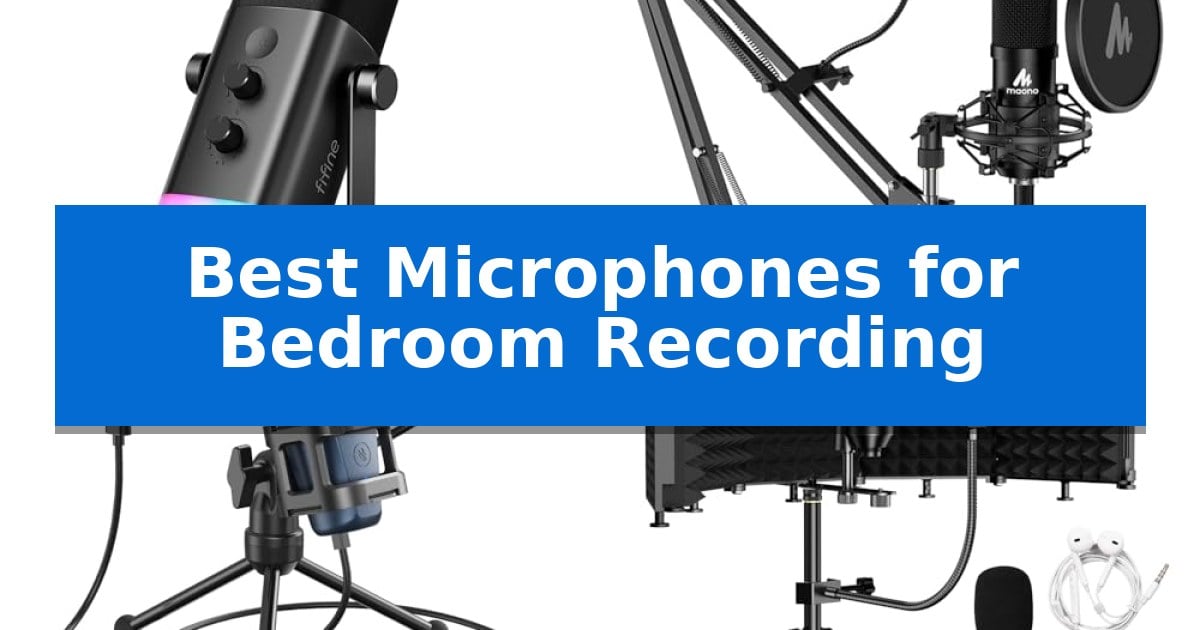
Transforming a bedroom into a functional home studio requires gear that balances audio fidelity with the practical constraints of a smaller, often untreated space. Finding the Best Microphones for Bedroom Recording involves selecting hardware that captures your voice clearly while minimizing the capture of ambient room noise or electrical hum.
Whether you are a podcaster, musician, or streamer, the right microphone can bridge the gap between amateur-sounding audio and a polished, professional output. This guide examines five distinct models, focusing on connectivity options, noise rejection capabilities, and ease of use to help you find the ideal fit for your specific recording environment.
You may also want to compare Best Microphones for Bass Voices, Best Microphones for Bass Cabinets, and Best Microphones for Bass Amps.
Best Microphones for Bedroom Recording
Quick Comparison
| Product | Best For | Key Strength | Score |
|---|---|---|---|
| FIFINE AmpliGame AM8 Dynamic Microphone | Best Overall | Hybrid USB/XLR connectivity for flexible recording workflows. | 4.9 |
| MAONO A04 USB Condenser Microphone | Complete All-in-One Starter Kit | High-resolution 192kHz/24Bit sampling rate for detailed audio capture. | 4.8 |
| TONOR TC777 USB Condenser Microphone | Simple Plug-and-Play Setup | Plug-and-play USB 2.0 connectivity requires no drivers. | 4.5 |
| Dejasound Studio Recording Microphone | Includes Foldable Isolation Shield | All-in-one kit includes isolation shield, pop filter, and tripod stand. | 4.7 |
| MAONO PD200W Hybrid Podcast Microphone | Wireless Freedom for Creators | Hybrid connectivity supporting wireless, USB, and XLR interfaces. | 4.8 |
How We Chose
- Connectivity Versatility: Assessing whether a microphone offers USB, XLR, or hybrid options to suit different recording setups.
- Noise Rejection: Evaluating the effectiveness of cardioid polar patterns and included accessories in isolating the voice from room reflections.
- Ease of Use: Determining how quickly a user can transition from unboxing to recording without complex software requirements.
- Build and Form Factor: Considering the physical footprint and the inclusion of necessary mounting hardware like stands or shock mounts.
- Feature Set: Analyzing functional additions such as mute buttons, headphone monitoring jacks, and gain controls that streamline the recording process.
1 FIFINE AmpliGame AM8 Dynamic Microphone — Versatile Hybrid XLR and USB
Achieving professional-grade vocal clarity in a home environment often requires equipment that adapts to your specific recording setup. The FIFINE AmpliGame AM8 USB/XLR Dynamic Microphone stands out by offering a dual-connection interface, allowing creators to switch between the simplicity of USB for quick plug-and-play recording and the professional flexibility of an XLR connection for use with dedicated audio interfaces.
Designed with a cardioid polar pattern, this microphone excels at isolating your voice while rejecting off-axis ambient noise, which is essential for maintaining audio integrity in less-than-perfect acoustic spaces like bedrooms. The 50Hz-16KHz frequency response ensures a balanced capture of vocal ranges, providing a natural sound profile that requires minimal post-production adjustment.
Usability is a core focus of the FIFINE AmpliGame AM8 USB/XLR Dynamic Microphone, particularly for those using the USB connection. Integrated features like a tap-to-mute button with an LED indicator, a headphone monitoring jack, and a mic gain knob provide immediate tactile control over your audio levels. The inclusion of a customizable RGB ring with multiple modes and colors allows for visual integration with existing gaming or streaming setups, while the memory function ensures your preferred settings remain active upon power-up.
The hardware is built for versatility, featuring 3/8'' and 5/8'' metal threads that allow for seamless mounting on most standard microphone stands without the need for additional adapters. Whether you are recording vocals, streaming, or podcasting, the included noise-canceling windscreen helps mitigate unwanted hums from nearby electronics, ensuring a cleaner signal path for your recordings.
Best for: Creators who need a versatile microphone that can transition from a simple USB setup for streaming to an XLR configuration for more advanced vocal recording.
Skip if: Users who exclusively require an XLR-only microphone and do not want to pay for or manage the additional USB-specific features like RGB lighting and integrated gain controls.
PROS
- Hybrid USB/XLR connectivity for flexible recording workflows.
- Integrated tap-to-mute and gain controls for real-time audio management.
- Cardioid dynamic capsule effectively rejects background noise in untreated rooms.
- Universal mounting threads compatible with most standard boom arms and stands.
CONS
- USB-specific features like RGB lighting and mute controls are inactive when using the XLR connection.
- XLR cable not included in the package.
2 MAONO A04 USB Condenser Microphone — Complete All-in-One Starter Kit
Achieving clear, studio-quality audio in a bedroom environment often hinges on the hardware used to capture the signal. The MAONO A04 USB Condenser Microphone is built around a 16mm electret condenser transducer that is specifically tuned to provide a strong bass response while maintaining clarity for voice-over and podcasting tasks.
Designed for immediate use, this microphone features Plug and Play functionality via a USB data port, eliminating the need for external sound cards or complex driver installations. It integrates directly with most laptops, PCs, and gaming consoles, making it a straightforward choice for those who need to transition quickly between recording, streaming, or video conferencing.
The internal Pro Sound Chipset supports a 192kHz/24Bit high-resolution sampling rate, which provides a smooth, flat frequency response suitable for speech. To ensure the signal remains clean, the included USB cable features a magnet ring designed for anti-interference, helping to reduce unwanted noise during the recording process.
The kit includes an all-in-one set of accessories, such as an adjustable scissor arm stand, a metal shock mount for stability, and a pop filter to manage plosives. The desk clamp is engineered to fit surfaces up to 2.1 inches thick, providing a secure mounting solution for most bedroom studio setups.
Best for: Content creators and podcasters seeking an all-in-one, plug-and-play recording solution for home studio environments.
Skip if: Users who require compatibility with the Maono Link software, as this specific model is not supported.
PROS
- High-resolution 192kHz/24Bit sampling rate for detailed audio capture.
- Plug and Play USB connectivity requires no extra drivers or hardware.
- Comprehensive accessory kit includes a shock mount, pop filter, and boom arm.
- Integrated magnet ring on the cable helps minimize signal interference.
CONS
- Not compatible with Maono Link software or Xbox consoles.
- Desk clamp limitation restricts mounting to surfaces thinner than 2.1 inches.
3 TONOR TC777 USB Condenser Microphone — Simple Plug-and-Play Setup
Achieving clear audio in a home environment often requires a setup that balances ease of use with effective noise management. The TONOR TC777 USB Condenser Microphone addresses this by utilizing a cardioid pickup pattern, which is specifically engineered to capture sound directly in front of the capsule while suppressing unwanted background noise from the surrounding room.
Designed for immediate integration into a workspace, this microphone features a plug-and-play USB 2.0 interface. It requires no additional drivers or complex assembly, allowing users to connect directly to Windows, Mac, or gaming consoles like the PS4 and PS5. The included 180 cm cable provides sufficient length for flexible desk placement.
The physical design prioritizes stability and noise reduction. It comes with a foldable tripod stand that occupies minimal desktop space, paired with a mini shock mount and a pop filter. These accessories work together to minimize vibrations and plosive sounds, which are common challenges during vocal recording or streaming sessions.
Operation is streamlined through integrated one-click mute and volume control, providing quick adjustments during live broadcasts or teleconferencing. With its adjustable angle for both the microphone and the pop filter, the TONOR TC777 USB Condenser Microphone offers a straightforward solution for those needing a reliable entry-level recording setup.
Best for: Users seeking a simple, plug-and-play USB microphone solution for podcasting, streaming, or vocal recording on PC and console platforms.
Skip if: Users who require an Xbox-compatible microphone or those needing advanced professional XLR connectivity for complex audio interfaces.
PROS
- Plug-and-play USB 2.0 connectivity requires no drivers.
- Cardioid pickup pattern effectively isolates voice from background noise.
- Includes a comprehensive accessory kit with a tripod, shock mount, and pop filter.
- Multi-device compatibility across PC, Mac, and PlayStation consoles.
CONS
- Not compatible with Xbox consoles.
- Limited to USB-only connectivity.
4 Dejasound Studio Recording Microphone — Includes Foldable Isolation Shield
Achieving professional-grade vocal clarity in a home environment often requires more than just a microphone; it demands a controlled acoustic space. The Dejasound Upgraded Studio Recording Microphone addresses this by bundling a high-fidelity condenser mic with a foldable, five-panel isolation shield designed to minimize ambient noise and room reflections.
This all-in-one solution features a 16mm diaphragm and a cardioid polar pattern, capturing audio at a 192kHz/24Bit sampling rate. It is built for versatility, offering onboard echo control, volume adjustment, and a 3.5mm monitor headphone jack, allowing for real-time audio feedback during recording sessions.
Designed for seamless integration, the microphone utilizes a USB plug-and-play interface, making it compatible with PCs, laptops, and smartphones via the included Lightning and Type-C adapters. The entire kit, including the tripod stand and shockproof filter, weighs only 4.1lbs, providing a portable setup that is easy to deploy in any bedroom studio.
The included isolation shield utilizes a triple acoustic design to dampen unwanted sound, which is particularly beneficial for vocalists or podcasters working in untreated rooms. By combining the condenser mic with noise-absorbing panels, this kit provides a comprehensive approach to improving recording quality without the need for additional hardware.
Best for: Home creators and podcasters who need a complete, portable recording setup that includes acoustic treatment.
Skip if: Users who already own professional-grade acoustic treatment or require an XLR-based interface for advanced studio mixing consoles.
PROS
- All-in-one kit includes isolation shield, pop filter, and tripod stand.
- USB plug-and-play connectivity with included mobile adapters.
- Onboard controls for volume, echo, and monitoring.
- Foldable isolation shield for effective noise reduction in small spaces.
CONS
- Integrated design limits the ability to upgrade individual components like the microphone capsule separately.
5 MAONO PD200W Hybrid Podcast Microphone — Wireless Freedom for Creators
Achieving professional-grade audio in a home environment often requires balancing equipment versatility with limited space. The MAONO PD200W Hybrid Podcast Microphone addresses this by offering a flexible three-way connection system, allowing users to switch between wireless freedom, USB plug-and-play, and XLR professional setups without needing multiple devices.
Engineered for clarity, this microphone utilizes a 30mm dynamic capsule with a cardioid pickup pattern to isolate vocals while minimizing room echo. It maintains a clean 82dB signal-to-noise ratio and handles high sound pressure levels up to 128dB, ensuring consistent performance even in untreated bedroom spaces. The integrated three-stage noise cancellation further assists in keeping recordings focused and broadcast-ready.
Usability is enhanced through the MaonoLink app, which provides access to four master-tuned preset modes and granular control over EQ and reverb settings. For collaborative projects, the system supports a single receiver to connect two wireless microphones simultaneously, recording each to an individual track for precise post-production editing.
The hardware is built for extended sessions, offering up to 60 hours of battery life when RGB lighting is disabled. With a stable 60m wireless range, the unit provides significant mobility for creators who need to move around their workspace. The included desktop stand and comprehensive cable kit ensure a complete, out-of-the-box setup for immediate use.
Best for: Creators who require a versatile, all-in-one microphone that transitions seamlessly between wireless, USB, and XLR recording setups.
Skip if: Users who strictly require a wired-only, zero-latency monitoring setup and do not need wireless or hybrid connectivity features.
PROS
- Hybrid connectivity supporting wireless, USB, and XLR interfaces.
- Three-stage noise cancellation for improved audio in untreated rooms.
- Dual-mic support with individual track recording for interviews.
- MaonoLink app integration for personalized EQ and preset modes.
CONS
- Camera/Lightning accessories for direct-to-camera recording are sold separately.
- Battery life is significantly reduced when RGB lighting is active.
Best Microphones for Bedroom Recording Buying Guide
Understanding Polar Patterns
Most bedroom recording microphones utilize a cardioid polar pattern. This design is essential for home studios because it is highly sensitive to sound directly in front of the capsule while rejecting audio from the sides and rear.
By focusing on the sound source, a cardioid mic helps reduce the amount of room echo or background noise captured in your recordings, which is particularly beneficial in bedrooms that lack professional acoustic treatment.
USB vs. XLR Connectivity
The choice between USB and XLR connectivity depends on your current equipment and future goals. USB microphones are designed for direct, plug-and-play convenience, making them ideal for beginners or those who want to record directly into a laptop or smartphone.
XLR microphones require an external audio interface or mixer to function. While this adds complexity and cost, it provides greater flexibility for professional-grade setups and allows for easier integration into larger, multi-microphone recording chains.
The Importance of Monitoring
A headphone monitoring jack is a critical feature for any bedroom recordist. It allows you to hear your voice in real-time without the latency often introduced by computer software.
Monitoring ensures you can maintain consistent mic technique and volume levels throughout your session, preventing the need for excessive post-production adjustments or re-recording due to clipping.
Managing Room Acoustics
Even with a high-quality microphone, the sound of your room plays a major role in the final recording. Bedroom environments often suffer from unwanted reflections off walls and hard surfaces.
Using accessories like pop filters, shock mounts, and isolation shields can significantly improve your audio quality. These tools help eliminate plosives, reduce mechanical vibrations from your desk, and dampen the sound of the room before it reaches the microphone.
Gain Control and Signal Integrity
Having physical gain control on the microphone body allows you to adjust your input levels quickly without navigating through computer settings. This is vital for maintaining a clean signal that is neither too quiet nor prone to distortion.
Proper gain staging ensures that your recording remains clear, allowing you to capture the full dynamic range of your voice while keeping the noise floor as low as possible.
Frequently Asked Questions
Do I need a soundproof room to get good recordings?
While a soundproof room is ideal, it is not strictly necessary. Using a cardioid microphone, a pop filter, and basic acoustic management like soft furnishings can produce high-quality results in a standard bedroom.
Can I use an XLR microphone with my computer directly?
No, an XLR microphone requires an audio interface to convert the analog signal into digital data that your computer can process.
What is the benefit of a hybrid USB/XLR microphone?
A hybrid microphone offers the convenience of USB for immediate, simple recording while providing an XLR output for when you decide to upgrade to a more professional audio interface setup later.
How close should I be to the microphone?
For most bedroom recording microphones, a distance of 2 to 6 inches is recommended to achieve the best balance between vocal clarity and proximity effect.
Are all these microphones compatible with Mac and PC?
Most modern USB microphones are designed for broad compatibility with Windows and macOS, typically functioning as plug-and-play devices without the need for specialized drivers.
Conclusion: Our Top Pick
For those seeking the most flexible and reliable solution for home recording, the FIFINE AmpliGame AM8 Dynamic Microphone stands out as the top choice. Its ability to switch between USB and XLR connectivity ensures it can grow with your studio, while the onboard controls and sturdy build make it highly practical for daily use.
While other options offer specific advantages like all-in-one kits or wireless capabilities, the AM8 provides a balanced feature set that effectively addresses the common challenges of bedroom recording. Its combination of natural audio clarity and versatile connection options makes it a dependable foundation for any creator.