
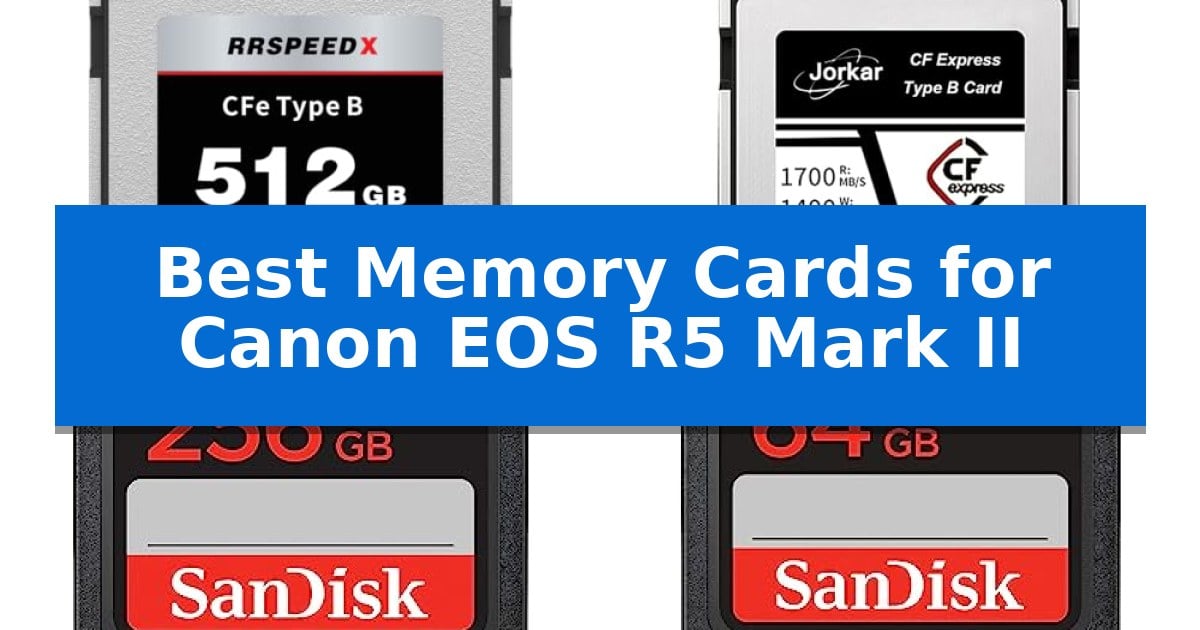
Capturing high-resolution stills and demanding 8K video requires storage media that can keep pace with the advanced processing power of your camera. Finding the Best Memory Cards for Canon EOS R5 Mark II involves balancing the extreme throughput needed for high-bitrate recording with the reliability required for professional assignments.
Whether you are prioritizing the raw speed of CFexpress Type B cards for continuous burst shooting or utilizing UHS-II SD cards for secondary storage, selecting the correct media is essential. This guide examines the technical specifications and compatibility of top-tier memory solutions to ensure your workflow remains uninterrupted.
You may also want to compare Best Memory Cards for Canon EOS R5, Best Memory Cards for Canon EOS R, and Best Memory Cards for Canon EOS 6D Mark II.
Best Memory Cards for Canon EOS R5 Mark II
Quick Comparison
| Product | Best For | Key Strength | Score |
|---|---|---|---|
| RRSPEEDX CFexpress Type B Memory Card | Best Overall | CFexpress 4.0 technology for high-speed read and write performance. | 4.9 |
| Jorkar CFexpress Type B Memory Card | Reliable Performance for High Bitrate | High-speed performance with read/write speeds up to 1700MB/s and 1400MB/s. | 4.9 |
| SanDisk Extreme Pro UHS-II SD Card | Professional Standard for Secondary Slots | 256GB capacity supports extensive high-resolution media storage. | 4.5 |
| SanDisk 64GB Extreme Pro UHS-II SD Card Works with Canon Mirrorless Cameras | Fast Transfers for Mirrorless Shooters | UHS-II technology enables high-speed data transfer and write performance. | 4.8 |
How We Chose
- Compatibility with CFexpress Type B and UHS-II SD slots.
- Maximum read and write speeds for high-bitrate 8K and 4K recording.
- Storage capacity options for long-form video and high-speed burst photography.
- Reliability features for professional data integrity.
- Inclusion of necessary hardware like card readers for efficient offloading.
1 RRSPEEDX CFexpress Type B Memory Card — Unmatched Speed for 8K RAW
Capturing high-bitrate video and continuous bursts on the Canon EOS R5 Mark II requires storage that can keep pace with its demanding sensor. The RRSPEEDX 512GB CFexpress 4.0 Type B Memory Card is engineered to support these intensive workflows, offering high-speed data transfer capabilities for professional-grade media.
This card leverages CFexpress 4.0 technology to achieve rated speeds of up to 3500MB/s read and 3400MB/s write. These specifications are designed to facilitate efficient offloading of large files and provide the sustained performance necessary for 8K 60p and 4K 120fps recording modes. With 512GB of storage capacity, it provides significant room for long-duration shoots, reducing the frequency of card swaps during critical assignments.
Designed specifically for the CFexpress Type B interface, this card is compatible with a range of high-performance cameras, including the Canon EOS R1, R3, R5, and R5 Mark II. It is important to note that this card is physically incompatible with SD, CompactFlash, or CFexpress Type A slots. Users should always format the media within the camera before the initial use to ensure optimal compatibility and performance.
The RRSPEEDX 512GB CFexpress 4.0 Type B Memory Card includes a 5-year warranty, providing long-term support for professional users. While it offers high-speed performance, users must verify their specific camera firmware and codec settings, as actual performance can vary based on the device, file type, and environmental conditions.
Best for: Professional photographers and videographers requiring high-speed, high-capacity storage for 8K RAW video and continuous burst photography on compatible Type B cameras.
Skip if: Users with cameras that utilize SD, CompactFlash, or CFexpress Type A slots, as this card will not fit those interfaces.
PROS
- CFexpress 4.0 technology for high-speed read and write performance.
- 512GB capacity ideal for long-duration 8K video and burst photography.
- Broad compatibility with professional-grade Canon, Nikon, and Fujifilm camera systems.
- Includes a 5-year warranty for added peace of mind.
CONS
- Strict physical compatibility limited exclusively to CFexpress Type B slots.
- Performance is dependent on camera firmware, settings, and specific recording codecs.
2 Jorkar CFexpress Type B Memory Card — Reliable Performance for High Bitrate
The Jorkar CFexpress Type B Memory Card is engineered to handle the high-bitrate demands of modern professional cameras, providing a robust storage solution for those capturing 8K and 4K RAW video. With its utilization of the PCIe 3.0 and NVMe protocol, this card is built to maintain the rapid data throughput necessary for continuous high-speed shooting and intensive file transfers.
Designed for professional workflows, the card boasts impressive technical specifications, including read speeds up to 1700MB/s and write speeds up to 1400MB/s. These metrics ensure that high-resolution data is written efficiently, minimizing downtime during demanding production sessions. The 256GB capacity offers a practical balance for photographers and videographers who require significant space for high-quality media without frequent card swaps.
Compatibility is a central focus of the Jorkar CFexpress Type B Memory Card, as it is designed to integrate seamlessly with a wide range of professional-grade devices, including the Canon EOS R5 and EOS-1DX Mark III. Furthermore, it offers backwards compatibility with select XQD devices, provided the camera has received the necessary firmware update, allowing users to consolidate their storage media across different camera bodies.
To provide peace of mind for long-term use, the manufacturer includes a 5-year limited warranty. This commitment to durability supports the card's role as a reliable component in a professional's kit, ensuring that the hardware remains a stable foundation for capturing critical footage and imagery.
Best for: Professional photographers and videographers requiring high-speed, reliable storage for 8K/4K RAW video and continuous burst shooting.
Skip if: Users who own Sony cameras, as this specific card is not compatible with that manufacturer's hardware.
PROS
- High-speed performance with read/write speeds up to 1700MB/s and 1400MB/s.
- Optimized for 8K and 4K RAW video capture and high-bitrate workflows.
- Includes a 5-year limited warranty for long-term reliability.
- Supports PCIe 3.0 and NVMe protocols for efficient data transfer.
CONS
- Incompatibility with Sony cameras limits its use in mixed-brand setups.
- Requires firmware updates for compatibility with some older XQD-based devices.
3 SanDisk Extreme Pro UHS-II SD Card — Professional Standard for Secondary Slots
High-resolution imaging and 8K video recording place significant demands on storage media, requiring reliable throughput to maintain data integrity. The SanDisk 256GB Extreme Pro UHS-II SD Card provides a substantial 256GB capacity, offering the necessary headroom for professional workflows that involve large file sizes and extended shooting sessions.
Utilizing UHS-II technology, this card is engineered to support the high-speed data transfer requirements of modern mirrorless systems. This standard is essential for clearing the camera's buffer quickly during rapid-fire bursts or when capturing high-bitrate video, ensuring that the camera remains responsive throughout demanding tasks.
The included Everything But Stromboli 3.0 Combo Card Reader adds practical utility to the bundle, facilitating efficient file offloading to a computer. This accessory supports USB 3.0 speeds, which helps reduce downtime when transferring large batches of media from the card to post-production environments.
Designed for compatibility with the Canon EOS R5, R6, and R6 Mark II, this bundle provides a streamlined storage solution. By pairing a high-capacity, high-speed card with a dedicated reader, it addresses the primary storage needs of photographers and videographers who require consistent performance in the field.
Best for: Professional photographers and videographers requiring high-capacity, high-speed storage for demanding 8K video and burst photography workflows.
Skip if: Users who do not require the high-speed throughput of UHS-II technology or those who already possess multiple high-speed card readers.
PROS
- 256GB capacity supports extensive high-resolution media storage.
- UHS-II technology enables fast read and write performance.
- Included 3.0 card reader provides a convenient solution for file transfers.
- Broad compatibility with Canon mirrorless models including the EOS R5.
CONS
- Bundle-dependent value may be redundant for users who already own a high-speed card reader.
4 SanDisk 64GB Extreme Pro UHS-II SD Card Works with Canon Mirrorless Cameras — Fast Transfers for Mirrorless Shooters
Capturing high-resolution imagery and video requires a storage solution that keeps pace with the internal processing capabilities of modern mirrorless systems. The SanDisk 64GB Extreme Pro UHS-II SD Card Works with Canon Mirrorless Cameras is engineered to support the demanding data throughput of high-end imaging devices, ensuring that photographers and videographers can record content without bottlenecks.
This card utilizes UHS-II technology, which provides the necessary bandwidth for rapid data transfer. By facilitating blazing-fast read and write speeds, it allows for efficient clearing of the camera buffer during high-speed burst shooting. The 64GB capacity offers a practical balance for storing significant amounts of high-resolution media while maintaining a manageable file organization workflow.
Designed for seamless integration, this card is specifically compatible with the Canon EOS R5, EOS R6 Mark II, and EOS R6 mirrorless cameras. The inclusion of an Everything But Stromboli 3.0 Micro & SD Card Reader in the bundle adds immediate utility, providing a direct method for offloading files to a computer without requiring additional hardware purchases.
Professional workflows often rely on reliable media to prevent data loss during critical shoots. This bundle is tailored for those who prioritize performance and convenience, offering a complete storage and transfer solution that fits directly into existing mirrorless camera setups.
Best for: Professional photographers and videographers using Canon EOS R5 or R6 series cameras who require high-speed UHS-II performance and an included card reader for efficient file management.
Skip if: Users who require massive storage capacities exceeding 64GB for long-form 8K video production or those who already possess high-speed UHS-II card readers.
PROS
- UHS-II technology enables high-speed data transfer and write performance.
- Bundled 3.0 card reader provides immediate plug-and-play file transfer capability.
- Verified compatibility with Canon EOS R5 and R6 series mirrorless cameras.
- 64GB capacity is well-suited for high-resolution photo and video workflows.
CONS
- Fixed 64GB capacity may be insufficient for extended 8K video recording sessions.
Best Memory Cards for Canon EOS R5 Mark II Buying Guide
Understanding Memory Card Formats
The Canon EOS R5 Mark II utilizes two distinct card slots: one for CFexpress Type B and one for UHS-II SD. The CFexpress slot is the primary interface for high-performance tasks, such as 8K RAW video recording and rapid continuous burst shooting, as it leverages the NVMe protocol for superior data transfer speeds.
Conversely, the UHS-II SD slot serves as a versatile secondary option. While it does not reach the extreme speeds of CFexpress, it is highly effective for standard photography, 4K video, or as a reliable backup medium. Understanding which slot to use for specific tasks is key to maximizing your camera's potential.
Throughput and Recording Requirements
High-bitrate video modes, particularly 8K 60p or 4K 120fps, demand consistent write speeds to prevent buffer overflow. Cards that support PCIe 3.0 or higher are generally required to maintain the steady data stream needed for these intensive recording modes.
When selecting a card, always check the manufacturer's media requirements for your specific codec. A card that is too slow will cause the camera to stop recording unexpectedly, potentially leading to lost footage during critical shoots.
Capacity and Workflow Efficiency
Storage capacity directly impacts your ability to capture long-form projects without frequent card swaps. A 512GB card provides significant headroom for high-resolution stills and extended video sequences, reducing the risk of missing shots while changing media.
Equally important is the read speed of the card. High-speed offloading is vital for professional workflows, as it significantly shortens the time required to transfer large files from the camera to your computer, allowing for faster post-production turnaround.
Reliability and Data Integrity
Professional photography often involves unpredictable environments, making the physical durability of your storage media a priority. Look for cards that are designed to handle the thermal demands of continuous high-speed writing, as heat management is crucial for preventing performance throttling.
Always format your memory cards directly in the camera before your first use. This ensures that the file system is optimized for the specific camera's firmware, which helps maintain stability and prevents potential file corruption during long recording sessions.
Compatibility Considerations
It is important to note that CFexpress Type B cards are not physically compatible with Type A, SD, or older CompactFlash slots. Always verify your camera's specific media requirements before purchase to avoid incompatibility issues.
Some bundles include external card readers, which can be a cost-effective way to ensure you have the correct interface for transferring files to your workstation. Ensure that your reader supports the speed rating of your card to avoid creating a bottleneck in your workflow.
Frequently Asked Questions
Can I use an SD card for 8K video on the Canon EOS R5 Mark II?
The Canon EOS R5 Mark II typically requires the CFexpress Type B slot for its most demanding recording modes, such as 8K RAW. The SD slot is generally intended for secondary storage, lower-bitrate video, or still photography.
Why is my card not reaching the advertised speed?
Actual performance is dependent on the device, specific camera settings, file types, and the connection interface of your card reader. Advertised speeds represent the maximum theoretical capability of the card.
Do I need to format my card before using it?
Yes, it is recommended to format your memory card in the camera before its first use to ensure it is properly configured for the camera's file system and firmware.
Are CFexpress Type B cards backwards compatible with XQD slots?
Some CFexpress Type B cards may work in select XQD devices, but this often requires a firmware update from the camera manufacturer. Always check your camera's manual for media compatibility.
What is the benefit of a 512GB card over a 64GB card?
A higher capacity card allows for longer continuous recording and more high-resolution burst sequences, which reduces the need to change cards during an assignment and keeps your project files together.
Conclusion: Our Top Pick
For photographers and videographers requiring the highest performance, the RRSPEEDX CFexpress Type B Memory Card stands out as the top choice. Its support for CFexpress 4.0 speeds ensures that you can handle 8K RAW recording and high-speed burst photography with ease, providing the necessary throughput for the most demanding Canon EOS R5 Mark II workflows.
While the higher capacity and speed of the RRSPEEDX card make it ideal for primary storage, remember that your choice should always align with your specific recording needs. For secondary storage or less intensive tasks, UHS-II SD cards remain a reliable and cost-effective supplement to your camera kit.